 odyvero
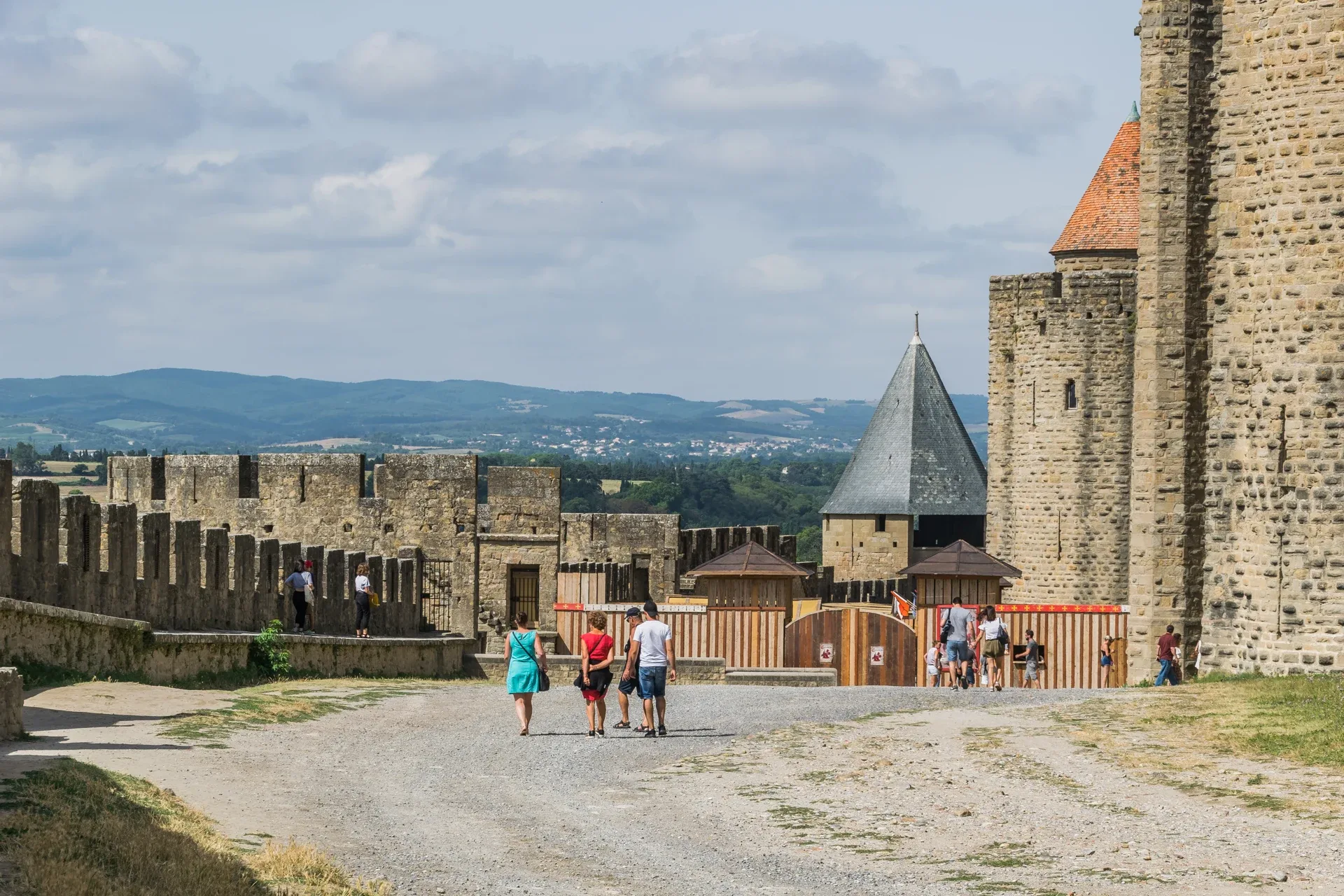
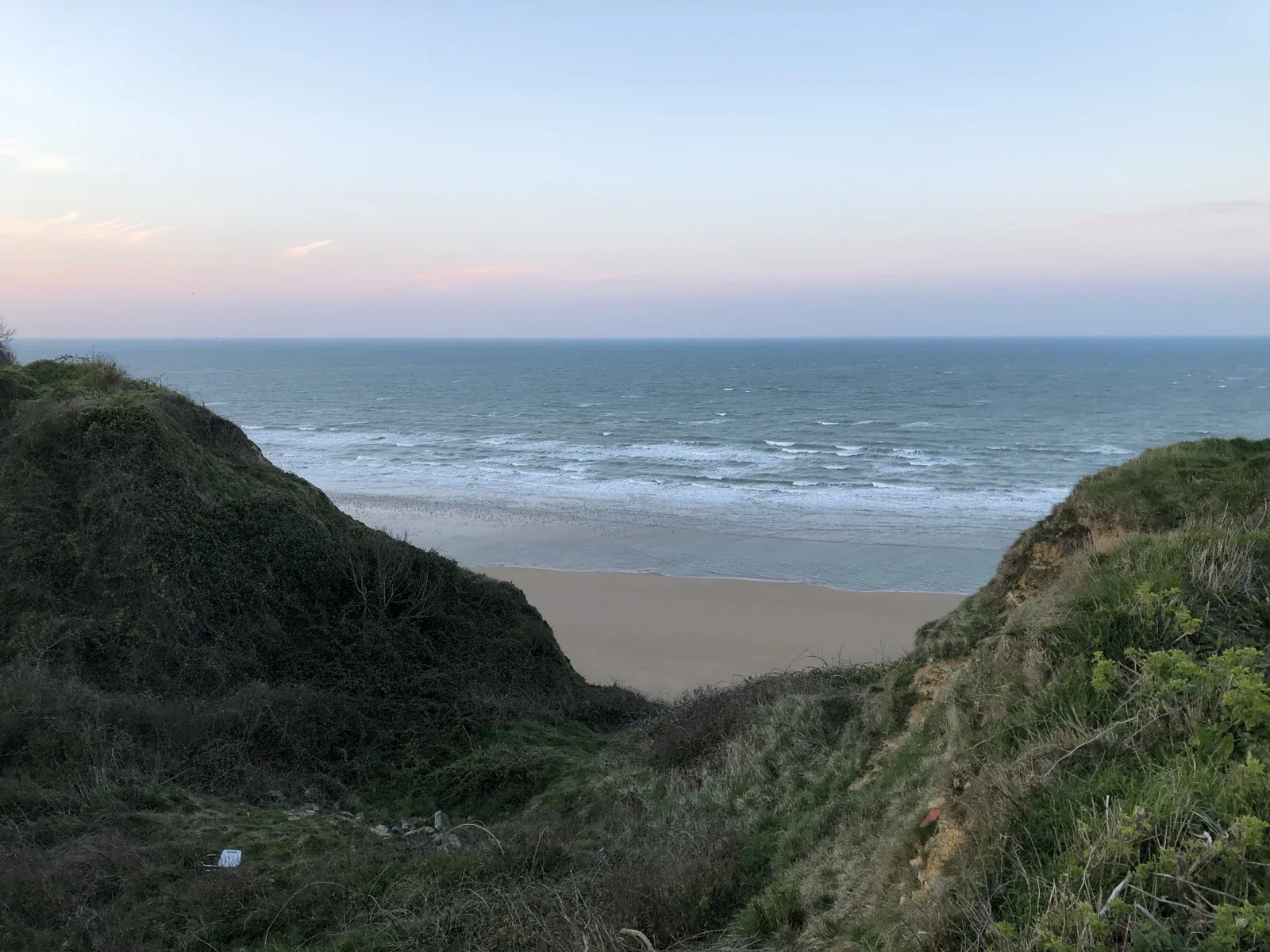
On July 26, 2026, the D-Day beaches and the Capetian royal fortresses of Languedoc were added to the World Heritage List. Six sites along the Normandy coast, eight fortified complexes in the south: here is what was recognized and how to plan your visit, among landscapes of remembrance, urban ramparts, and ridge-top citadels.
The two French inscriptions of 2026
On a Normandy beach, the horizon hints at the difficulties of a landing. In front of a fortress in the Corbières, the terrain helps explain its defenses. The two new French properties inscribed in 2026 invite visitors to look at a landscape as much as its monuments: the relationships between the places give the remains their full meaning.
The Ministry of Culture confirms their inscription on July 26, during the session of the World Heritage Committee in Busan. France now has 56 inscribed properties. The word “property” here refers to an ensemble recognized for its outstanding universal value; it can bring together several sites far apart. The six Normandy components thus form a single inscription, as do the eight complexes in the Languedoc network.
When planning a trip, we recommend choosing one of these two regions first. In Normandy, you will follow the traces of a military operation and visit places where its memory is passed on. In Aude and Ariège, you will discover how royal power organized a border through architecture. Two different trips, best built around a few in-depth visits rather than a checklist to complete.
The six D-Day sites
The property “The D-Day Beaches, Normandy, 1944” comprises Utah Beach, Omaha Beach, Gold Beach, Juno Beach, Sword Beach, and Pointe du Hoc. According to DRAC Normandy, these six components extend across nearly eighty kilometers of coastline. Pointe du Hoc is part of this series on the same footing as the five beaches, so it deserves its own place in understanding the area.
The recognition is based on the criterion concerning association with events of outstanding universal significance. The June 6, 1944, landings opened a front in the west of occupied Europe. On site, the landscapes make it possible to approach this event at different scales: a beach to understand the men’s exposure, a defensive structure to understand an obstacle, and the remains of a port to grasp the logistics required to continue operations.
The preserved traces include casemates, batteries, firing positions, and military installations. At Gold Beach, the remains of the artificial harbor Mulberry B remind us that the story continued after the initial assault. The American cemetery at Colleville-sur-Mer contributes to the memorial dimension of the property. It complements a visit to Omaha; the official list clearly identifies six components and does not count this cemetery as a seventh beach.
We would devote a first day to a coherent geographical sector, then a second to another aspect of the history. This division leaves time for explanations and reflection. A museum can complement the outdoor sites, particularly if you want to understand the maps and chronology before viewing the terrain. Plan its admission and visit duration separately.


The American sector from Bayeux
For a first visit focused on American forces, Bayeux offers the option of choosing an excursion with transport already arranged. The selected private day tour combines Utah Beach, Omaha Beach, and Pointe du Hoc with the American cemetery, as well as stops related to the paratroopers inland. This progression connects airborne operations, the landings, and the memory of the casualties.
The full-day option is listed as eight to nine hours. The guide provides commentary in English or Dutch; French is not among the languages offered in the listing we consulted. This information should factor into your choice from the outset, especially if you are traveling with children or relatives who want to ask specific questions. The private air-conditioned vehicle and listed fees are included; lunch and admission to an optional museum are separate.
The product also offers half-day options and a version organized around arrival from Paris. To follow the itinerary described here, explicitly select the full-day tour departing from Bayeux. Compare the price based on the vehicle and the actual group size. The listing states that this tour is not suitable for children under eight: for a younger family, a shorter self-guided visit lets you choose the sites and vocabulary.
We recommend this day tour if you want a provider to handle transportation and to focus your attention on the historical accounts. Three components of the property are included in its itinerary. To also visit Gold, Juno, or Sword, add another day rather than expecting this excursion to cover the entire inscribed coastline.

Viator
Private American D-Day day trip from Bayeux
To visit Utah, Omaha, and Pointe du Hoc in one day with private transport, choose the full-day option from Bayeux. Guide in English or Dutch; lunch and optional museum are separate.
- 480–540 min
- 5/5 (301 reviews)
A day linking Utah, Omaha, Pointe du Hoc and the American cemetery, with an English- or Dutch-speaking guide and private transport. Lunch and an optional museum are separate.
Cancellation policy
For a full refund, cancel at least 24 hours before the scheduled departure date.
From €545.00
View activitySword and the Côte de Nacre
At the other end of the Normandy itinerary, an outing from Ouistreham can combine the memory of D-Day with coastal architecture. The selected offer uses a 1976 convertible Citroën Dyane for a three-hour guided drive, with a maximum of three passengers. The advertised departure point is near Ouistreham town hall and the Church of Saint-Samson.
Commentary is available in French or English. The route takes in villas, coastal villages and memorial sites around Sword, with a stop at Pegasus Bridge. This broadens the story to include operations along the coast; the six listed components are those given in the official listing. Meals are not included.
This outing suits a small group looking for an introductory tour in French and a shorter format than a full battlefield day. Its itinerary also gives space to seaside heritage. To explore the military operations in greater depth, plan a dedicated visit afterward or choose a museum based on the area that interests you. The two Normandy options therefore cater to different preferences in language, duration and content.

Viator
The Côte de Nacre in a vintage car from Ouistreham
For an introduction to Sword and the coastal heritage in French, this three-hour outing from Ouistreham is suitable for up to three passengers. The route also takes in villas and coastal architecture.
- 180 min
- 5/5 (69 reviews)
A three-hour ride in a Dyane, in French or English, to discover coastal architecture and memorial sites around Sword. Departure from Ouistreham, maximum three passengers.
Cancellation policy
For a full refund, cancel at least 24 hours before the scheduled departure date.
From €90.00
View activityThe eight fortresses of Languedoc
The second French property inscribed in 2026 is called the “Royal Capetian Fortresses of Languedoc.” It brings together the castle and ramparts of Carcassonne, Aguilar, Lastours, Montségur, Peyrepertuse, Quéribus, Puilaurens and Termes. These eight sites are in Aude and Ariège, between the Corbières, the Pyrenean foothills and the Montagne Noire.
Their historical connection can be seen in the establishment of royal power in the 13th and 14th centuries. The DRAC Occitanie notes that the royal seneschalship of Carcassonne was created from 1226 onward. From this city, the network helped control the territory and the border with the Crown of Aragon-Barcelona. The fortresses therefore provide a way to examine administration, surveillance and defensive innovations together.
Circular towers, curtain walls, barbicans and enclosures take forms adapted to each site. The terrain is part of the defensive system: a promontory can command the approaches, while construction makes use of the available rock. The inscription recognizes this coherence through criteria related to the exchange of influences and outstanding examples of architecture. On site, comparing two fortresses helps reveal a shared military vocabulary across different landscapes.
The tourist label “Cathar castles” remains common in the region. To understand the inscribed property, focus especially on the alterations and features associated with the kings of France. Local histories may reach back to earlier occupations; the 2026 recognition connects the eight sites through their Capetian organization. A guide or visitor information can help distinguish the different periods in the visible walls.
Carcassonne, the gateway to the network
Carcassonne provides an introduction to the visit: the lists, gates and two lines of defense make an architectural language legible, one you will encounter again at the ridge-top fortresses. The historic fortified city has had its own inscription since 1997. In 2026, its castle and ramparts also became part of the serial property devoted to the royal network. The two dates reflect complementary ways of understanding the city.
The selected private tour offers a route along the lists and through the streets, taking in the fortifications and the Basilica of Saint-Nazaire. French is one of the available languages, alongside English and Spanish. The standard option is advertised as lasting about an hour and a half to an hour and forty minutes. The meeting point is in front of the Narbonnaise Gate, at the foot of the statue of Dame Carcas.
The guide is included, while entry to the Count’s Castle is separate. A longer option includes access to the castle courtyard, with additional admission fees. Choose your option based on the areas you want to see, and check what is included when booking. This tour offers a first historical reading of Carcassonne; the other seven fortresses require separate trips.
For the castle and ramparts, the Centre des monuments nationaux recommends allowing about two hours and booking in advance. From October to March, the advertised opening hours are 9:30 a.m. to 5 p.m., with last entry at 4:15 p.m. From April to September, they are 10 a.m. to 6:30 p.m., with last entry at 5:45 p.m. Last entry does not guarantee a visit to every area, as they close progressively. Arriving earlier leaves time to explore the whole site without counting only the minutes until closing.

Viator
Private tour of Carcassonne in French
To understand Carcassonne’s defenses before visiting a ridge-top fortress, select French and the option you want. The private guide takes you around the lists and through the city; admission to the castle is paid separately.
- 90–100 min
- 4.9/5 (72 reviews)
The city’s lists, streets and fortifications with a private guide. French is available; admission to the Count’s Castle is separate, and the option including the castle courtyard must be selected if desired.
Cancellation policy
For a full refund, cancel at least 24 hours before the scheduled departure date.
From €160.00
View activityThe ridge-top citadels
After Carcassonne, we would choose one or two fortresses for their setting. Peyrepertuse and Quéribus offer a chance to explore the relationship between rock and defense in the Corbières. Lastours provides another way into the network, while Montségur takes you into Ariège. The choice depends on where you are staying and how much walking you want to do to reach the sites.
A day devoted to a single site may be enough for travelers who want time to take in the landscape and construction details. Two visits mean planning around opening hours, travel and accumulated fatigue. For a first trip, we prefer Carcassonne followed by one ridge-top fortress rather than trying to visit every component. You will already have a point of comparison between an urban defensive system and a mountain setting.
Wear suitable shoes for uneven ground and allow some flexibility for the weather. Before each trip, check opening and access conditions with the site operator, especially when a site is exposed to wind or extreme heat. A photograph taken from the village does not show how much effort it takes to reach the ruins. Anyone who uses a walking aid should ask for details about the route and accessible areas.
Trip length and season
For Normandy, three nights is our suggested starting point: one day for the American sector, another for a more easterly sector, and time for arrival and return. If you have only one day, choose your main focus. The Bayeux private tour combines several distant stops; the Côte de Nacre drive favors a shorter, varied introduction in French.
In Languedoc, three or four nights give you time to consider Carcassonne, a day visiting fortresses and some flexibility to adjust the itinerary. These are planning suggestions, not a promise that you can cover all eight sites. Choose your accommodation based on the visits you actually decide to make. A convenient base for the urban ramparts does not shorten every trip to the hilltop sites.
April to June and September to October are seasons worth considering for these largely outdoor itineraries. In November, Carcassonne’s winter hours apply, so plan your days around an earlier closing time. In summer, schedule exposed routes at times that suit the heat and follow the site operators’ instructions. In Normandy, a windy or rainy day may mean changing how long you spend on the beaches and allowing more time for indoor sites.
Budget and transportation
To work out your budget, separate transportation, accommodation, guided visits and admission fees. The listings show pricing details for the offers; the exact total depends on the date and group you select. The private American-sector day is priced per vehicle, the private Carcassonne tour per group, while the Côte de Nacre drive is priced per person. These differences in pricing basis matter more than simply comparing the amounts shown.
The cost of a guide may be separate from monument admission. This is the case for the Carcassonne tour if you want to enter the castle. Conversely, exploring the landscape or outdoor areas can fill part of a day without requiring multiple bookings. The most useful budget is one based on your own itinerary, including actual admission fees and any free entry you are entitled to.
In both regions, check travel logistics before locking in your schedule. An included vehicle makes a Normandy excursion simpler. For the dispersed fortresses, compare transport links and travel times from your accommodation before deciding whether to rent a car or book a guided tour. You do not need a specific hotel or train to use this guide; the location of your base and the amount of time you are willing to spend traveling will guide your choice.
Recent nominations and inscriptions
An application announces a process, while an inscription is a decision. The place name and year make it possible to identify the correct recognition: Carnac and the shores of the Gulf of Morbihan were inscribed in 2025; the two properties presented here in 2026. A page that brings these destinations together under a single travel year may therefore refer to inscriptions from several different years.
World Heritage status applies to cultural, natural or mixed properties within a defined perimeter. In France, the relevant authorities oversee their protection and management, as well as any developments that could affect their outstanding universal value. This responsibility explains why the landscape around the remains matters as much as the monument itself. It is distinct from the safeguarding of intangible cultural heritage, which falls under a different convention.
For visitors, inscription offers a particularly useful way to understand a site: it points to the connections to look for between different places. In Normandy, the six components tell the story of an event and how it has been passed down. In Languedoc, the eight groups shed light on a shared defensive programme. Your trip can explore some of them, provided you understand the role each stop plays within the larger whole.
FAQ
What are the new French UNESCO sites of 2026?
The “D-Day Landing Beaches, Normandy, 1944” and the “Royal Capetian Fortresses of Languedoc” were inscribed on July 26, 2026. Each name refers to a serial property: six components for the Normandy coastline and eight groups of fortresses. Following these inscriptions, the Ministry of Culture lists 56 French properties.
Are all five D-Day landing beaches inscribed?
Yes. Utah, Omaha, Gold, Juno and Sword are included in the property, along with Pointe du Hoc. To understand the landscapes and remains, plan several days or focus your first visit on one area. The proposed American sector day trip covers Utah, Omaha and Pointe du Hoc.
Which eight fortresses were recognized in 2026?
The series comprises the castle and ramparts of Carcassonne, Aguilar, Lastours, Montségur, Peyrepertuse, Quéribus, Puilaurens and Termes. It extends across Aude and Ariège. The nomination highlights the historical and architectural connections between these groups, including how they were adapted to the terrain.
Why does Carcassonne have two UNESCO dates?
The historic fortified city has been inscribed since 1997. Its castle and ramparts are also part of the series of Royal Capetian Fortresses recognized in 2026. The first date applies to the fortified city; the second makes it possible to understand its fortifications within a wider regional network.
Is Carnac part of the 2026 inscriptions?
The megaliths of Carnac and the shores of the Gulf of Morbihan were inscribed in 2025, as noted on the Ministry of Culture’s official list. They can be part of a trip in 2026, but their year of inscription remains 2025. This distinction avoids confusing a new travel destination with a new heritage decision.
Can visits be booked in French?
The private tour of Carcassonne and the vintage-car ride along the Côte de Nacre are available in French. The private day trip to the American sector from Bayeux is offered in English and Dutch. Select your preferred language when choosing the option you book; it determines how your group will be able to follow the explanations.
Does a UNESCO ticket let you visit all the sites?
Heritage inscription does not correspond to a single joint ticket sold by the experiences in this guide. Each activity specifies the services and admission included. In Carcassonne, the private guide and access to the castle are paid for separately; in Normandy, lunch and an optional museum are additional to the selected private day trip.
How much time do you need for Carcassonne?
The Centre des monuments nationaux recommends allowing around two hours for the castle and ramparts. Add time to walk through the streets and, if you book one, to take your chosen guided tour. A day devoted to the city lets you spread out these discoveries and take a break, without scheduling a distant fortress in the same time slot.
Sources and checks
Plan your visits and check current conditions.
- Two new French inscriptions on July 26, 2026
Ministry of Culture · Accessed November 2, 2026
What this source supports
Inscriptions of the D-Day Beaches and the Capetian Royal Fortresses of Languedoc on July 26, 2026, during the Busan session; 56 French properties. The article covers visiting them and offers no tickets for the UNESCO session.
- The D-Day Beaches, Normandy, 1944
DRAC Normandy — Ministry of Culture · Accessed November 2, 2026
What this source supports
Six components: Utah, Omaha, Gold, Juno, Sword, and Pointe du Hoc; nearly 80 km of coastline. Criterion vi; Operation Neptune and Overlord, defensive structures, remains of Mulberry B, remembrance, and the American cemetery at Colleville. The cemetery is not counted as a seventh component.
- The Capetian Royal Fortresses of Languedoc
DRAC Occitanie — Ministry of Culture · Accessed November 2, 2026
What this source supports
Eight complexes inscribed on July 26, 2026: Carcassonne castle/ramparts, Aguilar, Lastours, Montségur, Peyrepertuse, Quéribus, Puilaurens, Termes. Aude and Ariège. 13th–14th centuries, seneschalship from 1226, border with the Crown of Aragon-Barcelona, adaptation to the terrain, criteria ii and iv.
- French list, years of inscription, and protection
Ministry of Culture · Accessed November 2, 2026
What this source supports
56 properties in 2026; Carcassonne 1997, Carnac and the shores of the Gulf of Morbihan megaliths 2025. Distinction between tangible/intangible conventions, criteria, authenticity, integrity, boundaries, and any buffer zones; protection and management. No extrapolated global total.
- Carcassonne Castle and Ramparts — visit
Centre des monuments nationaux · Accessed November 2, 2026
What this source supports
About two hours for the castle and ramparts; booking recommended; October–March 9:30 a.m.–5 p.m., last entry 4:15 p.m.; April–September 10 a.m.–6:30 p.m., last entry 5:45 p.m.; the last time slot does not guarantee access to all areas. Admission is separate from a private guide.
- Private tour of the American sector — 152014P1
Viator — Odyvero account Partner API · Accessed November 2, 2026
What this source supports
Exact product ACTIVE, Bayeux full-day option 480–540 min, Utah/Omaha/Pointe du Hoc/cemetery and airborne-sector stops. English- or Dutch-speaking guide, private air-conditioned vehicle, vehicle-based pricing, lunch and optional museum excluded, not recommended for children under eight. Half-day and Paris options must be selected separately. Exact supplier photo, rating, and price centralized after refresh.
- The Côte de Nacre in a Dyane — 277357P1
Viator — Odyvero account Partner API · Accessed November 2, 2026
What this source supports
Exact product ACTIVE, 180 min, 1976 Citroën Dyane, maximum three passengers, French/English, departure from Ouistreham near the town hall and Saint-Samson, coastal architecture and the memory of Sword, passing Pegasus Bridge; meals excluded, priced per person. Exact supplier photo and centralized commercial data.
- Carcassonne with a private guide — 124463P1
Viator — Odyvero account Partner API · Accessed November 2, 2026
What this source supports
Exact product ACTIVE; standard option 90–100 min, castle courtyard option advertised as two hours; French/English/Spanish; lists/streets/basilica and fortifications; guide included, castle admission separate; meeting point at the Narbonnaise Gate/Dame Carcas; group-based pricing. Exact supplier photo and centralized commercial data.
Viator — activity pages
Information about the offers featured in this article.Affiliate links: Odyvero may earn a commission when you book through this article’s buttons.
- Viator : Private tour of Carcassonne in French
Accessed November 2, 2026
- Viator : Private American D-Day day trip from Bayeux
Accessed November 2, 2026
- Viator : The Côte de Nacre in a vintage car from Ouistreham
Accessed November 2, 2026


