 odyvero
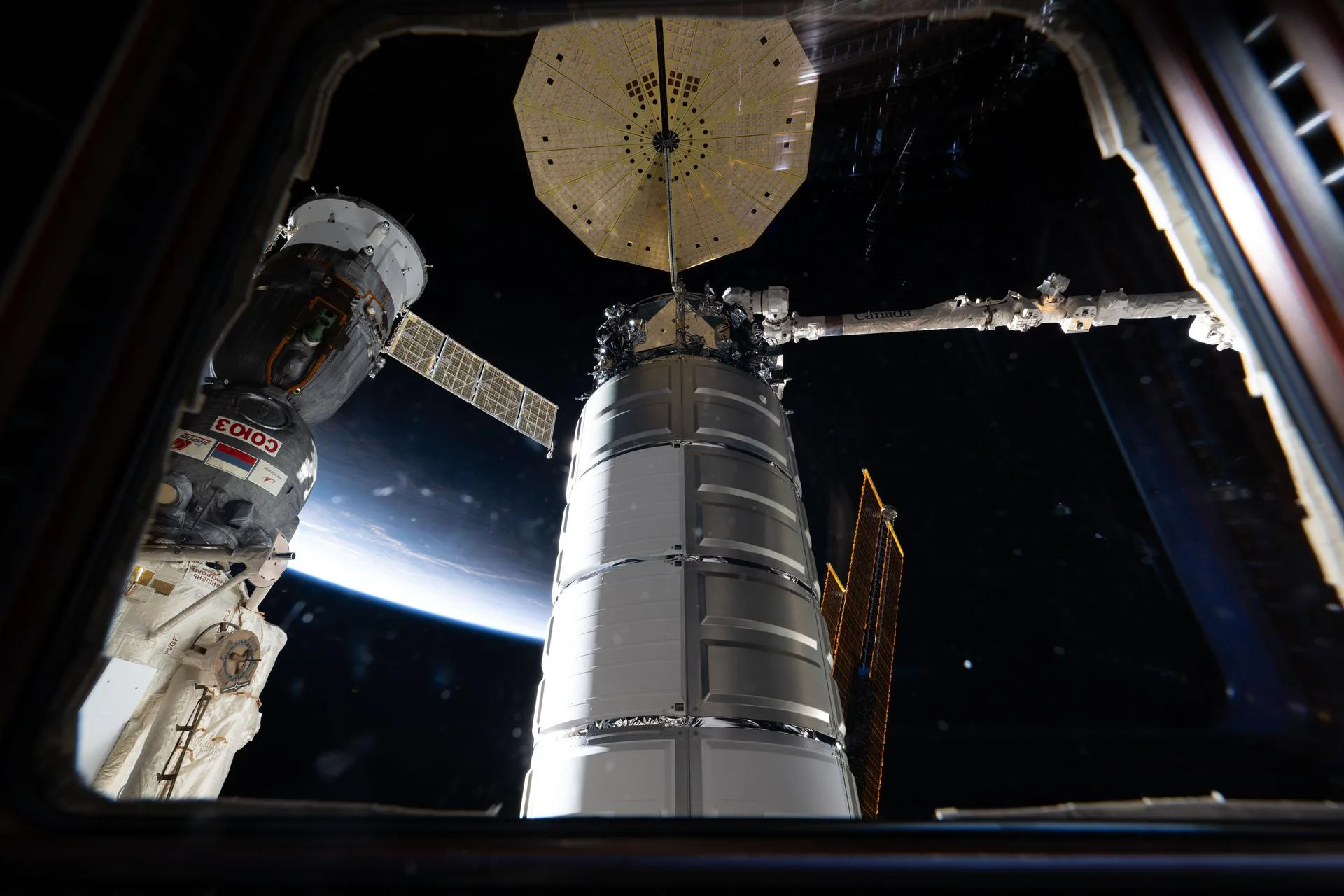
Floating inside an aircraft, briefly crossing the atmosphere or spending several days in orbit require very different preparations. As 2026 draws to a close, several commercial schedules already point to 2027. Here’s how to choose an experience based on your goal, understand operators’ announcements and plan a first space-themed day in Houston or Florida.
Four experiences to distinguish
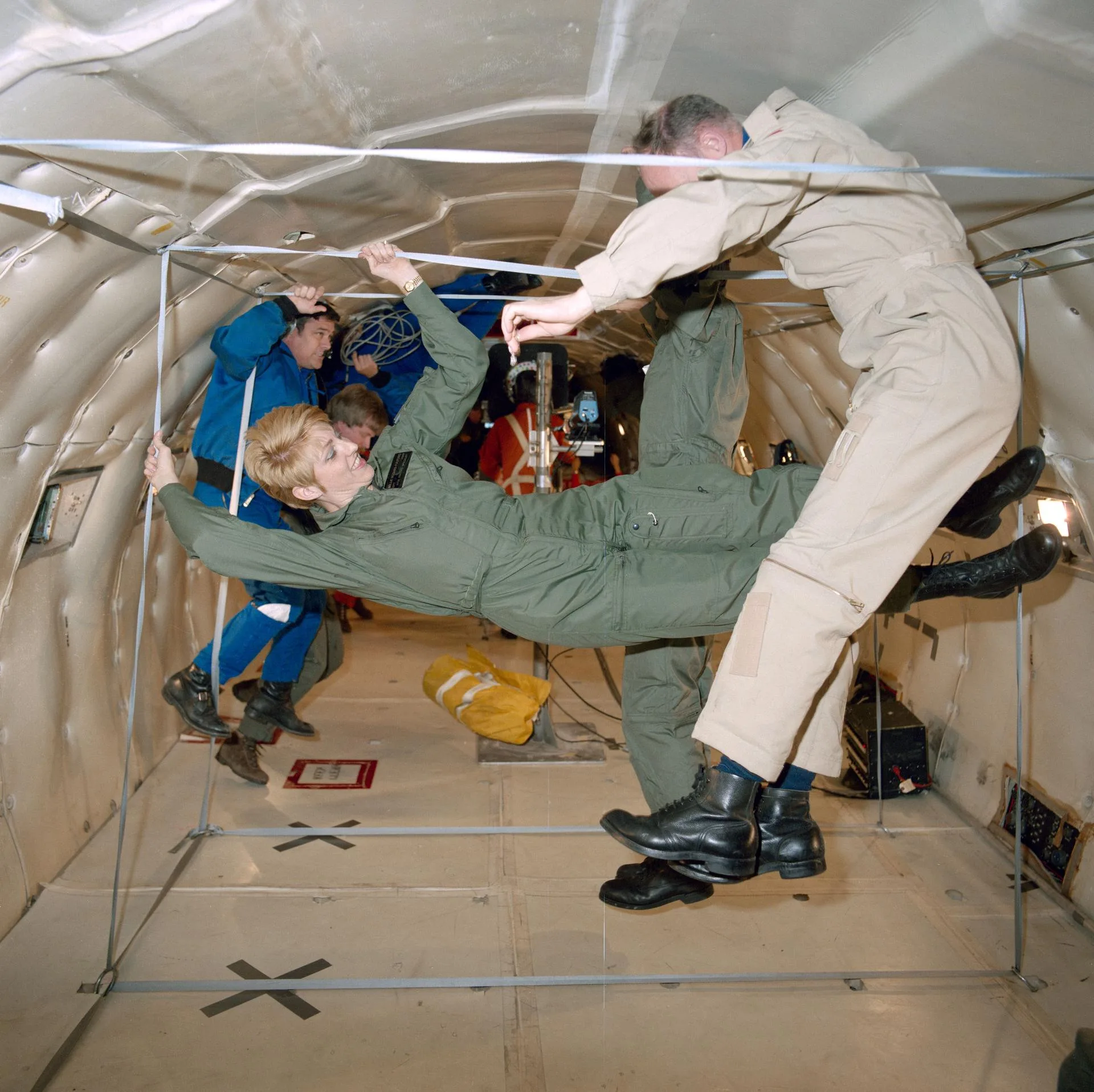
A body floating in the middle of a cabin is a familiar image of space travel. Yet this scene can take place in an aircraft that has remained within the atmosphere. For a few seconds, the aircraft and its occupants follow a free-fall trajectory: the floor stops supporting the passengers, who then experience weightlessness. The sensation they seek is real, even without entering space.
A suborbital flight follows a different trajectory. It climbs and then descends, with a period of free fall, but does not reach the speed needed to orbit Earth for an extended period. An orbital stay adds that speed: the vehicle and its occupants continue falling around the planet. Preparation, atmospheric reentry and life aboard involve considerably different demands across these two categories.
A stratospheric balloon offers yet another experience: gaining altitude and observing the landscape from a cabin carried by the atmosphere. Passengers remain subject to their weight. So when comparing a commercial offer, look at the altitude, trajectory and stated physical experience before the words “space” or “astronaut.” A fine view, a few weightless sequences and several days in a station are three distinct projects.
To make an initial choice, start with what you really want to do. If your goal is to float, look into a parabolic flight. If you want to live and work in orbit, the path involves selection and training for a mission. To get close to the objects, places and history of human spaceflight as a family, American visitor centers make it possible to plan a much simpler trip.
Weightlessness from Bordeaux
Air Zero G organizes discovery flights on Novespace’s Airbus A310. The operator’s FAQ describes fifteen parabolas: twelve in weightlessness, one simulating Martian gravity and two simulating lunar gravity. The floating sequences last about twenty-two seconds; they are separated by periods when the body is supported again, sometimes with an increased sensation of weight. The experience takes place in a specially equipped area, with instructors.
This alternation should inform your decision. You may want to discover how the body moves with minimal force, watch an object suspended in midair or try a few steps under reduced gravity. Movement is guided by the team’s instructions: sudden movements and improvised turns increase the risk of collisions and discomfort. Understanding the onboard announcements is part of the experience.
When the official schedule was checked, the dates listed at Bordeaux-Mérignac were April 22 and 23, August 26 and 27, and October 14, 2027. They appear on the waiting list. Signing up lets you express interest; it does not confirm a place. If you are planning a trip in late 2026, wait for the operator’s confirmation before committing to nonrefundable transport or accommodation.
Medical fitness should be addressed in advance. Air Zero G requires an examination and an electrocardiogram, with specific deadlines for submitting the documents. The FAQ also describes the refund arrangements if medical unfitness is declared within the required time. Have your situation assessed by the doctor responsible for the certificate: a common health condition or previous flying experience does not replace this step.
Zero-G flights in the United States
The American company Zero Gravity Corporation also uses the parabolic-flight principle. Its website features the Boeing 727 G-Force One, public flights and research operations. However, if you are considering a flight, the key page is its operations announcement, updated July 20, 2026, and accessible from the homepage banner.
The company explains there that its only operational aircraft suffered major damage during maintenance in July 2025. According to the announcement, the aircraft is no longer flightworthy and operations are suspended. The company is exploring replacement options and says it does not anticipate resuming operations before mid-2027, with no firm date set. This information takes precedence over older prices and booking buttons still visible elsewhere on the site.
For travelers, the practical consequence is clear: no trip to the United States should be planned around an assumed Zero-G flight being available in 2026. If you already have a booking, ask the company about the status of your case and the contractual options available. For a new inquiry, require a confirmed departure date, payment terms and refund policy before building the rest of your trip.
The suborbital flight schedule
Announcements about the resumption of suborbital flights need to be read in context and dated. Virgin Galactic illustrates this evolution well: its October 28, 2026 press release announces the arrival of the Apeiron spacecraft at Spaceport America in New Mexico. The company still expects software integration and validation, test preparations, and then the test flight program.
The same press release targets the first commercial flights for early in the second quarter of 2027, subject to successful testing. This forecast replaces the February 2027 target announced in August. An older presentation referring to a 2026 start is therefore no longer enough to plan a departure. A vehicle’s arrival at its base and the transport of customers are different stages of development.
Before making any payment for this kind of experience, ask where you stand in the commercial process: expression of interest, reservation with a deposit, seat allocation, or a mission actually scheduled. The contract must specify what happens if testing is delayed, your fitness changes, or the company modifies its service. The number of preparation days and any related travel must also be included in your budget.
This approach applies to other programs, including Blue Origin’s New Shepard. Their name alone does not establish that a departure is available. For Blue Origin, no current commercial schedule is qualified here; ask directly for a written program update before considering a reservation. An old announcement, even an official one, does not confirm a seat for your travel period.
Axiom’s orbital missions
Axiom Space organizes private missions to the International Space Station. “Private” describes the organizational framework here; crews may include astronauts supported by governments and engaged in research. Ax-4, launched on June 25, 2025, and returned on July 15, included participants from India, Poland, and Hungary, among others, under the command of Peggy Whitson.
The next documented mission, Ax-5, is the subject of a January 30, 2026 press release. Axiom announced a launch no earlier than January 2027 and up to fourteen days docked at the ISS. According to that announcement, the crew composition still depends on agreements and approvals from the relevant authorities. “No earlier than” sets a planning boundary, not a confirmed launch date.
A candidate should therefore expect a project that goes far beyond the days spent in orbit. Training covers vehicle procedures, safety, life aboard the station, and assigned tasks. You must be able to free up time for assessments, preparation stays, and schedule changes. Any purchase of a service is part of this broader operational framework, with decisions that also rest with the mission partners.
The pages consulted do not provide a current public price that would allow an Ax-5 seat to be compared with a conventional tourist reservation. Request a detailed quote and the scope of each stage rather than treating a historical amount as an available price. The same contractual caution applies to a future commercial station: a habitat presentation or development announcement does not imply that a stay is open to visitors.
Private spacewalks
Polaris Dawn showed that a commercial mission could conduct a spacewalk. The official program dates the mission from September 10 to 15, 2024, and describes a four-person crew, research activities, and the testing of a new spacesuit. This achievement was part of a mission planned around specific technical objectives.
Going outside a vehicle adds procedures related to vacuum, pressure, and life-support equipment. A spacesuit shown in a commercial presentation or a historical precedent does not constitute an option available to every passenger. The sources consulted document no bookable spacewalk service for ordinary travelers.
If this goal motivates your interest in space, explicitly distinguish it from an orbital stay during your first conversation with an operator. The authorized activities and associated training must be named in the proposal. Photographs from a previous mission show what that crew accomplished; they do not establish the rights or capabilities of future crews.
Houston and the places where missions are controlled
Space Center Houston offers an introduction to human spaceflight through its facilities, vehicles, and the work of ground teams. Tram tours provide access to certain parts of Johnson Space Center, a NASA workplace. The center highlights, among other things, astronaut training facilities, the rocket park, and the historic Mission Control Center.
The tram tour must be arranged separately from your visit to the museum. Historic Mission Control requires an additional fee and reservation on top of general admission. Other tours are offered to visitors on site, each with its own boarding rules. Current tours are in English; weather conditions or NASA requirements may affect access. The official website lists a duration of sixty to ninety minutes, depending on the tour.
For a stay in Houston without a car, we recommend an option combining admission with a shuttle from Bank of America Tower, at 800 Capitol Street. The listing provides for about five hours of independent exploration during an outing lasting six to seven hours in total. The round-trip city transfer and the tram inside the center are two different forms of transportation: booking the first does not automatically reserve all the second’s tours.
This excursion is guided in English, and a written guide is available in French. Check the selected option if Historic Mission Control is your priority. On site, our advice is to first settle the question of which tram tour you want, then plan the exhibits around that time slot. The five hours available require some choices, especially if you want time to read the explanations and have lunch.

Viator
Houston: Space Center and round-trip shuttle
To reach Space Center from downtown Houston without a car and spend about five hours on site. Choose the option that includes Historic Mission Control if that tour is your priority; English-language guidance.
- 6 to 7 hours
- 4.6/5 (57 reviews)
General admission and transportation from Bank of America Tower; about five hours of independent exploration. English-speaking guide, written information sheet in French. Historic Mission Control access depends on the option selected.
Cancellation policy
For a full refund, cancel at least 24 hours before the scheduled departure date.
From $85.00
View activityKennedy Space Center from Orlando
In Florida, Kennedy Space Center Visitor Complex is better suited to a day devoted to the vehicles and facilities of a launch site. The Atlantis Shuttle is on display there; the complex also offers experiences and discovery trails. The launch simulator is part of the ground visit. It recreates a scripted experience, with its own access conditions.
From Orlando or Kissimmee, an excursion with transportation lets you spend the day at the complex without arranging the drive yourself. The selected product lists about eleven hours in total and English-language guidance. Options combining admission and transportation include the corresponding admission ticket; a “transport only” option is for travelers who already have their tickets. Compare the options carefully before paying.
Meals must be arranged separately. The meeting point and schedule should be reconfirmed with Gray Line; the list of pickup locations does not mean departure is available from any hotel. For a wheelchair user, the provider requires advance arrangements for an adapted vehicle. These details have more impact on how easy the day will be than a comparison based solely on the listed price.
An actual launch follows a separate operational schedule. Standard admission and transportation from Orlando guarantee neither a liftoff on your chosen day nor special access to a viewing area. First, plan a day that interests you for Atlantis and the exhibits. If you want to attend a launch, then check the official announcement, the access options, and how flexible your nights on the Space Coast can be.

Viator
Kennedy Space Center from Orlando or Kissimmee
To spend a day at Atlantis and the exhibits from Orlando or Kissimmee, with transportation arranged. Choose an option with admission if you do not already have a ticket; English-language guidance, with actual launches to be considered separately.
- 11 hours
- 4.9/5 (1,563 reviews)
A day trip with transportation and an English-speaking guide. Choose an option that includes admission if you do not already have a ticket; meals are separate, and the meeting point must be confirmed.
Cancellation policy
For a full refund, cancel at least 24 hours before the scheduled departure date.
From $89.00
View activityThe contract and the budget
The budget depends first on the experience you choose. A day at a space center adds up admission, transportation, meals, and any extras. A parabolic flight adds travel to the base, the medical certificate, and a buffer in case of rescheduling. A space mission calls for a much more detailed review of the services included, payment deadlines, and costs associated with preparation.
The prices and ratings for the two ground-based excursions are listed in their cards, using the currency actually provided by the catalog. These are product reference points to compare against your date, participants’ ages, and chosen option. Access to Historic Mission Control or a package that includes a specific meeting can change what the booking includes. The final total is the one for the selected service.
For Air Zero G, the operator asks customers to account for the possibility of a postponement of up to twenty-four hours due to unfavorable weather or a technical problem. Scheduling a return flight immediately after the activity would leave less room for such a delay. Participant cancellation terms follow a different schedule: check the deadlines before paying and keep a copy of the version of the documents you accepted.
Finally, review insurance separately for each activity. Ask your insurer about the parabolic or space flight named in the policy, any exclusions, unrecoverable travel expenses, and the consequences of medical unfitness. Coverage included by the operator and your personal insurance may apply to different situations. Get a written response, without assuming that a standard travel policy covers every aviation activity.
FAQ
Can you float without going into space?
Yes. An aircraft can fly a parabola during which occupants float freely inside the cabin. Air Zero G advertises sequences of about twenty-two seconds, spread across a flight that remains within the atmosphere. The lack of support from the floor produces weightlessness; Earth’s gravity is still present. The program also includes reduced-gravity sequences.
Can you still plan an Air Zero G flight for 2026?
The schedule consulted lists departures from Bordeaux-Mérignac in April, August, and October 2027, all marked as waitlisted. No seat for 2026 is shown as available in this guide. Request confirmation in your name before purchasing travel. Medical requirements and their lead times should be factored in from the start of the project.
Are U.S. Zero-G flights currently operating?
The official announcement, updated July 20, 2026, says operations are suspended following damage sustained by G-Force One during maintenance. The company does not expect to resume flights before mid-2027 and gives no firm date. Historical prices for the experience therefore do not prove that a flight is available. Any existing commitment should be handled directly with the company.
When are Virgin Galactic’s commercial flights scheduled?
The October 28, 2026 announcement targets the beginning of the second quarter of 2027 for Apeiron, subject to successful completion of testing. This forecast replaces the February 2027 date announced in August. It remains conditional. To plan a trip, ask what type of booking you have, whether a seat has been assigned, and what provisions apply in the event of a postponement.
Can a private individual book an Axiom mission?
Axiom offers mission services to private participants and national astronauts. Access is through a supervised process involving evaluations, preparation, and the necessary approvals. Ax-5 is announced for no earlier than January 2027, with up to fourteen days docked to the ISS. The pages used here do not provide a current, qualified public price for this mission.
Can you book a spacewalk like an excursion?
No bookable offer of this kind was verified for this guide. Polaris Dawn completed a commercial spacewalk in September 2024 as part of a prepared technical mission. A seat in a capsule or station does not automatically include a spacewalk. Any potential extravehicular activity must be defined and authorized in the mission program.
Houston or Kennedy Space Center for a first visit?
Houston is especially appealing to visitors interested in astronaut training and mission control facilities. Kennedy Space Center is a good choice for discovering Atlantis and the surroundings of a launch site. Choose based first on your itinerary: the excursion from Houston lasts about six to seven hours, while the one from Orlando lasts about eleven hours. Both selected tours are conducted in English.
Does a Kennedy Space Center ticket guarantee a launch?
No. Launch times depend on operations and may change; viewing conditions also depend on the access offered for each launch. Depending on the option, the recommended package combines transportation and admission to the visitor complex. To enjoy a successful day regardless of a launch, plan your visit around the exhibits and check the official launch schedule separately.
Sources and checks
Plan your visits and check current conditions.
- Parabolic flight: what to expect and requirements
Air Zero G / Novespace · Accessed November 2, 2026
What this source supports
Fifteen parabolas with twelve zero-g sequences, one Martian and two lunar; about 22 seconds each; medical examination and ECG, documents, insurance and possible postponement up to 24 hours.
- Schedule of discovery flights
Air Zero G · Accessed November 2, 2026
What this source supports
Dates listed at Bordeaux-Mérignac on April 22 and 23, August 26 and 27, and October 14, 2027; on the waiting list at the time of checking.
- Flight Operations Update — July 20, 2026
Zero Gravity Corporation · Accessed November 2, 2026
What this source supports
According to the announcement: the only aircraft was damaged during maintenance in July 2025, operations were suspended, a resumption is not anticipated before mid-2027, and no firm date has been set.
- Ax-4 mission summary
Axiom Space · Accessed November 2, 2026
What this source supports
Launched on June 25, 2025, and returned on July 15, 2025; international crew and research.
- NASA Selects Axiom Space for Fifth Private Astronaut Mission
Axiom Space · Accessed November 2, 2026
What this source supports
Announcement dated January 30, 2026: launch no earlier than January 2027, with up to 14 days docked to the ISS; approvals and agreements are still required; no qualified public price is available.
- Apeiron Arrives Home to Spaceport America — October 28, 2026
Virgin Galactic · Accessed November 2, 2026
What this source supports
Arrival at Spaceport America and test preparation; commercial service is scheduled to begin in early Q2 2027 after successful testing. This replaces the February target announced in August.
- Polaris Dawn — Mission Overview
Polaris Program · Accessed November 2, 2026
What this source supports
Mission from September 10 to 15, 2024, first commercial spacewalk, four crew members, research and spacesuit testing.
- NASA Tram Tours
Space Center Houston · Accessed November 2, 2026
What this source supports
Tours in English, 60–90 minutes depending on the tour; Historic Mission Control costs extra beyond admission and must be reserved in advance; access depends on operations and weather.
- Kennedy Space Center Visitor Complex
Kennedy Space Center Visitor Complex · Accessed November 2, 2026
What this source supports
Atlantis and ground-based experiences, visitor information and a separate launch schedule.
- Houston: admission and shuttle, product 192749P18
Viator / Astroville Tours · Accessed November 2, 2026
What this source supports
Listing rechecked via Partner API Basic: ACTIVE, 360–420 minutes, five hours of independent exploration, departure from 800 Capitol Street, English and a written French guide, Mission Control inclusions depend on the option.
- Kennedy Space Center from Orlando, product 3170P32
Viator / Gray Line Orlando · Accessed November 2, 2026
What this source supports
Listing rechecked via Partner API Basic: ACTIVE, 660 minutes, English, admission depends on the option and there is a transport-only variant; meals excluded, departure point to be confirmed, accessible vehicle to be arranged.
- Cygnus XL and Soyuz seen from the Cupola
NASA / Chris Williams · Accessed November 2, 2026
What this source supports
Photograph dated April 13, 2026, visually reviewed, measured file size 1920 × 1280; documentary illustration of the ISS, not an Axiom service.
- Vestibular Study testing in Zero-G flights on the KC-135
NASA · Accessed November 2, 2026
What this source supports
Archive dated December 11, 1984, visually reviewed, measured file size 1920 × 1916; does not depict a current Air Zero G flight.
- NASA Images and Media Usage Guidelines
NASA · Accessed November 2, 2026
What this source supports
Factual informational editorial use with credit; no endorsement of recommended products, and no Creative Commons license assigned.
Viator — activity pages
Information about the offers featured in this article.Affiliate links: Odyvero may earn a commission when you book through this article’s buttons.
- Viator : Houston: Space Center and round-trip shuttle
Accessed November 2, 2026
- Viator : Kennedy Space Center from Orlando or Kissimmee
Accessed November 2, 2026


