 odyvero
The 2026 Biennale Arte ends on November 22. To explore “In Minor Keys” without rushing past the works, plan one day at the Giardini and another at the Arsenale: the standard ticket lets you split the two visits. Here’s how to choose your ticket, make the most of the autumn opening hours, and organize the rest of your stay in Venice.
Two venues, two days of visits
One feature of the ticket changes the whole structure of your stay: its two admissions can be used on different dates, even if they are not consecutive. You can therefore spend one day at the Giardini, the next day elsewhere in Venice, and then return to the exhibition at the Arsenale. This flexibility is worth using when contemporary art is the main reason for your trip.
The organizer estimates the average visit at around three hours per venue. Use this as a guide when planning your time, and allow extra time for breaks and queues at some pavilions. A sound installation, video, or performance may require you to stand still; the distance covered then gives only a partial idea of the visit. Allowing one day per venue gives you the option to spend longer with a work without routinely having to skip the next room.
The Giardini bring together the Central Pavilion and national pavilions in a garden setting. You move between exhibition spaces and outdoor paths. At the Arsenale, the buildings of the former naval complex give the route a different scale, particularly in the long Corderie. The international exhibition spans both venues, alongside national participations: visiting only one site therefore means missing a significant part of this edition.
For a first Biennale, we recommend two separate days and accommodation that makes it easy to reach Castello. If you have only one day, visiting both venues is still possible as long as you choose your priorities. The walk between them, estimated by the organizer at about ten minutes, is manageable; most of the fatigue comes from the accumulated hours of attention spent with the works.
Koyo Kouoh’s project
The 61st International Art Exhibition is titled “In Minor Keys.” Its project was conceived by Koyo Kouoh, who died in May 2025. The Biennale chose to realize it with the support of her family, preserving her curatorial intentions. This history gives the 2026 edition a particular focus on transmission.
The curator’s introductory text invites visitors to attend to sensations, listening, and the connections between artistic practices. The title borrows from musical vocabulary, but the exhibition goes far beyond sound-based works. For visitors, a good way in is to observe the relationships between the works: how they occupy space, the materials they use, the memories they evoke, or the forms of gathering they suggest.
Two artists serve as documented reference points in this framework: Issa Samb and Beverly Buchanan. Their practices, presented as foundations for the project, offer ways to approach questions of community, memory, and relationships with place. Reading their profiles before you go provides a few helpful cues without imposing a single interpretation on every work.
Wolff Architects’ scenography also shapes thresholds and transitions between artistic worlds. In an exhibition on this scale, these transitions matter: they allow you to change pace and regain your attention after a dense sequence. You can read an introduction, explore a few rooms, and then return to your own observations. No background in art history is needed to get started; the map, wall labels, and an optional guided tour gradually provide useful reference points.
Autumn 2026 opening hours
The edition is open from May 9 to November 22, 2026. For the remaining visiting period, autumn opening hours apply: from September 29 to November 22, the Giardini and Arsenale are open from 10 a.m. to 6 p.m., with last admission at 5:45 p.m. Arriving at this final admission time leaves fifteen minutes before closing; instead, plan to arrive at the start of a proper visiting window.
The venues are closed on Mondays, with one important exception in November: Monday, November 16, is scheduled to be open. If your stay includes a Sunday and a Monday, check the exact dates carefully before scheduling your two admissions. The Arsenale’s extended summer evening hours no longer apply during this period.
Some pavilions have their own schedules. The Austrian Pavilion is open Wednesday through Sunday, from 10 a.m. to 5 p.m., with last admission at 4:45 p.m.; it is closed on Mondays and Tuesdays. The Netherlands Pavilion remains closed on Tuesdays and on Mondays when the venues are open, although it can still be viewed from outside as a sculpture. These differences may be a reason to switch your Giardini and Arsenale days.
If there is a performance you especially want to see, check its specific schedule too. A building may be open while a performance takes place only at certain times. Whether you can get a spot then depends on capacity and visitor numbers; leave some time between events rather than filling every hour of the program.
The ticket and re-entry
A standard single ticket is listed at €30, plus a €0.50 presale fee. It entitles you to one admission to the Giardini and one admission to the Arsenale, on the same day or on separate dates. According to the official FAQ, you do not need to select a date for this standard admission. Buy your ticket through the ticket office linked from the Biennale website and keep the digital document accessible on your phone.
The key distinction concerns leaving the venues: once you have used an admission, a single ticket does not allow you to leave and return with that same ticket. If you plan to have lunch elsewhere, finish your visit to the venue first, or choose a ticket with multiple admissions. Both venues also offer food inside, allowing you to take a break without interrupting your access.
The three-day ticket costs €40 and the weekly ticket €50, before any fees listed by the ticket office. They allow multiple admissions over three or seven consecutive days; closure days are excluded from the count. These personal tickets require an identity document. They are worthwhile if you want to revisit rooms, split your visits into shorter sessions, or attend several events at the same venue.
The listed reduced fares include €20 for visitors over 65 and Venice residents, as well as €16 for students and young people, depending on the ticket office’s categories. Bring the relevant proof of eligibility. Children up to and including age six are generally admitted free; family activities may have different arrangements. Before paying for several people, check each person’s category individually, and always distinguish admission from any guided tour.
The Giardini route
For the first day, the Giardini offer a fairly clear layout: an overall map, the Central Pavilion, then national pavilions from which to select a few stops. We suggest arriving at opening time and starting with a substantial part of the international exhibition. This gives you a shared visual vocabulary for approaching the national presentations afterward.
After this first section, take a proper break before adding the pavilions that interest you. Choosing a few countries, artists you have noted, or particular media will make for a more coherent visit than moving systematically from one doorway to the next. If you are visiting as a group, each person can choose a priority; the shared itinerary can then remain varied without relying on a ranking list.
The paths through the gardens offer places to sit and plan what comes next. Check special opening hours early: waiting until the end of the day to visit the Austrian pavilion could mean missing its last admission. For performances, note a specific appointment, then arrange the other visits around it. A multi-day ticket becomes useful if you want to return to a highlight you discovered on site.
The two announced entrances to the Giardini are on Viale Trento and on the Sant’Elena side, at Viale IV Novembre. Choose the one that matches your arrival rather than automatically looking for a single main entrance. On the way back, a walk through Castello can extend the day; however, keep the evening light if you plan to spend the whole of the following day at the Arsenale.
A day at the Arsenale
The Arsenale deserves its own reserve of energy. The route passes through large buildings, and the works can call for very different amounts of time. We recommend arriving in the morning, then taking a break for food on site before continuing. A single ticket works well for this uninterrupted day; a pass with multiple admissions gives you more freedom to leave and return.
The international exhibition and national participations form several sections there. Use the map to identify the areas you want to reach and the locations of any events you plan to attend. If you are interested in a video or performance, check its duration before settling in: deliberately deciding to spend time on it makes the rest of the route easier to adjust.
For visitors attending during the November finale, the public program adds venues to identify, including the Tese dei Soppalchi, Sala d’Armi E, and Teatro Piccolo Arsenale. The general name “Arsenale” is not enough to calculate when to arrive at a room. Keep the program’s directions handy and ask staff for directions when you enter.
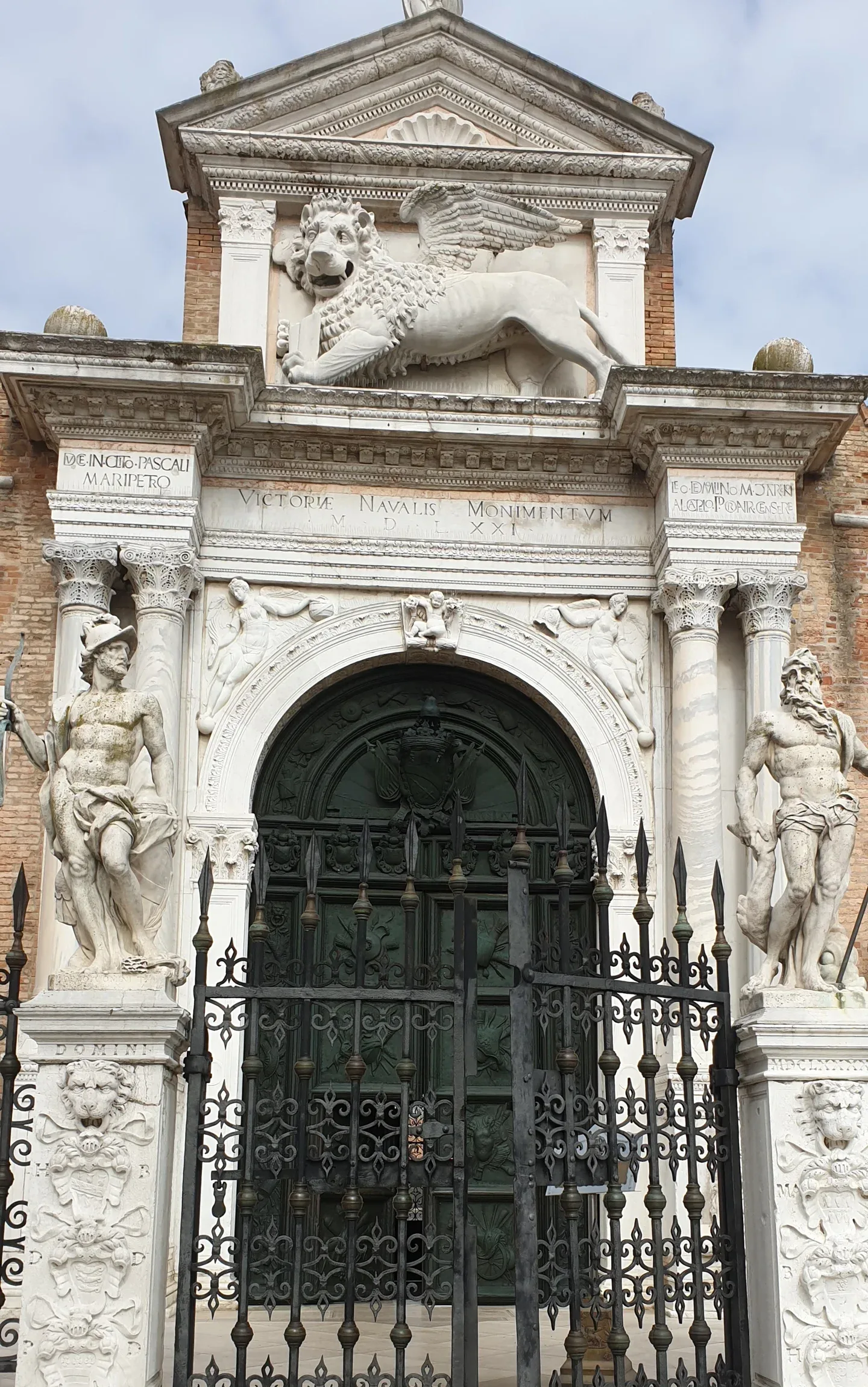
The announced exhibition entrances are Campo della Tana and Ponte dei Pensieri, on Salizada Streta. The Arsenal’s monumental historic gate, often photographed, is a heritage landmark in the neighborhood; use the address on your ticket or map to reach the exhibition. This precaution helps you avoid wasting time at a famous façade when your event is elsewhere in the complex.
Pavilions around Venice
Some national participations and collateral events take place outside the Giardini and the Arsenale. A ticket for the two main venues does not automatically cover their admission requirements. Many collateral events are free, depending on the organizer, but some require a ticket; check the dates and hours for each venue individually.
For a third day, choose an area of Venice and a few nearby addresses. The official directory of national participations helps you identify locations in Castello, Dorsoduro, or San Marco. The visit then becomes a walk through the city punctuated by exhibitions, at a different pace from days devoted to the main venues.
Before setting out, note the venue’s name, full address, and opening hours. Venetian directions often combine a neighborhood and a number: a number on its own is not enough to find your way reliably. A saved map and a short list of stops work better than a series of links open on your phone.
Forte Marghera, in Mestre, is also part of the announced geography of this edition. This stop requires travel to the mainland and its own checks of opening hours. It may suit a longer stay or accommodation on that side of the lagoon; for just two days, we recommend prioritizing the Giardini and the Arsenale.
The finale, November 13–22
The final ten days feature a public program of performances, lectures, discussions, and roundtables at the Arsenale. This period gives you a specific reason to choose certain dates in November: you can plan a day around an event, then explore the exhibition works before or afterward.
On Friday, November 13, Tammy Nguyen is scheduled for 4:30 p.m. at the Tese dei Soppalchi with “Timaeus and the Teacher: Foreword,” also scheduled for the same time the following day. On Saturday, November 14, a lecture by Felwine Sarr is listed at 11 a.m. at Sala d’Armi E. These times make it possible to choose a cultural priority before booking the rest of your stay.
On Monday, November 16, which is exceptionally open, the program lists “Tactics of Transmission” by Natalia Lassalle-Morillo and Sofiá Gallisá Muriente at 3:30 p.m. at Teatro Piccolo Arsenale. The finale also includes an assembly bringing together artist organizations and collectives, focused on transmission, research, and collective practices.
Check the updated official program before setting out: performances and activities may change. The language, venue capacity, and specific arrangements for each event matter just as much as the printed time. If this is your first visit to the exhibition, choosing one well-timed event in the day still leaves room for the galleries; several long sessions naturally turn the day into a schedule of events.
Getting there and accommodation
From Santa Lucia station or Piazzale Roma, the organizer lists ACTV lines 1 and 4.1 for the Arsenale. For the Giardini, it mentions lines 1, 2, 4.1, and 5.1, among others. Check the route and current schedules for the day of your trip, then confirm the exact stop and the way to your entrance. Water transport is separate from the exhibition ticket.
Castello is a practical base for a stay focused on the Biennale: it puts your accommodation closer to the two days of visits and gives you the option of walking around the neighborhood. Before booking a room, however, check the actual journey from your arrival point, including luggage and bridges. Apparent proximity on a map is no substitute for this check.
Accommodation near the station makes arrival by train and departure easier, though you will need to plan a daily connection to the eastern part of Venice. Mestre may also be a suitable option, depending on availability, with an additional journey to Venice and then to the sites. Compare the total cost and door-to-door travel time rather than just the nightly price. No price range is guaranteed for this exhibition period.
In November, pack clothing suited to outdoor stretches and possible rain, as well as comfortable shoes. If you have reduced mobility, consult the Biennale’s accessibility map and the conditions of your chosen transport. Courtesy electric vehicles and facilities are advertised at the sites, subject to availability; if you rely on a particular service, arrange it before your visit.
Meals and luggage
Both sites have a restaurant and other places to eat. This is useful with the single-entry ticket: you can take a break for lunch without using your final exit. The organizer also lists options for people with coeliac disease and vegetarian and vegan diets; for an allergy or a specific dietary requirement, contact the relevant service directly.
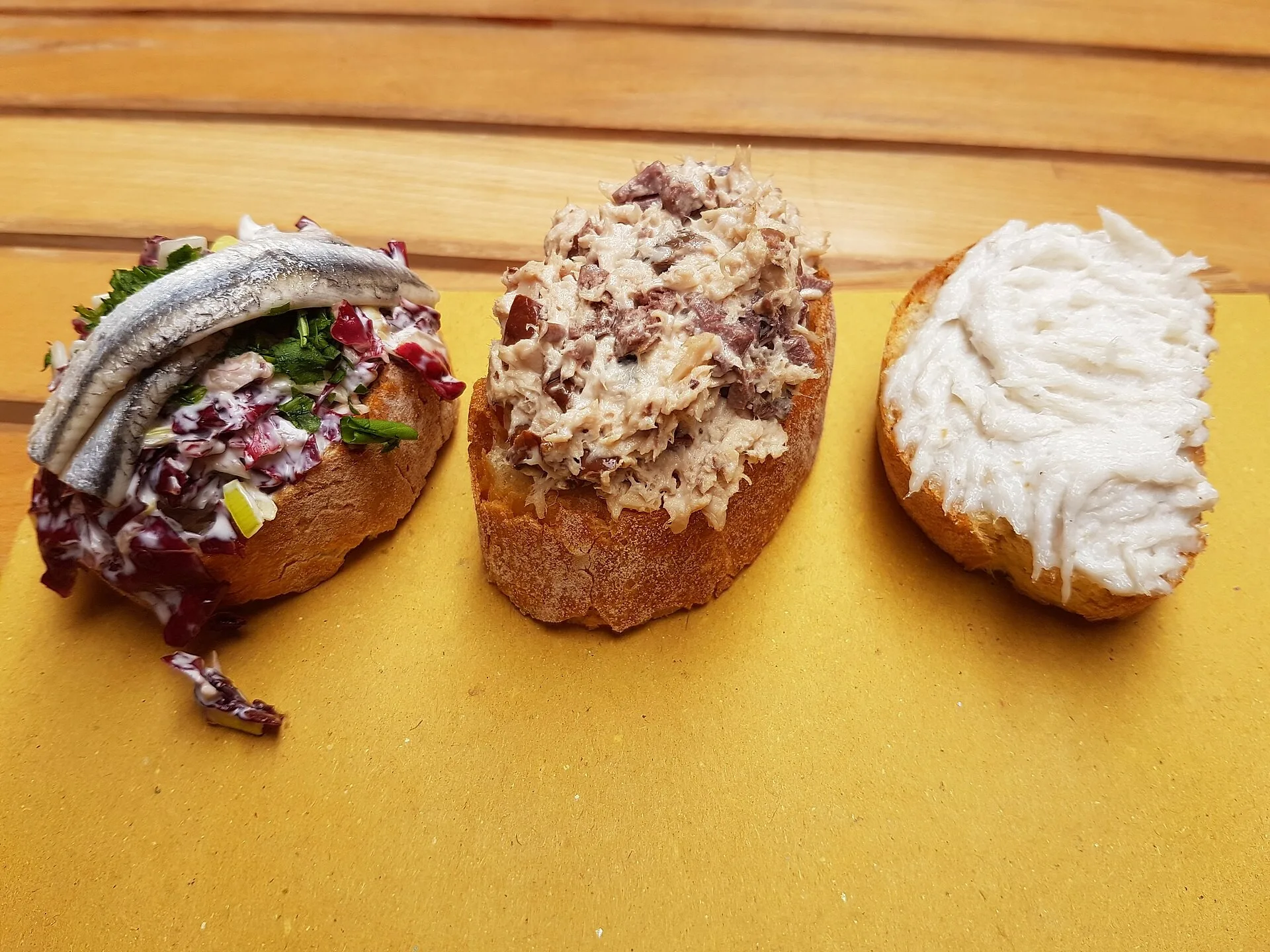
After the galleries, cicchetti offer another kind of break in Venice: small portions let you put together a meal or a snack, depending on the venue and your appetite. Choose somewhere in the neighborhood where you are rather than crossing the city to reach a place squeezed in between two pavilions. Check the menu and service arrangements before ordering, especially if you have dietary restrictions.
Leave your suitcases at your accommodation or arrange luggage storage before your visit. Suitcases are not allowed inside the sites, and the free cloakroom only accepts small items. If you are leaving that evening, plan your return to collect your belongings before heading to the station: include this stop in your departure schedule and allow time for travel.
Families can request a stroller, subject to availability, and have access to restrooms with changing tables. For children, selecting a few works and taking part in a guided activity can make for a more suitable pace than attempting the entire exhibition. Family visits have their own age and booking requirements, which you can check in the official education program.


A guided walk through Castello
To understand the neighborhood around the Arsenale, the outdoor Castello and Arsenale walk offered on Viator is a good complement. The listing we checked is two hours long, with an English-speaking guide and a small group of up to twenty people. The route passes the Pietà, Riva degli Schiavoni, the area around the Arsenale, and several religious or confraternity facades, before reaching the San Giovanni e Paolo area.
We recommend taking it on a half-day separate from your exhibition visits, for example on arrival day if the available departure time works with your transport. It offers an introduction to the neighborhood’s urban history before you return to contemporary art. You must make your own way to the meeting point; hotel pickup is not included.
The tour covers the walk and outdoor commentary. Monument admissions and the Biennale ticket must be booked separately. For commentary inside the exhibition, use the Biennale tours: scheduled individual tours are available in Italian and English; you can ask about other languages for a private tour. The price, reviews, and conditions for the walk are listed on the booking card.

Viator
Castello and the area around the Arsenale, outdoor walk
Explore the neighborhood around the Arsenale with an English-speaking guide on a half-day separate from the Biennale. The route is outdoors; the exhibition ticket must be booked separately.
- 2 hours
- 5/5 (1 reviews)
Two hours in the Castello neighborhood with an English-speaking guide. Outdoor route, up to twenty participants; monument and Biennale admissions are separate.
Cancellation policy
For a full refund, cancel at least 24 hours before the scheduled departure date.
From €30.00
View activityFAQ
What are the dates of the 2026 Venice Art Biennale?
The 2026 Biennale Arte, titled “In Minor Keys,” runs from May 9 to November 22, 2026. The two main sites are the Giardini and the Arsenale. For a visit in November, opening hours are 10 am to 6 pm, with last admission at 5:45 pm. Individual pavilion hours may differ.
Can I use the same ticket on two different days?
Yes. The single ticket gives you one entry to each site, including on non-consecutive dates. You can visit the Giardini on one day and the Arsenale on another day when it is open, during the exhibition. Leaving a site ends that entry; multiple returns require a ticket that allows them.
Is the Biennale open on Mondays in November?
The sites are normally closed on Mondays. Monday, November 16, 2026, is the announced exception in November. Several pavilions nevertheless follow their own schedules, so check your priorities before planning your entire visit around that day.
Is there a guided tour in French?
The Biennale’s scheduled individual tours are offered in Italian and English. You can request a private tour in another language, specifying French, subject to confirmation. The organizer asks you to submit your request at least fifteen days before your preferred date. The admission ticket is an additional cost.
Which site should I choose if I only have one day?
Both sites are part of the international exhibition. If you want to take your time, choose the site with the works or pavilions that matter most to you and give it a proper half-day, or longer. It is possible to visit both by selecting the stops, allowing for a break and the journey between them; our recommendation of two days is intended for a more relaxed pace.
Do children get in free?
General free admission applies to children up to and including age six. Older children may qualify for the youth ticket categories offered by the ticketing service. Family visits have specific arrangements, including for the admission of participating children; select this option explicitly if it suits your plans.
Can I leave a suitcase in the cloakroom?
No. Suitcases and large bags are not allowed and cannot be stored in the sites’ cloakrooms. The free service is for small items. Arrange storage at your accommodation or elsewhere before arriving at the Giardini or Arsenale.
Does the Castello walk include the Biennale?
No. The recommended option is an outdoor neighborhood tour with an English-speaking guide. It covers places and facades around the Arsenale, without entry to the exhibition. To visit the Biennale, buy its ticket and, if you wish, book a separate official guided tour.
Sources and checks
Plan your visits and check current conditions.
- Biennale Arte 2026
La Biennale di Venezia · Accessed November 2, 2026
What this source supports
Confirmed dates: May 9 to November 22, 2026; title and venues.
- Opening hours, tickets, visits, and FAQ
La Biennale di Venezia · Accessed November 2, 2026
What this source supports
Autumn opening hours, the November 16 exception, ticket and re-entry rules, discounts, languages, access, and services.
- Introduction by Koyo Kouoh and her team
La Biennale di Venezia · Accessed November 2, 2026
What this source supports
Curatorial intentions, Issa Samb, Beverly Buchanan, and scenography by Wolff Architects.
- National participations
La Biennale di Venezia · Accessed November 2, 2026
What this source supports
Locations of national participations, including venues around the city.
- Program for the final ten days
La Biennale di Venezia · Accessed November 2, 2026
What this source supports
Program from November 13 to 22; events with Tammy Nguyen, Felwine Sarr, Natalia Lassalle-Morillo, and Sofiá Gallisá Muriente.
- Castello and Arsenal Walk — product 88259P56
Viator Partner API · Accessed November 2, 2026
What this source supports
Active product, two hours, English-speaking guide, outdoor visit, maximum of twenty participants, no Biennale admission.
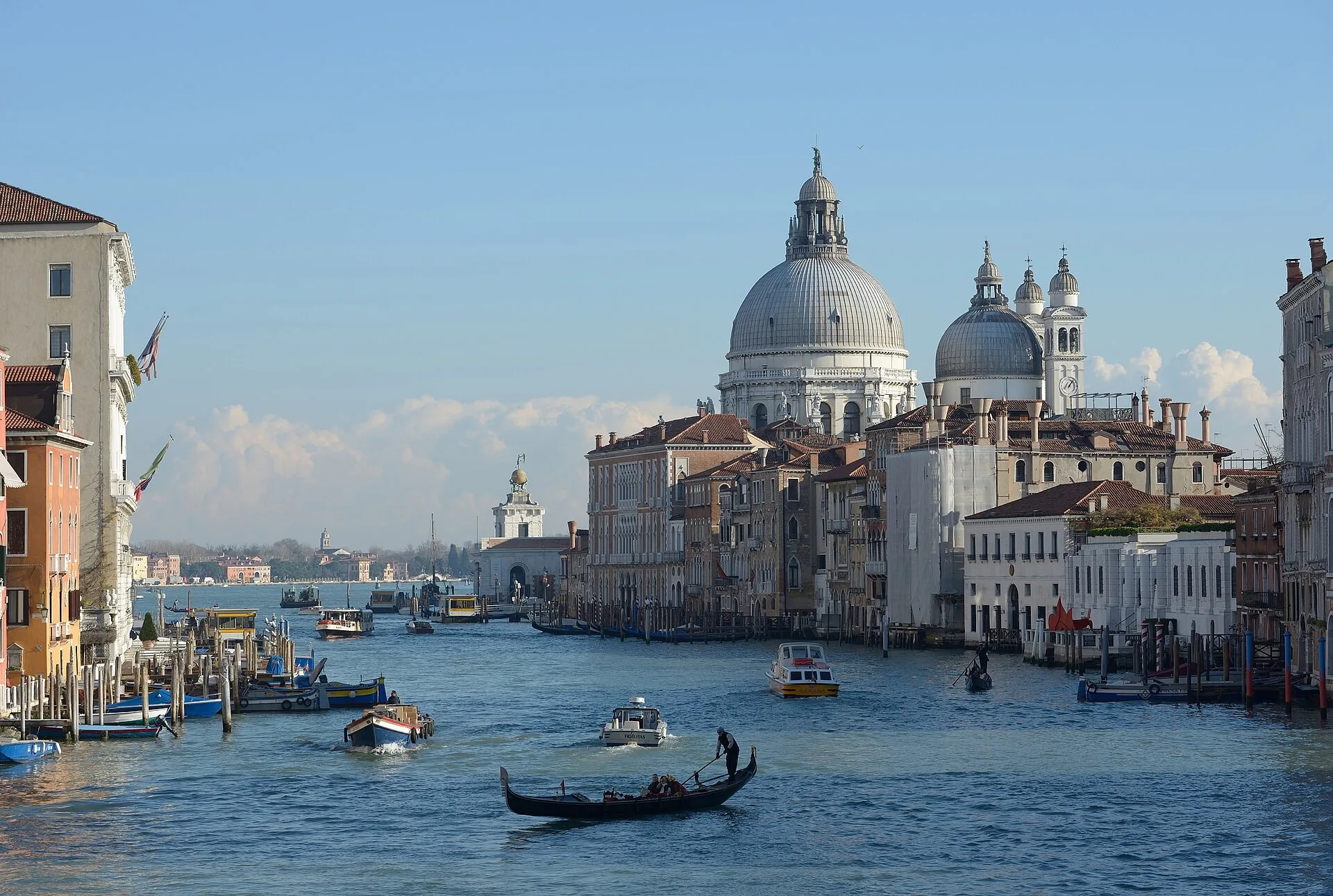
- Photography — The Grand Canal and the buildings along the water in Venice.
Wikimedia Commons · Accessed November 2, 2026
What this source supports
This Photo was taken by Wolfgang Moroder. Feel free to use my photos, but please mention me as the author and send me a message. This image is not in the public domain. Please respect the copyright protection. It may only be used according to the rules mentioned here. This specifically excludes use in social media, if applicable terms of the licenses listed here are not appropriate. Please do not upload an updated image here without consultation with the Author. The author would like to make corrections only at his own source. This ensures that the changes are preserved.Please if you think that any changes should be required, please inform the author.Otherwise you can upload a new image with a new name. Please use one of the templates derivative or extract. ; CC BY-SA 3.0 ; original and license rechecked, dimensions verified.
- Photography — Detail of the historic gate of the Venice Arsenal: the winged Lion of Saint Mark, sculptures, and gate.
Wikimedia Commons · Accessed November 2, 2026
What this source supports
Pieter van Eekeren; CC BY-SA 4.0; orientation corrected, vertically cropped, reduced to 1440 × 2300, and converted to WebP without enlargement; derivative under the same license. ; original and license rechecked, dimensions verified.
- Photography — Cicchetti served at a restaurant in Venice.
Wikimedia Commons · Accessed November 2, 2026
What this source supports
Benreis; CC BY-SA 4.0; original and license rechecked, dimensions verified.
Viator — activity pages
Information about the offers featured in this article.Affiliate links: Odyvero may earn a commission when you book through this article’s buttons.
- Viator : Castello and the area around the Arsenale, outdoor walk
Accessed November 2, 2026


