 odyvero

You may want to discover New York or the great parks and disagree with Donald Trump’s policies. To decide whether to travel, three questions deserve separate answers: what you are willing to fund, which entry requirements apply to you, and how much you are prepared to spend. Here’s how to choose between going, postponing, and choosing another destination, without turning your vacation into a test of political consistency.
Three decisions to make before booking
The first choice is about your own principles. If spending money in the United States feels incompatible with your convictions, choosing another destination is enough in itself. You do not need to prove that your absence will change national statistics. A trip costs time, money, and attention; you should be able to look forward to it.
The second choice concerns your personal circumstances. A visa difficulty, uncertainty about documents, or medical treatment that needs to be arranged may justify postponing, even when you still very much want to go. Conversely, a straightforward travel application does not resolve a moral disagreement. Treating these two questions as one often leads people to seek an administrative answer to a concern that is not administrative.
The third choice concerns the trip itself. Reuniting with someone you love, attending a family event, and discovering a city for the first time do not have the same personal value. Write down what is really motivating you to go, then what might make you give it up. This short list is useful when an attractive fare appears: it keeps you from deciding solely under the influence of a promotion or an anxiety-inducing conversation.
We recommend keeping the trip when its value remains clear, the requirements are appropriate for each traveler, and you accept the spending involved once you are there. Postponing is right for a trip you want to take but are still uncertain about. Canceling is right when you object on principle or have a worry that would occupy your entire stay. Any of these three decisions can be reasonable, depending on the traveler.
Who receives your spending
A trip pays several players: airlines, accommodation providers, restaurants, transportation services, guides, and cultural institutions. Some of the money also goes to public finances through applicable taxes and fees. You can direct some purchases toward businesses or associations that interest you, but you cannot fully separate your trip from the country’s economic system.
That leaves two consistent ways to act. The first is not to spend your travel budget there. The second is to go while choosing your services more deliberately. In that case, look into the operator, what the tour includes, and who its identifiable beneficiaries are. An independent business, a nonprofit museum, and a large chain have different structures; none of these categories alone tells you the convictions of their employees or owners.
Do not ask a guided tour to certify the morality of an entire trip. An activity about migration can deepen your understanding of New York; buying it does not offset the flight or the taxes associated with your stay. Likewise, staying in a city known for its progressive politics does not change federal border rules. These distinctions help you choose worthwhile spending without attributing significance to it that it does not have.
If you want your decision to make a public statement, explain precisely what you oppose or support. Avoid portraying all residents as representatives of an administration. People whose livelihoods depend on tourism may have very different backgrounds and opinions. For a traveler, that diversity matters as much when talking about a boycott as when deciding whether to go.
Entry into the United States
For a French national eligible for the Visa Waiver Program, a tourist stay of up to 90 days can be made with an electronic or biometric passport and an ESTA authorization. The authorization allows travel under this program; the Customs and Border Protection (CBP) officer decides whether to admit the traveler upon arrival. This distinction remains essential before purchasing services that are difficult to cancel.
France Diplomatie recommends applying at least 72 hours before departure. CBP advises travelers to apply as soon as they begin preparing for the trip, possibly even before buying tickets. For an expensive trip or a particular situation, follow this second approach: you will have more time to resolve any difficulty. Submitting an application well in advance does not remove the need to check its validity and the passport to which it is linked.
Travel history also matters. According to the official French guidance, a stay in Cuba since January 12, 2021, means, among other things, that you must apply for a visa rather than rely on ESTA. Other restrictions apply to certain travel histories and nationalities. Check each participant’s situation; people booking together may be subject to different procedures. An emergency French passport also requires particular attention.
The declared purpose must match the actual itinerary. Tourism under ESTA does not allow you to work in exchange for accommodation, babysit as an au pair, or turn your stay into unauthorized employment. For professional activities, studies, or a mixed-purpose trip, have the applicable rules clarified before making a payment. A package sold as a “cultural exchange” is not enough to establish its administrative status.
Finally, prepare a simple and accurate description of your stay: accommodation addresses, duration, itinerary, and planned return. Keep this information accessible without relying on an internet connection. Answer the questions asked accurately, without inventing an itinerary that sounds more reassuring than your actual plans. If your situation requires a visa or consular advice, clarity in your application comes before finding a good fare.
Individual situations to consider
Concerns are not distributed uniformly. Nationality, travel history, identity documents, purpose of travel, and health needs can affect the preparations required. Compare your situation with the official requirements rather than relying on the account of someone whose circumstances you do not know. An easy experience does not guarantee the same for you; an isolated difficulty is also no basis for calculating your likelihood of admission.
For transgender or non-binary travelers, the formalities warrant an individual check. France Diplomatie notes that a section on sex assigned at birth has been added to new visa applications. If your documents or situation raise a question, ask the U.S. consular authorities for guidance before committing to the trip. Without examining the case, it would be unwise to infer either certain authorization or a general ban.
The same preparation applies to medical treatments. The French health guidance recommends bringing necessary medications in their original packaging, with a prescription, and checking that they are permitted in the country. Essential treatment requires practical planning: the quantity carried, storage, and continuity of care. These factors may matter more to your decision than a general impression of the political climate.
For a couple, family, or group of friends, also seek the opinion of the person who feels most exposed. Do not pressure them to go simply because the others meet the usual requirements. The shared budget and everyone’s vacation plans warrant a discussion before booking. Postponing the trip or choosing another destination may let you keep the group plan without asking someone to spend every day feeling anxious.
Devices and social media
CBP states that it may inspect travelers’ electronic devices at the border. Its policy distinguishes a manual inspection, called a basic search, from an advanced search involving equipment to copy or analyze data. This distinction describes the procedure; it does not allow travelers to guarantee they will avoid an inspection by preparing their phone in a particular way.
According to the agency’s published rules, the examination concerns data present on the device, with network connections disabled, rather than only information stored remotely. CBP also specifies that refusing to present a device under conditions that allow it to be examined may affect a foreign national’s admissibility decision. This point merits careful attention if you are carrying professional or confidential information.
Before departure, follow your employer’s or organization’s rules for international travel. Bring only the devices you genuinely need and keep useful contact details separately. A backup and travel documents available offline make ordinary travel arrangements easier; they do not provide a legal guarantee against an inspection. Do not provide inaccurate information in applications or when speaking with the authorities.
It is also important to distinguish this border inspection from questions that may be asked on a form. In the primary sources verified for this article, we did not establish a universal requirement to provide social media passwords in an ESTA application. Announcements, proposals, and different procedures can easily circulate under the same headline. Check the official form in use on the date you apply rather than inferring a rule from a viral post.
Budget and medical coverage
To compare going ahead with postponing, calculate the full cost of the stay in the currencies in which you will be charged. Airfare is only part of the budget: include accommodation and its fees, transportation, meals, sightseeing, insurance, and any rental on the same worksheet. Use the actual prices offered for your group and dates, and separate refundable costs from non-refundable ones.
For each expense, check the unit: per person, room, night, group, or vehicle. For accommodation, the final total matters more than a price glimpsed in the search results. For an activity, compare what is included and any fees still to be paid. Also allow a margin for a change of plans, without confusing it with a mandatory expense.
Medical coverage should be reviewed before concluding that the trip is affordable. France Diplomatie recalls the very high cost of medical care in the United States and the absence of a social security agreement between the two countries that covers health insurance. The ministry recommends assistance or insurance that can cover medical expenses and repatriation. The embassy will not pay these expenses on your behalf.
Read the limits, deductibles, exclusions, and coverage conditions in your policy. Insurance linked to a bank card may depend on paying for the trip with that card and on the beneficiary’s circumstances; check the conditions that actually apply to you. If you have a treatment or pre-existing condition, obtain the necessary clarifications. Even a shorter stay is too expensive if essential coverage does not fit within the budget.
The cost of national parks
A trip focused on national parks calls for a separate calculation from an urban stay. The National Park Service states that in 2026, eleven parks charge a 100 USD surcharge for non-U.S. residents aged 16 or older, in addition to the standard entrance fee. The list includes Grand Canyon, Yellowstone, Yosemite, Zion, and Bryce Canyon. The rule does not automatically apply to every natural area in the country.
According to the NPS, the annual America the Beautiful pass for non-residents costs 250 USD. The published terms provide coverage for a private vehicle and its passengers, or for the passholder and three additional adults at sites that charge admission per person. The size of your group, the parks you visit, and how you access them therefore determine whether the pass is worthwhile. Also check the terms of any pass you may have purchased previously that is still valid.
For a commercial excursion, consult the tour’s specific rules and ask how the fees are charged. Do not apply the calculation for a private car directly to a group transported by an operator. A pass also does not replace all reservations, camping fees, or additional services. The official page for each park should supplement the service quote.
This difference in pricing may affect your political choice or the budget available to you. In either case, start with the amount that applies to your itinerary. Visiting fewer parks, spending more time in one region, or choosing a different trip are three possible trade-offs. Avoid replacing a park with another site simply because it seems cheaper without checking access, the season, and whether the visit genuinely interests you.


Reservations and postponements
If your trip is already booked, separate what is lost from what you can still choose. For each service, note the cancellation deadline, fees, refundable amount, and options for changes. A simple table is enough. An amount that is already nonrefundable should not automatically lead you to commit to all the remaining expenses, especially if your circumstances have changed.
Ask for a written quote before cancelling or changing a set of bookings. The cost of postponing may include a fare difference, even if the change fees are low. A voucher may have an expiry date or terms of use. Keep the responses and compare the total cost of the options, rather than focusing on a single penalty.
A personal political disagreement does not automatically give you the right to a refund. Insurance coverage and the terms of the contract determine which cases are covered. If you bought a package holiday, contact the organizer to find out which rules apply to your booking. Do not present a general concern as a covered event without checking the clauses and the exact circumstances.
If you are still uncertain about a new trip, make commitments gradually: take care of formalities first, then transport and accommodation according to their terms, and finally visits that require reservations. This approach leaves room to revise your decision. It also helps you avoid too quickly replacing a U.S. trip with an entirely nonrefundable alternative chosen solely to put an end to the uncertainty.
Immigration and civil rights in New York
For those who go, New York offers a way to build an itinerary around migration and civil rights. Ellis Island, the Lower East Side, and Greenwich Village provide three different entry points into this history. We would recommend spreading them over several days, leaving time for the collections and getting around. The trip gains depth when you can take in the visits without rushing from one reservation to the next.
At Ellis Island, check the National Park Service information about the ferry and the areas accessible when you visit. The site announces construction work and temporary exhibition closures, so choose your day based on what is actually open. The museum provides a way to explore immigration on a national scale before discovering stories of neighborhoods and families in Manhattan’s streets.
In the Lower East Side, the Nice Guy Tours food tour combines a three-hour walk with six advertised tastings. The guide gives commentary in English, and the group may include up to twelve participants, according to the listing consulted. The route mentions Orchard Street, food shops, and a walk past the Tenement Museum. Entry to the museum is not part of this stop on the tour.
We recommend this activity for travelers who want to connect shops and culinary traditions with the neighborhood’s history. Tell the provider about any dietary needs; the listing mentions a vegetarian option. Water and a meal are included, while tips are separate. Your group should be comfortable with the guide’s language to benefit from the commentary as well as the tastings.
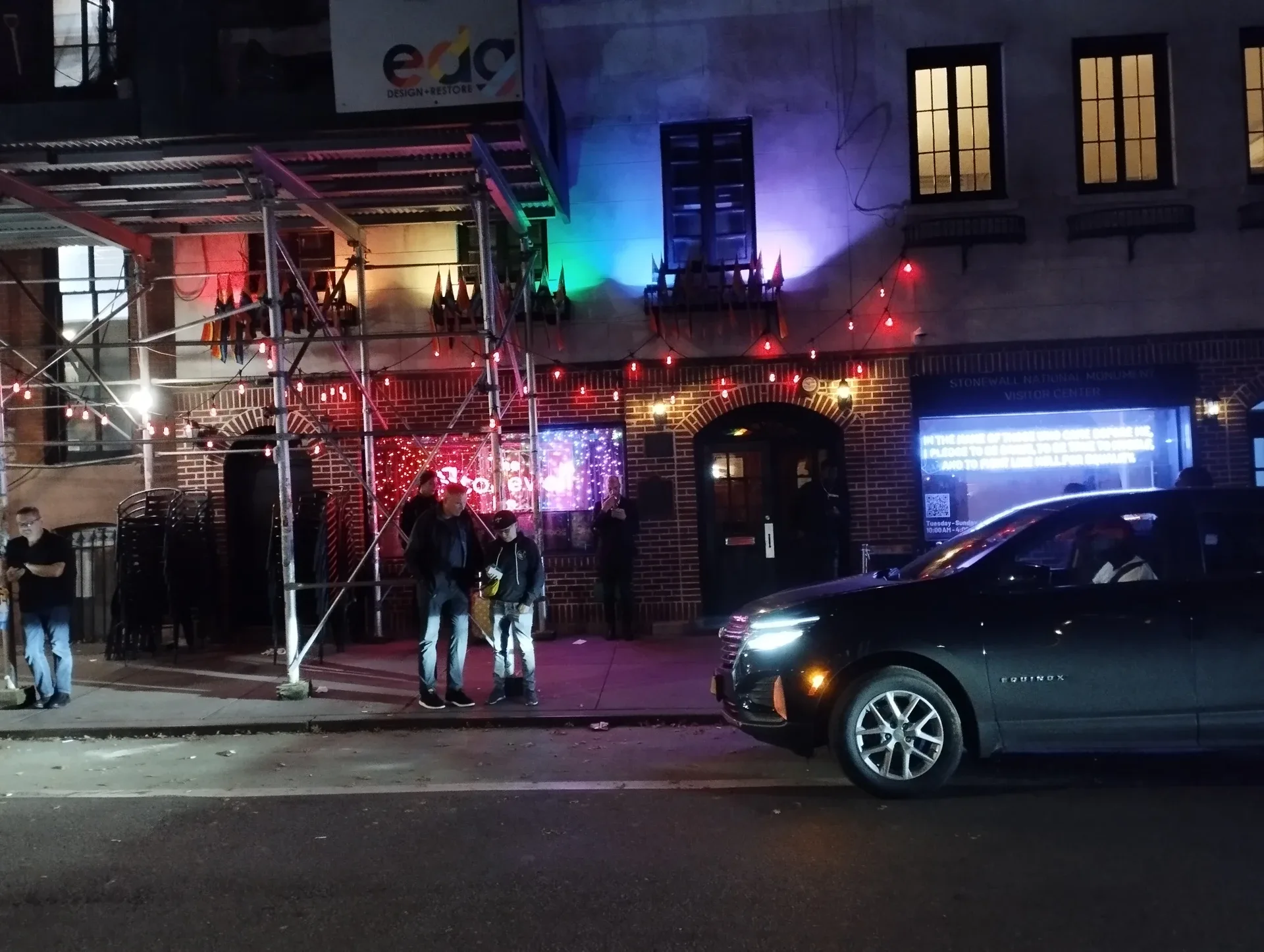
In Greenwich Village, the Stonewall National Monument offers another perspective on movements for civil rights. Check its official program before you go, then leave time to explore the neighborhood. These visits provide food for thought; they do not presume to reflect your guide’s views or those of the people you meet. You can take an interest in the country’s history while maintaining your own judgment about its current politics.

Viator
Cuisine and migration on the Lower East Side
To explore the links between food and migration in the Lower East Side, with a three-hour walk and an English-speaking guide. The stop at the Tenement Museum is outside only.
- 3 h
- 5/5 (717 reviews)
Three hours on foot in the Lower East Side with Nice Guy Tours, an English-speaking guide, and six advertised tastings. The Tenement Museum is viewed from the outside; admission to the museum must be arranged separately. Inform the provider of any dietary requirements.
Cancellation policy
For a full refund, cancel at least 24 hours before the scheduled departure date.
From $99.00
View activityChoosing another destination
If you decide against going to the United States, start again with the interests that inspired the trip. Was it the great landscapes, a major city, music, food, or visiting someone you care about? Several destinations may suit the first set of interests. For the last one, no substitute country serves exactly the same purpose. This distinction explains why two equally critical travelers may make opposite decisions.
Next, compare complete trips of the same duration, starting from your airport or train station. A destination advertised as cheaper may require more transportation, a car, or different insurance. Check its own entry and safety requirements. An itinerary with a connection in the United States may also require U.S. formalities, even if you had decided not to stay there.
You can also postpone the decision without immediately booking somewhere else. Identify what you need to review: a consular response, travel authorization, final budget, or everyone’s preferences. Revisit the plans when that information is available. The right choice is one you can stand behind during the trip and after paying, with a sufficient understanding of its consequences.
FAQ
Can you travel to the United States if you disapprove of Trump?
Yes, you can keep your trip while disapproving of the U.S. administration. However, decide what you are comfortable funding and the conditions under which you want to travel. Local services and cultural visits can shape the content of your trip; they do not entirely separate it from the national economy. If that participation feels unacceptable to you, choosing another destination is still a consistent choice.
Does a tourist boycott have a measurable effect?
The effect of your individual decision cannot be quantified using the sources consulted here. Overall changes in arrivals may have several causes, including prices, transportation, or formalities. You can decide not to go to express a personal conviction without claiming that your action has a proven economic result. To claim an effect for a collective campaign, specific data and a methodology would be needed.
Does an ESTA guarantee entry into the country?
No. An ESTA authorizes travel under the Visa Waiver Program; CBP decides whether to admit you upon arrival. Check each traveler’s eligibility, passport, and authorization validity. If your situation requires a visa, allow for the relevant processing time before buying services that are difficult to refund.
Does a trip to Cuba change the requirements?
Yes. France Diplomatie states that a stay in Cuba since January 12, 2021 makes you ineligible for the ESTA program and requires you to apply for a visa before traveling to the United States. This check also applies to a trip that includes Cuba before arriving in the United States. Consult the relevant authorities about your situation, and do not treat a previously approved ESTA as a sufficient answer.
Do you have to share your social media passwords?
We have not confirmed any universal requirement to provide these passwords in an ESTA application. Possible searches of a device at the border fall under a different procedure: CBP describes its powers and the possible consequences for a foreign traveler who refuses access. Review the official form and inspection policy applicable to your departure; do not confuse account identifiers, passwords, and an examination of the data on a phone.
Does the surcharge apply to all national parks?
No. The NPS identifies eleven parks that will apply the nonresident surcharge in 2026 to people aged 16 and over. Check the exact locations on your itinerary, then review the rules for any pass you choose. Commercial excursions have terms you should check with the operator. Timed-entry reservations, camping, and other services may incur separate fees.
Can you get a refund if you change your mind?
That depends on the terms of sale and the coverage you actually purchased. Personal political opposition does not automatically trigger a refund. Before taking action, ask how much is refundable, what the change fees are, and what terms apply to any voucher. For a package holiday, contact the organizer with the specific details of your booking.
Does the Lower East Side tour include a museum?
The Nice Guy Tours itinerary selected here passes the Tenement Museum and combines a walk with tastings. It does not include entry to the museum. The tour is advertised as being conducted in English. If your main goal is to enter a museum or hear commentary in French, book a separate service that explicitly confirms these details.
What should you check again just before departure?
Review the entry requirements and the latest alerts from France Diplomatie, then check the official information for the places you will visit. Check the status of your documents, the airline’s instructions, your insurance, and essential reservations. Health or weather alerts may apply to a specific area or travel history; apply them to your actual itinerary rather than to a general impression of the country.
Sources and checks
Plan your visits and check current conditions.
- ESTA authorization
U.S. Customs and Border Protection · Accessed November 2, 2026
What this source supports
Authorization to travel, admissibility determined at the border, electronic passport, and applying well in advance.
- Visa Waiver Program
U.S. Customs and Border Protection · Accessed November 2, 2026
What this source supports
Tourist or business stays of up to 90 days, subject to conditions.
- United States: entry and stay
France Diplomatie · Accessed November 2, 2026
What this source supports
Requirements for French citizens, passport and ESTA, 72-hour recommendation, Cuba since January 12, 2021, visa and work in exchange for accommodation, sex-at-birth field for new visa applications.
- United States: health
France Diplomatie · Accessed November 2, 2026
What this source supports
Cost of medical care, medical/repatriation insurance, no agreement covering health insurance, medication and prescriptions.
- United States: latest alerts
France Diplomatie · Accessed November 2, 2026
What this source supports
Geographical, weather, and health alerts to check again based on your itinerary and travel history.
- Inspection of electronic devices at the border
U.S. Customs and Border Protection · Accessed November 2, 2026
What this source supports
Basic and advanced inspections, data stored on devices, and disabled connections; possible consequences of refusing access for a foreign national’s admissibility.
- Nonresident fees
National Park Service · Accessed November 2, 2026
What this source supports
USD 100 surcharge for nonresidents aged 16 and older at eleven parks, USD 250 nonresident annual pass, coverage, and commercial tour cases.
- Entrance fees by park
National Park Service · Accessed November 2, 2026
What this source supports
List of the eleven parks and how vehicle/person entrance fees interact with the nonresident surcharge.
- Ellis Island: visitor information and updates
National Park Service · Accessed November 2, 2026
What this source supports
Immigration heritage, ferry, and temporary exhibition work/closures to check.
- Stonewall National Monument
National Park Service · Accessed November 2, 2026
What this source supports
Location in Greenwich Village, history of rights, and program to consult.
- Civil rights in the United States
National Park Service · Accessed November 2, 2026
What this source supports
Places and history of the civil rights struggles.
- Lower East Side: product 9510P3
Viator / Nice Guy Tours · Accessed November 2, 2026
What this source supports
ACTIVE product API listing: 180 minutes, English-speaking guide, maximum 12 travelers, six advertised tastings, water/food included, gratuities excluded, Tenement Museum viewed from the outside.
- Stonewall Inn, photograph from 2024
Wikimedia Commons / Mariana Silveira · Accessed November 2, 2026
What this source supports
Night photograph dated October 5, 2024, CC BY-SA 2.0, original 4080 × 3072; resized and converted to WebP.
- Grand Canyon, South Rim
Wikimedia Commons / Dietmar Rabich · Accessed November 2, 2026
What this source supports
Photograph under CC BY-SA 4.0, measured original 5160 × 3440, media file saved at 1920 × 1280.
Viator — activity pages
Information about the offers featured in this article.Affiliate links: Odyvero may earn a commission when you book through this article’s buttons.
- Viator : Cuisine and migration on the Lower East Side
Accessed November 2, 2026


