 odyvero
A dinner without conversation in Umbria, a week of group practice in France, ten days of meditation, or a walk in the forest: these trips call for very different commitments. Here are five ways to make room for silence, with the rules, pace, and arrangements that can help you choose a stay that suits you.
Different Degrees of Silence
The first question comes before the destination: how long would you like to stop speaking? Some travelers simply want a room without notifications and quiet meals. Others want to follow a daily practice with a group. Still others are willing to hand over their phone and pause their conversations for an entire retreat. A photograph of a forest tells you very little about these differences.
The term “quietcation,” used to describe vacations focused on calm, now brings these desires together. When booking, it is better to look at the place’s specific rules. Silence may apply to dinner, nighttime hours, or almost the entire stay. It may be shared and guided, or depend on how you choose to travel. The presence of teachings, music, shared tasks, and discussions also changes daily life.
This selection compares five specific experiences without ranking them by prestige. Eremito combines accommodation with silent dinner; Plum Village offers a mindfulness-based community life; Vipassana courses in the Goenka tradition require intensive discipline; the Kumano Kodo leaves walkers to organize their own days; and the forests near Helsinki offer a shorter first break. Your choice will depend on how much time you have, how much effort you want to make, and how much room you want to leave for other people.
Eremito: Meals in Silence
In Parrano, Umbria, Eremito welcomes travelers to a contemporary hermitage in the Monte Peglia Biosphere Reserve area. The rooms are called “Celluzze” and feature simple furnishings. The stay revolves around the place, meals, and an unhurried pace rather than a packed schedule of excursions.
Dinner is the most clearly defined part of the experience. Guests eat together without conversation, accompanied by Gregorian chant. The cuisine is vegetarian and seasonal. You therefore share a table with other guests while forgoing introductions and the usual conversation during the meal. This option is especially suitable for someone who wants to try silence without committing to several days of intensive meditation.
The digital break is also shaped by the infrastructure: the property states that it has no Wi-Fi and generally no mobile signal indoors. To plan your arrival, save the directions before setting off and let your loved ones know that reception is unreliable. A work task that must be completed every evening will be difficult to fit into this arrangement. If you need to remain reachable for a specific reason, confirm the contact arrangements with the team before booking.
The advertised package includes meals and some light activities, including yoga and guided meditations, as well as access to the relaxation area; the tourist tax is separate. Check the exact inclusions and stay conditions when booking. Full board makes planning easier: once you have settled in, you do not need to find a restaurant or plan every trip out for meals.
Eremito is particularly well suited to solo travel, which its welcome arrangements explicitly cater to. For a first try, a few nights is a reasonable length of stay, subject to the booking conditions. Silence at dinner is established; no rule requiring silence at all times is stated on the page consulted. The hotel notes a short winter closure: check its actual calendar before planning your journey.
Les Pruniers: Group Practice
The Plum Village in France offers a different relationship with calm: days unfold within a monastic community, alongside other retreatants. Mindfulness accompanies sitting meditation, walking, meals and daily work. The site recommends one or two weeks for a first visit, giving you time to discover this rhythm without trying to understand everything over a weekend.
Shared tasks are part of the stay. Preparing a room, washing utensils or helping with maintenance is a time for practice, just like formal activities. You should therefore be willing to take part in this communal life. Shared schedules, teachings and opportunities to meet structure the day; the monastery’s rules also apply to people who have come simply to discover meditation.
The published sample schedule includes morning sitting meditation, a walk in nature, a teaching or mindful service, and time to rest. Noble silence begins at 9:30 p.m., with lights out at 10 p.m. Some days also include sharing sessions. These times describe an example, not a promise that applies to every retreat: the schedule depends on the period and format you choose.
This setting may suit a beginner looking for structure and group support, while still wanting to listen to teachings and talk during scheduled periods. The food is vegan. The community asks participants, among other things, to abstain from alcohol, tobacco and drugs, and to follow the scheduled activities. These conditions deserve as much attention as the type of room.
You book for a specific retreat and set arrival dates. The center states that it does not accommodate people who arrive without a reservation or outside the scheduled periods. Also check which languages are offered for your chosen session: being located in France does not tell you what languages all the teachings are in. If you have accessibility needs or a chronic illness, contact the center in advance so it can arrange your stay with the necessary information.
Vipassana: ten days of discipline
Vipassana courses taught in the tradition of S. N. Goenka require a significantly greater commitment. The introductory course involves ten days of practice and takes twelve days in total, including arrival and departure. Participants commit to staying for the entire period. To choose a center, start with the official directory and read the code of discipline before submitting your application.
Silence applies to communication between participants: no conversation, gestures or written messages. It begins at the start of the course and ends on the morning of the final full day. You may still speak with the teacher about your practice and with the staff about practical needs. This opportunity to make contact is important: raise any problem directly rather than waiting for the retreat to end.
The published schedule starts with a 4 a.m. wake-up and continues with several long periods of meditation until evening. Reading, writing, music and entertainment are suspended. Phones, smartwatches and other electronic devices are handed over to the staff. In an emergency, family and friends contact the course organizers. The setting removes not only conversation but also the usual activities people use to fill their free time.
Couples, friends and family members follow the separation rules and do not contact one another during the course. Meals are vegetarian, with specific arrangements explained in the code of discipline. A stay for two will therefore not feel like a shared vacation. Each person must personally want to take part in this practice and accept the conditions, without relying on the other person’s presence to get through the days.
Funding comes from donations by people who have completed a course in this tradition; a new participant may donate at the end of their first course. You should still budget for travel and time away. Financial cost does not measure the intensity of the experience: the schedule, duration and concentration required are the decisive factors.
The official code of discipline states that this practice does not replace medical or psychiatric treatment and advises against it for people with significant mental health disorders. Any health condition must be described honestly in your application, with input from your healthcare professional if necessary. Wanting to rest after a difficult period is different from wanting to undertake intensive meditation training.
Kumano Kodo: finding calm on foot
On Japan’s Kii Peninsula, the Kumano Kodo brings together several ancient pilgrimage routes, inscribed as a World Heritage Site in 2004. Here, the experience takes shape through walking, villages and shrines. You remain responsible for your own pace and phone use. No common rules require silence across the entire network.
The Tanabe City Kumano Tourism Bureau presents the Nakahechi as a route suited to multi-day walks, with traditional lodgings in the villages. It is an option to consider if you want to travel from one stage to the next without changing regions every morning. Choose your overnight stays and trail sections before booking: distances, elevation gains and transport links cannot be determined from the name “Kumano Kodo” alone.
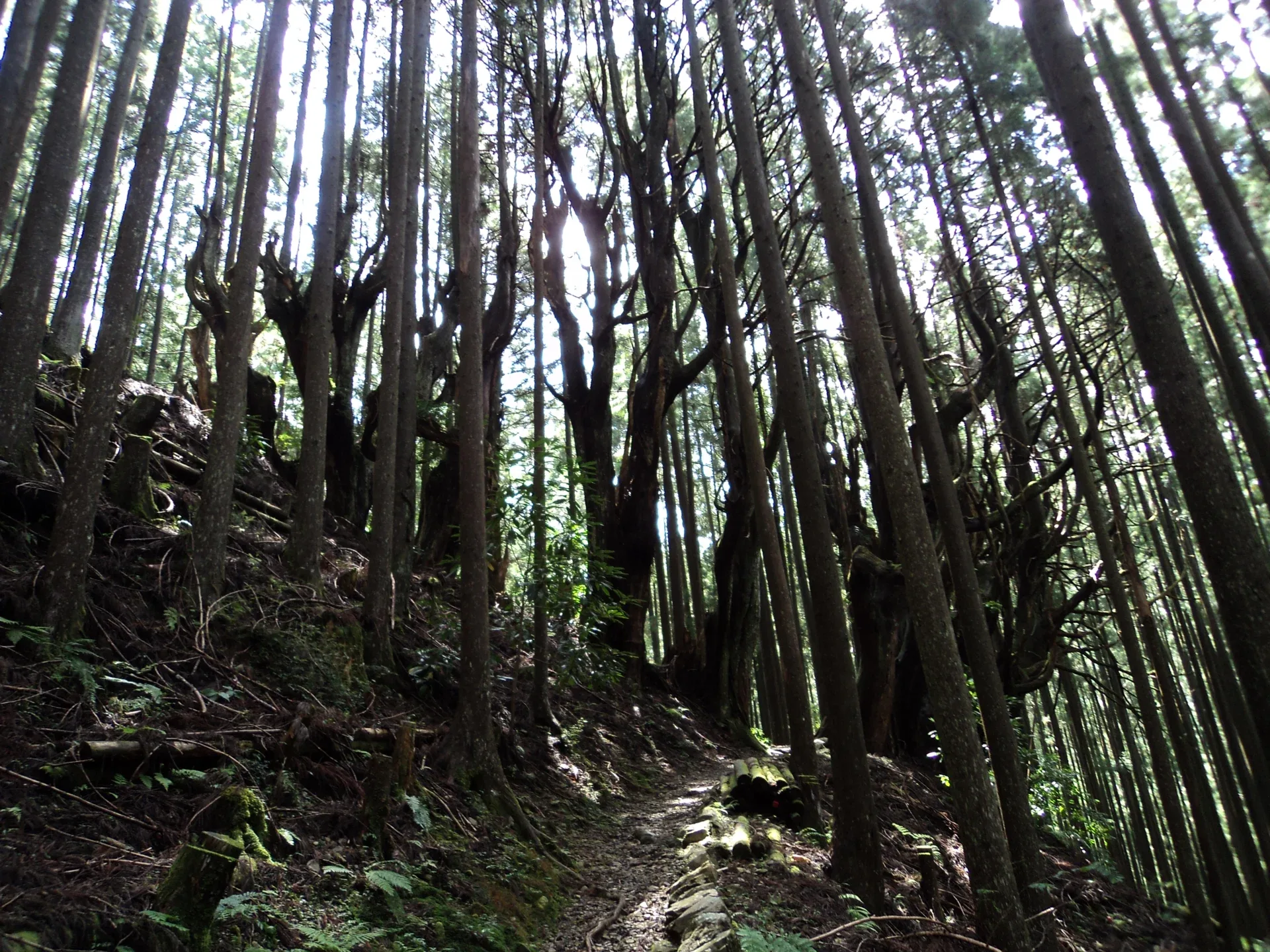
The Kohechi connects Koyasan to the Kumano shrines via a more mountainous route, with three passes above 1,000 meters. Its geography calls for different preparation. The solitude and forest may appeal to travelers seeking calm; the physical effort and self-sufficiency required should weigh just as heavily in your decision. For a first walk in Japan, a well-documented section suited to your ability is more useful than an ambitious itinerary built around an image.
Official recommendations highlight steep climbs, stairs, stone paving and uneven ground. They advise checking the weather and trail conditions, planning alternatives and telling someone your route. Walking with a partner is recommended. Your phone still serves for safety and navigation, even if you stay off social media during the day.
Booking accommodation and meals, and arranging luggage transfers if needed, reduces the number of decisions you have to make on the way. In spring and autumn, some buses can be crowded. Check the official closures page for the specific sections just before departure and during your stay. The peace you seek will also depend on your schedule and stages: a heritage route is still shared with residents and other walkers.


Near Helsinki: forests and sauna
Nuuksio and Sipoonkorpi make it possible to plan a forest break close to Helsinki. Visit Finland identifies them as the two national parks nearest the capital, reachable in under an hour depending on the route. This proximity makes them suitable for a first try: you can spend a day in nature without immediately committing to a week-long residential retreat.
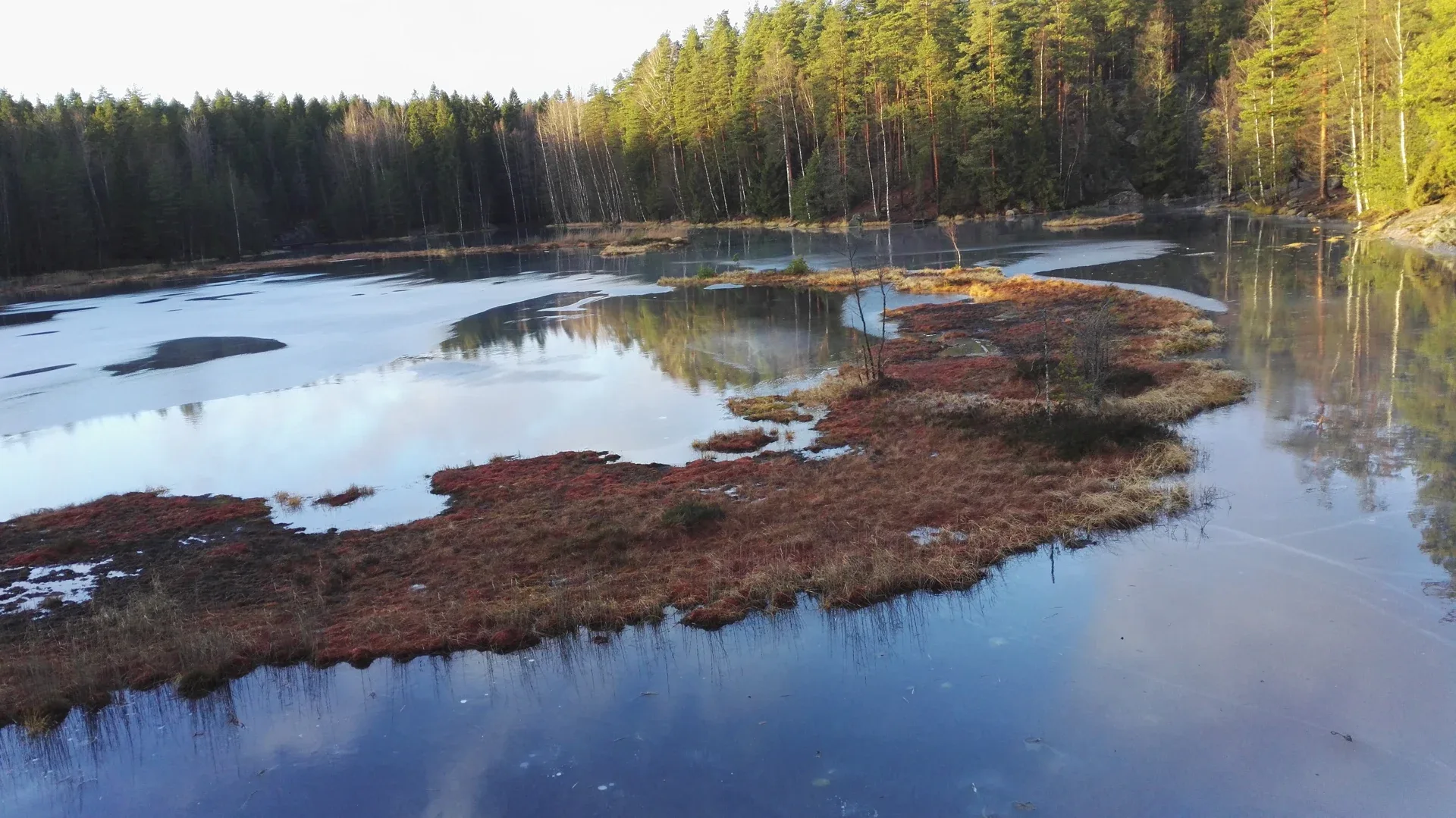
Nuuksio is illustrated here by Lake Mustalampi, its wooded shores and small vegetation-covered islets. For an independent outing, choose a marked trail from the park’s official information, then check access and local conditions. A photograph of a partly frozen lake depicts a landscape; it is not permission to walk on the ice. Keep the navigation and communication tools you need, especially when daylight fades early.
For a guided day trip, we have selected an outing by Taiga Times in Sipoonkorpi National Park, departing from Helsinki. It combines a forest walk, lunch and a smoke sauna. The advertised route is about six kilometers, with hills and steps. Departure and return are in front of the Kiasma Museum; the guide speaks English. The small group is limited to eight travelers.
This option is particularly appealing to people who want to leave transfers, lunch and sauna arrangements to someone else. Transport, lunch, sauna admission, a towel and slippers are among the inclusions; bring your water bottle and swimsuit. Read the activity details and the operator’s stated medical conditions, particularly cardiovascular conditions, before booking. Duration, price and reviews are grouped in the offer card.
The guide’s commentary and group conversations are part of the day. You can seek quiet while walking, but no group silence is promised. This excursion is a first step toward a less busy trip, with a return to the city on the same day. It can also help you decide whether you would like to spend several nights in the forest or go on a proper guided retreat.

Viator
Forest and smoke sauna from Helsinki
For a first forest day without having to arrange transfers, lunch and the sauna. Expect six kilometers with hills and steps; bring a water bottle and swimsuit. Guidance is in English, and no group silence is required.
- 6 h 30 min
- 5/5 (247 reviews)
Guided day trip in English to Sipoonkorpi: around six kilometers of walking, lunch and a smoke sauna, with transport from Kiasma. Bring a water bottle and swimsuit; no ecological restoration work is included.
Cancellation policy
For a full refund, cancel at least 24 hours before the scheduled departure date.
From €165.00
View activityDuration and season
For a first stay, start by deciding how much time you can realistically set aside, including travel. A day in the forest fits into a trip to Helsinki; a few nights at Eremito require a well-organized arrival but offer more flexibility than a course. Plum Village recommends one or two weeks to experience its community life. Vipassana requires you to set aside the entire course period, with no early departure planned in your schedule.
Next, choose the season for the place you have selected. In Finland, winter changes the light, footing and equipment you need; a winter outing should be prepared using information suited to the day you choose. On the Kumano Kodo, the weather, trail conditions and terrain determine which route is feasible. For accommodations and communities, opening or retreat dates matter more than a general idea of the “low season.”
At the end of October, it is better to book an option that is actually open than to turn an old program into a future calendar. This article compares approaches and places; it does not announce a specific edition. For each stay, first check an available arrival date or departure, then the transport change conditions. A buffer day can be useful before a long course if your journey involves several connections; this is a planning margin to adapt to your circumstances.
The cost of your stay
Costs can only be compared accurately when they cover the same things. A guesthouse that includes meals reduces the expenses you need to decide on once you arrive. For a community retreat, consider accommodation, contributions, meals and travel together. A donation-funded course still has an access cost and takes up many days. A point-to-point hike adds up overnight stays, meals, local transport and, possibly, luggage services.
For each option, make a short list of definite expenses: main transport, the last leg to the destination, overnight stays, meals not included and taxes. Then add any personal requirements that are genuinely necessary, such as a private room or a transfer service. The advertised starting price for a room and the price of a day that includes transport do not cover the same service. In the affiliate offer, the card brings together variable pricing details so that figures that quickly become outdated are not repeated throughout.
Your budget should also reflect your needs during the stay. A shared room may suit community life but be less suitable if you are looking for privacy. A remote location may require an arranged transfer rather than an improvised journey in the evening. It is better to pay for the format that meets your needs than to extend your stay just to reach a certain number of nights.
Accommodation and getting around
A peaceful stay also depends on where you stay. Before booking, check whether the room and bathroom are private or shared, where activities take place and how to make the final leg of the journey. On-site meals mean you do not have to go out to eat; a hiking stop requires you to reach your accommodation after a day on the trail. These details matter especially when you are traveling alone and have to arrange each connection yourself.
If you have limited mobility, ask about specific situations: stairs between the bedroom and dining room, distance to the practice room, whether you can sit on a chair, the type of ground and how long you need to walk. Plum Village invites guests to get in touch to prepare for their arrival. The Sipoonkorpi excursion covers six kilometers that include hills and steps: consider that terrain rather than relying only on the general difficulty rating.
On a point-to-point hike, the weight you carry affects your choice of stages. On the Kumano Kodo, look into luggage services and available connections before committing to a series of overnight stays. Once your bookings are confirmed, gather addresses, check-in times and useful contact details in a document you can access offline. You will have less searching to do during the trip while keeping the information you need if your plans change.
Your phone and people back home
Before leaving, distinguish between three uses: the interruptions you want to get away from, practical tools and essential contacts. Turning off notifications and removing the apps you use most may be enough for an independent hike. An offline map, transport ticket or emergency number can still be useful. For a retreat that collects devices, prepare these items in a format accepted by the staff.
Give someone you trust your destination, dates and the appropriate way to contact you. For Vipassana, contact is handled through the course management. If you are staying somewhere with unreliable reception, ask about the arrangements before you arrive. On a walking trip, share your stages and any changes to your plans. The level of disconnection should remain compatible with safety and your responsibilities toward others.
Finally, plan to return without an unnecessarily tight schedule. A twelve-day course, a community week and a day hike take up different amounts of time in your calendar. A little buffer for travel and everyday tasks means you will not have to deal with everything as soon as you get back. You can then keep one specific habit from the stay—an occasional screen-free meal or regular walk—without trying to recreate all its rules at home.
FAQ
Which experience should you choose for your first silent retreat?
A silent dinner at Eremito or a day in the forest near Helsinki lets you try a change for a limited time. Plum Village may suit someone drawn to community practice and ready to take part in its activities. A Vipassana course requires you to accept its full discipline and duration from the outset; wanting some peace and quiet alone does not describe that commitment.
Do you need to know how to meditate before you go?
The walking and accommodation options presented do not require you to adopt all the rules of a meditation school. Vipassana introductory courses are intended for learners and involve an application and acceptance of the rules. At Plum Village, the program includes an orientation on arrival. Choose based on your interest in the practice offered and your ability to keep up with its pace, rather than assuming that prior experience is required everywhere.
Can you attend a retreat as a couple?
It depends on the place and format. Plum Village says it accommodates couples and families according to its lodging arrangements. In a Goenka Vipassana course, couples do not interact during practice and follow the separation rules. A double room at a hotel, a community retreat and an intensive course therefore involve three different ways of spending time together.
Are silent retreats always phone-free?
No. The rules vary: devices are handed in during Vipassana courses; Eremito says it has no Wi-Fi and that mobile reception is generally unavailable indoors. On trails and in parks, you decide how to use your phone. Keep navigation and emergency features suited to the terrain, then separately reduce the uses that distract you.
How much does a quiet getaway cost?
There is no single price for these experiences. Compare the total cost for your dates: travel, accommodation, meals, any contribution, transfers and taxes. Vipassana courses in this tradition are funded by donations, while a guesthouse stay and a guided excursion each have their own pricing. The activity card shows the current amount, in the currency actually provided.
Do parks and pilgrimage routes guarantee silence?
Natural areas and the Kumano Kodo routes are used by other visitors and local residents. Their setting gives you time to focus on walking, but they do not impose a general commitment to silence. Likewise, the Sipoonkorpi outing includes a guide. For a shared rule, choose a place that explicitly specifies periods of silence.
Can a retreat replace medical care?
A stay does not replace treatment or medical care. The Vipassana rules draw particular attention to serious mental health conditions; Plum Village asks guests to report chronic illnesses and continue prescribed treatments. If your condition requires support, discuss your plans with your healthcare professional and the organizer before booking, describing the actual program you are considering.
Sources and checks
Plan your visits and check current conditions.
- Eremito: A Silent Stay and Dinner
Eremito · Accessed November 1, 2026
What this source supports
Parrano, Celluzze, silent dinner with Gregorian chant, vegetarian meals, no Wi-Fi and generally no indoor mobile signal; full-board stay and a short winter closure.
- Vipassana: Code of Discipline
Dhamma.org · Accessed November 1, 2026
What this source supports
Ten days, or twelve including arrival and departure; 4 a.m. wake-up, silence, separation, device deposit, donations, health requirements, and contact with the team.
- Retreats at Plum Village
Plum Village · Accessed November 1, 2026
What this source supports
Community life, activities, one or two weeks recommended, vegan cuisine, booking required, health requirements, and welcome arrangements.
- Sample Schedule at Plum Village
Plum Village · Accessed November 1, 2026
What this source supports
Sample day with teachings, walking, and sharing; noble silence at 9:30 p.m., lights out at 10 p.m.; schedules vary by retreat.
- The Kumano Kodo Routes
Tanabe City Kumano Tourism Bureau · Accessed November 1, 2026
What this source supports
The Kii network, UNESCO-listed in July 2004; Nakahechi with village-to-village stages; mountainous Kohechi and three passes over 1,000 m.
- Kumano Kodo: Preparation and Safety
Tanabe City Kumano Tourism Bureau · Accessed November 1, 2026
What this source supports
Uneven terrain, climbs, and stairs; reservations, weather, closures, walking partner, luggage, and buses during the busy season.
- Nature and Parks Near Helsinki
Visit Finland · Accessed November 1, 2026
What this source supports
Nuuksio and Sipoonkorpi near the capital; nature, trails, and respect for the environment. No winter route is guaranteed.
- Forest and Smoke Sauna from Helsinki
Taiga Times via Viator Partner API · Accessed November 1, 2026
What this source supports
ACTIVE product 178122P24 reviewed, 390 min, Sipoonkorpi, approximately 6 km of walking, hills and steps, English-speaking guide, maximum eight travelers, departure from Kiasma. Transport, lunch, and sauna included; bring a swimsuit and water bottle. Supplier photo of the exact product, centralized commercial data, Odyvero affiliate link provided by our API.
- Photograph: Lake Mustalampi in Nuuksio, partially frozen, with small vegetated islands and wooded shores.
Ppntori / Wikimedia Commons — resized and converted to WebP, without cropping · Accessed November 1, 2026
What this source supports
CC BY-SA 4.0; original verified at 5152 × 2896, derivative at 1920 × 1079 without enlargement, shared under the same license. Rights rechecked file by file; actual dimensions decoded, illustration visually inspected. Resized and converted to WebP.
- Photograph: A trail passes through dense forest on the Kohechi, a route on Japan’s Kumano Kodo.
VKaeru / Wikimedia Commons — resized and converted to WebP · Accessed November 1, 2026
What this source supports
CC BY-SA 3.0; rights rechecked file by file; actual dimensions decoded, illustration visually inspected. Resized and converted to WebP.
Viator — activity pages
Information about the offers featured in this article.Affiliate links: Odyvero may earn a commission when you book through this article’s buttons.
- Viator : Forest and smoke sauna from Helsinki
Accessed November 1, 2026


