 odyvero
In Seville, the riverbanks and gardens make it easy to fit in a run between two sightseeing stops. In Chamonix or Madeira, the terrain shapes much of the trip. Ljubljana and Stockholm offer an easy blend of city and nature. Here are five bases for a few days away with your running shoes, depending on your experience, the season and what your travel companions are looking for.
Terrain before distance
A running trip starts with a simple question: do you want to run during your vacation, or is running the main reason for the trip? In the first case, accommodation near a park or river makes it easy to head out in the morning, return for a shower and then meet up with everyone else. In the second, access to trails, elevation gain and weather take up more of the itinerary. This difference matters more than the number of kilometers a destination promises.
For a first trip of this kind, we recommend choosing one base. You can repeat a loop, make it longer or cut it short without changing hotels. The same neighborhood gradually becomes familiar; you learn where the trail starts, where to stop at the bakery on your way back and which variation to try the next day. Three to five days is a reasonable planning timeframe, with runs suited to your usual routine rather than a prescribed improvement goal.
Seville is especially well suited to those who want to leave plenty of room for sightseeing. Ljubljana adds wooded trails close to the center. Stockholm offers waterside walks and Djurgården’s green spaces. Chamonix is for travelers drawn to the mountains, with routes to choose according to conditions. Madeira calls for particular attention to the slopes and transfers between the coast and trailheads.
Seville, gardens and the Guadalquivir
Seville is our first choice for an urban stay where running remains just one part of the day. María Luisa Park makes it easy to alternate short loops with quieter stretches among fountains, garden pavilions and tree-lined paths. Plaza de España and Plaza de América are easy landmarks to find again. The tourist office notes that this public garden developed from the former gardens of the San Telmo Palace: the setting is also worth exploring on a leisurely walk, with no workout in mind.
For a more continuous run, the Guadalquivir area offers a different option. You can choose a starting point near the riverbanks and plan an out-and-back route based on how much time you have. Paseo de las Delicias is a useful landmark for locating this part of the city. Before running, check access, crossings and any roadworks; a riverbank is still a shared space for pedestrians and cyclists.
We would recommend autumn, winter or spring for planning this trip around city runs, adjusting each outing to the actual temperature. In hot weather, a short early-morning run and an easy return to your accommodation are preferable to a long, exposed loop. The park’s shady spots are no substitute for bringing water or reducing your effort as the heat rises.
The hotel’s location should make your out-and-back route easy. Accommodation that requires a long crossing of the old town before every run can complicate an otherwise simple plan. Check the park or riverbanks on a map before booking, then check the walking route from the exact address. After your shower, you can rejoin your companions for sightseeing, meals and walks. You don’t need a race bib to enjoy this kind of trip.
Ljubljana, the river and wooded trails
Ljubljana suits travelers torn between a cultural getaway and a little more time in nature. The marathon organizer publishes running routes that you can use as starting points for planning runs, whether or not you register for the event. One route follows both banks of the Ljubljanica, crosses several bridges and passes through Trnovski pristan. Its connection to the city means you can later revisit the same scenery on foot.
The Tivoli–Rožnik circuit offers a different setting. The official listing gives it a distance of ten kilometers, starting and finishing at the Tivoli parking lot. It links the park’s paths with the Rožnik area and Koseški Pond. Read the route before setting out: starting in a park doesn’t mean the entire run follows a flat path. The wooded sections and terrain change your footing, especially when the ground is wet.
For a first look around, start with a short run in Tivoli, then consider the longer circuit another day. You’ll have a better sense of how to get around from your hotel and which terrain suits you. In spring and autumn, keep an urban alternative in mind in case the trails are waterlogged. In summer, an early start leaves more time for sightseeing; in winter, daylight and ground conditions become day-to-day factors in your choice.
The private Ljubljana tour featured here is a good fit for this trip. With a guide, you can revisit the squares, bridges and Plečnik architecture at a different time from your longer run. French is one of the available languages; the stated duration ranges from one to three hours, depending on the option to be specified when booking. Admission fees are separate and the castle is optional. Factor this walk into your day’s total walking: it adds time on your feet to the time you’ve already spent running.

Viator
Ljubljana: Private Tour of Bridges and Squares
To explore Ljubljana’s bridges and architecture with a guide, choose French and specify your preferred duration. Schedule this private walk separately from your longer run.
- 1–3 h
- 5/5 (51 reviews)
Private walk with a local guide; French is offered. Choose a duration of one to three hours. Admission, meals and drinks are separate.
Cancellation policy
For a full refund, cancel at least 24 hours before the scheduled departure date.
From €180.00
View activityStockholm, the islands and parks
In Stockholm, the water helps structure your outings without taking you completely out of the city. The tourist office highlights Djurgården, the loop around Kungsholmen and the Haga–Brunnsviken area among the running routes suggested with former athlete Peter Häggström. These areas offer several ways to shape your stay: stay near the centre, follow a shoreline or devote an outing to green spaces.
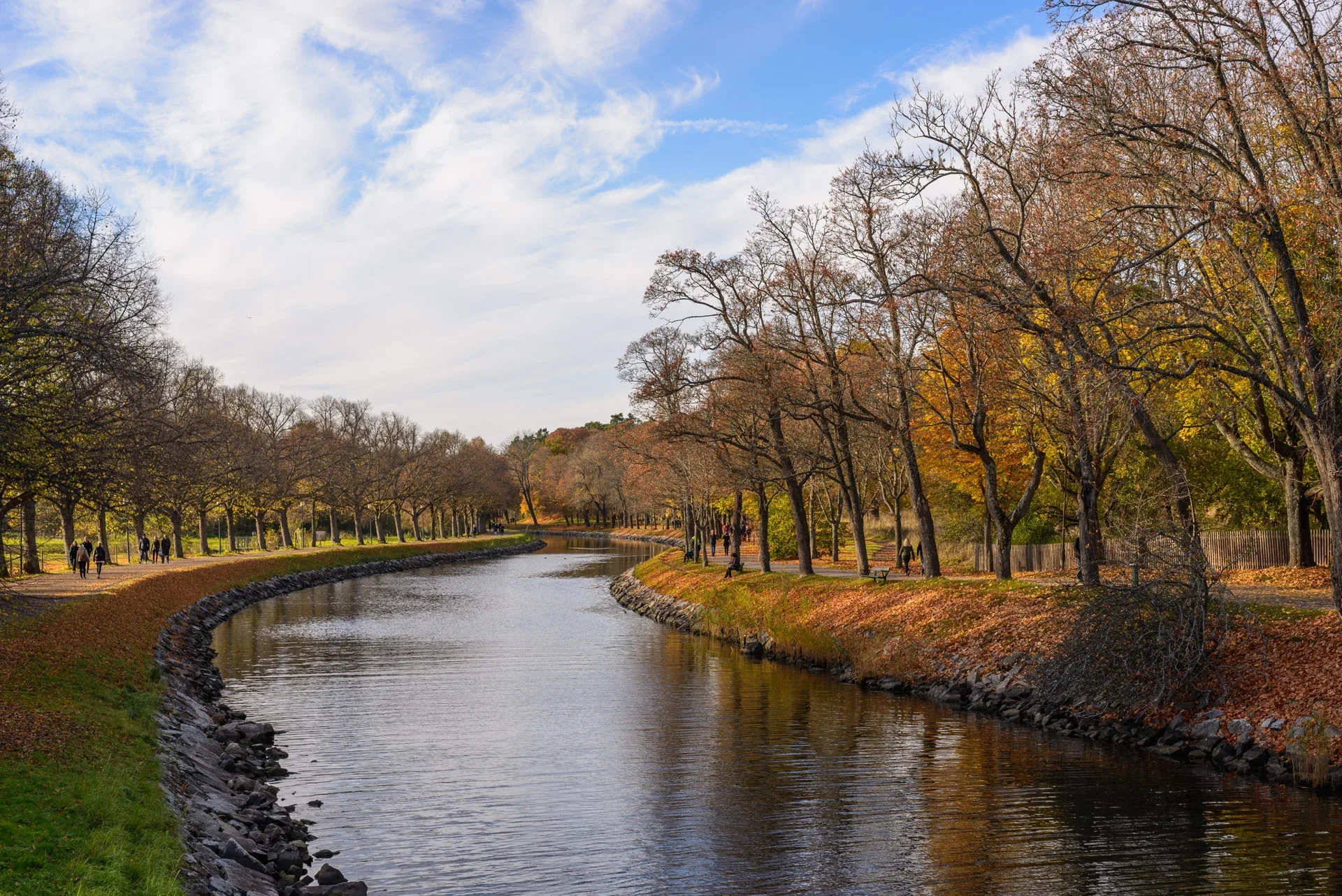
For a first base, Djurgården is particularly appealing because running and sightseeing can take place in the same area. Paths near the canal and waterfront make it easy to plan a flexible outing; the museums then give the rest of the group ideas for things to do. You can arrange to meet after you return rather than ask your companions to wait at every stop. Check the journey between your hotel and the island before choosing your neighbourhood.
We recommend May to September for a first stay focused on outdoor activities, subject to the weather. An autumn visit calls for more attention to daylight, wet leaves and the wind near the water. In winter, trail conditions may require you to change your plans completely. A destination that is pleasant to explore in summer does not automatically offer the same running conditions all year round.
For a different perspective on the city after several outings on foot, a private boat trip is an option the group can enjoy together. The selected product advertises a two-and-a-half-hour trip with a skipper and offers English, among other languages. Agree on the route with the skipper: the central islands and the archipelago are possibilities to discuss, not a guaranteed series of stops. Confirm the boarding location and schedule before setting aside the day. Above all, this activity adds some time sitting down and a view from the water to the group’s itinerary.

Viator
Stockholm: Private Boat Trip with Skipper
For some time sitting on the water together after your outings on foot: agree on the route with the skipper and check the schedule. The product lasts two and a half hours and offers English.
- 2 h 30
- 5/5 (33 reviews)
Two and a half hours on a private boat with a skipper; English is offered, and the itinerary can be arranged according to the package and conditions.
Cancellation policy
For a full refund, cancel at least 24 hours before the scheduled departure date.
From SEK 6,000.00
View activityChamonix, choosing your elevation gain
Chamonix is worth a stay when mountain terrain is part of what you want from your trip. The tourist office describes a valley with routes of varying difficulty and points to planning tools as well as local professionals. La Chamoniarde notes, however, that climbs, descents and technical sections place different demands on your muscles and can greatly increase the time needed. A distance you are used to running on roads is therefore not enough to choose an outing.
To explore the area, start by identifying the valley-floor options suited to the day’s conditions. A modest outing lets you get your bearings and keep some energy in reserve for the next day. Then plan longer high-altitude routes by considering their elevation gain, escape routes, estimated duration and required equipment. The prestige of a route’s name tells you nothing about whether a trail will be passable during your stay.
The season calls for a proper check with local sources. La Chamoniarde reports that snow patches can persist until mid-July depending on altitude, and that wintry conditions can occur in summer. It also warns that snow bridges above torrents can become fragile. A spring weekend therefore does not mean you can freely access the high-altitude routes known from summer races. Summer and early autumn are periods to consider, then confirm for the specific route.
For a group of runners and non-runners, agree on a realistic shared itinerary. A long outing that takes up the whole day leaves little flexibility for a meal or a visit. A day in the valley, a more ambitious outing in favourable weather and a lighter day are one possible plan, to be adjusted to your experience. Before each mountain departure, check the information from La Chamoniarde and the Office de haute montagne. Prepare a charged phone, protective clothing and provisions in line with the route.


Madeira, the slopes and transfers
Madeira is for runners who want to spend time on the trails and are willing to organise their transport. The official Visit Madeira website lists trail routes in very different environments, from Funchal Ecological Park to mountain areas. Your choice of hotel should therefore take your planned starting points into account: staying on the coast while running in the mountains for several days requires advance logistical planning.
The Chão dos Louros route listing gives a good sense of this. The route described runs from Boca da Corrida, in the Jardim da Serra area, to Chão dos Louros, in the municipality of São Vicente. It is rated difficult and lists 886 metres of ascent and 1,294 metres of descent. These figures show why you need to look at the elevation profile and the muscles involved, then plan for the finish as well as the start. A long descent can affect your plans for the following days.
This example can help you choose the type of stay, but it does not confirm that the trail is open. For each route, check its condition, access restrictions and the weather using up-to-date official information. Conditions near the sea do not necessarily reflect those at higher elevations. Keeping one day free lets you reschedule an outing or choose a different walk without disrupting the whole trip.
For a first trail-running trip, select a few routes that match your actual experience, along with a shorter alternative. Funchal Ecological Park is one of the areas to explore in the official catalogue; choose a documented route there rather than improvising a distance. If you lack experience on steep terrain or organising transfers, a local professional can help you plan the trip. In that case, confirm the guide’s services and transport arrangements directly before making any reservation.
Three to five days on site
A short stay works better with some breathing room than with a different workout every half-day. As a suggested plan, keep arrival day for an orientation walk or an easy outing if you feel up to it. The next day, choose your main route. Then set aside time for a cultural activity or a lighter day before a possible second outing. Adjust this framework to the trip, your fatigue and your usual training.
Running takes up only part of the morning. You also need to allow for getting to the start, preparations, the return journey, a shower and a meal. In the mountains, a transfer makes this time commitment even longer. When arranging a meeting with your companions, consider the whole time window. A flexible return to the hotel helps you avoid rushing to a cultural reservation after your outing.
If you are taking part in an official race, its schedule becomes the fixed point. Bib collection, any equipment checks, and the start time and location take priority over other activities. Check the edition actually announced by the organiser, its registration requirements and medical rules. A schedule from a previous year is no basis for booking the next one. The visits suggested in this guide must be booked separately and do not provide access to a competition.
Your companions should be able to choose how they spend their days. In Seville, a morning outing leaves plenty of time to enjoy the trip together; in Stockholm or Ljubljana, sightseeing can include the areas you run through. In Chamonix and Madeira, transfer requirements and the length of outings should be discussed earlier. Decide together how many time slots to set aside for sports before booking accommodation and activities.
Accommodation and budget
A precise address is more useful than a general mention of being “close to the centre”. For a city base, check whether you can walk to the park or riverside you have in mind, how easy it is to return, and how breakfast works. For a trail stay, also look at gear storage, somewhere to dry clothes, and transport options to trailheads. A washing machine can be useful if you are staying several days with only a few belongings.
Build your budget around your own plans; there is no single average that applies to all five destinations. Separate the cost of getting there, accommodation, meals, local transport and activities. Depending on the trip, add trail transfers, a guide, access fees or race entry. A self-guided loop near the hotel and a point-to-point mountain route do not involve the same expenses. Prices for the selected tours are shown on their cards, in the currency actually provided.
Finally, keep a backup plan that genuinely interests you. A city visit, museum or short walk can save the day if running is no longer a good fit. This flexibility matters especially when you are sharing the trip with loved ones. That way, you can choose a destination for the whole stay, giving the planned running outings the place you intended from the start.
FAQ
What is a runcation?
It is a trip that includes running as a planned part of the itinerary. It might mean a few runs during a city break, a trip centred on a marathon, or several days of trail running. The term does not imply any required fitness level or standard package. When booking, instead specify your preferred terrain, experience and how much time you want to spend running.
Which destination should I choose as a beginner?
Seville works well for a first trip combining short runs and sightseeing, with accommodation near María Luisa Park or the riverbanks. Ljubljana is another option: start with the paths in Tivoli Park, then choose a longer route if it suits you. Stick to a familiar run duration and make sure you can return quickly; mountain routes require different experience and preparation.
Where should I go, depending on the season?
For an initial shortlist, we recommend Seville during the cooler periods and Stockholm from May to September. In Ljubljana, you can adapt your route between the river, park and trails according to ground conditions. In Chamonix, high-altitude outings depend on snow conditions, even in summer. In Madeira, check the weather in the specific area and trail access. These are planning pointers, not a guarantee of conditions on the day you set out.
Do I need to register for a marathon?
You can plan the entire trip around casual runs, with no race. If a race entry is your reason for going, wait for the official information for your chosen edition before booking non-refundable services. Check the distance, cut-off times, required documents and bib collection. A sightseeing tour or excursion booked during your stay does not replace race registration.
How do I compare road running and trail running?
For road running, your usual distance and duration are useful starting points. For trail running, also consider elevation gain, technical difficulty, exposure, altitude and current conditions. The difficult Chão dos Louros route illustrates the difference, with a significant climb and an even longer descent. For a first trail experience, choose a documented route within your capabilities, and ask locally for advice if the terrain or conditions are unfamiliar.
Can I go with people who do not run?
Yes, by setting aside time together rather than assuming the whole group will follow the sports itinerary. The cities in this selection make it easy to meet up for a visit or a meal after a well-planned morning run. Mountain stays require more agreement about transport and how long outings will take. The private tour in Ljubljana and the boat trip in Stockholm are complementary sightseeing activities, each with its own booking conditions.
What gear should I bring?
For city running, bring shoes suited to your running style, clothing appropriate for the weather, a way to navigate and, depending on the outing, a way to stay hydrated. For the mountains, gear depends on the terrain, time spent outdoors and conditions: prepare for cold and rain, and plan your food and water, navigation and emergency communication together. Also check what your insurance covers for the activity you have in mind; races may have specific conditions.
How many days should I plan for?
As a suggested itinerary, three to five days on site can combine a route check, a few runs and sightseeing from a single base. A race or long transfers may call for more time. Keep at least one flexible time slot if your route depends on the weather. The right length depends mainly on the journey there and how many days you actually want to devote to running.
Sources and checks
Plan your visits and check current conditions.
- María Luisa: gardens and squares ↗
Visita Sevilla · Accessed November 1, 2026
What this source supports
Public park, fountains, garden pavilions, Plaza de España and Plaza de América; historic setting of the San Telmo gardens.
- The Guadalquivir in Seville ↗
Visita Sevilla · Accessed November 1, 2026
What this source supports
Riverside setting and Paseo de las Delicias; no certified route distance.
- Tivoli–Rožnik circuit ↗
NLB Ljubljana Marathon · Accessed November 1, 2026
What this source supports
Published 10 km circuit, starting and finishing at the Tivoli parking lot, through the Rožnik area and Koseški Pond.
- Running along the Ljubljanica ↗
NLB Ljubljana Marathon · Accessed November 1, 2026
What this source supports
Route along both riverbanks, across bridges and through Trnovski pristan; no edition date included.
- Routes suggested with Peter Häggström ↗
Visit Stockholm · Accessed November 1, 2026
What this source supports
Djurgården, Kungsholmen, Haga–Brunnsviken; text published on August 23, 2024. No quotation or map reproduced.
- Djurgården’s green spaces and museums ↗
Visit Stockholm · Accessed November 1, 2026
What this source supports
Djurgården’s sightseeing and green-space setting.
- The trail valley ↗
Chamonix Tourist Office · Accessed November 1, 2026
What this source supports
Routes for various levels, preparation tools and checking mountain conditions.
- Trail running: terrain, conditions and seasons ↗
La Chamoniarde · Accessed November 1, 2026
What this source supports
Terrain, physical exertion, snowfields that can last until mid-July depending on altitude, snow bridges and changing weather.
- Trail areas in Madeira ↗
Visit Madeira · Accessed November 1, 2026
What this source supports
Catalogue of areas and routes, including the Funchal Ecological Park; no confirmation that individual routes are open.
- The Chão dos Louros route ↗
Visit Madeira · Accessed November 1, 2026
What this source supports
Difficult Boca da Corrida–Chão dos Louros route, +886 m and -1294 m. Length omitted because it is inconsistent between the text and route listing. Check access again before setting out.
- Ljubljana: private tour of the bridges and squares ↗
Operator via Viator Partner API · Accessed November 1, 2026
What this source supports
ACTIVE product, private tour, 60–180 min, French offered, admission fees separate. Odyvero affiliate link genuinely supplied by our API. Supplier photo of the exact product; commercial data centralized.
- Stockholm: private boat trip with skipper ↗
Operator via Viator Partner API · Accessed November 1, 2026
What this source supports
ACTIVE product, private boat with skipper, 150 min, English offered, itinerary to be agreed. Odyvero affiliate link genuinely supplied by our API. Supplier photo of the exact product; commercial data centralized.
- Photograph: Djurgårdsbrunn Canal in Stockholm, lined with paths and trees in autumn colors. ↗
Arild Vågen / Wikimedia Commons — resized and converted to WebP · Accessed November 1, 2026
What this source supports
CC BY-SA 3.0; Commons metadata rechecked file by file, original decoded, derivative visually inspected. Resized and converted to WebP.
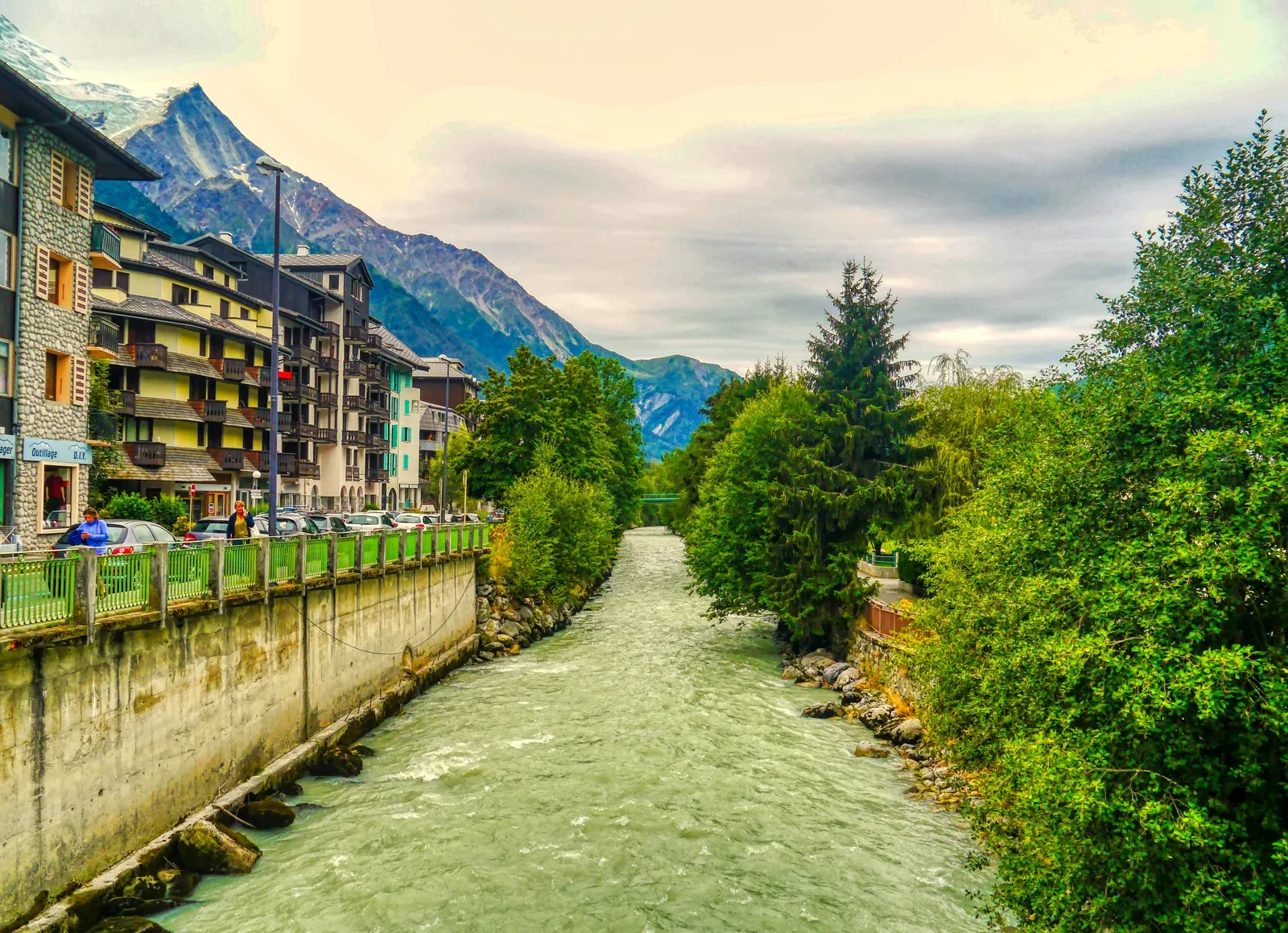
- Photograph: The Arve runs through Chamonix between buildings in the town center and trees, with mountains in the background. ↗
Zairon / Wikimedia Commons — resized and converted to WebP · Accessed November 1, 2026
What this source supports
CC BY-SA 4.0; Commons metadata rechecked file by file, original decoded, derivative visually inspected. Resized and converted to WebP.
Viator — activity pages
Source for the activity information below.Affiliate links: Odyvero may earn a commission when you book through this article’s buttons.
- Ljubljana: Private Tour of Bridges and Squares ↗
Accessed November 1, 2026
- Stockholm: Private Boat Trip with Skipper ↗
Accessed November 1, 2026


