 odyvero
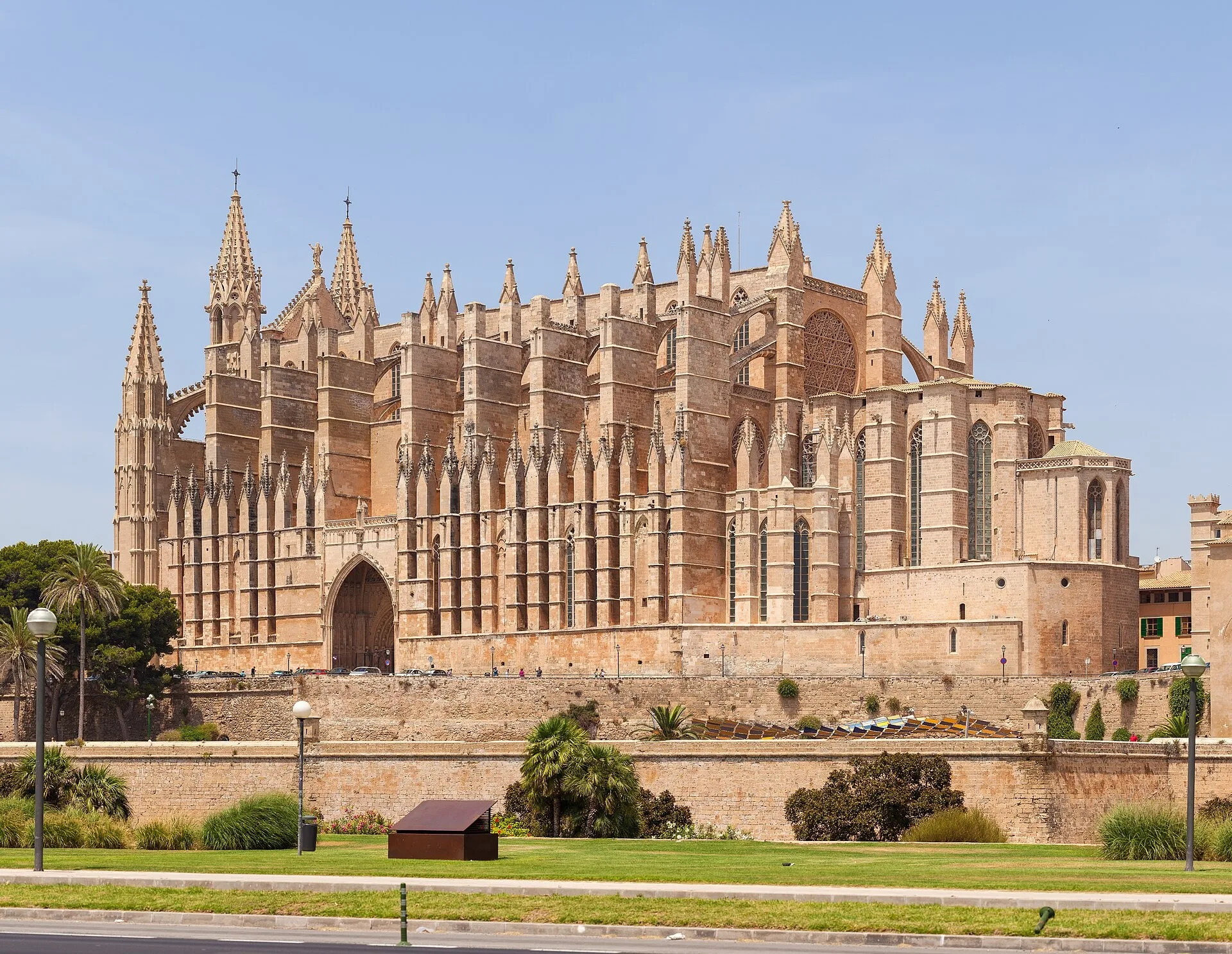

A couple spends a week in a four-star hotel in Mallorca: under the legal rate schedule, the tourist tax comes to €42 before VAT in high season. Nowhere near a general charge of €15 per night. Here are the rules to know, the applicable discounts and the criteria for choosing between Mallorca, Menorca and Sardinia without letting a tax alone decide your trip.
The €15 figure
The eye-catching amounts circulating about Mallorca’s tourist tax can change a holiday plan before you even start comparing hotels. For budgeting, the relevant reference is Article 13 of Balearic Law 2/2016, in its consolidated version published in the BOE. The text consulted sets rates from €1 to €4 per person per day of stay, depending on the accommodation category, before the reductions provided for by law. It does not set a general tax of €15 per night.
This distinction matters from the outset: a political proposal, a spending estimate or a headline mentioning an increase cannot be used to calculate an invoice. The applicable rate must correspond to a text in force, your dates and the exact classification of your accommodation. For a future booking, ask the establishment for the current amount and check the official ATIB page, the Balearic Islands’ tax authority, again.
The calculations below use the legal rate schedule before VAT. They are intended to compare like-for-like situations; the actual amount invoiced must be confirmed by the accommodation provider, including its tax treatment. Keep this consistent basis in mind when consulting tables: a figure excluding VAT and an invoice total are not directly comparable. The sources were checked on November 2, 2026; no rate schedule for summer 2027 is anticipated here.
Rates by accommodation type
The tax applies to stays in the categories of tourist accommodation defined by law. Hotels, tourist apartments, holiday rentals, rural accommodation, guesthouses, campsites and refuges are within its scope. Booking a house or apartment therefore does not automatically exempt you from paying it. The legal nature and classification of the accommodation matter more than how it looks on a platform.
For hotels, city hotels and apartment hotels, the rate schedule distinguishes three levels. Five-star, five-star grand-luxe and four-star superior properties are subject to the €4 rate. Four-star and three-star superior properties are subject to €3. One-, two- or three-star establishments are subject to €2. The “superior” designation therefore changes the calculation: an ordinary four-star property and a four-star superior property do not fall under the same rate.
Tourist apartments have their own classification: four keys and four keys superior are €4, three keys superior are €3, and one to three keys are €2. Accommodation marketed for tourist stays is listed at €2. Hostels, guesthouses, bed-and-breakfasts within the relevant categories and campsites are €1, as are hostels and refuges. The relevant rural establishments should be checked against their classification: the law provides for the star-category rate when they have opted for that classification.
All these amounts are for each taxable person and each day or part of a day of stay as defined by law. A room occupied by two adults therefore means two taxpayers. When comparing accommodation, ask for the exact category used by the operator; words such as “boutique,” “charming” or “luxury” in a listing are not enough to identify the tax rate.
Travelers and discounts
Children under 16 are exempt. A family with two adults and two children aged 8 and 13 therefore calculates the tax for two people. From age 16, the age-based exemption no longer applies. If a teenager’s birthday falls during the trip, ask the establishment to explain the calculation using the exact dates and bring documents that can verify the child’s age.
The tax low season runs from November 1 to April 30. The reduction is 75% of the base rate: an amount of €4 becomes €1, and an amount of €2 becomes €0.50, still before the invoice’s VAT treatment. May and October are outside this reduced-rate period, even if a brochure describes them as shoulder-season months. The marketing term “low season” does not replace the dates set by law.
A second reduction applies from the ninth day at the same establishment: subsequent days receive a 50% reduction. In low season, this reduction applies to the amount already reduced. For a long stay, you therefore need to separate the first eight days from the following days rather than multiply the full rate uniformly across the entire stay.
This rule gives a small tax advantage to a continuous stay. It does not mean you should forgo a useful change of base, but it is worth including in your comparison. Two different hotels mean two periods to consider. If your stay crosses November 1 or May 1, ask for a breakdown by date: applying the same season to the entire booking could produce a misleading estimate.
The cost of your stay
For seven nights for two adults between May and October, the calculation using the pre-VAT rate schedule comes to €56 at the €4 rate, €42 at the €3 rate, €28 at the €2 rate, and €14 at the €1 rate. These amounts represent the total for the couple, not an amount to be added a second time for each room. They assume seven taxable days of stay and no other exemption.
In an ordinary four-star hotel, two adults accompanied by two children under 16 therefore remain at a base of €42 for that week. With a 17-year-old and a 13-year-old, three people are taxable: the base rises to €63. The number of people actually subject to the tax sometimes explains the difference between two budgets better than the number of rooms booked.
For fourteen consecutive nights in the same four-star hotel, two adults pay on a base of eight days at €3, then six days at €1.50 each. The total comes to €66 before VAT. In the same category, a week for two between November and April gives a base of €10.50. For an establishment charging the higher rate of €4, the same low-season week comes to €14 for the couple.
These examples help put the tax in perspective within the budget. Between a week for two at the €4 rate and the same week at the €1 rate, the difference in the base amount is €42. By way of illustration, a €20-per-night difference in room price amounts to €140 over seven nights. This latter amount is a comparison scenario, not an observed hotel price. Accommodation and transportation therefore deserve just as much attention as the tax.
The bill and payment
Before paying for your accommodation, check whether the local tax is included, excluded, or listed as payable on site. A stay presented as “all-inclusive” may still have taxes payable separately; only the booking confirmation shows what has been included in the price paid. Ask for an amount covering all travelers and all dates, with any reductions and VAT clearly itemized.
The operator collects the tax from the traveler, and the law requires them to provide proof of the charge and its payment. Keep it with your accommodation invoice. If a single total line is difficult to understand, ask for a breakdown: the category applied, taxable persons, number of days, and reductions. This makes it possible to resolve a discrepancy without arguing solely about a figure found in an article.
For a rental, direct these questions to the manager identified in your booking. Using a platform does not make it possible to infer who has already collected which amount. If two parties ask for the same payment, show the existing receipt before making any further payment. If the disagreement persists, the ATIB information and the establishment’s supporting documents are the relevant records for having the calculation checked.
The budget beyond the tax
A meaningful comparison between islands starts with the same number of travelers, the same dates, and the same standard of accommodation. Then add transportation from your home, any necessary baggage, the arrival transfer, and the return trip to the airport. A cheaper ticket may require an extra night or a late arrival that changes the actual cost of the trip.
Car costs deserve a separate line: rental, selected coverage, fuel, and parking. For an itinerary focused mainly on urban Palma, the car may go unused for several days. For isolated accommodation and spread-out visits, it serves a different need. Compare a rental for selected days with one for the entire stay, factoring in the pickup and return conditions.
Also set aside a budget for the activities that motivate the trip. An excursion with transportation and a meal may replace several separate expenses, but you need to read the exact package details. An introductory price for customers arriving in their own car is not the cost of a day with a driver. Booking platforms consolidate prices and variable details; the trip budget should be based on the options you will actually use.
Finally, leave some room for the weather. A postponed day at sea may require you to reorganize your visits, while well-located accommodation lets you enjoy the city without additional transportation costs. A lower tax does not always make up for a stay where every activity requires a long extra journey.
Majorca outside summer
Majorca remains appealing to travelers who want to combine a city, villages, and mountain scenery. Palma can serve as a base for a first cultural discovery, while the Serra de Tramuntana gives the stay a different focus. The island’s interior also offers the opportunity to plan days around small towns and local cuisine, without having to change beaches every morning.
Between November and April, the tax reduction is tangible, but your choice of season should reflect your activities. A stay focused on urban walks and heritage requires different planning from a week of swimming. For mountain walks, adapt your route to the weather, daylight hours, and your experience. A mild day on the coast does not indicate the conditions on a higher-altitude route.
You should also check the transport services for your dates. The TIB portal brings together the interurban network’s routes, timetables, and alerts; its switch to winter timetables is a useful reminder that services vary by season. Check both the outbound and return journeys before choosing a self-guided excursion, then review the route between your accommodation and the stop. A village that looks accessible on a map may require more planning at the end of the day.
For a short stay, we recommend using Palma as a base and taking just one trip outside the city. Over a week, you can add more time in another area if the itinerary warrants it. This suggested pace is intended to limit transfers and related costs, without claiming that winter is invariably cheaper across all expense categories.
Palma on foot and independently
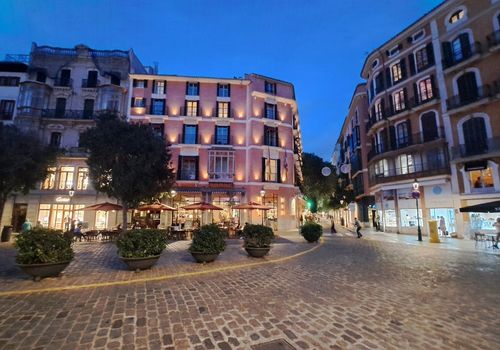
A day in Palma can take in the squares of the old town, the area around the cathedral, and the La Llotja district. The advantage of this plan is that you can spend time in the city while limiting motorized travel. You can choose separately which monuments you want to visit inside and take a break whenever the group needs one.
For a guiding thread in French, the WeGoTrip audio guide focused on the Gothic and civic heart of the city follows a route between Plaça de Cort, several central locations, and the waterfront. The stated duration is 3 hours 48 minutes, which you can adjust to allow for stops. The product includes the audio and the route on a smartphone; monument admission tickets and headphones are at your expense.
The provider describes this content as AI-generated. We have selected it for its self-guided format in French and its flexibility, especially if you prefer to split up the walk. Download the route before setting out so you can use it offline in the app. For access requirements and opening hours, check the monuments’ own information when planning your visit.
WeGoTrip
Palma: self-guided audio tour of the Gothic and civic heart of the city
Discover central Palma at your own pace in French, without a car. Download the route before setting out; this AI-generated audio guide does not include monument tickets.
Self-guided audio tour in French of central Palma; smartphone route, monument tickets, and headphones not included. The provider notes that it is generated by AI.
From €7.00
View activityA day in the Tramuntana
A guided trip may suit travelers who want to add a day among the scenery of the Tramuntana and the Sóller Valley without organizing every visit themselves. The tour listed in our selection combines heritage stops, tastings, and a meal at Can Det, along with an introduction to olive oil production and the local orange-growing culture.
Two options should be distinguished. The version using the client’s car lasts about five hours and uses communication equipment between vehicles; the car and fuel remain your responsibility. The version with pickup lists a duration of about six hours in the product option. Confirm your pickup location and explicitly select this option if you are not driving.
The available languages are English, German, and Spanish. This excursion is therefore intended for travelers comfortable in one of these languages. Compare the total cost of your selected option with the cost of organizing your own day, taking into account the included visits and meal. It provides guided support outside Palma; the city audio guide serves a different purpose and does not cover this excursion.

Viator
Tramuntana and the Sóller Valley: tour with visits and a meal
For a guided day outside Palma with visits and a meal at Can Det. If you do not have a car, select the pickup option: the introductory price does not guarantee this option. Guide in English, German, or Spanish.
- 5 hours with your own car; about 6 hours with the pickup option
- 5/5 (7 reviews)
Guided discovery of the Tramuntana and the Sóller Valley, with visits and a meal at Can Det. Choose between using your own car or pickup; available in English, German, or Spanish.
Cancellation policy
For a full refund, cancel at least 24 hours before the scheduled departure date.
From €75.00
View activityMenorca for a different itinerary
Menorca is worth choosing for its landscapes and pace, but it is subject to the same regional tax on tourist stays. Changing islands within the Balearics therefore does not make the tax disappear. With the same dates and tax category, the calculation works the same way. Any potential savings should come from an actual accommodation and transport quote, rather than from this island boundary alone.
The Menorca tourist office highlights its coves, the heritage of Maó and Ciutadella, and its Talayotic sites. This combination suits a trip that makes room for walks and the island’s history. For a first week, choose a base according to the visits you prioritize, then consider the travel involved. Having many beaches does not mean you can visit them all without a journey or an approach on foot.
Autumn may appeal to those who want to combine towns, heritage, and outdoor activities in a less summery atmosphere. The weather during your stay will nevertheless determine how much room to give coastal outings. In November, plan a varied enough itinerary to enjoy the island without relying on swimming or on a specific boat trip.
Between Majorca and Menorca, the useful question is what you want from your holiday. Palma and the Tramuntana suit a desire for a city and mountainous scenery; Maó, Ciutadella, and Menorca’s landscapes offer a different combination. For a car-free stay, choose your neighborhood, transport links, and season before booking accommodation far from the places you want to visit.
Sardinia by region
Sardinia is an alternative if you want a change of scenery, heritage, and travel style. Its appeal goes beyond comparing taxes: its indented coastline, villages, and inland mountains make for very different trips depending on the region you choose. For a week, it is better to pick a cohesive area than to try to connect the island’s main sights all at once.
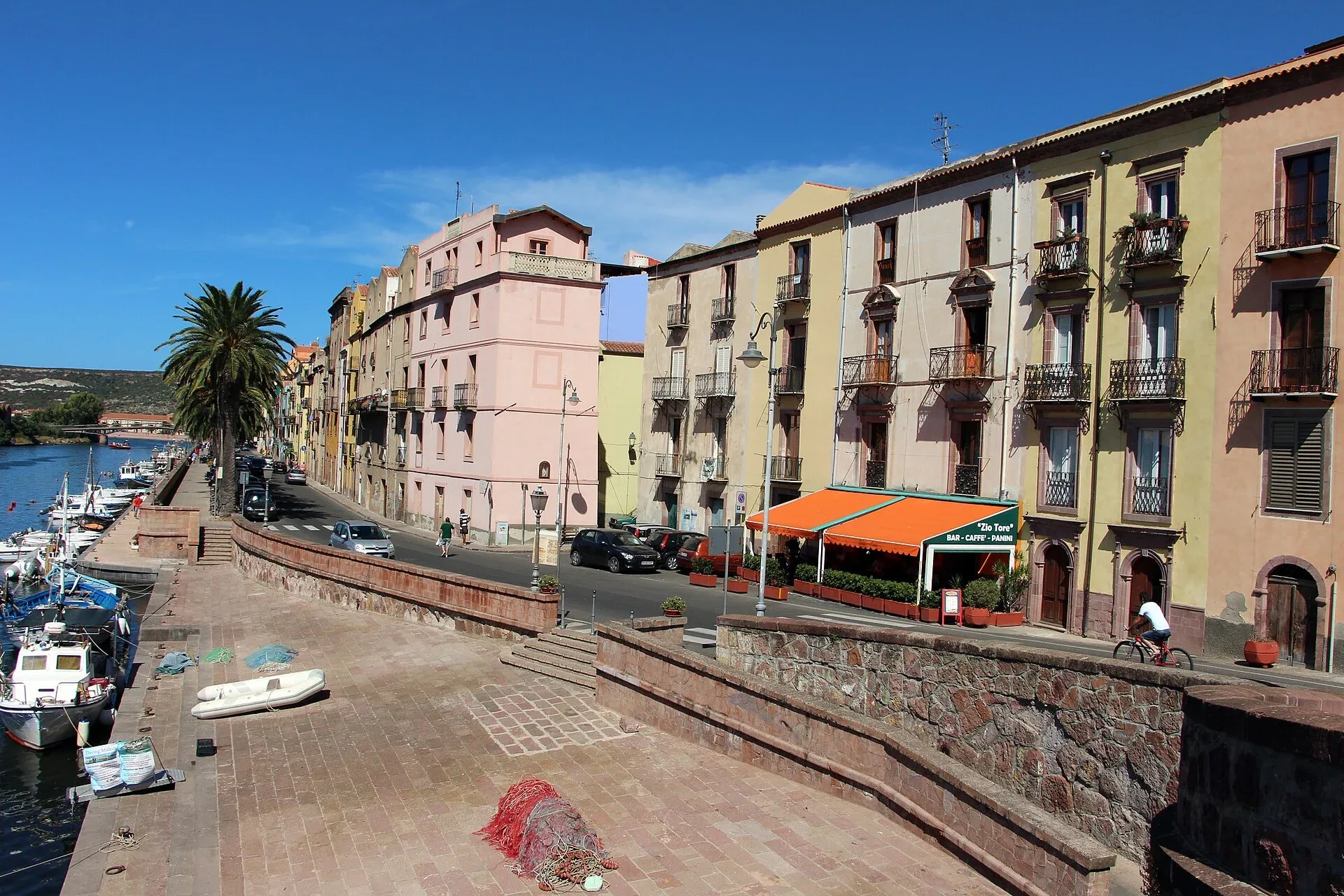
In the northeast, a stay can focus on the coastline and granite landscapes. The east-central area combines the sea with more limestone scenery. In the west, Bosa offers a different mix of town walks and riverside surroundings; in the south, you can plan a stay around Cagliari and nearby sights. Our guide to the regions of Sardinia details these base options and the activities available in each.
Sardinia should not be presented as a destination guaranteed to be free of tourist tax. Check local rules with the municipality and accommodation you choose. Ask for the total for your travelers and dates, then add transport, parking, and activities. Without this comparison, an apparently lower local tax may conceal a more expensive journey from your departure city.
The climate also varies between the coast and inland areas. The regional tourist office describes colder winters inland, with snowfall in the mountains. In spring and autumn, hiking and cultural visits can take up more of your itinerary. Choose your dates around these activities, checking which services are open and the local conditions, rather than expecting a full extra week of beach weather everywhere.

Choosing based on your holiday
For a few days without a car, Palma has an organizational advantage if the flights and accommodation fit your budget: a day on foot, separately chosen visits, and perhaps a guided outing are already enough to make a stay. The tax amount then becomes a verifiable line item, with a substantial reduction when your dates fall between November and April.
For a week centered on coves, walks, and island heritage, consider Menorca, bearing in mind that it follows the same Balearic tax framework. For a trip that combines more Italian coastal regions with inland mountains, compare a specific area of Sardinia. In either case, the final price should be based on accommodation and transport actually researched for your group.
Before deciding, put together three comparable totals: accommodation including taxes, getting there and traveling locally, and the activities you actually want. For mobile connectivity, first check how much data your plan lets you use in the European Union. Spain and Italy fall under the EU roaming framework and its fair-use conditions, so an extra eSIM is not an automatic expense. This is the same principle as checking the tax: pay for an identified need, within the right scope.
FAQ
Does the tourist tax in Majorca reach €15 per night?
The rate schedule in Article 13 of the Balearic law consulted ranges from €1 to €4 per person per day, before discounts and VAT treatment. It does not list a general tax of €15 per night. For your booking, ask the accommodation provider for the updated total, specifying the accommodation category and dates; do not calculate your budget based on an increase that has only been mentioned.
Do children pay the tourist tax?
Travelers under 16 are exempt. A person who is 16 is no longer covered by this age exemption. Provide the actual ages when booking and keep proof of age. If someone has a birthday during the stay, the property should specify how the charge is calculated for the relevant dates.
When does the low-season reduction apply?
The reduced tax period runs from November 1 to April 30. The 75% discount applies to the accommodation’s statutory rate. October and May are outside this period. For a stay spanning both periods, ask the property to provide a date-by-date breakdown.
Does the tax go down for a two-week stay?
From the ninth day at the same property, the reduction is 50% for the days concerned. The first eight days are calculated at the rate applicable on those dates. In low season, the long-stay reduction applies to the amount already reduced; ask for this breakdown in your stay estimate.
Does a holiday rental avoid the tax?
The law covers accommodation marketed for tourist stays. A rental is therefore not exempt by default. Check who collects the tax, what has already been paid, and which category was applied. The booking platform and property manager should make it possible to distinguish the accommodation price from any remaining amount due.
Is Menorca an alternative without an ecotax?
Menorca is part of the Balearics and subject to the same regional system. It may be a better fit for the kind of trip you want, but changing islands does not eliminate the tax. Before concluding that you will save money, compare the full accommodation costs, flights, and local transport for the same dates.
Can you explore Majorca without renting a car?
If you stay in Palma, you can plan days on foot, then choose trips based on TIB timetables or book an excursion with transport. Check the return connections and the exact departure point. For the Tramuntana tour presented here, booking with your own car and booking with pickup are two separate options to select at the time of reservation.
Where can you check an amount charged by the hotel?
First ask for an itemized statement showing the category, taxable travelers, days, and reductions. The ATIB official page links to the consolidated law and tax information. Keep your booking and proof of previous payments: they allow any discrepancy to be reviewed against specific details.
Sources and checks
Plan your visits and check current conditions.
- Consolidated Law 2/2016 on tourist stays
BOE — Autonomous Community of the Balearic Islands · Accessed November 2, 2026
What this source supports
Articles 4, 5, 10 to 13 and 19: scope, exemption for children under 16, rates from €1 to €4, low season from November 1 to April 30 with a 75% reduction, 50% reduction from the ninth day at the same establishment, supporting documents. Examples in the text exclude VAT.
- Tax on tourist stays
Agència Tributària de les Illes Balears · Accessed November 2, 2026
What this source supports
Scope of accommodation and access to the consolidated text. Confirm the invoice total with your accommodation provider.
- Destination Mallorca
Consell de Mallorca · Accessed November 2, 2026
What this source supports
Palma, Serra de Tramuntana, inland areas and coastline: a variety of places to stay.
- Interurban transport in Mallorca
Consorci de Transports de Mallorca · Accessed November 2, 2026
What this source supports
Routes, schedules, alerts and payment information; winter schedules announced to start on November 1.
- Autumn in Menorca
Fundació Foment del Turisme de Menorca · Accessed November 2, 2026
What this source supports
Maó, Ciutadella, Talayotic heritage, museums and nature activities. The former wording about a UNESCO application is not included.
- Sardinia’s climate
Regione Autonoma della Sardegna · Accessed November 2, 2026
What this source supports
Coastal and inland climates, lower temperatures inland, and possible snow in the mountains. Seasonal advice, with no weather guarantees.
- Mobile roaming costs
European Commission — Your Europe · Accessed November 2, 2026
What this source supports
EU roaming framework and fair-use conditions.
- Palma: self-guided audio tour of the Gothic and civic heart of the city
WeGoTrip · Accessed November 2, 2026
What this source supports
Product 26699: French, indicative duration 3 h 48, AI generation disclosed, app and offline download. Monument admission tickets and headphones are excluded.
- Tramuntana Hidden Places Self Drive Guided Tour
Viator — supplier listing via Partner API · Accessed November 2, 2026
What this source supports
Active product 28965P391; TG2 is five hours using the customer’s car, with the car and fuel excluded; TG4 is about six hours with pickup depending on the option. Visits and meals at Can Det; languages: English, German, Spanish.
- Kathedrale von Palma II.jpg
Wikimedia Commons — Thomas Wolf · Accessed November 2, 2026
What this source supports
CC BY-SA 3.0 DE; original file 6623 × 5127. A derivative was downloaded and checked at 1920 × 1486, without upscaling; the bytes were uploaded.
- Bosa, fiume temo, case.JPG
Wikimedia Commons — Sailko · Accessed November 2, 2026
What this source supports
CC BY-SA 3.0; original 3456 × 2304. Media for record ralph-27099-bosa: existing local file checked at 1920 × 1280 and photograph visually verified. Remote storage was checked through server validation.
Booking partners
Information about the offers featured in this article.Affiliate links: Odyvero may earn a commission when you book through this article’s buttons.
- Viator : Tramuntana and the Sóller Valley: tour with visits and a meal
Accessed November 2, 2026
- WeGoTrip : Palma: self-guided audio tour of the Gothic and civic heart of the city
Accessed November 2, 2026


