 odyvero


Traveling solo after 50 gives you plenty of freedom over what you visit, your schedule, and the people you meet. First, though, you need to book the right kind of trip: a room where you can sleep well, company when you want it, and an itinerary that suits your energy. This guide helps you compare independent travel, small-group trips, and women-only tours, with a cultural trip to Santiago de Compostela as an example.
What you want from your next trip
A museum no one wants to accompany you to, a week free outside school holidays, the desire to walk or reclaim some time for yourself: the reason for your trip already points you in a direction. Before comparing destinations, picture what you would like to do on an ordinary day of the trip. This often reveals your needs better than a beach photo or a packed itinerary.
Some women travelers want to choose every meal and visit. Others mainly want to stop organizing transport while keeping their own room. Still others are looking for a shared activity after several days alone. These expectations can change during the same trip. You can enjoy traveling solo and book several guided activities without having to adopt the identity of a completely independent traveler.
After 50, travel experience varies as much as personal circumstances. A woman used to business travel may be new to solo vacations; an experienced hiker may prefer to delegate transport; someone else may need time to imagine traveling after a separation. Your age can help clarify some expectations, but your experience, health, and preferences determine how you organize the trip.
To choose between two plans, identify three concrete priorities. For example: a quiet single room, cultural discovery, and a few chances to talk with others. Use these to assess each option. An offering that meets these needs deserves more attention than a long list of excursions you will only partly enjoy.
Independence and company by choice
A completely independent trip suits you if you like making decisions day by day. You book your accommodation, transport, and activities separately. You can have a late lunch, spend a morning at a single place, or change your plans after a poor night's sleep. This flexibility means knowing whom to contact if a journey changes or a booking causes a problem.
A small group lets an organizer handle some of these decisions. To understand what you are buying, look at a detailed day-by-day itinerary: departure time, travel, group meals, free time, and overnight stay. Two trips of the same length can have very different rhythms. A small group may spend a lot of time in a vehicle; a more flexible option may require you to make more of your own decisions during the day.
A middle-ground option works well when you want to preserve your independence without having to manage everything alone. Stay in the same hotel for several nights and add a guided tour, a workshop, or an accompanied day trip. These activities give the trip some structure; the remaining hours are yours. You choose when to be with others instead of having company imposed on you for the whole week.
Finally, consider how comfortable you are communicating in a particular language. A tour conducted in a language you struggle to understand can be more tiring than a self-guided walk. For a trip lasting several days, the language used for explanations, conversations with the guide, and practical instructions matters from the moment you book.
The room and a good night's sleep
A single room is often a worthwhile expense to protect when sleep affects how much you enjoy traveling. Ask what the description includes: a room for one person, the type of bed, bathroom, window, ventilation, and location within the property. A small room under the roof and a double room for sole occupancy may be sold under similar descriptions.
The neighborhood also affects how well you sleep. A central location makes it easier to come and go, but the room may face a busy street. Check recent reviews for comments about noise, then ask your accommodation provider a specific question: do the rooms available on your dates face the street or a courtyard? Also ask what happens if you arrive after the usual check-in time.
If you need a particular room temperature, an elevator, or an easily accessible shower, confirm the facilities in the room you have booked. An elevator in the building does not tell you whether there are a few steps between reception and your floor. Written confirmation can prevent a detail from complicating every outing once you arrive.
A dormitory or shared room can still be a good choice if you enjoy that atmosphere. Think about schedules, lighting, storage, and how much privacy you want. Booking your own room after several nights in shared accommodation can make a multi-stop trip more enjoyable. Rest deserves as much attention as sightseeing.
Understanding the single supplement
On a tour, the advertised starting price often assumes a room shared by two people. The single supplement is the additional charge for sole occupancy under the trip's terms. Compare the total price for your booking, including the nights it applies to and any exceptions. Even one shared night on a train or in a guesthouse may matter to your decision.
For example, Intrepid's page about solo travel says accommodation is generally in a shared twin room, with the option of a paid single room on most trips. Some accommodation remains shared depending on the itinerary. This illustrates a question to ask any operator: where will you sleep alone, and where will sharing still be required?
An offer advertised as “no single supplement” also deserves scrutiny. It may provide a shared room with another participant, or include a room for sole occupancy. Check what happens if no roommate is available, as well as the terms for changing rooms during the trip. Do not base your budget on having your own room unless this is explicitly confirmed.
To compare two tours fairly, ask for the final price for one person with your preferred room arrangement. Add the meals not included, transfers, and optional activities you genuinely plan to do. This total helps you decide whether the comfort of having a guide justifies the price.
Women-only trips
A women-only trip can meet a desire for company, an interest in local encounters, or the wish to travel in a setting that suits you better. Read the programme details: who leads the trip, what activities are planned, how much time is devoted to socializing, and how is free time arranged? The label alone tells you little about what day-to-day travel will be like.
Intrepid’s Women’s Expeditions range advertises groups of no more than twelve women, led by female guides. It welcomes women of different ages. These are features of this range and should be distinguished from the tour operator’s other trips. If you want to travel mainly with women from your generation, ask whether the departure has an explicit age requirement.
A similar age does not guarantee compatible travel styles. Ask the operator about long days, walks, early starts, and consecutive nights in different places. A 70-year-old traveller may want a full-on itinerary; another traveller aged 50 may prefer more breaks. What matters is information about the effort involved and how the trip is organized.
Before paying, also check the cancellation terms and how departures are confirmed. Ask what happens if the minimum number of participants is not reached. Wait for clear confirmation before committing to non-refundable transport, or choose change terms that suit this risk.
Communities for women travellers
A community can provide practical feedback before you book: the quality of a room, how easy a transfer was, the pace of an excursion, or how a solo traveller was welcomed at a restaurant. JourneyWoman, for example, offers English-language resources aimed at women travellers over 50 and a directory of businesses. You can explore options there, then check the services directly with the organizers.
To get a useful answer in a group, ask a specific question. “Did you stay alone at this accommodation, and was it quiet?” is more informative than a general question about the best country for solo travel. Include your dates, how you plan to get around, and your needs, without posting your exact address or booking details.
Recommendations from members are specific to their circumstances. Someone who shared a room, drove a car, or travelled in summer will not have faced the same constraints as you. Check the decisive details in the official terms: an old account does not confirm current schedules, what a tour includes, or insurance coverage.
If you are considering travelling with someone you met online, first discuss budget, sleeping arrangements, pace, and how you would handle a disagreement. A brief meeting in a public place, followed by a short outing, gives you an initial sense of how well you get along. Keep your documents, payments, and a way to return under your own control.
Meeting people day to day
Regular activities make it easier to talk to people without having to become highly sociable on the first evening. Returning to the same café, taking a class, or choosing an activity based on a particular interest gives you common ground. You already have something to talk about, even if you do not want to share anything personal.
You can also plan a group activity after two days on your own. This pace avoids booking the whole week to address a passing concern. If you enjoy someone’s company, continue the conversation over coffee; if you would rather go back to your room, the end of the activity provides a natural break.
At a restaurant, choose the setting you genuinely prefer: a quiet table, a counter, or a longer lunch. A book or notebook can keep you company while you wait, without requiring you to stay occupied for the whole meal. You are entitled to ask for a comfortable table and to refuse a seat that makes you feel uneasy.
Meeting people does not commit you to anything further. You can accept a conversation and decline an excursion, or share a meal and keep your hotel to yourself. Having a simple way to say no ready can sometimes make these interactions easier. Your itinerary can still change, even after you have met people you like.
The pace and actual effort involved
To assess a day, look at how the different demands add up: travelling with luggage, standing in queues, cobblestones, stairs, sightseeing, and the return journey. A tour described as cultural can involve a lot of walking. Ask how much time you will spend on foot each day, what the terrain is like, and whether there will be opportunities to rest, rather than relying on a general rating such as “easy.”
Before a multi-day walking trip, try a day that resembles what you have planned: the shoes you will travel in, a small bag, and a similar length of outing. You can adjust your gear and distances based on recent experience. For a walking pilgrimage, the Xunta de Galicia recommends preparing gradually before departure, wearing shoes that have already been broken in, and carrying a light pack.
Rest should be built into the itinerary you book. An afternoon described as free is of little use if you have to spend it transferring or doing laundry before a very early start. Check accommodation changes and how much time there is between activities. Several nights in the same place give you useful flexibility to recover or adjust a visit.
If you have persistent pain, a chronic condition, or questions about an unusual level of exertion, plan the trip with a healthcare professional. An operator’s information describes an activity; it does not determine whether it is suitable for you personally. You can keep the destination and choose another way to explore it.
Health, medication, and privacy
If you take medication, gather the information needed to continue your treatment: your prescription, medication names, and useful contact details. Check the rules for carrying the products and entering the country with them. A medication that is easy to obtain in France may be subject to different conditions elsewhere; check before you leave.
If you are travelling in a group, tell the organizer about any needs they must know to accommodate you, without feeling obliged to explain them to all the participants. A room near the bathroom, a dietary requirement, or regular breaks may require advance arrangements. Ask them to clarify what can be guaranteed and what will depend on the accommodation.
Comfort during perimenopause or menopause may also inform simple choices: ventilation, access to water, layers that are easy to remove, breaks, and privacy. If symptoms interfere with sleep or activities, discuss them with your doctor. This article does not offer treatment, and no trip is presented as a medical solution.
For a European destination such as Spain, request your European Health Insurance Card in advance. Ameli recommends applying at least fifteen days before departure and provides a provisional replacement certificate when there is less time. Coverage follows the rules in force at your destination; you may still have expenses to pay.
Insurance and assistance
Consider medical expenses, assistance, and repatriation separately. The EHIC provides proof of entitlement to necessary care during your stay in participating countries; it does not replace comprehensive travel insurance. Ameli recommends checking which costs you may still have to pay and what coverage a specific policy offers for your destination.
The relevant terms are in the policy: countries covered, maximum trip duration, coverage limits, deductibles, exclusions, and whether pre-existing conditions are covered. Some policies also have age-related conditions. Ask about your exact situation before taking out a policy. The label “senior insurance” is not enough to explain what it covers.
Also check that the planned activities are covered. A city walk, a multi-day hike, and an activity at altitude may be subject to different conditions. For a guided tour, ask about the tour operator’s insurance requirements. Intrepid, for example, states that its travellers must have travel insurance; that requirement alone does not tell you which policy is right for you.
Keep the assistance number and contact procedure available offline, along with a copy accessible to someone you trust. If you have medical expenses or your transport arrangements change, keep the necessary documents and receipts. It is easier to deal with things when you already know whom to contact and what information to provide.
Safety guidance
Preparation begins with the country's travel advice and local guidance. Read the sections relevant to your plans: transport, health, weather, and activities. In Galicia, as elsewhere, a rainy spell can affect walks and transport. A national rating does not describe the condition of a street, trail, or route on the day you visit.
While there, keep a return option you understand. Familiarize yourself with the route to your accommodation during the day, and keep its address available offline. If a situation makes you uncomfortable, go into an open establishment, ask the staff for help, or choose identifiable transport. You can change your plans without having to justify your decision to someone you have only recently met.
The French Ministry's Fil d'Ariane service allows eligible travelers to receive alerts during a stay abroad of less than six months. The service does not geolocate registrants and does not replace insurance. It complements official information and communication with someone you trust.
Agree with that person on a reasonable check-in schedule and what to do if you do not respond. Privately share your accommodation and important travel details. This way, you can avoid publishing your precise location to strangers while keeping a useful point of contact during your stay.
Compostela as a cultural stay
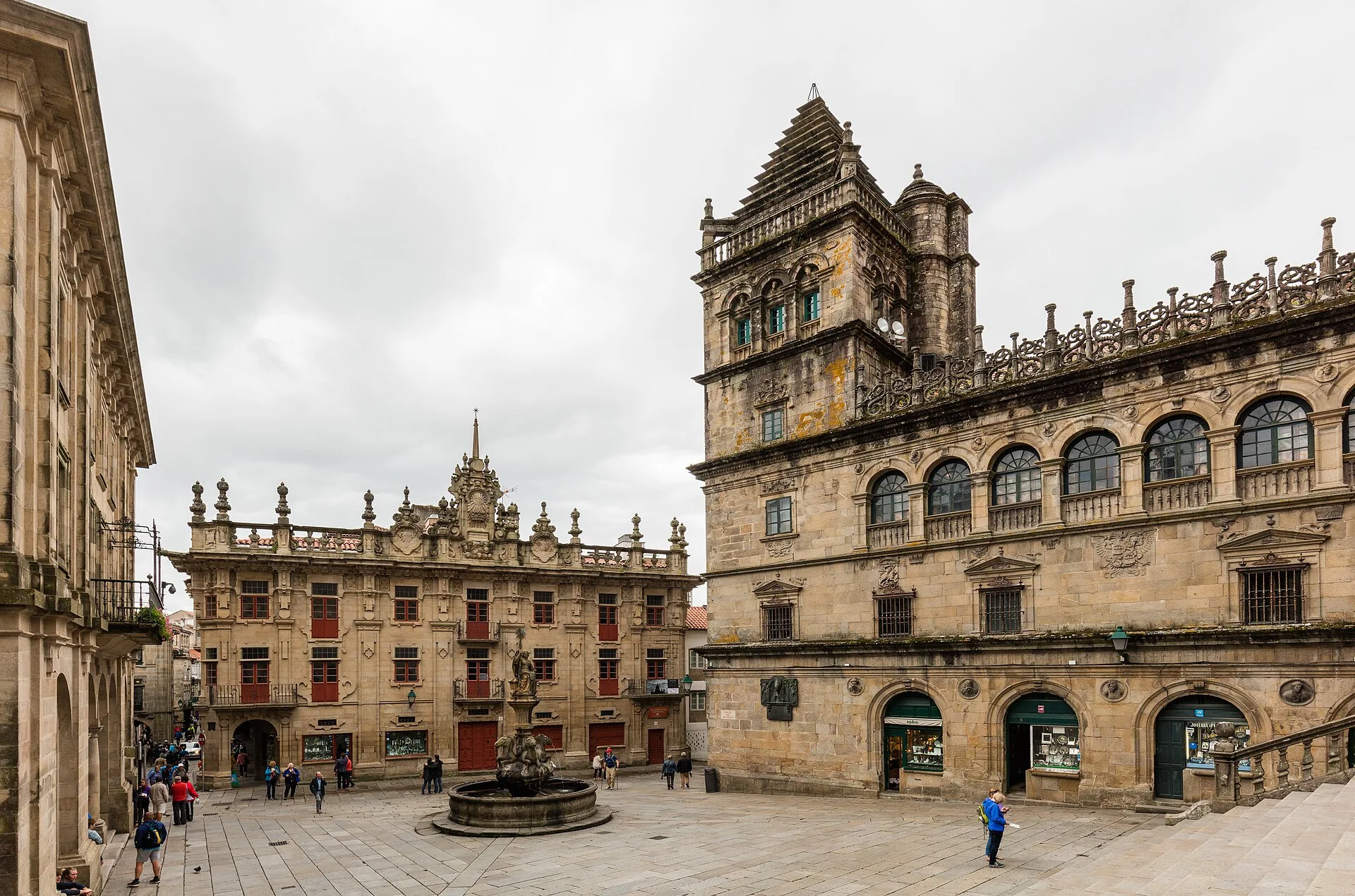
Santiago de Compostela makes it possible to plan a stay around a historic center, squares, a market, and walks, without undertaking a pilgrimage. This is an appealing option for a traveler who wants to spend several nights in one place and plan a few visits on foot. It also leaves open the option of booking occasional guided tours rather than a full itinerary.
Around the cathedral, the squares provide easy-to-find landmarks on a map. Obradoiro, Quintana, and Platerías offer different perspectives on the monumental complex. You can devote one outing to these exterior areas, then set aside another time slot for the indoor spaces that interest you, according to their current access arrangements.
Mercado de Abastos offers a different morning destination. The tourist office locates the market at Travesía de Altamira and says its current building dates from 1941. Plan your visit for a day when it is open: the published hours exclude Sundays and some holidays. The market is a way to explore local produce without turning every meal into a planned reservation.
Alameda is another possible walk to include depending on your energy and the weather. Cobblestones and rain call for suitable footwear; for specific accessibility needs, check the route with the tourist office and your accommodation. A historic center's size does not guarantee that there are no stairs or uneven paths.

Four nights in one base
We suggest four nights to allow for three full days, with arrival and departure separate from the main visits. This duration is a pacing choice that you can adapt to your transport arrangements. It lets you keep one day flexible without committing to a long trip or changing hotels to explore the surrounding area.
You can use arrival day to settle in, have a meal nearby, and familiarize yourself with the way back. The next day, the cathedral squares provide an initial point of reference. If you have booked a guided tour, it is best to schedule it early in your stay so you can use the landmarks you learn about during later independent outings.
The second full day can combine the market, when it is open, with an indoor visit chosen to suit your interests. Leave time between the two: you will be able to have lunch without rushing and return to rest. An appointment in the late afternoon is worthwhile only if you want it, not just to fill a slot in the itinerary.
Keep the third day for exploring a place in more depth, enjoying a walk, or taking part in a cultural activity confirmed with the tourist office. This flexible time also accommodates a rainy day or a change in energy. For your return, check the actual schedules and your transport's conditions; this itinerary does not assume that any particular rail or air route will be operating.
A private tour in Spanish
The Private Tour of the Secrets of Santiago, listed as 281562P2 on Viator, is an option for a traveler who understands Spanish and wants to talk with a guide. The listing consulted describes a two-hour outdoor tour. The itinerary includes the area around the cathedral, streets in the historic center, and the market district.
This option suits you if you like asking questions and having an appointment dedicated to your discoveries. It can fit at the start of an independent stay. Spanish is the only language indicated; your booking should match your actual ability to follow the explanations throughout the walk.
The private nature of the tour does not mean it is a meetup with a group of women travelers. For that, look for a group activity whose format is explicitly stated. Here, the value lies in one-on-one guidance and cultural content. The product promises neither a women's community nor a specific service related to age.
Tickets to indoor spaces are not included in the outdoor tour described. Check the meeting point, time slot, and total price for one participant when you book. The listing presents the available commercial information for this exact product; the starting price does not remove the need to verify the selected option.

Viator
Santiago de Compostela: Private Tour in Spanish
For a Spanish-speaking traveler who wants a one-on-one conversation with a guide at the start of her stay; private outdoor tour, with no indoor admission tickets included.
- 120 min
- 5/5 (25 reviews)
An outdoor cultural tour with a Spanish-speaking guide, to get your bearings in the historic center during an independent stay. Private tour; indoor admission tickets not included.
Cancellation policy
For a full refund, cancel at least 24 hours before the scheduled departure date.
From €50.00
View activityThe city and the pilgrimage
A stay in Santiago and several days on the Camino require different preparations. For a cultural visit, you can return to the same address each evening and adjust your outings. A walking pilgrimage adds stages, luggage, successive accommodations, and transport options for when you want to stop walking.
If the Camino appeals to you, take the time to plan it separately. Consult the Xunta de Galicia's routes and recommendations, then choose stages compatible with your recent experience. Check distances, terrain, and service opening times for the route you select. No hiking track or walking duration can be inferred from a photograph alone.
Encounters on a well-traveled route remain unpredictable. People may walk with you for a few hours, then continue another way. Keep your own accommodation and transport arrangements, even when you meet pleasant company. Your comfort should not depend on an improvised group whose expectations or pace may change.
You can also stay in the city first to experience the atmosphere of the arrivals and think about a future walking trip. This first visit does not commit you to any distance or certificate. A cultural visit is valuable in its own right, even if you do not continue on the trails afterward.
Budget for one person
A useful budget distinguishes fixed costs from those you can adjust. Transport to the destination, your room, any insurance, and necessary transfers make up the baseline. Then come meals, visits, and local transport. Calculate the stay for one person, without hypothetically splitting the cost of a room or car.
For a getaway such as Santiago, ask for the room price on your chosen dates and compare cancellation terms. A slightly more expensive location may suit you if it makes the return journey easier and helps you sleep better. Look at the total cost of the stay rather than an isolated saving on one night or transfer.
Prices and reviews for bookable activities should be checked in the current listings. They can change according to dates and options. For a private tour, pay particular attention to the billing unit and the total for an individual booking. Booking alone does not automatically mean you will pay a rate divided by the maximum number of participants.
Finally, set aside an accessible reserve for an extra night, a changed return, or an unexpected journey. The amount depends on your destination and ticket conditions. You can fund this buffer by cutting an optional activity before departure, rather than counting on assistance or an immediate refund during the trip.
Your phone and documents
In Spain, a French subscriber can often use their plan under EU roaming conditions, subject to the limits and fair-use rules set out in the contract. Check the available data allowance and included services before buying an additional eSIM. For this city break, a new SIM adds nothing if your plan already covers your needs.
Whatever phone you use, save your tickets, accommodation address, and useful contacts so you can find them without an internet connection. An offline map and a charged battery make getting around easier. Also keep essential information on a separate medium: losing a device should not prevent you from finding your accommodation or contacting assistance.
For travel outside your usual coverage area, check connectivity requirements for the specific country. An eSIM in particular requires a compatible, unlocked device. Check coverage, validity period, and whether calls or SMS are included; a data plan may provide internet access only.
Keep your documents and payment methods under your control when meeting new people. You can arrange a shared meal without sharing your booking details or identity document. The sociable side of travel is compatible with keeping this information private.
Life transitions
A separation, bereavement, children leaving home, or the end of working life can change the way you travel. If your plans coincide with one of these periods, choose an arrangement that gives you the option to step away or change plans. A private room and occasional guided activities can offer a combination of privacy and company.
You do not have to turn the trip into a personal test. Decide what would make this holiday satisfying for you: seeing the sea again, discovering a cultural site, spending several days without obligations, or getting back into walking. These goals are yours and can be modest. No trip guarantees any particular emotional change.
For a longer stay, consider the practical questions that are less apparent on a short trip: laundry, medication refills, insurance coverage for the entire period, looking after an empty home, and access to your usual services and accounts. Also check entry and stay requirements for your nationality. An extension must be arranged before the relevant documents or coverage expire.
When you return, note which choices you would keep: the number of nights in one place, the company you enjoyed, the type of room, and the expenses that were genuinely worthwhile. These observations will help you book your next trip. You can stay longer, travel farther, or choose the same arrangement again, depending on what you learned from the experience.
FAQ
Is it too late to start traveling alone after 50?
You can start at this age by choosing arrangements suited to your experience and needs. A cultural stay based in one place, with a private room and one guided outing, lets you try different levels of independence. Your health and the planned activity determine what precautions are useful; the number of trips you have already taken is not an eligibility requirement.
Should I choose a tour reserved for women over 50?
This choice can make it easier to find the kind of social setting you prefer, but you should examine the actual itinerary. Check the stated age requirement, group size, pace, and sleeping arrangements. A women-only departure may include several generations. A mixed group may also suit you if the activities, language, and arrangements match your expectations.
Can I have my own room without paying a single supplement?
Some offers may include a room for single occupancy in the total price. Other offers advertised as “no single supplement” involve sharing with another participant. Written confirmation should specify the room type, the nights covered, and any exceptions. Always compare the total cost for the sleeping arrangement you actually want, rather than just the advertised starting price.
How can I meet people without sharing my whole trip?
A group tour, workshop, or regular activity provides an initial opportunity to connect. You can book one activity midway through several free days and then decide whether you would like more company. Shared meals and conversations are optional. A private tour, such as the one described in Santiago de Compostela, provides personal guidance but does not bring together a group of travelers.
What budget should I plan for a solo trip after 50?
It depends mainly on the destination, dates, room, and transport. Ask for actual prices for one person, add the meals and activities you want, then set aside a reserve for unexpected expenses. Compare tours after accounting for meals not included, transfers, and supplements. No universal daily budget accurately describes both an independent stay in Europe and a multiweek guided trip.
Is the EHIC enough for traveling alone in Spain?
It certifies your entitlement to medically necessary care during your stay, under the rules applicable there. It does not replace insurance with suitable coverage, particularly for assistance or repatriation. Check your existing policies before adding another one, including their limits, exclusions, age conditions, and coverage period. Ameli recommends applying for the card sufficiently early before departure.
Can I visit Santiago de Compostela without walking the Way of St. James?
Yes. You can book accommodation in the city and plan a stay centered on the cathedral squares, the market, cultural visits, and walks. Four nights give you three full days according to the itinerary proposed here. You do not need to walk any pilgrimage route to enjoy the city. A future walking trip should be planned separately, with its own route and accommodation.
Is the Secrets of Santiago de Compostela tour conducted in French?
The listing for product 281562P2 that was consulted specifies Spanish only. You need to understand Spanish to benefit from the guide’s explanations. The tour is private, outdoors, and advertised as lasting two hours. Paid admission to indoor sites is not included in the service described. Check the time slot, meeting point, and total price for one person under the booking conditions.
Should I buy an eSIM for a few days in Spain?
First check your French plan and its EU roaming terms. If it includes enough data and the services you need, an additional eSIM may be unnecessary. If you choose another plan, check that it is compatible with your device, its validity period and coverage, and whether it includes calls or data only. In all cases, keep your essential documents accessible offline.
Sources and checks
Plan your visits and check current conditions.
- JourneyWoman
JourneyWoman · Accessed November 2, 2026
What this source supports
resources aimed in particular at women travelers over 50 and a directory.
- Intrepid solo travel
Intrepid Travel · Accessed November 2, 2026
What this source supports
twin room, single supplement, shared-room exceptions, and required insurance.
- Intrepid Women's Expeditions
Intrepid Travel · Accessed November 2, 2026
What this source supports
female leaders, women-only range, advertised maximum of twelve participants, varied ages.
- Health insurance
Health insurance · Accessed November 2, 2026
What this source supports
EHIC, advance planning, coverage, and assistance policies.
- Ariane Thread
Ministry for Europe and Foreign Affairs · Accessed November 2, 2026
What this source supports
alerts, stays of less than six months, operation without geolocation.
- France Diplomatie Spain
Ministry for Europe and Foreign Affairs · Accessed November 2, 2026
What this source supports
safety, alerts, and weather precautions.
- European Union
European Union · Accessed November 2, 2026
What this source supports
roaming and fair use.
- Santiago Tourist Office
Santiago Turismo · Accessed November 2, 2026
What this source supports
cultural discovery opportunities, without reproducing its itinerary.
- Mercado de Abastos
Santiago Turismo · Accessed November 2, 2026
What this source supports
location, 1941 building, opening hours, and closing days.
- Xunta de Galicia
Xunta de Galicia · Accessed November 2, 2026
What this source supports
gradually preparing for the pilgrimage, shoes, and backpack.
- Viator product 281562P2, actual GET request from our account; public listing
Provider / Viator · Accessed November 2, 2026
What this source supports
ACTIVE status, Spanish-only language, two hours, private outdoor tour. The Odyvero tracking link comes from the returned productUrl, not this documentation URL.
Viator — activity pages
Information about the offers featured in this article.Affiliate links: Odyvero may earn a commission when you book through this article’s buttons.
- Viator : Santiago de Compostela: Private Tour in Spanish
Accessed November 2, 2026


