 odyvero
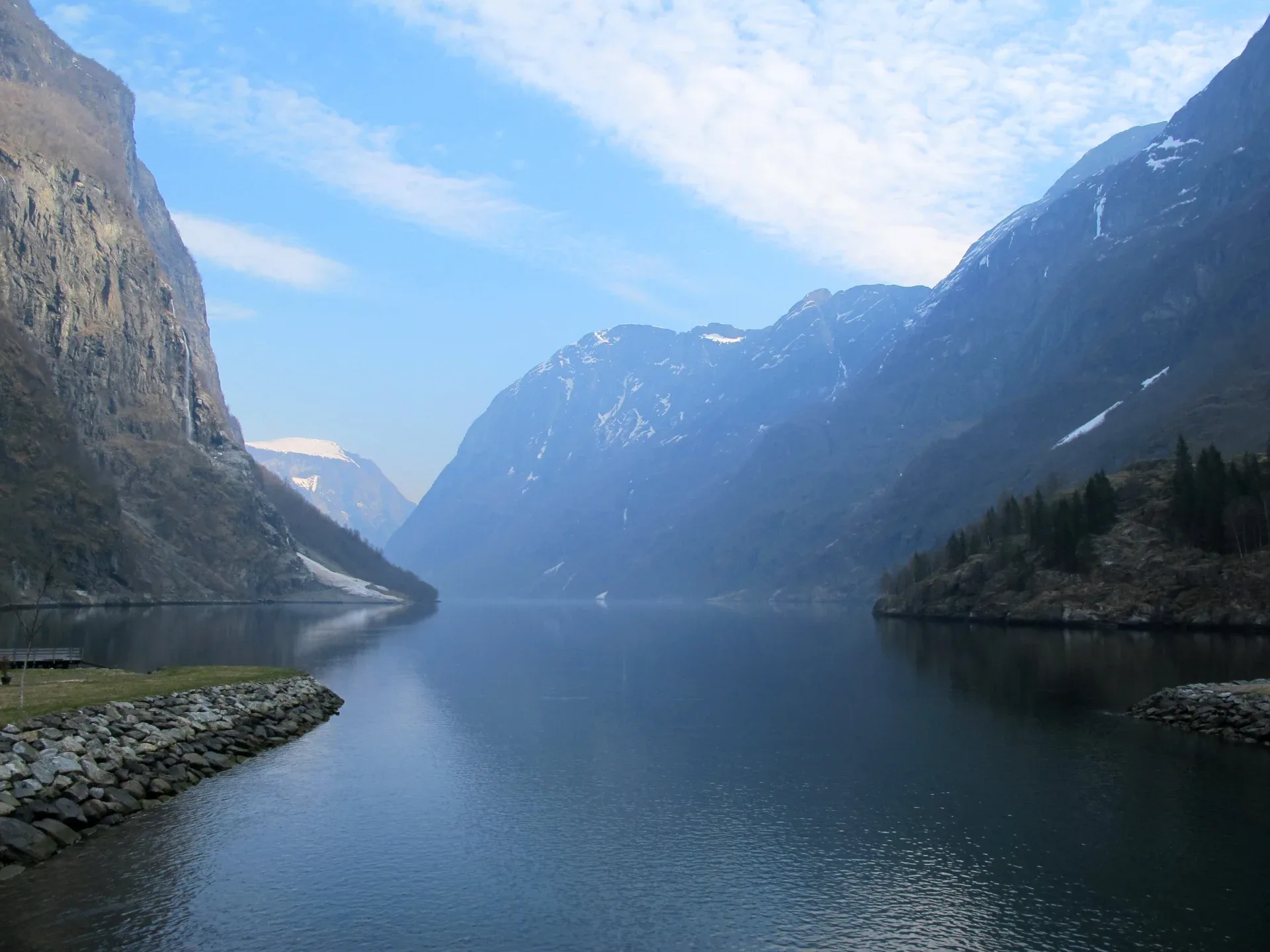
Starting out beside the Soča, looping between two fjords or making a few stops in the Alentejo: a van trip in Europe is best planned region by region. Here are three itineraries to adapt to the season, with a method for planning overnight stays, the vehicle and expenses without spending your holiday driving.
Three regions for three trips
The first choice is about how much time you want to spend outdoors. In Slovenia, a base in the Soča Valley lets you alternate riverside walks with days when the van stays put. In Norway, around Aurland and Lærdal, the road is part of the itinerary: it connects fjord level with a mountain plateau, and its seasonal openings need to be monitored. In Portugal’s Alentejo, a loop around Évora and Vila de Frades focuses on towns, villages and a stop devoted to talha wines.
These three suggestions are separate trips. Combining them into one journey would require a very different schedule and a much larger driving budget. For a first trip, choose the one that suits your starting point and the kind of days you want. A closer region can provide more actual holiday time than a distant destination where the outbound and return journeys take up several days.
The Soča suits those who want to park the vehicle and walk, while accepting that overnight stays need to be arranged at designated places. Aurlandsfjellet appeals to travelers who enjoy scenic driving and can adjust a stop according to the weather. The Alentejo lends itself to a trip where you walk to a historic center, then get back in the van for another short leg. In each case, your choice of campsite or designated area shapes some of your daily travel.
Choosing the season by region
In late autumn, the three regions call for different preparations. For a first rental, we favor visits to Portugal’s interior over an itinerary that depends on Alpine mountain passes. Even so, confirm which accommodations are open, whether the van has heating, and what services are available. A damp night quickly makes storage for wet clothes and ventilation important; a milder latitude is no reason to overlook the vehicle’s equipment.
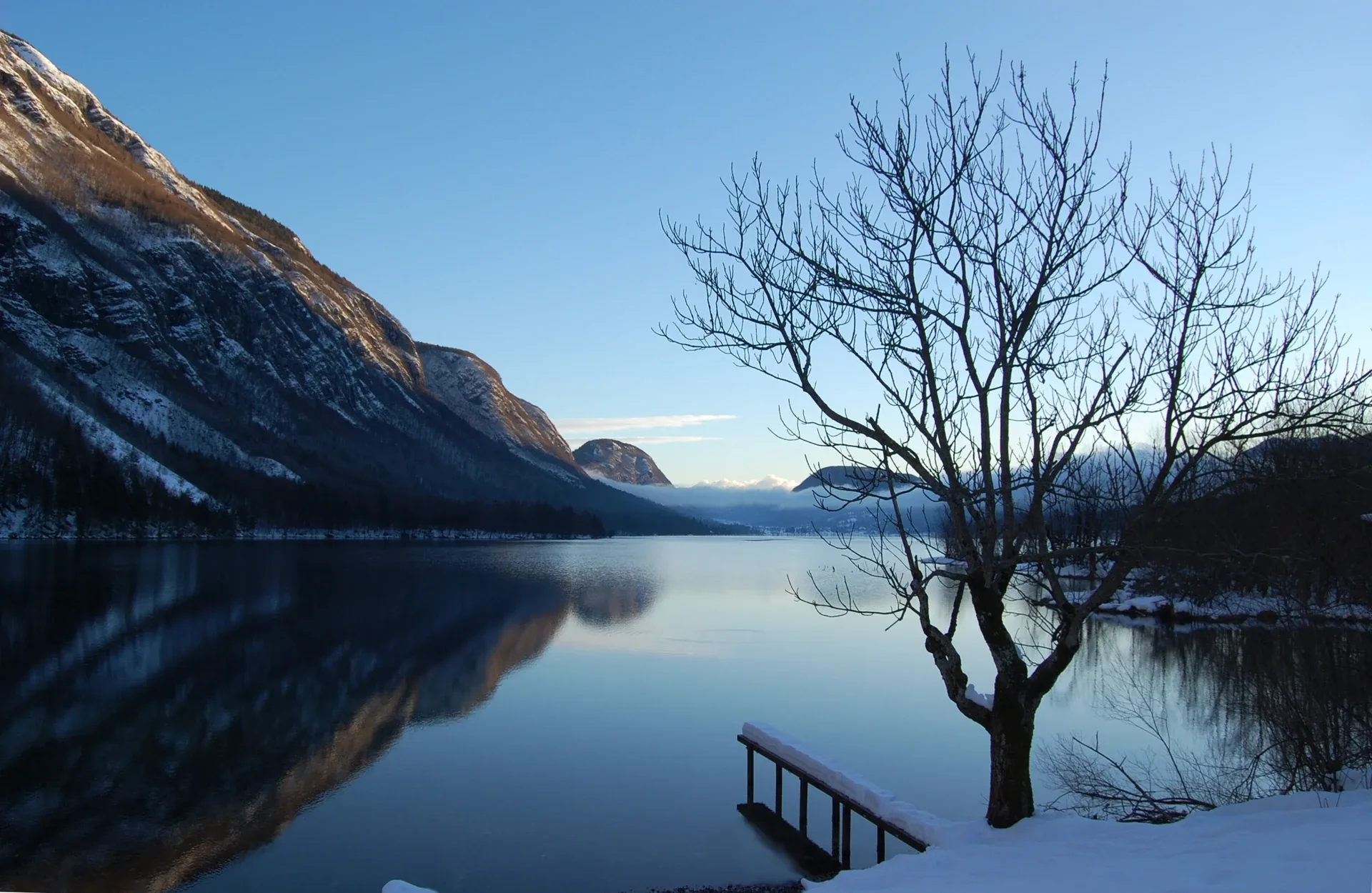
In Slovenia, distinguish between a stay in the valley and a hike at higher elevation. A road being open all the way to your accommodation says nothing about the condition of a trail, footbridges or higher access routes. The winter photograph of Lake Bohinj, elsewhere in the Julian Alps, illustrates this seasonal change of context; it does not depict the day’s conditions in the Soča Valley. For a first trip focused on walks, we favor the warmer season, after checking local conditions.
Around Aurland, the winter closure of Aurlandsfjellet directly affects the driving itinerary. If crossing it is your main objective, choose your dates based on its actual opening. For a trip outside summer, build an itinerary that does not depend on the high mountain road from the time you book. Scheduling a pre-booked activity and a non-refundable overnight stay on either side of an uncertain crossing limits your options for adapting. Weather and information from the relevant authorities remain the final checks before each outing.


Trip duration and the journey to get there
The itineraries below allow for seven to ten nights in the region. Add the journey from home, rest stops and any crossings separately. With a rental, those travel days use the vehicle just as much as the days spent in the region. So compare the total cost of picking up a van near home with travelling to the region and renting locally, including luggage, transfers and return conditions.
Build the itinerary around two or three bases rather than a succession of parking spots. Two nights in the same place give you a full day without arrival formalities, completely unpacking or searching for a new place to stay. It also gives you time to do laundry, restock supplies and wait for better weather for a walk. The last evening deserves particular attention: get closer to the return location and check the opening hours of any services you will need before handing back the van.
When estimating a transfer day, distinguish driving time from shopping, lunch and setting up. A time estimate from a route planner does not include stopping at a water point or waiting at a campsite reception desk. On a minor road, the vehicle’s size may also require a slower pace. Schedule booked visits on settled days, then keep one flexible day to absorb changes. An early start will not make an overloaded itinerary sustainable.
The Soča and the Trenta Valley
For seven to nine nights on the road, we suggest two bases: the Trenta Valley followed by the area around Bovec, with arrival and return plans tailored to where you are coming from. Triglav National Park presents the Soča Trail as a path linking the river’s source to Bovec. This continuous route makes it easier to plan several walks in the valley without turning every outing into a full-length hike. Choose sections to suit your ability and current conditions.
Use the first two nights to get your bearings and explore an area close to your accommodation. Then set aside two or three days for separate walks, leaving the van in the corresponding authorized parking area. The park notes that seasonal public transport is available to reach the trailhead. Check its stops and timetables before planning a one-way walk; a summer service is not a guaranteed year-round return option.
The second base, near Bovec, saves you from driving the length of the valley every day. It lets you shift the focus of your stay downstream and keep a day free for activities you choose locally. For a water-based outing, ask the operator directly about the required skills, equipment provided, and accepted hydrological conditions. The water’s color says nothing about whether swimming is safe or a riverbank is accessible.
Plan your overnight stays before visiting. In Triglav National Park, sleeping and camping outside designated areas is prohibited; driving, stopping, or parking in the natural environment is also prohibited. A drivable track or open riverbank is therefore not a place to add to your itinerary. Park rules also prohibit fires in nature, except for expressly permitted exceptions. Choose a campsite or authorized overnight area, then plan your outings around that address.
For driving, check the vehicle’s maximum authorized weight and the applicable toll system. The Slovenian Tourist Board indicates that an e-vignette is required on the relevant motorways and expressways for vehicles up to 3.5 tonnes; above that, the DarsGo system applies. DARS distinguishes several categories: check which one applies to your van and verify the license plate you enter before purchasing. If you are travelling in late autumn, winter equipment requirements—listed by the tourist board as applying from 15 November to 15 March—are also part of your preparations.
Aurlandsfjellet and the Norwegian Fjords
A week to ten nights around Aurland and Lærdal lets you spend several days amid the same landscapes, under different light and conditions. The main road route is clearly defined: the Aurlandsfjellet Scenic Route connects Lærdalsøyri and Aurlandsvangen over 47 kilometres. The Norwegian Public Roads Administration describes it as a passage between fjords and mountains, with striking contrasts and snow at altitude for much of the year.
We suggest spending the first nights near Aurland, setting aside a day for the accessible Stegastein area, then heading to Lærdal when conditions allow the planned drive. According to the tunnel operator, the 24.5-kilometre Lærdal Tunnel makes it possible to plan a loop with the mountain road. This arrangement lets you choose the day you cross. It avoids making the whole week depend on a booking on the other side of the plateau.
The high mountain road closes in winter. The official page states that the section from Aurlandsvangen to the Stegastein viewpoint normally remains accessible all year; that does not guarantee identical conditions every day. Check road conditions before driving up and keep an alternative in mind. For a first trip centred on this crossing, aim for a season when the road’s opening is confirmed—typically the summer period travellers look to—rather than choosing a date based only on the calendar.
On the ground, an extra night at each base offers more than a routine detour to another fjord. You can spend a morning on a walk, wait for a break in the clouds, or reschedule a visit. Scenic pull-offs are for stops permitted by their signs; we do not recommend them as overnight locations. Choose authorized accommodation based on the van’s actual access, available services, and arrival times. Places where you can admire the scenery and places where you can sleep are not automatically the same.
Finally, set aside a specific amount in your budget for Norwegian road charges. AutoPASS explains the billing options for foreign-registered vehicles: an agreement with a tag provider or registration through Epass24, each with different terms. The operator notes that a tag for a light vehicle cannot simply be obtained at the border and must be ordered in advance. If you have a rental van, ask how tolls are recorded and recharged, and what administration fees apply. Vehicles over 3.5 tonnes require a specific check of the applicable rules.
The Alentejo around Évora
For seven nights in inland Portugal, we suggest a first base near Évora, followed by a second near Vila de Frades. The benefit of this arrangement is the time it leaves for exploring on foot: you can spend several half-days in the city and on chosen visits without driving the van through its historic centre. The Évora municipal portal brings together information from the tourist office, heritage services, parking, and transport; use these resources to plan access suitable for the vehicle’s dimensions.
Plan three nights at the first base, then three at the second, and one final night depending on your return route. This is only a suggestion; adjust it to the accommodation you find. In Évora, an initial walk lets you identify the places you want to explore further the next day. Leave time for a meal, shopping, and getting back to your accommodation. Check precise opening hours and monument tickets with each operator once your date is set.
The stop in Vila de Frades gives the second part of the trip a concrete focus. Honrado’s Cella Vinaria Antiqua tour includes a visit to the wine-cellar museum and a tasting of four talha wines, with food pairings. These wines are associated with the large clay jars used to make them. The listing we verified gives the meeting point as Rua General Humberto Delgado, 17, and says commentary is available in Portuguese, English, or Spanish. Choose your language when booking.
This activity fits into a day when the vehicle remains parked in an authorized space. Arrange the return journey on foot if your accommodation makes that possible, book transport, or have a driver who does not drink alcohol. The tasting reservation includes neither an overnight stay nor a guaranteed place for your van. Ask about these separately before confirming the day’s arrangements. The listing shows the exact offering and its centrally managed commercial details.
For walking tours in the Alentejo, spring and autumn are our preferred seasons. This choice is based on the comfort we look for when walking and living in a small interior, not on a promise about the temperature. Always check the weather and whether accommodation is open on your chosen dates. In summer, available shade, ventilation while parked, and time spent outdoors become important booking criteria; in cooler seasons, also check the heating, humidity, and whether there is somewhere to dry clothes and towels.

Viator
Talha wines in Vila de Frades
To discover talha wines during your stop in Vila de Frades, plan this visit alongside an overnight stay nearby and arrange a return journey that does not involve driving after the tasting; choose Portuguese, English, or Spanish.
- 5/5 (51 reviews)
Visit to Cella Vinaria Antiqua and tasting of four wines with accompaniments. Meet on site; Portuguese, English or Spanish.
Cancellation policy
For a full refund, cancel at least 24 hours before the scheduled departure date.
From €35.00
View activityOvernight stays and services
Before each transfer, identify a primary place to sleep and a backup option. The check is whether overnight stays in the vehicle are permitted, not merely whether there is a car park. A community app can help you spot possibilities; signage, the site operator and local rules determine what is allowed. Do not enter private property just because an old comment mentions a quiet night or a beautiful view.
A campsite, a parking area and a service point meet different needs. The first may offer a reserved pitch with sanitary facilities; the second accommodates vehicles under its own conditions; the third may allow you to empty waste or refill water without permitting overnight stays. Check water, electricity, sanitary facilities, wastewater disposal and how many people are covered by the price. An attractive rate loses its appeal if a long round trip is still needed to access services.
At reception, specify the vehicle’s length and height, the number of occupants and whether you have a dog. Ask whether late arrival is possible and whether the electrical hookup requires special equipment. For a stay of several nights, being close to a walking route or public transport means you do not have to move the van whenever you want to go out. In a small living space, this stability also makes everyday life easier: the bed and belongings can stay set up during the day.
Keep outdoor furniture and cooking outside in areas where their use is permitted. Noise, smoke and dishwater affect other occupants just as much as the cleanliness of the pitch. Arriving before dark makes it easier to check the ground, hookup and access routes. If the planned location is not suitable, use the backup option; do not make dinner and sleep depend on an improvised search on a mountain road.
The full cost of the trip
Compare trips on the same basis: number of people, rental days, paid nights and total kilometres. Savings supposedly made on hotels do not, on their own, tell you the cost of the trip. You need to include the vehicle, overnight stays, food, fuel, tolls, any crossings and activities. A deposit that is temporarily held affects your available cash; it only becomes an expense if money is actually kept.
Here is an educational example for two adults, ten days and nine nights. The following figures are calculation assumptions, not a quote or an average for Europe: rental at €95 per day, 1,200 kilometres in total, fuel consumption of 8 litres per 100 kilometres and fuel at €1.80 per litre. Add an overnight fee of €28, daily food costs of €30 for two, and then allowances for road costs, activities and unexpected expenses.
- Rental: €950 for ten days.
- Fuel: 96 litres, or €172.80 using the stated assumption.
- Nine overnight stays: €252.
- Food: €300 for both travellers.
- Budgeted road costs: €100.
- Budgeted activities: €120.
- Contingency reserve: €150.
These assumptions add up to €2,044.80 for two people, or €1,022.40 per person. Excluding the rental line leaves €1,094.80, but the cost of owning a van also includes maintenance, insurance, any financing and wear and tear. This example excludes any plane ticket and any crossing not included in the road-cost allowance. Replace each assumption with your own figures, especially if the journey to your starting point requires more kilometres or days.
Calculate fuel costs by multiplying the total distance by fuel consumption and dividing by one hundred. Allow some extra for detours, refuelling and local driving. For tolls and ferries, use the vehicle’s exact specifications: a different category, length or height may change the amount charged. Check the rental company’s administration fees as well, even when the crossings themselves are automated.
To reduce the total, start with the major items: distance to your starting point, number of rental days and choice of well-located accommodation. An extra night near a place you plan to visit can save a lot of driving. Cutting essential services to achieve a lower theoretical budget, however, makes the trip more difficult. Prices and ratings for a recommended activity remain on its card, so figures that may change are not repeated unnecessarily.
The van and rental agreement
Sleeping capacity and road seats must be checked separately. A vehicle may offer several sleeping options without having the same number of approved seats for travelling. Every passenger must have a suitable seat. For a family, also check the fittings required for child seats; do not assume that a bench seat that converts into a bed is automatically suitable. Ask for written confirmation if the sales listing is unclear.
Next, check the maximum permitted weight and the remaining payload once passengers, luggage, water and equipment are on board. This affects driving, tolls and how much you can bring. The required licence depends on the vehicle’s actual category and the driver’s entitlements; check the documents before booking. Do not choose a heavier model solely on the basis of a licence rule stated in a general-interest article.
A small van is easier to park and can make urban stops simpler. A larger model offers more storage and sometimes a bathroom, but its size must be considered for every access route. Write down the height, width and length on a sheet kept near the driver. Include anything fitted to the roof or rear. The route planner should be suitable for the vehicle if the route includes size restrictions.
In the contract, note the mileage allowance, the cost of exceeding it, permitted countries, roadside assistance and insurance exclusions. Check the conditions for unpaved roads, ferries, additional drivers and loaned equipment. The excess represents a financial liability separate from the daily rate. Additional insurance is worthwhile only if you understand what it covers and the procedure to follow in the event of damage.
At pickup, photograph the vehicle’s condition with the rental company and test the essential equipment: bed setup, heating, water, fridge and hookup. Ask them to explain the battery indicators and emptying procedures. On return, allow enough time for fuel, cleaning and any required servicing. Avoidable return charges are prevented from the first day, when you are shown how the equipment works.
Water, power and waste
The stated autonomy depends on how your group uses the facilities. A shower, cooking and washing dishes use the supply differently from a trip where you use the campsite’s sanitary facilities every evening. On your first trip, monitor your consumption for a day before planning several nights without services. Check the levels at the start of each leg and keep a reserve suited to the people travelling and the actual opportunities to refill.
Drinking water must come from a source identified as potable and be stored in a clean container. At a service point, do not confuse the rinsing tap with the filling tap. Use the equipment intended for your clean-water system and follow the vehicle’s instructions. Grey water and toilet waste must be emptied at suitable facilities, according to the site operator’s instructions; never empty them onto the ground or into a river.
For electricity, distinguish the battery that starts the engine from the system used for living in the vehicle. Ask which appliances can run without a hookup and what each indicator means. Charging phones is one thing; using heating appliances or a computer for a long time is another. An estimate of autonomy must account for the equipment actually installed, its condition and the weather, particularly when a solar panel contributes to charging.
Ventilate according to the manufacturer’s instructions, including in cool weather, and use heating or cooking equipment only as intended. Do not improvise a heater using a camping stove. Secure items before every departure, close the tanks and check the doors, roof vents and external connections. A quick check together can prevent you from driving off with a cable connected or a cupboard open. Keep waste on board until you reach an appropriate collection point.
Packing and life on board
Pack items according to their daily use and where they will be stored in the vehicle. Soft bags are generally easier to stow than hard-shell suitcases, provided they do not obstruct exits or controls. Keep rainwear, shoes and a lamp accessible from the entrance. A separate container for wet gear prevents it from getting mixed in with other belongings after a walk in the Soča Valley. When you return, use the drying areas permitted by your accommodation.
Try out the sleeping arrangements before your first long leg. Check how much space is actually available once the bed is set up, access to the toilet if there is one, and whether you can move around without shifting all the luggage. If the van has a pop-top roof, ask for an explanation of the closing procedure and conditions of use. The clearance available overnight and the vehicle’s height when ready to drive are two different measurements. When travelling as a group, decide where everyone will keep their personal belongings and how to pack up in the morning.
Meals are easier with a few ingredients that can be used in different ways and a supply suited to the refrigerator’s capacity. Buy fresh food according to your storage options, then identify a place to eat on transfer days. Check the supplied inventory before adding duplicate pots, dishes and accessories. For a first trip, equipment for sleeping, cooking and using the facilities takes priority over bulky leisure gear. Keeping space clear makes it easier to move around inside the van and pack up before each departure.
Preparing before departure
A useful route sheet contains just a few reliable details: accommodation, arrival time, access suitable for the van, available services and the main activity. Add the rental company’s or roadside assistance’s contact details and keep your confirmations available offline. For every country you cross, check the documents and rules that apply to the vehicle; transit countries count even if you do not plan to visit them. Check the requirements for urban areas before entering them as well.
The day before driving through the mountains, check the road conditions and local weather, then choose the next day’s route. For the Soča, check seasonal transport if your walk depends on it. For Aurlandsfjellet, confirm that the mountain road is actually open. For Évora and Vila de Frades, focus on confirming access, parking and the language of your booked tour. These targeted checks are more useful than adding a long list of pins to a map.
For a first trip, it is also a good idea to start with a night near the pick-up location. You can test the bed, get the water working and easily find help if needed. Keep some flexibility on days without reservations, while securing essential nights and your return. That way, you can adjust the itinerary without having to reorganize the entire trip.
FAQ
Which European itinerary should you choose for your first van trip?
Start by choosing a region you can reach within the total time available. The Soča Valley suits a walking holiday based at two locations; Aurland and Lærdal are good for a road trip through the fjords during the season when the roads are open; the Alentejo is suited to visits to towns and villages. If getting there takes up a large part of your holiday, narrow the area or compare the cost of renting locally. The three itineraries in this article are independent of one another.
Can you sleep anywhere in a van in Europe?
No. Options depend on the location, regulations and signage. Overnight stays outside designated areas are prohibited in Triglav National Park. For the other stops suggested here, choose a campsite or pitch where the operator confirms overnight stays are permitted. An address listed in an app and a place where daytime parking is allowed do not establish permission to sleep there.
What budget should two people plan for ten days?
The example in the article comes to €2,044.80 for two people, based on explicit assumptions about rental, mileage, nights, food and reserves. This amount is neither a quoted price nor an average. For your own estimate, replace rental and overnight costs with actual quotes, calculate fuel for the entire distance and add any crossings. Also keep enough cash available for the deposit and excess.
Do you need to book all campsites in advance?
At a minimum, secure your arrival night, the final night and any stops that are essential for a booked activity. For the rest, base your reservations on how busy it is, what alternatives are available and the establishment’s rules. Check cancellation terms before booking a long sequence of nights. In the mountains, staying two nights in one place and keeping a day free to travel makes it easier to adjust your walks without searching for new accommodation every evening.
Is a Slovenian vignette required for a van?
It is required on motorways and expressways subject to the vignette system for vehicles up to 3.5 tonnes; check the applicable category with DARS. Above that maximum permitted weight, the DarsGo system applies. Ask the rental company whether the vehicle already has the required coverage and for which dates. When buying a vignette, carefully check the licence plate, country of registration, category and start date.
Can you drive the Aurlandsfjellet loop in winter?
The mountain road closes in winter, so the complete loop described here depends on it being open. Under normal operating conditions, the road authority describes access to Stegastein from Aurlandsvangen as open all year, subject to actual conditions. Plan a winter trip with a suitable route, an appropriately equipped vehicle and up-to-date road information; do not simply reuse the summer itinerary. This guide does not guarantee any future opening date.
Does the Vila de Frades tasting include transport?
The listing consulted specifies an on-site meeting point at Cella Vinaria Antiqua, Rua General Humberto Delgado, 17. It advertises a visit to the winery museum, four wines and accompaniments, with a guide in Portuguese, English or Spanish. Arrange transport and overnight accommodation separately. If you drink alcohol, plan a return trip without driving or have a driver who does not drink.
How can you tell whether the van will be self-sufficient enough?
Check the actual tank and battery capacities, then compare them with your needs: meals, hot water, toilet, heating and charging. Try a first day with easy access to services. Then choose overnight stops based on what you have observed and the available levels. A claimed number of days of autonomy without specifying conditions of use is not enough to plan several remote stops.
Sources and checks
Plan your visits and check current conditions.
- Triglav National Park: visiting rules ↗
Triglav National Park · Accessed November 1, 2026
What this source supports
Overnight stays and camping outside designated areas are prohibited; driving, stopping and parking in the natural environment are prohibited; fires are regulated, and dogs must be kept on a leash.
- Soča Trail: valley and access ↗
Triglav National Park · Accessed November 1, 2026
What this source supports
Trail from the source to Bovec via the Trenta Valley; check seasonal transport access. No invented distance, duration or future trail conditions.
- Driving and motorhomes in Slovenia ↗
Slovenian Tourist Board · Accessed November 1, 2026
What this source supports
A vignette is required for vehicles up to 3.5 t on applicable roads, and DarsGo for heavier vehicles; carry the required documents and winter equipment from November 15 to March 15; overnight stays are permitted at designated areas and campsites.
- Electronic vignette: categories ↗
DARS · Accessed November 1, 2026
What this source supports
The vignette is linked to the license plate; check the maximum weight, category, registration and start of validity. No prices reproduced.
- Aurlandsfjellet: scenic route ↗
Statens vegvesen · Accessed November 1, 2026
What this source supports
The 47 km road runs from Lærdalsøyri to Aurlandsvangen and closes in winter; access to Stegastein from Aurlandsvangen is advertised as open year-round, subject to disruptions; the Lærdal Tunnel is 24.5 km long. No future opening is guaranteed.
- Foreign vehicles: Norwegian tolls ↗
AutoPASS / Statens vegvesen · Accessed November 1, 2026
What this source supports
Agreement and tag, or Epass24 registration; order a tag for light vehicles before travelling; environmental data and specific rules apply to vehicles over 3.5 t.
- Évora: visitor services and access ↗
Câmara Municipal de Évora · Accessed November 1, 2026
What this source supports
Municipal visitor portal: heritage and historic center, tourist office, parking and transport. No monument opening times or prices inferred from the portal.
- Vila de Frades: Cella Vinaria Antiqua ↗
Honrado via Viator Partner API · Accessed November 1, 2026
What this source supports
Exact product 115068P5, ACTIVE, rechecked: winery-museum visit, four wines and accompaniments; 90 min; meeting point at Rua General Humberto Delgado 17; Portuguese-, English- or Spanish-speaking guide. Transport, overnight stay and parking are not included in the booking described. A commission may be earned through our API-returned deep affiliate link. Exact product photo, SUPPLIER_PROVIDED, not CC-licensed. The price and currency actually returned are retained only in the main offer.
- Photograph: ralph-bergen-naeroy-89435 ↗
Acediscovery / Wikimedia Commons / CC BY 4.0 · Accessed November 1, 2026
What this source supports
CC BY 4.0; reduced and converted to WebP without upscaling; derivative under the same license. Commons rights checked file by file; Odyvero file downloaded and decoded at [1920, 1440] px, visually inspected. Bohinj is distinct from the Soča; Nærøyfjord is distinct from the Aurlandsfjellet road. The seasons shown in the photographs are explicitly identified in the captions.
- Photograph: ralph-couple-bohinj-22967 ↗
Smihael / Wikimedia Commons — reduced and converted to WebP without cropping · Accessed November 1, 2026
What this source supports
CC BY-SA 3.0; original 2956 × 1924, derivative 1920 × 1250 without upscaling; derivative under the same license. Commons rights checked file by file; Odyvero file downloaded and decoded at [1920, 1250] px, visually inspected. Bohinj is distinct from the Soča; Nærøyfjord is distinct from the Aurlandsfjellet road. The seasons shown in the photographs are explicitly identified in the captions.
Viator — activity pages
Source for the activity information below.Affiliate links: Odyvero may earn a commission when you book through this article’s buttons.
- Talha wines in Vila de Frades ↗
Accessed November 1, 2026


