 odyvero
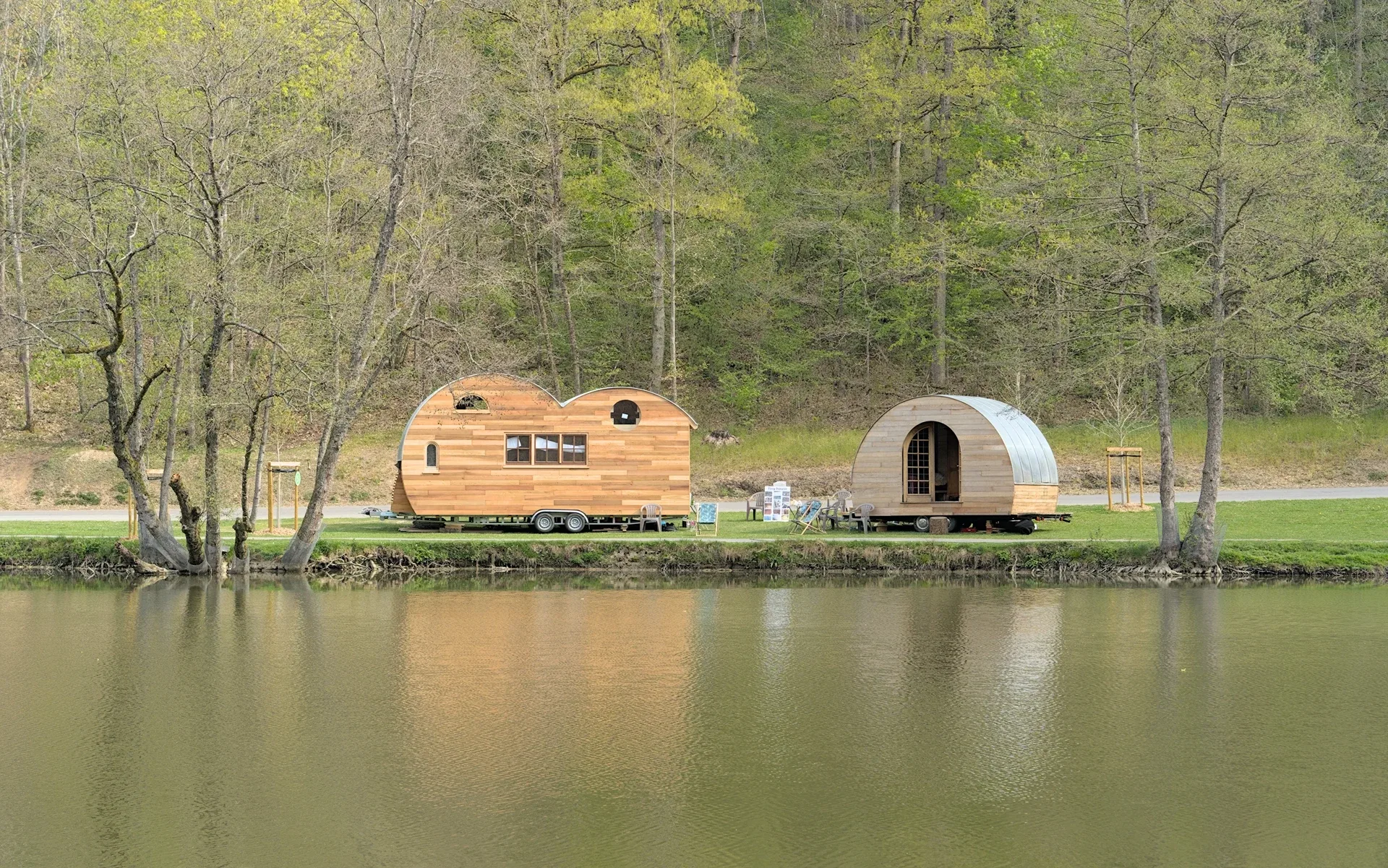
A solar-powered pocket-sized kitchen, a container where you prepare dinner outside, a dome after a hike or a room built around a living tree: these accommodations offer very different ways to stay. Here’s how to choose your first experience, based on four real-world examples in France, Texas, Patagonia and Okinawa.
Four types, four different daily experiences
At Parcel in France, the operator asks guests to limit showers to two minutes to conserve the tiny house’s resources. At Flophouze in Texas, the containers have heating and air conditioning, but cooking takes place in a shared outdoor area. At Treeful in Okinawa, some rooms move with a living tree. These details give you a more accurate idea of the stay than a photograph of a terrace at sunset.
The first choice is about what you want to try. A small house with a kitchen lets you organize meals and experience a compact space. A converted container may appeal to architecture and reuse enthusiasts. A dome can serve as a base for days of hiking, with services spread across several buildings. A treehouse adds height, stairs and a special closeness to the branches. None of these names, on its own, tells you what the bathrooms, heating or services are like.
We selected four examples to illustrate these differences: Parcel’s tiny houses, Flophouze in Round Top, EcoCamp in Torres del Paine National Park and Treeful on Okinawa’s main island. They are part of separate trips. For a first experience from France, a nearby location lets you try this type of accommodation without adding lots of travel. The three distant examples make sense as part of a trip already focused on their region.
If you’re also curious about a future change of home, use your stay to observe your habits: where to put your things, how to cook as a couple, and how much space to keep for reading or working. Two nights can tell you about these routines. A permanent-housing project then requires you to consider the land, permits, utilities, maintenance and several seasons in a context specific to your situation.
| Accommodation | Meals | What to check |
|---|---|---|
| Parcel, tiny house | Kitchen in the accommodation | Water and electricity resources |
| Flophouze, container | Shared outdoor cooking | Houze category, distinct from the houses |
| EcoCamp, dome | Dining options depend on package | Private or shared bathrooms |
| Treeful, treehouse | Kitchenette in the Bamboo Treehouse | Treehouse alone or with AeroHouse |
On small screens, scroll the table sideways.
The tiny house at Parcel
A tiny house brings together, in a compact space, functions that are usually spread across several rooms. Parcel’s accommodation descriptions include a double bed, a kitchen with a refrigerator, cooktop, sink and dishes, as well as a shower and a dry toilet that doesn’t use sawdust. The appeal of a first stay is the chance to live in a small house for a few days, preparing your meals and using its amenities.
The operator describes timber buildings, insulation made from recycled cotton, solar panels and rainwater management. Guests are asked to moderate their consumption, including by taking short showers. It’s worth understanding this setup as soon as you arrive: which appliances are allowed, how to check resource levels, how to use the shower and what instructions apply to the toilet. The advertised self-sufficiency comes with a particular way of using the facilities; it doesn’t mean you can skip learning how they work.
To choose a location, start with the landscape you want to explore and the transport options available. A spot in the vineyards, a meadow or a working farm lends itself to different kinds of activities. Ask which walks are accessible from the accommodation, where to buy groceries and how check-in works. The range includes several destinations and family-friendly options; check the capacity, sleeping arrangements and access for the specific unit you book.
We’d recommend this option for a trial stay for two, with an evening set aside for cooking and an unhurried day. Plan a simple meal using ingredients and equipment you already know. It will be easier to discover how the kitchen is laid out without starting with a recipe that requires several pans. Parcel says there is no Wi-Fi, making it a good fit for a stay with reading and walks; download arrival information before leaving your usual internet connection. Some destinations require a minimum stay of two nights.
Flophouze’s containers
In Round Top, Texas, Flophouze turns shipping containers into accommodations. Their rectangular shell offers a concrete point of comparison with a small wooden house. The project is especially appealing to travelers interested in interior design and reused materials who want to include a stop on a Texas itinerary. Set aside some time in the accommodation and on the property to appreciate the architecture.
The official FAQ provides a crucial detail about meals: cooking is not allowed inside the Houzes. A shared outdoor area has a gas barbecue and a charcoal cooker; guests need to bring charcoal for the latter. Plates, cutlery and glasses are provided in the accommodations. So you can plan dinner on site, but you’ll need to prepare it differently from how you would in a tiny house with a cooktop.
The containers have heating, air conditioning and Wi-Fi. If you want to keep those amenities during your stay, this setup is closer to a furnished room with outdoor areas than to a resource-limited home. Still, ask for details about the specific container you’re considering: sleeping arrangements, bathroom, food refrigeration and location relative to the shared areas. An amenity in another category doesn’t mean it’s included in your booking.
This distinction matters particularly at Flophouze, which also offers larger houses, including Farmhouze and The Barn. Their kitchens and capacity belong to those houses, not the containers. Check the exact name on your confirmation. Check-in is listed from 3 p.m. and checkout at 11 a.m.; instructions are sent before your stay. Local businesses’ hours vary, and Round Top event periods affect commercial terms. Buy groceries before settling in and read the cancellation policy that applies to your rate.
The EcoCamp Patagonia dome
In Torres del Paine National Park, Chile, EcoCamp uses geodesic domes as guest rooms and communal spaces. The stay revolves around the Patagonian landscape and the outings you choose. This option suits people who want to return to furnished accommodation after hiking, while accepting a property where meals, gatherings, and rest are spread across several buildings.
The word “dome” does not mean the entire roof is transparent. Here, it describes a type of structure. When choosing, look instead at the category and amenities: Standard offers 10 m² with shared bathrooms, while Superior provides 23 m², a private bathroom, composting toilets, and propane heating. We would prioritize Superior for a first stay when an in-room shower and the ability to heat the room determine the expected level of comfort.
Superior’s outlets can charge small devices, but the electrical capacity remains limited; the property specifically prohibits hair dryers. It also reports that there is no wifi or mobile phone signal on site. Prepare your reservations, contacts, and return information for offline use. A battery charged before an outing, dry clothes, and a well-organized bag become ordinary parts of the stay.
Next, compare the all-inclusive option. EcoCamp offers guided programs and a full-board stay option for exploring more freely. Transfers, park entrance fees, and excursions are specified in the program you purchase. For a stay with children, the property states a minimum age of six, in addition to the requirements for each activity. First choose days suited to your group, then the dome that will let you recover comfortably. A stay in Patagonia requires planning across several days and regional connections, with opening dates to be confirmed for your season.
Treeful’s Living Treehouses
Treeful is located in the forest in the north of Okinawa’s main island, Japan. The property offers standalone treehouses and packages that combine a treehouse with an AeroHouse. This distinction is essential: the property’s name alone does not tell you which spaces will be available to you. The Bamboo Treehouse is a specific example of a treehouse where you can take care of some everyday needs on site.
The listing recommends two guests and describes a hot shower, flush toilet with bidet, induction cooktop, dishes, refrigerator, and microwave. Air conditioning and wifi are also listed among the amenities. The bedroom offers a direct connection to the river and includes a spiral staircase. The “Treehouse Only” booking covers the treehouse alone. For meals offered by the property, ask in advance: services and capacity are managed separately.
The connection to the tree is especially tangible. Treeful explains that treehouses built on living trees may move in strong winds and that heavy rain can cause water to seep around the trunk. The sound of branches, insects, and weather are all mentioned in the information provided before booking. These details help you choose accommodation based on your sleep, comfort with heights, and genuine desire to be close to the forest.
The Floating Treehouse makes the question of access even clearer: its floor is 6.2 meters above the ground, and the staircase takes about three flights of stairs to climb. This room is best considered with luggage that is easy to carry and a clear understanding of the route. If you are primarily looking for a forest view with few steps, ask for a solution that addresses that need specifically. The property asks guests to book at least five days before their stay; also leave time to read its instructions for arriving by car.
Comfort in a Small Space
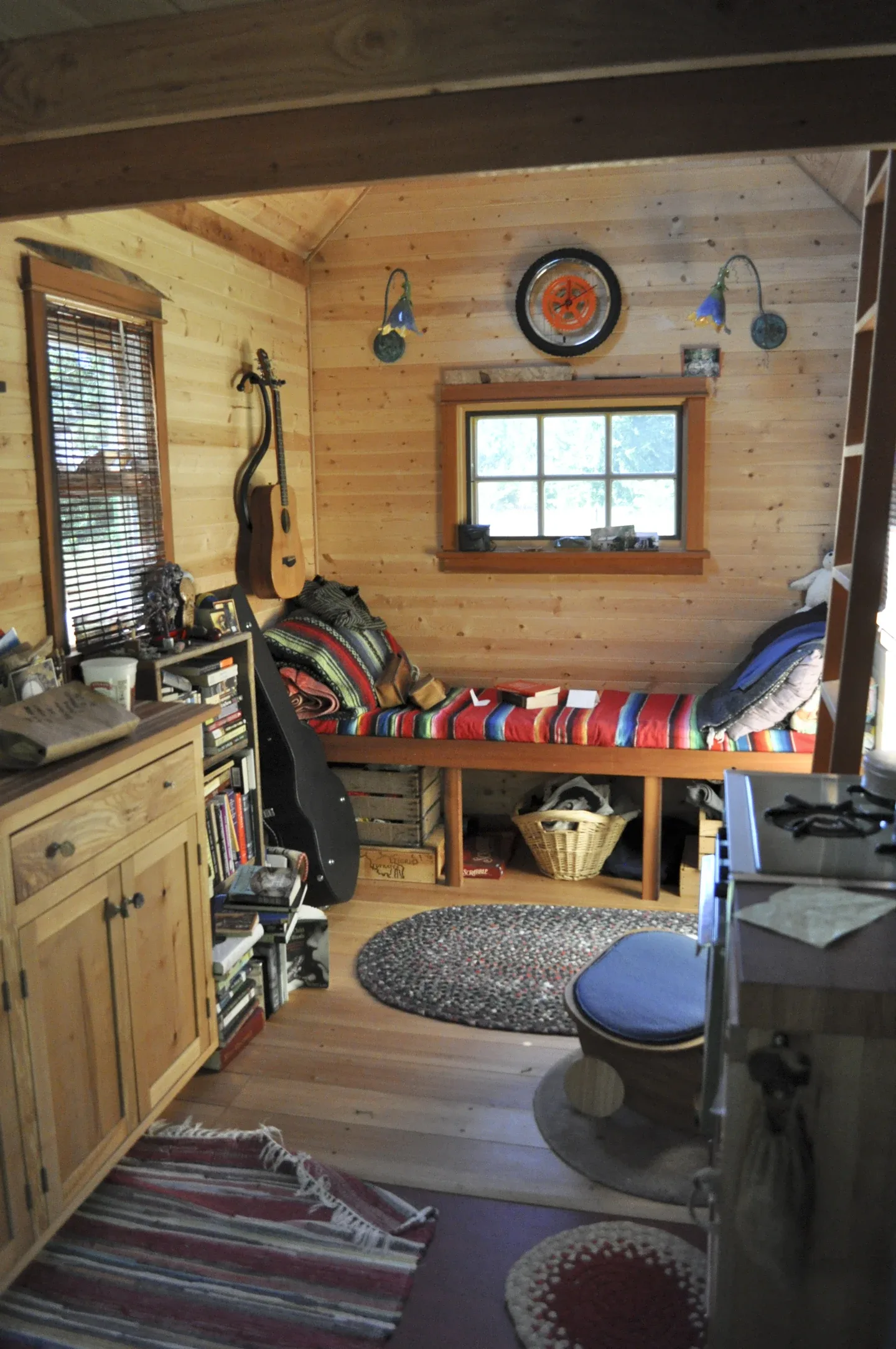
The stated floor area is useful once you know how it is laid out. Consider where you can stand upright, open a suitcase, get dressed, and walk around the bed. A compact room may suit two people with small bags; sharing becomes more difficult if each person brings a large suitcase or wants to work at a table while the other cooks. Photos from several angles and a floor plan, if available, help you understand how the space can be used.
Sleeping arrangements deserve consideration separately from the maximum occupancy. A main bed, a convertible bench, and a futon offer different options for storage and for moving around once they are unfolded. At Treeful, the Bamboo is recommended for two people, even though a third traveler may be accommodated under the conditions stated on the website. For a family, describe the children’s ages and ask where everyone will sleep and how they will get to the toilet at night.
Also consider how activities are separated. Cooking smells linger more in a single-room space; a dining nook may also serve as storage. At Flophouze, outdoor cooking changes this arrangement. At Parcel, cooking takes place in the accommodation’s small kitchen. At EcoCamp, communal dining means the dome does not have to serve that purpose. The choice therefore depends on how much you enjoy preparing meals or whether you would rather leave them to the property.
Finally, imagine spending half a day in the rain. Depending on the package, you might read in bed, sit at a table, go to a communal lounge, or enjoy a sheltered meal. This simple scenario reveals how much the terrace actually contributes to the promise of the stay. For a first experience, we favor an interior where you would want to spend a few hours, even if you chose the location for its landscape.


Water, Electricity, and Connectivity
A small accommodation may be connected to utilities, operate from stored supplies, or combine several solutions. Its size and exterior appearance do not tell you which. Before booking, identify the hot-water supply, toilet system, available outlets, and rules for using appliances. This information should apply to the exact accommodation category, especially when a property includes several generations of buildings.
At Parcel, solar power and water management call for mindful consumption. Prepare to use the toilet in accordance with the instructions, and avoid bringing appliances unless you know they are compatible. At EcoCamp, Superior’s outlets are for everyday charging, subject to power restrictions. If you use an electric medical device, request written confirmation about the power supply, its continuity, and available assistance. A simple photo of an outlet does not answer these questions.
Dry toilets and composting systems also involve practices specific to the location. Follow the instructions provided on arrival rather than those from another accommodation: waste separation, permitted products, and maintenance may differ. In a dome with shared bathrooms, prepare a small toiletry bag and shoes that are easy to slip on. In a treehouse with an indoor bathroom, simply check the layout and amenities your group needs.
Connectivity requires the same preparation. Parcel advertises a stay without wifi; Flophouze and some Treeful treehouses have it; EcoCamp reports that there is no wifi or mobile network. Download your confirmations, useful maps, and arrival instructions. An additional mobile plan is useful only where a network actually covers the route. For a night whose appeal lies in the quiet, informing your loved ones and organizing your documents for offline use will keep you from spending the evening searching for a signal.
The Seasons at Each Location
Choose the season together with the destination, your accommodation budget, and the activities you have planned. In France, a heated tiny house makes an off-season getaway possible, with more evenings spent indoors. Ask what heating system is installed at your destination and what the paths are like after rain. In spring or summer, shade, ventilation, and the orientation of the windows become important criteria for enjoying the day.
In Texas, the presence of air conditioning at Flophouze tells you about the amenities, while outdoor plans depend on the weather on your dates. If dinner is to be prepared at the shared barbecue, ask about sheltered areas and the rules for using it. Round Top events also affect bookings. Consult their official calendar when planning your route, without assuming that the conditions of an ordinary weekend will apply during a very busy period.
Chilean Patagonia follows the seasons of the Southern Hemisphere. French autumn corresponds to austral spring, and the French summer months to local winter. For EcoCamp, check whether your chosen stay is open, along with transfers and possible excursions, before booking flights. Wind and changing weather call for layered clothing and a flexible schedule. Choose your dome category based on how sensitive you are to the cold and your itinerary, not on a single sunny image of the mountain range.
In Okinawa, heavy rain and wind can affect travel and activities. Treeful directly describes their possible effects on the cabins. Before departure, check weather alerts and messages from the property. For this international comparison, no single period suits all four experiences. You could start with a night close to home, then book more unusual architecture when the season and itinerary of a distant trip make it a good fit.
Two nights for a first try
Two nights give you a full day without changing accommodation, allowing you to really make use of the place. This is our suggested starting point for a nearby tiny house; adjust it to the minimum booking requirements. One night may be suitable if you arrive early and already know how the place works. For distant destinations, include the experience in a longer regional stay rather than making a round trip just for the room.
Use the first afternoon to settle in: walk the path with your luggage, locate the amenities, understand the instructions, and put away your groceries. Ask right away for any explanations you need about the water, heating, and closing the windows. You can then spend the evening at the accommodation, with a meal already arranged. In a compact home, finding a place for your bags as soon as you arrive makes it easier to move around.
The next day can include a local walk or one main outing. Keep the morning or late afternoon free at the accommodation to enjoy the light, cook, read, or take in the scenery. If your goal is to try out a small space, use it in everyday situations: prepare breakfast for two, dry a jacket, and set up the beds. These moments tell you more about your preferences than a continuous schedule of activities away from the property.
Before you leave, note what you would like to have again: an in-room bathroom, meals served, bed height, quiet, a view, or an independent kitchen. You will then have a personal reference point for your next booking. If you are considering a permanent home, repeat the experience in another season and in a building similar to the one you have in mind. The comfort of a tourist stay also depends on the services, housekeeping, and amenities provided by the hosts.
The budget beyond the night
To compare the four types, calculate a total for the same travelers and the same number of nights. Add meals, the final leg of the journey, services you will actually use, and planned activities. With a tiny house and kitchen, you can plan for groceries; a stay with full board groups expenses differently. The right amount depends on how you organize your trip, not on a national average price for an “unusual stay.”
Separate essential options from on-the-spot purchases. A private bathroom may justify a higher category if you expect to return tired from a hike. A large house will not necessarily be a better fit if you want to try a container. Also check the linens, housekeeping, taxes, and amenities listed at checkout. The quote and confirmation should specify the accommodation and package that informed your choice.
Transportation makes a particular difference when comparing a location in France with the faraway examples. If you are already traveling in Japan or Chile, a distinctive night becomes one stop on your itinerary. If you simply want to experience a small space, a nearby location you can reach easily lets you devote a larger share of your budget to the stay itself. We would first choose the region and the time available, then the type of accommodation that fits into them.
Finally, read the cancellation policy before paying for the other elements. At Flophouze, the rules vary depending on events and the booking channel. For a gift voucher, check the validity period, exclusions, and any additional charges. For an outdoor activity, check the weather policy and rescheduling terms separately. Prices and reviews for the selected activity in Okinawa appear on its main listing; accommodation rates must be checked for your dates and category.
Getting there and luggage
The final leg of the journey often determines how easy the stay will be. Parcel presents a selection that can be reached by train, with onward travel from the station to be arranged. The examples around Houdan and Joigny still require a road transfer. Book that final leg and plan for groceries and the return trip as well. An accommodation described as accessible by train may work without a personal car while still requiring a taxi, a suitable bicycle, or another local option.
For Treeful, follow the photographic directions provided by the property. The website warns that navigation can be difficult in some areas and describes a forest road to take from the prefectural road. Save the instructions, meeting point, and contact details before setting out. Arriving in daylight makes it easier to follow the landmarks and leaves more time to understand the paths and stairs around the property.
Soft bags are easier to carry than a large suitcase up a small staircase or along an uneven path. Keep your overnight essentials, medication, and toiletries together in an accessible bag. For an elevated cabin, check whether staff can help with luggage. For EcoCamp, prepare your gear according to the package you booked and any stops at refuges: you may not spend every night of the trip in the same dome.
Describe any mobility needs in terms of actions and distances: number of steps, handrail, slope, doorway width, bed height, and distance to the bathroom. Ask for details about the specific room. A general description of a property or the presence of a ground-level terrace does not tell you about the entire route. Getting written confirmation before booking helps you choose a suitable option with confidence.
A kayaking stop in Kadena
During a trip to Okinawa’s main island, a mangrove excursion can complement the forest nights at Treeful. We chose kayaking on the Hija River in Kadena for a separate stop along a route between the Naha area or the island’s center and the north. Plan this activity around your itinerary; Kadena is not an excursion right outside the cabins.
The experience viewed on Viator lasts two hours in total, including about one hour on the water. Check-in, changing clothes and paddling instructions take up the remaining time. The guide accompanies you as you observe the mangroves and river life. The advertised languages are Japanese and English; the French language of the booking page does not mean that the tour is conducted in French.
The necessary equipment, guide and insurance listed by the operator are included. The meeting point is Kadena Fishing Port; confirm the details in your booking confirmation. Guests make their own way to the departure point. The listing says participants must be between two and eighty-four years old, and specifies conditions for children accompanied by adults and medical restrictions. Tell the operator about your group’s needs before booking, and bring clothes that can get wet.
We would choose this activity before heading north or on the return journey, allowing time to change clothes and continue the drive. It is booked separately from Treeful and includes no overnight stay. Check the exact itinerary, time slot and conditions on the day when you book. Activities on other islands in the archipelago, such as Ishigaki or Iriomote, require a separate trip and cannot be added as a roadside stop on the main island.

Viator
Kayaking in the Kadena mangroves
A stop on the Hija River to plan during a drive to northern Okinawa or on the return journey. Allow two hours on site, with an English- or Japanese-speaking guide; make your own way to Kadena. Book your night at Treeful separately.
- 2 hours, including about 1 hour on the water
- 4.7/5 (64 reviews)
Two hours in total, including about one hour kayaking on the Hija River; English- or Japanese-speaking guide, equipment included, meeting point in Kadena, no hotel transfer.
Cancellation policy
For a full refund, cancel at least 24 hours before the scheduled departure date.
From ¥6,000
View activityEnvironmental commitments
Small size, wood, or the reuse of a shipping container provide information about construction. To understand an accommodation provider’s approach, also look at energy, water, facilities, waste and the travel required to get there. Parcel describes its materials and resources; EcoCamp details some electricity constraints; Flophouze presents its reuse practices. These details can help inform your questions, but they do not provide an environmental assessment that can be compared across all four properties.
Ask for specific commitments if this criterion influences your choice: energy source, wastewater management, land maintenance, consumption policy and any verifiable certification. A property with a heated spa, air conditioning or frequent services uses resources that should be assessed based on how they actually operate. A photograph of a treehouse shows its setting, but does not measure its impact.
For a first try, choosing a nearby destination and staying several nights in one place can simplify the trip and reduce successive journeys. You can explore how the accommodation works without crossing several regions for a series of rooms. Then choose activities based around this home base, and follow consumption guidance and access rules. Part of the value of the stay also comes from taking time to understand and use the place properly.
FAQ
What is the difference between a tiny house and a converted shipping container?
A tiny house is a small home designed to bring several functions together in a compact space. A converted shipping container reuses a rectangular maritime shell. Comfort then depends on the design: insulation, windows, kitchen, bathroom and utilities. The accommodations presented by Parcel include a kitchen and measured resource management. At Flophouze, the Houzes are heated and air-conditioned, while cooking takes place outdoors in the shared area.
Which accommodation should you choose for a first experience?
A nearby tiny house with a kitchen and bathroom is a practical choice for trying out everyday life in a small space. Book two nights if you want to use the accommodation without rushing and prepare your own meals. If your priority is to rest after guided activities, consider a package that includes meals. The location, final leg of the journey and exact amenities matter more than the most eye-catching design.
Can you cook at all of these accommodations?
Options vary by accommodation. Parcel lists a kitchen with a cooktop, sink, refrigerator and dishes. Treeful’s Bamboo Treehouse has, among other things, an induction cooktop, refrigerator and microwave. Flophouze does not allow cooking inside the Houzes and offers a shared outdoor area for grilling. At EcoCamp, check the meals included in the package you purchase. Confirm the equipment and provisions before planning dinner.
Do all the domes have private bathrooms?
No. At EcoCamp, the Standard uses shared bathrooms, while the Superior has a private bathroom and propane heating. The categories therefore suit different needs within the same property. If you want to avoid going outside at night, choose a unit whose listing explicitly describes an indoor toilet and shower. A geodesic shape or a window looking up at the sky tells you nothing about these amenities.
Is a treehouse suitable for children?
The choice depends on the children’s ages, sleeping arrangements and the actual route through the accommodation. Ask about stairs, safety barriers, nighttime movement and the property’s rules for your chosen category. Treeful’s Floating Treehouse requires climbing the equivalent of three flights of stairs. For a first family experience, easy access and a nearby bathroom may be priorities. Also check the minimum ages for activities and accommodations; EcoCamp admits children from six years old.
Can you travel to a tiny house without a car?
Yes, if you arrange the whole journey. Parcel offers a selection of destinations served by train, with a final local transfer. Confirm a taxi, bicycle or other transport option before booking the accommodation, then plan for groceries and the return trip. If you plan to stay for two days, ask about available meals and walks accessible directly from the property. The nearest train station alone does not solve these transport needs.
Does an eSIM work at remote sites?
It lets you use a compatible network where there is coverage; it does not create coverage. Treeful warns of navigation and signal difficulties on some access routes, and EcoCamp says there is no mobile phone service on site. Save documents, instructions and contacts for offline access. For a wider trip in Japan, compare your current plan with available packages based on trip length and usage, without relying on a constant connection in the forest.
Are two nights enough to try out a future home?
Two nights let you observe everyday routines: cooking, putting things away, sleeping and sharing a small space. They can help clarify your preferences before you extend the trial. A permanent residence project requires a different assessment, covering multiple seasons, the land, permits, utility connections, maintenance and full costs. Tourist accommodation includes services and surroundings that will not automatically be part of your future home.
Sources and checks
Plan your visits and check current conditions.
- Parcel — the tiny houses
Parcel · Accessed November 2, 2026
What this source supports
Kitchen and bathrooms; solar power, water and mindful consumption.
- Parcel — destinations accessible by train
Parcel · Accessed November 2, 2026
What this source supports
A selection of places served by train, with a final leg to arrange; no Wi-Fi.
- Flophouze — practical questions
Flophouze · Accessed November 2, 2026
What this source supports
Heating, air conditioning, Wi-Fi, no indoor cooking and a shared barbecue; hours and cancellations.
- Flophouze — accommodation categories
Flophouze · Accessed November 2, 2026
What this source supports
Farmhouze and Barn houses, distinct from the Houze containers.
- EcoCamp — Superior Dome
EcoCamp Patagonia · Accessed November 2, 2026
What this source supports
23 m², propane heating, private bathroom and composting toilet; limited electricity and no Wi-Fi.
- EcoCamp — Standard Dome
EcoCamp Patagonia · Accessed November 2, 2026
What this source supports
10 m² and shared bathrooms. Heating information omitted because it contradicts the FAQ.
- EcoCamp — practical questions
EcoCamp Patagonia · Accessed November 2, 2026
What this source supports
Packages, services, minimum age and communication; rates from past seasons excluded.
- Treeful — Bamboo Treehouse
Treeful · Accessed November 2, 2026
What this source supports
Treehouse recommended for two people; kitchenette, bathroom, air conditioning, Wi-Fi, stairs and connection to the living tree.
- Treeful — Floating Treehouse
Treeful · Accessed November 2, 2026
What this source supports
Floor 6.2 meters above the ground; staircase equivalent to three floors and possible movement in strong winds.
- Treeful — getting there by car
Treeful · Accessed November 2, 2026
What this source supports
Forest road, photo instructions and precautions related to navigation and signal.
- Treeful — packages and reservations
Treeful · Accessed November 2, 2026
What this source supports
Treehouse alone or with AeroHouse; book at least five days in advance.
- Kadena mangrove kayaking — product 220328P1
Viator / 220328 · Accessed November 2, 2026
What this source supports
ACTIVE product, two hours including about one hour on the water; Japanese/English, equipment and insurance, meeting at Kadena Port with no hotel transfer.
Viator — activity pages
Information about the offers featured in this article.Affiliate links: Odyvero may earn a commission when you book through this article’s buttons.
- Viator : Kayaking in the Kadena mangroves
Accessed November 2, 2026


