 odyvero

A night above the valley changes how you plan a hike: you need to reach your accommodation, recover, and set out again with the same pack the next day. For your first multi-day trek, here’s how to choose a route in the Dolomites, compare it with major Alpine and Pyrenean routes, and book stages suited to your experience.
The format of your first trip
For your first hut-to-hut hike, we recommend one or two nights on a route with clearly identified access points and descents. This gives you time to experience the dormitory, communal meals and walking several days in a row. It also lets you assess what really changes when you carry a loaded pack, before committing your entire vacation to a major crossing.
The best starting point is your current experience. Someone used to valley walks and someone who already tackles mountain passes on day hikes can both discover hut stays, but on very different routes. Note your most recent outings that you completed comfortably: duration, ascent, descent, terrain and pack weight. The itinerary should remain manageable for the slowest person in the group.
A loop usually makes it easier to return to your starting point. A point-to-point trek offers more variety, provided you arrange transport between its two ends. For a first trip, plan to reach the valley with some time to spare before the last bus or train. Booking a very early departure from the lowlands followed by a long climb on the same day adds fatigue to a day that is already new to you.
Effort and terrain
Distance alone is not enough to compare two stages. Ten kilometers on a rocky trail, with a mountain pass and a long descent, require a different level of attention from a walk of the same length on a track. Consider the elevation gain, elevation loss, altitude, exposed sections and ground conditions together. Descents also put strain on your legs, especially on the second or third day.
Times on official route descriptions provide a guide to walking time. Add your breaks, meals, photos and pack adjustments to plan the full day. Leave enough margin to arrive before the time requested by the hut. A long stop at the start can become a problem if the weather worsens or progress slows on wet rocks.
Before booking, try two consecutive days with the boots and pack you plan to use. This test can reveal chafing, pain on descents and adjustments that are easy to miss on a single outing. If you are also new to mountain navigation, ask a qualified guide or leader to clarify the route. Recently purchased gear is no substitute for knowing how to handle a difficult section.
The Dolomites around Biella
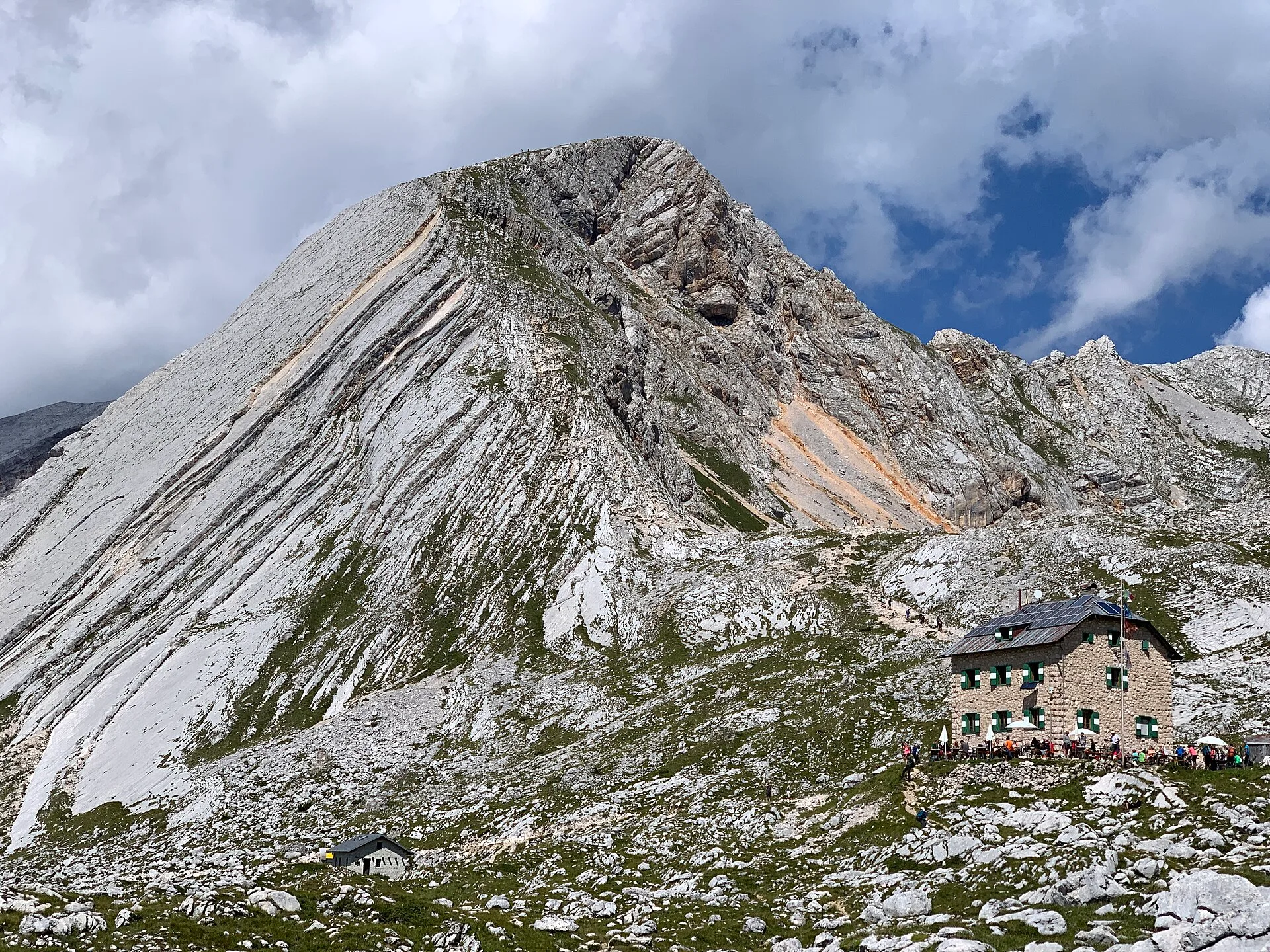
In the Dolomites, Rifugio Biella, also known as Seekofel Hütte, offers a concrete example for gauging a first stage. Located at 2,327 meters at the foot of Croda del Becco, its operator describes it as the first stage of the Alta Via 1. From Lake Braies, the hut reports around 900 meters of ascent and about three and a half hours of walking. This departure already requires a genuine ability to climb with your pack.
So the lake’s proximity on the map doesn’t tell you everything about the day. The starting point, climb, crossing of the Forcella Sora Forno area and arrival at the hut should all be considered together on a suitable map. An overnight stay at Biella can make a good first plan if the route matches your ability and conditions. The return trip or continuation to another hut needs to be planned separately, with its own challenges and booking.
The operator describes the full Alta Via 1 as around 125 kilometers over twelve days. Variants and the stages you choose change the plan; they deserve separate route planning. To try overnight stays at altitude, start with a coherent section rather than booking the entire crossing based on its reputation alone. In particular, check the difficulty of each connection and the options for descending with accommodation providers or a local professional.
Biella announces that it will be open from June 12 to September 25, 2027. This information applies to this hut only. It does not confirm that other accommodation will be open or that snow has cleared from the access routes. The reservation-opening announcements on its website should be checked directly before making any payment, as several different dates appear there.
Other mountain ranges compared
The Tour du Mont-Blanc is suited to a longer, already-planned trip. Its official website describes a loop of around 170 kilometers through France, Italy and Switzerland. La Chamoniarde gives an average duration of eight to ten days, with around six hours of walking per day. Villages and different accommodation options make it possible to plan shorter sections, but every break in the route means arranging transport back.
For someone new to multi-day trekking, a section of the Tour can be a more manageable goal than the full loop. Choose stages according to the passes and the group’s ability, then check valley transport connections to reach the start or return home. Variants cannot simply be added to the itinerary: some substantially increase the demands of the day.
In the Écrins, the GR54 is a challenging undertaking. The national park’s trail information lists 194.4 kilometers, 11,962 meters of cumulative ascent and thirteen days, with a “difficult” rating. These figures explain why we do not recommend it as a first trial of a few nights. A shorter stay in the area needs its own itinerary, using up-to-date information from the park and huts.
The Pyrenees offer another scale of undertaking. The GR10 links the Atlantic to the Mediterranean and alternates between valleys and high-altitude sections; the Association of GRdistes Friends stresses the need for experience, fitness and navigation skills. A selected section may suit the length of your vacation. Check what each type of accommodation offers: a gîte, a staffed hut and an unstaffed cabin provide different services. A cabin marked on a map does not mean that meals and a bed have been booked.
The season for staffed huts
For many high-altitude routes, July, August, and part of September are the period to examine first. The exact dates depend on the mountain range, altitude, year, and whether huts are staffed. For the Tour du Mont-Blanc, the generally indicated window runs from mid-June to mid-September. La Chamoniarde notes, however, that high passes may retain snowfields until late June or early July.
Snow changes how you move and the consequences of a slip. Ask for recent local advice about the sections concerned. For a first multi-day hike, a snow-free route suited to your abilities is a more reasonable choice than setting out with equipment you do not know how to use. The date a bed is booked tells you nothing about trail conditions.
In September, cross-check the opening dates of every refuge and seasonal transport service. A crossing that begins while huts are staffed may end after an essential accommodation has closed. When planning for the next season in late October, start again with those calendars rather than assuming summer services are available for an autumn hike. An accessible winter room, if there is one, requires greater self-sufficiency for water, food, and sleeping arrangements.
The Booking Chain
Make a simple table with one row for each night: exact refuge, date, number of people, meal plan, confirmation, deposit, and cancellation terms. Add the relevant contact in case of a delay. Several establishments have similar names; check the booking against the actual location and planned stage. A booking in the wrong place can force an excessively long connection.
Before paying for the first nights, check that the entire chain is feasible. If a stage is full, review the length of the days before and after it. The nearest available accommodation as the crow flies may be on the other side of an additional pass. Shifting the schedule by a day or choosing another starting point in the mountain range may solve the problem better than making one stage much longer.
The FFCAM emphasizes the need to notify the hut warden if you cancel. It also asks hikers not to book several huts for the same night in order to keep different options open. Instead, keep one main booked plan and research descent options. If the route needs to change, contact the relevant accommodations as soon as you make the decision. This frees up places, avoids meals being prepared unnecessarily, and prevents concern about your absence.
Keep confirmations accessible offline. Save a copy of contact details, payment rules, and cancellation terms. For a group, one person can centralize this information, but everyone should be able to find the refuge address and the next day’s plan.
Meals and Dormitories
A half-board plan makes a multi-day hike easier when it includes dinner and breakfast. Check exactly what it includes, the arrival time, and arrangements for lunch. For the Tour du Mont-Blanc, La Chamoniarde notes that many refuges prepare packed lunches, which must be ordered the day before. Confirm this option with each accommodation, especially if you have special dietary requirements.
Mention allergies and dietary needs when booking, then get confirmation of what the kitchen can prepare. Also bring the food you need for the hike: the next place to restock may be in the valley, several hours away. Check whether water is available and safe to drink rather than assuming every spring or tap is usable.
A sleeping-bag liner is one of the essentials to check. La Chamoniarde mentions the blankets or duvets available at Tour huts and the need for an individual sleeping-bag liner. The specific rules are set by each establishment. Get your belongings ready before bed, keep passageways clear, and keep your headlamp within reach. A quiet departure lets groups with a shorter stage keep sleeping.
On arrival, separate wet belongings from clean bedding and follow the instructions for shoes and backpacks. Ask for the information you need for the next day early, rather than waiting until mealtime to have a long discussion about the route. The hut warden knows the latest conditions in the area; their observations complement the preparations you made before setting out.
What to Pack
Your backpack should cover the hike, a cold or wet arrival, and the planned overnight stay. The basic list includes well-broken-in shoes, waterproof protection, a warm layer, clothing suited to the conditions, sun protection, water, food, and a small first-aid kit. Add a sleeping-bag liner, a headlamp, and navigation tools. The final pack volume depends on the route and the services actually available.
Keep dry clothes for the refuge in a waterproof bag inside your backpack. They are useful after a rainy day, when hiking clothes do not dry straight away. Items used during the day should be easy to reach: jacket, food, water, map, and phone. Every stop becomes more difficult if what you need is buried under all your overnight gear.
Weigh your fully loaded backpack, including the water and food you plan to carry, then test it outdoors. Remove duplicates that have no specific purpose while keeping safety essentials. Share group equipment according to each hiker’s carrying capacity. An overly heavy backpack makes descents more tiring and can affect your balance on uneven ground.
Trekking poles can help if you know how to use them; try them before your trip. For snow, ice, or equipped sections, choosing the right gear requires an assessment of the route and the necessary skills. Adapt the plan if those conditions exceed your experience.
The Cost of a Multi-Day Hike
Work out the cost of your trip night by night, using the current rates for the refuges you have selected. Add accommodation, meals, any packed lunches, drinks, and services charged separately. Check which discounts actually apply and what proof is required. A club membership or reciprocal agreement card only saves you money if the relevant establishment accepts it.
Transport can account for a significant part of the total: getting to the mountain range, a shuttle to the starting point, the return journey from the end of the route, and possibly an overnight stay in the valley. In the Dolomites, a crossing with distant endpoints may require more planning than a loop. Around Mont Blanc, crossing three countries also means checking payment methods and the currencies used.
Set aside an accessible reserve for a change of plan: an early descent, extra transport, or accommodation in the valley. Ask refuges how to pay the balance, and carry enough cash if card payment is not guaranteed. Rates for the recommended guided outing are shown in its central card; calculate overnight stays for your multi-day hike separately, based on the establishments you choose.
Getting There and Staying Connected
Planning starts with the final connection to the trail. Save the schedules for the actual day of travel and check when they operate during the season. For a crossing, plan your return before setting out too: the exact stop, connections, and a backup option if you finish the stage early. A valley name shared by several stops is not enough to identify the right bus.
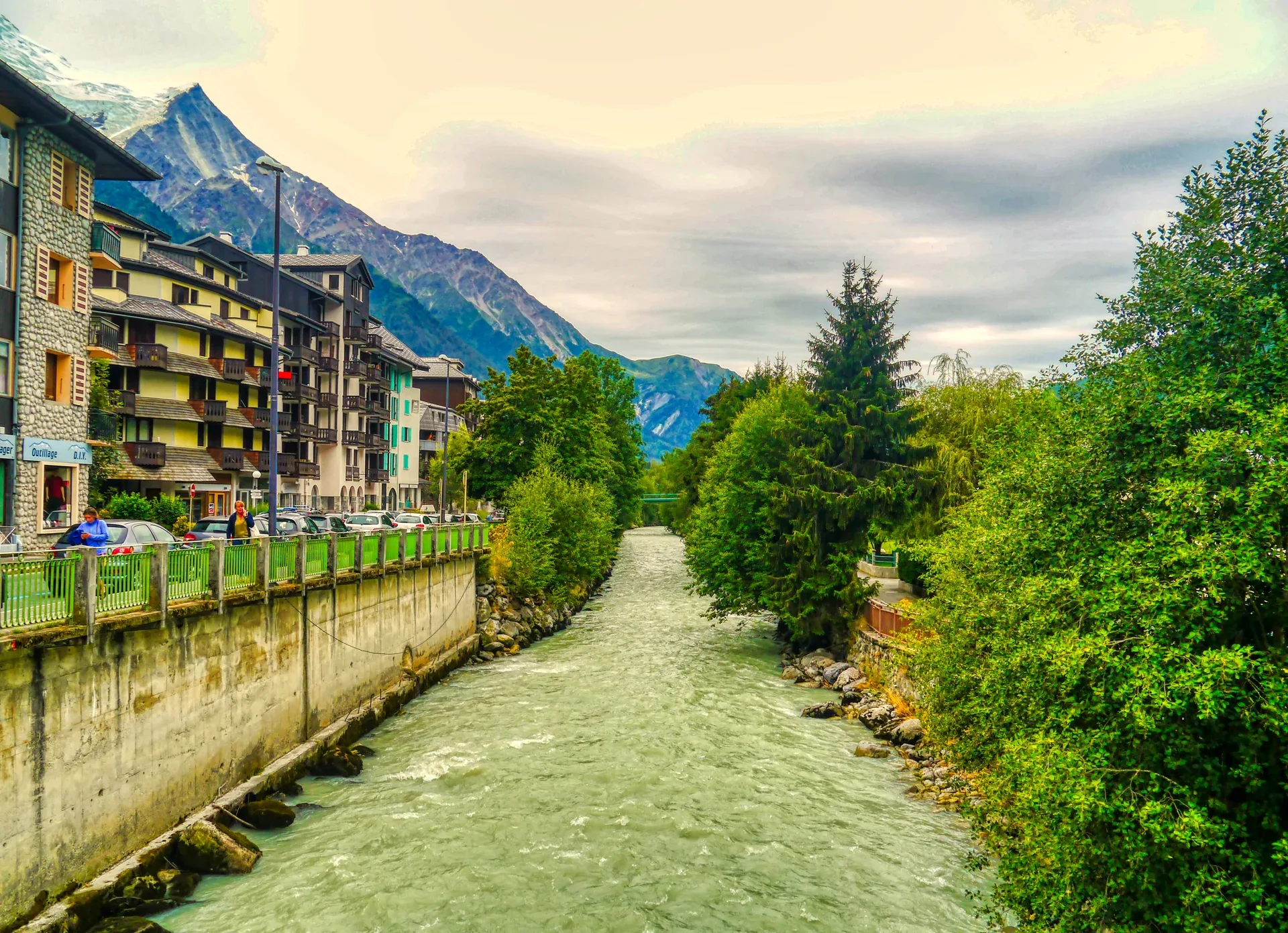
Chamonix can serve as a base for planning around the Tour du Mont-Blanc, with an overnight stay in the valley to spread out travel and hiking. In the Dolomites, choose your base according to your selected starting point rather than Cortina’s name recognition alone. The goal is to reach the trail and return in good conditions, without multiplying road journeys between distant areas.
Download maps, contacts, and bookings before leaving the valley. Test offline access, plan for your phone’s battery life, and bring a backup navigation method you know how to use. Check your mobile plan for the countries you will cross, particularly on an international route. Buying an eSIM does not create a signal in a valley without coverage; essential documents must remain available without a network.

Weather and Backup Plans
Each stage should have a decision point and an option to adapt. Check the forecast for the mountain range, then ask for local information about the trail. In France, Météo-France compiles mountain forecasts by region. Check the wind, precipitation, thunderstorms, and snow conditions where they affect your route. A pleasant temperature in the valley does not describe the exposure on a pass.
Before your trip, identify the descents to the valley that are actually feasible and the transport serving them. Your fallback plan should be based on a route you have checked. A shorter line on your phone may cross difficult terrain or a stream that has become dangerous. In the Écrins, the park notes that footbridges and trail conditions depend in particular on snow cover, winter damage, and weather events.
If conditions or fatigue exceed what you had planned for, change your itinerary early enough. Notify the huts expecting you and a trusted person of your new arrangements. Carry local emergency numbers and know how to share your location. Communications still depend on available coverage; choosing a suitable route and making decisions before difficult sections remain essential.
Rules for the mountain environment
The route passes through inhabited areas, pastures, and sometimes protected zones. Check the rules that apply to the area before planning a swim, a bivouac, or bringing a dog. On the Tour du Mont-Blanc, restrictions vary between reserves and countries. Permission granted in one valley does not apply to the entire crossing.
Stay on the trails, close gates as directed, and keep your rubbish until you reach an appropriate collection point. Food scraps attract animals too; take them away along with your packaging. At huts, use water according to the instructions, and do not count on having a shower or being able to recharge your devices at every stop.
These checks are part of preparing for your trip. They help you choose an option that complies with local rules, particularly if you want to hike with an animal or add an overnight stay outdoors. Ask the relevant manager for permission before including this option in your booked itinerary.
A guided day hike in the Dolomites
Before booking several nights, a trip with a professional gives you a chance to discuss the terrain, try out your equipment, and see how you recover after a day of hiking. The trekking experience offered here lasts five hours, with a UIAGM/IFMGA mountain guide and a route adjusted to participants’ abilities. The listing offers English and Italian.
This activity includes a day of guiding, with a possible stop at a mountain hut. Plan your meal and check the exact meeting point and travel arrangements to the starting point. Pole rental is separate. Tell the guide about your trekking plans so you can choose an outing that helps with your preparation: the terrain you are looking for, your hiking habits, and your downhill experience.
You are booking a guided hike here, with no overnight stay and no reservations at Alta Via huts. For a first guided crossing, you need a program that explicitly covers the days, accommodation, and services you want. This day is mainly intended to help assess your level and set your next goal in the mountain range.

Viator
A guided day hike in the Dolomites
To test your equipment and confidence on the trails before booking several nights, tell the guide which trek you have in mind and choose a suitable outing. Guiding in English or Italian, with no overnight stay.
- 5 hours
- 5/5 (3 reviews)
Five-hour hike with a UIAGM/IFMGA mountain guide, in English or Italian. The route is adapted to the group, with the option of stopping at a mountain hut. Day outing, with no overnight stay or crossing reservation. Pole rental is separate; bring your own meal.
Cancellation policy
All sales are final. Cancellations will not be refunded.
From €499.00
View activityFAQ
How many days should I plan for my first hut-to-hut hike?
We recommend one or two nights to try trekking if you already go on day hikes. This gives you a chance to test your pack, sleeping in a dormitory, and your recovery before setting out again. Choose stage lengths based on your usual hikes, with an accessible descent and an arranged return. Even a short trip can be demanding if the passes or elevation gains exceed your experience.
What is the difference between a staffed mountain hut and a cabin?
A staffed mountain hut has a team on site during a defined period and offers services you should check, particularly meals and sleeping arrangements. A cabin or unstaffed shelter may require much greater self-sufficiency for cooking, finding water, and sleeping. The name shown on a map does not specify all the services available. Check the site’s listing and how it operates for your planned dates.
Can you set out in June in the Dolomites or around Mont Blanc?
It depends on the route, whether huts are staffed, and snow conditions. A hut opening in June does not guarantee a snow-free approach. La Chamoniarde reports that snowfields may remain on the high passes of the Tour du Mont-Blanc until early July. Ask for recent local information and choose a route that matches your abilities. For a first experience, postponing your departure can make the trip easier to plan.
Do I need to book every night before setting out?
For a route planned around staffed huts, confirm every overnight stay before committing. A missing booking in the middle may force you into an unrealistic stage. Also check meals, deposits, and cancellation terms. If your plans change, notify the establishments concerned immediately; avoid holding multiple alternative bookings for the same night.
Do I need a sleeping bag?
It depends on the accommodation and how it operates. For huts on the Tour du Mont-Blanc, La Chamoniarde states that blankets or duvets are available and that an individual sleeping bag liner is required. Confirm the rules with each establishment. An unstaffed shelter may require different equipment, chosen according to the temperature and the services actually available.
Can you hike the Alta Via 1 without a guide?
Hiking independently means knowing how to choose your stages, read a map, assess conditions, and change your route. The variants and sections you choose should match your experience. Booking huts does not demonstrate these skills. If you are new to the mountains as well as multi-day hiking, have a professional plan or guide your trip, and describe your experience level precisely.
What budget should I plan for mountain huts?
Calculate the total based on your chosen accommodation and dates: overnight stays, dinner, breakfast, packed lunches, drinks, and separate services. Add transport, a possible night in the valley, and a contingency for changing your plans. Prices and discounts vary by establishment and package; ask for the applicable rate before comparing two routes.
Does a Viator ticket book the nights on my trek?
The outing recommended in this guide is a five-hour guided hike with no accommodation. It does not book any sequence of huts and is not an Alta Via package. Book overnight stays for your route directly with the establishments or as part of a trip that explicitly includes them. Always check the exact services rather than inferring what a trip includes from its title.
Sources and checks
Plan your visits and check current conditions.
- Rifugio Biella: access and season
Rifugio Biella · Accessed November 1, 2026
What this source supports
Altitude 2,327 m; the stage from Braies involves around 900 m of ascent and takes 3 h 30; the Alta Via 1 is around 125 km/twelve days; opening announced from June 12 to September 25, 2027. Conflicting dates for when reservations open: not stated.
- Tour du Mont-Blanc: preparation
La Chamoniarde · Accessed November 1, 2026
What this source supports
Average duration of eight to ten days and six hours of walking per day; snow possible on the passes until early July; booking, a sleeping-bag liner and preparation; local restrictions.
- The Tour du Mont-Blanc
My Tour du Mont-Blanc · Accessed November 1, 2026
What this source supports
Around 170 km across France, Italy and Switzerland; general season from mid-June to mid-September; respect trails and dispose of waste properly.
- GR54: Tour of Oisans and the Écrins
Écrins National Park · Accessed November 1, 2026
What this source supports
Trail information: 194.4 km, 11,962 m of elevation gain, thirteen days, difficult; trail and footbridge conditions vary.
- The Great Crossing of the Pyrenees
Association of GRdistes Friends · Accessed November 1, 2026
What this source supports
Atlantic-to-Mediterranean crossing, valleys and passes; experience and navigation skills required; varied accommodation.
- Booking and cancelling a night in a mountain hut
FFCAM · Accessed November 1, 2026
What this source supports
Notify the hut if you cancel and avoid blocking several huts for the same night.
- Mountain forecasts
Météo-France · Accessed November 1, 2026
What this source supports
Forecasts by mountain range, with snow cover and avalanche-risk sections.
- Guided hike in the Dolomites — 259279P7
Viator / operator guide · Accessed November 1, 2026
What this source supports
ACTIVE product; five hours, English/Italian; UIAGM/IFMGA mountain guide; pole rental excluded; no overnight stay included. Listing and catalogue actually reviewed via API.
Viator — activity pages
Information about the offers featured in this article.Affiliate links: Odyvero may earn a commission when you book through this article’s buttons.
- Viator : A guided day hike in the Dolomites
Accessed November 1, 2026


