 odyvero
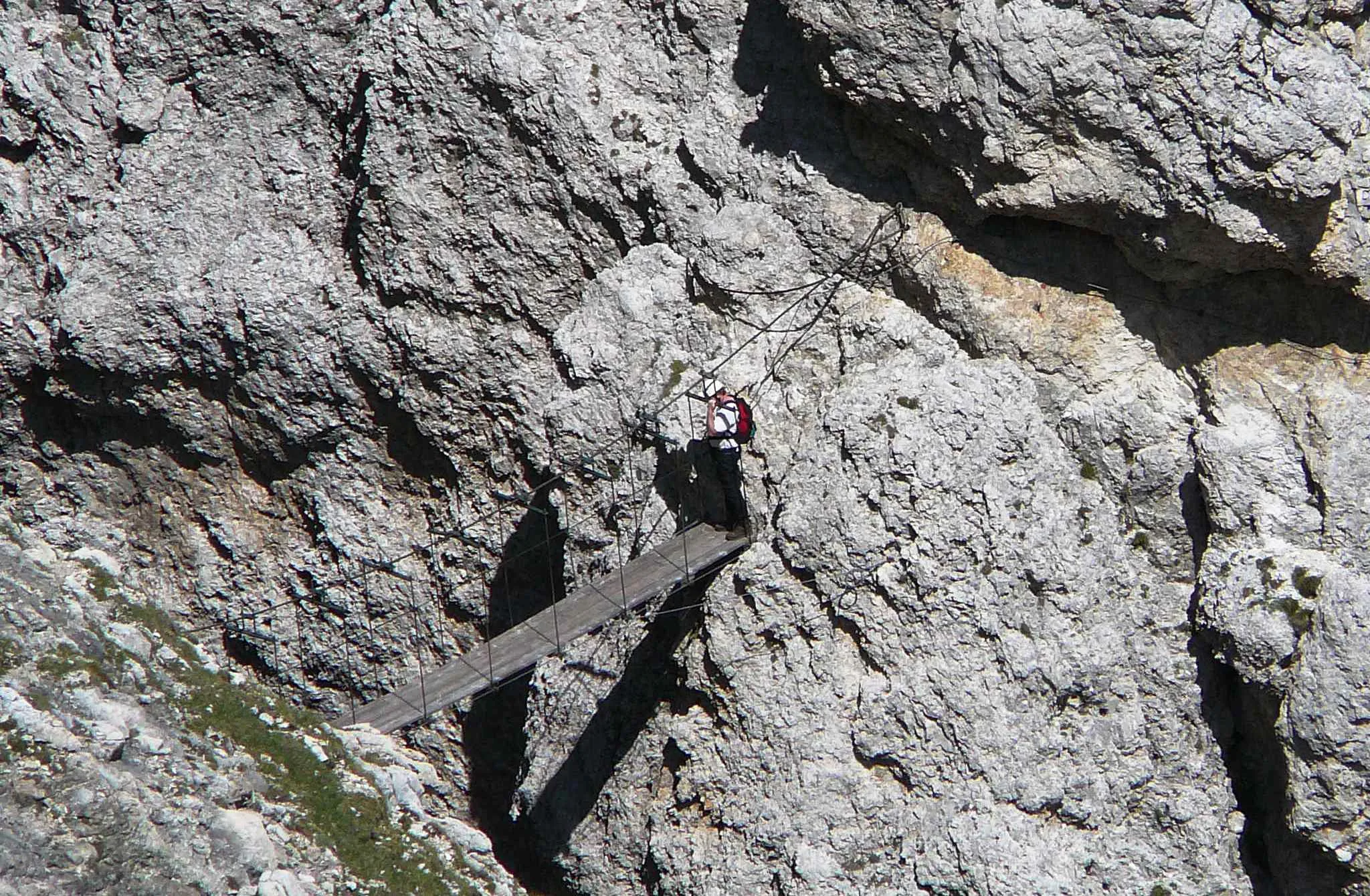

Between the tunnels of Monte Paterno, the ladders of Pinut and the rope traverses of the Verdon, the day changes as much as the scenery. Here’s how to choose your route based on your experience with exposure, your stamina and access, with guided outings for learning or tackling a mountain route.
Three regions, three ways to climb
At Mürren, the route descends toward Gimmelwald. At Pinut, it crosses tiers of cliff separated by wooded terraces. In the Dolomites, a short cable section may be part of a long day in the mountains, with an approach, a summit and a trail descent. The term “via ferrata” therefore covers very different outings. To choose, the name of the mountain range and a photo of a suspension bridge tell you less than the total duration, the return terrain and what experience is expected.
For a first time, we recommend a guided outing on a short route, chosen after speaking with the guide. The Cortina d’Ampezzo area offers this option without requiring you to commit in advance to a major summit. If you already have experience with exposed sections, Monte Paterno or Tridentina–Pisciadù can shape a day around a particular landscape. In Switzerland, Pinut offers moderate technical difficulty but significant exposure; Mürren and Tour d’Aï call for different skills. The Verdon stands out for its routes, where you also move using ropes, abseils and zip lines.
This comparison covers separate stays. Flims, the Bernese Oberland, Leysin, Cortina and La Palud-sur-Verdon do not make a coherent tour for a few days. Choose your base first, then an outing suited to your group. A successful learning day near your accommodation is more useful than a long journey to a route whose approach or return is beyond your experience.
This guide is intended to help you prepare a choice and a booking. An up-to-date local route description, the condition of the equipment and information from the operator are still necessary before setting out. Snow, rain and wind can completely change an outing that is otherwise familiar. In late October, a plan in the high Dolomites should already be treated as a late-season outing, with precise local confirmation.
Grading, exposure and the full day
The grading describes part of the effort, usually the difficulties of the equipped section. It indicates the steepness, footholds and movements involved. It does not summarize the number of hours spent outdoors, the condition of a gully on the descent or a person’s reaction to exposure. Someone used to long hikes may find that a horizontal traverse slows them considerably; a climber comfortable on rungs may lack the stamina for the return.
Grading scales vary by country and by author. In Switzerland, the consulted pages use K grades: K1–K2 at Pinut, K3 at Mürren and K4 for Tour d’Aï on the Swiss Alpine Club website. Italian descriptions may use a different scale. A quick conversion to the French grades F, PD, AD or D loses some of the context. Read the route description and details about the most demanding sections, then ask the guide how they relate to your actual experience.
Differences between sources are also worth knowing. For Tour d’Aï, the Alpes vaudoises tourism office lists K3, while the SAC gives K4 and rates the descent T3+. We use the more cautious interpretation when preparing the outing. Your choice should account for the exposed face and the return, rather than seeking the most reassuring grade. The time given for the ferrata alone is also not enough: an hour on the cables can be part of several hours of hiking.
To assess your level, describe specific situations: have you walked a narrow trail above a slope? Have you carried your pack for half a day with significant elevation gain? Do you know how to use your equipment under a professional’s supervision? An introductory session is a chance to answer these questions on suitable terrain. Good fitness helps you make progress; learning the techniques and becoming comfortable with exposure are separate skills.
Cortina for a first outing
Cortina is an interesting base for discovering via ferrata with a guide who chooses the route according to conditions and the group. Not all routes accessible from the valley require a major ascent. Local guide service Guide Dolomiti presents Ra Pegna in particular as a beginner-friendly route and Ra Gusela as a short via ferrata. These names offer starting points for discussion without committing you to booking a route before participants have been assessed.
For a first outing, it helps to choose a reasonable approach, a relatively short equipped section and a straightforward return. You can take time to adjust your harness, handle the lanyards and learn how to find secure footholds. Fatigue also affects your hands and shoulders, especially when you pull on the cable a lot because you are not yet used to the movement. The guide can observe your progress and adjust what comes next before exhaustion becomes the main focus of the day.
The group outing offered around Cortina lasts about four hours. It includes guidance from a UIAGM/IFMGA mountain guide and is aimed at beginners in good physical condition who are comfortable with heights, on easy to moderate routes. The activity is offered in English and Italian. These languages are especially important here: you need to understand instructions quickly in the field and be able to report a difficulty clearly.
The final meeting point depends on the route selected and, according to the operator, is confirmed the day before. Private transport, any lifts and rental of a helmet, harness and via ferrata kit are separate from the advertised guiding service. Plan your arrival after confirming the exact location and equipment arrangements. The activity’s duration leaves room elsewhere in the day, but the journey to the starting point and any prior discussions should also be included in your schedule.

Viator
Group introductory via ferrata around Cortina
Choose this option for a first outing to learn with a guide on a suitable route. Arrange your transport after the meeting point is confirmed the day before.
- 240 min
- 5/5 (81 reviews)
Four-hour outing with a UIAGM/IFMGA mountain guide, in English or Italian. An easy-to-moderate route is chosen according to the group; kit rental, private transportation, and lifts are separate. The final meeting point is confirmed the day before.
Cancellation policy
All sales are final. Cancellations are not eligible for a refund.
From €139.00
View activityThe private option around Cortina
A group of your own may prefer private guiding to work at a shared level or follow a more individual progression. This option suits friends who want to discover the activity together, a couple with different levels of experience, or participants who want to discuss a particular goal with the guide. The route will still depend on everyone’s abilities and the day’s conditions. A private booking does not make a demanding route suitable for every level.
The selected private option is advertised as lasting about four and a half hours with a UIAGM/IFMGA mountain guide, in English or Italian. Individual equipment rental and private transport are not included. Its main benefit is the time to talk with the guide and organize the outing for your group. Before booking, describe your previous experience, the number of participants and the kind of day you have in mind: learning the basic techniques, progressing on rock or tackling a more challenging route.
When comparing group and private options, consider the group’s composition as well as the price. For a group outing, the advertised level should already suit you. With a private booking, the guide has more flexibility to plan the outing with you; they may also recommend a simpler objective than the one you had in mind. If someone mainly wants to find out how they react to heights, mention this in your first conversation. That makes it possible to find suitable terrain before committing the day to an ambitious objective.

Viator
Private via ferrata with a guide around Cortina
For a group with varying levels of experience, discuss your pace and objective directly with the guide. The route will still be chosen according to everyone’s abilities and the conditions.
- 270 min
Private four-and-a-half-hour outing with a UIAGM/IFMGA mountain guide, in English or Italian. The plan is discussed based on skill level and conditions; equipment rental and private transportation are separate.
Cancellation policy
All sales are final. Cancellations are not eligible for a refund.
From €595.00
View activityMonte Paterno and the wartime tunnels
Monte Paterno gives the outing a different scale: the mountain becomes the focus of the whole day. The Innerkofler–De Luca route combines equipped sections, galleries dating from the First World War and views of the Tre Cime di Lavaredo. A headlamp is essential for the tunnels. The appeal of this place lies in the alternation between enclosed spaces, rock and open views of the surrounding peaks, rather than in a succession of athletic challenges.
This outing is for people in good shape who can walk for several hours and move comfortably on exposed terrain. A via ferrata described as relatively manageable technically still comes with the demands of its environment: altitude, weather, travel across mountain terrain and fatigue management. If this is your very first time using lanyards, or you are significantly uneasy about exposure, a short session around Cortina will help you assess your comfort before taking on this objective.
The selected guided activity advertises a maximum group size of five, a UIAGM mountain guide and a via ferrata kit with helmet, harness and headlamp. Guiding is offered in English and Italian. The duration field says six hours, while the description calls for approximately six to seven hours; allow for this range when planning the day. Any evening appointments should leave enough time for the walk and return journey.
Logistics are planned around Lago d’Antorno, with an ascent to Rifugio Auronzo advertised in the guide’s vehicle. The access road fee is separate. The listing shows different amounts in two sections: ask the operator for the current surcharge before paying. This check concerns road access, not an optional visit. For the same reason, confirm the meeting place and time before booking shared transport from your accommodation.
The presence of tunnels does not remove the need to prepare for the outdoor conditions. The day may start in clear light and continue on cold or wet sections. Keep a warm layer easily accessible and discuss what to pack with the guide. The schedule should allow time to move carefully and understand the historical landscape, rather than treating the galleries as a separate visit to add to an improvised hike.

Viator
Monte Paterno: guided via ferrata and tunnels
Choose this full-day outing for the historic tunnels and views of the Tre Cime, with the advertised equipment included. Allow for the required stamina and confirm the road surcharge before paying.
- 360 min
- 4.4/5 (7 reviews)
Guided day outing lasting approximately six to seven hours, with a maximum of five participants, in English or Italian. UIAGM guide, helmet, harness, kit, and headlamp included. Meeting point: Lago d’Antorno; toll toward Auronzo is separate, amount to be confirmed.
Cancellation policy
For a full refund, cancel at least 24 hours before the scheduled departure date.
From €265.00
View activityThe Tridentina to Pisciadù
The Tridentina, also searched for as Brigata Tridentina or Pisciadù, is popular for its distinctive sequence: a climb on rock near a waterfall, the Exner Tower, then a suspension bridge before reaching Rifugio Franco Cavazza. The refuge is at 2,587 metres, near Lake Pisciadù. The bridge is a striking feature of the route, but preparation should focus on the entire ascent and descent and on conditions in the Sella massif.
The Val Gardena description details several sections, including vertical passages and a more demanding upper section. It mentions options for leaving the main route before the most challenging passages. These should be identified on a current route description and understood before setting out. A group that discovers its difficulties in the middle of a crowded section has less room to make a calm decision. For a first experience of this scale, a guide can help size the day appropriately and anticipate these choices.
The standard return via Val Setus also includes equipped sections. You therefore need to stay focused after the refuge, with suitable equipment and a plan for the descent. The tourism source notes, in particular, that snow may remain in the valley early in the season, in June and July. The fact that a trail is popular does not, by itself, tell you whether footholds are secure on a given day. Contact the refuge or a local professional for recent conditions.
Crowds also affect how you plan. On a via ferrata, a slower group can hold up everyone behind it. Allow extra time for waiting rather than counting on finishing ahead of schedule. An early start, consistent with the weather and available daylight, is preferable to timing your outing solely to avoid other people. We do not recommend this route based only on a stated minimum skill level: you should already be comfortable on rock and have the stamina for the return.
Pinut and its wooded terraces
Above Fidaz, near Flims, the Pinut crosses three rocky ledges separated by terraces. The ladders provide access to terrain that appears impassable from the valley. Between two cliff sections, the route passes through wooded areas before emerging into alpine pastures. This sequence makes the outing different from the long Dolomite ridges and the downhill traverse at Mürren. The landscape unfolds in tiers, with the atmosphere changing as you climb.
Graubünden Tourism rates it K1–K2 and lists twenty-seven ladders. This moderate technical difficulty may suit beginners with proper guidance, but the lower part of the route includes some highly exposed sections. The operator requires sure-footedness, the ability to move safely in the mountains, and comfort with heights. The route description advises against the outing for children under twelve. Families should use this guidance when deciding before booking accommodation or renting equipment.
The route description’s figures refer to a full mountain outing: 5.6 kilometres, around 3 h 45, and 914 metres of ascent for the route shown. They do not refer only to time spent on the ladders. The approach is listed as taking around half an hour from Fidaz, followed by a return along an old alpine path to Bargis and Fidaz. The description gives around two hours for the descent; check which return route suits your plans and the route description you are using.
For access, the source mentions transport to Flims followed by the local bus toward Fidaz, with a stop at Fidaz Pinut. The return deserves as much attention as the outbound journey: a connection that works in the morning does not guarantee a late connection from Bargis. Download the relevant timetables and allow extra time for walking. The parking areas described are paid and have limited capacity; plan your departure around authorized parking spaces.
The Pinut is particularly well suited to a stay based around Flims, with a full day available. Its rating attracts people who want to start gently; its terrain is a reminder that ease of movement and comfort with exposure are not the same thing. If ladders or an exposed traverse already make you very anxious, guidance and a conversation beforehand are more useful than deciding based on photographs alone.

Mürren, a traverse to Gimmelwald
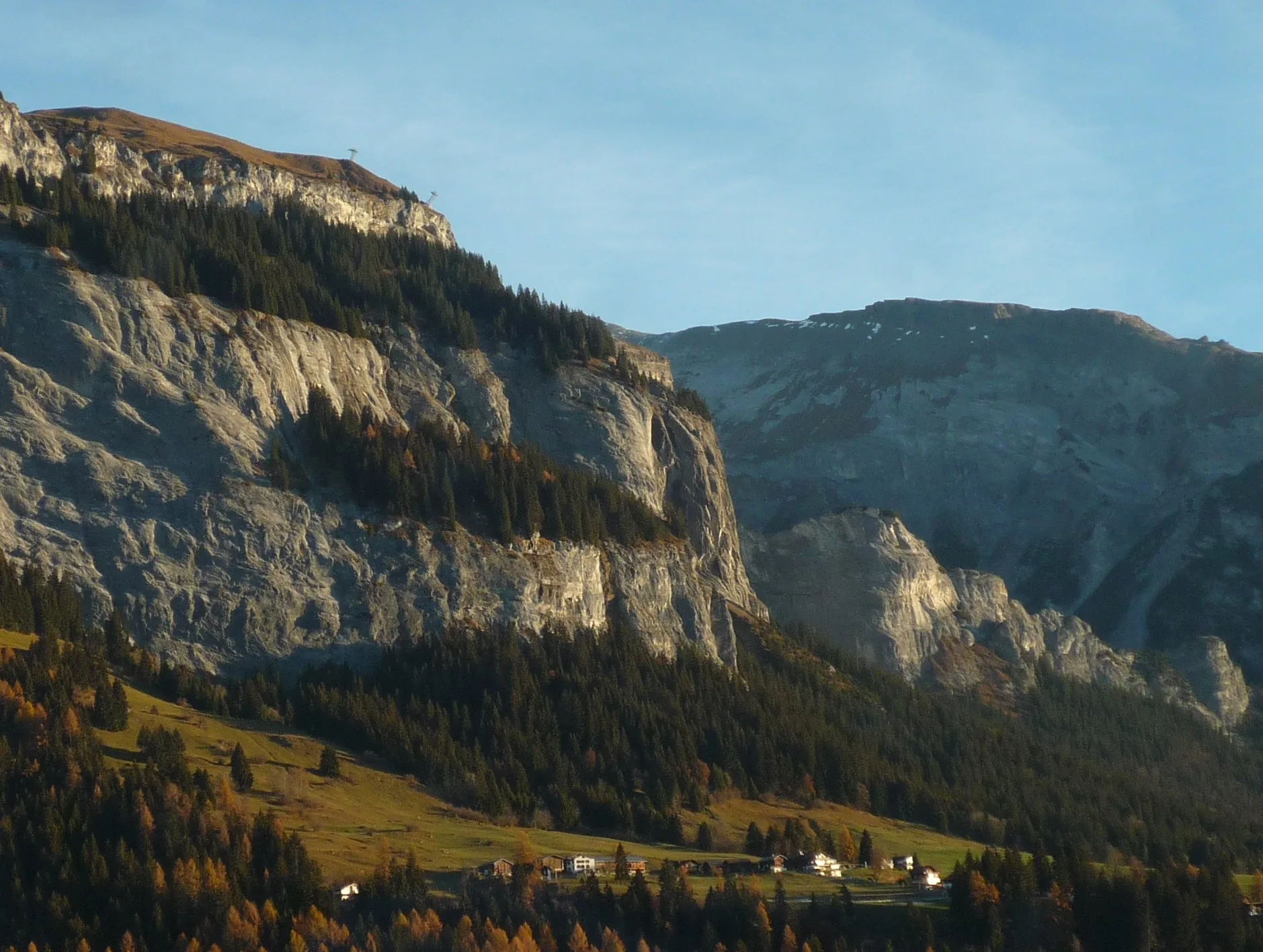
At Mürren, the via ferrata follows an unusual direction: it descends toward Gimmelwald. The route crosses a slope overlooking the valley, with sections where the height is hard to ignore. Mürren Tourism lists it as 2.2 kilometres and rates it K3. The eighty-metre Nepalese bridge is one of the route’s highlights. The pace depends on the group’s progress, how busy the route is, and each person’s confidence on exposed traverses.
The tourism office advises inexperienced people to hire a guide. This recommendation makes sense even if you hike regularly. Descending rungs, repositioning lanyards, and traversing above a drop require different habits from walking a valley trail. Psychological fatigue can set in before muscular fatigue. When booking, describe your actual experience rather than simply saying you are athletic without specifying the terrain you have already covered.
According to the local website, access is regulated from June 1 to October 31, between 9 a.m. and 6 p.m. These hours define the permitted access window; weather and route conditions remain decisive. The zipline requires a mountain guide to be present and must remain closed in all other situations. The base-jumping platform is off limits to via ferrata visitors. Do not plan the outing on the assumption that all visible installations can be used freely.
Mürren is a car-free village, accessible by cable cars from Stechelberg or via the Lauterbrunnen–Mürren connection. The via ferrata starts near the Sportchalet, after you arrive in the village. Plan a day that includes the ascent to Mürren, time for any equipment rental, and the return from Gimmelwald. Know the last connections before setting out, and allow for progress that may be slower than expected.
At the end of October, the closing date is no reason to attempt the outing at any cost. A wet route, risk of thunderstorms, or deteriorating weather means you should reconsider your plans. If you booked your stay well in advance, keep a valley walk or visit as a backup for the day. You can shift the activity to the best available weather window after speaking with the guide or operator.
Tour d’Aï above Leysin
The Tour d’Aï offers a summit objective at around 2,330 metres above Leysin. The route passes along ledges, through a chimney, and up a vertical to slightly overhanging wall before reaching the top of the tower. The views open out over the Vaud Alps and Lake Geneva. This objective appeals to climbers already familiar with vertical terrain who want to combine a sustained section with a mountain day in the Berneuse area.
The Swiss Alpine Club (CAS) rates the via ferrata K4 and describes the terrain as difficult and exposed. The same portal specifies that the return via the normal route includes a ladder, chains, and sections rated T3+, with part of the upper section in the shade. The descent therefore calls for specific preparation. Reaching the summit with energy to spare helps you stay focused on the return; planning your start based only on the via ferrata’s duration underestimates this second part.
The CAS timings provide a rough estimate of around three and a half hours for the full outing described from the upper access points: approach, via ferrata, descent, and climb back toward Berneuse. In this breakdown, the equipped section takes about one hour and ten minutes. These figures apply to the route described, not to every departure point in Leysin. Check which lifts you plan to use, their schedules, and any additional walking if you choose a different approach.
The tourist office mentions equipment rental in Leysin and guided outings with the Bureau des Guides des Alpes Vaudoises. For a group choosing between Mürren and the Tour d’Aï, the decision can be based on the type of terrain sought: a very exposed downhill traverse on one side, a wall and summit on the other. The least experienced participant’s ability and confidence on the trail descent should remain central to the discussion.
The Verdon and rope routes
In the Verdon, the term “via ferrata” sometimes appears alongside “via cordata” or “adventure course.” These terms refer to different ways of progressing through the terrain. On a classic via ferrata, you follow fixed equipment using an appropriate self-belay system. A via cordata outing may combine rope travel, easy climbing, abseils, and a zipline, arranged by the professional guide. Read the exact route details before comparing two offers.
The operator Les Canyons du Verdon describes several day trips around La Palud-sur-Verdon. Trou du Renard offers an introduction to vertical terrain with an abseil, zipline, and rope sections, for a stated duration of three hours and a minimum age of ten. Mainmorte combines a dry canyon, abseils, and an ascent with via ferrata-style sections; the stated duration is five hours, with a minimum age of sixteen. These details apply to this operator’s offerings.
Traversée des Cataractes is described as a six-hour outing, also for ages sixteen and up, with long abseils and exposed traverses on the Escalès cliffs. Its itinerary assumes a different level of confidence from that needed for a short introductory outing. The route name, duration, and stated minimum age provide an initial way to narrow down the options; a conversation with the guide is still necessary to discuss the group’s experience with exposure and its endurance.
The provider says it supplies technical equipment and provides qualified guides. Participants need closed-toe shoes, suitable clothing, and water, with a packed lunch for the longer outings mentioned. Before booking, confirm the meeting point, what the service includes, and the rescheduling conditions. We do not link these routes to a generic Viator ticket: the search conducted did not yield an exact, sufficiently relevant product in this area.
The Verdon lends itself to a stay in which the vertical outing is one of several day activities. Heat, wind, rain, and local conditions affect the choice of time slot. An operator may offer activities year-round while adapting the outing days and routes. For an autumn visit, ask which route will actually be offered on your date rather than inferring availability from the presence of a booking form alone.
Season and access conditions
For high-altitude routes in the Dolomites, July through September is a reasonable starting point when planning your stay, subject to confirmation based on snow cover and weather. Snow may still remain in couloirs or shaded areas in June; October brings less daylight and may bring cold conditions. The opening of a lift, the opening of a mountain hut, and whether a via ferrata is passable are three separate pieces of information. Check all three if they affect your plans.
A local page showing open routes should be read alongside its update date. The Guide Dolomiti list consulted was last updated on August 21, 2026, and notes that it is not maintained during winter, from November to early May. Its descriptions help identify routes; they cannot establish that a route will be passable several months later. For an upcoming outing, seek recent local information from guides, mountain huts, or the relevant operators.
Some older access routes require particular caution. For Marino Bianchi and the Cristallo area, Guide Dolomiti notes that the old lift between Son Forca and Forcella Staunies has been closed since 2016, as has the Lorenzi hut. An account that still relies on this connection may greatly underestimate the current approach. We therefore do not consider Marino Bianchi a simple extension of an introductory outing. Any plans should be based on the access options actually available.
Forecasts should be read by altitude and area. A pleasant temperature in the village says little about a shaded rock face; a clear sky at breakfast may give way to deteriorating conditions later in the day. Ask your guide what conditions would prompt a change of objective or a postponement. Where possible, choose a stay with some flexibility in the schedule, especially when the via ferrata is your main reason for travelling.
Equipment and professional guidance
Essential equipment includes a mountaineering helmet, a suitable harness, and a via ferrata set with an energy absorber. You will also need footwear suited to the terrain, clothing for the expected conditions, and a pack with water, food, and protection from cold or rain. Gloves can make handling the fixed equipment more comfortable. A headlamp is necessary for the tunnels on Monte Paterno and is listed among the inclusions in the selected offer.
Check that the equipment is suitable for the person using it, particularly for children and people with non-standard body sizes. Follow the manufacturer’s instructions and usage limits; ask the rental shop or guide to check the equipment. Improvised combinations of slings and carabiners are not a substitute for a set designed for this activity. Equipment that has sustained a major impact or has a questionable history should be assessed by a qualified person before it is used again.
For your first outing, learn the techniques with a professional on terrain chosen for that purpose. You should understand and practise harness adjustment, clipping past anchors, spacing, and how to respond to difficulties. An article cannot check your technique or the route setup. Depending on the people and terrain, the guide may also arrange additional support.
When choosing a guide, check the stated qualification, the language actually offered, and the group size. The outings around Cortina presented here list UIAGM/IFMGA mountain guides; the Monte Paterno outing lists UIAGM. The offers consulted provide guidance in English and Italian. If you need explanations in French, confirm this before booking rather than assuming the service language from the language of the booking page.
Professionals also need accurate information. Tell them about balance difficulties, an intense fear of heights, or any health issue that could affect you during exertion. Read the recommendations and restrictions in the activity details before paying. Describe your experience with hiking and exposed terrain; the guide can then suggest a suitable objective, format, or alternative location.
Budget and travel
The cost of a day out adds up across several items: a guide if needed, equipment rental, road access, lifts, transport, and food. Two offers with different starting prices may include very different services. For Monte Paterno, the equipment set and headlamp are listed as included, while the road toll is extra. For the selected options around Cortina, individual equipment rental is listed separately. Compare the total for your group and departure point.
Product prices and reviews are shown in the cards, using data from the partner. The final price depends on the date, participants, and selected option. For private guiding, also check how the service is priced: the displayed amount may depend on group size. Avoid planning your budget around an old price from a blog or a price for a different version of the activity.
If you are travelling without a car, choose a base based on its actual connections. Mürren is accessible by lifts, and the approach to Pinut is described as starting from local transport to Fidaz. You still need to arrange equipment rental, the walk to the starting point, and the return journey. Around Cortina, a meeting point confirmed the day before may require more coordination; the presence of a train station or bus service in the area does not guarantee access to the required meeting point at the necessary time.
For a stay in Switzerland, check that your mobile plan includes the country before you leave. Data access in the valleys can help you check connections, receive a message from your guide, or find a weather report. If your usual plan does not cover these uses, a local eSIM is an option. The selected Airalo plan includes ten gigabytes for fifteen days; it requires an unlocked, compatible phone. Its list price retains its original currency in the card.
Offline preparation is still useful: save schedules, meeting-point details, and route information so they are available without a connection. An eSIM provides data within its coverage area; it does not guarantee reception in a gorge or behind a rock face, and it is not an emergency device. For a single day in Switzerland with sufficient existing coverage, you can keep your current plan and skip this add-on.
Airalo
10 GB Switzerland travel eSIM valid for 15 days
Useful for a multi-day stay in Switzerland if your plan excludes the country. Check that your phone is compatible, and download route information for offline use as well.
Mobile data in Switzerland: 10 GB for 15 days for connections and communication with your guide from the valleys. An eSIM-compatible, unlocked phone is required; first check whether Switzerland is included in your plan. Reception in the mountains is not guaranteed.
From $22.00
View activityThree types of stay
To try the activity around Cortina, plan a stay that lets you schedule the shorter outing on the most suitable day. The first day can be used to reach your base, take an easy walk, and collect equipment if that is part of the plan. The guided outing then takes up an extended half-day, including travel. Another day gives you flexibility for weather or a hike suited to the group. This is a suggested pace, with no fixed schedule or mountain-hut booking included.
For a Monte Paterno or Pisciadù outing, set aside a full day and avoid a long transfer immediately afterward. Confirm conditions and access the day before, then choose accommodation that makes sense for your return. Doing both routes on consecutive days may suit experienced participants, subject to local advice. For a first week, scheduling an easier day in between can help you assess accumulated fatigue in both your legs and arms.
In Switzerland, build your stay around a single area: Flims for Pinut, the Bernese Oberland for Mürren, or Leysin for Tour d’Aï. Trains and lifts allow for a range of itineraries, but linking all three areas quickly turns the trip into a transport circuit. In the Verdon, La Palud makes a base to discuss with your operator for a roped outing and other days of exploration. In each case, a coherent stay depends on the terrain you choose, the time available, and the group’s shared ability level.
FAQ
Which via ferrata should you choose for your first time?
A short, guided outing chosen to suit your fitness and comfort with exposure is the best starting point in this selection. Around Cortina, introductory options let the professional adapt the route. Pinut is technically moderate, but its exposed sections and elevation gain still require proper preparation. Your first experience using via ferrata lanyards deserves more consideration than choosing solely on the basis of an easy rating.
Can you do a via ferrata if you have a fear of heights?
An intense fear of heights can make progress very difficult, even on a technically simple route. Discuss it with the professional before booking and ask for an introductory route suited to your situation. A suspended footbridge or a crossing above a valley involves genuine exposure. If you do not yet know how you will react, a short guided session allows for a more meaningful assessment than a long, committing route.
What is the difference between a via ferrata and a via cordata?
A via ferrata generally follows fixed equipment used with a specific self-belay kit. A via cordata involves rope-based progression organized according to the terrain and the guidance provided. In the Verdon, the routes featured may combine rappelling, easy climbing, and a zip line. Read the activity description and ask for clarification about how you will be accompanied. A difficulty rating given for a ferrata does not automatically describe a day on a cordata.
When is the best time to visit the Dolomites?
July through September is a starting point for planning high-altitude routes, subject to local confirmation. Snow may persist early in the season and return before winter; access, mountain huts, and lifts each have their own schedules. For a departure in June or October, ask for recent confirmation for your exact route, including the descent. Opening information published during the summer does not confirm the condition of the terrain several weeks later.
Is the Mürren via ferrata open year-round?
The Mürren tourist office states that it is open from June 1 to October 31, from 9 a.m. to 6 p.m. Access also depends on weather conditions and the state of the route. The zip line is reserved for people accompanied by a mountain guide. Also plan the lifts needed to reach Mürren and return from Gimmelwald, allowing extra time for equipment and the group’s progress.
Can children go on these routes?
The minimum age depends on the route, provider, equipment, and the child’s experience. The Pinut listing advises against the route for children under twelve. In the Verdon, the operator we consulted lists the Trou du Renard for ages ten and up, then Mainmorte and the Cataractes for ages sixteen and up. These age limits apply to those activities. Have the instructor assess your plans and check that the kit is suitable; age alone does not indicate comfort with exposure.
Is equipment included in guided outings?
What is included varies. The Monte Paterno offer selected for this guide lists a helmet, harness, via ferrata kit, and headlamp. The two options around Cortina list personal equipment rental separately. The Verdon provider mentioned here says that technical equipment is provided. Review the exact offer and clothing instructions before departure; shoes, water, clothing, and food may still be your responsibility.
Do you need a guide for every via ferrata?
The rules depend on the site and activity. Anyone going independently must have the skills, equipment, and information needed for the route. For a first time, we recommend hiring a professional to learn and choose suitable terrain. At Mürren, the zip line requires a guide. The rope routes in the Verdon featured here are offered with a guide; this article does not provide a basis for attempting them independently.
Can you do these outings without a car?
Mürren is reached by lifts, and the Pinut has an access route described using local transport to Fidaz. Then check the exact starting point, equipment rental, and return journey. Around Cortina, the route and meeting point for some activities are confirmed the day before: contact the operator before booking your connections. An excursion that is technically suitable can become difficult to arrange if the first bus arrives after the meeting time or the last return leaves too early.
How do you compare guide prices?
Compare the stated total duration, group or private format, qualifications, language, equipment, and included transportation. Add lift fares or tolls if they are charged separately. Check the group size used to calculate the displayed price and the weather-related rescheduling terms. The cards bring together available pricing information and reviews; the partner’s checkout lets you confirm the amount for your date and group.
Sources and checks
Plan your visits and check current conditions.
- Ferrata: equipment and commitment in the mountains
Guide Dolomiti · Accessed November 1, 2026
What this source supports
Characteristics of the ferrata and equipped trail; specialist equipment; length, terrain and weather all contribute to the actual difficulty.
- Ferratas around Cortina: descriptions and conditions
Guide Dolomiti · Accessed November 1, 2026
What this source supports
Last update shown as August 21, 2026; updates stop from November to early May. Beginner routes at Ra Pegna and Ra Gusela; Monte Paterno tunnels require a headlamp. The former Son Forca–Forcella Staunies lift has been closed since 2016, and the Lorenzi refuge is closed. No summer status is presented as a current condition.
- Tridentina and the return from Pisciadù
Val Gardena · Accessed November 1, 2026
What this source supports
Waterfall, Exner Tower, suspension bridge, Franco Cavazza refuge at 2,587 m. Val Setus has cables and possible snow early in the season; expect crowds and waiting.
- The historic Pinut via ferrata
Graubünden Tourism / Flims Laax Falera Management AG · Accessed November 1, 2026
What this source supports
K1–K2, 27 ladders, three cliff bands; exposed at the start. Route details: 5.6 km, 3 h 45 min, 914 m ascent. Approach about 30 min; check the return route depending on Bargis/Fidaz. Not recommended for children under 12; public transport access to Fidaz.
- Mürren–Gimmelwald via ferrata
Mürren Tourismus · Accessed November 1, 2026
What this source supports
Descending K3 traverse, 2.2 km; 80 m Nepalese bridge; regulated opening period June 1–October 31, 9 a.m.–6 p.m. Zip line with a guide only; base-jump platform prohibited. Access to the car-free village.
- Tour d’Aï: grading and return
Swiss Alpine Club SAC · Accessed November 1, 2026
What this source supports
K4 ferrata, T3+ return, summit at about 2,330 m. The full route is described as 3 h 30 min, ferrata 1 h 10 min; return includes a ladder, chains and shaded sections.
- Tour d’Aï: access and guiding
Alpes vaudoises · Accessed November 1, 2026
What this source supports
Access from Berneuse and the village of Aï; equipment and guides; the K3 grade differs from the SAC rating, as explicitly noted in the article.
- Rope courses in the Verdon gorges
Les Canyons du Verdon · Accessed November 1, 2026
What this source supports
Trou du Renard: 3 h from age 10; Mainmorte: 5 h from age 16; Cataractes: 6 h from age 16. Abseils, zip lines and via cordata vary by route; equipment and guiding are advertised. Age limits are specific to the operator.
- Data plans for Switzerland
Airalo · Accessed November 1, 2026
What this source supports
Official page checked again: data plans in Switzerland, including 10 GB/15 days; compatible phone required. Imported catalog 20624 in USD retained; the page’s localized display in EUR is separate, with no editorial conversion.
- Via Ferrata Experience in the Dolomites of Cortina
Viator — UIAGM/IFMGA Mountain Guide · Accessed November 1, 2026
What this source supports
Exact service, inclusions, exclusions, English/Italian language and duration checked again in the Partner API Basic. A booking through these affiliate links may earn Odyvero a commission.
- Dolomites Via Ferrata Experience Private Activity
Viator — UIAGM/IFMGA Mountain Guide · Accessed November 1, 2026
What this source supports
Exact service, inclusions, exclusions, English/Italian language and duration checked again in the Partner API Basic. A booking through these affiliate links may earn Odyvero a commission.
- Innerkofler-De Luca via ferrata to Monte Paterno
Viator — Giovanni Orlando · Accessed November 1, 2026
What this source supports
Exact service, inclusions, exclusions, English/Italian language and duration checked again in the Partner API Basic. Separate toll with conflicting amounts in the listing: no amount included. A booking through these affiliate links may earn Odyvero a commission.
Booking partners
Information about the offers featured in this article.Affiliate links: Odyvero may earn a commission when you book through this article’s buttons.
- Viator : Group introductory via ferrata around Cortina
Accessed November 2, 2026
- Viator : Private via ferrata with a guide around Cortina
Accessed November 2, 2026
- Airalo : 10 GB Switzerland travel eSIM valid for 15 days
Accessed November 1, 2026
- Viator : Monte Paterno: guided via ferrata and tunnels
Accessed November 2, 2026


