 odyvero
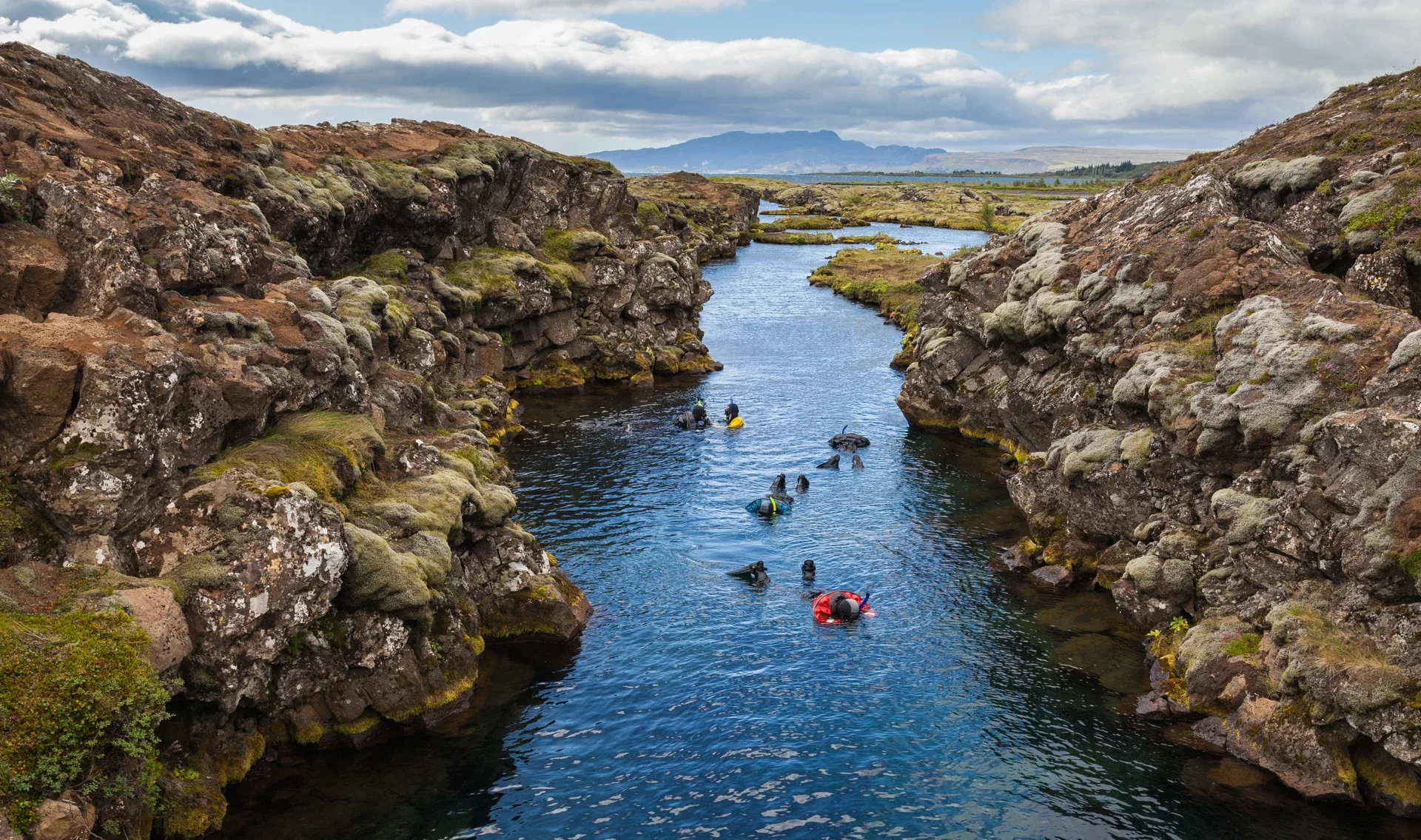

At Silfra, you come to see a fissure in water at 2–4 °C. In the Norwegian fjords, a trip can be built around nudibranchs, walls or wrecks. Whether you’re considering a snorkeling excursion or several days in a drysuit, here’s how to choose a trip suited to your experience.
Choosing based on your skill level
The first decision is about how you’ll be in the water. At Silfra in Iceland, snorkeling lets you see the fissure from the surface with a mask, snorkel and thermal protection. Scuba diving requires certification and specific drysuit experience. Farther north in Iceland, the Strýtan hydrothermal chimneys are for experienced divers. In Norway, the required skill level varies with the site, depth, current and type of trip.
For a first Nordic experience, we recommend Silfra snorkeling for travelers who can swim and feel comfortable in the water. The meeting point fits into a stay around Reykjavik without requiring you to organize a whole week of diving. For a diver already trained in drysuit use, Silfra becomes a geological stop, while Gulen is better suited to a trip focused on marine life. Strýtan and Narvik appeal to more specialist interests: hydrothermal activity at the former, wreck heritage at the latter.
This distinction also helps groups plan. Two friends may want to see the same blue water but have different qualifications. Booking one for scuba and the other for snorkeling can work, but schedules, guides and meeting points need to be coordinated. A shared surface excursion is often the simplest way to enjoy the activity together. The more experienced diver’s certification never exempts anyone else from the requirements of their own booking.
Silfra, the fissure from the surface
Silfra is in Þingvellir National Park in southwest Iceland. Its appeal lies in the shape of the rocks and the clarity of the water: from the surface, you can follow the walls, narrower passages and openings into wider spaces. The site is part of the landscape where the North American and Eurasian plates diverge. The phrase “between two continents” refers to this geological setting, which you can explore without touching or climbing the walls.
The park lists the water temperature as 2 to 4 °C. A summer departure therefore does not turn the outing into a swim in temperate water. Thermal protection, the fit around the neck and wrists, and the hood and gloves all require careful preparation. Your face remains in contact with the water. If that concerns you, mention it before booking: the guide can explain how the activity works and what it requires, without pressuring you to go based on a mere impression that it sounds easy.
The equipment provides buoyancy, but you still need to know how to swim. You must be able to move forward, follow the group and stay calm with your face in the water. Tourist snorkeling takes place mainly at the surface; commercial translations that use “free diving” do not necessarily describe a session involving underwater descents. Check the exact activity, the suit provided and the professional’s instructions rather than relying on the word used in the title.
For travelers who already have their own transport, the Troll Expeditions trip with a meeting point at Silfra is a suitable option. The checked listing advertises three hours in total, an English-speaking guide, a drysuit, equipment and photos. It is for participants aged 12 to 69, with a participating adult accompanying minors. A medical form, swimming ability and equipment sizing are part of the requirements; parking is paid separately. You are responsible for getting to the park.

Viator
Silfra snorkeling with photos, meet at the park
To see the fissure from the surface during a trip where you already have your own transport, with equipment and photos advertised as included. The meeting point is at the park, and instructions are in English.
- 180 min
- 4.9/5 (3,727 reviews)
Surface trip with Troll Expeditions: drysuit equipment and photos listed as included, English-speaking guide, three hours in total. Make your own way to the park; parking not included. Ages 12 to 69; swimming ability and a medical form required; minors must be accompanied.
Cancellation policy
For a full refund, cancel at least 24 hours before the scheduled departure date.
From €126.00
View activitySilfra with scuba
Scuba diving offers a different perspective on the fissure’s spaces, but requires more preparation. Þingvellir’s official rules require an Open Water-equivalent certification and a drysuit diving certificate. Alternatively, divers may have ten logged drysuit dives within the past two years, with written confirmation signed by an instructor. A logbook with limited detail or dives completed long ago should be reviewed before you travel.
The park sets a maximum depth of 18 meters and prohibits caves and overhead environments. These rules apply even when a photograph suggests an interesting opening or a commercial listing gives a different depth. The route remains in open water, with a buddy. The visibility can create an unusual sense of space; it does not change your certification or the site rules.
For reference, DIVE.IS lists about three hours on site for an excursion that includes a dive of around 30 to 40 minutes. The remaining time is used for document checks, gearing up, the briefing, any waiting and getting changed after the dive. The route also includes a walk carrying equipment after leaving the water. So the total duration shown for an excursion with transfers never means several hours underwater.
Before choosing this option, ask the dive center to confirm in writing that it accepts your certifications and supporting documents. Share details of your recent experience, your size and any fit requirements. If you learned to dive only in warm water, taking drysuit training and getting recent practice will prepare you better than encountering this equipment for the first time on the day at Silfra. The guide retains the final say on how the activity proceeds.
The Strýtan chimneys
In northern Iceland, trips to Strýtan depart from Hjalteyri, near Akureyri, on Eyjafjörður. The scenery changes completely: a hydrothermal chimney rises from the sea, fed by hot water circulating from underground. The local centre describes a structure whose base lies at around 65 metres and whose top is at around 15 metres. These figures explain its shape; they are not a plan to descend to the bottom.
The contrast between the hot vent and the cold sea is what makes the site interesting. The presence of hydrothermal water does not remove the need for thermal protection. The chimney is also fragile: poorly controlled buoyancy, using a hand to steady yourself, or trailing equipment can damage it. Plan your visit with the centre that guides visitors and protects the area. You can appreciate the emissions and formations without handling the concretions or trying to test how hot they are.
The day trip offered by Strýtan Divecenter combines two dives, first at Arnarnesstrýtan and then at Strýtan, and is advertised as lasting around six to eight hours. The centre requires, among other things, an Advanced-level certification or equivalent, a drysuit certification or ten drysuit dives, at least twenty-five dives in total, and a most recent dive within the past six months. The stated minimum age is seventeen. These requirements apply to this trip and should not be inferred from those for Silfra.
The first site also serves to assess the group’s comfort and ability. The centre may offer a different second dive if the large chimney is unsuitable for the participants or the conditions. This possibility should factor into your travel decision: coming to Hjalteyri for a range of northern dives lets you enjoy a suitable day on site. Plan this as part of a stop near Akureyri, allowing time for technical discussions and weather-related adjustments.
Gulen and small marine life
On the Norwegian coast, Gulen turns your attention to marine life. The centre highlights nudibranchs, reefs, wrecks, and various packages with accommodation. For a photographer or a diver who enjoys observing slowly, this base offers practical advantages: several dives in the same area make it possible to learn how to spot organisms and better understand their environment. The value of the trip then depends as much on the quality of the observations as on the number of sites visited.
Nudibranchs are small molluscs whose shapes and colours often call for a slower pace to notice. A dive devoted to macro photography follows a different rhythm from a wreck exploration. Your companions, lighting, and available time should match that intention. When booking, say that you want to look for and photograph small marine life: this helps the centre suggest a suitable programme rather than a collection of unrelated dives.
Gulen also offers wreck-focused packages. To compare trips, look at the balance of shore dives and boat trips, tanks, fills, available equipment, and accommodation. A more inclusive package can simplify logistics for a group flying in. If you bring your own equipment, share its configuration with the centre to check connections, weighting requirements, and storage or drying options.
We would set aside several days for this destination rather than treating it as a stop between two long journeys. This is an editorial choice: it leaves time to explore several environments and benefit from the advice of a local team. The exact site for each dive is decided according to conditions and ability. A small-life programme remains worthwhile when an exposed dive is replaced with a suitable site, provided the centre knows your goal from the outset.
Narvik and the wrecks
Narvik attracts divers interested in maritime history and the fighting of 1940. In the Ofotfjord and surrounding area, the wrecks represent very different vessels and configurations. Dive Narvik distinguishes between recreational and technical diving programmes. A destination’s name alone is therefore not enough to establish whether a particular wreck is accessible with your certification, usual gas mix, or cold-water experience.
Before booking, decide what kind of exploration you want. Seeing a ship’s outline from the outside, examining its superstructure, and making a penetration are distinct undertakings. For a first local trip, a guided exterior exploration within the limits of your certification already offers a compelling view of the heritage. Entering a wreck requires specific training and planning; the presence of an opening is never permission to go inside.
The local operator notes that wrecks are protected and that permits are required for several sites. Ask which arrangements are included in the trip and which sites are actually being considered for your group. Leave objects where they are. An apparently ordinary fragment may contribute to the site’s history and integrity, while a piece of metal may be unstable. Plan photography around observation, without collecting or moving objects.
Narvik is particularly well suited to a trip built around this type of diving. Provide your logbook, certification level, training, and equipment configuration before booking transport. The centre should be able to confirm a compatible programme, available gases, and backup options. For a group with varied experience, it is more useful to identify dives everyone can genuinely do together than to choose the most spectacular-looking wreck in a photograph first.

The seasons at each site
The operators consulted offer Silfra trips year-round. The water remains cold in summer, while winter adds the challenges of travel, air temperature, and daylight. For a first trip with a rental car, we would favour the period from June to September because logistics are generally simpler. This advice concerns the time spent on land; your in-water exposure protection should remain suitable for the temperatures specified by the park.
Strýtan Divecenter also advertises year-round activity, subject to the weather. In winter, schedules take account of the available daylight, among other things. A trip to northern Iceland should therefore leave room for flexibility, especially if several connections precede your arrival in Hjalteyri. Schedule the dive at a point where a change of plans will not immediately disrupt the entire trip. Check the duration and rescheduling options with the centre rather than assuming that a departure is guaranteed every day.
In the Norwegian fjords, visibility depends on the site, freshwater inflows, particles, and local conditions. The Divers Alert Network report shows, in particular, how dark waters can support interesting marine life. An excellent underwater photograph does not tell you how clear all fjords will be in a given month. Ask the centre which period suits the subjects you want to see, then also compare the type of diving and the exposure of the sites.
Winter trips focused on orcas and whales are a distinct undertaking. Some programmes offer snorkelling from boats, with wildlife sightings depending on natural conditions. They require their own preparation and confirmed departure dates. A booking to see cetaceans is not a substitute for a reef or wreck diving trip; likewise, a week of scuba diving in Norway does not automatically include an encounter with orcas.
Preparing before departure
Drysuit diving requires training. SSI dedicates a specialty to its equipment, use, and the situations specific to this type of suit, including practice in both protected and open water. Buying digital course materials is only one part of the process. Contact a dive center well in advance to complete the training and gain experience before your trip. The goal is to arrive able to gear up, communicate, and move around in equipment you know.
The choice of undergarments depends on the suit, the temperature, and the dive. Follow the operator’s list rather than relying on a universal thickness rule. For a rental, provide accurate measurements and mention any particular needs: neck comfort, mobility, shoe size, or optical equipment. Regular glasses cannot be worn under the masks provided by the vetted operators. Discuss suitable options before departure, especially if you do not wear contact lenses.
Complete the medical questionnaire honestly and in advance. Certain answers or age requirements may prompt a request for medical clearance; requirements vary by operator and activity. A tour guide cannot determine whether you are individually fit to participate. Submit the required documents by the requested deadlines and have any health concerns assessed by a qualified professional. Administrative clearance on the day of the activity should not become the uncertainty affecting your entire trip.
For scuba diving, also check your insurance: covered activities, depth limits, assistance, evacuation, and any treatment-related expenses. Read your policy terms with the actual itinerary in front of you. Finally, plan your return schedule in accordance with the applicable recommendations for flying after diving. Ask the dive center for advice based on your sequence of dives and your journey; avoid scheduling a scuba dive in the final hours before your flight.
Planning and budget
Compare activities on a like-for-like basis. At Silfra, an outing with a meeting point at the park and an excursion with a transfer from Reykjavik do not involve the same time or costs. Compare the first option’s price with your actual transport, parking, and day-plan arrangements. If you already have a vehicle for your trip, it can fit naturally into a visit to Þingvellir; without a car, a clearly included transfer makes getting there easier.
Keep time in the water separate from the time you need to set aside. Check-in, the equipment briefing, getting dressed, and returning take up a significant part of a cold-water activity. Leave a buffer before a second paid visit. After changing, you can decide whether you still want to walk around the park or continue your drive. Having a meal and dry clothes within reach in the car makes the day more comfortable than an itinerary that assumes you will leave immediately.
For a trip to Norway, make a complete list: accommodation, meals, transfers, boat trips, tanks, fills, weights, and rental equipment. Ask what extra expenses apply if you choose a more specialized program. A technical diver has different needs from a recreational diving group. Airlines also have their own baggage rules; check the space and weight available for equipment before choosing between bringing your own and arranging a confirmed rental with the dive center.
The prices and ratings for bookable activities appear on the cards, based on supplier data. They help you compare an activity at the time of review, but do not guarantee availability for your dates. For dive centers mentioned without a card, request a quote for your group and its experience level. Keep written confirmation of what is included, the change policy, and the arrangements in place if weather alters the schedule.
Three trip formats
For a short trip based around Reykjavik, set aside a day focused on Þingvellir for Silfra. First book the activity time slot, then plan walks and other stops around that appointment. For the on-site snorkeling option, locate parking lot P5 and Troll Expeditions’ exact meeting point: the park’s name covers too large an area to serve as an address on its own. The listing asks you to arrive twenty minutes before departure. In winter, factor road conditions into your departure time rather than treating a summer driving time as a year-round guarantee.
For an Iceland trip that includes the north, Silfra and Strýtan can be two separate stops. Prepare for the first appointment in the southwest and the second around Akureyri and Hjalteyri. Plan your overland travel before adding up the dives. A day dedicated to the chimneys already takes six to eight hours, depending on the dive center, in addition to your own travel time. Staying overnight in the area and leaving some flexibility in your itinerary makes more sense than a schedule that requires crossing much of the island after the dives.
For a week focused mainly on diving, first choose a base in Norway that fits your interests. Gulen is a good fit for a program focused on marine life and macro; Narvik better suits an interest in wrecks. Ask for a detailed proposal before combining the two. Travel time between regions, setup days, and return-trip constraints all take up a real part of the trip. Spending several days with the same team lets them tailor the dives based on your demonstrated comfort, rather than requiring you to explain your experience again at every stop.
A mixed group benefits from agreeing on a shared itinerary during the planning stage. At Silfra, a non-diving companion can stay on land during an outing, but seats in a transfer vehicle and any associated fees depend on the booked option. On a specialized trip, check what non-divers can do and how they will get around. Accommodation chosen solely for access to the boat may be very convenient for divers but require different arrangements for other travelers. Discussing these choices before booking helps avoid discovering on site that your plans do not fit together.
Finally, keep confirmations, accepted documents, and the dive center’s contact details in a folder that is available offline. For Silfra, save the meeting point for your own operator, since several teams work in the same area. For a scuba trip, include your certifications and any validated logbook details, along with relevant insurance information. Your phone stays on land or in suitable storage during the activity; mobile service is useful for organizing your trip, but does not replace professional supervision or safety equipment.
Photography and the environment
At Silfra, the clarity of the water and its apparent depth can make you want to take photos as soon as you enter. Getting your equipment adjusted and feeling comfortable come first. The selected snorkeling outing advertises included photos, so you can leave your personal camera aside while you explore. Ask how to retrieve the images and what photography conditions apply, without necessarily expecting a portrait at every point along the route.
In scuba diving, a camera or lighting adds handling tasks to those involved in wearing a drysuit. For your first cold-water trip, a simple setup you already know how to use is preferable. At Gulen, mentioning your interest in macro helps the team form compatible buddy groups. On Narvik’s wrecks, an exterior photography plan should be consistent with visibility, current, and the time available. Framing a shot never justifies leaving the group or changing the dive plan.
Protecting the environment starts with your position and equipment. Nothing should scrape Strýtan’s fragile formations, disturb the small organisms sought out for macro photography, or remove objects from a wreck. Guides can explain appropriate behavior for the site and the subjects you observe. Planning your trip around these requirements also improves your chances of a good encounter: fewer unnecessary movements, more time to observe, and attention left to take in the underwater landscape.
FAQ
Can you experience Silfra without a certification?
Yes, by booking a snorkeling outing suited to your age and ability. You will remain mostly at the surface, wearing a mask, snorkel, and thermal protection. You must be able to swim, feel comfortable in the water, and meet the operator’s medical and size requirements. Scuba diving has separate certification requirements.
What is the water temperature at Silfra?
Þingvellir National Park states that it is 2 to 4 °C. The cold water requires suitable protection even during a summer visit. Air and on-land conditions change with the seasons: also bring the clothing required for getting dressed, waiting, and returning, as well as a dry change of clothes.
What certification do you need to dive at Silfra?
The park requires a self-contained diver qualification equivalent to Open Water and drysuit certification. It also accepts ten logged drysuit dives completed within the past two years, confirmed in writing by an instructor. Have the operator approve your documents before traveling; they may impose additional requirements.
What depth is permitted in the fissure?
The park’s maximum permitted depth is 18 meters. Caves and overhead passages are prohibited. The geological depth of part of the fissure, or a different figure in an older commercial description, does not change this rule. The dive route is decided with the guide in accordance with the regulations.
How much time should I allow for snorkeling?
Set aside a proper half-day in your plans, including travel. The on-site option selected lists three hours in total; time in the water accounts for only part of that. The briefing, equipment, waiting, and changing all take time. A transfer from Reykjavik adds to the duration: compare packages based on their full itinerary.
Is Strýtan suitable for a beginner diver?
Strýtan Divecenter’s two-dive trip is intended for experienced participants. Requirements include Advanced level or equivalent, drysuit experience, twenty-five logged dives, and a most recent dive within the past six months. The guide may adapt the second dive after the first. Send your logbook to the center to get a suitable recommendation.
Where should I choose an underwater photography trip?
Gulen is a good option for small marine life and macro photography, with trips dedicated in particular to nudibranchs. Silfra focuses more on rock formations and clarity; Narvik appeals to wreck photographers. Tell the center about your subjects, experience, and equipment so they can put together a suitable itinerary and groups.
Can I see orcas on a diving trip?
A diving booking in Norway does not mean you will encounter orcas. Specialist winter trips offer whale watching and snorkeling with cetaceans, depending on their departure dates and natural conditions. They have their own requirements and do not guarantee sightings. If this is your main goal, choose a program specifically dedicated to it.
Should I buy my equipment before I go?
Renting may be enough if the center confirms that it has everything you need, in the right sizes and compatible with your activity. The selected snorkeling option includes equipment; check diving trips item by item. For drysuit diving, training and comfort with the equipment matter more than immediately owning your own suit.
Sources and checks
Plan your visits and check current conditions.
- Diving and snorkeling rules at Þingvellir
Þingvellir National Park · Accessed November 1, 2026
What this source supports
Water at 2–4 °C; maximum depth 18 m; drysuit and certifications, buddy, no overhead environments, medical questionnaire.
- Silfra diving: what to expect and how to prepare
DIVE.IS · Accessed November 1, 2026
What this source supports
One dive of about 30–40 min; around three hours on site; qualifications, walking in dive gear and English-language service.
- Silfra snorkeling: logistics
DIVE.IS · Accessed November 1, 2026
What this source supports
Advertised year-round availability, preparation time, swimming and equipment; distinction between an on-site excursion and a transfer.
- The Strýtan hydrothermal chimney
Strýtan Divecenter · Accessed November 1, 2026
What this source supports
Structure from 65 to 15 m deep; hydrothermal water in a cold sea, in a protected and fragile area.
- Arnarnesstrýtan and Strýtan day trip
Strýtan Divecenter · Accessed November 1, 2026
What this source supports
Two dives, 6–8 h, Advanced level, drysuit certification or experience, 25 dives, most recent within six months, minimum age 17, suitability decided by the guide.
- Diving trips in Gulen
Gulen Dive Resort · Accessed November 1, 2026
What this source supports
Macro life and nudibranchs, reefs, wrecks, accommodation and diving services. No event schedule included.
- The wrecks of Narvik
Dive Narvik · Accessed November 1, 2026
What this source supports
Heritage connected in particular with 1940, recreational and technical programs, protections and permits at several sites.
- Fjords of Norway
Divers Alert Network · Accessed November 1, 2026
What this source supports
An observation report: tidal currents, marine life and the effects of freshwater and sediment inputs; sightings are not guaranteed.
- Drysuit training
Scuba Schools International · Accessed November 1, 2026
What this source supports
Training in drysuit equipment and procedures; theory and practice, with the digital kit separate from the full course.
- Winter Whales of Norway
Waterproof Expeditions · Accessed November 1, 2026
What this source supports
Specialist winter snorkeling and cetacean-watching programs, separate from scuba diving; no dated event has been created.
- Silfra snorkeling: meet on site
Viator — Troll Expeditions · Accessed November 1, 2026
What this source supports
Product 50287P18 checked via Partner API: three hours, English-speaking guide, equipment and photos advertised as included, parking excluded, own transport, ages 12–69, swimming ability and medical form required. Booking links are affiliate links: a booking may earn Odyvero a commission.
Viator — activity pages
Information about the offers featured in this article.Affiliate links: Odyvero may earn a commission when you book through this article’s buttons.
- Viator : Silfra snorkeling with photos, meet at the park
Accessed November 1, 2026


