 odyvero
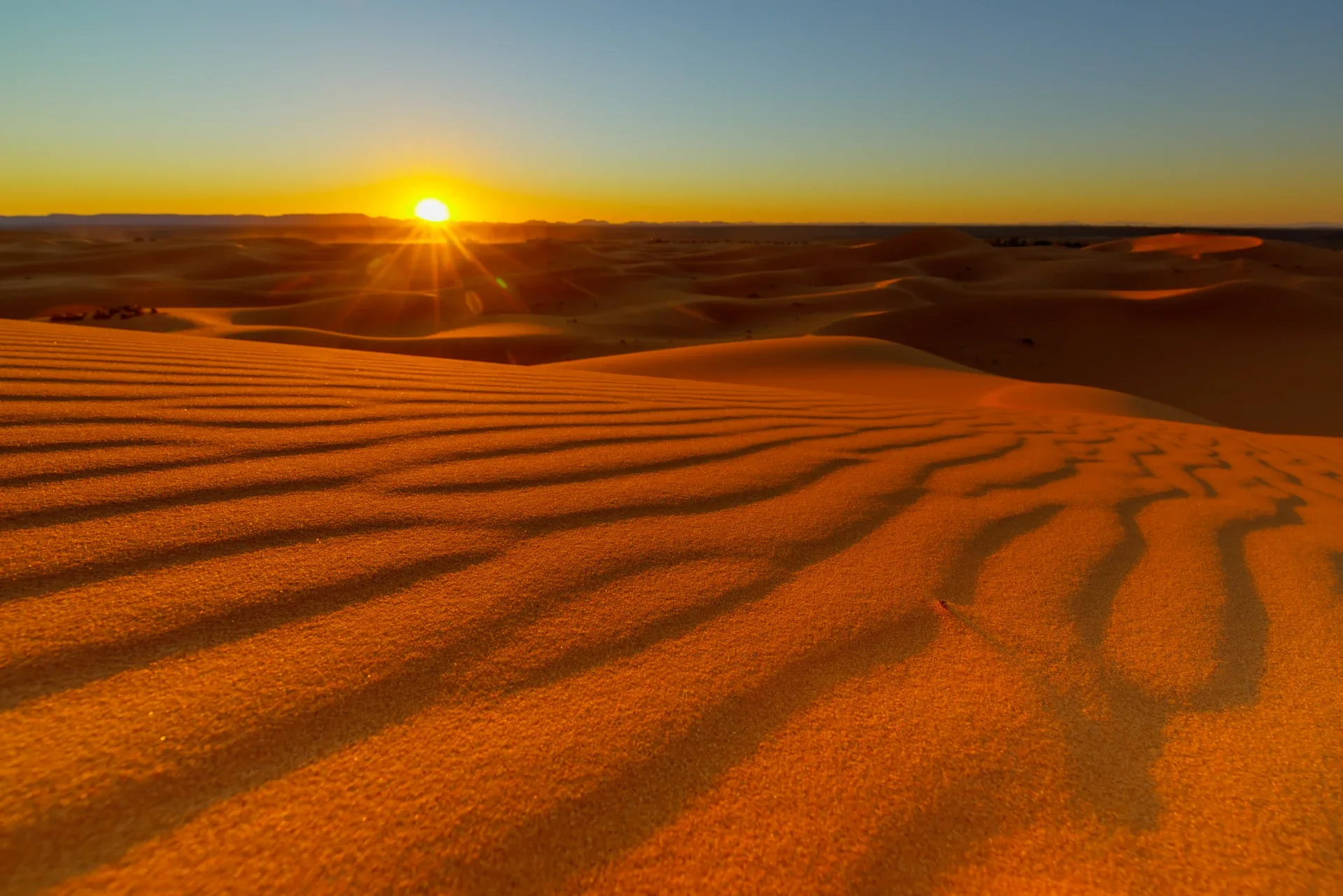
To travel from Marrakech to the dunes of Erg Chebbi in ten days, book two nights in Merzouga and break up the return journey in Ouarzazate. This loop leaves room for earthen villages, palm groves and the Todra Gorge, with a final night in Marrakech before your flight. Here are the stops, transport options and bookings that make this first trip manageable.
The loop and its nine nights
The decisive point lies to the east of the route: spend a full day in Merzouga. With only one night, arrival in the dunes and the following day’s departure come in quick succession. Two nights make it possible to see the landscape at different times of day, rest after the drive and explore the surroundings without immediately packing up again. To keep this day in a ten-day trip, we limit the number of major cities and return to the same airport.
The proposed breakdown includes two nights in Marrakech at the start, one in Aït Ben Haddou, one in Skoura, one in Tinghir, two in Merzouga, one in Ouarzazate and then a final night in Marrakech. Day ten is reserved for departure. Suggested sightseeing times are planning guidelines; weather, traffic and road conditions determine how things actually unfold. A day that includes the High Atlas, in particular, requires a different buffer from a stroll around the city.
The ten-day itinerary
Day 1
arrival and first evening in Marrakech; overnight in Marrakech.
Day 2
the medina, heritage and a garden of your choice; overnight in Marrakech.
Day 3
cross the High Atlas and visit Aït Ben Haddou; overnight near the ksar.
Day 4
drive to Skoura and explore the palm grove; overnight in Skoura.
Day 5
Tinghir and the Todra Gorge; overnight in Tinghir.
Day 6
drive to Merzouga and spend the first evening near the dunes; overnight in Merzouga or at the camp.
Day 7
a day around Erg Chebbi; second night on site.
Day 8
drive back to Ouarzazate; overnight in Ouarzazate.
Day 9
cross the High Atlas and return to Marrakech; overnight in Marrakech.
Day 10
departure, with a transfer to the airport arranged in advance.
This itinerary assumes ten days on the ground, including arrival and departure. A very late arrival or early departure reduces sightseeing time in Marrakech. Base your bookings first on the nine nights and the actual flight times you have purchased, and only then on activities. Fes, Essaouira and the Drâa Valley can be part of another trip: adding them here would take time away from the stops already planned.
Seasons along the route
Spring and autumn are the periods the Moroccan National Tourist Office favors for visiting the Sahara. For this loop, March to May and September to November are therefore our preferred planning windows. They make it possible to plan city walks, oases and dunes together, while packing clothes suited to cool evenings and the mountains. A favorable season never removes the need to check conditions a few days before departure.
In winter, the route crosses mountainous terrain before reaching the desert. Check conditions in the High Atlas with your accommodation or driver, and plan a flexible booking when conditions warrant it. In Merzouga, ask specifically what is provided for sleeping: bedding, blankets and any heating. A private tent does not tell you how warm it will be at night.
In summer, we would favor a different route for a first trip if you are sensitive to heat. If you keep the desert, schedule outdoor outings early or late and book accommodation where you can rest somewhere cool. The organized tour described below itself plans a summer adjustment, with one night at a hotel by the dunes. Have the arrangements for your date confirmed rather than assuming that both nights will be in the same camp.
Days 1 and 2 — Marrakech
The first day is for reaching your accommodation and getting your bearings. If you’re staying in a medina riad, ask before you arrive where a car can drop you off and for directions for the final stretch on foot. An address on a map doesn’t always tell you how to reach the door with a suitcase. Keep your accommodation’s phone number available offline, and arrange your transfer so you don’t have to look for a connection, a taxi, and your front door all at once.
Depending on your neighborhood and arrival time, an initial stroll could take you around the Koutoubia and Jemaa El-Fna. The minaret is a landmark in the city; the square offers another view of the center, with its cafés, foot traffic, and activities. Keep this outing short if you started your journey early. A meal near the riad and a full night’s sleep will set you up for the following days better than a string of visits as soon as you land.
On the second day, set aside a generous stretch of time for the medina and choose a heritage site that suits your interests, such as El Badi Palace or the Saadian Tombs, both listed by the tourism board. Group visits by area. Detours, breaks, and stops to chat in the souks take time; it’s easier to follow a plan with one main site in the morning followed by a walk than a list of timed tickets scattered across the city.
If you’d like to see the Jardin Majorelle, plan this as a separate time slot. The official website directs visitors to its own ticketing service and distinguishes the garden from the Pierre Bergé Museum of Berber Arts and the Yves Saint Laurent Museum Marrakech. Choose the ticket that matches the visits you have planned, and check the time before paying. For a more leisurely first day in the city, the Menara, its basin, and its olive trees offer another option for a stroll.
A food walk can also shape part of your second day. The tour we selected lasts three hours, meets at Café Argana on Jemaa El-Fna, and allows up to ten participants. French is one of the languages offered; select it for your chosen date. Tastings let you discover several places along the way. Private transport is separate, and dietary requirements must be communicated before booking. Let this outing take the place of a meal and a walk, rather than adding a full sightseeing itinerary to the same time slot.

Viator
Marrakech: street food in the medina
To discover several places in the medina on day 2: select French and meet at Café Argana on Jemaa El-Fna. The walk lasts three hours, with a maximum of ten participants; let the organizers know about dietary requirements before booking.
- 180 min
- 5/5 (49 reviews)
Three hours of walking and tastings in the medina, with French available.
Cancellation policy
For a full refund, cancel at least 24 hours before the scheduled departure date.
From €35.00
View activityDay 3 — Aït Ben Haddou
The third day marks the start of the road trip. Crossing the High Atlas via Tizi n’Tichka calls for a day built around the drive, with suitable breaks along the way. Set off after a proper breakfast, and keep water, suitable clothing, and any motion-sickness remedies you might need within easy reach. Essentials for the drive should stay in a small bag rather than at the bottom of the trunk under all the suitcases.
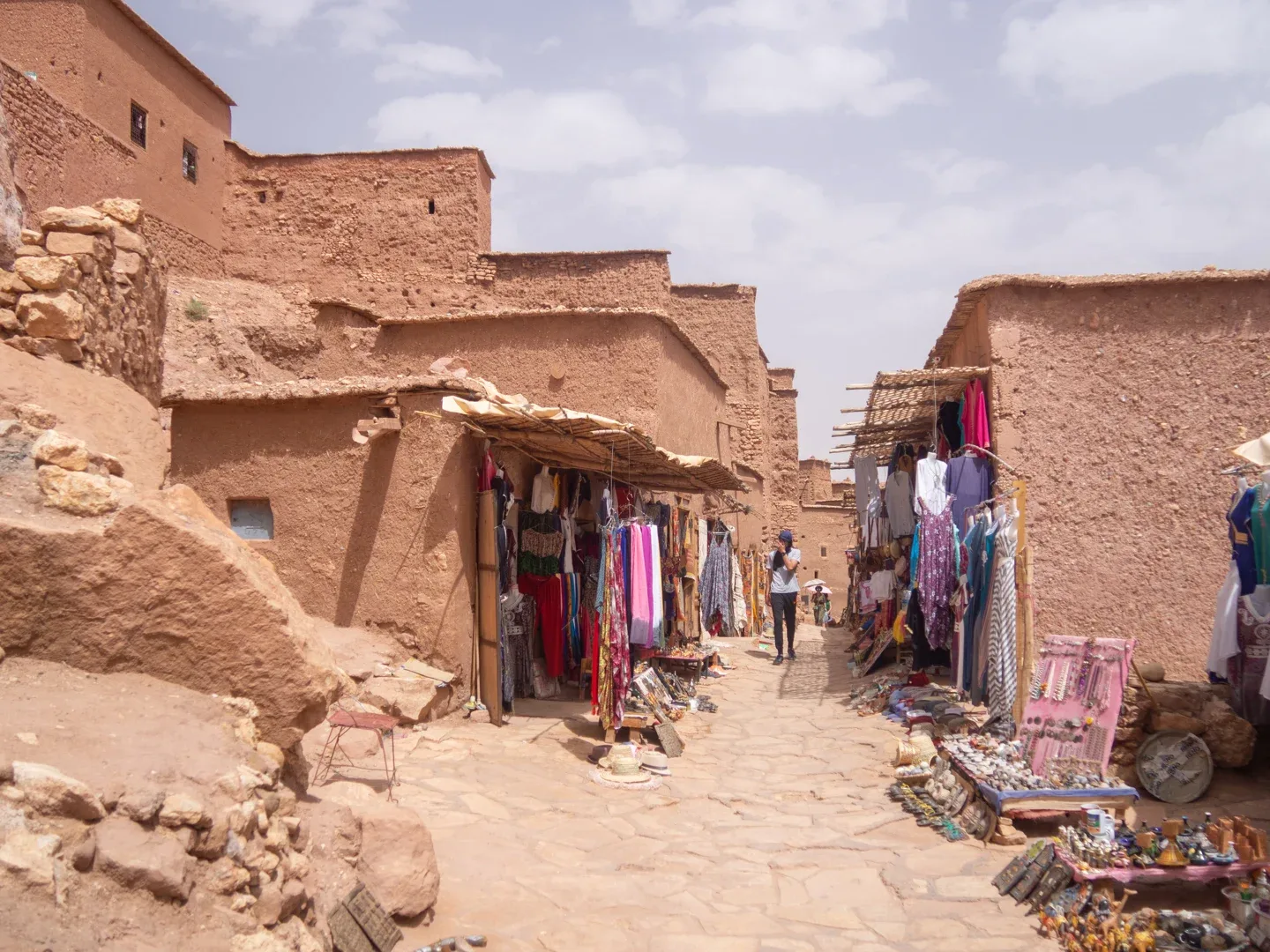
The destination is Aït Ben Haddou, in the Ounila Valley. The Moroccan National Tourist Office describes its buildings rising up a hillside to the old granary at the summit. This layout makes the ksar well worth exploring on foot: the architecture, passageways, and views change as you climb. Wear shoes with good grip for the uneven surfaces and bring sun protection, even if you left Marrakech in the cool of the morning.
Staying near the site avoids squeezing in a rushed visit before another long leg of the journey. Depending on your arrival time and conditions, spend part of the afternoon at the ksar or take the main walk the next morning. A local guide can explain how the buildings were used and how this earthen architecture is maintained. Agree on the route, language, and price before the tour begins; check separately whether any entrance fees apply.
For this stop, we recommend focusing on the village and its landscape. A film studio visit in Ouarzazate would take another time slot, with its own access arrangements and ticket. It may interest film buffs, but you’d then need to adjust day 4’s itinerary. Simply passing through a filming region is no reason to pile on stops that delay your arrival at the accommodation.


Day 4 — The Skoura palm grove
The journey from Aït Ben Haddou to Skoura makes for a more flexible day. The Moroccan National Tourist Office highlights the palm grove among the region’s landscapes near Ouarzazate. Choose accommodation based on your plans: staying in the palm grove, near a road access point, or in the town means different travel times. Ask for directions for the final approach and where to leave your vehicle.
We’d set aside half a day here for a guided walk. It gives you a chance to take in the gardens, paths, and buildings rather than seeing the oasis only through a window. Agree on the route locally based on permitted access, the weather, and the crops. The land and homes are part of people’s daily lives: stick to agreed paths and ask permission before photographing anyone.
This stop also adds some flexibility at the start of the circuit. If crossing the Atlas or exploring the ksar took longer than expected, you can continue from Skoura without immediately committing to another long day on the road. A relaxed lunch and a stroll near your accommodation can be enough for the afternoon. Spending the night here is worthwhile for the time it gives you on the ground, not just as a quick photo stop.
If you’re interested in architecture, check locally which building can be visited and under what conditions. The words “kasbah” and “visit” can mean different things: an exterior visible from a path, an inhabited home, a space open to the public, or a guided tour. Confirming a specific place is better than relying on a general promise in the day’s itinerary.
Day 5 — Tinghir and the Todra Gorge
The following day takes you toward Tinghir and the Todra Gorge, also known as the Todgha Gorge. The tourism board links the town with its palm grove and the gorge: you can see both landscapes during the same stop, as long as you leave time outside the car. Choose a place to stay in Tinghir or nearby based on access to your accommodation, food options, and the walk you have planned.
A short walk in the gorge lets you take in the cliffs and the narrow passage between them. It’s a good first look if you’re continuing your journey the next day. A longer hike or a climbing session requires specific planning, suitable guidance, and an assessment of conditions. Booking a night in the area doesn’t automatically make every mountain outing compatible with your itinerary.
The palm grove offers a different perspective on this stop, with cultivated land at the foot of the surrounding hills. Ask a local guide to suggest a walk that fits your available time and the group’s ability. Set the starting point and where you’ll meet your vehicle. If you’re traveling with children or anyone who can’t walk for long, choose one suitable route rather than two walks reduced to hurried out-and-back trips.
We’d leave the Dadès Valley out of this day’s in-depth visits. It features on many commercial itineraries, but adding a scenic drive and hike in the Dadès, followed by the Todra Gorge, would make this a much busier day. If the Dadès is your priority, move your overnight stay from Skoura or Tinghir there and plan the following day accordingly.
Days 6 and 7 — Merzouga
On day six, the goal is to reach the Merzouga area with enough time to get to your accommodation or camp comfortably. The ONMT identifies the village as a gateway to Erg Chebbi. This is useful to know when booking: ask for the name of the area, the meeting point, and the transfer arrangements. A listing advertised as “Merzouga desert” may cover several locations.
You can spend the first evening at a hotel on the edge of the dunes or at a camp, depending on your preference. The choice depends on the level of comfort you want and how you would like to spend the second day. A plan with one night at the camp and one night at a hotel can sometimes make it easier to shower, rest, and manage your luggage. Staying in the same place for both nights avoids an extra move. Compare these arrangements before considering the scenery in the promotional photos.
For the camp, check which tent is reserved, whether the bathrooms are private or shared, the bedding, the water available, meals, and the transfer. Also confirm where your rental car will stay and which bags you will take with you. A camel transfer may be offered; ask about a vehicle alternative if your back, mobility, or preferences require it. Agree on the means of access with the operator, including any additional charges.
Day seven is spent entirely in the area. We would set aside the beginning or end of the day for the dunes and the middle of the day for a break or a locally guided visit. Walking on sand takes more effort than covering the same distance on firm ground. Choose a route suited to you and follow your host’s advice about the conditions at the time. Even a short outing gives you time to observe the terrain and changing light.
Some excursions include a stop in Khamlia for music or a meeting with local residents. Ask what kind of welcome is planned, how long it will last, and how compensation is handled. An organized meeting should be arranged with the hosts; anyone being photographed must give their consent. Keep part of the day free as well: you booked two nights precisely so you can make decisions on the spot without depending on another departure.
Quad biking and buggy rides are activities to book separately if you are interested in them. Ask about the instructions, equipment provided, and route before deciding. For a first trip focused on oases and dunes, we would prioritize a walk and some time to rest. An activity catalogue does not mean you have to fill every available hour, especially between two days on the road.
Days 8 to 10 — The return
Day eight is dedicated to the return journey to Ouarzazate. Set off early after arranging the transfer from the camp and collecting your luggage. Ask the driver or your accommodation to confirm the route based on road conditions. Factor meals and breaks into the day’s plan, and do not schedule a fixed-time activity for the evening. Reaching Ouarzazate is the main objective.
This overnight stop breaks up the return before another crossing of the High Atlas. Choose accommodation that is easy to reach, with parking if you are driving and the option to have dinner on-site or nearby. An accessible room and a simple meal are especially useful after a long day of sitting. The film studios or a heritage visit are still options, but only if you genuinely make time for them in a revised version of the itinerary.
Day nine takes you back to Marrakech. Plan as carefully as you did for the outward journey: leave early enough, take breaks, and adapt to conditions at the mountain pass. If you are renting a car, confirm the return location and time, allowing for some extra time. You can book the final night near a convenient airport connection or at your original riad if you would like to return to a familiar place.
On day ten, arrange the airport transfer with your accommodation based on your flight and the airline’s instructions. We do not recommend using that morning to make up for a missed visit far from your neighborhood. The previous night in Marrakech protects your departure from some of the risks associated with a long-distance journey, but it does not remove the need for a timely transfer and sufficient check-in time.
The four-day organized option
To delegate the transfers, we selected a four-day Marrakech–Merzouga loop. Its current itinerary passes through Aït Ben Haddou and the Dadès, reaches the dunes via the Todra, keeps a day around Merzouga, then returns to Marrakech. It includes a hotel in the Dadès and two nights on the desert side, with a summer adjustment to be confirmed. Transport, a driver, three breakfasts, and three dinners are listed as included.
This option suits travelers who want to keep a full day in Merzouga and have the option to select French. The tour is shared and accommodates up to fifteen travelers. Ask about the pickup point, tent type, bathrooms, and arrangements for visiting the ksar. Lunches are not included, and some local activities are optional.
On a ten-day trip, this option replaces the self-drive section. You could keep the first two nights in Marrakech, take the tour from day three to day six, then stay in Marrakech before your flight. You would then have more time in the city, but fewer nights in the oases. If you want to match our loop’s Skoura–Tinghir stops and split return journey exactly, ask instead for a driver quote covering the nine nights listed.
The final day of the organized tour involves a long return journey. So keep a night in Marrakech after you arrive and avoid booking a flight for that same evening. Compare the option based on its full itinerary, language, and accommodation, then check the prices and terms for your dates. Check the selected option’s meals, drinks, and additional charges before paying.

Viator
Marrakech–Merzouga: four days and two nights near the dunes
To delegate the desert portion while keeping a full day in Merzouga: choose this shared loop instead of the self-drive stops. Select French and confirm the camp, bathrooms, and pickup arrangements; keep a night in Marrakech after the return.
- 4 days
- 4.9/5 (376 reviews)
Four-day shared tour with a day in Merzouga, a hotel in the Dadès Valley, and two nights near the desert. French available; maximum fifteen participants. Summer arrangements to be confirmed; lunches are separate.
Cancellation policy
For a full refund, cancel at least 24 hours before the scheduled departure date.
From $235.56
View activityTransport and budget
A rental car is suitable if you want to choose your own breaks and accommodation and have someone who is comfortable driving on winding roads. Ask the rental company about insurance terms, the deposit, authorized drivers, and driving restrictions. Our loop is a road-trip plan: access to a camp via an unpaved track should be arranged with the accommodation provider using a suitable transfer. A vehicle’s appearance does not determine which roads its contract covers.
If you hire a driver, send them an itinerary that includes every overnight stop, the main visits, and the return to Marrakech. The quote should specify the vehicle, fuel, parking, driver’s expenses, daily hours, and any guiding services. A driver handles transport; narrated visits may require a separate guide. If French-language explanations matter, have them included in the service rather than assuming they are provided based on the language used in business communications.
To compare budgets, add up nine nights, transport, meals not included, visits, camp transfers, and a contingency for unexpected expenses. Then divide only the costs that are genuinely shared among the travelers. A double room, a vehicle, and an excursion sold per person are not calculated on the same basis. The number of travelers can notably change the comparison between a car, a driver, and a shared tour.
The local currency is the Moroccan dirham, abbreviated MAD. Keep a backup payment method and enough cash for small expenses, without assuming you can pay by card at every stop. We do not set a universal budget: accommodation, season, camp comfort, and transport can make a significant difference to the total. Prices and currencies for bookable activities are shown on their listings, along with the terms provided by the supplier.
Luggage and reservations
One easy-to-move piece of luggage and a small overnight bag are usually better than equipment spread across several suitcases. For the desert, set aside the useful items before you arrive at the meeting point: warm clothes, comfortable clothing, sun protection, a flashlight, charger, and your usual medication. Keep your documents and water with you. The exact list depends on the bedding and facilities confirmed by the camp.
For clothing, plan several layers for moving from the mountains to the inside of a vehicle and then to an evening outdoors. Closed-toe shoes are useful in the ksar, oases, and on walks. Lightweight, covering clothing protects you from the sun and is suitable for getting around villages. For a religious visit or a place with a particular dress code, follow the site’s and your guide’s instructions.
It is worth deciding the booking order in advance: flights, nine nights, transport, a night at the camp with transfer, then activities with fixed times. Check entry requirements for your nationality and passport validity before making any non-refundable purchase. The ONMT notes that visa requirements depend on nationality and that your passport must cover your stay. Also consult official travel advice and your insurance policy regarding medical assistance and planned travel.
FAQ
Is ten days enough for Marrakech and Merzouga?
Yes, if you devote the trip to this loop and keep two nights in Merzouga. The proposed itinerary includes nine nights and uses days 3, 6, 8, and 9 mainly to travel between stops. It leaves time for visits at other points without adding Fes or the coast. If your flights take away a full day on the ground, simplify the route rather than eliminating all the breaks.
Should you spend one or two nights in the desert?
Two nights in the Merzouga area give you a full day there. You can spend both nights at the same accommodation or split them between a camp and a hotel. The choice depends on the level of comfort you want, transfers, and the season. Check exactly what each offer means by “night in the desert”: location, bathrooms, and access vary.
Can Agafay replace Merzouga on this itinerary?
Agafay is suitable for a desert outing near Marrakech, with a rocky landscape. To see the dunes of Erg Chebbi, you need to travel to the Merzouga area. If you choose Agafay, rebuild the trip around Marrakech and its surroundings; you will free up several days of driving. The two options offer different landscapes and paces.
Can you take this trip without driving?
Yes, by booking a driver for the stops or choosing an organized tour for the desert segment. The four-day tour presented here keeps a day in Merzouga but follows its own itinerary, which is more concentrated than our loop. For the article’s exact nine-night trip, request a custom quote. Transfers to the camp and sightseeing guides should be clearly listed in the package.
Is this route suitable for children?
It may suit children who are used to traveling, provided you adapt the breaks, walks, and accommodation. The long driving days remain the main factor to consider. Confirm suitable seats with the transport provider and check the age requirements for each activity. For a family not comfortable with these journeys, a more local stay around Marrakech will be easier to organize.
What budget should you plan for ten days?
Build your budget around nine nights and the transport you actually choose, then add meals, visits, camp transfers, and a contingency. Compare quotes on the same basis: number of travelers, rooms, language, meals, and insurance. Prices for activity cards, when available, apply to the services shown; they do not represent the total cost of the trip or guarantee availability.
When is the best time for this loop?
Spring and autumn are the seasons recommended by the ONMT for the Sahara. We recommend March to May and September to November for planning the full route. Check conditions in the High Atlas and Merzouga separately. In winter, the mountains and cold nights require appropriate planning; in summer, look for cool accommodation and plan outings for the coolest times of day.
Can you take an evening flight on the day you return from Merzouga?
We recommend keeping one night in Marrakech after an organized return from the desert. On our self-drive loop, the journey is even broken up with a night in Ouarzazate before the final night in Marrakech. This arrangement leaves room for road delays and avoids combining a long drive with a fixed boarding time.
Which identity document should you prepare?
Prepare a valid passport covering your stay and check the requirements for your nationality with the relevant authorities. Visa requirements depend on nationality; do not infer your situation from another traveler’s. Also check the documents required for each child and the rental company’s terms if you are driving. Complete these checks before making non-refundable bookings.
Sources and checks
Plan your visits and check current conditions.
- Marrakech and its main sights ↗
Moroccan National Tourist Office · Accessed November 1, 2026
What this source supports
Jemaa El-Fna, Koutoubia, Menara, the medina, El Badi and the Saadian Tombs; the proposed visits and overnight stays are Odyvero’s own.
- Marrakech’s heritage ↗
Moroccan National Tourist Office · Accessed November 1, 2026
What this source supports
Koutoubia, the medina and the olive groves of Menara; no annual event is presented as having a confirmed date.
- Ouarzazate, Tinghir and the valleys ↗
Moroccan National Tourist Office · Accessed November 1, 2026
What this source supports
Tizi n’Tichka, Dadès, Tinghir, the palm grove and the Todra Gorge. No door-to-door driving time has been extrapolated.
- Palm groves of southern Morocco ↗
Moroccan National Tourist Office · Accessed November 1, 2026
What this source supports
Skoura Palm Grove and landscapes of the Ouarzazate region; arrange the local route with a guide.
- Aït Ben Haddou in the Ounila Valley ↗
Moroccan National Tourist Office · Accessed November 1, 2026
What this source supports
A ksar in the Ounila Valley, with buildings on a hillside and an ancient granary at the summit. UNESCO pages were inaccessible, so no inscription date is cited.
- Merzouga and Erg Chebbi ↗
Moroccan National Tourist Office · Accessed November 1, 2026
What this source supports
Merzouga and the dunes of Erg Chebbi; no seasonal water or wildlife sightings are guaranteed.
- Seasons, currency and formalities ↗
Moroccan National Tourist Office · Accessed November 1, 2026
What this source supports
Spring and autumn are recommended for the Sahara; currency is MAD, visa requirements depend on nationality, and your passport must cover your stay. March–May and September–November are editorial preferences. No medication advice has been carried over.
- Official Jardin Majorelle ticketing ↗
Jardin Majorelle · Accessed November 1, 2026
What this source supports
Tickets via tickets.jardinmajorelle.com, with the garden and museums listed separately. No unavailable price or time slot has been invented.
- Travel advice for Morocco ↗
France Diplomatie · Accessed November 1, 2026
What this source supports
The alerts page was consulted; check the link again before departure. No detailed entry rules have been inferred from the alerts alone.
- The Agafay landscape ↗
Marrakech-Safi Regional Tourism Council · Accessed November 1, 2026
What this source supports
A rocky desert and hills near Marrakech, different from the dunes of Erg Chebbi.
- Marrakech: street food in the medina ↗
Viator / operator · Accessed November 1, 2026
What this source supports
Actual GET request via Partner API Basic; product ACTIVE. Program, duration, French-language option, inclusions and logistics reviewed. The featured offer was hydrated with its exact title, duration, reviews and SUPPLIER_PROVIDED photo; the supplier’s price and currency are retained in the catalog. No supplier call is made when reading the page, and availability for any specific date is not guaranteed. Odyvero affiliate links: a commission may be earned on a booking. Three hours, ten people maximum, starting at Café Argana in Jemaa El-Fna; private transport excluded. No promise of three meals in total.
- Marrakech–Merzouga: four days and two nights by the dunes ↗
Viator / operator · Accessed November 1, 2026
What this source supports
Actual GET request via Partner API Basic; product ACTIVE. Program, duration, French-language option, inclusions and logistics reviewed. The featured offer was hydrated with its exact title, duration, reviews and SUPPLIER_PROVIDED photo; the supplier’s price and currency are retained in the catalog. No supplier call is made when reading the page, and availability for any specific date is not guaranteed. Odyvero affiliate links: a commission may be earned on a booking. Shared tour for up to fifteen people, with a hotel in the Dadès area followed by two nights near Merzouga, adapted for summer; three breakfasts and three dinners; lunches are separate, and local activities are optional.
- Erg Chebbi sunset ↗
Thomas Fuhrmann · Accessed November 1, 2026
What this source supports
CC BY-SA 4.0. Original file actually decoded: [6630, 4422]; reduced derivative without upscaling: [1920, 1281]. Visual check completed: dunes and low sun on the horizon. WebP derivative under the same license.
- Ait Zineb - Ksar of Aït Benhaddou - 20190716174408 ↗
C messier · Accessed November 1, 2026
What this source supports
CC BY-SA 4.0. Original file actually decoded: [4608, 3456]; reduced derivative without upscaling: [1440, 1080]. Visual check completed: alley, earthen buildings and textile stalls; do not caption as a panoramic view of the ksar. WebP derivative under the same license.
Viator — activity pages
Source for the activity information below.Affiliate links: Odyvero may earn a commission when you book through this article’s buttons.
- Marrakech–Merzouga: four days and two nights near the dunes ↗
Accessed November 1, 2026
- Marrakech: street food in the medina ↗
Accessed November 1, 2026


