 odyvero
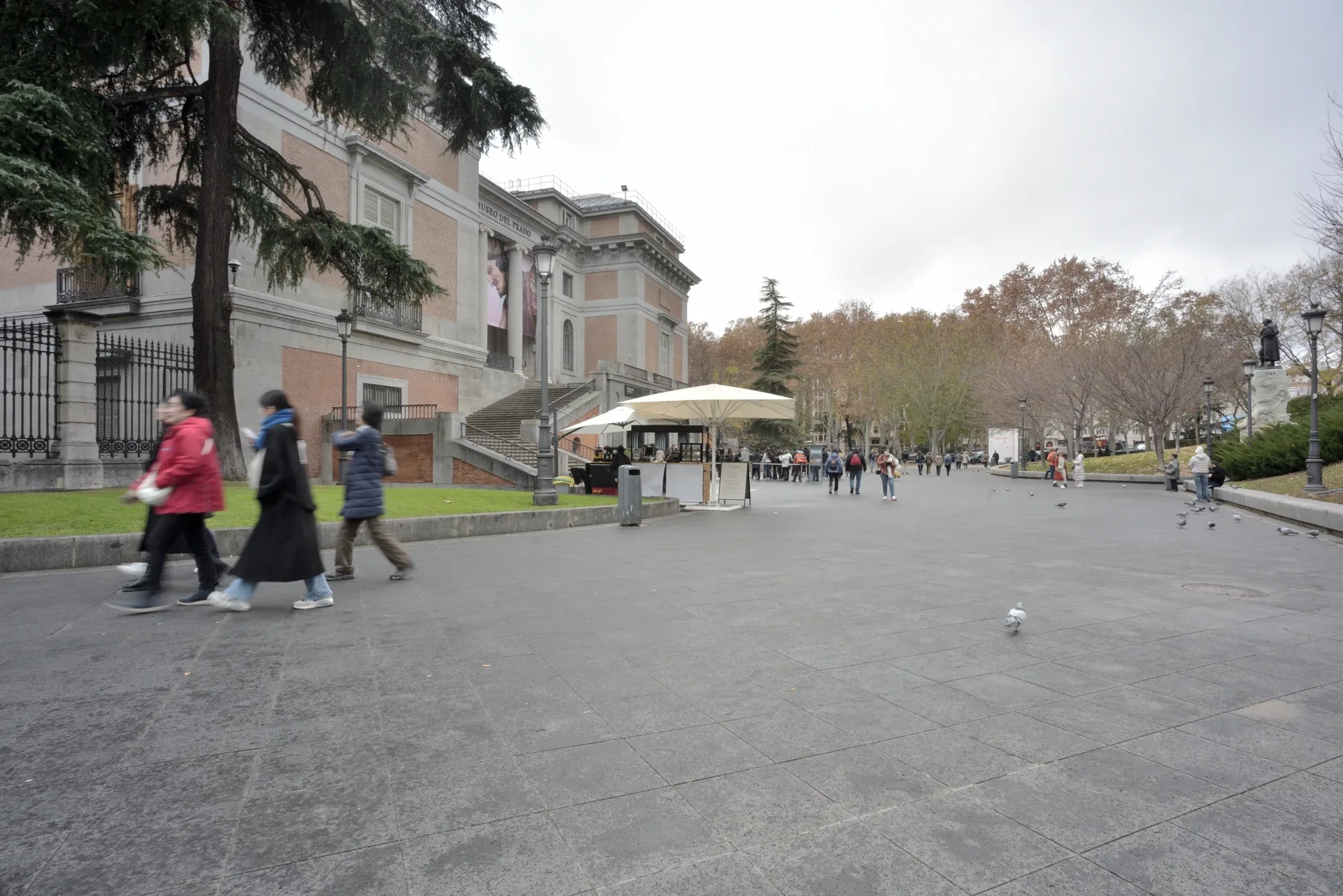
From December 1, 2026, to March 28, 2027, the Prado is dedicating an exhibition to Mariana of Austria, queen and later regent of Spain. Around one hundred works explore how her image conveyed her authority. Here are some ways to approach the exhibition, give it a meaningful place in your stay, and choose an additional visit to the museum’s collections.
Dates and galleries
The “Mariana de Austria” exhibition is announced for galleries A and B in the Jerónimos building, the Prado extension devoted in part to temporary exhibitions. The dates confirmed by Madrid’s official tourism office are December 1, 2026, to March 28, 2027. The exhibition therefore covers the year-end holidays and much of the Madrid winter. If you’re traveling in November, you’ll need to choose another museum program.
The Prado is usually open from 10 a.m. to 8 p.m. Monday through Saturday and until 7 p.m. on Sundays and public holidays. During the exhibition, pay particular attention to the closures on December 25 and January 1. On December 24 and 31, as well as January 6, the announced hours are reduced to 10 a.m.–2 p.m. Plan for a morning visit on these days, with one major visit rather than a string of appointments.
When booking, check the exhibition’s access conditions and the time slot offered for your date. Museum entry and a guided tour are two separate things to check. We would plan around an hour and a half to two hours with Mariana’s works, followed by a short selection from the collections. This is a suggested visit duration; adjust it to suit your interest in the labels and objects.
Mariana, queen and later regent
Mariana of Austria, also known in French as Marie-Anne d’Autriche, belonged to the House of Habsburg. She became Philip IV’s wife in 1649 and the mother of the Infanta Margaret and Charles II. After Philip IV died in 1665, she served as regent for her young son. These few key facts are enough to understand why the way a sovereign is presented changes over the course of her life.
Royal portraiture served a public purpose. It identified a person, her rank, and her place in the dynasty. When Mariana became regent, her image helped affirm authority exercised in the name of the heir. The exhibition’s announced focus is precisely this construction and its circulation within a monarchy watched by the other European courts.
Artistic lineage matters as much as biography. The exhibition places Mariana within traditions of representing Habsburg women who had exercised power before her. You can look for what was passed down from one generation to the next and what responded to a new situation. The visit becomes easier to follow with two questions in mind: what role is the sovereign claiming here, and who was this image meant to address?
Images of authority
The announced program brings together around one hundred works in a range of media: paintings, sculptures, medals, textiles, illuminated manuscripts, and prints. This diversity is a reason to linger. The same person can appear on a monumental canvas or circulate in a much smaller form. The medium changes the relationship with the viewer, the places where the work can be displayed, and how widely it can be shared.
In front of a painted portrait, first take in the whole image: the figure’s position, the proportions of the setting, the direction of the face, and the objects in view. Then move closer to observe the costume, hands, and details the painter has rendered most sharply. The label lets you compare this initial reading with the work’s date, artist, and function. It is more fruitful to start with what you see than to automatically assign a symbol to every accessory.
For a medal or print, the change in scale deserves as much attention as the subject. Look for inscriptions and how they name the sovereign. Then consider how a face remains recognizable in a small format. Manuscripts and textiles offer other ways of associating a person with an institution, a ceremony, or a dynastic legacy; their labels will explain the context of each piece.
We would make a first pass through the main sections, then return to two or three objects in different media. Comparing them makes the exhibition’s themes easier to remember than reading every label in full. The general program is not, however, a definitive list of loans: to identify the works actually on display, consult the exhibition route and documents published by the museum at the time of your visit.
Portraits and their versions
A Louvre entry offers a useful example for preparing your eye. It describes a portrait of Marie-Anne d’Autriche dated 1652 and attributed to Velázquez’s workshop. The canvas is more than two meters tall. Its history includes the Buen Retiro Palace, then the Prado, before it entered the Louvre as part of the 1941 Franco-Spanish exchange. This work is cited here as a documentary point of comparison, not as an announcement that it will be part of the exhibition.
The phrase “workshop of” merits close attention. It helps distinguish the creation of a model from its execution and the different versions that followed. For a royal image intended to be seen beyond a single room, these questions of production and circulation are especially important. Two similar portraits may differ in format, execution, or intended use, enriching how we read them.
In the galleries, take time to note the exact attribution and provenance whenever they are provided. A date places you in Mariana’s life; a former location may offer clues about how the painting was used. This gives you concrete reference points for appreciating the image beyond the likeness of the face alone. Paying attention to different versions is particularly apt for a subject built around the circulation of power.
Velázquez in the collections
The permanent collection adds a second layer of depth to the visit. The Prado is home to Las Meninas and a major collection of paintings by Velázquez, among other works. For a first visit, we would set aside time in front of this painting rather than trying to see every school of painting after the exhibition. You can extend your attention there to the court figures, the characters’ positions and the way the composition directs the viewer’s gaze.
The historic Villanueva building houses much of the collection; the Jerónimos extension is used, in particular, to present temporary exhibitions. Check the map when you arrive and ask where the works you have chosen are located. The display may change, and a work from the collection may be included in a temporary exhibition route. It is better to build your selection around the galleries open that day than to follow a series of numbers from an old guidebook.
For a half-day focused on Mariana, three or four stops in the collections are enough after the exhibition. For a general first introduction to the Prado, on the other hand, you could book a guided tour of the masterpieces and set aside another time slot for Mariana. This second arrangement requires more time, but avoids reading the final galleries when your attention starts to wane.
A guided tour of the Prado
The Artfulness Tours visit featured here lasts two hours and welcomes a maximum of seven participants. The guide is described as accredited and qualified in art history; museum admission is included. The languages listed in the verified details are English and Spanish. The meeting point is the statue of Goya in front of the museum, with precise instructions sent before the tour.
Its appeal for this trip lies in the guidance provided in front of the collections’ great works: you have a clear thread to follow and can ask questions in a small group. The programme mentions some of the major painters represented at the Prado. We would choose this option for a first encounter with the museum, keeping the discovery of Mariana as a separate part of the visit.
The verified listing describes a general Prado tour. It does not advertise commentary on the “Mariana de Austria” exhibition or special access to its galleries. Before booking two activities for the same day, ask how your ticket allows you to combine the collections and the exhibition, and whether you can continue exploring on your own after the guided tour. Also choose a departure in your preferred language; no French-language departure is listed for this product.

Viator
Prado: collections tour in a group of seven
For a first introduction to the Prado’s collections with a guide in English or Spanish: two hours, maximum seven participants, admission included. Set aside a separate time for Mariana, which is not mentioned in this general tour.
- 120 min
- 5/5 (373 reviews)
Two hours with an accredited guide in English or Spanish; Prado admission included. General overview of the collections; arrange a separate visit to the Mariana exhibition.
Cancellation policy
For a full refund, cancel at least 24 hours before the scheduled departure date.
From €50.00
View activityA day between the Prado and Retiro
The Prado district is well suited to a day centred on the museum. Estación del Arte station serves the area. Plan to arrive early enough to reach the entrance or meeting point listed in your confirmation, leave anything necessary at the cloakroom and find your way to the galleries. In winter, coats and bulky bags make this extra bit of time especially useful.
We would suggest spending the morning on Mariana, then having lunch before making a short selection from the collections if your ticket allows. Another option is to start with the guided tour, then book the exhibition for a time slot that works with your access. In either case, give yourself a seated break: two focused visits take more energy than a stroll through the galleries.
Retiro Park offers a change of pace close to the museum. Its paths, large pond and views can be enjoyed according to the time available and the weather. The park is free to enter, and its stated opening hours from October to March are 6 a.m. to 10 p.m. It closes in certain weather conditions; keep an indoor alternative in mind rather than relying entirely on a walk outdoors.
The Crystal Palace, built in 1887, belongs to a very different era from Mariana’s. You can treat it as a landmark in the park’s landscape without automatically planning an indoor visit. For a family cultural day, a short walk in Retiro can also replace a second visit to the collections. That way, the trip still includes a proper discovery of the Prado and a more relaxed moment outdoors.
The Royal Palace and the Bourbons
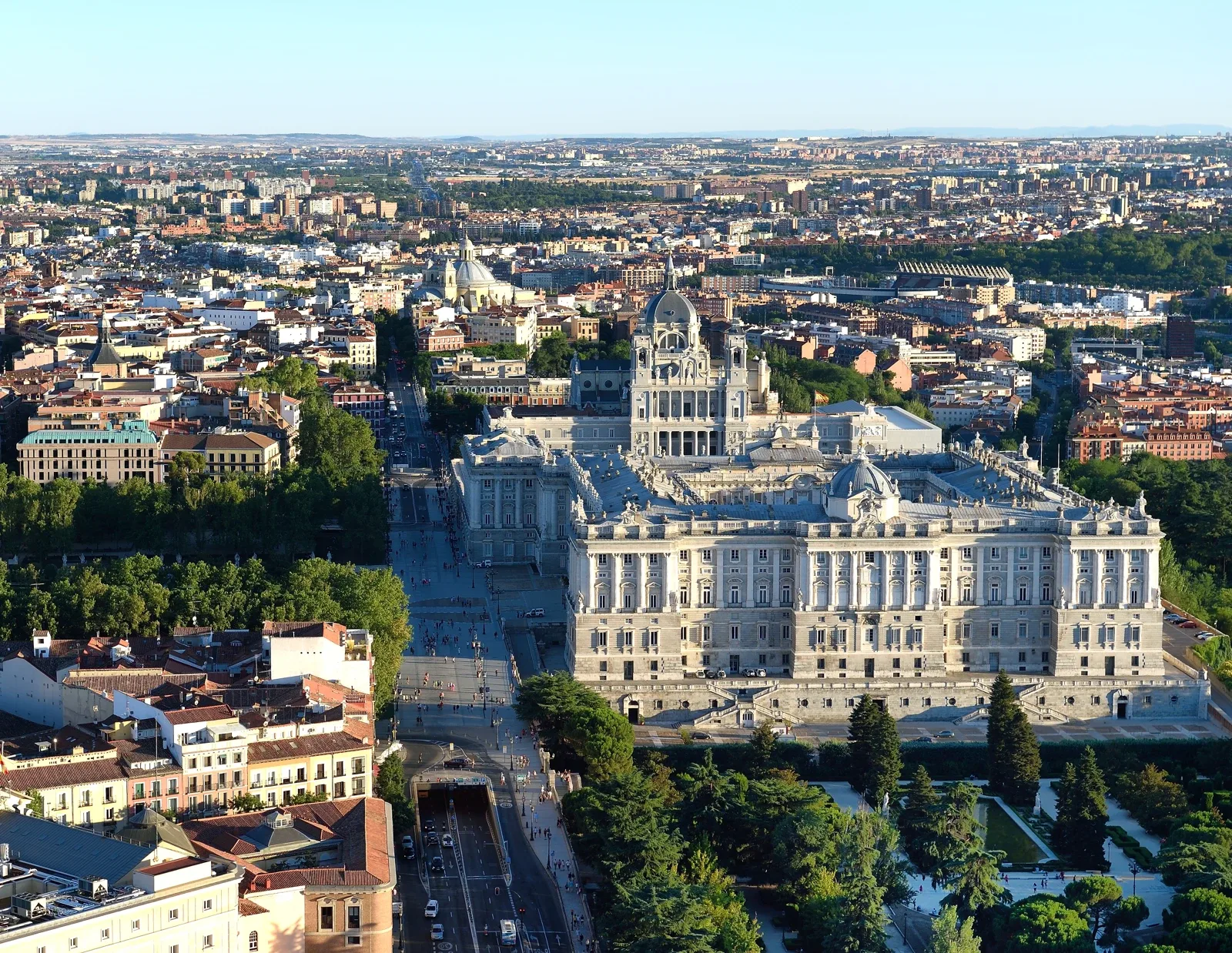
The Royal Palace makes an interesting addition for another half-day. Its location recalls the former Alcázar, but the building visible today was constructed after the fire of 1734. The foundation stone of the new palace was laid in 1738, and Charles III was the first monarch to live there. Mariana, who died in 1696, therefore never lived in the apartments you will visit in this palace.
This difference in chronology gives the visit a direction. After seeing images of an Habsburg queen, you discover the monumental setting of the Bourbon monarchy. The staircase designed by Sabatini, the Throne Room with its ceiling painted by Tiepolo, and the Gasparini Room are among the main highlights presented by the tourism office. They invite you to focus on reception spaces, materials and the staging of a court.
The selected guided tour lasts an hour and a half and includes an admission ticket and a guide. The listing offers tours in English, Spanish or Italian, depending on the departure you choose. The stated meeting point is near the equestrian statue of Philip IV in Plaza de Oriente; the provider recommends arriving fifteen minutes early. Prices and review details are grouped in the linked offer, where you can check which departure works for your visit.
In winter, the palace’s stated general opening hours are 10 a.m. to 6 p.m. Monday through Saturday, and 10 a.m. to 4 p.m. on Sundays and public holidays. Last admission is one hour before closing. A morning departure therefore allows more flexibility, especially on Sundays. Ópera station is among the access points listed by the tourism office for reaching the area; your confirmation remains the reference for the group’s meeting point.
We would book this visit for the day after the Prado. You can then spend some time in the Plaza de Oriente area without having to cross the city to reach another major museum. The palace is also used for official functions: check its calendar for your chosen date, particularly around holidays. The Royal Kitchens require a separate visit; add them to your plans only if your package includes them.


Viator
Royal Palace of Madrid: guided tour with admission
Schedule this for another half-day to discover the Bourbon monarchy’s interiors after the Habsburg images at the Prado. An hour and a half with admission and a guide; choose a departure in English, Spanish or Italian.
- 90 min
- 4.9/5 (235 reviews)
One and a half hours at the Royal Palace, including admission and a guide. Departures are available in English, Spanish, or Italian, depending on the selected time slot.
Cancellation policy
For a full refund, cancel at least 24 hours before the scheduled departure date.
From €50.00
View activityPacing and budget
Over two days, a well-balanced itinerary brings together Mariana and a selection of works at the Prado on the first day, followed by the Royal Palace and a stroll on the second. If you add a two-hour guided museum visit, shorten your self-guided selection or plan a day more broadly devoted to the arts. The durations suggested here are organizational guidelines; allow additional time for meals, travel, and appointment buffers.
For your budget, first compare what is included: a self-guided admission ticket, admission with a guide, and a palace tour are different purchases. The two recommended activities include admission to their respective venues. Check the exhibition terms before buying an additional Prado ticket. Prices and variable reviews appear on the offer cards; the final amount depends on the departure, date, and traveler details provided.
The Prado’s general free-entry hours may appeal to visitors looking for a few specific works. This window is shorter than a full day, and the terms for temporary exhibitions are listed separately. If Mariana is the reason for your trip to Madrid, we would prioritize access that lets you choose a sufficiently long time slot. That way, you can look closely at the small supports without spending most of your time watching for closing time.
The advertised general free admission covers the final two hours: from 6 p.m. to 8 p.m. Monday through Saturday, and from 5 p.m. to 7 p.m. on Sundays and public holidays. It may work for a second visit to the collections. For your main day, focus on the time available to spend with the works and the exhibition ticket terms, then add meals and travel to your chosen meeting point.
With children, ask them to compare two images rather than memorize an entire genealogy. A costume, inscription, or change in format offers a concrete starting point. For visitors who want to limit walking, the Prado lists elevators, a cloakroom, and dining areas; ask for details about the accessible route and the services you need. A shorter day can still allow for an in-depth visit to part of the exhibition.
FAQ
What are the dates of the Mariana of Austria exhibition at the Prado?
The exhibition is confirmed from December 1, 2026, to March 28, 2027, in rooms A and B of the Prado’s Jerónimos building in Madrid. The museum’s closure days still apply. During this period, the Prado is closed in particular on December 25 and January 1; reduced hours until 2 p.m. are announced for December 24 and 31, as well as January 6.
Who was Mariana of Austria?
Mariana, or Maria Anna of Austria, was a Habsburg sovereign, the wife of Philip IV and the mother of Charles II. After her husband’s death in 1665, she served as regent for her young son. The exhibition explores how images portrayed her successive roles and supported her authority within a tradition of dynastic female power.
What can you see in this exhibition?
The program announces around one hundred works, including paintings, sculptures, medals, textiles, illuminated manuscripts, and prints. They offer a way to study the creation and circulation of Mariana’s image. The works on view should be verified in the final materials and on site; portraits cited for comparison in a guide do not constitute a list of confirmed loans.
How much time should you allow for the Prado?
We would suggest around one and a half to two hours for the exhibition alone, and longer if you read every label or revisit certain objects. If you want to add the collections, set aside a substantial half-day and keep your selection focused. The recommended guided tour lasts two hours on its own: if you choose both routes, add that time to the time you set aside for Mariana.
Does the Viator tour include a guide for Mariana?
The selected Prado tour describes a guided visit to the general collections, with museum admission included. Its itinerary does not mention a guided tour of the Mariana exhibition. To attend both, confirm the exhibition access terms and arrangements after the guided tour. This ensures you book the service actually described and set aside separate time for the temporary exhibition rooms.
Can these tours be booked in French?
The verified languages for the Artfulness Prado tour are English and Spanish. The listing for the Royal Palace tour selected here offers English, Spanish, and Italian. Choose the departure language before paying. A sales page displayed in French does not mean the guide will provide commentary in French; neither of these products lists a French-language departure in the data reviewed.
Was the Royal Palace Mariana’s residence?
The current palace postdates Mariana. It was built in the 18th century, after the old Alcázar burned down in 1734. A visit introduces the Bourbon monarchy and its spaces of representation, complementing the Habsburg images seen at the Prado. It is more comfortable to plan it for a different half-day from the exhibition.
Is the exhibition suitable for a family visit?
Families can explore the subject by choosing a few objects and asking simple visual questions: How can you recognize the sovereign? What does an inscription say? Why change the format? We would shorten the time spent on additional collections before cutting all the breaks. Enter children’s ages and select child fares when choosing a departure for guided activities; no uniform discount is assumed here.
Sources and checks
Plan your visits and check current conditions.
- Mariana of Austria — dates and program ↗
Madrid Destino · Accessed October 31, 2026
What this source supports
December 1, 2026, to March 28, 2027, galleries A–B in the Jerónimos building. Around one hundred works in various media; strategies of representation and the Habsburg women’s legacy.
- Prado Museum — visits and opening hours ↗
Madrid Destino · Accessed October 31, 2026
What this source supports
Collections and buildings, services and access, regular and free opening hours, closures, and reduced holiday hours.
- Queen Mariana of Austria — RF 1941 31 ↗
Musée du Louvre · Accessed October 31, 2026
What this source supports
Portrait from 1652, attributed to Velázquez’s workshop; 2.09 × 1.25 m; provenance: Buen Retiro, Prado, and the 1941 exchange. Documentary point of comparison; no loan announced.
- Royal Palace — history and visit ↗
Madrid Destino · Accessed October 31, 2026
What this source supports
The 1734 fire, the first stone laid in 1738, and Charles III as its first occupant; grand interiors, winter opening hours, access, and a dedicated tour of the kitchens.
- El Retiro Park — access and seasonal information ↗
Madrid Destino · Accessed October 31, 2026
What this source supports
Free park, October–March hours 6 a.m.–10 p.m., possible weather-related closures, and the Crystal Palace built in 1887.
- Mariana of Austria — biographical background ↗
Wikipedia, secondary source · Accessed October 31, 2026
What this source supports
Wife of Philip IV from 1649, widowed in 1665, and regent for the child Charles II; lived 1634–1696.
- Prado: collection tour for a group of seven ↗
Viator — Partner API data · Accessed October 31, 2026
What this source supports
Active status, duration, inclusions, languages, and meeting point checked with a GET request for the exact product. Available supplier photo, rating, and price retained in the central offer. No live availability check or ticket specifically for Mariana.
- Madrid Royal Palace: guided tour with admission ↗
Viator — Partner API data · Accessed October 31, 2026
What this source supports
Active status, duration, inclusions, languages, and meeting point checked with a GET request for the exact product. Available supplier photo, rating, and price retained in the central offer. No live availability check or ticket specifically for Mariana.
Viator — activity pages
Source for the activity information below.Affiliate links: Odyvero may earn a commission when you book through this article’s buttons.
- Royal Palace of Madrid: guided tour with admission ↗
Accessed October 31, 2026
- Prado: collections tour in a group of seven ↗
Accessed November 1, 2026


