 odyvero
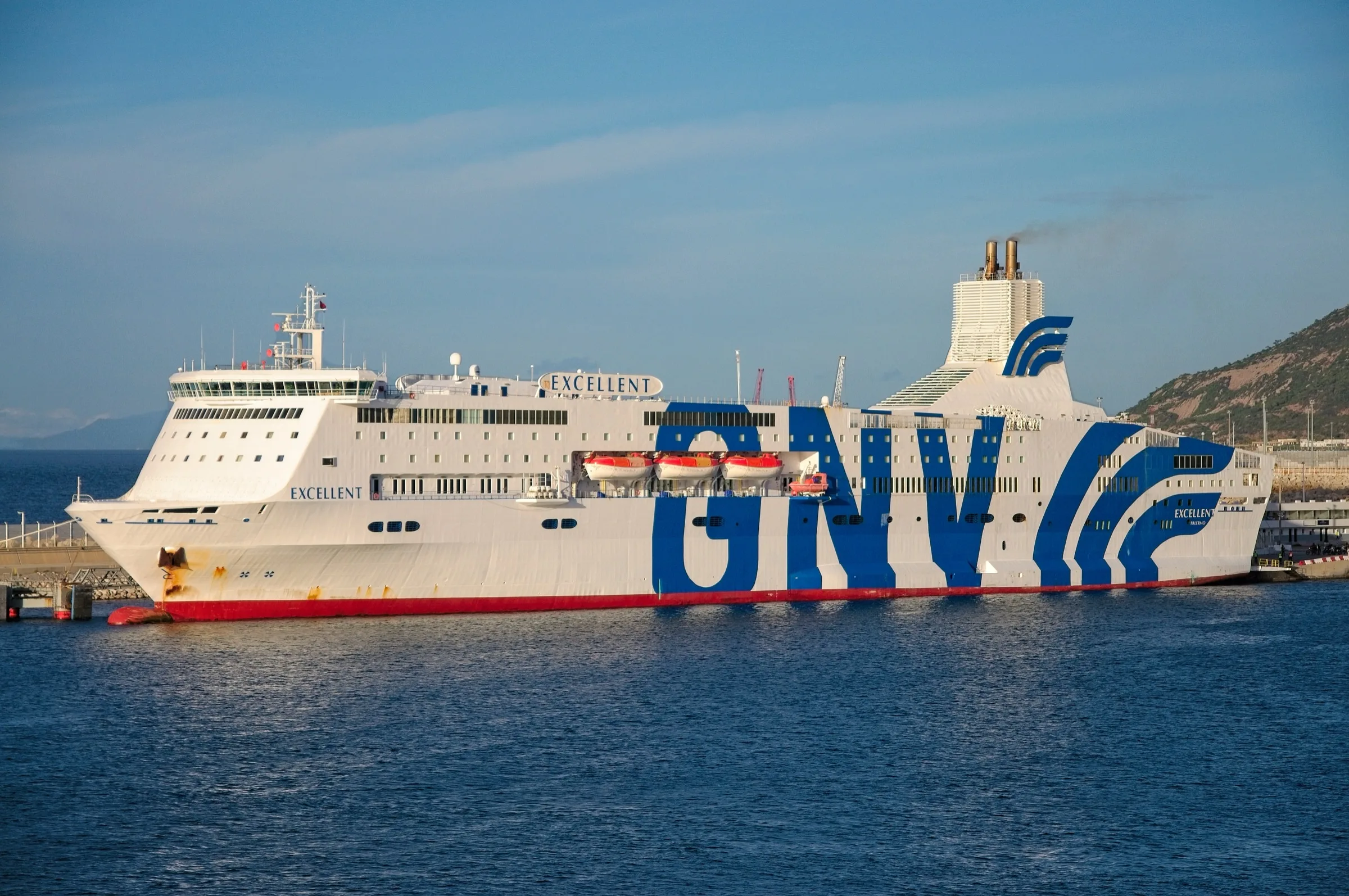
Whether you’re taking a Corsica–Italy crossing, spending a night on the Adriatic or setting off for Morocco, your choice of port shapes the journey as much as the ship does. Here’s how to compare routes, total costs and onboard arrangements, with schedules actually announced for late 2026 and some 2027 departures.
The door-to-door journey
A ferry can drop you and your car near the first stops on your trip, replace a long day of driving or let you travel on foot between two transport networks. To choose, start with your actual destination: a beach in Corsica, a region of Greece or a Moroccan city. Compare crossing prices after identifying the ports that serve your itinerary.
Add up the journey to the port, the time required for check-in, sailing, disembarkation and the final leg. A short crossing may involve a long drive to the port. An overnight ferry can free up a day, provided you have suitable accommodation and don’t plan a long drive as soon as you leave the car deck.
The three route groups covered here represent different choices. Between France and Italy, the verified examples concern Corsica and Italian ports. To reach Greece, plan to board on Italy’s Adriatic coast. For Morocco, compare a long crossing from Sète or Barcelona with the drive to the Strait of Gibraltar. Assess these options as part of the entire journey.
The ferry company pages consulted already show several seasons. A summer 2027 schedule does not confirm a departure in November 2026. The dated examples below help explain the network and its variations; your ticket sets your schedule, terminal and transport conditions.
Corsica from Italy
Bastia and Livorno are a useful pair of ports for combining Corsica with Tuscany. Moby currently lists a season from May 15 to September 30, 2027, with a four-and-a-half-hour daytime crossing. The same page lists Genoa–Bastia from May 15 to September 27, 2027. These periods can help you plan a summer trip; by themselves, they say nothing about winter travel.
Livorno is especially convenient for an itinerary already focused on Tuscany. Genoa may make more sense if you’re arriving from northwestern Italy. Compare your approach route and first night on land before choosing the shortest crossing. If you’re traveling from a region of France far from the border, it’s worth comparing the detour to an Italian port with the French departures available on your dates.
The direction of travel matters too. You could plan a trip that starts in Corsica and continues in Italy, or the reverse, without assuming that the return journey will be identical. Check each leg separately: frequency, schedule and fares available for the outbound trip may differ on the return. If you’re spending several days in Tuscany, the ferry becomes one part of a circular itinerary rather than simply a way to reach the island.
On the Moby page consulted, required arrival times differ between Livorno and Bastia and depending on whether you’re bringing a vehicle. Time spent in the terminal is therefore in addition to the advertised four-and-a-half hours. If you’re traveling with family, pack a small bag for the daytime crossing and food suited to the schedule; anything left in the car shouldn’t be your only supply during the sailing.
Italian ports to Greece
To reach Greece with your vehicle, choose based on the drive to the Italian port and the location of the Greek port on arrival. Superfast lists Ancona, Bari and Venice in Italy, and Igoumenitsa and Patras in Greece. Grimaldi offers, among other routes, Brindisi–Igoumenitsa and Ancona–Igoumenitsa. These ports’ presence in the network helps you narrow down your options; then look up the specific route for your travel date.
Consider Ancona if you’re arriving from northern Italy. Bari and Brindisi require you to continue into Puglia, but may fit well with a stay in the region before heading to Greece. Driving farther south just to shorten the sailing doesn’t necessarily mean arriving sooner: the drive, breaks and a possible hotel night all factor into the calculation.
On arrival, Igoumenitsa is a natural starting point for a trip through Epirus and northwestern Greece. Patras offers a different entry point for the Peloponnese. If you’re heading to an island, first check whether it’s served directly on your travel date, then look at possible connections. Arriving on the mainland and taking a second ferry means organizing two separate legs.
If you’re traveling without a car, check transport options from the terminal to your next accommodation. Seeing a port city on the map tells you neither the pedestrian route through the port nor the bus schedule after arrival. An overnight stay may be the simplest option if the ferry arrives late or the next leg requires a new booking.
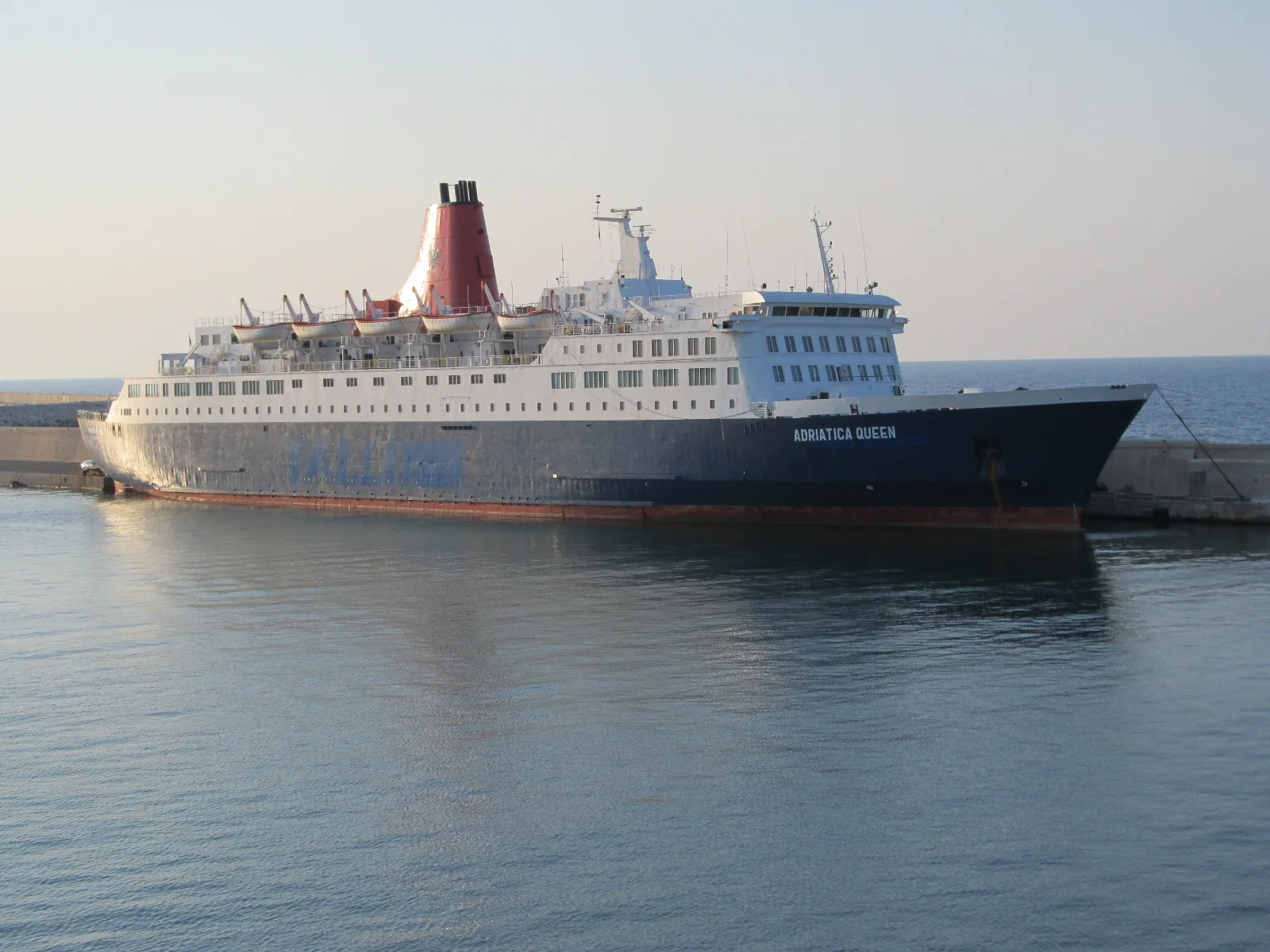


Brindisi–Igoumenitsa in autumn
Grimaldi publishes a specific example of a schedule for late 2026. From October 7 to December 17, its Brindisi–Igoumenitsa page shows a daily departure at 1 p.m. and arrival at 10 p.m. In the opposite direction, it lists a 1 a.m. departure and 9 a.m. arrival. Times are local: the time-zone difference between Italy and Greece matters when reading the schedule.
This example highlights a common search mistake: relying on the summer timetable for an autumn departure. On this same route, the seasonal periods shown don’t all include the same evening departures. For a November trip, use the period that includes November, then confirm your departure in the booking system.
The 1 a.m. return also requires careful attention to the date. Plan your evening at the port around the exact date shown on your ticket, and check when check-in begins. This becomes especially important if you’re checking out of your accommodation in the morning or need to reach Igoumenitsa after a day on the road.
On this route, Grimaldi requires passengers to check in no later than two hours before departure, unless otherwise notified. This rule applies to the route consulted. Superfast publishes its own instructions, with tables by port and deadlines that may be longer. Always follow the instructions of the company actually carrying your group.
Morocco from Sète
GNV’s Sète–Tangier route lets you board with your vehicle in France and avoid driving all the way across Spain. It suits a trip where you want to keep your car, carry the group’s luggage, and spend part of the journey at sea. The level of comfort you choose on board plays an important part in that decision.
Plan for a journey of around two days at sea, to be confirmed for your chosen departure. GNV’s page shows several durations depending on the route and mentions a stop in Barcelona in some sections. For your itinerary, check the arrival time on your booking rather than relying on an average duration: it determines your first night in Morocco and how far it is reasonable to drive after disembarking.
Compare an inside cabin, an outside cabin, and a reclining seat, checking the number of people actually permitted in each option. On a long crossing, a cabin gives you space to sleep and put your family’s belongings. Check which meals are included or offered separately, as well as the conditions for transporting your pet, if you have one. Each option must match the ship and departure you select.
GNV also lists Sète–Nador in its network. This arrival is worth considering if your trip is focused on northeastern Morocco. A departure that saves you a drive through Spain may, however, leave you far from your first Moroccan sights: your route map is still the best way to compare the ports.
Spain and the Strait of Gibraltar
There are two options from Spain. GNV’s Barcelona-to-Tangier and Barcelona-to-Nador routes offer a longer crossing from northeastern Spain. Its network also includes Almería–Nador. Farther west, Algeciras–Tanger Med offers a short crossing of the strait, after driving to the southern tip of Spain.
DFDS lists around one hour and thirty minutes at sea on Algeciras–Tanger Med, with car transport and several departures daily. Its website recommends arriving at the port at least ninety minutes before departure. Build checks, boarding, and leaving the port into your schedule; time at sea does not account for the entire border crossing.
The old FRS address that was checked now redirects to DFDS. A search using an old company name may therefore take you to the new booking platform. At the time of verification, DFDS also noted that its system was changing and asked passengers to contact customer service for a return after November 9, 2026, on Algeciras–Tanger Med. Check this operational guidance if it applies to your trip.
Tanger Med and the center of Tangier are not the same arrival point. Plan your transfer or drive from the terminal shown on your ticket. Since published schedules use local times, also check the time zone for your travel date, particularly if you are arranging to meet a driver or someone you know.
Three itineraries to plan
For a Corsica–Tuscany loop, first schedule your nights on land on either side of the Bastia–Livorno crossing. After arriving in Livorno, you could spend the night nearby or take a short leg toward your Tuscan accommodation. Save the main sightseeing for the next day if your travel day already includes getting to the port and the crossing. On the return, check the route’s seasonal schedule before booking accommodation with dates that would be difficult to change.
For a Puglia–Greece trip, separate your time in Italy from the day you board. Arriving in Bari the day before gives you time to visit the old town, then reach the terminal with enough time the next day. If your ship ultimately departs from Brindisi, add that transfer to your itinerary: staying overnight in Bari does not put you at the port in Brindisi. In Greece, choose your first night based on your expected arrival and your next destination, keeping the drive short after a poor night’s sleep.
For a tour of northern Morocco, map out two access routes before requesting quotes. The first goes to Sète or Barcelona and spends more time on the ferry; the second heads down to Algeciras and crosses the strait. For each direction, note the overnight stops en route, the time available in Morocco, and the driving that follows disembarkation. Comparing only the crossing would underestimate much of the effort involved in the second route.
These three itineraries are planning suggestions and should be adapted to the tickets actually available. You can choose different ports for the outbound and return journeys if that makes the trip more coherent. If you do, check the terms of each booking, the continuity of your insurance, and any vehicle permits required for the entire route.
The full cost of the crossing
For a useful comparison, prepare the same details for each search: passengers and their ages, outbound and return journeys, vehicle, accommodation, and options. A promotion for one foot passenger does not represent the budget for a family with a car and cabin. Proceed to the payment summary and keep a copy of the fare conditions.
Then add fuel, tolls, parking, and any overnight stay on the approach route. For Morocco, this method lets you compare a departure from Sète with one from the strait on an equal footing. For Greece, it helps you choose between a crossing from farther north and a longer drive south through Italy. Also budget for the expenses you will need after arrival.
On board, check dining, connectivity, and services that can be booked in advance. A crossing fare may cover a seat without including a meal or a private berth. When comparing one cabin with another, check its occupancy, category, and use: what your group pays in total matters more than the advertised price for a single seat.
Finally, read the change and cancellation rules. A more flexible fare may be useful when an earlier stage of your trip is still uncertain. To compare options, note exactly what happens if you change the date, if the new departure costs a different amount, and whether any fees remain payable. Do not assign a value to flexibility without reading its terms.
Overnight accommodation and luggage
On an overnight crossing, your sleeping arrangements directly affect the following day. A private cabin can be particularly useful with young children, after a long drive to the port, or before continuing your trip. Check the number of berths, whether there is a porthole, and the allocation conditions before selecting an option.
Pack a bag separate from the car boot: documents, regular medication, water, toiletries, sleepwear, and chargers. Find out whether you can access the garage during the crossing and plan so that you will not need to return to it. Keep anything you need for the night with you when you leave the vehicle.
Adjust the plan for children to the crossing’s length and schedule. A short daytime crossing mainly calls for activities, sun protection on the open decks, and snacks or meals at the right time. A long crossing requires more clothing and meal planning. Family facilities vary by ship; check what is listed for your crossing.
If you are prone to seasickness, seek advice from a healthcare professional before departure, particularly if you are asking for a child or are taking medication. At sea, follow the crew’s instructions about access to outdoor areas. The weather can also affect arrival time: leaving your first evening free of tight reservations makes it easier to adapt.
The car and specific needs
Enter your vehicle details as it will arrive at the port, including any external equipment that affects its dimensions. A roof box, bike rack, or trailer may change the category you need to book. Also check the guidance for fuel or engine type; ferry operators publish specific rules for some alternative-energy vehicles.
If the vehicle is rented or borrowed, ask the rental company or owner for any required permissions and check that your insurance covers the countries you will travel through. A ferry ticket does not cover these issues. For Morocco, also prepare the customs procedures that apply to the vehicle with the relevant authorities before finalizing your route.
At boarding, keep your documents accessible and follow staff instructions for parking. Note where the car is parked before leaving the garage. When disembarking, allow extra time for checks and to find your way calmly; the start of the announced arrival window does not mean you will already be on the motorway.
If a passenger has reduced mobility, describe their specific needs to the ferry company before booking: the route from the terminal, cabin access, lift access, and any assistance required. For a pet, check both the areas where it is allowed on board and the health formalities for the outbound and return journeys. Transport conditions and a country’s entry requirements must be arranged separately.
Documents and check-in
Every passenger, including a child, must have the documents required for their trip. Check the requirements for their nationality and the countries they will visit. For Morocco, prepare passports and vehicle documents; check special circumstances, any required visas, and rules concerning minors with the relevant authorities, in addition to the carrier’s instructions.
An electronic ticket can make the process easier without eliminating every step at the port. Superfast notes, for example, that travel documents must be checked by the port agency before boarding on its Adriatic routes. Its page distinguishes check-in, ticket collection, and boarding: identify which steps apply to your booking.
The check-in closing time is the final deadline. Plan your arrival according to the time required by the ferry company and port. Superfast’s tables vary the instructions by terminal and season; some time slots require arriving further in advance with a vehicle. Also allow time to find the correct entrance and reach the ticket office if necessary.
The day before, download your travel documents and useful contact details. Keep an offline-accessible copy with the terminal name and check-in address. Check the company’s messages before setting off: changes to the berth, schedule, or procedure are easier to handle before you join the vehicle queue.
A stop in Bari Vecchia
If you choose Bari for your departure to Greece, spending a night in the city can provide both a buffer before reaching the port and a first vacation stop. Arriving the day before lets you separate the drive, sightseeing, and port formalities. The next day can then be set aside for your boarding appointment, without trying to fit a long activity into an uncertain window.
The street-food tour offered through Viator combines a walk through Bari Vecchia with tastings. The advertised route includes the Basilica of Saint Nicholas, the old town’s squares, and the orecchiette area. We recommend it to travelers with a proper half-day to spend in Bari, before the crossing day or during a stay in Puglia.
The tour lasts three hours and offers French as a guide language, depending on the departure booked; a bilingual format may be available. Tastings are included. The meeting point is in the city, and transfers from the port or hotel are separate. Check the address on your ticket and select your preferred language, then arrange your return to your accommodation separately.

Viator
Bari street food and old town
For a proper half-day in Bari, ideally the day before the ferry: a walk with tastings, with French offered depending on the departure. Meeting point in the city; port transfers are separate.
- 4.6/5 (249 reviews)
A three-hour walk with tastings in Bari Vecchia. French offered depending on the date; bilingual format may be available. Meeting point in the city; hotel and port transfers are separate.
Cancellation policy
For a full refund, cancel at least 24 hours before the scheduled departure date.
From €59.00
View activityStaying connected after disembarking
Before setting sail, download the terminal maps, the address for your first night, and your contacts’ details. This preparation is useful even if your phone usually works abroad. Connectivity at sea may be subject to a different service or pricing; check your carrier’s terms and the ship’s plans before enabling data.
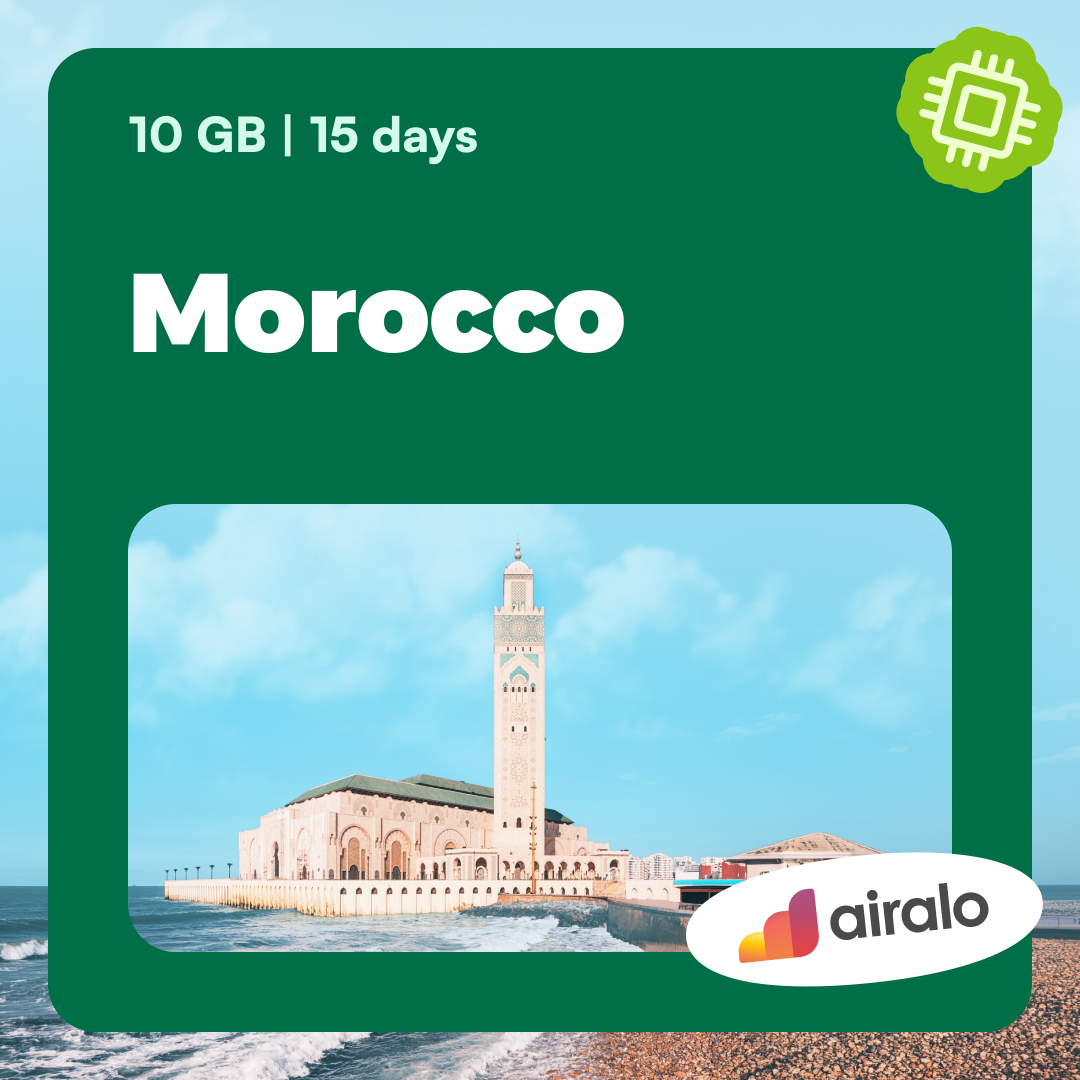
For an arrival in Morocco, first check what your usual mobile plan includes. A data eSIM can be useful for finding a driver, checking a route, or contacting your accommodation once ashore. The selected Airalo plan includes ten gigabytes for fifteen days in Morocco. It requires an unlocked phone that supports eSIM.
Install it with a stable connection and check the activation process, coverage, and plan terms before your trip. This plan is for overland travel in Morocco; it does not provide guaranteed connectivity during the crossing. The selected offer’s price and currency are shown on its card, preserving the amount actually provided by the catalog.
Airalo
Morocco: 10 GB / 15-day data eSIM
To reach your transfer and first-night accommodation after arriving in Morocco, if your usual mobile plan is unsuitable. Requires an eSIM-compatible phone; land connectivity only, with no guaranteed maritime coverage.
- 15 days
For appointments and travel after disembarking in Morocco. An eSIM-compatible, unlocked phone is required; land use only.
From $33.00
BookDelays and connections
Allow extra time after a ferry, especially when a train, another boat, or an appointment determines what comes next. Separate bookings may mean you have to rearrange the connection yourself. An overnight stay near your arrival point can sometimes be more useful than a series of tickets that are difficult to change.
European rules cover ferries departing from an EU port, as well as some arrivals from a non-EU country when an EU transport company operates the service. In the event of cancellation or a departure delay of more than ninety minutes, the rules provide, for the services concerned, a choice between a refund and rerouting under the conditions set out in the regulation.
Assistance while you wait and compensation for an arrival delay are covered by separate provisions, with exceptions including weather conditions. Keep your ticket, notifications, expenses, and correspondence with the company. The official Your Europe page explains passenger rights and the complaints process; check it for your situation rather than assuming you will automatically be reimbursed for the entire trip.
FAQ
Is there a ferry between France and Italy?
Yes, Corsica has routes to Italian ports. The example verified here is Bastia–Livorno with Moby, with a season announced from May 15 to September 30, 2027; Genoa–Bastia is also listed in the published schedule. For a route between mainland France and mainland Italy, check a separate itinerary: these Corsican routes do not involve boarding on the French mainland coast.
Which Italian port should you choose to reach Greece?
Compare Ancona, Bari, Brindisi, or Venice based on your approach route and the Greek port you want to reach. Igoumenitsa and Patras serve different parts of the journey. The right choice takes into account the drive in Italy, check-in, the crossing, and the drive in Greece. If you plan to stop in Puglia, Bari or Brindisi may fit naturally; from the north, also look into more northerly departures.
Can you take the ferry to Greece in November?
Some routes have a confirmed autumn schedule. On Brindisi–Igoumenitsa, Grimaldi lists a daily 1 p.m. departure from October 7 to December 17, 2026, with arrival shown as 10 p.m. local time. Book the specific departure and check for any changes. Schedules from another season or another company should not be applied to this route.
Is it better to depart from Sète or Algeciras for Morocco?
Sète avoids a long drive through Spain, with a crossing of around two days to Tangier, depending on the departure. Algeciras–Tanger Med takes about one hour and thirty minutes at sea with DFDS, after the drive to southern Spain. Compare the full cost, how tired you will be from driving, the nights required, and your destination in Morocco; neither option is always the cheapest.
How early should you arrive before departure?
Follow your company’s required arrival time for your terminal and vehicle. The verified examples range from a recommendation to arrive at least ninety minutes ahead with DFDS on the Strait to several hours for some of Superfast’s Adriatic operations. Grimaldi’s Brindisi–Igoumenitsa page consulted requires arrival no later than two hours before departure. The check-in closing time does not replace the recommended arrival time.
Is a cabin necessary for an overnight crossing?
It depends on the duration, your group, and what you plan to do after arrival. A cabin provides a bed and private space, which can be especially useful with children or after a long drive. Compare its occupancy and total price with the other facilities available. A passage booked without a cabin should not be taken to include a bed reservation.
Can you board with a loaded car and bicycles?
Check which vehicle categories are accepted and declare the actual dimensions, including exterior equipment. A roof box, bike rack, or trailer may affect your booking. Prepare your vehicle documents, any necessary authorizations, and insurance that covers the countries you will visit. Keep a bag with you for anything you need during the crossing, and ask about access to the vehicle deck.
Will your phone work throughout the crossing?
Coverage and charges depend on the network used and onboard services. Check your carrier’s terms for maritime connections and download your documents before departure. A land-based eSIM for Morocco works after arrival within its coverage area; buying one does not guarantee Internet access in the middle of the Mediterranean.
Sources and checks
Plan your visits and check current conditions.
- Bastia–Livorno: 2027 season
Moby · Accessed November 1, 2026
What this source supports
Season shown from May 15 to September 30, 2027, crossing time 4 h 30; information presented by port and vehicle.
- Brindisi–Igoumenitsa: 2026 schedule
Grimaldi Lines · Accessed November 1, 2026
What this source supports
October 7 to December 17, 2026: daily departure at 1 p.m., arrival at 10 p.m. local time; return 1 a.m.–9 a.m.; check-in no later than two hours before departure.
- Routes to Greece
Grimaldi Lines · Accessed November 1, 2026
What this source supports
Network includes Ancona–Igoumenitsa and Brindisi–Igoumenitsa; check departures for your specific dates.
- Adriatic ports and network
Superfast Ferries · Accessed November 1, 2026
What this source supports
Italian ports: Ancona, Bari, Venice; Greek ports: Igoumenitsa and Patras.
- Check-in and boarding
Superfast Ferries · Accessed November 1, 2026
What this source supports
Document checks at the port on Adriatic routes, even with an e-ticket; deadlines vary by port and season, check-in closes 30 min before departure.
- Sète–Tangier: journey and facilities
GNV · Accessed November 1, 2026
What this source supports
Vehicles, cabins, crossing of around two days depending on departure and stopover; follow the times shown on your ticket.
- Morocco network
GNV · Accessed November 1, 2026
What this source supports
Sète–Nador, Barcelona–Tangier, Barcelona–Nador and Almería–Nador are listed in the network.
- Algeciras–Tanger Med
DFDS · Accessed November 1, 2026
What this source supports
About 1 h 30, cars, recommended arrival at least 90 min before departure. Booking-system alert for returns after November 9, 2026.
- Passenger rights when traveling by ship
European Union — Your Europe · Accessed November 1, 2026
What this source supports
Territorial scope; cancellation and departure delays of more than 90 min; refund/rerouting, assistance and weather-related exceptions.
- Bari street food tour — product 6914P16
Viator — API Partner Basic · Accessed November 1, 2026
What this source supports
Active product rechecked via API; 180 min, tastings, French offered, bilingual format possible, port/hotel transfers separate.
- Morocco eSIM 10 GB / 15 days
Airalo · Accessed November 1, 2026
What this source supports
Product page rechecked; imported catalog airalo:26153:en:USD, 33 USD retained without conversion. For use on land.
Booking partners
Information about the offers featured in this article.Affiliate links: Odyvero may earn a commission when you book through this article’s buttons.
- Airalo : Morocco: 10 GB / 15-day data eSIM
Accessed November 1, 2026
- Viator : Bari street food and old town
Accessed November 2, 2026


