 odyvero
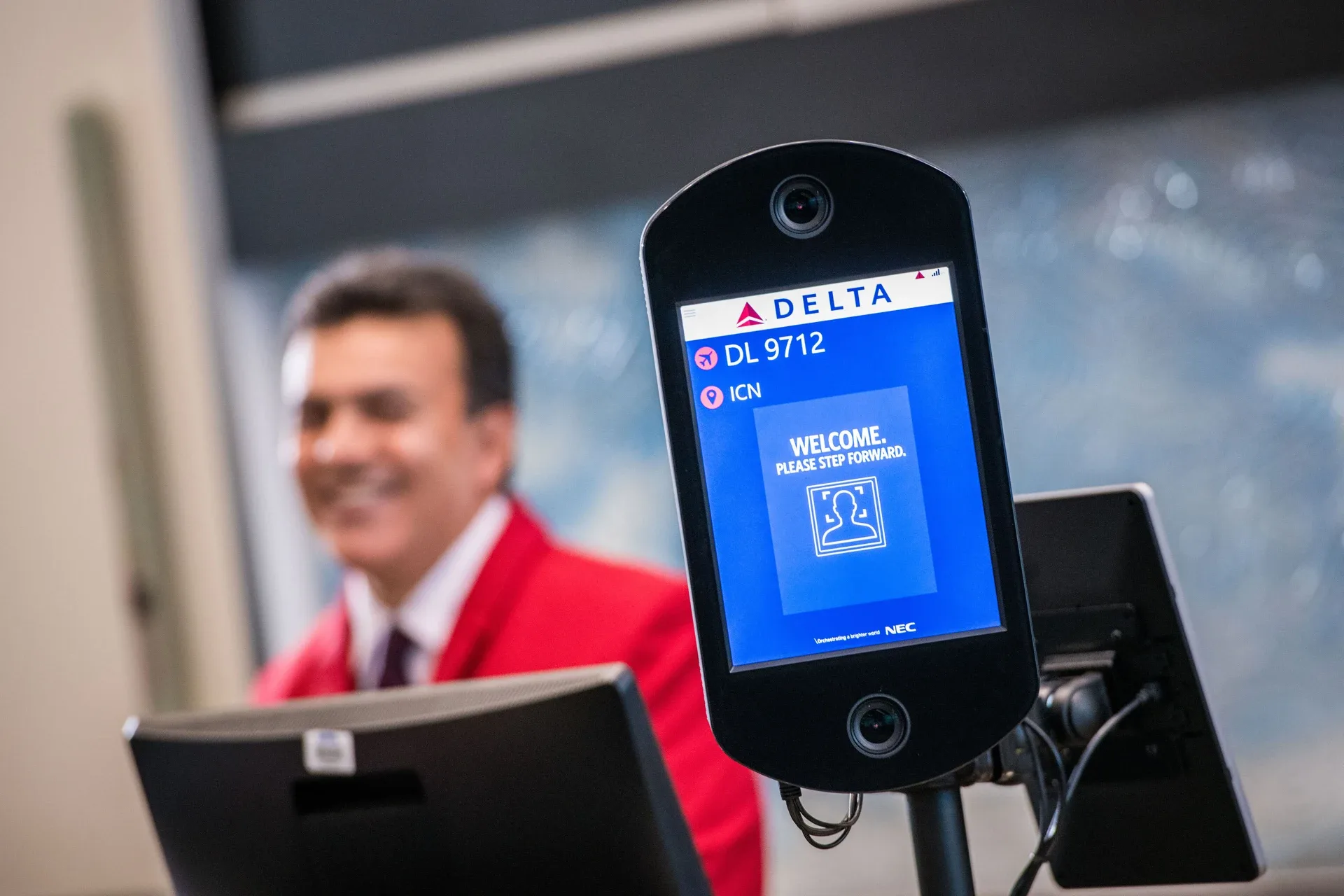

A gate may recognize your face without relieving you of the need to carry your passport. In 2026, the rules vary depending on the check, the country and your traveler status. Here is how to distinguish boarding, security and border control, know when to request a conventional check, and prepare for your passage without counting on a miraculously empty queue.
Checks along the airport journey
At the airport, several staff members may ask you to look at a camera during the same trip. Yet they are not all checking the same thing. The airline checks your travel booking and the documents required for your destination; security controls access to the restricted area; border authorities decide whether you may cross the border. At the gate, a final check links the passenger to the flight. A biometric system may be used at one or more of these stages.
This distinction explains why enrollment in an airline’s app does not automatically eliminate the checks that follow. Each organization has its own rules, verification methods and area of responsibility. You may therefore present your document at a kiosk, then pass in front of a camera, and still have to show it again to an officer. Keep it accessible until all formalities and boarding are complete.
The term “paperless” also covers several different situations. A boarding pass may be stored digitally on your phone. A gate may recognize you using a photo already associated with the flight. An authority may let you pass through a gate without scanning your passport again. These three services do not have the same implications for the documents you need to carry.
Before signing up, identify the stage involved and the organization offering the service. The useful question is specific: can you check your bag, cross the border or board using this system on this trip? A general announcement about airport modernization is less informative than the instructions from your airline and the relevant authority.
Your face and your document
Facial recognition compares an image captured on site with a reference. In a so-called “one-to-one” check, that reference may be the photo on the document you have just presented. The kiosk then checks whether you are its rightful holder. The U.S. TSA describes this process, for example, for its CAT-2 technology, which combines document scanning with a camera.
Other systems search for a match among several photos already available for a group of travelers. The TSA also distinguishes “one-to-many” systems intended for certain populations or programs. To the passenger, the gesture in front of the camera may look the same; the source of the reference photo and the way the data are processed differ.
Enrollment depends on the service. A commercial process may ask you to submit a document and a portrait before departure. A border gate may compare your face directly with the document presented, without requiring additional enrollment in an airline program. In Singapore, the ICA says visitors can use automated lanes from their first arrival, without prior enrollment before the trip, subject to the system’s conditions.
Digital identity projects go further. With One ID, IATA describes a process that includes advance verification of travel eligibility, consent-based sharing of digital credentials, and passage without repeatedly presenting documents when the equipment is available. The organization itself notes that the mere presence of biometrics is not enough to make an airport compliant with this vision. For your next flight, rely on the process actually offered; do not assume your face will be recognized in every connecting terminal.
Parafe at French borders
In France, Parafe concerns border control at the external borders of the Schengen Area. Service Public presents the system as optional and free of charge. It is available to travellers whose nationality, age, biometric document and direction of travel meet the stated conditions. An adult French citizen with an eligible biometric document falls within this scope; the rules for other nationalities may differ between entry and exit.
The process described by Service Public starts with scanning the document. You approach alone, remove anything covering your face, place the document on the reader, then enter when the gate invites you to do so. You then look at the camera and follow the on-screen instructions until the door opens. The biometric passport or identity card accepted by the system therefore remains a document used during the procedure.
When preparing for a family, pay close attention to the age requirements. The official page allows minors aged twelve and over who meet the conditions to use Parafe when arriving in France; it does not give them access to the same process when leaving the country. Two travellers with the same type of passport may therefore need to use different queues. Ask staff which route is suitable for your group before entering the gates.
You can choose a manual check by a border guard. This option may also help people who find the gate or its instructions difficult to use. It does not remove the need to check the document or carry out other regulatory checks. On site, the lanes in operation and staff directions determine which route is available.
The EES is a separate system, with its own scope of travellers and formalities. For more on this, our guide “EES in Europe: who is affected and how to prepare for your crossing” explains the situations covered. Seeing a camera at a checkpoint is not enough to identify which system is being used: look for its name on the signage and keep the procedures distinct.
TSA and CBP in the United States
In the United States, the TSA and CBP operate at different stages. The TSA oversees transportation security, particularly at checkpoints before access to departure gates. CBP handles international border formalities. Their official pages explain why a general answer to “Can I refuse the camera?” would be misleading.
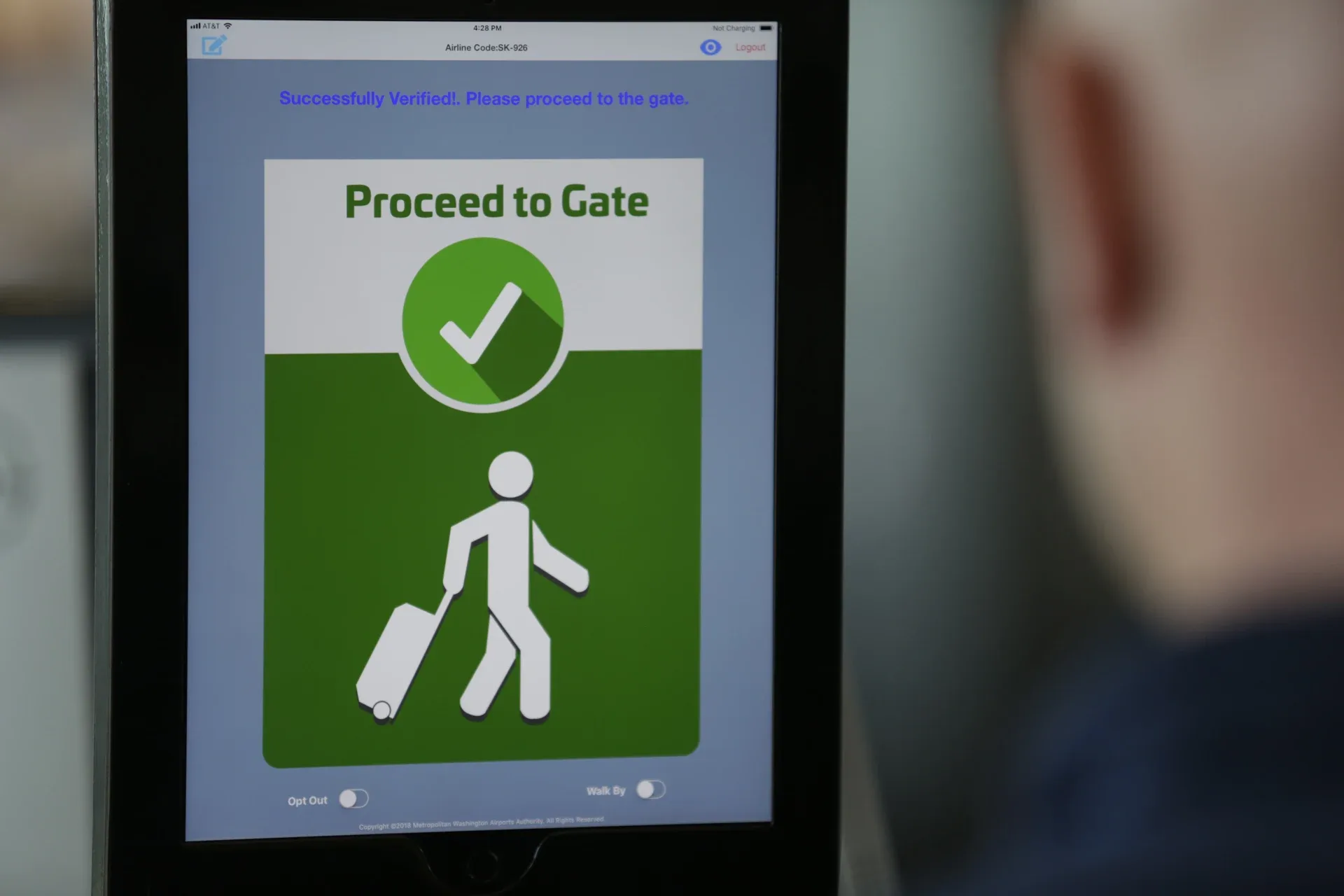
For the facial comparison process at its checkpoints, the TSA says participation is voluntary. You can tell the officer that you prefer a conventional identity document check. Do so before your photo is taken, when the officer directs you to the device. Your screening continues under the usual procedure; security checks of people and baggage are still required.
CBP, for its part, describes biometric procedures for international entry and exit, with differences depending on the airport and partner processes involved. In its privacy policy, the option to request alternative processing is explicitly stated for U.S. citizens. A French visitor should not infer that they automatically have the same option at border control.
If you need an accommodation or want to understand the procedure, speak to the officer before going in front of the camera. Nationality, status and the operation in progress matter more than the equipment’s brand. A voluntary enrolment with an airline and a collection carried out by a border authority may both occur during the same trip, while being subject to different rules.
Finally, biometrics do not replace entry requirements. Prepare your passport and any permits or visas required for your situation. Identity recognition and the right to enter a territory are two related but distinct checks. Complete the formalities before choosing an available route at the airport.

Public domain ; réduction à 1920 × 1280 et conversion WebP sans agrandissement.
Arrivals and departures at Changi
In Singapore, the distinction between arrival and departure is particularly useful for foreign travellers. The ICA describes automated lanes using facial and iris recognition and, when requested by the system, a fingerprint. Residents may use the process without presenting a passport on arrival and departure at the relevant air and sea checkpoints. Foreign visitors can also use these lanes when departing.
If you are arriving as a foreign visitor, have your passport ready to be scanned in the automated lane, following the ICA’s instructions. Being able to proceed through the biometric checks afterwards does not mean you can leave the document at home. The authority explicitly asks travellers to bring it: an officer may request it, and the destination country may need it for the next leg of your journey.
Preparation also includes the SG Arrival Card. The ICA says relevant travellers should submit it within the three days before arrival. This form and the gate process serve different purposes. Complete the form before your flight through the official channel, then keep the necessary information accessible with your travel documents.
In the automated lane, look at the position indicated for the face and iris capture. The ICA asks travellers, among other things, to remove sunglasses, masks and anything obstructing the eyes or face; coloured or patterned contact lenses may also interfere with the check. You may be asked for a fingerprint. Follow the screen rather than copying gestures you have seen at another airport.
Children under six must use the Special Assistance Lanes, according to the ICA. These wider lanes also accommodate wheelchair users and allow family groups of up to four people to complete formalities together. This detail may make arrival much easier to organise than signing up for another digital service.
Biometric data and your rights
A photograph used to recognise a person raises questions that go beyond how quickly they can pass through. The CNIL reminds us that biometric data are particularly sensitive: they come from characteristics of the body and cannot be replaced like a password. Before signing up for an optional service, you should therefore identify the data controller, the purpose and the retention conditions.
For commercial services intended to streamline the passenger journey, the CNIL requires consent to be freely given, specific and informed. This means clear information, a non-biometric alternative and the ability to withdraw consent. A general acceptance of ticket terms is not sufficient to constitute specific consent to biometric processing. Checks carried out as part of a state function fall under a legal framework that must be distinguished from this.
The EDPB has also examined several storage architectures used by airports and airlines. In its 2024 opinion, it favours solutions that keep the data in the individual’s hands, or encrypted storage for which the individual alone holds the key, subject to the necessary safeguards. A central database does not become protective simply because a commercial presentation calls it “secure.”
To make a choice, read the service’s privacy notice and look for answers to four questions: who processes the images, for which stages, for how long, and how can you withdraw consent or exercise your rights? If the service lets you select only certain stages, choose the ones you need. An app-based service does not need to receive more data than its function requires.
Retention periods cannot be generalised from one system to another. Service Public says data specific to the Parafe process are deleted after the traveller passes through the gate. CBP’s policy distinguishes, among other things, between photographs of U.S. citizens and records of the foreign nationals concerned. This information must be read within its scope; it does not support a claim that every image taken at airports disappears after a few seconds.
Documents to prepare before departure
Start with the documents required for your itinerary: identification, entry into the country, any transit requirements, and transportation. The airline and destination authorities are the right contacts for these requirements. Check biometric services afterward, as each has its own eligibility rules. This order helps you avoid spending time creating a portrait in an app while forgetting an essential formality.
Check that the information on your booking matches the documents you will use. If your passport was renewed after you enrolled in a digital travel process, check the service’s update procedure before departure. An existing profile and a new document may need to be linked again. Avoid trying to resolve this at the boarding gate, when time is tightest.
Download your boarding pass when it is issued and keep your flight details and useful contact information handy. Make sure you can access your documents without relying solely on a mobile connection at the last minute. A digital copy can help you retrieve information; however, bring any required original documents. Your ability to present your travel document should not depend on your phone’s battery or an app opening.
If biometric registration is optional, check its actual coverage before enrolling: departure airport, terminal, airline, flight, and the steps offered. Your return journey may follow a different process. Also check the rules for children and companions. The service’s usefulness depends on your specific journey, especially when multiple airlines or countries are involved.
Children and assistance
Preparing as a family means more than checking that everyone has a biometric passport. The permitted age, whether travelers must go through alone, and the available accessible routes all affect your plans. Parafe and Singapore’s automated lanes illustrate how rules can differ; a procedure you used on a previous holiday does not automatically apply to your next trip.
Before splitting up, tell an agent that you are traveling with a child or someone who needs assistance. Ask how to stay together during the check. If a child cannot use the e-gate, follow the route suggested for your group rather than having everyone choose whichever line looks shortest. It is worth planning ahead for where to meet up on the other side of the border.
A wheelchair, difficulty positioning yourself in front of the camera, or trouble reading the screen may also warrant a specific route. Explain the practical need to staff. In Singapore, SAL lanes provide an explicitly designated option for some of these situations. Elsewhere, check the arrangements with the airport and the authority responsible for the check, in addition to any assistance booked for the flight.
If recognition fails, wait for instructions. Poor positioning, something in front of your face, or a technical issue may require assistance; a failed match does not tell the traveler what caused it. Present the requested document and let the officer resume the check. Making repeated attempts without instructions may only complicate the process.
Timings and connections
More automated checks are no reason to leave yourself less time at the airport. The total time includes getting to the terminal, any check-in, baggage, security, border control, and getting to your gate. The camera only affects certain steps. Faster processing at a gate may still mean a wait to drop off your bags or a long walk.
Follow the airline’s recommended arrival times and the deadlines on your booking. For a connection, check for changes of terminal or zone and any formalities, as well as baggage handling. Any time saved at one step is not guaranteed time you can count on elsewhere. A manual check may still be needed to complete your passage.
On arrival, also distinguish the time spent at the checkpoint from when you will be ready to leave. Depending on your journey, you may still need to collect your bags and complete other formalities. If you have booked a driver, provide your flight number, check the meeting point, and find out when the included waiting time starts. Landing time and the time you exit the terminal are two different milestones.
A layover that includes a trip into the city requires separate planning. Our guide “6-Hour Layover: What Outing Can Actually Fit?” helps you work out how much time you really have. The presence of biometric processing at the airport does not, by itself, make an excursion compatible with a tight connection.
Your transfer after Changi
For an arrival in Singapore followed by a stay in the city, the private transfer offered by Rui Transport Services via Viator may suit a group traveling with luggage. The pickup is arranged after immigration and baggage collection. The provider plans to contact you via WhatsApp: share a number where you can be reached and keep the pickup instructions accessible.
The product includes several options; select the arrival journey that matches your needs. The listing states an initial waiting period of sixty minutes after the confirmed landing time. Ask the provider to clarify how surcharges and additional waiting time work, and what applies to your scheduled time, particularly for a late arrival. The duration and available commercial information are shown on the card. This booking covers ground transportation; border processing follows the ICA’s procedures.

Viator
Private transfer from Changi to your accommodation
For getting to your accommodation with a group and luggage after immigration; keep WhatsApp accessible and confirm the meeting point and waiting time with Rui Transport Services.
- 20–45 min
- 5/5 (330 reviews)
Private arrival transfer offered by Rui Transport Services, from Changi to a hotel or residence. Meet after immigration and baggage claim, with contact via WhatsApp. Select the arrival option and confirm waiting time, luggage, and any surcharges with the provider.
Cancellation policy
For a full refund, cancel at least 24 hours before the scheduled departure date.
From SGD 120.00
BookStaying connected during your trip
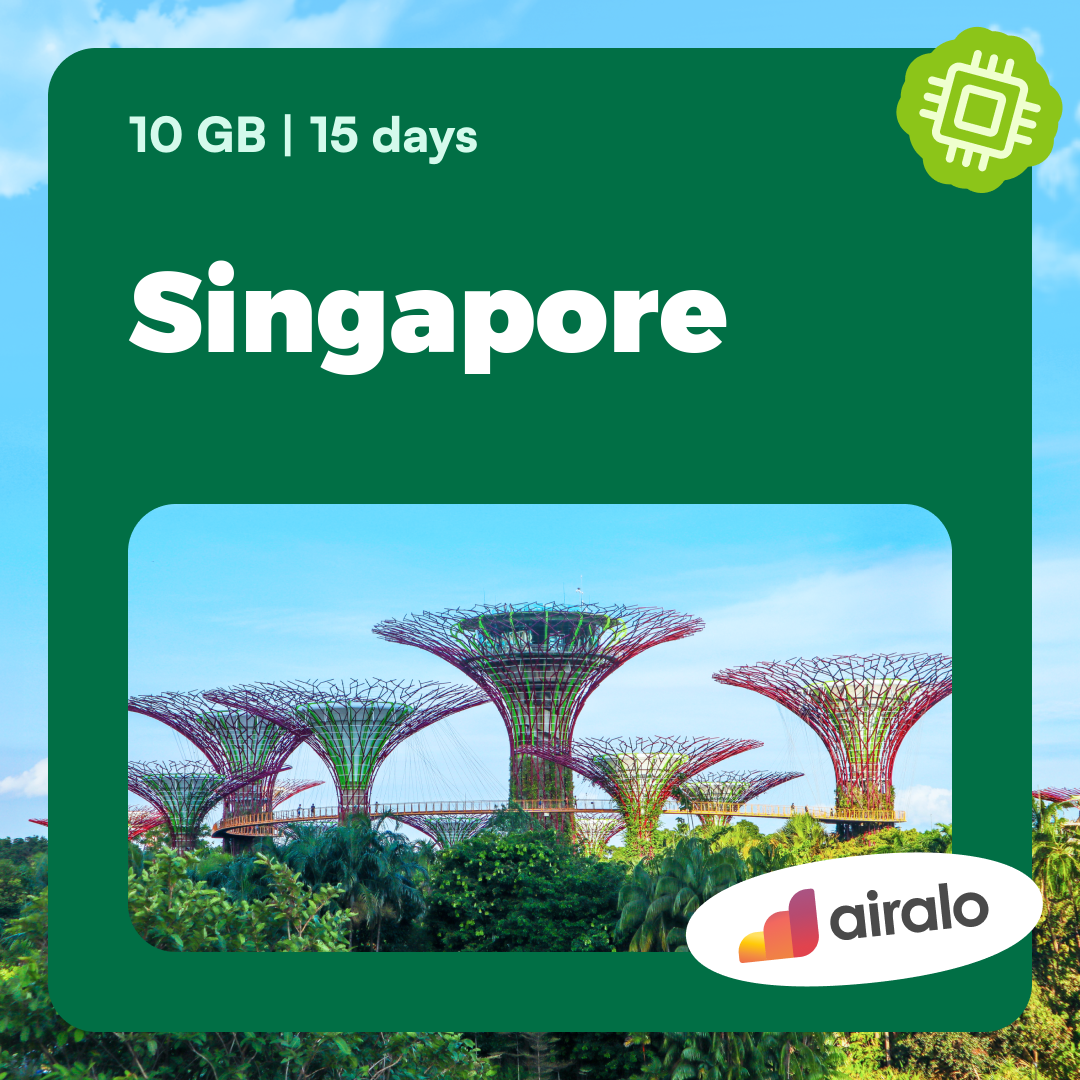
Having a connection as soon as you leave the terminal makes it easier to contact your driver, check the meeting details, and follow the route to your hotel. If your plan already covers Singapore, simply check its roaming terms. If your plan does not include data, the Airalo Singapore 10 GB eSIM, valid for fifteen days, is an option for maps and messaging, depending on your usage.
Before buying, check that your phone supports eSIM and is unlocked. Install the profile using a stable connection and read the activation instructions for the plan you choose. This offer provides data: WhatsApp uses the internet, but there is no promise of a local phone number or included traditional calls. The card shows the catalog price in its actual currency. Biometric border processing follows its own procedure; no paid data plan is required for the camera to recognize you.
Airalo
Singapore eSIM — 10 GB for fifteen days
For contacting your driver and using maps and messaging during a stay in Singapore, if your plan does not already provide local data. Check eSIM compatibility before purchase.
A 10 GB data plan valid for fifteen days in Singapore, to find your driver, use maps, and message during your stay. Requires an eSIM-compatible, unlocked phone; data only.
From $15.50
BookFAQ
Can you take an international flight without bringing your passport, thanks to facial recognition?
You must bring the documents required for your itinerary. Some processes let you avoid presenting your passport at one step, but other checks and the destination country may still require it. In Singapore, the ICA expressly reminds travelers to carry it even when a process that does not require presenting the document is available. A photo or digital identity in an app does not automatically replace the required original.
Can you refuse facial recognition at the airport?
It depends on the system. The TSA allows travelers to request a standard check for the facial comparison it describes at its checkpoints. Parafe is optional. The CNIL requires an alternative for commercial processes based on consent. At the US border, CBP policy describes the alternative processing option for US citizens: a French visitor should check their situation with the officer rather than automatically applying the TSA rule.
Do you have to pay to use a Parafe e-gate?
No. Service Public describes Parafe as free. Its use depends on your eligibility and the lanes available. A private fast-track subscription, an assistance service, or a transfer booking is a different service. Check what is being sold before paying for a product whose name suggests speed at the airport.
What happens if my phone runs out of battery?
Present your physical documents and ask what procedure is available for your booking. If your boarding pass is stored only on your phone or you have a digital enrollment, you may need help from the airline. Before traveling, arrange backup access to useful reference details and keep your phone sufficiently charged. Do not confuse e-gates that read your passport directly with services based on a personal app.
Can children use biometric gates?
Rules vary. According to Service Public, eligible minors aged twelve and over use Parafe when arriving in France, not when leaving the country. In Singapore, the ICA directs families with children under six to the Special Assistance Lanes. Ask where your group should go before joining a queue, and check that assistance remains available throughout the formalities.
How long is the photograph of my face retained?
The retention period depends on the data controller and the procedure. Parafe crossing data is deleted after you pass through, according to Service Public. The CBP states that photographs of U.S. citizens are retained for a maximum of twelve hours after verification under the policy described, and that a different process applies to the foreign nationals concerned. Check the notice for the specific service rather than assuming a general period applies to all airports.
Does biometrics mean I can plan for a shorter connection?
Keep the time buffers in your itinerary and follow the airline’s instructions. Getting between gates, baggage, security, and any border checks still take time. A quick identity check at one checkpoint does not guarantee that the entire journey will be quick. Plan your connection around the actual terminals and formalities, allowing for the possibility of a manual check.
Do I need to buy an eSIM to use Changi’s automated lanes?
No. The immigration process relies on the documents and biometric data requested by the ICA. A mobile connection is for your own needs, such as messaging your driver, using a map, or accessing your travel documents. An eSIM may be useful during your stay if your plan does not cover Singapore; it is neither a biometric registration nor a mandatory add-on for the checkpoint.
Sources and checks
Plan your visits and check current conditions.
- Facial recognition at airports: principles to follow
CNIL · Accessed November 1, 2026
What this source supports
Page dated October 9, 2020: the sensitivity of biometric data; free, specific and informed consent for streamlining commercial journeys; a non-biometric alternative; withdrawal and control over data; and the need to distinguish government functions. Older deployment projections are not included.
- Facial recognition at airports: control over biometric data
European Data Protection Board · Accessed November 1, 2026
What this source supports
Opinion of May 24, 2024: risks associated with matching, active and consent-based enrollment, individual control and storage architectures; a targeted opinion on security, retention and data protection by design, not a general approval of the systems.
- Fast border crossing: how to use a Parafe gate?
Service Public / DILA · Accessed November 1, 2026
What this source supports
Fact sheet verified on April 7, 2025: Parafe is free and optional, for the external Schengen border, with eligibility depending on document/nationality/direction of travel; children aged 12 and over are eligible on arrival in France; document scan followed by a camera check; manual inspection possible; passage data deleted after crossing.
- Biometrics Technology
Transportation Security Administration · Accessed November 1, 2026
What this source supports
One-to-one CAT-2 comparison against the document photo; distinct one-to-many uses; facial comparison is voluntary, and a conventional check can be requested from the officer at the TSA checkpoint.
- Biometrics Environments: Airports
U.S. Customs and Border Protection · Accessed November 1, 2026
What this source supports
Uses for international entry/exit and certain partner processes; coverage varies by airport and type of check. No fixed number of airports is stated in the text.
- Biometrics: Privacy Policy
U.S. Customs and Border Protection · Accessed November 1, 2026
What this source supports
Policy amended on July 9, 2026: the option to request alternative processing is explicitly stated for U.S. citizens; their photos are retained for no more than 12 hours after verification; foreign nationals concerned are enrolled in IDENT. Do not generalize the refusal option or retention period to all visitors.
- Automated Lanes at the Passenger Halls
Immigration & Checkpoints Authority, Singapore · Accessed November 1, 2026
What this source supports
Page updated on October 30, 2026: automated lanes available from the first visit without prior enrollment; face/iris/fingerprint if requested; residents need not present their document on arrival or departure at air/sea checkpoints, foreign visitors on departure; always carry your passport; SGAC within 3 days before arrival; SAL for children under 6/wheelchairs/family groups of up to 4.
- One ID
International Air Transport Association · Accessed November 1, 2026
What this source supports
Vision for digital identity and advance verification of eligibility, with consent-based sharing and document-free passage where available; biometrics alone are not enough to make an airport One ID-compliant.
- Changi Arrival Transfer — Rui Transport Services, 173510P8
Viator / Rui Transport Services · Accessed November 1, 2026
What this source supports
GET Partner API product 173510P8 actually consulted: active, private transfer, arrival/departure options, WhatsApp contact after immigration/baggage claim, initial wait of 60 minutes after landing, variable duration of 20–45 minutes. Driver departure fields differ at 75/90 minutes: no departure threshold is printed; supplier confirmation is recommended. Actual calendar price is 120 SGD in the central offer, not relabeled in EUR.
- Singapore eSIM — 10 GB, 15 days
Airalo · Accessed November 1, 2026
What this source supports
Product page reviewed: 10 GB/15-day plan, data and eSIM installation; imported catalog key airalo:21282:en:USD, 15.50 USD. The page’s local EUR price was not substituted for the USD feed. Article-specific link prepared with subId pix39894_fr_connexion.
Booking partners
Information about the offers featured in this article.Affiliate links: Odyvero may earn a commission when you book through this article’s buttons.
- Airalo : Singapore eSIM — 10 GB for fifteen days
Accessed November 1, 2026
- Viator : Private transfer from Changi to your accommodation
Accessed November 2, 2026

