 odyvero
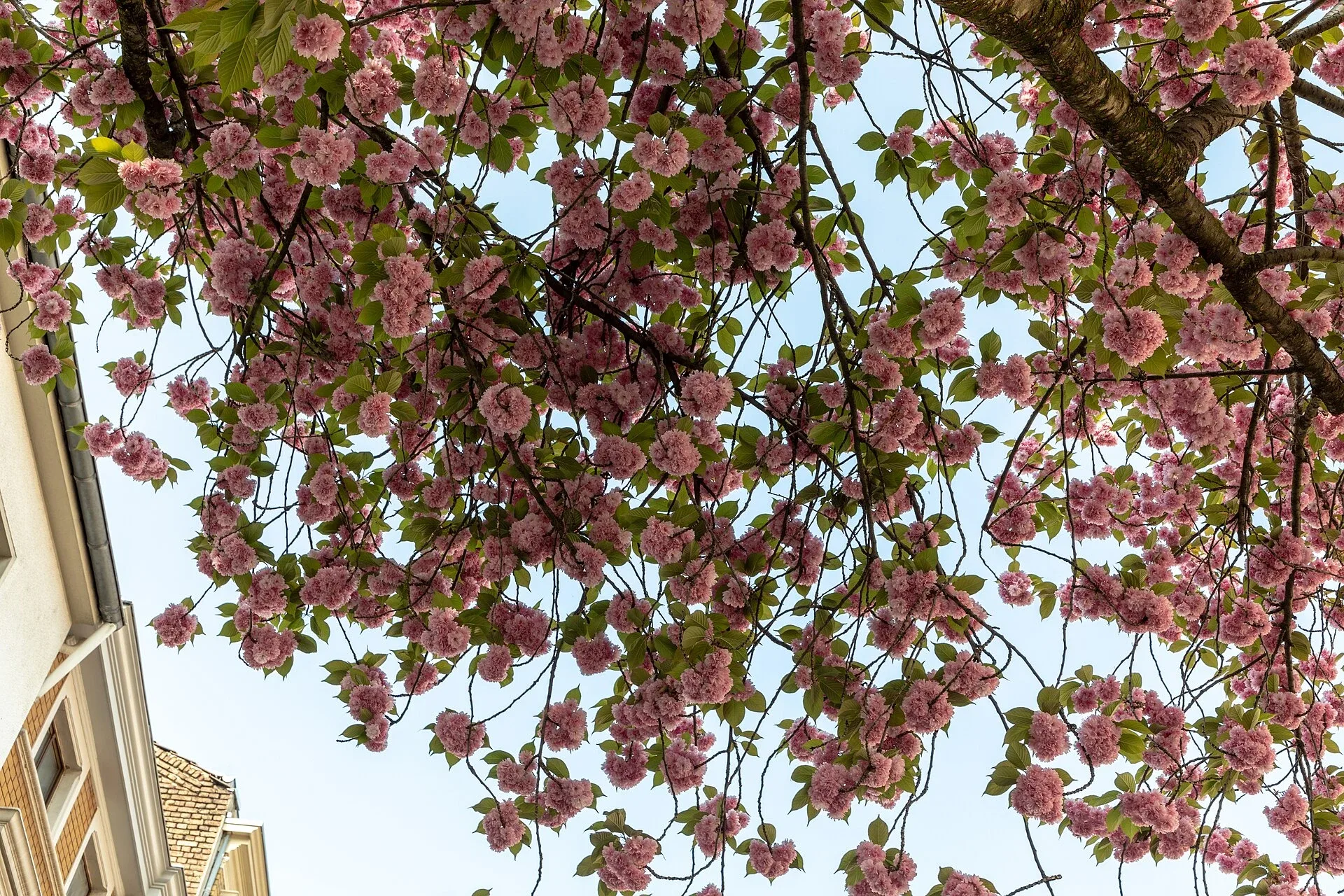
In Bonn, pink branches meet above the streets; in Amstelveen, 400 cherry trees make up a park on the edge of Amsterdam; in Stockholm, the blossoms accompany coffee breaks at Kungsträdgården. These three European getaways offer different settings and trips that are easy to enrich. Here’s how to choose your destination, find the right time to visit and plan a few days without making the whole trip depend on a single photograph.
Three stays, three settings
Bonn is especially well suited to those who want flowers to be a major part of their trip. The cherry trees are part of the neighborhood: their branches frame façades, doorways and street views. You can return to the same place at different times of day, then extend your walk around the city. For a short getaway focused on photography, it’s our top choice.
Amstelveen fits more naturally into a stay in Amsterdam. Kersenbloesempark, also known as Bloesempark, is in the Amsterdamse Bos, in the neighboring municipality of Amstelveen. Set aside a separate outing for it, away from the city center and its canals. Its appeal lies in the concentration of trees in an open garden, with the option to continue the day around Lake De Poel or the old village.
Stockholm makes it easy to add cherry blossoms to an urban itinerary without planning an excursion to the outskirts. Kungsträdgården is a central place where you can drop by, sit down and return later. This option is a good fit if you mainly want to explore the Swedish capital, with a springtime stop among the sightseeing. In all three cases, choose just one base: traveling between these cities to follow the blossoms would require a much longer trip.
Blossom season
The most useful guides are local. Visit Amstelveen places the blossom period at about two weeks in March or April, with variations depending on temperature, wind and precipitation. In Bonn, the city says the peak is generally around mid-April and lasts ten to fourteen days at most. Visit Stockholm also cites mid-April as the usual period for cherry blossoms in the capital.
These indications can help you choose a travel window. They do not let you book the exact day of peak bloom several months in advance. Even two cities at different latitudes can have overlapping blossom periods. The order “Netherlands, Germany, Sweden” is therefore not a guaranteed travel schedule.
In Bonn, the different varieties offer another guide. The blossoms in the Altstadt generally appear in stages between late March and mid-April. The large pink trees on Heerstraße and Breite Straße tend to bloom later in this sequence. A photo of a nearby street already in bloom does not prove that these two avenues are at the same stage.
To plan for next spring, favor accommodation with flexible cancellation and check the city or tourist office updates as your departure approaches. Look at the date the shared photos were taken: a recent post may show an earlier season. The weather can help you understand how things are progressing, but a mild forecast is not enough to predict peak bloom. Dates for a Japanese festival, if there is one, should be checked separately for the relevant edition.
Bonn and its pink streets
Heerstraße and Breite Straße are the best-known places to see Bonn’s cherry blossoms. According to the city, each street has around sixty Japanese Kanzan cherry trees. Their deep-pink double blossoms form denser clusters than the pale blooms of many other cherry trees. At street level, the branches create a canopy; looking up, you can make out bunches of blossoms and the first leaves between the façades.
The neighborhood has a history that helps explain this landscape. The trees were planted as part of its renovation in the late 1980s, alongside building restoration, added greenery and reduced through traffic. The trees are therefore in residential streets. Shops open, residents come home and deliveries continue. To enjoy the scenery, your walk should leave room for everyday life to carry on.
We recommend starting with a walking loop between the two streets, then returning to whichever one has the light you like best. Allow one to two hours for your visit, or longer if you plan to take photographs at length. This is a suggested pace; there is no set route requiring you to spend all that time beneath the trees. An overnight stay in Bonn lets you spread your visit over two days rather than relying on a single arrival in the middle of the afternoon.
The Altstadt has around three hundred ornamental cherry trees in total. Michaelstraße, Maxstraße and Peterstraße offer a chance to look for other views and stages of bloom. The city specifically mentions columnar cherry trees in Maxstraße and Peterstraße. In Beuel, Professor-Neu-Allee also has Kanzan trees. These streets extend the walk if you’re staying locally; they guarantee neither solitude nor blossoms at the exact moment of your visit.
Arriving in the morning may make photography easier, but there’s no promise of an empty street. The evening offers different light, but be mindful of vehicles and entrances. The blossoms can be enjoyed freely from public spaces. You don’t need an activity ticket to walk these streets. If you add a cultural visit to your stay, schedule it after your first look around: that way, you’ll know whether you want to return beneath the trees the next day.
Amstelveen and its four hundred cherry trees
Amstelveen’s cherry blossom park offers a more open setting. The trees are spread throughout an oval-shaped garden in Amsterdamse Bos. Instead of a street vista, you’ll find flowering canopies, a lawn, and people settling in to watch spring unfold. This layout lends itself to a leisurely visit, observing the trees from the paths and permitted areas.
The four hundred cherry trees were donated to the municipality in 2000 by the Japanese Women’s Club. Visit Amstelveen notes that each tree bears a first name: two hundred Japanese women’s names and two hundred Dutch ones. This detail gives the place an interest beyond its colour alone. It recalls the ties between the Japanese community and the city, while inviting you to appreciate the park one tree at a time.
From Amsterdam, allow at least half a day, including travel, rather than squeezing in a stop between two museums. For public transport, the tourism office directs visitors to the 9292 journey planner: search for the park itself and check the final walk from the suggested stop. The word Amsterdam in “Amsterdamse Bos” does not mean that the garden is right next to the historic centre.
Cycling is an appealing option for those comfortable getting around locally. The office lists bicycle parking along Burgemeester A. Colijnweg during blossom season. Check the arrangements announced for your visit and leave your bike in the designated areas. For a family not used to cycling in the city, public transport lets you focus on the walk instead.
Blossom weekends attract many visitors; Visit Amstelveen recommends going on a weekday for a quieter experience. Plan your meal according to the rules posted on site, and don’t count on finding a particular spot under a tree. After your visit, the area around De Poel and the old village make a natural continuation of the outing. You can stay in the same area rather than setting off immediately on another excursion.
You could spend another half-day at the Rijksmuseum in Amsterdam. The guided tour we recommend lasts ninety minutes, is in English, and is limited to eight people. The museum ticket is included, after which you can continue exploring the collections at your own pace. It’s a good cultural anchor for your stay, especially if you’d like to alternate walks with indoor activities. Transport to the cherry blossom park is arranged separately.

Viator
Rijksmuseum: Small-Group Introduction
To alternate flowers with the collections, book this English-language tour for another half-day; the trip to Amstelveen remains separate.
- 90 min
- 4.8/5 (299 reviews)
Ninety minutes in English, maximum eight participants, museum admission included.
Cancellation policy
For a full refund, cancel at least 24 hours before the scheduled departure date.
From €60.00
View activity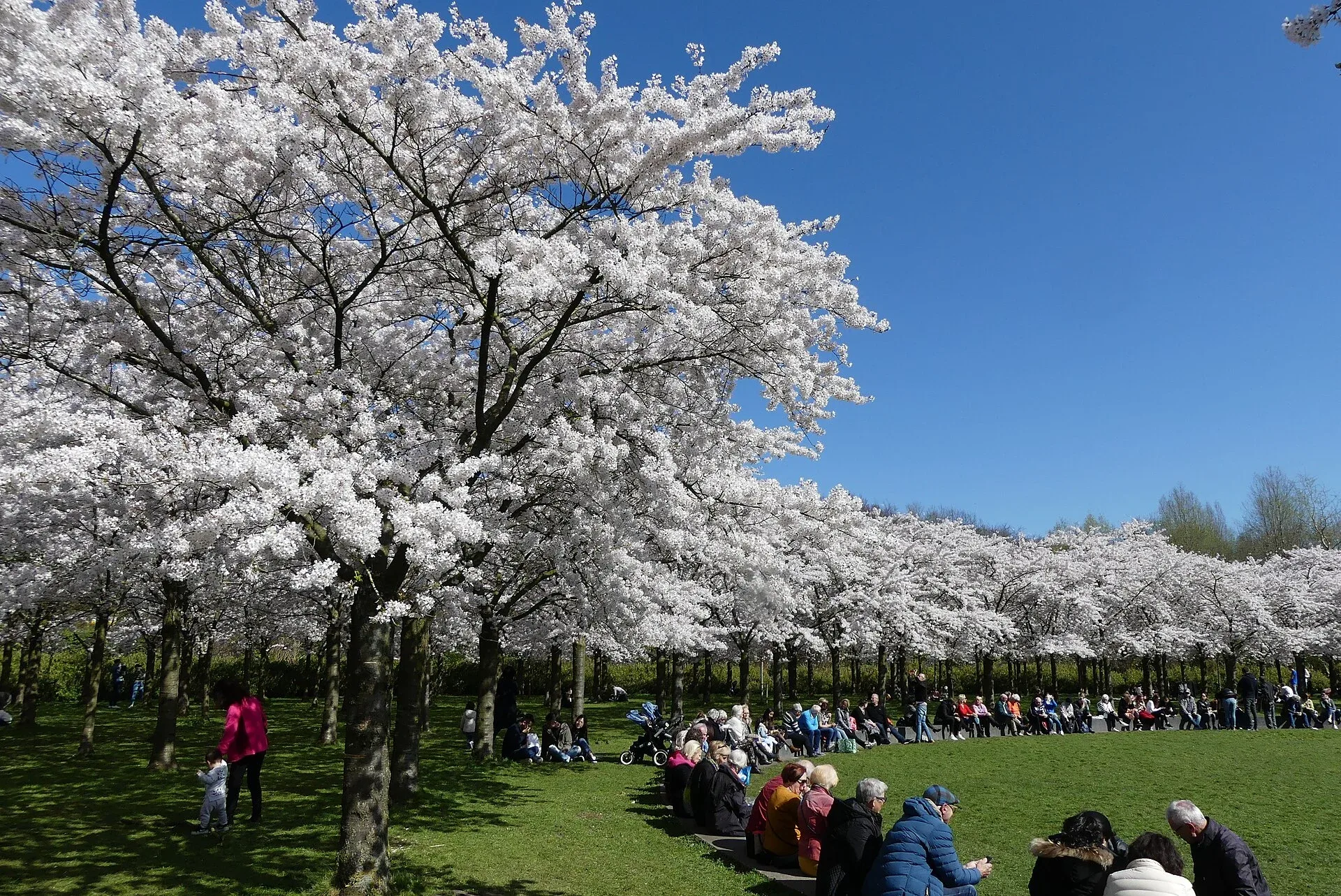


Stockholm around Kungsträdgården
In Stockholm, the cherry trees are in the northern part of Kungsträdgården. Visit Stockholm gives Jussi Björlings allé 10 as a reference point. The park is a year-round gathering place; in spring, the flowering trees offer another reason to stop by. You could make a brief first visit, then come back with a coffee if the weather makes you want to linger.
Fika, a coffee break with something sweet, fits naturally into this visit. The tourism office specifically recommends taking time for a coffee or lunch near the cherry trees. For your itinerary, this pause changes the scale of the visit: there’s no need to set aside a whole day for the park to enjoy the blossom. A stop between two neighbourhoods may be enough, with the option to return another day.
Kungsträdgården is our choice for a first visit, thanks to its central location. Visit Stockholm also mentions two other places: Bysistorget, on Södermalm, and Lumaparken, in Hammarby Sjöstad. They let you pair the flowers with a neighbourhood you already planned to explore. Their inclusion in the guide doesn’t mean all three places will be at the same stage during your stay.
For a balanced day, we suggest visiting Kungsträdgården and taking a break in the city centre, then exploring Gamla Stan in a separate time slot. The old town’s lanes, façades, and squares offer plenty to see regardless of the blossom. In cool weather, leave room for a meal or an indoor visit rather than spending several hours outside in a row.
Rainbow Tours Stockholm’s guided walk provides a historical thread for this second part of the day. It lasts two and a half hours, with departures in English or German depending on the session, and a maximum group size of twenty travellers. The itinerary includes the area around the Royal Palace, Stortorget, and Gamla Stan’s narrow streets. Don’t assume monument admission is included just because a monument appears on the itinerary. The exact meeting point is given in the booking instructions.
We recommend it if you’d like a guide to help you understand the places rather than simply following a map. Your visit to the cherry trees remains independent of this activity. First choose the language and time that suit you; you can fit in a stop at Kungsträdgården before or after without having to make a second timed appointment.

Viator
Gamla Stan: Guided Historical Walk
Pair the cherry trees at Kungsträdgården with a historical tour of Gamla Stan; choose a departure in the language that suits you.
- 150 min
- 4.9/5 (1,535 reviews)
A two-and-a-half-hour walk with Rainbow Tours Stockholm, in English or German depending on the departure, with a maximum of twenty travelers; explore the lanes and monuments along the outdoor route.
Cancellation policy
For a full refund, cancel at least 24 hours before the scheduled departure date.
From €19.90
View activityA weekend with weather flexibility
Two nights make a good starting point for this kind of getaway: they leave you several opportunities to visit the trees. In Bonn, arriving and taking a first look around lets you return the next day depending on the light and the state of the blossom. Spend the rest of your stay exploring nearby streets, the city centre, and the sights you’ve chosen. A day trip works better if you live close enough to make a last-minute decision.
In Amsterdam, three nights give you more flexibility to combine a trip to Amstelveen, a museum visit, and time exploring the city. Keep two half-days interchangeable for the park. If you book a museum visit at a fixed time, schedule the blossom for another sufficiently broad time slot: the return from Amstelveen shouldn’t turn into a dash to the entrance.
In Stockholm, two or three nights let you visit Kungsträdgården several times without reshaping your entire city itinerary. The important thing is to keep a schedule you’ll still enjoy if the buds haven’t opened yet or the petals have already fallen. Choosing the city matters as much as choosing the week.
These durations are our suggested itineraries. Adjust them to the journey from home, especially if you’re travelling by train with several connections. An extra night on site may be more useful than a long journey to add a second blossom destination.
Transport and budget
For a car-free trip, distinguish the journey to the city from access to the trees. In Bonn, the walk takes place along urban streets; choose your accommodation based on the walking or transport needed to reach them. In Amstelveen, add the local journey from Amsterdam to your budget and sightseeing time. In Stockholm, a stay focused on the neighbourhoods lets you include Kungsträdgården among your regular journeys.
Compare transport and accommodation for the same dates before deciding. A slightly cheaper hotel may be less worthwhile if it requires several long round trips. For international tickets, check the suggested connections, exchange conditions, and buffer time between trains. There’s no single travel time that works for every departure point in France.
Your budget mainly covers transport, nights, meals, and chosen activities. Walking through Bonn’s streets doesn’t require a ticket; guided experiences must be booked separately. For the parks, check the access rules and any seasonal arrangements with the operator. Prices and reviews for the two recommended activities are shown on their cards, using the information available at the time they were last updated.
Book the things that genuinely structure your trip, then leave some time unscheduled. A Rijksmuseum tour and a guided walk through Gamla Stan cater to different interests; neither is necessary to see the cherry trees.
Photography and respect for the sites
A wide shot explains the setting; a close-up of the flowers shows their shape. In Bonn, the façades help convey the perspective, while in Amstelveen the spacing of the trees and the lawn give a sense of the park’s scale. In Stockholm, look for a composition that lets pedestrians move through the frame. A photograph with visitors can faithfully capture these popular gathering spots.
Stay in publicly accessible areas; don’t pull a branch toward the camera, pick flowers, or place equipment on the roots. On residential streets, keep doorways and sidewalks clear. A tripod is no reason to block a walkway or set up in the road.
When visiting with children, alternate photo stops with stretches when you simply walk. If you have a stroller or wheelchair, check the actual route, the distance from the stop, and the ground conditions. A garden may be close to transit but still involve a substantial walk. Bring suitable shoes, rain protection, and plan for a possible sheltered break.
FAQ
When can you see cherry blossoms in Europe?
For the three destinations in this guide, focus on March and April. Amstelveen usually reports a period of about two weeks in March or April; Bonn and Stockholm often cite mid-April. These are general guidelines, not a prediction of any given year’s peak. Check local information as your trip approaches, distinguishing current photographs from archive images.
How long does the bloom last in Bonn?
The city generally says the peak lasts ten to fourteen days at most, and less when the weather is warm. The different varieties in the Altstadt do not all bloom at the same time. You may therefore see flowers in the neighborhood before the Kanzan trees on Heerstraße and Breite Straße reach full bloom.
Where can you see cherry blossoms near Amsterdam?
Amstelveen’s Kersenbloesempark has four hundred trees in the Amsterdamse Bos. Plan a dedicated trip from Amsterdam and use 9292 to find the exact public transport route. Allowing half a day, including travel, gives you a reasonable buffer; you can extend your visit to De Poel and the old village depending on your pace.
Do you need to book a guided tour to see the flowers?
You can walk through Bonn’s streets freely. For parks, check access conditions and any seasonal rules set by the operator before you go. The activities recommended here are the Rijksmuseum and Gamla Stan; they complement your stay and are booked separately from viewing the cherry blossoms.
Which destination should you choose with children?
Amstelveen is a good choice if you want to spend half a day in a park and its surroundings. In Stockholm, you can make a shorter stop between other visits. In Bonn, the walk calls for more attention to traffic and residential entrances. In each case, plan a break, bring suitable clothing, and choose a route appropriate to the children’s ages.
Can you plan the trip without a car?
Yes, if you plan the local connections. Bonn and Kungsträdgården can be visited in an urban setting; Amstelveen requires a separate trip from Amsterdam. Check the schedules for your dates, the final walking distance, and connection conditions. For Stockholm from France, also compare the total travel time with the number of nights you actually have available.
What should you do if the bloom shifts or it rains?
Choose a city whose other sights also interest you, and leave several time slots open for the trees. In Amsterdam, the Rijksmuseum can anchor an indoor half-day; in Stockholm, spread out your walks and breaks. Flexible accommodation helps if you can move your trip, while a varied city itinerary lets you keep dates you’ve already booked.
Can you predict the exact day several months in advance?
No. Typical periods can guide your booking, but weather conditions determine how the flowers actually develop. Recent local observations are more useful than a generic calendar. If peak bloom is your absolute priority, wait until later to decide when to travel and keep several possible dates open rather than booking a single non-refundable weekend.
Sources and checks
Plan your visits and check current conditions.
- Cherry blossoms in Bonn’s neighborhoods ↗
City of Bonn · Accessed November 1, 2026
What this source supports
Heerstraße and Breite Straße: around sixty Kanzan trees each; about three hundred ornamental cherry trees in the Altstadt. Blossoms appear in stages from late March to mid-April; the peak is often around mid-April and lasts ten to fourteen days at most, shortened by warm weather. The trees were planted as part of the renovation work in the late 1980s. Other streets and Professor-Neu-Allee in Beuel.
- Cherry Blossom Park Amstelveen ↗
Visit Amstelveen · Accessed November 1, 2026
What this source supports
An oval park with four hundred cherry trees in the Amsterdamse Bos; donated by the Japanese Women’s Club in 2000; two hundred trees have Japanese female names and two hundred have Dutch female names. Blossoms last about two weeks in March/April, depending on temperature, wind and precipitation. A weekday is recommended; get there by bus using 9292, or park your bicycle at Burgemeester A. Colijnweg; De Poel and the old village are nearby.
- Kungsträdgården ↗
Visit Stockholm · Accessed November 1, 2026
What this source supports
Spring cherry trees in the northern part of the park; a central meeting place open year-round, at Jussi Björlings allé 10.
- A fika or lunch under the cherry blossoms ↗
Visit Stockholm · Accessed November 1, 2026
What this source supports
Page dated March 20, 2026: blossoms usually appear in mid-April; Kungsträdgården, Bysistorget and Lumaparken; a coffee or lunch break is recommended. No confirmed festival schedule or annual peak is inferred.
- Rijksmuseum: small-group tour in English ↗
Viator — Rijksmuseum Tours · Accessed November 1, 2026
What this source supports
A 90-minute tour in English, limited to eight participants, with admission included; continue exploring the collections on your own after the tour. Product checked via a GET request to our partner API. Booking links are affiliate links and may earn Odyvero a commission; details of featured offers may vary.
- Gamla Stan: guided historical walk ↗
Viator — Rainbow Tours Stockholm · Accessed November 1, 2026
What this source supports
A two-and-a-half-hour walk with Rainbow Tours Stockholm, in English or German depending on the departure, for a maximum of twenty travelers; discover the narrow streets and monuments along an outdoor route. Product checked via a GET request to our partner API. Booking links are affiliate links and may earn Odyvero a commission; details of featured offers may vary.
Viator — activity pages
Source for the activity information below.Affiliate links: Odyvero may earn a commission when you book through this article’s buttons.
- Gamla Stan: Guided Historical Walk ↗
Accessed November 1, 2026
- Rijksmuseum: Small-Group Introduction ↗
Accessed November 1, 2026


