 odyvero
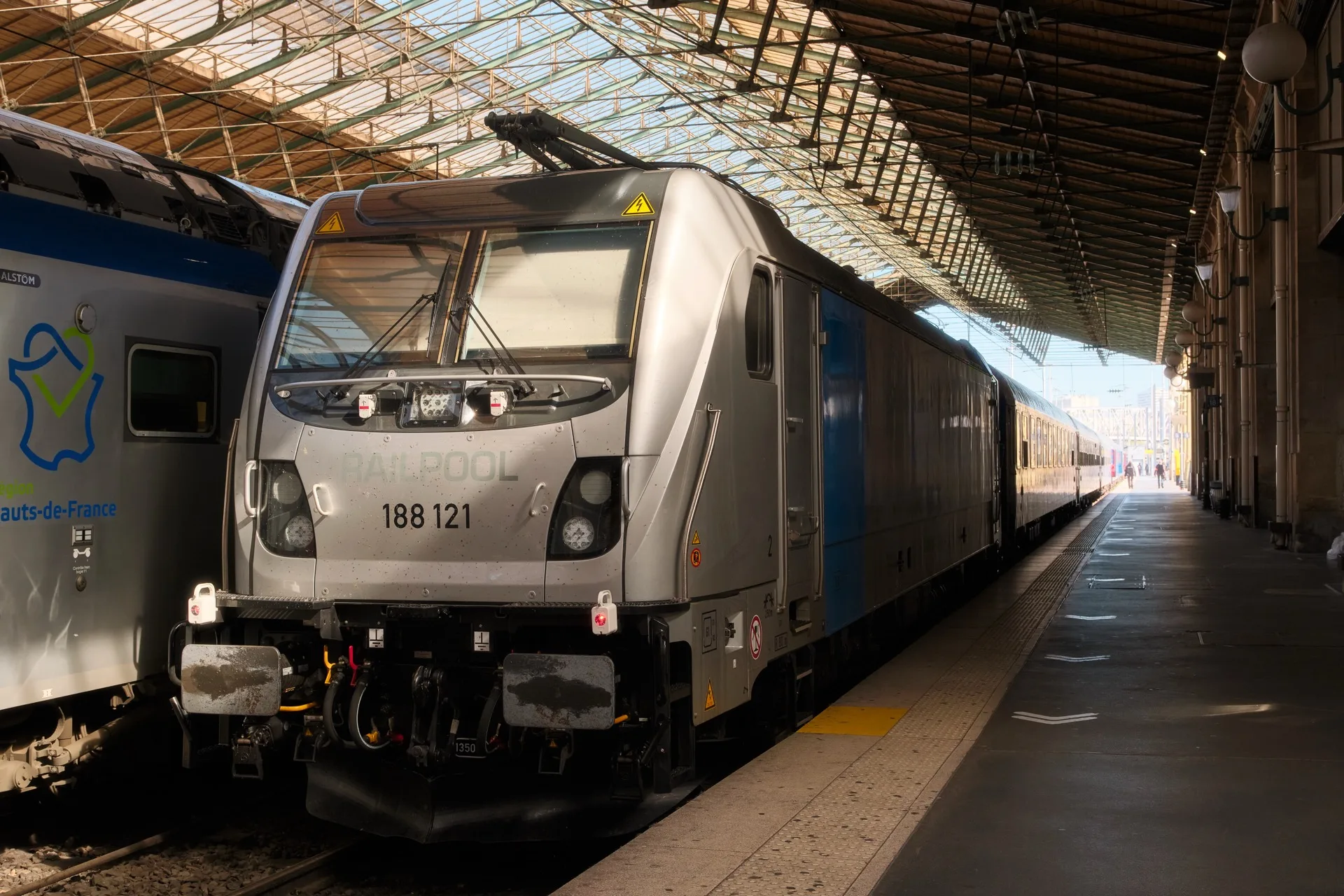
The European Sleeper night train connects Paris and Berlin three times a week. When planning your trip, choosing your compartment matters as much as choosing your dates: a seat, a shared berth and a private space make a difference to your night, your budget and your plans for the next day. Here’s how to organise the journey and your first days in Berlin, with points to check before booking.
Operating days
The regular schedule published by European Sleeper lists departures from Paris to Berlin on Tuesdays, Thursdays and Sundays. In the other direction, trains leave Berlin on Mondays, Wednesdays and Fridays. These days refer to the departure: arrival is the following day. This distinction is essential when booking accommodation or an activity.
For a short stay, start by thinking in terms of nights on site. A Tuesday departure from Paris means arriving on Wednesday; a Friday return from Berlin gives you two nights in a hotel before returning to Paris on Saturday. If you leave on Thursday and take the train back on Monday, you normally have three nights in Berlin, from Friday to Sunday. These are examples of how to plan a stay and should be checked against the services actually available for booking.
The frequency means you should check both directions before confirming your outbound journey. Moving your departure by a day can change the whole trip, since the next train may not run the following day. For a business meeting, concert or family event, choose the date you need to arrive, then work back to the corresponding train departure.
The regular service makes Berlin an option throughout the year. In autumn and winter, it is best to focus your first walk on one neighbourhood and plan a warm place to take a break. In spring and summer, a longer stroll after dropping off your luggage is easier to arrange. The season changes what you do once there; train times still need to be checked for each date.
Stations and timetables
In Paris, the service departs from Gare du Nord. The announced commercial route passes through Aulnoye-Aymeries, Mons, Brussels, Liège and Hamburg before reaching Berlin. You stay on the same train for this direct journey; the route through Belgium is part of the trip.
The carrier’s Paris–Berlin page gives a departure around 17:45 and an arrival around 9:59 as a reference, meaning a night and part of the morning. These times help explain the general schedule; they should not be used to plan a connection. The carrier’s date-specific journey planner accounts for service changes and engineering works; check it before buying, then again as your travel date approaches.
Pay particular attention to the Berlin station. The line’s general overview mentions Berlin Hauptbahnhof, the central station, but some services use a different station. When we checked, the departure on 30 October 2026 was listed as leaving from Berlin-Spandau. The station shown on your ticket and in the timetable for that day determines your local journey, both on arrival and for your return.
If you are travelling to Paris from another region, allow a buffer for the station transfer, your luggage and possible delays. Arriving at Montparnasse or Gare de Lyon does not mean you are ready to board at Paris-Nord. For an important booking or a long journey to Paris, compare a tight connection with arriving in Paris earlier in the day.
Choosing a compartment
European Sleeper offers four categories: Budget, Classic, Comfort Standard and Comfort Plus. The biggest difference is between a seat and a horizontal sleeping berth. Next come the number of occupants, bedding and compartment facilities. Coaches and their layouts can vary: the category and booking description matter more than an illustrative photograph.
Budget offers seats, either in a compartment or in an open-plan area, depending on the coach. This option is mainly for travellers who prioritise the cost of transport and are willing to spend the night in a seat. If you want to start sightseeing the next day, a berth is generally a better choice: you can lie down and better separate travel time from rest time.
Classic offers compartments that convert into berths for the night. A blanket, sheet and pillow are provided; toilets and washing facilities are in the corridor. You can book a shared space or a private compartment. With a shared booking, you choose a berth in a space that other travellers will also occupy. With a private booking, your group reserves its own space, subject to the capacity offered for sale.
For a solo traveller, a shared Classic berth offers a good compromise between sleeping comfort and budget. The operator offers compartments reserved for women; select this option when it is available. For a family or a group of friends, compare the total cost of separate berths with that of a private compartment. Being able to store your belongings together and organise the children’s bedtime may make the private option worthwhile.
Comfort Standard accommodates a maximum of three travellers in a compartment with beds made up. The carrier says the washbasin and toilets are in the corridor. Comfort Plus also accommodates up to three people, with a washbasin in the compartment and toilets elsewhere in the coach. Breakfast is included in Comfort Plus, while it can be added in the other categories.
So the word “Comfort” is not enough to make a choice. A couple who want to travel by themselves should check that the booking is private and confirm the number of occupants. A tall traveller or anyone concerned about accessing the upper berth should check the exact features of the coach and contact the carrier before paying. The priority is to book a berth you can use for the whole night.
Booking and budget
The European Sleeper website lets you search for available journeys and categories. Start with your outbound and return dates, the number of travelers, and the children’s ages, then compare compartments on that same basis. The price of a shared berth is shown per person; for a private space, check its capacity and the number of occupants actually entered.
To compare the train with another mode of transport, add up the costs for the entire trip: return journey, travel to Paris, local transport in Berlin, meals on board, and accommodation. The night on the train replaces a hotel night in your itinerary only if your plans would otherwise have required that night at your destination. It does not guarantee a room will be available first thing in the morning when you arrive.
Fare conditions can matter as much as the price difference. The official FAQ distinguishes Easy Night, which is non-refundable; Good Night, which allows a refund depending on how far in advance you cancel; and more flexible Flex Night. As of the verification date, Good Night provided a full refund up to thirty days before departure, then a half refund up to fifteen days before departure; Flex Night offered a full refund up to forty-eight hours before departure. Review the conditions attached to your chosen ticket before paying.
If your stay still depends on time off, an appointment, or another booking, compare fare flexibility explicitly. Check the rules for each journey and for your accommodation separately. A refundable room does not automatically make your train ticket refundable.
Holders of an Interrail Global Pass or Eurail Global Pass must reserve a seat on this train. The pass and reservation must be presented together; according to the operator’s FAQ, passes limited to a single country are not accepted. The carrier also states that the pass reservation option does not cover private compartments. So compare the pass option with a regular ticket based on the type of berth you want.
Overnight on board
Pack a small bag with what you’ll need between boarding and arrival: documents, a toothbrush, any regular medication, water, sleepwear, and morning essentials. This way, you won’t have to open your entire suitcase in the compartment. An eye mask and earplugs can help block out lights and the movement of shared accommodation.
The carrier includes luggage in the ticket and recommends one main bag and a small bag. Everyone should be able to carry and store their belongings safely. In a shared compartment, manageable luggage makes it easier to settle in; items you need overnight are more accessible in the small bag than under a pile of clothes.
Sleeping compartments can be locked from the inside, according to the train’s description. When you settle in, check how the door works, your berth number, and the toilets. If you need to be woken before your station, tell the staff: the operator notes that not all stops are announced, to let passengers sleep.
You can bring your own food for dinner. Staff offer drinks, snacks, and breakfasts; the route page says the dining car is not in service. So plan dinner around food you can carry or the services actually available, rather than expecting a restaurant on board.
The breakfast included in Comfort Plus should be distinguished from the option available as an add-on for other categories. Check what is included in your booking, especially if several people are traveling with different dietary needs. If you have strict medical or dietary requirements, bringing suitable food avoids depending on what is available during the journey.
Children and special requirements
Children aged three or under can travel free if they do not occupy their own seat or berth, according to the operator’s conditions. To reserve a separate place for them, select the child fare. Children aged four to eleven have a specific fare; enter their exact age in the search to see the applicable price.
For a family, a private compartment makes it easier to get ready for bed and organize belongings. However, check the berth layout, the actual capacity offered, and how easy it is to access the beds. Having a blanket and a small overnight kit ready before boarding avoids reorganizing all the luggage when the children start to get tired.
Dogs and cats are allowed for an additional fee and require a private compartment. Plan for this when searching, and include the animal in the booking. For an assistance dog, the carrier requests that you contact them separately; arrangements may differ from those for a pet.
Bicycles are not available for booking for 2026 according to current information from European Sleeper. If your stay depends on bringing your own bike, settle this before buying your ticket. Renting a bike in Berlin may be an alternative, to arrange separately.
You need to check accessibility directly with the operator. European Sleeper says its trains do not currently have all the facilities needed by passengers with reduced mobility. A folding wheelchair may be carried as luggage by prior agreement, but it is not possible to move around the train in a wheelchair. Contact the operator before purchase to describe your needs; assistance at departure and arrival stations must also be booked with the relevant organizations.
Your first day in Berlin
When you arrive, start by dropping your luggage at the hotel or at a suitable luggage facility near your station. Confirm in advance whether your accommodation can store your bags: the train’s arrival time and the time your room will be ready are two separate things. This keeps you from planning a first day of walking around with a suitcase.
Then keep your plans flexible. Lunch, a walk, and checking in at the hotel make for a reasonable arrival day after a night on the train. If you get off at Berlin Hauptbahnhof, the government district and the Spree make a good starting point for exploring the center. From another station, first head to your accommodation or your chosen neighborhood by local transport.
For a first visit, the area around Brandenburg Gate and Unter den Linden lets you see several landmarks in one outing. You can adjust the length of your walk to the weather and how rested you actually feel. A timed indoor visit is easier to schedule the next day, once your luggage is put away and you have a full day available.
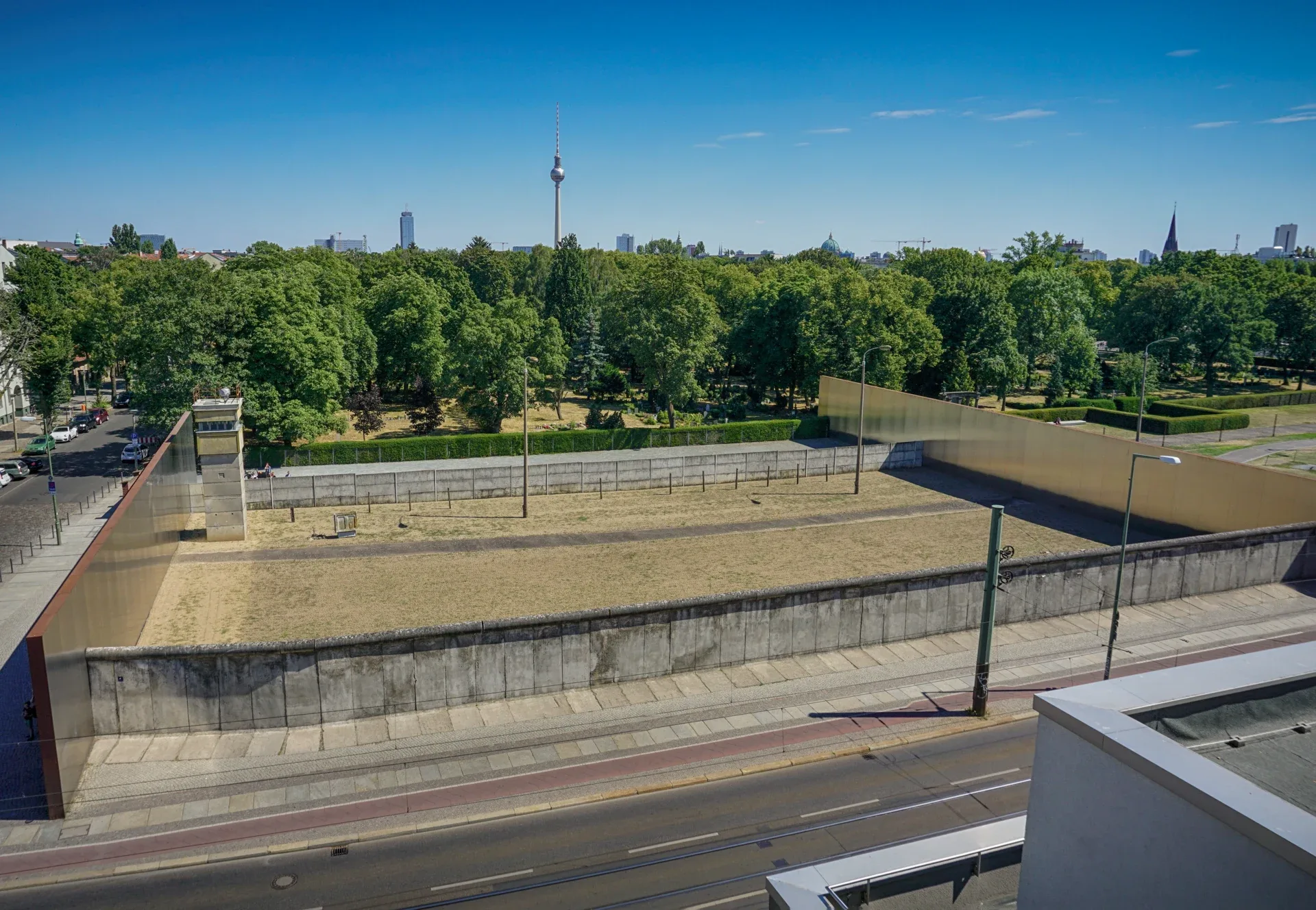
Plan to visit Bernauer Strasse during your stay as well. The Berlin Wall Memorial combines the historic site, an outdoor exhibition, and indoor exhibition spaces. The preserved border installations help explain the division of the city. Give it a dedicated visit rather than adding it to the end of an already overlong list of monuments.


A historical tour the following day
To connect central Berlin’s landmarks with the city’s history, a tour with a historian provides a narrative thread after your first night at the hotel. The activity featured here lasts three hours and is conducted in English, with a maximum group size of eight participants. The advertised route includes the Reichstag, Brandenburg Gate, Unter den Linden, and Museum Island.
The meeting point is in front of Café Einstein, Unter den Linden 42. The activity includes travel by public transport at certain points; tickets and meals are at your own expense. Treat the tour as a guided route through the center, and make your own way to the meeting point. Passing by the monuments does not include admission to their interiors.
This option suits travelers who are comfortable with explanations in English and want to understand the city’s key historical periods before continuing on their own. Schedule it for your second day, or later in your stay, to keep your arrival flexible. The price and reviews are displayed on the activity listing in the central catalog; booking this activity is separate from your train ticket.

Viator
Historical introduction to Berlin with a historian, in English
An introduction to Berlin’s history in English, scheduled for your second day after a night at a hotel, so your arrival by train can stay flexible.
- 3 hours
- 5/5 (11 reviews)
Maximum of eight travelers; historian guide advertised; English. General city-center route; public transport and meals are separate. Cancellation subject to 24-hour terms.
Cancellation policy
For a full refund, cancel at least 24 hours before the scheduled departure date.
From €130.00
View activityThe return journey and connections
Before leaving the hotel, check the Berlin departure station, the schedule, and travel information again. The word “Berlin” in an itinerary should be replaced with the name of a specific station for the return journey. Also allow time to collect your luggage and get to the platform without relying on a final visit that might run late.
If you are continuing to another French city after Paris-Nord, compare the arrival station with the departure station for your next train. A connection to Lyon, Rennes, or Bordeaux may require traveling across Paris. Transfer times should account for changing stations, finding your way through the transit system, and carrying your luggage.
When tickets are purchased separately, check the terms that apply in the event of a delay and the flexibility of the onward ticket. A comfortable buffer may cost you a few hours in Paris, but it makes it easier to organize a return trip with children or a long journey to the departure station. For an important appointment, arriving earlier remains the safest planning choice.
FAQ
Does the Paris–Berlin night train run every day?
No. The regular schedule lists departures from Paris on Tuesdays, Thursdays, and Sundays, and from Berlin on Mondays, Wednesdays, and Fridays. Arrival is the day after departure. Check services for your date in the journey planner, especially when engineering works affect the service.
How long does the journey take?
The sales page gives an approximate journey time of sixteen hours, from a late-afternoon departure to arrival the following morning. Times and the Berlin station may vary depending on operations. Use the dated timetable and your ticket to plan a connection, luggage drop-off, or activity.
Which category should I choose for a good night’s sleep?
Classic lets you travel lying down in a couchette with bedding provided. Comfort Standard and Comfort Plus offer compartments with up to three beds, with different amenities. To travel only with your companions, choose a booking explicitly marked as private. Budget is a seat and is mainly for travelers prioritizing cost.
Are breakfast and toilets included?
Breakfast is included in Comfort Plus; it can be added in the other categories. Toilets are outside the compartment, including in Comfort Plus, which has a private washbasin. In Classic and Comfort Standard, toilet facilities are also in the corridor. Check the exact category before booking.
How much does a Paris–Berlin ticket cost?
The price depends on the date, category, whether the compartment is shared or booked privately, and the passengers registered. Compare a return trip for the same travelers, including cancellation terms and the options you want. To find the total cost of the trip, add meals, transport to and from the stations, and nights in Berlin rather than comparing only a headline fare.
Can I use Interrail on European Sleeper?
Yes. The operator accepts the Interrail Global Pass and Eurail Global Pass, with a reservation required. According to its FAQ, one-country passes are not accepted. Pass reservations do not provide access to private compartments; if you want a private compartment, compare with a regular ticket for that option.
Can I travel with a child or a pet?
Yes, by entering the travelers and the pet when searching. Younger children may share a place under the operator’s terms; a separate berth requires an appropriate booking. Dogs and cats travel in a private compartment for an additional fee. Check assistance requirements and berth details before paying.
Can I book a tour for the morning of arrival?
A self-guided walk lets you adjust the itinerary to your arrival time and how tired you feel. For a paid activity at a fixed time, we recommend choosing the following day instead. This gives you time to drop off your luggage, get to the hotel, and start the tour without depending on the train’s punctuality.
Sources and checks
Plan your visits and check current conditions.
- Paris–Berlin by night train ↗
European Sleeper · Accessed October 31, 2026
What this source supports
Operating days, stations served, timetable references and booking conditions, children, pets, Interrail and bicycles.
- Dated timetables and regular schedule ↗
European Sleeper · Accessed October 31, 2026
What this source supports
Three departures per week in each direction; example: ES 474 on 30 October 2026 from Berlin-Spandau, arriving in Paris on 31 October.
- Train categories ↗
European Sleeper · Accessed October 31, 2026
What this source supports
Budget, Classic, Comfort Standard, Comfort Plus, bedding, toilets, meals and luggage.
- Accessibility and assistance ↗
European Sleeper · Accessed October 31, 2026
What this source supports
Limited accessibility on the rolling stock; folding wheelchair accepted as luggage by agreement, and assistance at the station.
- The Berlin Wall Memorial at Bernauer Strasse ↗
Stiftung Berliner Mauer · Accessed October 31, 2026
What this source supports
Historic site with indoor and outdoor exhibitions.
- Introduction to Berlin with a historian ↗
Viator / Context Travel · Accessed October 31, 2026
What this source supports
Active product 10847P37 checked via Partner API: three hours, English, maximum eight travellers, departure from Unter den Linden 42; public transport and meals are separate.
Viator — activity pages
Source for the activity information below.Affiliate links: Odyvero may earn a commission when you book through this article’s buttons.
- Historical introduction to Berlin with a historian, in English ↗
Accessed November 1, 2026


