 odyvero
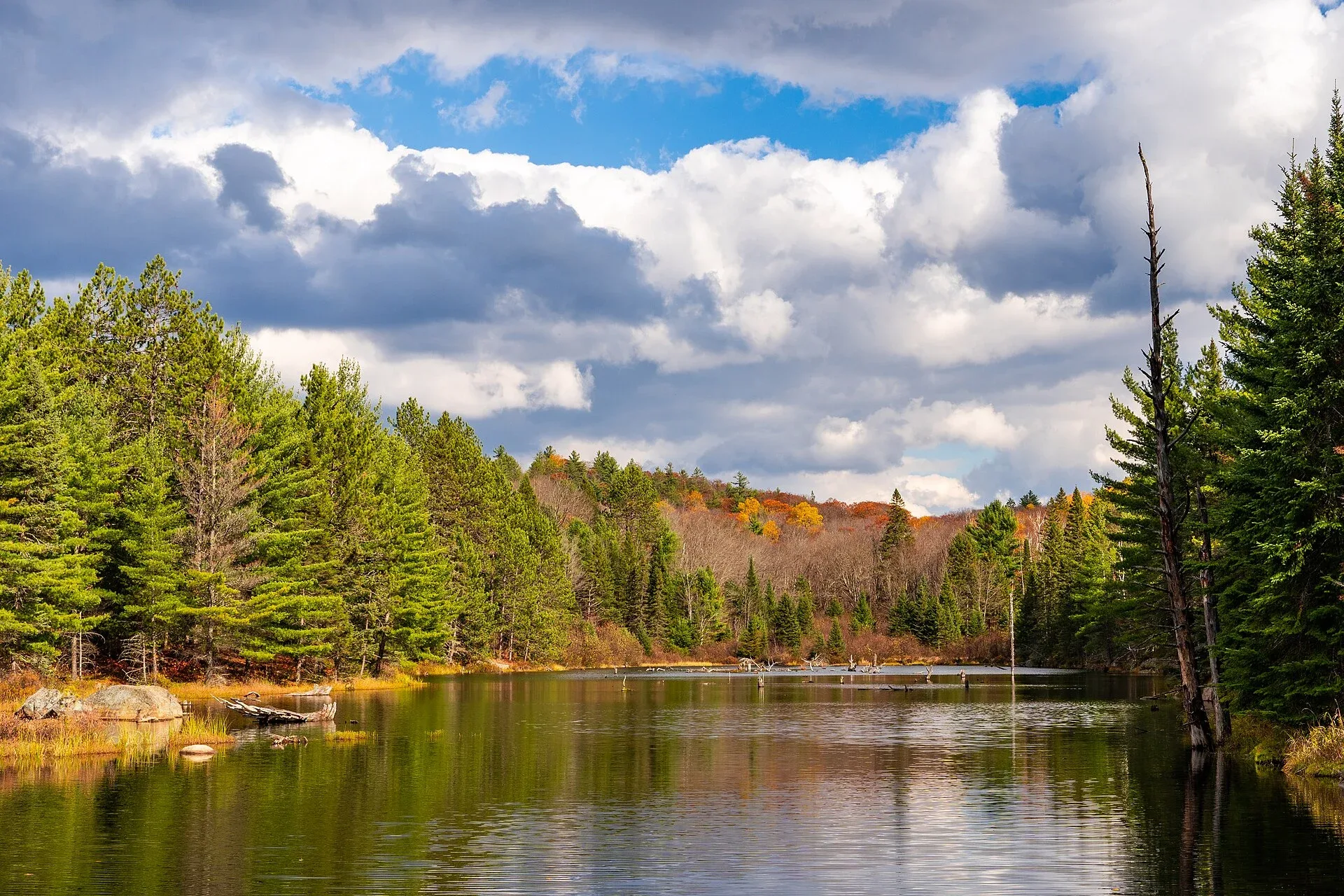
From Algonquin’s lakes to the overlooks of the Outaouais, then to the paths of Mount Royal: this route connects Ontario and Quebec with four bases and plenty of time outdoors. Here’s how to divide ten days on the ground, choose the fall-color season and plan reservations without turning the trip into a highway marathon.
Fall-color season
In Algonquin, a lake may reflect a hillside that is still red while nearby birches have already lost some of their leaves. The autumn calendar varies by tree species, temperatures, wind and location. To include Algonquin, Gatineau and Montreal in one trip, we would prioritize late September or early October, while keeping two forest days flexible. This is a planning choice, not a guarantee that peak colors will coincide.
Ontario Parks says Algonquin’s colors typically appear between mid-September and mid-October. Bonjour Québec gives a broader province-wide range, from mid-September to late October. The two timeframes apply to different areas: the last leaves in Montreal do not tell you what the maples are like in Ontario’s highlands.
Algonquin’s official report dated October 29, 2026, illustrates this difference: it showed 100% color change, but also 90% of leaves fallen. For a late departure, check both figures. A forest that has almost entirely changed color may already be quite bare. Use the tracking maps to choose your outings closer to departure; several months ahead, they cannot predict the next season.
The phrase “Indian summer” often comes up in connection with these trips. Plan your stay primarily around the foliage and days long enough for walking. You can’t count on a warm spell, and early mornings may call for a beanie, light gloves and a warm jacket. The trip is still worthwhile in cool weather: the lakes, woodlands and city visits do not depend on an exceptional summer-like week.
The route’s four bases
The trip starts in Toronto and ends in Montreal. This avoids returning to your arrival airport, but means comparing multi-city flights and one-way car rental fees. Plan for nine nights: one in Toronto, two near Huntsville or Dwight, three in Ottawa and three in Montreal. Day ten is the departure day.
Here, ten days means time on the ground. A very late-arriving flight reduces the first stop to checking in; arriving the day after leaving France can also affect your count. Confirm your actual flight dates before booking hotels. The first night in the city lets you recover without immediately driving toward the forests.
This route does pass through the province of Quebec: the day at Gatineau Park takes place in the Outaouais, followed by the stay in Montreal. Quebec City, Charlevoix and Tadoussac would require additional stops. We would save them for a longer trip, preserving both nature stays instead of adding a string of one-night stops.
The driving times below are planning allowances, not guaranteed travel times, and exclude lengthy visits. Allow approximately three to four hours between Toronto and your base near Algonquin, four to five hours to reach Ottawa from the western area via the Highway 60 corridor, then two and a half to three hours between Ottawa and Montreal. Your accommodation’s address, traffic and roadworks can significantly affect these estimates.
Day 1 — Toronto on foot
After arriving, choose a hotel where you can walk out for dinner. A short stroll downtown or near Lake Ontario is enough to get a feel for Toronto. The towers, major intersections and waterfront offer an initial contrast with the wooded stops ahead. If your flight arrives late, the plan can simply be a meal and a full night’s sleep.
For this first day, we wouldn’t book a fixed-time activity just a few hours after landing. Formalities, luggage and the transfer make your arrival time in the city uncertain. A timed visit is better planned for an additional day before the road trip begins.
You can wait until the next day to pick up the car. Still, compare the cost and hours for a downtown pickup with those at the airport, taking your hotel into account. Keep the pickup straightforward so you can inspect the vehicle and load your bags without driving back across the whole city. In the evening, buy your first snacks and a supply of water for the road.
Day 2 — Toward Huntsville and Dwight
This day takes you to the western entrance of Algonquin’s Highway 60 Corridor. Huntsville offers a range of services; Dwight puts you closer to the park’s first stops. Check the accommodation’s exact location: two places advertised as “near Algonquin” can mean very different early-morning drives. A kitchen or an early breakfast can also make it easier to set out for a hike.
Set off after getting enough sleep, with a lunch break planned along the way. The afternoon should allow for traffic leaving Toronto, shopping, and settling in. If you have time and daylight left, a short walk around your accommodation offers a first glimpse of the landscape. A long hike does not naturally fit into this transfer day.
Prepare the next day’s picnic before dinner. Ontario Parks recommends filling up before entering the corridor: the last places to stock up are around Huntsville or Dwight to the west, and Whitney to the east. Download maps, confirmations, and directions to your accommodation. You should not need mobile service to find a reservation or your way back.
Day 3 — Algonquin’s Lakes
Devote your first full day to the Highway 60 Corridor. This road crosses an accessible part of the park and provides access to trailheads, lakes, and interpretive sites. It lets you discover several kinds of landscapes without planning a backcountry expedition. Choose your main walk before setting out, then add a second, shorter outing depending on the group’s energy.
For a viewpoint, Lookout Trail is a 1.9 km loop. The park estimates about an hour and rates it moderate, with relatively steep, uneven terrain. So the short distance does not mean an entirely flat walk. Allow time for the climb, stops at the lookout, and a careful descent when wet leaves cover the footholds.
Spruce Bog Boardwalk offers a different approach: a 1.5 km loop, rated easy and estimated at about an hour, with boardwalks through black spruce bogs. The landscape is lower, closer to the water and vegetation. Pairing this walk with the lookout lets you experience more than a succession of panoramas. Still, check the day’s access conditions before deciding which to visit first.
If you are used to hiking, Track and Tower makes for a more demanding day: 7.5 km and about four hours according to Ontario Parks, with a viewpoint over Cache Lake. In that case, save most of your energy for this hike rather than adding every short loop. The park’s times are estimates; photos, breaks, and wet ground can easily make the outing longer.
Between visits, use picnic areas and authorized parking lots. Highway 60 is still a road in use: shoulders are not improvised lookouts. For the drive back to Dwight or Huntsville, leave enough daylight, and skip the last stop if it means finishing a walk in the dark.
Day 4 — Algonquin and Ottawa
The second day lets you cross the corridor to its eastern entrance, then continue on to Ottawa. It gives you some flexibility with the weather: if the previous day was very rainy, plan a short walk here, provided you have the required permit. The drive already takes up a significant part of the day; a long loop of several hours would make for a late arrival in the city.
The Algonquin Visitor Centre and the Logging Museum trail provide context for the landscapes you have been travelling through. The museum’s interpretive trail is 1.3 km long and explores the history of logging. Check opening dates for buildings and services; an outdoor visit and access to indoor facilities may vary by season.
Then leave the park for Ottawa, with a meal break planned. Stop for photos only in designated areas, even if a gap in the trees looks tempting from the road. In the city, a centrally located hotel will let you leave the car behind for the next day’s visits. Keep the evening simple: check in and have dinner, then prepare for your day in the city.
Day 5 — Ottawa and its Museums
Ottawa offers a day less dependent on the weather between your two forest stops. Divide your time between the area around Parliament, a walk along the Rideau Canal, and one museum chosen to suit your interests. Tours inside Parliament and exhibitions have their own reservation requirements to check; the facades and outdoor walks do not require the same kind of planning.
The Canadian Museum of History, across the river in Gatineau, is a good fit for a day focused on the country’s societies and stories. The National Gallery of Canada offers a different focus, centred on art. Choose one as your main visit. Rushing from one institution to the other and spending only a few minutes in each gallery would leave you without enough time to take in what you are seeing.
The ByWard Market is a natural place to stop for a meal or a stroll. Leave part of the afternoon free, too: after two days of driving and walking, that flexibility helps you prepare for the next day’s outing. If today turns out to have the best weather, swap Days 5 and 6. Three nights in Ottawa make this change possible without moving your luggage.
Day 6 — Gatineau Park
From Ottawa, cross into the Outaouais for a day in Gatineau Park. The National Capital Commission presents it as a conservation park with several areas and access points. Plan the precise starting point for your walk and how you will get there. A general address for “Gatineau Park” is not enough to plan the day.
Pink Lake has a 2.3 km loop with stairs and interpretive signs. Despite its name, the water has a green hue; the name comes from a family that settled in the area. The site lets you take in the colours of the shoreline while learning about a lake whose water layers mix very little. Swimming, watercraft, and pets are prohibited there.
For a walk focused more on panoramic views, King Mountain has a 1.9 km trail and ten lookouts. The terrain includes climbs and is not suitable for all mobility levels. This is a good main destination if you want to look out over the Ottawa River valley. Choose between it and Pink Lake based on what appeals to you, then add a short stop only if access and timing allow.
Parkway schedules vary, and some visits may require a shuttle. Check NCC information for your season and day of the week before relying on car access. A closure at the nearest parking lot can add several kilometres of walking: assess alternative access points before setting out, not at the last minute with tired children.
The NCC also lists Cross Loop Road in the Meech Creek Valley: a 5.6 km round trip on a wide gravel road with gentle slopes. This option suits visitors who prefer a rural walk to climbing the steps of a lookout. The southern part of the park can be very busy; visiting on a weekday and choosing your route in advance make the day easier to plan.
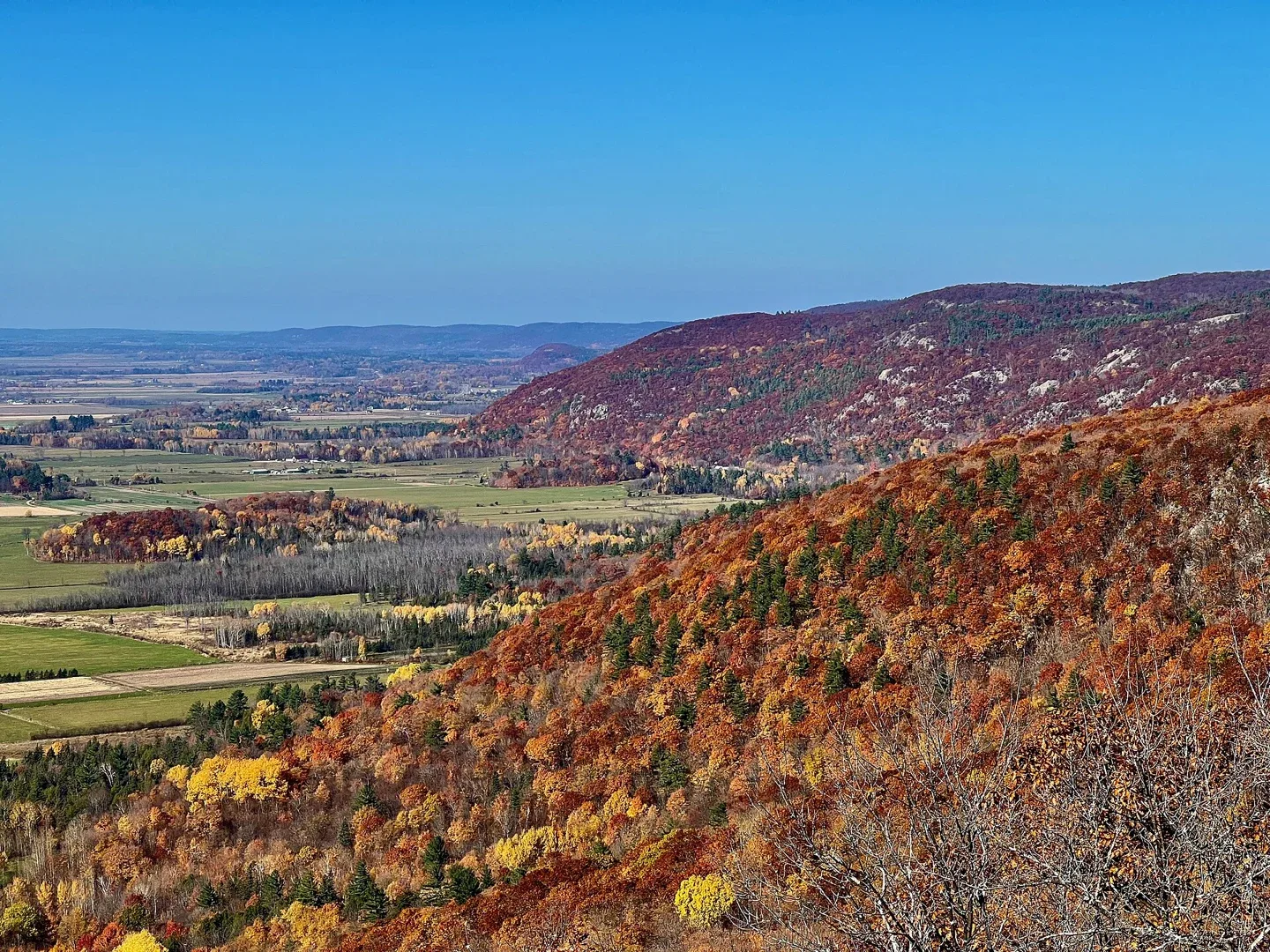
Public domain ; réduction et conversion WebP sans agrandissement.
Day 7 — Arrival in Montreal
After breakfast, head to Montreal. This shorter drive leaves the afternoon free to check in, return the car if needed, and take a first walk around the neighbourhood. Plan ahead for the rental-car return, its opening hours, and your luggage: for a three-night stay, choosing a hotel near the metro may be more useful than keeping a parking space.
In Montreal, you can get around on foot and by public transit. Accommodation downtown or near a metro station makes Mount Royal, the Mile End, and Old Montreal easier to reach. Compare the total cost of the stay, including parking if you keep the car, rather than just the advertised nightly rate.
Keep the first late afternoon free near your accommodation. Find the metro entrances, work out the next day’s route, and choose a restaurant where you can have a relaxed dinner. This free time also allows for a slower-than-expected arrival. Three nights give you two full days in Montreal without scheduling an important visit just before your return flight.
Day 8 — Mount Royal and the Mile End
Mount Royal brings together wooded paths, city views, and a proper walk without leaving Montreal. The park was designed by Frederick Law Olmsted. The Kondiaronk Belvedere looks out toward downtown and the St. Lawrence River, providing a clear landmark in the geography of this final stop. Choose a climb that suits your fitness level, and wear the shoes you use for hiking.
The visit is better if you leave time between viewpoints. Paths through the trees let you observe the differences in foliage, while the area around Beaver Lake offers a different atmosphere. The park is only partially accessible, so if you have a stroller or specific mobility needs, plan your route rather than automatically following the shortest walking route.
Mile End then offers a more food-focused discovery. Secret Food Tours’ advertised three-hour tour combines a walk through the neighborhood with tastings, including bagels, smoked meat, and poutine. The guide speaks English, and the meeting point is at Théâtre Rialto on avenue du Parc. The menu may change; notify them of any allergies and dietary needs before booking.
We would choose this activity to replace lunch and discover several specialties with a guide. Schedule the Mount Royal walk before or after it, depending on the actual time slot available, and leave a buffer to get to the meeting point. A shorter morning in the park is better than rushing to arrive on time. If you prefer to eat on your own, you can also explore the neighborhood independently, choosing one place that appeals to you.


Viator
The Mile End through its specialties
To replace lunch on day 8 with three hours of tastings in Mile End; English-speaking guide, meeting point at Théâtre Rialto, and dietary needs to be reported before booking.
- 4.9/5 (3,183 reviews)
Three hours of walking and tastings with an English-speaking guide, starting from the Rialto Theatre. Tastings include bagels, smoked meat, and poutine; the menu varies, and dietary requirements should be mentioned before booking.
Cancellation policy
For a full refund, cancel at least 24 hours before the scheduled departure date.
From CA$109.20
View activityDay 9 — Old Montreal
The final full day focuses on the historic district and the riverfront. Old Montreal is well suited to a walk connecting its squares, shopping streets, and façades, rather than driving between them. After the forest scenery, the buildings’ materials and the layout of the streets offer another way to read the landscape.
Guidatour’s tour spends two hours in the neighborhood. The listing offers guides in French or English, depending on the option, with departure near the obelisk in Place d’Youville. The route includes squares and the areas around major monuments. Notre-Dame is viewed from the outside during this tour; a visit inside the basilica must be arranged separately.
We think this activity is especially useful at the end of a trip to connect places with their history, rather than simply photograph the façades. Explicitly select a French-language departure if that is your preference. Then leave the afternoon free to return to a favorite street, have lunch, or continue toward the Old Port, without adding an excursion outside Montreal.

Viator
Old Montreal on foot with Guidatour
To spend two hours learning about the neighborhood’s history on day 9, then continue toward the river at your own pace; select the French-language departure. Notre-Dame Basilica is viewed from the outside.
- 4.8/5 (2,704 reviews)
Two hours on foot in the historic district, with a French- or English-speaking guide depending on the option. Departure from Place d’Youville; Notre-Dame is presented from the outside, and interior access is separate.
Cancellation policy
For a full refund, cancel at least 24 hours before the scheduled departure date.
From CA$35.00
View activityDay 10 — Departure
The final morning depends on your flight time. If you have a late departure, a short walk and lunch near your accommodation are easy to cut short. For an earlier flight, focus on the transfer and airport formalities. Leaving your bags at the hotel and doing an activity across town always means an extra trip to retrieve them.
If you kept the car, allow time for returning it, refueling if needed, and getting to the terminal. The itinerary ends in Montreal: a return flight from Toronto requires another day of travel and changes the balance of these ten days. Check this before comparing two tickets whose prices seem similar.
Priority reservations
At Algonquin, reserve the right area: “Highway 60 Corridor.” A permit for another park access point does not automatically let you use this one. Under the rules consulted for 2026, day-use permits could be obtained up to five days in advance, starting at 7 a.m. Recheck the process for your travel season, and make sure the permit is associated with the correct license plate.
If you visit the park on two days, check that each day is covered. A lodging reservation in Huntsville does not replace a park entry permit. Some trails also have closures or special conditions in the fall: choose your loop after reviewing the alerts, and keep an authorized alternative within the same corridor.
First book your nights near Algonquin, flights, and a car rental with a one-way return. Book guided tours in Montreal next, once the days are settled. In Gatineau, prioritize checking access times and the transportation options available during your actual travel dates. No city tour ticket replaces these checks with the relevant operators.
Budget and packing
To compare two trip plans, add up nine nights, the rental car with its insurance and one-way fees, fuel, parking, park access, meals, and the activities you choose. Rates vary too much by date and room type for a single amount to accurately represent this itinerary. The activity listings show the available pricing details without repeating them for each day.
A car is most useful between Toronto, Algonquin, and Ottawa, and then for the trip to Montreal. City parking can become an avoidable expense after you return the car. Conversely, a room with facilities for breakfast and picnics makes early starts easier. Compare these costs together: more distant, cheaper lodging can add a lot of driving.
Pack layers you can take off while walking, a waterproof jacket, grippy shoes, and a small bag for water, a picnic, and warm clothing. Add a flashlight, a power bank, and maps you can access offline. Wet leaves sometimes hide roots and rocks; set your pace according to the terrain, not a walking time you read before the trip.
Observe wildlife from a distance; do not feed or approach animals. A moose is a possible sighting, never a scheduled appointment. Store food securely and use the designated waste facilities. These practices matter even on a short visit, when your vehicle and services may seem close by.
FAQ
When is the best time to see fall colors in Canada over ten days?
For this itinerary between Algonquin, Gatineau, and Montreal, late September and early October provide a solid basis for planning. Ontario Parks says Algonquin’s fall colors typically run from mid-September to mid-October. Exact dates change every year: check recent reports, then adjust your hiking days without expecting every location to reach peak color at the same time.
Can you follow this itinerary in late October?
Yes, for the scenery, cities, and walks that are still open, but much of Algonquin’s foliage may have fallen. The report for October 29, 2026, said 90% of the leaves had fallen. Late in the season, give more time to city visits, check what is open, and shorten outings according to the available daylight. A trip focused on red maples should be planned earlier.
Do the ten days include flights from France?
The itinerary includes ten days on the ground and nine nights. Your arrival time determines how much of the first day remains, and the return flight takes up part of the last. If you have only ten days including all travel, first calculate the actual number of nights in Canada, then shorten one stop rather than keeping every visit on a compressed schedule.
Do you need a car for Algonquin?
A car makes this self-guided itinerary, its lodging, and hikes along the Highway 60 Corridor much easier. Organized transportation from Toronto is available on some dates, but its round trip and schedule require a different trip plan. In Montreal, you can return the car and continue on foot and by public transit.
Which permit should you book for Algonquin’s Highway 60?
Choose “Highway 60 Corridor” in the Ontario Parks system. Permits are tied to a specific access point and date; check both days of your visit. The process consulted for 2026 opened reservations five days in advance, at 7 a.m. Review the rules for your season, alerts, and trail conditions before purchasing.
Can you visit Quebec City on this trip?
The itinerary visits the province of Quebec via the Outaouais region and Montreal, but does not include its capital. To include Quebec City, add nights or replace part of the stay. An extra round trip during your Montreal days would take time away from the visits and walks that set the pace of this itinerary.
Which hikes should you choose with children?
Spruce Bog Boardwalk in Algonquin offers a short 1.5 km loop, rated easy by the park authority. In Gatineau, Cross Loop Road offers a gravel path with gentle slopes, and you can adjust the distance by choosing your turnaround point. Pink Lake has stairs, while King Mountain has more elevation gain: choose based on age, walking experience, and trail conditions, and bring water and warm clothing.
Can you add a canoe trip in Algonquin?
The park offers rental options, but an autumn outing requires checking whether the rental provider is open, the weather, water temperature, and the group’s experience. If needed, book an option suited to beginners, with the required safety equipment. It replaces a hike that day; don’t automatically add it to the drive to Ottawa.
Sources and checks
Plan your visits and check current conditions.
- Algonquin in autumn: access and reservations
Ontario Parks · Accessed November 1, 2026
What this source supports
Guide dated September 1, 2026: colors typically appear from mid-September to mid-October; permits for the Highway 60 Corridor can be booked up to five days ahead starting at 7 a.m.; separate areas; parking only. Rules should be checked again for a new season.
- Ontario fall-color tracking
Ontario Parks · Accessed November 1, 2026
What this source supports
Algonquin, report dated October 29, 2026: color change 100%, leaf fall 90%. This past report does not predict the next season.
- Algonquin Park trails and activities
Ontario Parks · Accessed November 1, 2026
What this source supports
Lookout, 1.9 km, 1 hour, moderate; Spruce Bog, 1.5 km, 1 hour, easy; Track and Tower, 7.5 km, 4 hours, moderate; Logging Museum, 1.3 km; canoe rentals. Durations are provided by the park authority.
- Planning an Algonquin visit
Destination Ontario · Accessed November 1, 2026
What this source supports
A car is recommended; transportation and tours from Toronto are available on certain dates; interpretive programming. Travel times between stops and overnight arrangements are editorial estimates and choices.
- Quebec’s fall-color map
Bonjour Québec / Ministry of Tourism · Accessed November 1, 2026
What this source supports
Province-wide period from mid-September to late October; 2026 map updated October 29; distinguishes peak color from the end of foliage. No peak date is guaranteed for the next season.
- Gatineau Park
National Capital Commission · Accessed November 1, 2026
What this source supports
A conservation park with multiple access points and heavy use in the south; check hours and closures.
- Pink Lake: trail and conservation
National Capital Commission · Accessed November 1, 2026
What this source supports
2.3 km loop with stairs; green color, named after a family; distinct water layers; swimming, watercraft and pets prohibited. Road access depends on varying schedules.
- King Mountain: trail and lookouts
National Capital Commission · Accessed November 1, 2026
What this source supports
1.9 km loop, ten viewpoints, trail not universally accessible; check access and season.
- Autumn drives in Gatineau Park
National Capital Commission · Accessed November 1, 2026
What this source supports
Cross Loop Road, 5.6 km round trip, a wide gravel path with gentle slopes; access and shuttles vary, with no future schedule asserted.
- Mount Royal Park
Tourisme Montréal · Accessed November 1, 2026
What this source supports
A park designed by Olmsted; Kondiaronk Belvedere overlooks downtown and the St. Lawrence River; partially accessible.
- Planning a visit to Ottawa
Tourism Ottawa · Accessed November 1, 2026
What this source supports
Context on the capital, national museums, walks and proximity to nature. No promise of indoor access to Parliament.
- Canadian Museum of History
Canadian Museum of History · Accessed November 1, 2026
What this source supports
Museum in Gatineau with collections and historical narratives, including a permanent exhibition about First Peoples. No hours or temporary exhibitions are guaranteed to remain unchanged.
- Montreal Mile End food tour with bagel, poutine and 7 tastings
Viator / activity operator · Accessed November 1, 2026
What this source supports
Active individual listing rechecked via Partner API: duration, language, meeting point, inclusions and restrictions. Odyvero-tracked link and supplier photo of the exact product in the main offer; no future availability guaranteed.
- The Original: Old Montreal walking tour by Guidatour
Viator / activity operator · Accessed November 1, 2026
What this source supports
Active individual listing rechecked via Partner API: duration, language, meeting point, inclusions and restrictions. Odyvero-tracked link and supplier photo of the exact product in the main offer; no future availability guaranteed.
Viator — activity pages
Information about the offers featured in this article.Affiliate links: Odyvero may earn a commission when you book through this article’s buttons.
- Viator : Old Montreal on foot with Guidatour
Accessed November 1, 2026
- Viator : The Mile End through its specialties
Accessed November 1, 2026


