 odyvero
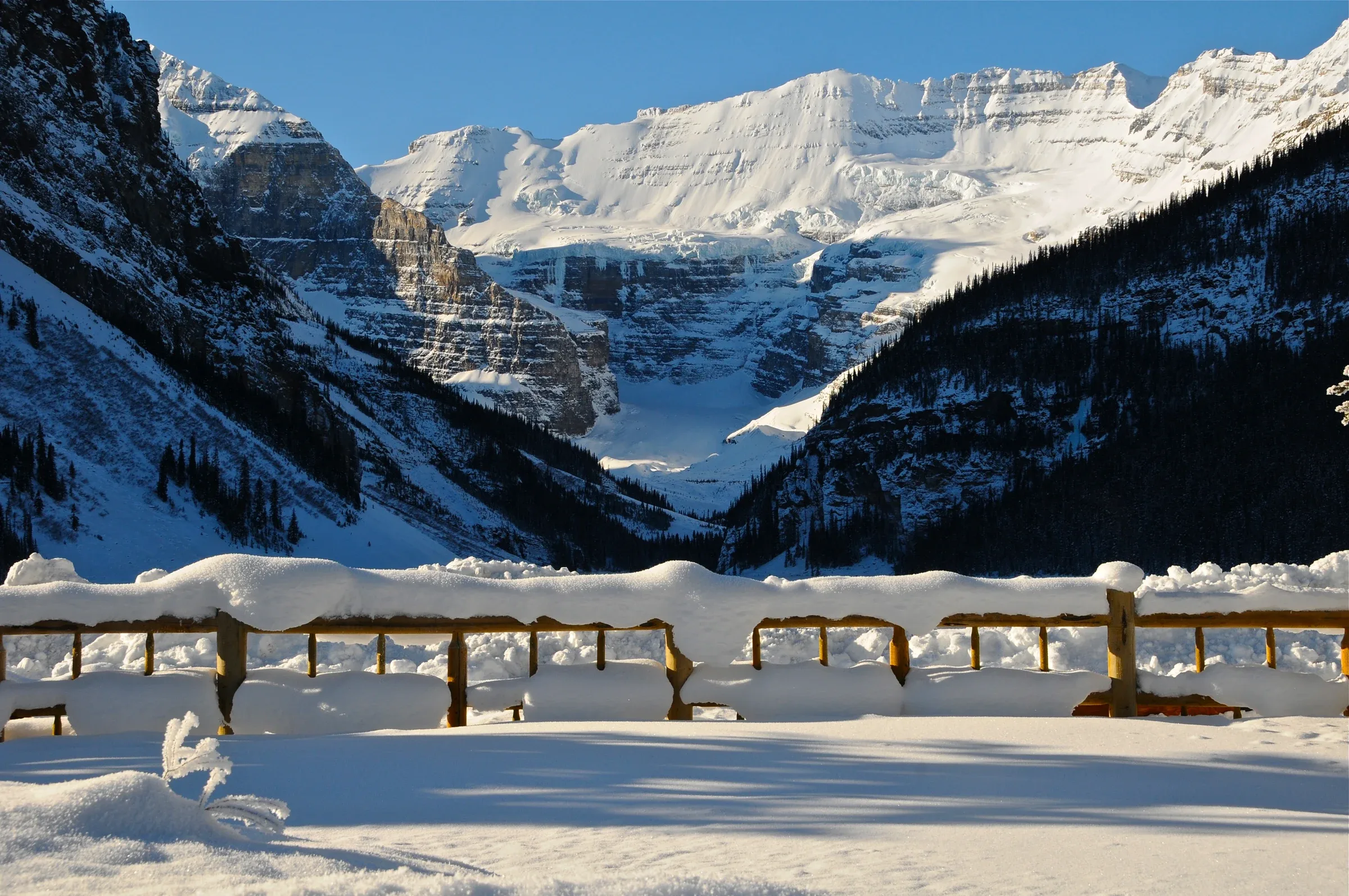
Lake Louise remains accessible after the Moraine shuttles have finished for the season. Around Banff, forest walks, a gondola-accessed summit, and Yoho’s landscapes also make it possible to plan a stay without skiing. For November 2026 to January 2027, here are eight outings to choose from based on snow conditions, your mobility, and the time you have, along with closures that genuinely affect your plans.
November, December, or January
In November, plan your stay first around the landscapes accessible from the valleys. The transition between frozen ground, snow, and ice can make a short walk more challenging than its distance suggests. Snowshoes are not always useful as soon as the first snow falls: Parks Canada generally places the best snowshoeing season between late December and early April. For a first trip, the shores of Lake Louise, Fenland, and Cave and Basin offer stops that are easy to shorten.
In December, snow activities take up more of the itinerary, depending on conditions. Keep a flexible day rather than filling the schedule with a string of non-changeable commitments. Calling Christmas the “off-season” is misleading: you are also visiting a ski and holiday destination. Book your accommodation and the activities that matter to you, then adapt your independent walks to the weather. Cave and Basin, for example, lists a closure from December 14 to 17, 2026, and on December 25.
In January, a snow-focused stay makes more sense than a trip motivated by turquoise lakes. Surfaces may be completely white, the terrain can be picked out in low-angle light, and outings may require more warm-up breaks. However, no date on the calendar guarantees that ice is safe to walk on or that a road is open. Decide whether to take the more distant excursion after checking conditions, rather than automatically moving a trip canceled due to ongoing danger to the following day.
Moraine and Johnston: access
Moraine Lake is not included in these eight suggestions. In 2026, Parks Canada’s shuttles ended service on October 12; the road remains off-limits to private vehicles year-round. A tour whose title still includes “Moraine Lake” may offer a completely different winter itinerary. The listings selected below provide alternatives for exactly this reason: read the option that applies to your date before paying.
A trail on Moraine Lake Road does not provide ordinary winter access all the way to the lake. The groomed route ends before avalanche paths. For a sightseeing trip, choose other landscapes in the area instead of making a long trek toward Moraine.
Johnston Canyon requires a separate check: since October 13, 2026, Parks Canada has listed a closure of the trail from the parking lot to the Lower and Upper Falls, as well as the P1 parking lot and its facilities. No confirmed reopening date was found for this guide. Commercial tour listings do not always reflect this situation. Check the official bulletins before booking an excursion that still advertises the canyon; the following eight outings let you plan your trip without relying on it.
Lake Louise in winter
For a first introduction to the Rockies, Lake Louise is the outing to prioritize if you have just one full day. From the Chateau area, your gaze travels up to the valley’s high walls. In winter, the appeal lies more in the terrain, forests, and contrasts in the snow than in the color of the water. Arriving to find a white surface is entirely in keeping with the season.
You can stay in the first section of the shore or extend your walk along the Lakeshore Trail, depending on conditions. Parks Canada lists this trail as 2.3 kilometers one way. You do not have to reach its end: with children or in very cold weather, a shorter walk still offers the essential views. Follow the signs and respect avalanche areas; in winter, the summer routes to Lake Agnes and the Plain of Six Glaciers require specific skills and equipment. The teahouses are closed this season.
From Banff, Roam Route 8X connects downtown, Lake Louise Village, and the lakeshore daily, year-round. Check the departures and the last return trip for your day, and plan to wait outdoors. The village and the lake are separate stops: make sure you know which one is right for your walk. For skating, check separately which areas are prepared and what the conditions are; seeing visitors on the ice is not enough to decide it is safe to go out.
Fenland and the Bow River
Fenland is suitable for a first outing after arrival, or for a morning when you would rather stay close to Banff. The interpretive trail winds through an old spruce forest. People come here to walk under the canopy, look for tracks, and take time to notice the details of the forest floor. This more intimate scale complements the distant panoramas of Lake Louise or the Icefields Parkway.
Parks Canada’s detailed description gives a 2.1-kilometre loop with no significant elevation gain. The trailhead is west of Mount Norquay Road; downtown Banff is said to be about a twenty-minute walk away. You can also start from the Central Park area and follow the river to the trailhead. Add this approach to your time outdoors, especially if you plan to walk back to your hotel.
The town’s proximity makes it easy to take a short family outing. It does not eliminate patches of ice: shoes with good traction and, if needed, walking crampons are still useful. If the snow is too soft and your feet sink deeply, choose a better-packed route. Keep children on the trail, observe wildlife from a distance, and pack out your waste. Fenland pairs naturally with a break in town, with no extra transportation or activity booking required.
Tunnel Mountain Summit
Tunnel Mountain offers a genuine uphill workout close to Banff. The trail reaches a summit overlooking the town and the Bow Valley, with a different viewpoint from the riverside walks. It is a good option for hikers looking for an active outing while still being able to return to town afterward.
From the lower parking lot on St. Julien Road, Parks Canada lists 2.4 kilometres one way and 260 metres of elevation gain. The approach from downtown adds about one kilometre, depending on your starting point. Plan your outing around the round trip, the approach walk, and breaks rather than just the distance to the summit. No single ascent time is right for everyone in snowy conditions.
The slope can become very slippery: the park strongly recommends trekking poles and walking crampons. A group whose members are uneasy on the first icy sections will find Fenland better suited to them. Bring an extra layer for the stop at the summit, since exertion often masks the cold during the climb. The descent requires just as much attention as the ascent; set your turnaround time according to the available daylight, even if the summit seems close.
Cave and Basin and Marsh Loop
At Cave and Basin, your stay takes on a historical dimension. The hot springs have long been part of the relationship between Indigenous peoples and this territory. Their presence also played a role in the events that led to the creation of Canada’s first national park. The exhibits and films at the national historic site help you understand this history during a day when you want to alternate between indoor and outdoor activities.
For the period from October 16 to May 14, the stated hours are 11 a.m. to 5 p.m., Thursday through Monday. In addition to regular closing days, there are interruptions from December 14 to 17, 2026, and on December 25. Check your date before setting out. The site is visited for its heritage and hot springs; swimming at Upper Hot Springs is a separate activity with a separate entrance.
Marsh Loop starts from the historic site’s parking lot. This 2.8-kilometre loop crosses the open valley landscape around a marsh, where Parks Canada reports that birds and animal tracks can be seen in winter. It lets you extend your visit without aiming for a summit. Adapt your walk to the trail conditions and wind, then return to the starting point. When planning your stay, count this combination as a single outing: it already offers enough variety between cultural discovery and walking.
Sulphur Mountain by Gondola
The Banff Gondola lets you gain elevation without making the long hike up Sulphur Mountain. The departure point is at the end of Mountain Avenue. At the top, you can enjoy views of the valley and surrounding mountains; indoor spaces let you break up your time outdoors. Book this time slot when visibility is expected to be good if the panorama is the main reason for your purchase.
The operator says the local Roam Route 1 serves the site year-round. It is a convenient option from Banff Avenue, especially since parking at the departure point is limited. Check operating hours for your chosen day and the ticket conditions. The last ride up and the facility closing time are two different times: arriving late shortens your time on site.
The outdoor walk at altitude is still a winter activity, even after riding up by gondola. Bring suitable shoes, gloves, and a windproof layer; do not continue along a stretch made difficult by ice. If you plan to have lunch at the summit, book and check the relevant restaurant separately. Sky Bistro, for example, lists a closure from January 4 to 15, 2027; this does not mean the gondola closes on the same dates. Lunch and the ride up should therefore be arranged as two separate services.
Minnewanka and Stewart Canyon
The Lake Minnewanka area suits travelers who want to see a large lake without going as far as Lake Louise. From the day-use area, the walk toward Stewart Canyon follows the direction of the Cascade River, which feeds the lake. Here you can discover the relationship between the shoreline, forest, and waterway, which roadside photo stops alone do not show as well.
Parks Canada’s winter guide lists 1.5 kilometres one way to the canyon, with little elevation gain. Plan to return along the same route and choose your distance according to traction. The trail can be very icy. Staying near the trailhead to admire the lake is also a worthwhile outing if conditions make continuing uncomfortable.
If you are driving, plan your access without scheduling a complete loop around the area: the western section of Minnewanka Loop Road is closed to vehicles from November to May to preserve a wildlife corridor. Check which roads are open on the day you leave. If you are traveling without a car, do not assume summer transit services operate in winter; confirm transportation for this outing before committing to it. Finally, enjoy the scenery from dry land: Parks Canada does not monitor the natural ice on Minnewanka, and its appearance cannot tell you how solid it is.
Emerald Lake and Natural Bridge
West of Lake Louise, Emerald Lake takes you into Yoho National Park, in British Columbia. Snow, forest, and mountains make up most of the winter scenery. From the arrival area, a few viewpoints are enough to appreciate the place without undertaking a complete loop. This outing works well for those who prefer several short discoveries over the course of a guided day.
The lake loop requires specific preparation. Parks Canada warns of a large avalanche path on the left side and route variations depending on the time of the season and ice conditions. For a first visit, stay on the recommended winter access routes that are open near the trailhead; an existing track does not prove that the route is safe. The Yoho information centre in Field is closed from mid-October to early May: get advice before setting out, particularly from the Lake Louise visitor centre.
Natural Bridge completes the visit with the Kicking Horse River and its rock formation. Observe from accessible, designated areas. The itinerary proposed here stays on the banks and at viewpoints; descending onto the frozen river beneath the bridge is not part of it.
In winter, circuit 132218P427 combines Lake Louise, Emerald Lake, Natural Bridge, and Marble Canyon. It offers departures from Calgary, Canmore, or Banff, an English-speaking guide, and a general duration of eight to ten hours depending on the option. Meals are separate; the snowshoeing activity depends on the option selected. Explicitly select the winter option without Moraine for a day from November to January.

Viator
Lake Louise and Yoho: winter tour with Marble Canyon
For a day trip to Yoho with a stop at Marble Canyon: choose the winter option without Moraine and the departure point that matches your accommodation.
- 8 to 10 hours
- 4.9/5 (1,608 reviews)
English-language winter tour lasting eight to ten hours depending on the option, departing from Calgary, Canmore, or Banff: Lake Louise, Emerald Lake, Natural Bridge, and Marble Canyon. Select the version without Moraine; meals are separate, snowshoes depend on the option.
Cancellation policy
For a full refund, cancel at least 24 hours before the scheduled departure date.
From CA$79.00
View activityBow Lake and Peyto Lake
Bow Lake and the Peyto viewpoint offer access to more northerly landscapes along the Icefields Parkway. This outing is especially suited to travelers willing to spend a day on the road to see high mountain terrain and vast snowy expanses. Keep it as a weather-dependent option for your trip, after days spent closer to Banff or Lake Louise.
The main access to Bow Lake should be distinguished from some roadside areas that are open in summer. For Peyto, Parks Canada’s winter guide describes a 570-metre loop to the viewpoint, with a stated elevation gain of 30 metres. Snow and access from the parking lot can change the actual effort required. The view opens up from above: the summer descent to the lakeshore is a different route and is not part of this plan.
Preparing for the drive matters more here than the walking distance. Parks Canada notes that there are no winter services between Lake Louise and Jasper and no mobile coverage on the Icefields Parkway. Fill up before setting off, keep water, food, warm clothing and emergency supplies in the vehicle, and check Alberta 511. Don’t continue to Jasper just because you’ve reached Peyto; this outing is planned as a return to your base.
Product 5525750P4 combines Lake Louise, Bow Lake instead of Moraine in winter, Peyto, Emerald Lake and Natural Bridge. The listing specifies a ten-hour trip, departures from Calgary, Canmore or Banff, ice cleats and a hot drink in winter; meals are at your own expense. English is listed among the available languages, along with Mandarin and Cantonese, depending on the option. This day is a good fit if you’re deliberately choosing scenic views and plenty of driving; stops depend on road access and conditions.

Viator
Lake Louise, Bow, and Peyto: winter scenery
To include Bow and Peyto in a day of sightseeing: choose this itinerary if you’re prepared for the drives and for adapting the stops to the weather.
- 10 hours
- 4.9/5 (235 reviews)
Panoramic tour advertised as lasting ten hours, departing from Calgary, Canmore, or Banff. In winter, Bow replaces Moraine; the itinerary also includes Louise, Peyto, and Emerald/Natural Bridge, depending on conditions. English, Mandarin, or Cantonese, depending on the option; meals are separate.
Cancellation policy
For a full refund, cancel at least 24 hours before the scheduled departure date.
From CA$99.00
View activity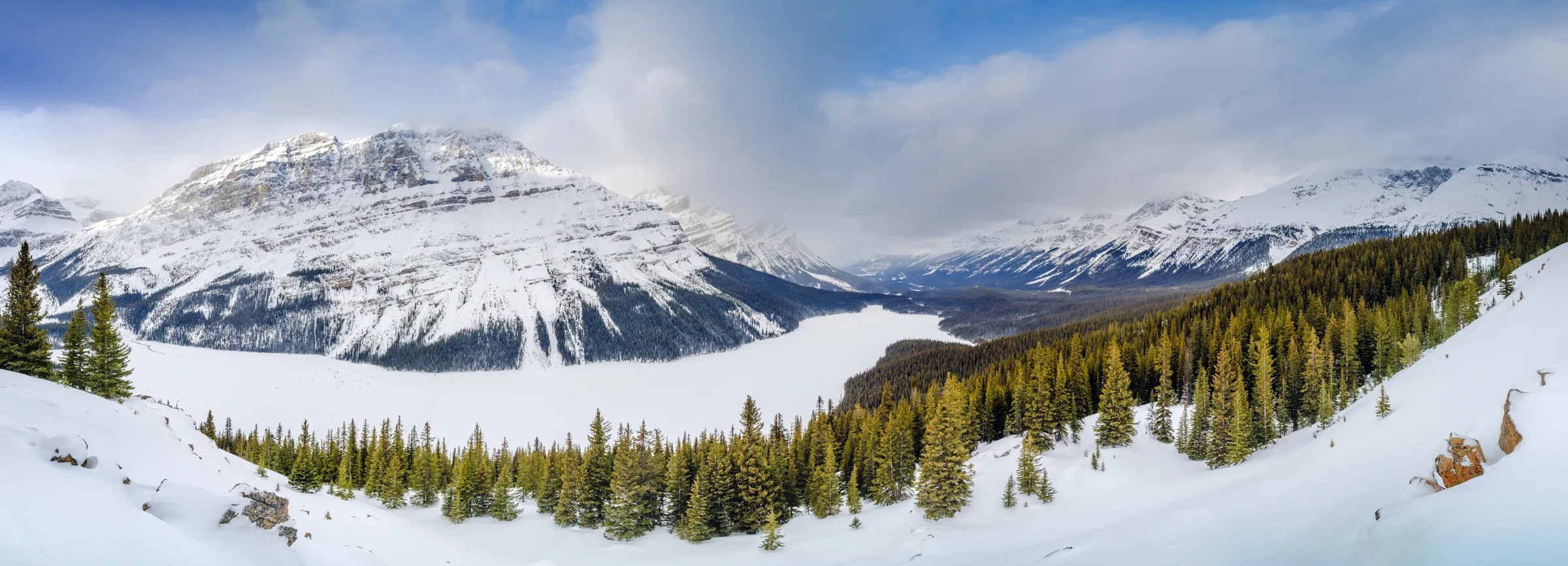


Getting around and making reservations
If you’re traveling without a car, Banff is a convenient base for walks near downtown, the gondola and departures to Lake Louise. Still, check each connection: a route shown on the network map does not necessarily serve your destination in winter. For a round trip by bus, identify both stops, the last return, and leave a buffer between finishing your walk and the scheduled bus.
A car offers more flexibility for Minnewanka or Yoho, but requires proper winter preparation. On Highway 93N, winter tires or chains are mandatory from November 1 to March 31, and outside this period whenever the road is snowy or icy. In Yoho, the stated rule for the Trans-Canada Highway applies from October 1 to April 30. Confirm the equipment on your rental vehicle and check road conditions in both provinces: Alberta 511 and DriveBC.
The two excursions featured in this guide suit different priorities. The one to Yoho and Marble Canyon is a good fit for a trip combining lakes and a canyon; the one via Bow and Peyto prioritizes a northern extension. Choose one for your big guided day rather than booking both and revisiting Louise and Emerald several times. An excursion sold with transportation may still include only short stops: if you want to spend several hours on a single shore, a self-guided visit to Lake Louise is a better fit.
A three-day itinerary
For a first visit, spend the first day in Banff: Fenland in the morning, a break in town, then Cave and Basin if it’s open that day. Marsh Loop extends the visit if the footing and remaining time allow. Tunnel Mountain can replace Fenland for hikers comfortable on a winter trail; routinely doing both adds less than choosing an outing that suits your pace.
The second day can be devoted to Lake Louise by bus or car. Allow time to take in the scenery, walk along the shore and return without rushing. If you choose an organized excursion that already includes Louise, use this day for Sulphur Mountain, picking a time with good visibility, or for Minnewanka with transportation confirmed.
Use the third day for your farther outing to Yoho or Bow and Peyto. Swap the days when conditions warrant, but don’t treat this itinerary as a fixed booking order. Keep a nearby Banff option in reserve in case the road closes or visibility deteriorates. Guided excursion durations include travel; plan for a simple dinner after you return rather than another activity at a fixed time.
Equipment and budget
Plan on several layers, wind protection, grippy winter footwear, a hat and gloves. Hiking ice cleats are useful on icy trails; snowshoes serve a different purpose, when you’re moving through sufficiently deep snow. A headlamp, a charged battery, something to eat and drink, and extra clothing are useful even for an outing advertised as short. Choose the route to suit the least experienced person in your group.
Before leaving your accommodation, download the route description and the information you’ll need to get back. Tell someone where you’re going and when you expect to return: Parks Canada recommends this precaution and notes that there is no phone reception everywhere. If you’re driving, keep warm gear within easy reach during stops, and include a blanket, ice scraper and shovel in your emergency supplies. On foot, prepare for breaks before you start to get cold: add a layer as soon as you stop, and have a shorter return option in case someone in the group gets tired. These precautions let you choose an outing based on the actual conditions, without relying on an open shop or a call from the trail.
In your budget, separate accommodation, transportation, park admission and activities. A gondola or bus ticket does not automatically include the park pass; an excursion should specify what’s included. Add meals not covered, any equipment rental and the modification terms. Excursion prices and reviews are shown on their listings and should be checked for your dates and group. A starting price does not guarantee availability.
FAQ
Can you visit Moraine Lake in November or January?
The regular summer visitor access is not available during this period. Parks Canada shuttles stopped running on October 12 in 2026, and private vehicles are prohibited on Moraine Lake Road year-round. The winter trail ends before avalanche terrain; it should not be treated as a family walk all the way to the lake. For a winter visit, consider Louise, Minnewanka, Emerald, or the Bow and Peyto viewpoints, depending on conditions.
Is Johnston Canyon open for winter 2026–2027?
When this guide was checked, Parks Canada reported that the trail from the parking lot toward the Lower and Upper Falls, as well as parking lot P1, had been closed since October 13, 2026. No reopening date has been confirmed here. Check the official bulletins when you travel and ask what itinerary is actually being offered if an excursion still mentions Johnston Canyon. Fenland or Tunnel Mountain offer different options around Banff.
Which month should you choose for a trip without skiing?
November suits a trip focused on valley scenery and short visits, though conditions underfoot can change considerably. If you’re looking for more activities in the snow, late December and January better match the snowshoeing season indicated by Parks Canada. Christmas is still a holiday period: calling it the “off-season” does not mean accommodation will be less in demand or that excursions will be available without a reservation.
Can you explore Banff without renting a car?
Yes, by choosing outings based on the transportation that’s actually available. From downtown Banff, you can walk to Fenland and the approach to Tunnel Mountain. Roam 1 serves the gondola year-round, and Roam 8X runs daily between Banff and Lake Louise. A guided excursion can round out your trip to Yoho or the Icefields Parkway. Check winter schedules for your dates; not every summer route automatically continues in winter.
Do you need snowshoes for all eight outings?
No. On a hard, icy trail, ice cleats that fit your footwear may be more useful than snowshoes. Snowshoes are for conditions where the snow depth and route are suitable; Parks Canada generally identifies late December onward as the best period. Ask for advice based on your chosen trail, and check what equipment is included if you book an activity. Snowshoes and ice cleats do not replace the training and equipment needed to enter avalanche terrain.
Can you walk on frozen lakes?
Do not decide based on their appearance or traces left by other visitors. Parks Canada does not monitor the safety of natural ice surfaces; currents, changes in water levels, and weather can affect their strength. For these eight outings, the shorelines and land-based viewpoints are sufficient. If you want to skate, check which areas are maintained and their current conditions, and do not assume that this applies to the entire lake.
Which excursion should you choose between Yoho and Peyto?
To combine Lake Louise with Yoho scenery and Marble Canyon, choose winter tour 132218P427 or its version without Moraine. To add the Bow and Peyto viewpoints, product 5525750P4 follows a more road-focused itinerary that also includes Louise and Emerald. Avoid booking both just to visit more places: several stops overlap. Choose the option whose departure point, language, and duration suit your stay.
Is the Icefields Parkway still accessible in winter?
It can be driven in winter, but closures and delays are possible due to snow, road conditions, or avalanche risk. Check Alberta 511 before setting out, equip the vehicle in accordance with regulations, and travel during daylight. Parks Canada warns that there are no winter services between Lake Louise and Jasper and that mobile coverage is lacking along the road. If you are not comfortable driving in winter, choose a suitable excursion or a day trip closer to Banff.
Sources and checks
Plan your visits and check current conditions.
- Access to Lakes Louise and Moraine ↗
Parks Canada · Accessed October 31, 2026
What this source supports
2026 shuttles ended on October 12; Lake Louise is accessible year-round; private vehicles are prohibited on Moraine Lake Road.
- Access questions for Lake Louise and Moraine ↗
Parks Canada · Accessed October 31, 2026
What this source supports
Access conditions and shuttle season; distinction between the park and transportation.
- Winter walks around Banff ↗
Parks Canada · Accessed October 31, 2026
What this source supports
Fenland: 2.1 km loop according to the detailed description; Marsh Loop: 2.8 km; Stewart Canyon: 1.5 km one way; Tunnel Mountain: 2.4 km one way and 260 m of elevation gain. Johnston Canyon has been closed since October 13, 2026, including the trail and P1.
- Official Banff bulletins ↗
Parks Canada · Accessed October 31, 2026
What this source supports
Johnston Canyon Trail and Day Use Area closure notice dated October 13, 2026, still listed at the time of consultation.
- Lake Louise winter routes ↗
Parks Canada · Accessed October 31, 2026
What this source supports
Lakeshore: 2.3 km one way; avalanche risks on the teahouse trails and winter closure of the teahouses; Moraine Road groomed before avalanche terrain; Peyto winter loop: 570 m.
- Snowshoeing and winter safety ↗
Parks Canada · Accessed October 31, 2026
What this source supports
Generally best from late December to early April; avalanches from November to June; equipment, informing others, and choosing a route.
- Seasonal closures ↗
Parks Canada · Accessed October 31, 2026
What this source supports
The western branch of Minnewanka Loop Road is closed to driving from November to May; road restrictions.
- Cave and Basin: history and visit ↗
Parks Canada · Accessed October 31, 2026
What this source supports
Hot springs, park history, relationships with Indigenous peoples, exhibits, and films.
- Cave and Basin: hours ↗
Parks Canada · Accessed October 31, 2026
What this source supports
October 16–May 14: Thursday–Monday, 11 a.m.–5 p.m.; closed December 14–17, 2026, and December 25.
- Banff Gondola: access and operations ↗
Pursuit — Banff Gondola · Accessed October 31, 2026
What this source supports
Departs from Mountain Avenue; served by Roam Route 1 year-round; limited parking; Sky Bistro closed January 4–15, 2027, a closure to distinguish from the gondola itself.
- Yoho: recommended winter routes ↗
Parks Canada · Accessed October 31, 2026
What this source supports
Emerald Lake: avalanche path and route alternatives depending on the season; Field office closed from mid-October to early May; winter travel precautions.
- The Icefields Parkway ↗
Parks Canada · Accessed October 31, 2026
What this source supports
Bow Lake: distinction between the main access point and summer day-use areas; Peyto viewpoint is separate from the trail to the shore; remote road with no cell coverage.
- Winter maintenance on the Icefields Parkway ↗
Parks Canada · Accessed October 31, 2026
What this source supports
No winter services between Louise and Jasper; snow/avalanche closures; drive during daylight; winter tires or chains.
- Driving in the parks ↗
Parks Canada · Accessed October 31, 2026
What this source supports
93N: winter tires or chains required from November 1 to March 31, and when there is snow or ice outside that period; Highway 1 in Yoho: October 1–April 30; Alberta 511/DriveBC and emergency supplies.
- Skating and natural ice safety ↗
Parks Canada · Accessed October 31, 2026
What this source supports
Parks Canada does not monitor the safety of natural ice surfaces; various factors affect their strength.
- Roam 8X: Banff–Lake Louise ↗
Roam Public Transit · Accessed October 31, 2026
What this source supports
Daily service year-round; stops in downtown Banff, Lake Louise Village, and at the lakeshore. Expired schedules in the FAQ have not been carried over to winter 2026–2027.
- Banff National Park fees ↗
Parks Canada · Accessed October 31, 2026
What this source supports
Admission fees and paid services are separate; check rates before traveling.
- Winter tour — product 132218P427 ↗
Jupiter Legend Corporation via Viator Partner API · Accessed October 31, 2026
What this source supports
The product page and calendar were actually accessed via GET. Status ACTIVE; winter season listed for November 2026–January 2027; language, duration, inclusions, and variants checked. No live availability check or booking.
- Winter tour — product 5525750P4 ↗
Rockies Journey via Viator Partner API · Accessed October 31, 2026
What this source supports
The product page and calendar were actually accessed via GET. Status ACTIVE; winter season listed for November 2026–January 2027; language, duration, inclusions, and variants checked. No live availability check or booking.
Viator — activity pages
Source for the activity information below.Affiliate links: Odyvero may earn a commission when you book through this article’s buttons.
- Lake Louise and Yoho: winter tour with Marble Canyon ↗
Accessed October 31, 2026
- Lake Louise, Bow, and Peyto: winter scenery ↗
Accessed October 31, 2026


