 odyvero
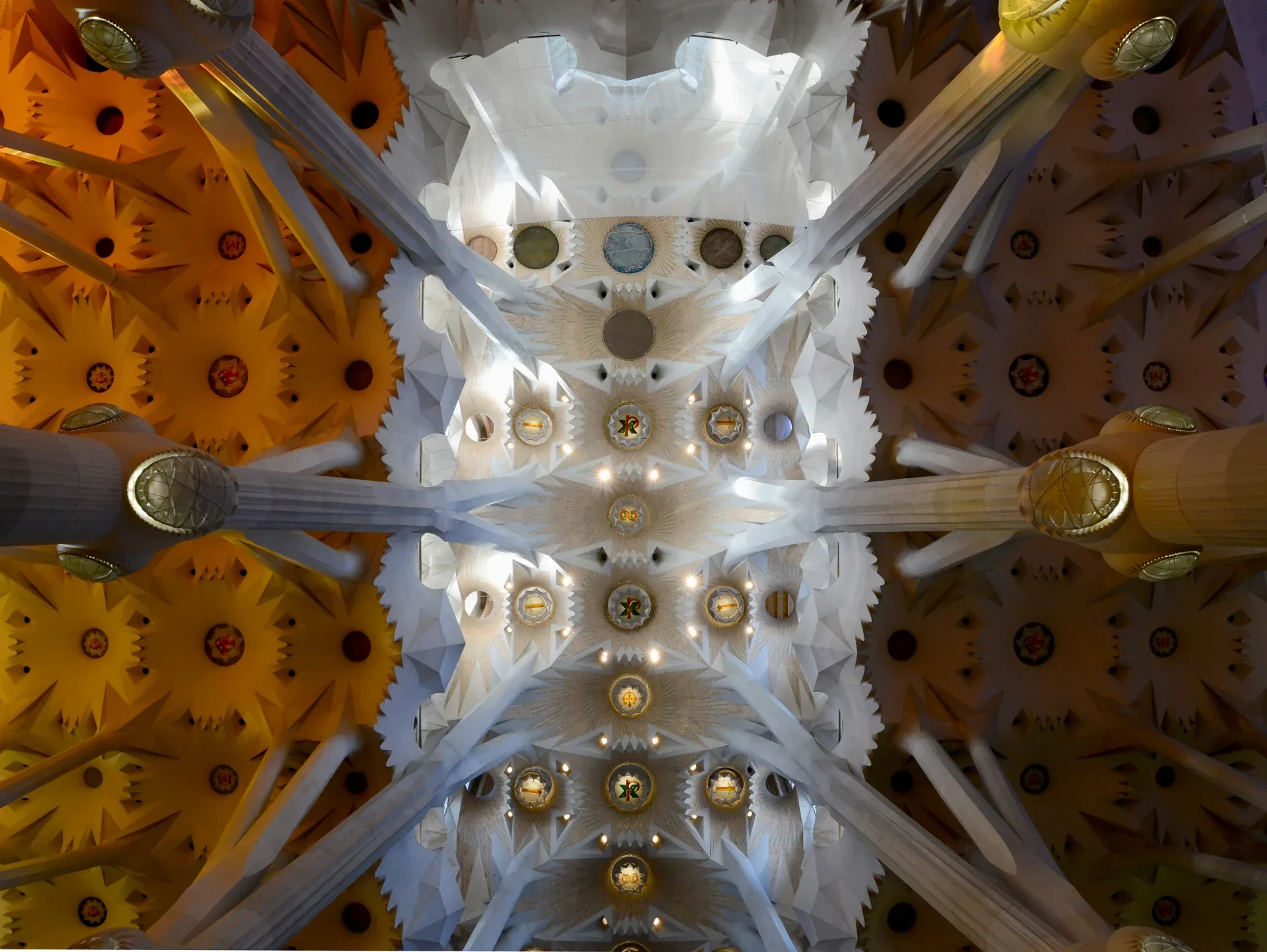

The Tower of Jesus Christ was inaugurated in June, but the centenary of Gaudí’s death continues in Barcelona’s exhibition halls and streets. Until the end of 2026, the Sagrada Família tells the story of its collective construction, Casa Batlló brings the architect face to face with Miró and Gomis, and several events extend the commemoration. Here are the dates that still matter and an itinerary for combining them with Gaudí’s houses and park.
The calendar for late 2026
For a November or December stay, the exhibitions provide the clearest anchors. “The Strength of a Shared Dream” at the Sagrada Família is scheduled to run through December 31, 2026. At Casa Batlló, “Gaudí–Miró–Gomis: Deconstructed” continues until January 10, 2027. These two offerings approach the centenary from different angles: the passing down of a construction project across generations, and the encounter between architecture, art, and the photographic gaze.
The calendar narrows to a few key dates. The exhibition connecting the Sagrada Família with the Hospital de Sant Pau closes on November 15. Barcelona’s municipal program as World Capital of Architecture runs until December 13. Then the Sagrada Família Foundation announces a concert with Escolania de Montserrat and the Vallès Symphony Orchestra, accompanied by an illumination of the Nativity façade, on December 23 at 7 p.m.
An early November stay can still pair the two monuments along Avinguda Gaudí with their joint exhibition. In December, we would prioritize indoor exhibitions, one house, and a daytime walk in the park. For the concert, check the invitation arrangements with the organizer: the centenary program distinguishes between open events and those with limited capacity. A tourist booking for the basilica does not count as an invitation to that evening event.
The Sagrada Família after June
On June 10, 2026, one hundred years after Gaudí’s death, the Tower of Jesus Christ was blessed and inaugurated. At 172.5 meters, its height marks a major milestone in Barcelona’s skyline. When planning a visit, the key distinction is which areas are actually accessible: an inaugurated tower does not mean its summit is included in the tourist tickets offered to the public.
The basilica visit remains worthwhile for the nave, façades, and interpretation spaces. The branching columns and vaults show how Gaudí organized the interior’s vertical dimension. The façades tell other stories through their choices of representation. We recommend taking time to notice these differences rather than reducing the visit to a search for the highest viewpoint. The anniversary is an opportunity to explore what supports the building as much as what crowns its skyline.
A private tour with an official guide can be useful if you want to ask questions about the project and its development. The selected tour lasts an hour and a half, includes admission, and offers French among the guided-tour languages. Select this language when booking and arrange your journey to the monument separately. This service accompanies an architectural visit; it does not advertise an invitation to the December concert or specific entry to a centenary event.

Viator
Sagrada Família: Private Tour in French
To explore the architecture during the centenary, choose French with this 90-minute private tour, admission included; allow separate time for the exhibition, whose access still needs to be confirmed.
- 1 hr 30 min
- 4.9/5 (66 reviews)
Private tour with admission and an official guide; select French. Allow separate time for the centenary program.
Cancellation policy
For a full refund, cancel at least 24 hours before the scheduled start date.
From €225.00
View activityThe exhibition on collective construction
On display from September 18 to December 31, 2026, “The Strength of a Shared Dream” places the Sagrada Família in a history of collective decisions, skills, and funding. The foundation emphasizes the continuity between the generations who built the monument. This guiding idea offers a more precise reading of the centenary: understanding how a work conceived by one architect continues through other teams, other tools, and new technical resources.
Gaudí left plans, drawings, descriptions, and models to guide his successors. The exhibition’s interest lies in following their role in a project that spans several generations. This lets you connect the forms you see in the basilica with questions of transmission and construction. It is a particularly relevant complement for visitors drawn to architecture, craftsmanship, or major technical projects.
Allow some extra time after your guided visit if this exhibition is a priority. The official page locates it in the basilica but does not explain in sufficient detail how it fits with all the tourist ticket options. Confirm that your ticket includes access before finalizing your schedule. To plan the day, we would leave the afternoon around the Sagrada Família open rather than immediately scheduling another house with a fixed time slot.
Casa Batlló, Gaudí, and Miró
At Casa Batlló, the centenary program continues with “Gaudí–Miró–Gomis: Deconstructed.” The exhibition, co-organized with the Fundació Joan Miró and designed with the Tomorrow Bureau studio, brings together original works and digital installations. It is announced on the second floor, from July 8, 2026, to January 10, 2027. The ticket office offers a separate admission or a package combined with a visit to the house.
This distinction lets you choose according to how familiar you are with the site. For a first visit, we would pair the house with the exhibition to maintain a direct connection with Gaudí’s architecture. If you have already visited Casa Batlló, separate admission to the exhibition can focus your time on this temporary program. Compare the spaces included in the option you choose: an exhibition ticket and a general visit meet two different needs.
Inside the house, the light well deserves special attention. The tiles are darker higher up, and the windows become larger on the lower floors. These variations help distribute the light. The ventilation features also show the care given to the building’s everyday use. Observing these details before the exhibition gives you concrete examples for thinking about the relationships between form, perception, and function.
The “Hidden Order” mapping show on January 31 and February 1, 2026, has ended. For the end of the year, Casa Batlló announces Christmas illuminations from late November through January 6, without giving an exact start date on its summary page. Keep this evening stroll as a possibility, to be confirmed in your week’s program. It is not a reason to book transport based on an assumed date.
Avinguda Gaudí and Sant Pau
Until November 15, 2026, the exhibition “The Sagrada Família and the Hospital de Sant Pau. A Living Memory” extends the basilica visit. It is announced along the axis connecting the Sant Pau modernist site and Avinguda Gaudí. It brings together two buildings that have shaped neighborhood life, with a focus on local residents and their history.
The Hospital de Sant Pau was designed by Lluís Domènech i Montaner. Its place in this itinerary helps situate Gaudí within a city where several architects developed Modernisme. The official program contrasts two practical functions: the temple and the garden hospital, with light, color, and outdoor spaces designed in a care setting. The walk becomes a way to compare architectural responses to different uses.
We would schedule this stop after the Sagrada Família, leaving time for a break between the two. If you want to enter the Sant Pau modernist site, treat that visit as a separate booking; the exhibition information is not enough to establish free access to all of its buildings. After November 15, the walk remains worthwhile, but the exhibition should be removed from your itinerary.
Casa Vicens, the first language
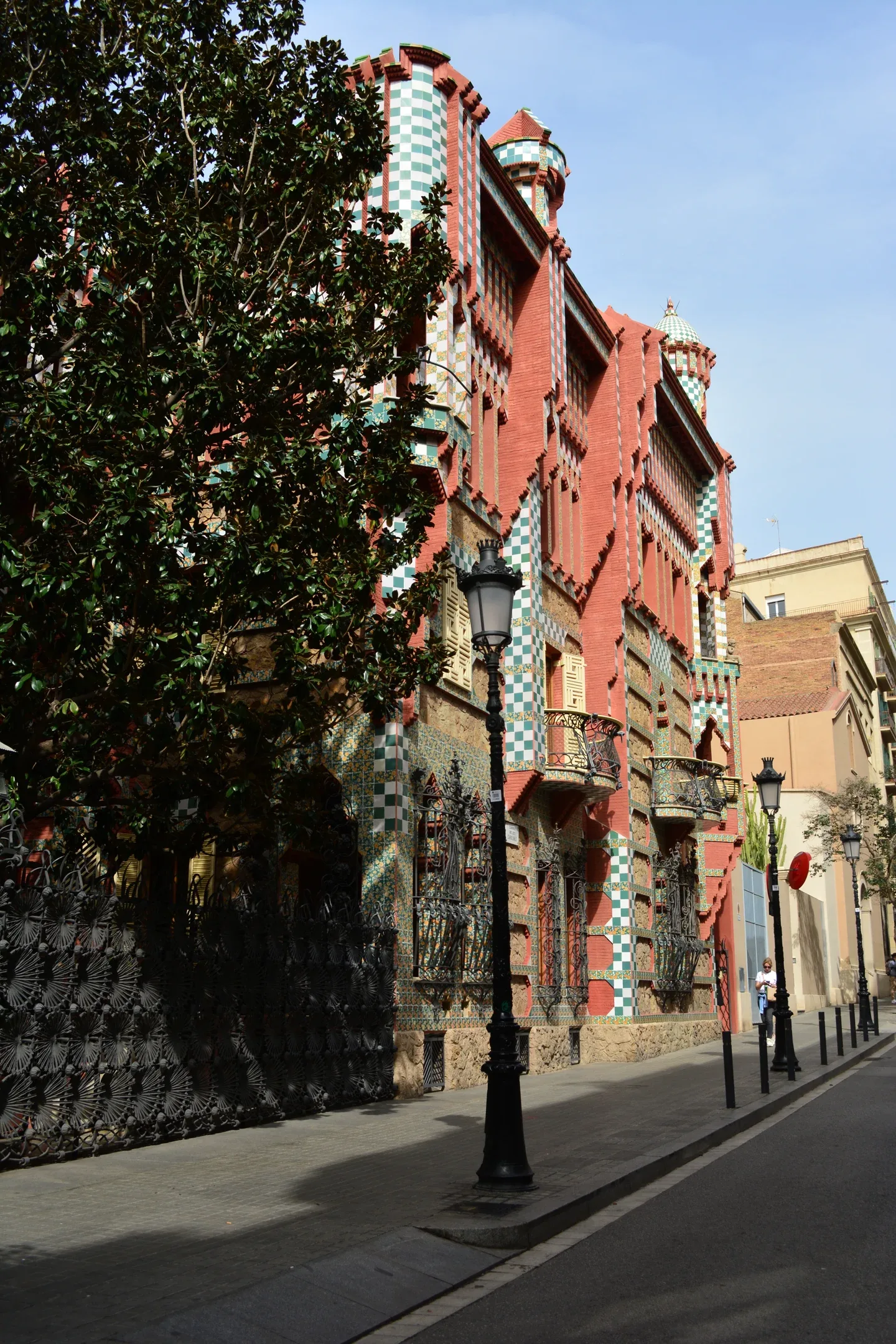
In Gràcia, Casa Vicens takes you back to the beginning of Gaudí’s work. The house was designed as a summer residence with a garden. Its façade combines stone, brick, and ceramic, with prominent patterns and colors. The contrast with the volumes of the Sagrada Família offers a clear focus for your visit: finding the attention to nature and materials in a work on a domestic scale.
Inside, the dining room, its relationship to the garden, and the smoking room help explain the layout of the living areas. The permanent exhibition, installed in the former attic, brings together information about the house, its evolution, and its furnishings. The terrace continues the exploration of the ceramic details. This route encourages you to see a building as a collection of lived-in spaces, with their own uses and circulation.
We recommend admission with an audio guide for visitors who prefer to explore at their own pace. The selected product lists French and an estimated duration of one hour and thirty minutes. Bring your headphones; early access is a specific option that you must select explicitly if you are interested. You can then have lunch or walk around Gràcia without immediately adding a second booking.
Casa Vicens is also a good choice on a return visit to Barcelona when you already know the major monuments. Its visit adds depth to the centenary program without relying on an exceptional show. For a short stay, it can replace another house: you do not need to visit them all to follow the evolution of Gaudí’s work.


Viator
Casa Vicens: Admission with French Audio Guide
A standalone stop for comparing Gaudí’s first house with the Sagrada Família: admission and a French audio guide; bring your headphones. Early access is available as a separate option.
- 1 hr 30 min
- 4.7/5 (747 reviews)
Self-guided visit with a French audio guide and your own headphones. Early access is a separate option.
Cancellation policy
For a full refund, cancel at least 24 hours before the scheduled start date.
From €24.00
Buy a ticketPark Güell by day
Park Güell adds elevation, open spaces, and city views to the itinerary. We would schedule it on a different half-day from the Sagrada Família, so you have time on site and do not make two important visits depend on a tight connection. At the end of the year, choose a daytime slot to observe the materials and the relationship between architecture and landscape.
The official ticket office distinguishes between a park visit and several combined tickets, including ones with the Gaudí House Museum or the Porter’s Lodge. Choose the additional space that genuinely interests you. The name “Park Güell” on a ticket is not enough to conclude that every building open to visitors is included. Conservation work may also affect access to some areas; check for reported disruptions before setting out.
Tickets are purchased online for a specific entry time. The official site allows thirty minutes after the stated time slot to enter the park; leaving is final. This rule is a reason to plan meals, water, and meeting arrangements before entry. For visitors with mobility difficulties, the park offers an adapted route but notes that its general route includes slopes and stairs. Plan access with the visitor services team rather than improvising from a station chosen only because it seems nearby.
Three days around the exhibitions
For a two-day stay, we would devote the first day to the Sagrada Família and its exhibition, with Avinguda Gaudí as an extension. Before November 15, the exhibition shared with Sant Pau is an additional reason to follow this route. The second day would bring together Casa Batlló, its temporary program, and a walk along Passeig de Gràcia. Casa Milà, also known as La Pedrera, can then be viewed from the avenue or visited separately if you choose.
With a third day, Park Güell and Casa Vicens are two complementary options around Gràcia. For a family or group walking at a slower pace, we would keep just one reserved admission and leave the other half-day free. These three days are a suggested pace, not the duration of a commercial tour. The visit times on your tickets, breaks, and accommodation location should determine the final order.
The World Capital of Architecture program offers another addition through December 13, 2026. The municipality is running it across Barcelona’s ten districts. Look for an activity near your route rather than crossing the city just to tick off another item. This program broadens the focus to neighborhoods and contemporary uses of architecture, beyond Gaudí’s buildings alone.
For accommodation, a base connected to the visits by public transport is sufficient for this itinerary. We do not recommend using a car to travel between monuments. Choosing a hotel or train depends on your dates and starting point; no date-specific offer can be inferred from the centenary calendar alone.
November and December bookings
First book the visits whose time slot shapes the day, then the temporary events. At the Sagrada Família, tickets are issued in the visitor’s name and official identification is required. The scheduled time must be observed. From November to February, the official FAQ lists opening hours of 9 a.m. to 6 p.m. Monday through Saturday, and 10:30 a.m. to 6 p.m. on Sundays, with possible changes for celebrations. On December 25 and 26, the listed hours are reduced to 9 a.m.–2 p.m.
Build your budget by separating admission, guided tours and special events. The prices of the selected options appear on their cards, in the currency returned by the provider. For an exhibition or concert, compare the exact contents of the booking, then add up the expenses for your group. A walk past the façades on Passeig de Gràcia can round out your stay without another admission ticket.
For audio guides, charge your phone and bring headphones. Download your tickets before setting out. An additional eSIM is only worthwhile if your usual plan does not adequately cover your usage in Spain. Finally, arrange your luggage with your accommodation: the Sagrada Família specifies that it has no luggage storage. This way, you can arrive for your visit with everything you need.
FAQ
Which centenary events can you still see in late 2026?
The exhibition on the Sagrada Família’s collective construction project runs through December 31. The Casa Batlló exhibition, “Gaudí–Miró–Gomis: Deconstructed,” is scheduled to remain open until January 10, 2027. The Sagrada Família–Sant Pau exhibition ends earlier, on November 15. The concert and illumination on December 23 are a separate event; confirm the admission requirements with the foundation.
Is the inauguration of the Tower of Jesus Christ still to come?
It took place on June 10, 2026. For a trip in November or December, the program therefore focuses on the continuation of the commemorations and visits to the monuments. Check tourist tickets for the towers to see exactly which areas are included; the inauguration does not imply access to the top of the Tower of Jesus Christ.
Does a Sagrada Família ticket include admission to the December concert?
The tourist visit and the concert require separate bookings. The general centenary program provides for invitations to limited-capacity events. Check the announced procedure for the evening of December 23 before including it as a confirmed activity during your stay. The guided option featured in this guide does not include this invitation.
Do you have to visit Casa Batlló to enter its exhibition?
The official program lists separate tickets for “Gaudí–Miró–Gomis: Deconstructed” and options combined with a visit to Casa Batlló. If you already know the house, admission to the exhibition alone may be enough. For a first visit, the combined option lets you explore the architecture before viewing the temporary exhibition, subject to the areas included in your ticket.
Which Gaudí visit should you choose with a French audio guide?
The Casa Vicens admission selected in this guide includes a French audio guide. It allows you to visit independently, using your own headphones. For the Sagrada Família, the selected option is a private tour with an official guide; select French when booking. An audio guide and a human guide offer different experiences: choose based on whether you prefer to explore on your own or ask questions.
Is two days enough for a Gaudí trip?
Two days allow you to prioritize the Sagrada Família, Casa Batlló and a few walks, along with the corresponding exhibitions. We would save Park Güell or Casa Vicens for a third day, or replace one of the major houses with that stop. The number of monuments matters less than the time available at each one, especially when traveling with children or with specific mobility needs.
Can you follow this itinerary with reduced mobility?
The Sagrada Família states that the basilica is accessible, with the exception of the towers. Casa Vicens states that it is accessible to people with reduced mobility. At Park Güell, an adapted route is available, while the general route includes slopes and stairs. Let the venues and your guide know about your needs so you can determine which entrances and areas you will actually be able to visit.
Sources and checks
Plan your visits and check current conditions.
- The centenary program
Sagrada Família Foundation · Accessed November 2, 2026
What this source supports
Commemoration from autumn 2025 through Christmas 2026; Tower of Jesus Christ at 172.5 meters.
- Inauguration of the Tower of Jesus Christ
Sagrada Família Foundation · Accessed November 2, 2026
What this source supports
Blessing and inauguration on June 10, 2026: past event, distinct from tourist access.
- The Strength of a Shared Dream
Sagrada Família Foundation · Accessed November 2, 2026
What this source supports
Exhibition at the basilica from September 18 to December 31, 2026; collective construction, documents, and models passed down to successors. Inclusion with every tourist ticket has not been confirmed.
- The Sagrada Família and Sant Pau: Living Memory
Sagrada Família Foundation · Accessed November 2, 2026
What this source supports
Exhibition from July 7 to November 15, 2026, along the Sant Pau–Avinguda Gaudí axis; Sant Pau was designed by Lluís Domènech i Montaner.
- Concert and illumination on December 23
Sagrada Família Foundation · Accessed November 2, 2026
What this source supports
December 23, 2026, at 7 p.m.: Escolania de Montserrat, Vallès Symphony Orchestra, and the Nativity façade. Invitation procedure to be confirmed.
- Gaudí Year: Casa Batlló activities
Casa Batlló · Accessed November 2, 2026
What this source supports
Gaudí–Miró–Gomis: Deconstructed, July 8, 2026–January 10, 2027, on the second floor, with a separate or combined ticket. The January mapping show and June free admission have ended. Christmas illuminations are announced from late November to January 6, with no precise start date.
- The interior of Casa Batlló
Casa Batlló · Accessed November 2, 2026
What this source supports
Lightwell: darker tiles higher up, larger windows lower down, ventilation; craftsmanship and how the spaces function.
- Visiting Casa Vicens
Casa Vicens · Accessed November 2, 2026
What this source supports
Summer residence, garden, living rooms, permanent exhibition in the attic, terrace; smartphone audio guide and personal headphones; accessibility.
- Park Güell: ticket options and access
Park Güell / BSM · Accessed November 2, 2026
What this source supports
Online tickets, time slot, and 30-minute grace period; no re-entry. The house museum and porter’s lodge are included in separate ticket options.
- Park Güell: conservation and accessibility
Park Güell / BSM · Accessed November 2, 2026
What this source supports
Slopes and stairs along the general route, an adapted route, and conservation work.
- Sagrada Família: practical information
Sagrada Família Foundation · Accessed November 2, 2026
What this source supports
Named tickets, ID, punctuality; November–February, Monday–Saturday 9 a.m.–6 p.m., Sunday 10:30 a.m.–6 p.m.; December 25–26, 9 a.m.–2 p.m.; special events may change opening hours; accessible areas excluding the towers; no luggage storage.
- Barcelona 2026, World Capital of Architecture
Barcelona City Council · Accessed November 2, 2026
What this source supports
Program from February 12 to December 13, 2026, across ten districts; UNESCO-UIA designation.
- La Pedrera – Casa Milà
Fundació Catalunya La Pedrera · Accessed November 2, 2026
What this source supports
Casa Milà is also known as La Pedrera; general and nighttime visit options are separate.
- Viator — Private Sagrada Familia Tour
Viator / operator · Accessed November 2, 2026
What this source supports
90-minute private tour, admission and official guide included, French available. No access to the concert or Tower of Jesus Christ is advertised.
- Viator — Gaudi’s Casa Vicens Skip-the-Line Ticket with Audio Guide
Viator / operator · Accessed November 2, 2026
What this source supports
Casa Vicens admission and French audio guide; 90 minutes is indicative, bring headphones, early access depending on option.
Viator — activity pages
Information about the offers featured in this article.Affiliate links: Odyvero may earn a commission when you book through this article’s buttons.
- Viator : Sagrada Família: Private Tour in French
Accessed November 2, 2026
- Viator : Casa Vicens: Admission with French Audio Guide
Accessed November 2, 2026


