 odyvero
Six bases over twenty-one days: Hanoi, Ninh Binh, Phong Nha, Hué, Hoi An, and Ho Chi Minh City. Choose March–April for the full itinerary, plan your transfers, and leave some leeway before your return flight.
The route and the season
In Ninh Binh, boats travel between limestone formations; in Hué, visits are spread around the Perfume River; in Ho Chi Minh City, a single day can already include a museum, a market, and several neighborhoods. Each stop takes time on the ground. To cross the country on a budget, we’ve chosen six bases rather than a string of one-night stops: Hanoi, Ninh Binh, Phong Nha, Hué, Hoi An, and Ho Chi Minh City.
The itinerary assumes twenty-one days in Vietnam, including arrival and departure, with an international flight arriving in Hanoi and departing from the South. It prioritizes walks, public transport, and a few carefully chosen paid visits. You can travel it in reverse. The season, flights, and services actually available should determine the final order; traveling from north to south does not automatically guarantee good weather at every stop.
March and April are our first choice for this full itinerary. Vietnam Tourism presents spring as a favorable time nationwide, while the Central region generally becomes drier. The North can still be cool or misty in early spring. Pack a light warm layer: three weeks in Vietnam does not mean three weeks in beachwear.
A November departure calls for different preparation. Hanoi may have pleasant weather while Phong Nha and the Central region remain exposed to heavy rain. The tourism board places Phong Nha’s flood-risk months between September and December, and notes autumn rains in Hué and Hoi An. If you’re traveling during this period, keep your Central Vietnam accommodation flexible and consider replacing those days with more time in the North and South. Local closures and alerts take precedence over this itinerary.
The twenty-one days
This breakdown includes days spent mainly changing bases. Choose exact schedules using the transport operators’ search tools for your dates. A domestic flight is included between Da Nang and the South; you can replace it with the train if you’re willing to give up an extra day of sightseeing.
- Days 1 to 3: Hanoi, settle in and explore on foot. - Day 4: Travel to Ninh Binh, then settle in Tam Coc or near Trang An. - Days 5 and 6: Boat trip, countryside, and a historical visit; take the train to Dong Hoi at the end of your stay if the schedule works. - Day 7: Arrive in the Dong Hoi area and transfer to Phong Nha; keep the schedule light. - Days 8 and 9: Caves and local sights, depending on what’s open. - Day 10: Return to Dong Hoi, travel to Hué, and check in. - Day 11: Imperial Citadel and a walk around Hué. - Day 12: Choose a second visit in Hué or take time to rest. - Day 13: Travel to Da Nang, then transfer to Hoi An. - Days 14 to 16: Hoi An, countryside, and possibly the coast, depending on the weather. - Day 17: Transfer to Da Nang and fly to Ho Chi Minh City. - Days 18 and 19: City sights and southern neighborhoods. - Day 20: Free day, optional excursion, or time to recover. - Day 21: International departure.
If your train arrives in Dong Hoi in the middle of the night, adjust your last night in Ninh Binh or arrange accommodation on arrival. Booking a bed until morning may cost less than improvising a chain of transfers. The trip also benefits from leaving day 20 free of rigid bookings: delays, tiredness, or a desire to extend a visit can all be accommodated.
Hanoi and your first meals
The first three days are for getting your bearings as well as sightseeing. Choose accommodation within walking distance of Hoan Kiem Lake and the Old Quarter, then check the exact location on the street. A place slightly set back from a busy thoroughfare may offer better sleep. If you arrive late, confirm reception arrangements before comparing only the price of the bed.
On day 1, a walk around the lake and a meal near your room are enough. Day 2 can include the Old Quarter and a cultural site, such as the Temple of Literature or Thang Long Citadel. Set aside day 3 for another area and a show if that appeals to you. Museums, temples, and shows have their own opening hours and tickets; don’t plan your day on the assumption that every place is open all the time.
For meals, start by identifying a few dishes rather than immediately looking for a long list of restaurants. Pho combines broth and rice noodles; bun cha brings together grilled pork, vermicelli, and accompaniments; banh mi makes an easy meal to take away. Vietnam Tourism lists them among the capital’s specialties. Watch what the food stall actually cooks, ask the price per serving, and choose a freshly cooked preparation when it suits the dish.
A food tour can fit on day two, after your first night’s rest. The selected private tour is led by an English-speaking guide and includes tastings, water, and coffee or tea. Its advertised duration is two to three hours. Its value on this itinerary is educational: learn how dishes are prepared and ask questions about ingredients before ordering on your own for the rest of the trip.
This expense is optional. Choose it if you’d like a guided introduction at the start, then keep your other meals flexible. Mention allergies and dietary restrictions before booking, and ask for a clear answer about possible substitutions. The product’s list of dishes describes the proposed route; the specific stops may change. For the meeting point, confirm whether pickup is available from your accommodation or whether you need to go to the stated location.

Viator
Hanoi: Private Street Food Tour
Schedule it for day two to learn how to recognize the dishes and ask questions before the rest of the itinerary. Private tour in English, tastings included; confirm dietary adaptations and the meeting point before booking.
- 120–180 min
- 5/5 (82 reviews)
A two- to three-hour private walk with an English-speaking guide, tastings, and coffee or tea.
Cancellation policy
For a full refund, cancel at least 24 hours before the scheduled departure date.
From $37.00
View activityThree days in Ninh Binh
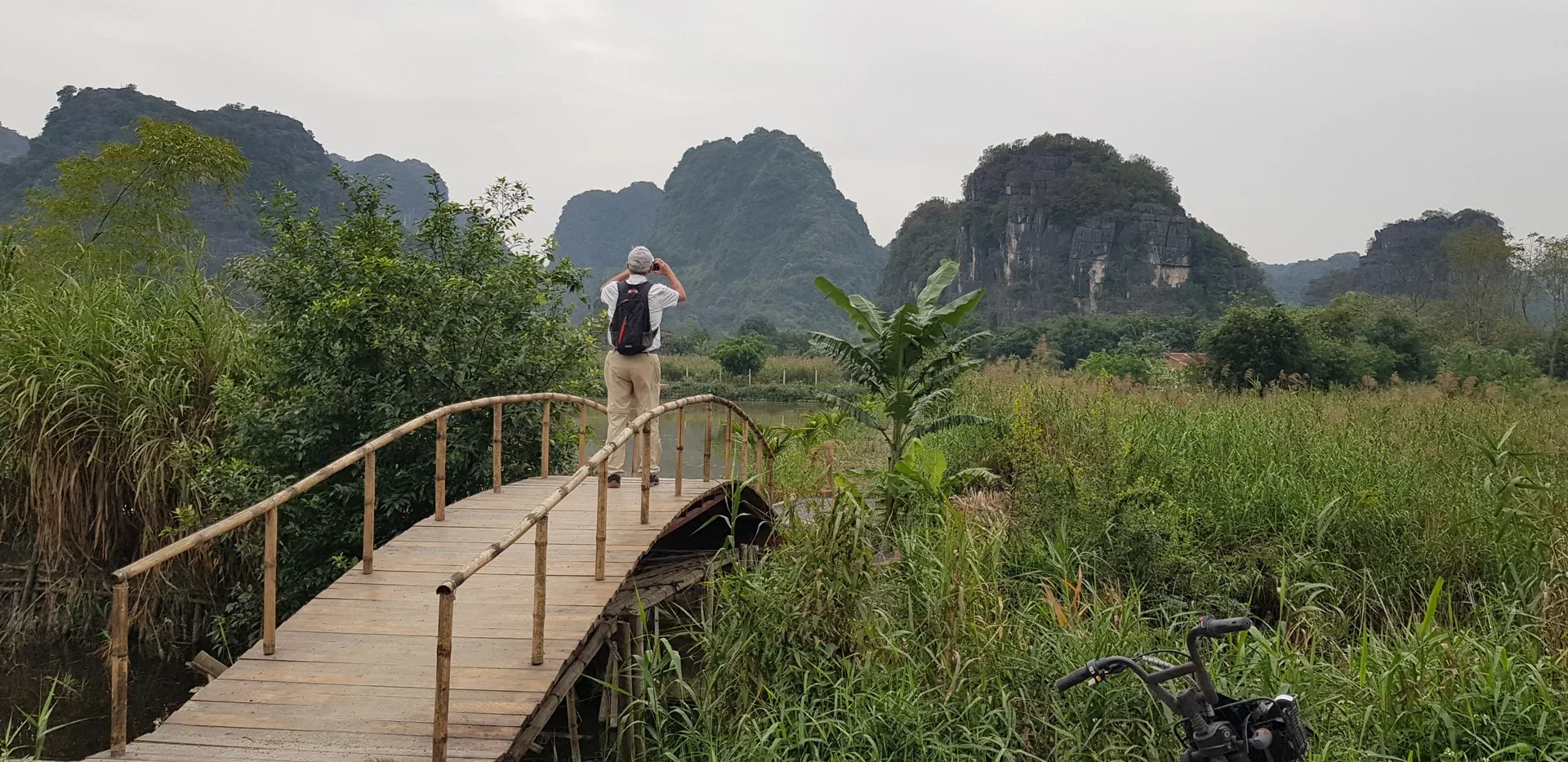
Staying in the Tam Coc or Trang An area changes how you visit Ninh Binh. You have an evening after arrival, a full day for boating, and another block of time for the countryside or Hoa Lu. Your choice of base depends on how you get around: a pleasant place amid the rice fields may require extra transfers for every meal. Check the actual distance to the boat piers and access road.
On day 4, travel from Hanoi to Ninh Binh and then to your accommodation. Vietnam Tourism gives a journey time of about two hours from the capital by train or road, not including waiting and the final transfer. So treat this as an arrival and settling-in day, followed by a nearby stroll. Booking a major visit at a fixed time as soon as you arrive would leave no room to absorb delays.
On day 5, choose a boat trip in Trang An or Tam Coc. Both areas offer waterways amid karst scenery, but their routes differ. For a first visit on a limited budget, one boat trip is enough to leave time to enjoy the landscape. Check the route, passenger limit, ticket terms, and conditions for the day at the ticket office. The fields change with the seasons: a photo of golden rice fields does not represent every week of the year.
Hang Mua will appeal to those who want a viewpoint and are comfortable with a strenuous climb. The tourism office describes the route as having around five hundred steps. Schedule this visit for a time that suits the heat and your fitness level, and bring water and shoes with good grip. A boat trip, a climb, and several temples in one day take more energy than their proximity on a map might suggest.
Day 6 can include Hoa Lu, described by Vietnam Tourism as an ancient capital, or a leisurely exploration of the paths near your accommodation. If you cycle, ask for a route suited to your experience and avoid roads where the traffic makes you uncomfortable. Leave your main luggage at your accommodation only with their agreement, then plan your transfer to the station if you are taking an evening train.
For a shorter stay where you keep all your nights in Hanoi, our guides to day trips from the capital and day trips to Ninh Binh offer an alternative plan. On this national itinerary, staying overnight instead avoids heading back north before continuing to Dong Hoi.


Phong Nha and the caves
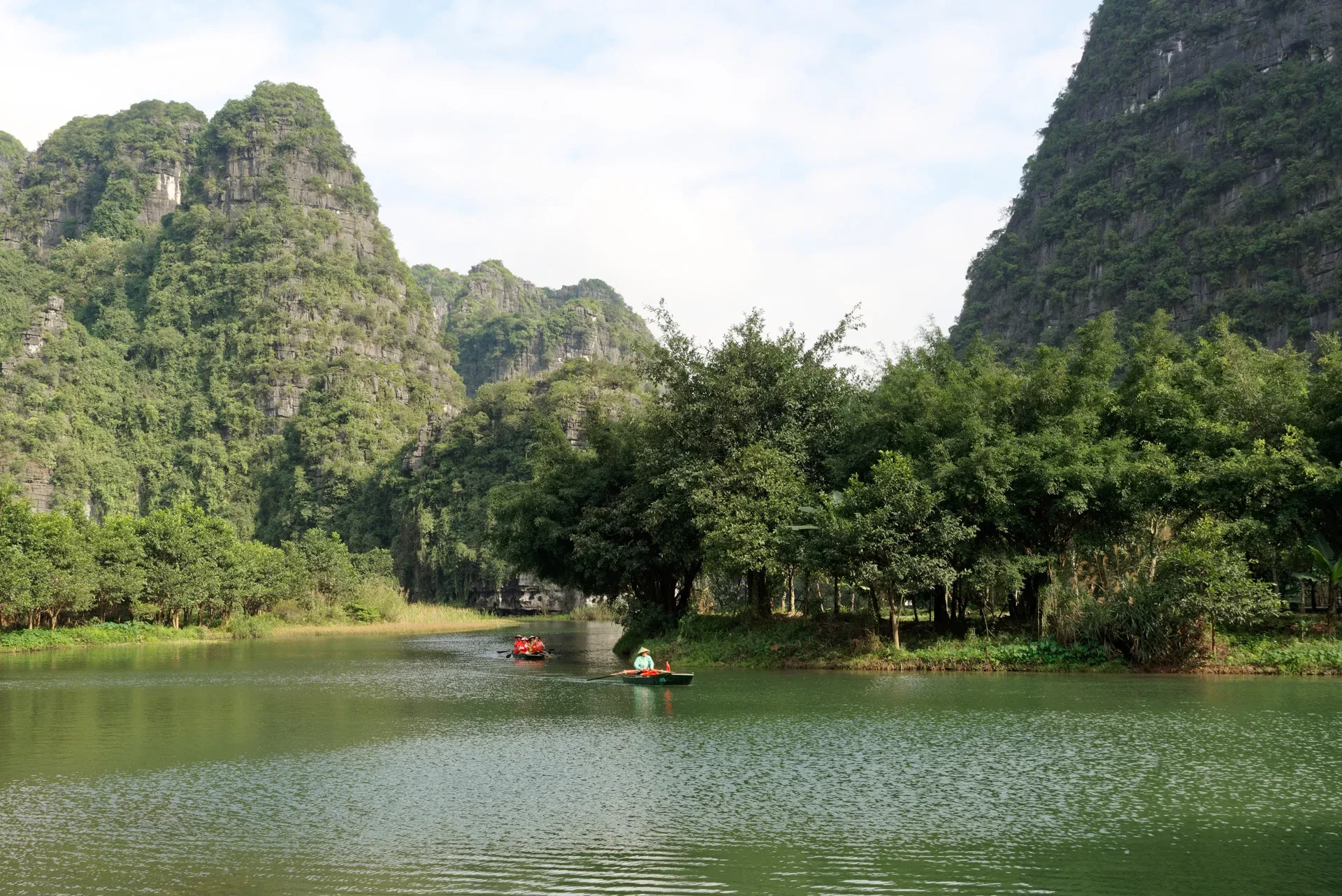
Rail access is via Dong Hoi, followed by a road transfer to Phong Nha. Vietnam Tourism places Dong Hoi Airport about forty-five kilometers from the village and also identifies the train station as a gateway. The station, airport, and village are different locations: when booking each leg, ask for the exact drop-off point. A ticket bearing the name of a region does not necessarily take you to your accommodation.
Keep day 7 light after the journey. A walk near the Son River, a meal, and getting ready for the next visit are enough. Compare activities based on what they actually include: a developed cave access route, an outing with transport, or a guided multi-day expedition involve very different budgets and levels of effort. The fame of Son Doong should not become a promise of access on an ordinary budget tour.
For day 8, choose a cave visit that is open and suited to your mobility. Ask the operator about the total duration from your accommodation, steps, wet sections, equipment, and included meals. This lets you compare offers without assuming that the word “cave” refers to the same activity. Bring a change of dry clothes and protect your phone, documents, and medication from moisture.
Day 9 can be set aside for a countryside outing, an authorized nature activity, or a second visit if conditions allow. The tourism portal highlights Bong Lai Valley and the area around Nuoc Mooc, among other places. Check local access conditions before setting out. After heavy rain, a path that is easy in the dry season may become slippery or impassable; your accommodation or operator should be able to explain current conditions.
From September to December, avoid booking non-refundable activities for all three days. If flooding or closures jeopardize this leg, remove Phong Nha from the itinerary and reallocate the nights elsewhere. Do not replace a suspended activity with an independent exploration of caves or waterways. Your trip plan should let you change destinations without losing the entire budget set aside for activities.
Hue and the Perfume River
Day 10 takes you from Phong Nha to Hue, with a return to Dong Hoi if you are taking the train. Compare this journey with a clearly specified road transfer, taking into account transfers at both ends. Your arrival time determines the day’s schedule: checking in, having a meal, and taking a short walk may use all the time left. Accommodation close to sights and restaurants makes the next two days easier.
Spend day 11 at the Imperial City. The history of the Nguyen dynasty provides a thread for exploring the courtyards, pavilions, and preserved buildings. Bring water and take breaks; the visit is more than just walking through a gate and leaving. To keep costs down, first choose the sites that interest you before buying a combined ticket. Add up the visits you will actually make, not everything listed on the ticket.
Day 12 lets you explore one aspect in more depth: an imperial tomb, Thien Mu Pagoda, or a rural area. Vietnam Tourism highlights the tombs of Tu Duc, Minh Mang, and Khai Dinh, among others. They do not form one walk that you can take from just any hotel. Work out the transport cost and time on site before deciding to visit several in one day.
The food is another reason to stay in Hue. The official portal lists banh beo and banh khoai among the local dishes. If traveling as a couple, choose a few portions to share and ask what is included and how large each serving is. A market offers a chance to look at the produce and local customs, without requiring you to turn every visit into a shopping trip.
In very rainy weather, reduce outdoor travel and check access conditions before crossing the city. Autumn is a sensitive time in Central Vietnam. An extra flexible night there can help you reschedule a visit; it does not guarantee that every site will remain accessible during a major disruption.
Hoi An and free days
On day 13, travel via Da Nang to Hoi An. Da Nang’s train station and airport serve as transfer points; set aside a separate line in your budget for the transfer to your accommodation. From Hue, choose a daytime journey if you want to take in the scenery. A package with several tourist stops takes longer than a direct connection and should be compared as an excursion.
Three full days then give you flexibility. Spend the first exploring the Ancient Town and its streets, checking locally which monuments require a ticket. The second can be spent in the surrounding area, with a walk or a cycling outing suited to your ability. The third remains available to spend more time in the area you enjoy, head to the coast if conditions are good, or simply rest.
Your accommodation choice is especially useful here. A room near the center makes it easy to get around on foot; a base near the coast is better suited to several beach days. On a three-day stay, changing neighborhoods to save a small amount can multiply your trips. Ask for the final price, room access details, any bicycle parking, and which services are actually included.
Custom-made clothing requires time for fittings and alterations. If you plan to order anything, start early enough during your stay and agree clearly on the fabric, price, and delivery. Keep these purchases outside your essential travel budget. A decision to spend at the end of your stay should not eat into the reserve for transport or unexpected expenses.
From September to January, Vietnam Tourism’s climate guide describes Hoi An as entering a wetter period, with a risk of heavy rain and autumn flooding. A beach day therefore cannot be treated as a guarantee on a November itinerary. Check the forecast and local guidance before booking a boat trip or heading out on low-lying roads.
Ho Chi Minh City and departure
Day 17 is devoted to travelling to Da Nang, taking the domestic flight and settling in the South. Compare the final ticket price, including baggage, airport transport and change conditions. If you prefer rail, allow the actual journey time stated by the carrier and scale back the city itinerary. The stretch to the South is a long journey; placing it between two full days creates predictable fatigue.
On day 18, choose one museum or major historical site, followed by a walk around the centre. Vietnam Tourism highlights the War Remnants Museum, the Central Post Office and the Dong Khoi area. The subjects covered by the museum can be difficult; leave yourself time afterwards rather than immediately following the visit with several timed activities. For religious monuments or buildings undergoing work, check that access is actually available.
Day 19 can be devoted to Cholon, including Binh Tay Market and Thien Hau Pagoda, two places described by the tourism office. Plan a short walk and opportunities to take breaks: heat and traffic affect the pace. Choose your crossings carefully, put your phone away when you are not using it, and avoid walking at the edge of the road while looking at a map.
Day 20 remains free. A trip to the Mekong Delta is possible if it suits your interests and budget, with a confirmed return and a clear itinerary. To understand how much time you will spend at each place, compare the hours on the road with those spent on canals, in villages and on visits. You can just as easily spend the day in the city and preparing for departure.
Spend the final night in the city from which your international flight departs. Check the airport and terminal listed on your ticket rather than inferring them from an old booking. Plan the journey according to the airline’s recommendations and traffic conditions. The buffer day mainly protects your final connection; it becomes more valuable when earlier legs include an overnight train, a road transfer and a domestic flight.
Trains and bookings
Start by booking the connections that actually shape the itinerary: your international arrival and departure, the train to Dong Hoi and the journey between the Centre and the South. The DSVN portal lets you search for official rail tickets. Use your dates and the exact station names; prices and schedules depend on the train and class you choose. You do not need a fixed timetable to follow this guide.
For each train, note four details: departure station, arrival station, departure date and arrival time. A journey that crosses midnight changes date while you are travelling. Tell your accommodation your actual arrival time, then check whether you can leave your bags or access a room. This simple coordination helps you avoid paying for an urgent transfer and an unplanned night after making an otherwise correct booking.
Compare a sleeper berth with a night’s accommodation and daytime travel, taking your sleep into account. An overnight train can save you a room if the schedule works for you. If you sleep poorly or arrive before services open, plan a quiet day and budget for a place to rest. The compartment photos should match the class you bought, and the exchange conditions should match the seller you used.
For a coach, identify the operator, departure point and arrival point. A pickup advertised in a city may involve several connections. Prefer daytime travel when it makes planning and comfort easier. Compare the lowest fare with the onward transfer, baggage and cancellation conditions. Keep tickets available offline and store a separate copy of important documents.
Budget for three weeks
For planning purposes, we suggest setting aside thirty to forty euros per day for everyday expenses: simple accommodation, regular meals and short local journeys. Add one hundred and eighty to two hundred and eighty euros for major connections and chosen visits, then another one hundred to one hundred and fifty euros as a reserve. Over twenty-one days, that comes to nine hundred and ten to one thousand two hundred and seventy euros per person.
These amounts are an Odyvero planning estimate, not a record of currently available prices. They exclude international flights, insurance, any required formalities and personal purchases. They suit a modest trip with some trade-offs; a private room, several private excursions or late bookings may cost more. Prices in the dining recommendation remain in its menu, in the currency actually provided by the catalogue.
Before you leave, fill in three columns with your own amounts: expenses already booked, expenses still to pay and a separate reserve. If the domestic flight and trains use up the connections budget, reduce organised visits or increase the budget. Avoid counting the same night twice when an overnight journey replaces a room, but add an arrival-night room if you actually need one.
The simplest ways to save are to reduce the number of base changes and choose your accommodation’s location carefully. A dorm with a locker and a reception desk that can accommodate your arrival may be more useful than a slightly cheaper bed at the end of an extra journey. If travelling as a pair, compare the total cost of a room with that of two beds rather than assuming one option is always cheaper. Check taxes, breakfast and included amenities.
On the ground, pay in the local currency and check your bank’s fees before making a withdrawal or payment. Do not rely on mental currency conversions that may have become outdated. Keep small bills for everyday expenses and a separate alternative payment method. The reserve should remain available for a travel change, a medical consultation or an extra night, rather than automatically becoming the budget for last-minute shopping.
Meals and luggage
A budget trip is more enjoyable when you eat regularly and have water available. Check portion sizes, preparation and displayed prices, then confirm before ordering several side dishes. Illustrated menus can help, but dietary restrictions require more precise wording. Keep a written translation of your allergies and check sauces, broths and garnishes; a mainly plant-based dish may contain fish or meat.
Pack clothes that dry easily, rain protection, a layer for the North and air-conditioned spaces, and shoes suited to walking and wet surfaces. A bag you can carry comfortably on your own makes station stairs and transfers easier. Confirm the baggage allowance for each leg: a domestic flight ticket and a train ticket do not necessarily follow the same rules.
Keep essential medicines and documents in the bag that stays with you, along with any necessary prescriptions. Suitable insurance for your itinerary and potential medical costs is part of your pre-departure budget. This itinerary can be completed without renting a scooter. If you nevertheless want to drive, check licensing, insurance and local requirements separately before renting; a rental company handing over the keys does not satisfy these obligations.
For entry requirements, Vietnam Tourism states that French nationals are exempt from visas for stays of up to forty-five days, subject, among other things, to holding a passport valid for at least six months upon entry and proof of onward travel. Check these conditions for your nationality and circumstances before departure. If you need an e-visa, the official portal listed is evisa.gov.vn. The specific exemption for Phu Quoc should not be treated as the rule for this journey across the country.
Itinerary alternatives
If Ha Long is a priority, replace some days in Ninh Binh or the Centre rather than adding an excursion to an already full schedule. A cruise requires transfers and boarding, and depends on suitable weather; Vietnam Tourism notes that cancellations may occur during storms. Our comparisons from Hanoi can help you choose between the bay, inland landscapes and villages. This will help you decide what deserves your budget before booking.
For Sapa or Ha Giang, remove a full stop elsewhere and reorganise the North. These regions add travel and require particular preparation, especially if you are considering motorbiking or hiking. With twenty-one days and a late arrival, keeping six bases already offers a varied introduction. A geographically shorter itinerary may also be preferable if you want to hike for several days or are travelling with children.
In a rainy autumn, a two-region version makes sense: Hanoi and Ninh Binh, then the South with extra nights in Ho Chi Minh City and, if you wish, in the delta. Look for a suitable flight and accommodation with flexible change conditions. This option removes the Central stops when conditions call for it, without claiming that the rest of the country is immune to bad weather.
FAQ
Can you really travel across Vietnam in three weeks?
Yes, with a limited number of stops and days set aside for travel. The proposed itinerary includes six bases and a domestic flight between Da Nang and the South. In its main version, it leaves out the northern mountains and Ha Long Bay. To add those regions, replace another stop or extend the trip rather than reducing the number of nights everywhere.
What budget should I plan for, excluding international flights?
Our planning estimate is nine hundred and ten to one thousand two hundred and seventy euros per person, including a contingency, for twenty-one modest days. It covers daily expenses, transportation and selected visits. This is not a quote: replace each estimate with your actual bookings, then add insurance, any required formalities and shopping. Private services and single rooms will require an adjustment.
What time of year should I choose for this itinerary?
March and April offer a good compromise for visiting all three major regions. The North may still be cool, while temperatures rise in the Centre and South. In November, allow plenty of flexibility for Phong Nha, Hué and Hoi An, which are exposed to autumn rains. Check forecasts and alerts shortly before departure, then check the local status of access routes during your trip.
Should I start in Hanoi or in the South?
Either direction works. Compare international flights, schedules for major connections and the season in each region. Arriving in Hanoi and departing from Ho Chi Minh City avoids having to return all the way to your point of entry. However, check the total cost of a multi-city ticket and your flight conditions before arranging your nights around this choice.
Is it possible to travel without a scooter?
Yes. The main connections are by train, road transport and domestic flight; at each stop, you can walk, use available transport and book transfers with identified providers. Remote sites around Hué and access to Phong Nha require extra planning. Include their cost in your budget, even if you choose a visit without a guide.
Do French citizens need a visa?
For a twenty-one-day trip, the exemption of up to forty-five days listed by Vietnam Tourism generally covers the stay of a French national who meets the conditions. In particular, check your passport validity and proof of onward travel, as well as your personal circumstances. For another nationality or a different length of stay, consult the applicable rules and, if necessary, the official evisa.gov.vn portal.
Can I replace the domestic flight with a train?
Yes, provided you set aside time for the long connection between Da Nang and the South. Use the actual schedule for your chosen train, then reduce the time spent visiting Hoi An or Ho Chi Minh City. Compare the ticket price, any nights you would no longer need, and your ability to rest. Rail can suit the trip without necessarily being cheaper for every date and class.
Which tickets should I buy first?
First, settle your international flights and major connections that determine where you spend the nights. Next, book accommodation for days with unusual arrival times and priority activities whose cancellation terms work for you. Leave more flexibility for cave visits and boat trips when weather may affect them. Keep the day before your international departure free in your departure city.
Sources and checks
Plan your visits and check current conditions.
- Climate in Vietnam’s regions ↗
Vietnam Tourism · Accessed November 1, 2026
What this source supports
Regional seasons, rainfall in the Central and Southern regions, cooler weather in the North; March–April selected editorially.
- Entry requirements for Vietnam ↗
Vietnam Tourism · Accessed November 1, 2026
What this source supports
45-day visa exemption for French citizens, passport valid for six months, proof of onward travel, evisa.gov.vn portal.
- Hanoi: places and specialties ↗
Vietnam Tourism · Accessed November 1, 2026
What this source supports
Hoan Kiem, the Old Quarter, the Temple of Literature, the citadel, and the dishes mentioned.
- Ninh Binh ↗
Vietnam Tourism · Accessed November 1, 2026
What this source supports
Indicative travel time of two hours from Hanoi, about 500 steps at Hang Mua, boat rides, and Hoa Lu.
- Phong Nha ↗
Vietnam Tourism · Accessed November 1, 2026
What this source supports
Access via Dong Hoi, caves, the Son River, Bong Lai, and Nuoc Mooc; flooding from September to December.
- Hué ↗
Vietnam Tourism · Accessed November 1, 2026
What this source supports
Nguyen dynasty, citadel, tombs mentioned, Thien Mu Pagoda, and cuisine.
- Ho Chi Minh City ↗
Vietnam Tourism · Accessed November 1, 2026
What this source supports
Museum, post office, Dong Khoi, Cholon, Binh Tay Market, and Thien Hau Pagoda.
- Official railway ticketing ↗
Vietnam Railways · Accessed November 1, 2026
What this source supports
Search portal; no fares, schedules, or seasonal ticket rules included.
- Private Hanoi food tour — 116300P36 ↗
Viator / product operator · Accessed November 1, 2026
What this source supports
Active product rechecked via Partner API; English, private, 120–180 minutes, tastings, water, and coffee/tea. Central snapshot hydrated with the exact product’s supplier photo.
Viator — activity pages
Source for the activity information below.Affiliate links: Odyvero may earn a commission when you book through this article’s buttons.
- Hanoi: Private Street Food Tour ↗
Accessed November 1, 2026


