 odyvero
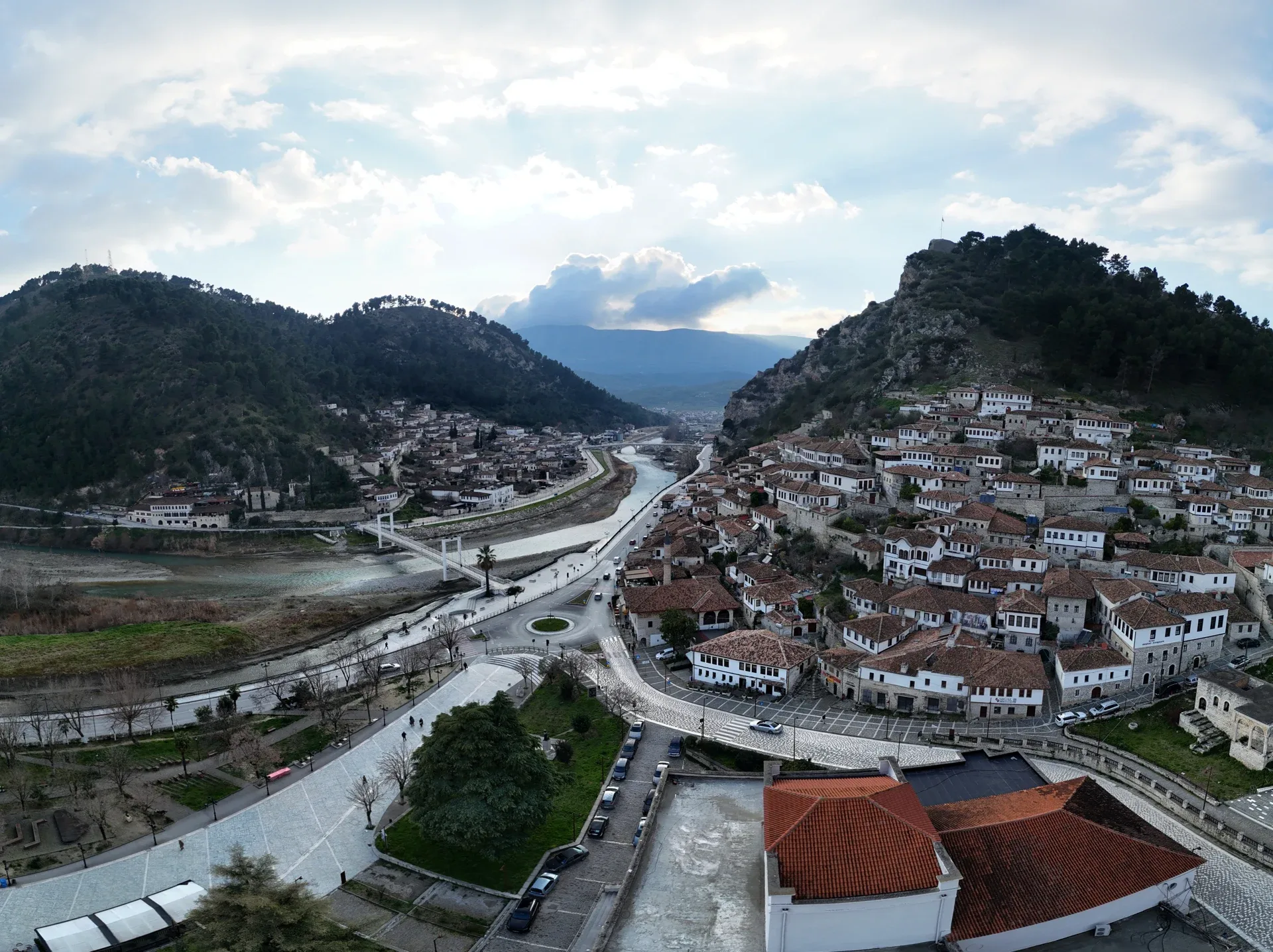
Albania is particularly well suited to a trip combining historic towns and the Ionian coast; Georgia lets you build a week around Tbilisi, its nearby monasteries and Kakheti wines. To choose between them, focus on the season, how many times you want to change hotels and how much time you want to spend by the sea. Here are two practical ways to travel, with excursions, logistics and precautions to keep in mind.
Two ways to travel
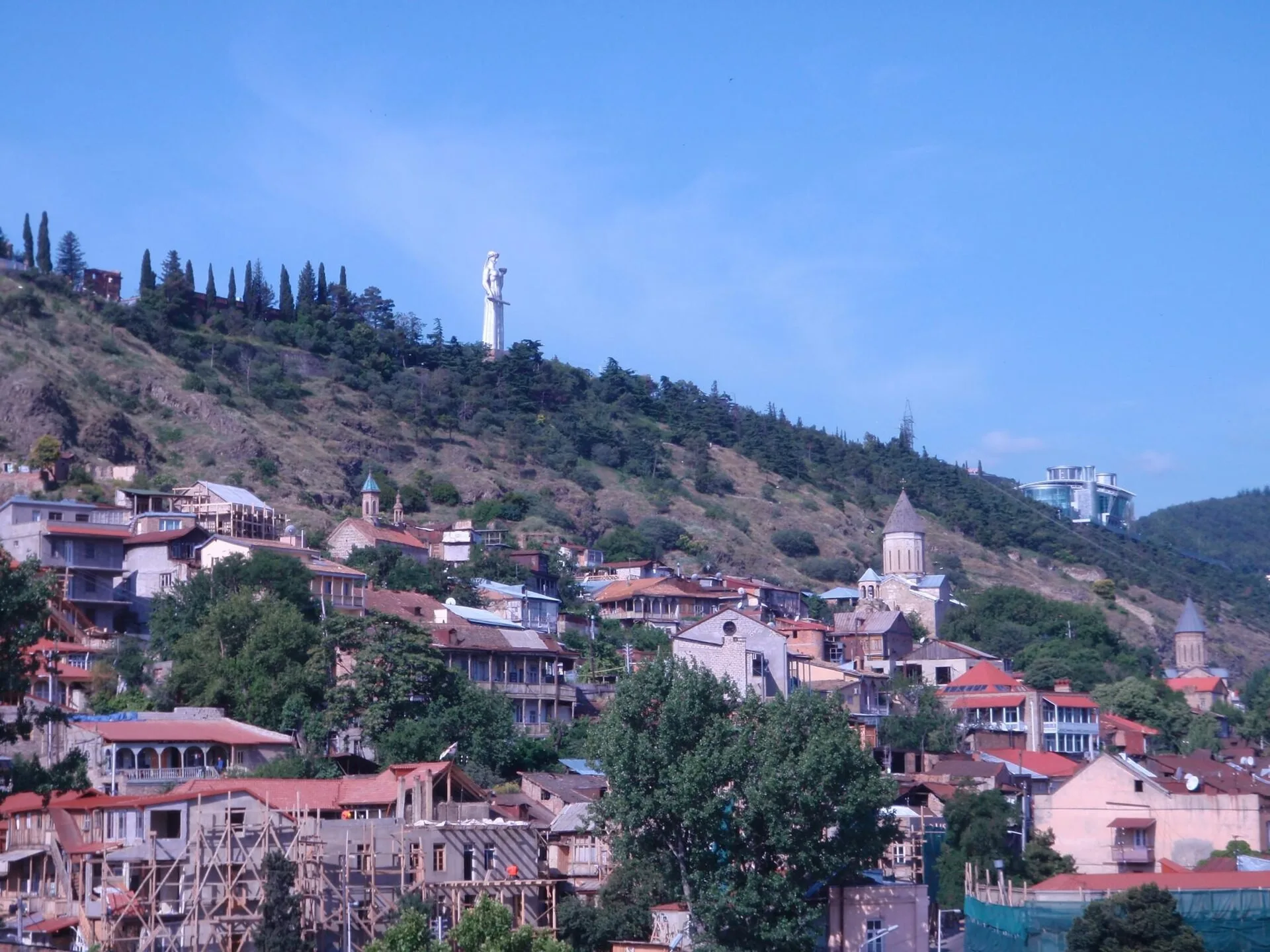
In Berat, the white houses of Mangalem rise above the Osum, facing the Gorica quarter. In Tbilisi, Old Town balconies, the domes of the sulfur baths and churches occupy the slopes around the Mtkvari. These urban landscapes offer an initial sense of each trip: in Albania, you can connect several small heritage towns before heading to the coast; in Georgia, a capital rich enough to fill several days serves as a base for regional excursions.
For a week that includes swimming, we prefer Albania, provided you spend several nights on the coast and choose a suitable time of year. For a week of sightseeing, meals and wine discovery without constantly repacking, Tbilisi makes a logical base. Both countries have mountains, but a trek requires specific planning. Adding one to a week already divided between city and coast, or between the capital and vineyards, greatly reduces the time available at each stop.
Your choice also depends on how you arrive. Compare the airports actually served from your city, landing times and the journey to your first accommodation. An attractive ticket price may come with an extra night near the airport or an expensive transfer. For seven days, prioritize the country that is simplest to reach; with ten days, you have more flexibility for a second or third base.
Seasons for your itinerary
For the Albanian itinerary presented here, May–June and September are our first periods to consider: they make it possible to combine heritage and coastline in one trip. These are planning recommendations, not guarantees about water temperature or weather. In April or October, give more time to the towns and choose accommodation you will enjoy even if the beach is unusable. A balcony, comfortable indoor space or a convenient location for getting around on foot may then matter more than being right beside a cove.
In midsummer, plan a coastal stay in Albania around a base where you genuinely want to spend time. In hilly towns, allow for breaks and spread out outdoor visits. Check accommodation, parking and beach-facility conditions and prices for your dates. “Albania” covers very different situations depending on whether you stay in an inland town or a seaside resort.
In Georgia, Tbilisi and Kakheti work well for a cultural itinerary in spring and autumn. You can visit a winery for wine tasting year-round; a booked tasting does not automatically include the harvest. Travelers interested in vineyard work need a tour that explicitly offers participation and confirms the date. High-altitude trails, meanwhile, depend on snow cover, road conditions and local weather.
In late October and November, we favor a trip focused on towns, museums and meals, with excursions that can be adapted. In Albania, the itinerary can be narrowed to Berat and Gjirokastër; in Georgia, to Tbilisi, Mtskheta and a day in Kakheti. Reread safety recommendations just before departure: they can affect an urban visit regardless of the season.
Berat, between its neighborhoods and citadel
Berat deserves a full stop if you enjoy exploring cities on foot. The Mangalem and Gorica neighborhoods face each other across the Osum; the castle district sits above them. Albania’s national tourism agency describes a still-inhabited ensemble of traditional houses, cobbled streets, and places of worship. To understand the city, alternate views from the river with walks through the lanes rather than looking only for a photograph of the façades.
We suggest two nights for a relaxed visit. This gives you a day without transfers for the castle and, depending on opening hours, the Onufri National Iconographic Museum. Another walk lets you explore the lower neighborhoods and cross over to Gorica. The museum has its own appeal for its icons and religious art; check access and opening hours separately, particularly if your stay includes a Monday.
Your choice of accommodation has a very practical consequence: an address in the historic neighborhoods may mean cobblestones, steps, and an uphill walk with your luggage. Ask where the vehicle can drop you off and how far you will still need to walk. If you have difficulty walking, it is better to know the exact access than to rely on a vague “historic center” label.
If you would rather keep your hotel in Tirana, the Berat and Belshi Lake excursion offers a different arrangement. The selected tour lasts nine to ten hours and includes transportation and castle admission. It is a group tour, with a group size advertised as up to fifty participants. French is available as a digital booklet; live commentary is offered in English, with Italian depending on the departure and option. The Onufri Museum remains optional. This tour works for a one-day visit, while two nights in Berat give you more freedom to explore the neighborhoods.

Viator
Berat and Lake Belshi from Tirana or Durrës
To discover Berat without changing hotels: allow nine to ten hours, with transportation and the castle included. French is provided in a digital booklet; confirm the spoken language, pickup arrangements, and which areas of Tirana are served before the trip.
- 9 to 10 hours
- 4.8/5 (1,809 reviews)
Group excursion lasting 9 to 10 hours, including transport and Berat Castle. Spoken English; Italian depending on departure and option, written French via a digital guidebook. Onufri Museum optional; meals to be arranged separately.
Cancellation policy
For a full refund, cancel at least 24 hours before the scheduled departure date.
From €25.00
View activityGjirokastër, the stone houses
Gjirokastër offers a second perspective on Albania’s heritage. The city stretches along the slopes above the Drino Valley; its stone houses, slab roofs, and castle shape the landscape. The bazaar and house museums let you vary your visits between public spaces, domestic architecture, and fortifications. The appeal of a stop here lies in this continuity: the materials and terrain are reflected in the streets, homes, and views over the valley.
We recommend two nights if this architecture is an important reason for your trip. Plan indoor visits for the hours when they are open, and leave some free time for the bazaar. The opening hours of one house museum do not tell you the hours of the other sites. Rather than rushing through several entrances with no time to stroll, choose one house and the castle, then add more according to your interests and the time available.
The cobbled lanes and slopes call for suitable shoes, especially when it rains. Also check the location of your accommodation: it may be in the lower town, near the bazaar, or farther uphill. This affects your daily back-and-forth trips. If you are heading to the coast afterward, set aside a day when the transfer is the main activity; you can enjoy the end of the day at your destination without counting on an extra visit along the way.
The Ionian coast from a single base
The Albanian national tourism agency presents the coastline as stretching from Vlorë toward Sarandë and Ksamil, including Dhërmi, Himarë, Qeparo, and Borsh. For a first week, choose just one of these bases according to access, accommodation, and the trips needed to reach the beach. Two addresses that look close on a map can make for very different days if one lets you do everything on foot while the other requires a vehicle for every outing.
Himarë is one option for a stay combining beach time with exploring the surrounding coast. Sarandë or Ksamil puts more emphasis on the southern end of the coast. The right choice depends on the specific neighborhood and beach: actual distance, slope, road crossings, public access, and available facilities. Also consider where you can have dinner without getting back in the car, especially if you want to spend several evenings in the same area.
Three nights give you two full days by the sea. That is a reasonable minimum for planning a stop that makes the trip from inland worthwhile. A single night mostly amounts to arriving, having a meal, and leaving. With ten days, you can extend this stop instead of adding another resort. Any boat trips can be decided based on the conditions announced, the sea, and the exact service offered; they are not necessary to enjoy the coast.
Outside the swimming season, ask your accommodation which nearby services are actually open. A large room overlooking the sea is still pleasant, but a succession of closed restaurants or difficult access to other sights can weigh on your stay. For a trip later in the year, a more urban itinerary is often easier to adapt.
Seven to ten days in Albania
For seven days with a cultural focus, we would choose Tirana as the arrival point, followed by Berat and Gjirokastër. Use your arrival day to reach your accommodation; two nights in Berat and two in Gjirokastër give you proper time to visit, with a final night arranged according to your return flight. Adjust the order and number of nights in Tirana to match flight times and available transport. This itinerary prioritizes heritage stops rather than a quick crossing of the country.
For seven days including the sea, simplify further: arrive, visit Berat, then stay at a single coastal base and return. Gjirokastër then becomes an option for another trip or an extension. Before booking non-refundable nights, check that transfers work with your dates, especially if you do not have a car. A bus or organized transport may require an early departure that takes up a substantial part of the day.
For ten days, one balanced option is to distribute nine nights among an initial arrival night, two nights in Berat, two in Gjirokastër, three on the coast, and one return night. Place the final night wherever makes the most sense for your departure. Keep the transfer days deliberately light: the three main stops offer enough to explore without routinely adding a detour.
Tirana’s current situation calls for particular adjustments. In its advisory updated on October 23, 2026, France Diplomatie reported demonstrations and violence since October 13, with areas of the city center to avoid, including the vicinity of Skanderbeg Square, the road to Durrës, and the Ministry of Education. Check the latest alert and ask for a pickup point that complies with the guidance. The itineraries suggested here therefore do not automatically include a walk through these areas.
Tbilisi, a capital for several days
Tbilisi lets you keep the same accommodation while alternating between the city and excursions. In the old town, the Abanotubani sulfur baths, churches, sloping streets, and houses with balconies form an ensemble best explored one neighborhood at a time. The Metekhi area offers another perspective on the Mtkvari and the buildings around it. The variety of places of worship described by the tourism office is also part of the city’s history.
Set aside at least two full days for the capital on a week-long trip. The first can focus on the old neighborhoods, with breaks rather than one continuous uphill route. The second allows you to choose indoor visits and another part of the city. Mtatsminda, accessible in particular by funicular when it is operating, is one option for gaining some elevation. Check access on the day and keep an alternative in mind if the weather obscures the views.
For the baths, book the option that suits your group and expectations: the establishment, time slot, any private space, and included services. A photograph of the domes tells you about the neighborhood, not the conditions of a bathing session. A meal can then become the focus of the evening, without adding an excursion. Restaurant menus and the specialties on offer can help you plan several different meals rather than search for a single place said to represent all Georgian cuisine.
Choose your accommodation with the slopes, noise, and access to excursion meeting points in mind. An address on an old street may be charming but require a daily climb. Finally, demonstrations reported in Tbilisi make it important to check which areas you will pass through and avoid gatherings. Whether a location is suitable for tourists depends on the local information available at the time.


Mtskheta and the nearby monuments
Mtskheta offers a day of religious heritage close to the capital. The former capital is particularly associated with Svetitskhoveli and Jvari Monastery, set on a hill overlooking the confluence of the rivers. The route is interesting both for its buildings and for their relationship to the landscape. For a first visit, this excursion complements Tbilisi’s churches without requiring several nights elsewhere.
The selected tour combines Mtskheta, Jvari and the Chronicles of Georgia, whose large sculpted columns offer a different kind of stop from the ancient monuments. The advertised duration is six hours, for a maximum of fifteen travelers, with an English-speaking guide. The listing specifies a meeting point at Rose Revolution Square in Tbilisi, not hotel pickup. Confirm the meeting point and time with the operator before the outing, taking local conditions into account.
The tour also includes a stop at a wine cellar; tasting is optional and costs extra. Plan for lunch separately. This combination is suitable if you are looking for a cultural outing with organized transportation while keeping part of the day or evening free in the capital. For places of worship, check the required dress code and access conditions; religious activity may affect how a visit unfolds.

Viator
Mtskheta, Jvari, and Chronicles of Georgia from Tbilisi
For a six-hour cultural outing from Tbilisi, in English, featuring Jvari, Svetitskhoveli and the Chronicles. Make your own way to the confirmed meeting point; plan separately for lunch and the optional tasting.
- 6 hours
- 5/5 (6 reviews)
Six-hour group excursion in English, with a maximum of fifteen travellers. Meeting point at Rose Revolution Square; no hotel pickup. Cathedral, monastery, Chronicles, and wine cellar; optional paid tasting, lunch separate.
Cancellation policy
For a full refund, cancel at least 24 hours before the scheduled departure date.
From $23.00
View activityKakheti and Georgian wines
Discover Kakheti through its towns, monasteries and wine-growing landscape around the Alazani Valley. Sighnaghi and Telavi offer different bases for a regional stay. The national tourism administration highlights, among other things, Bodbe’s religious heritage and several grape varieties, including Saperavi and Rkatsiteli. For travelers, a guided day trip offers an introduction to the region without having to organize transport between every stop.
The traditional qvevri method has been on UNESCO’s Representative List of the Intangible Cultural Heritage of Humanity since 2013. It uses buried clay vessels for winemaking and storage. Its transmission through families and communities is part of the recognized heritage element. During a visit, ask how the cellar uses these vessels, which grapes it works with and how maceration takes place. This will give you useful context for understanding the wines served.
The selected tour from Tbilisi advertises a duration of nine hours, a maximum group size of nineteen and guidance in English or Russian. Bodbe, Sighnaghi and Telavi are listed; tastings are included, while lunch is separate. The exact meeting point must be confirmed. Choose this day trip if you want an introduction to the region while keeping your accommodation in the capital.
To explore the wine scene in greater depth, two nights in Kakheti give you more time to visit a winery of your choice and the town where you are staying. Arrange transportation with someone who does not drink or book a driver. A tasting should fit with the return journey and everyone’s pace; companions who do not drink alcohol can enjoy the venues, winemaking methods and meal without taking part in the same tasting.

Viator
Kakheti from Tbilisi: Bodbe, Sighnaghi, Telavi, and tastings
For a first introduction to Kakheti wines while keeping your hotel in Tbilisi. Set aside the day for the nine-hour tour; English or Russian, tastings included and lunch separate. Confirm the exact departure point.
- 9 hours
- 4.9/5 (130 reviews)
Nine-hour group day trip, maximum nineteen travellers, with an English- or Russian-speaking guide. Wine tasting included; lunch separate. Meeting point in Tbilisi to be confirmed.
Cancellation policy
For a full refund, cancel at least 24 hours before the scheduled departure date.
From €13.00
View activityA week around Tbilisi
With seven days, one base is enough: arrival day, two days in the city, an outing to Mtskheta, a day in Kakheti, then a free day and departure. Excursions can be rearranged depending on availability and the weather. The free day also allows for delays, a change of plans or a return visit to a neighborhood. Do not schedule a long excursion on the day of your return flight.
This arrangement avoids changing hotels and lets you get your bearings again each evening. It is particularly well suited to travelers who enjoy cultural visits and meals, with occasional guided outings. Check the languages before booking: the three products recommended in this guide are not a selection of tours with French-speaking guides. If spoken French is essential, make it a priority booking criterion.
With ten days, you can keep this structure and add two nights in Kakheti, replacing the round trip with a proper regional stay. An extra night in Tbilisi before departure helps protect the end of the trip. Plan the remaining days around your interests, without feeling obliged to visit a second major region of Georgia.
A mountain trip, in Svaneti or toward the high elevations of the Caucasus, deserves its own itinerary. French travel advice highlights the risks of rockfalls, avalanches and landslides, as well as the challenges of mountain roads. For a first cultural week, it is better to save this extension for a trip with enough time, suitable equipment and appropriate guidance. None of the itineraries suggested here passes through or near Abkhazia or South Ossetia, which are formally advised against.
Transport and budget
Without a car, organizing a trip around Tbilisi is the simpler of the two options: a fixed accommodation base, days in the city and a few excursions with transportation included. In Albania, a heritage-focused trip with several stops is still feasible, but you should sort out connections between accommodations before making final bookings. Ask for current schedules, the exact departure point and the available alternative if a connection does not run on the planned day.
A car offers more flexibility for luggage, villages and certain beaches. It also adds rental, insurance, fuel, parking and driving-related considerations. France Diplomatie emphasizes road risks in both countries. For a week, compare renting for the entire trip with arranging two or three selected transfers and taking excursions: base the calculation on your actual itinerary, not just the vehicle’s daily rate.
To compare budgets, prepare two estimates for the same dates and using the same criteria. Separate five categories: international travel with baggage; accommodation for the exact number of nights; local transport; visits and activities; meals and day-to-day expenses. Add suitable insurance and a contingency reserve. You cannot draw conclusions about the relative cost of the countries by comparing a double room, a dormitory and an apartment across different categories.
Also clarify how prices are calculated. A private transfer may be shared among travelers; a group excursion is generally priced per person according to the option selected; some supplements are paid on site. The activity listings here bring together the prices and reviews available for the main offers. The final amount depends on your date, options and group size. The text therefore does not attribute the starting price of a single excursion to an entire country.
In Albania, compare a coastal stay with an inland stay. In Georgia, consider the cost of the flight and guided day trips before concluding that inexpensive accommodation makes the trip worthwhile. Finally, check your own bank’s terms, the currency in which you will be charged and your bank’s withdrawal fees. You do not need a fixed exchange rate to choose the structure of the trip; use up-to-date amounts when preparing your estimate.
Entry requirements and safety
For French nationals, France Diplomatie indicates that a visa is not required for Albania for stays of up to ninety days in any six-month period, provided they have a passport or national identity card valid for three months after their planned return. The Albanian authorities use the date printed on the card, so check it before buying tickets. A document previously reported lost or stolen must not be used again, even if it has been found.
In Georgia, French nationals do not need a visa for stays of up to one year, provided they have an identity document valid for the entire stay. Proof relating to the purpose of the trip, accommodation, means of payment, or return may be requested. For children, check that the photograph still allows them to be clearly identified; French travel advice reports refusals of entry due to photographs that no longer match the young traveller’s appearance.
Since January 1, 2026, foreign visitors to Georgia must have health and accident insurance valid for the entire stay, written in English or Georgian, with minimum coverage of thirty thousand lari. Ask your insurer for an appropriate certificate. If you plan to take part in a mountain activity, separately check that the policy covers search and rescue and that specific activity.
In both countries, review the official travel advice before departure and avoid gatherings. For Georgia, the alerts consulted also mention nationwide power cuts that occurred in August 2026, with consequences for transport and communications. This is a reason to keep your accommodation address, confirmations, and useful contacts available offline; it does not mean that a power cut is ongoing during your trip. Allow extra time before an important journey and register your trip with Fil d’Ariane if applicable.
FAQ
Which country should I choose for a week with a beach?
Albania is our pick for combining heritage and the Ionian coast in the itineraries presented here. Plan several nights at a single coastal base and check the season, the specific beach, and access from your accommodation. For seven days, for example, combine Berat and the coast rather than also adding Gjirokastër and a hike in the north. Georgia has a Black Sea coastline, but it is not part of the Tbilisi–Mtskheta–Kakheti trip described in this guide.
Can you travel without renting a car?
Yes. The simplest option is to base yourself in Tbilisi, with city visits and organized excursions to Mtskheta and Kakheti. In Albania, you can stay in Tirana and visit Berat on an excursion, or plan several stops with verified connections. Confirm each transfer and its departure point before paying for accommodation. A rural location or an isolated beach may require a vehicle even if the nearby major city has public transport.
Is seven days enough to discover both countries?
We recommend spending the week in just one country. Travelling between the two adds an international journey and further transfers, leaving less time for sightseeing. In seven days, Albania lends itself to two main stops, depending on your priorities; Georgia, to Tbilisi and two regional day trips. If you have two weeks or more and want to combine the countries, first check which flights are actually operating and plan your nights around them.
Is Albania cheaper than Georgia?
This guide does not rank the countries by price; comparable quotes for your dates would be needed. Flights, accommodation category, car rental, and the choice of coastline can all affect the result. Compare two complete trips with the same number of nights, travellers, and paid activities. Prices shown on the cards relate to specific listed products, not to a representative daily budget for the country.
Are the recommended excursions available in French?
The Berat trip offers written French via a digital guidebook, while spoken guiding is advertised in English, with Italian depending on the departure and option. The Mtskheta–Jvari–Chronicles trip is guided in English. The Kakheti excursion advertises English or Russian. For a French-speaking guide, choose a service that explicitly confirms French for the option you book; a sales page translated into French is not enough.
What should I prioritize for a November departure?
Prioritize cities, museums, meals, and cultural outings that can be adjusted. In Albania, Berat and Gjirokastër can form the heart of the trip; around Tbilisi, Mtskheta and Kakheti round out the city days. Check seasonal opening hours and connections. For a seaside stay, choose accommodation that will still make for an enjoyable trip without swimming. A high-altitude itinerary requires specific local checks on roads and weather.
What documents should a French traveller bring?
For Albania, bring a passport or identity card valid for three months after your return, and ensure you comply with the date printed on the card. For Georgia, your document must be valid for the entire stay; also keep proof of accommodation and return travel, as well as the required insurance certificate. This information applies to French nationals: travellers of another nationality, those using a travel document, or those in a special situation should check the requirements with the relevant authorities.
What insurance is required for Georgia?
According to France Diplomatie, health and accident insurance must be valid throughout the stay, with a certificate in English or Georgian and coverage of at least thirty thousand lari. Check the document provided by your insurer rather than assuming that a bank card automatically meets the requirement. For challenging hikes or high-mountain activities, check covered activities, rescue coverage, and exclusions in addition to this entry requirement.
Sources and checks
Plan your visits and check current conditions.
- Berat: neighborhoods, castle and Onufri Museum ↗
Albanian National Tourism Agency · Accessed November 1, 2026
What this source supports
Osum, Mangalem, Gorica, the inhabited castle quarter, cobbled streets and Onufri Museum.
- Gjirokastër: heritage and architecture ↗
Albanian National Tourism Agency · Accessed November 1, 2026
What this source supports
Stone houses and roofs, castle, bazaar, house museums and the Drino Valley.
- The Albanian Riviera ↗
Albanian National Tourism Agency · Accessed November 1, 2026
What this source supports
Vlorë–Sarandë/Ksamil route; Himarë, Dhërmi, Qeparo and Borsh. Choosing a coastal base: editorial advice.
- Tbilisi: Old Town and places to visit ↗
Georgian National Tourism Administration · Accessed November 1, 2026
What this source supports
Sulfur baths, Old Town, Metekhi, Mtatsminda and funicular, and a variety of places of worship.
- Mtskheta: former capital and monuments ↗
Georgian National Tourism Administration · Accessed November 1, 2026
What this source supports
Former capital, Svetitskhoveli and Jvari; religious heritage and excursions from Tbilisi.
- Kakheti: wine and heritage ↗
Georgian National Tourism Administration · Accessed November 1, 2026
What this source supports
Alazani, Sighnaghi, Telavi, Bodbe and the saperavi/rkatsiteli grape varieties. No harvest dates are promised.
- Georgia’s traditional qvevri wine-making method ↗
UNESCO — Intangible Cultural Heritage · Accessed November 1, 2026
What this source supports
Inscribed in 2013; buried clay vessels, wine-making, preservation and transmission of know-how.
- Albania: latest updates and alerts ↗
France Diplomatie · Accessed November 1, 2026
What this source supports
Notice updated on October 23, 2026: demonstrations and violence in Tirana since October 13; areas to avoid include Skanderbeg Square, the Durrës road and the Ministry of Education.
- Albania: entry and stay ↗
France Diplomatie · Accessed November 1, 2026
What this source supports
French citizens are exempt from visas for stays of up to 90 days in any six-month period; national ID card/passport must be valid for three months beyond the planned return date; printed issue date on ID cards and documents that are lost or stolen.
- Albania: safety ↗
France Diplomatie · Accessed November 1, 2026
What this source supports
Exercise caution on roads and in the mountains. The suggested trip length and distribution of overnight stays in this guide are editorial recommendations.
- Georgia: latest updates and alerts ↗
France Diplomatie · Accessed November 1, 2026
What this source supports
Avoid demonstrations; take care when photographing minors; nationwide power cuts were reported in August 2026, with no claim that an outage is ongoing. Insurance has been mandatory since January 2026.
- Georgia: entry and stay ↗
France Diplomatie · Accessed November 1, 2026
What this source supports
French citizens may enter without a visa for up to one year; travel document must be valid for the entire stay; supporting documents may be requested; health/accident insurance in English or Georgian, with minimum coverage of 30,000 GEL.
- Georgia: areas not recommended and mountain safety ↗
France Diplomatie · Accessed November 1, 2026
What this source supports
Abkhazia, South Ossetia and their surrounding areas are formally discouraged; road hazards, avalanches, rockfalls and landslides; emergency assistance and suitable insurance.
- Berat and Lake Belshi from Tirana or Durrës ↗
Operator via Viator Partner API · Accessed November 1, 2026
What this source supports
Group excursion lasting 9 to 10 hours, including transport and Berat Castle. English spoken; Italian depending on departure and option, written French via a digital booklet. Onufri Museum is optional; meals must be arranged separately. Exact product, duration, languages, logistics and inclusions checked against the API response. Price and reviews centralized; affiliate link provided through our access.
- Mtskheta, Jvari and Chronicle of Georgia from Tbilisi ↗
Operator via Viator Partner API · Accessed November 1, 2026
What this source supports
Six-hour group trip in English, with a maximum of fifteen travelers. Meeting point at Rose Revolution Square; no hotel pickup. Cathedral, monastery, Chronicle and winery; optional paid tasting, lunch separate. Exact product, duration, languages, logistics and inclusions checked against the API response. Price and reviews centralized; affiliate link provided through our access.
- Kakheti from Tbilisi: Bodbe, Sighnaghi, Telavi and tastings ↗
Operator via Viator Partner API · Accessed November 1, 2026
What this source supports
Nine-hour group day trip, maximum nineteen travelers, with an English- or Russian-speaking guide. Wine tasting included; lunch separate. Meeting point in Tbilisi to be confirmed. Exact product, duration, languages, logistics and inclusions checked against the API response. Price and reviews centralized; affiliate link provided through our access.
- Photograph: Aerial view of Berat: the white houses of Mangalem and Gorica on either side of the Osum River. ↗
Arianit / Wikimedia Commons — CC BY-SA 4.0 · Accessed November 1, 2026
What this source supports
CC BY-SA 4.0; reduced and converted to WebP without upscaling; derivative under the same license. Rights verified on the file page and actual dimensions decoded, without upscaling.
- Photograph: Houses and hills in Old Tbilisi. ↗
Ian.Climacus · Accessed November 1, 2026
What this source supports
CC BY 2.0; rights verified on the file page and actual dimensions decoded, without upscaling.
Viator — activity pages
Source for the activity information below.Affiliate links: Odyvero may earn a commission when you book through this article’s buttons.
- Berat and Lake Belshi from Tirana or Durrës ↗
Accessed November 1, 2026
- Kakheti from Tbilisi: Bodbe, Sighnaghi, Telavi, and tastings ↗
Accessed November 1, 2026
- Mtskheta, Jvari, and Chronicles of Georgia from Tbilisi ↗
Accessed November 1, 2026


