 odyvero
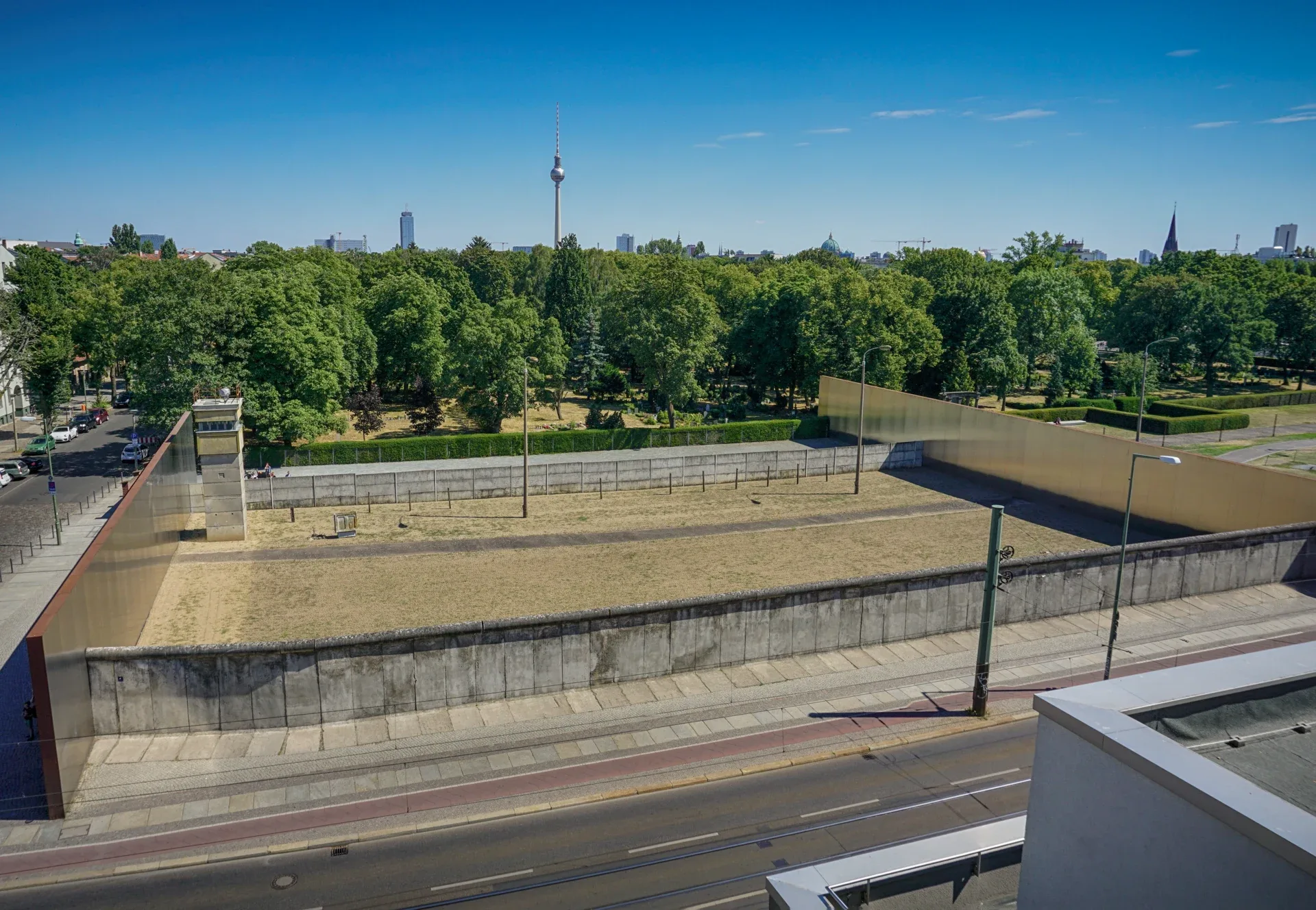
At Bernauer Strasse, the two walls and the monitored strip between them give the former border a tangible presence. To understand the Wall, start by choosing the sites you want to explore, then the kind of guidance: a memorial tour to delve deeper into the division, a private guide to talk in French, or a small group to place this history in the broader story of Berlin. Here are the useful differences between these options and three bookable activities, on foot or by bike.
What to look for in your tour
The first criterion is how much time the itinerary devotes to the Wall. A walk combining the Reichstag, the Memorial to the Murdered Jews of Europe, and Checkpoint Charlie covers several periods in Berlin’s history. It helps you get your bearings on a first visit. To explore how the border worked, the lives of local residents, or escape attempts, choose a tour that includes a substantial section at Bernauer Strasse. The locations of the stops matter more than a pile of historical terms in a tour title.
Next, consider language and format. Three hours of commentary on the Cold War require a comfortable level of understanding: you need to be able to follow the explanations and ask your own questions. A private French-speaking guide is especially suitable for a family or group of friends who want to discuss things together. A small English-speaking group brings in other travelers’ questions and shares the cost of the guide. A bike tour appeals to those who want to connect several sections of the former border.
Finally, distinguish between a private tour and a specialist tour. A private tour reserves the guide for your group; a specialist tour depends on the guide’s knowledge and approach. If you have a family-history research project, a school assignment, or a specific interest in the GDR, describe your topic before booking. You can ask which sites and documents will be used, as well as about the background of the person who will actually lead the tour.
| Option | Language | Duration | Best for |
|---|---|---|---|
| Memorial, institutional interpretation | French on request for groups | About 1 hour for a public tour | Exploring Bernauer Strasse in depth |
| Private Tour Berlin, private tour | French available | 3 h | Discussing several historical periods |
| Insight Cities small group | English | 3 h | Historical introduction, maximum eight |
| Berlin Bike Tour by bike | German | 4 h | Connecting the traces, maximum eight |
On small screens, scroll the table sideways.
The Wall sites
The border, closed beginning August 13, 1961, surrounded West Berlin for about 155 kilometers. It divided neighborhoods in the city center and also ran along its outskirts. Over the years, East German authorities strengthened the system: walls, cleared strips, lighting, surveillance, and obstacles formed a network designed to prevent people from leaving for the West. The fragments visible today are part of this long history, with different configurations depending on the site and period.
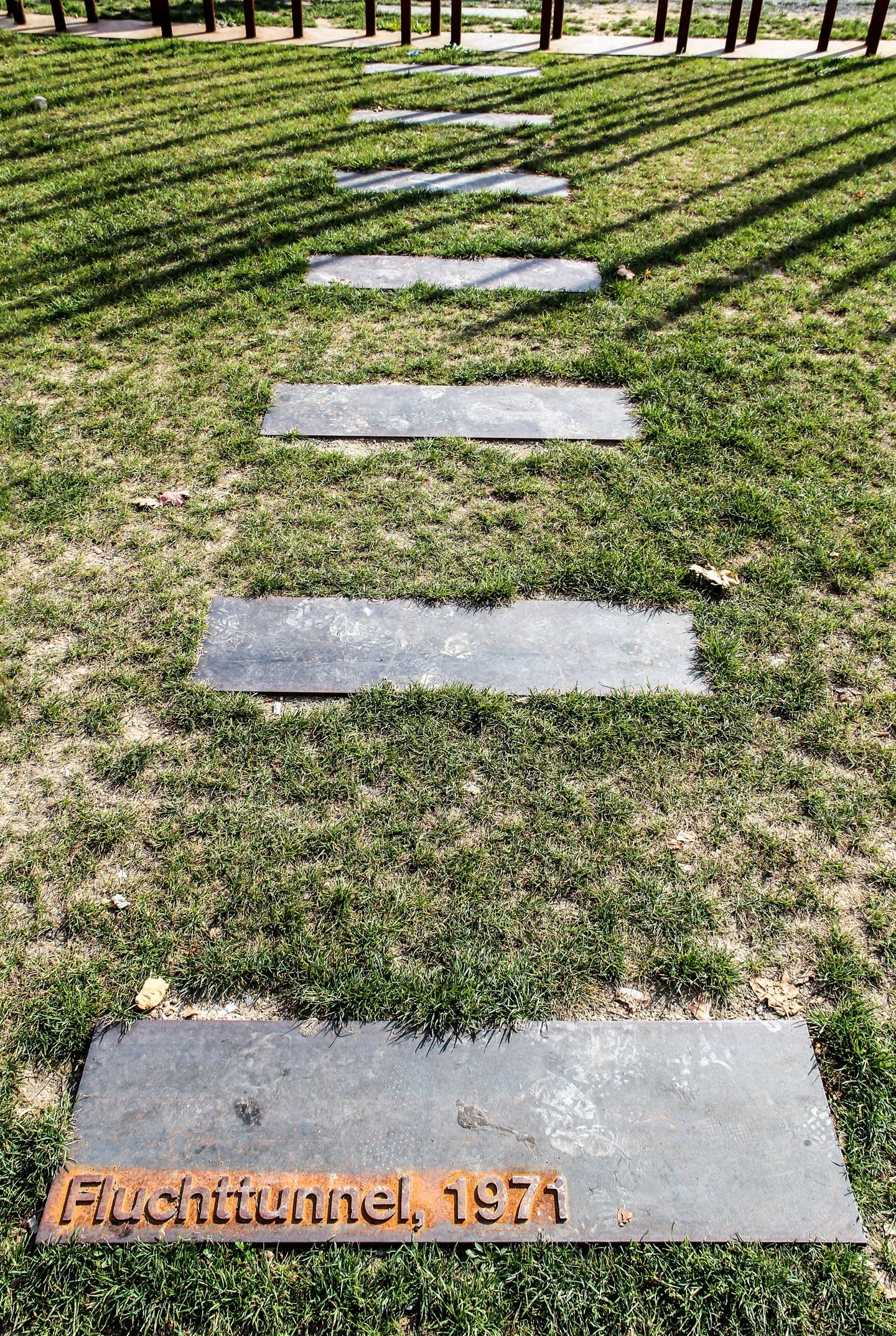
At Bernauer Strasse, the memorial helps visitors understand how the system was laid out. Remnants of the border strip, the foundations of a former apartment building, the Chapel of Reconciliation, and the Window of Remembrance connect the installations to the people affected by the division. The documentation center, across the street, provides historical context. We would prioritize this site for a first visit focused on the Wall.
Checkpoint Charlie offers more insight into crossing the border and relations between the Cold War powers. The site is at the intersection of Friedrichstrasse and Zimmerstrasse. Distinguish between seeing this urban space, the Foundation’s exhibition installations, and the nearby paid venues: a stop on the street does not automatically include museum admission. On a general historical walk, this stop is chiefly an opportunity to explain the checks and the categories of travelers permitted to cross the border.
The East Side Gallery introduces another period: the paintings created after the Wall opened, documented by the Foundation’s online exhibition as they appeared in 1990. Visitors can see how a wall became a canvas for artistic expression. To explore both the border system and its transformation, combine this walk with Bernauer Strasse as two separate stops. That way, you can take in the artworks without cutting short the memorial’s accounts.
Key markers of the division
A few dates can help you make better use of your guide’s explanations. The closure on August 13, 1961, began with barbed wire, followed by the construction of walls and the gradual strengthening of the border. The Foundation explains that the GDR sought to put an end to the mass departures to the West. This timeline helps explain why the surviving remains do not all represent the same version of the system: it changed over nearly three decades.
The opening on November 9, 1989, came in a year of protests, departures, and changes in neighboring countries. Demonstrations and public pressure preceded the confusing announcement of new travel regulations, followed by a rush to the crossing points. During your visit, ask how these events are documented at the site where you are. You can connect a familiar date to a specific place, beyond the image of people climbing onto the Wall.
The physical disappearance of the border continued afterward. Systematic dismantling began in 1990, while some sections were protected. At Bernauer Strasse, preserving the remains and building the memorial also became part of the site’s history. The landscape today is therefore the result of several decisions: to close, transform, demolish, and preserve.
The Bernauer Strasse Memorial
Admission to the memorial’s exhibitions is free. You can explore the site at your own pace, then book a guided visit if you would like to learn more. The Foundation offers public tours and group tours on request. The latter can be arranged in French, subject to guide availability, including for a small group. It is worth checking this option before looking for a commercial private tour covering the whole city.
The general tour focuses on the consequences of the Wall’s construction on this street: families and friends separated, the neighborhood transformed, and escape attempts. Public tours are listed as lasting about one hour. Check the calendar for the language, subject, and departure time; a group tour booked for your date follows a separate process. Admission to the site is free, while guided services have separate terms.
The outdoor exhibition stretches for 1.4 kilometers, with a core section of about 500 meters between Gartenstrasse and Strelitzer Strasse. A good self-guided visit can therefore remain focused. At the visitor center, Bernauer Strasse 119, start by looking at the map; the documentation center is at number 111. The observation tower helps you grasp the width of the former border strip, which is difficult to take in from just one side.
For planning purposes, allow two to three hours to combine the outdoor area, exhibition, and reading breaks. This estimate is longer than the public tour alone. A stop at the Nordbahnhof exhibition on border stations and ghost stations also helps explain how the division affected everyday travel. You can save it for the end rather than loading the guided tour with questions unrelated to its stated subject.


Private tours in French
Private Tour Berlin’s three-hour tour, offered on Viator, provides a private guide, with French among the available languages. It combines themes from the Third Reich, World War II, and the Cold War. We would choose it for a first historical overview of Berlin with teenagers in the family or with friends, when everyone wants to join the conversation easily.
The description lays out a central route, from the Brandenburg Gate and the Reichstag viewed from the outside to sites associated with Nazism, remnants of the Wall, and Checkpoint Charlie. The stop lists on the listing do not all detail the same route: ask them to confirm the itinerary if Bernauer Strasse is your priority. You can then decide to use the private tour for the history of the city center and visit the memorial separately.
The value of this format lies in the conversation. A guide can revisit a timeline, explain a term, or devote an answer to your group’s questions. Mention the topics that matter to you in advance: the construction of the border, everyday life, and the changes after 1989. Also agree on the transportation and exact meeting point; any pickup depends on the location and arrangements confirmed by the provider.
The listing specifies a minimum age of ten and a non-refundable booking. Reserve once your stay and itinerary are settled. It describes the guides as experienced local guides and notes their membership in a professional association; it does not establish that any individual guide holds a history degree. If you need specialized research expertise, ask about the guide’s background before purchasing rather than inferring their qualifications from the tour being private.

Viator
Private historical Berlin tour with a French-speaking guide
For French-language conversation from age ten; confirm the stops you want before booking this non-refundable private tour.
- 3 hours
- 5/5 (11 reviews)
Private walk on the Third Reich and the Cold War; French available, ages ten and up. Confirm the exact route before purchase; sales are non-refundable.
Cancellation policy
All sales are final. Cancellations will not be refunded.
From €335.00
View activityA small group with a historian
Insight Cities offers a three-hour introduction to Berlin in English, with a maximum of eight participants. The inclusions list a historian as the guide; the team description mentions, among others, professors, PhD candidates, and journalists. This option suits those looking for historical discussion in a small group without making the entire tour private. If the guide’s specific background is important to you, you can ask who will lead the tour.
The published route connects several sites in the city center, including the Reichstag, Brandenburg Gate, Museum Island, Unter den Linden, and Potsdamer Platz. It offers an overview of the capital across several periods. We would choose it early in the stay to get a sense of the neighborhoods and main themes, then set aside time to visit Bernauer Strasse independently. The memorial and the East Side Gallery are not included in the published list of stops for this product.
The listed meeting point is in front of Café Einstein, Unter den Linden 42. Any public transport needed during the tour is at your expense, as are meals. Keep your transit ticket handy and plan a break before or after the three hours. The listing states that cancellations made at least twenty-four hours before departure are fully refunded; review the terms that apply to your booking.
With eight people, it is easier to organize discussion than with a large group. Still, the conversation depends on everyone’s interests. Prepare one or two specific questions about the division rather than a full personal itinerary. For a first visit to Berlin, this breadth can be valuable: explanations of the Wall are set within the city’s political and urban history.

Viator
Historical introduction to Berlin with a historian, in English
For an overview of Berlin’s history in a small English-speaking group. Add a self-guided visit to Bernauer Strasse, which is not among the published stops.
- 3 hours
- 5/5 (11 reviews)
Up to eight travelers; historian guide advertised; English. General city-center route; public transportation and meals are separate. Cancellation subject to the 24-hour terms.
Cancellation policy
For a full refund, cancel at least 24 hours before the scheduled departure date.
From €130.00
View activityThe route by bike
The Berlin Bike Tour circuit visits several sites connected with the Wall over four hours. It takes a maximum of eight participants, and the published language for the selected product is German. The tour starts and ends at Bornholmer Strasse 75. The itinerary mentions Bernauer Strasse, Mauerpark, Checkpoint Charlie, and the Brandenburg Gate, among other sites. This option suits German speakers who want to understand the distances and how the neighborhoods changed.
Traveling by bike offers a different perspective on the sequence of sites associated with the border. You can see how its traces fit into streets, parks, and redeveloped spaces. Stops give you time to hear explanations before setting off again. If you want to spend longer reading documents at the documentation center or examining each feature of the memorial, plan another visit: the four hours include the full ride and all the stops.
The listing requires a minimum of three people per booking. The inclusions reviewed name the guides but do not specify whether a bike and equipment are provided: ask them to clarify these details, as well as the available sizes, before paying. If you are traveling with children, check what equipment is accepted and whether they can comfortably keep up with the group. All participants should be able to understand traffic instructions and feel comfortable during the rides between stops.
According to the operator, the tour runs in all weather. Dress for several hours outdoors, taking wind and stationary breaks into account. The terms reviewed provide a full refund for cancellations made at least twenty-four hours in advance, as well as the possibility of cancellation if there are not enough people for the tour to run. Review the terms for your time slot and keep a walking tour as a backup in your itinerary.

Viator
The Berlin Wall by bike, in German
For connecting the Wall’s different areas if you understand German and are comfortable cycling. Check the equipment and three-person minimum before purchasing.
- 4 hours
- 5/5 (17 reviews)
Up to eight travelers; departure and return at Bornholmer Strasse 75; German. Minimum of three people per booking; confirm whether bikes are provided.
Cancellation policy
For a full refund, cancel at least 24 hours before the scheduled departure date.
From €34.00
View activityLanguage and qualifications
When choosing between two guides, start by defining what you want to understand. An introduction to the division should connect politics, urban space, and individual lives. Research into a family escape calls for more targeted sources and preparation. Ask how the provider would approach your question, which sites they recommend, and whether they can confirm the guide’s identity. A concrete answer will tell you more than a marketing adjective.
The French-language option must be available on the date and for the version you purchase. In the selection presented here, Private Tour Berlin offers it; the Insight Cities small-group tour is in English, and the Berlin Bike Tour is in German. French-language institutional tours require a specific request and depend on availability. Choose your language before planning the rest of the day around a departure time.
The Tränenpalast offers an interesting complement for stories of crossing the border and separation. The former border crossing at Friedrichstrasse now houses a free exhibition. The museum offers group tours in several languages, including French, and asks visitors making requests in other languages to contact its visitor services at least six weeks in advance. This advance planning works well for a school or association group whose dates are already set.
The cost of a guided tour
Compare prices for the group you actually have. A private tour rate may depend on the group composition you enter, while a shared group is generally booked per traveler. Enter all adults and the children’s ages, then review what is included and any additional fees. Linked cards bring together the available commercial information; the final price is the one for the option and date you choose.
At the memorial, you can spend your budget on interpretation rather than admission, since the exhibitions are free. A group booking with the Foundation may suit a language or educational need. For a broader commercial walking tour, check transportation, any admission fees, and the meeting point. A guide outside a museum, admission to that museum, and a tour inside it are separate services to identify.
The best use of a private tour depends on the time spent together. For several people sharing the same interest, three hours of conversation in a common language may justify the cost. For a solo traveler comfortable in English, a small group is another way to get historical guidance. If your question is exclusively about Bernauer Strasse, first look at the memorial’s offering: you can focus the explanations on the site you are studying.
The pace of the day
For a day devoted to the Wall, we would suggest visiting Bernauer Strasse in the morning, taking a lunch break, then choosing a second segment based on your interests. The Tränenpalast continues the discussion of crossing the border; the East Side Gallery opens up questions about art and the changes after 1989. This itinerary is only a suggestion to adapt to opening hours; there is no need to add these places to an already long guided tour.
The memorial’s visitor and documentation centers list opening hours of Tuesday to Sunday, 10 a.m. to 6 p.m., with the last ascent to the tower at 5:45 p.m. The outdoor exhibition is accessible every day from 8 a.m. to 10 p.m. Check for special hours around public holidays and commemorations. At the Tränenpalast, usual hours are 9 a.m. to 6 p.m. Tuesday to Friday, and 10 a.m. to 6 p.m. on weekends.
With children, start with things they can observe: the two sides of the border, the space between them, a vanished house, or traces of a crossing. Let their questions guide how long you stay. Testimonies and memorial installations call for restraint; plan breaks rather than a succession of dramatic stories. Ask explicitly when booking for a format suited to their age.
In autumn and winter, a walking route can more easily alternate between outdoor areas and exhibitions. Bring warm clothing for explanations while standing still, and shoes suitable for several hours of walking. For accessibility, the memorial provides detailed information about elevators, loaned seats, and outdoor surfaces. Describe your actual needs to the visitor service; a private tour also lets you agree on distances and breaks in advance.
FAQ
Can you visit the Berlin Wall for free?
Yes. The exhibitions at Bernauer Strasse are free and allow for a substantial self-guided visit. The Tränenpalast also offers free admission. Guided services are booked under their own terms; choose an interpretive tour for dialogue and additional explanations. You can therefore plan an informative day without buying a commercial tour, while checking the opening hours of indoor spaces.
Does a private tour guarantee a historian?
A private tour reserves the guide for your group. To find out the guide’s qualifications, ask about their background and specialty. In our selection, Insight Cities advertises a historian for its introductory group tour in English; Private Tour Berlin presents local guides for its private walk. If you are researching a specific topic, confirm the expected expertise before booking.
Which option should I choose for a tour in French?
Private Tour Berlin’s three-hour private tour offers French among its languages. Select it when booking and confirm the route. To focus on the memorial, contact the Berlin Wall Foundation: it organizes French-language group tours subject to availability. The Tränenpalast also accepts requests from French-speaking groups, with a stated preparation lead time of at least six weeks.
How much time should I spend at Bernauer Strasse?
Allow two to three hours if you want to combine the outdoor remains, the tower, and the exhibition, with time for reading. This is a planning estimate. A public guided tour lasts about an hour, and you can add your own visit afterward. The outdoor exhibition extends for 1.4 kilometers; focusing on its main section can reduce the amount of walking.
Should I choose Bernauer Strasse or the East Side Gallery?
Choose Bernauer Strasse to understand the border system and its consequences for residents. The East Side Gallery is more relevant for viewing the paintings and artistic expression after the opening. The two visits complement each other. With only half a day and a historical focus on the Wall, we would choose the memorial; with more time, add the murals on a separate walk.
Are the tours suitable for children?
Adapt the duration, vocabulary, and topics to their age. The selected private tour specifies a minimum age of ten. The Foundation also offers formats for children and families, which you can assess for your group. For cycling, ask about age and equipment requirements, then consider whether everyone can manage the routes and follow the instructions in German.
Is the memorial wheelchair accessible?
The visitor and documentation centers have adapted access and elevators; the site explains how to obtain the elevator key. Most of the outdoor exhibition is accessible, although some sections should be checked against your needs. Contact the visitor service to plan the route and arrange any useful assistance. An accessibility claim for a commercial tour also warrants checking the route and any transportation included in that service.
Can I change or cancel the selected activities?
Terms vary: the Private Tour Berlin private tour is listed as non-refundable; Insight Cities and Berlin Bike Tour products provide a full refund for cancellations made at least twenty-four hours in advance. Check the terms of your booking and the cancellation deadline. Agree on a customized route or language change with the operator; a product being listed as active does not guarantee availability on your date.
Sources and checks
Plan your visits and check current conditions.
- History of the Berlin Wall ↗
Berlin Wall Foundation · Accessed October 31, 2026
What this source supports
August 13, 1961; November 9, 1989; a 155 km border around West Berlin, the development of border barriers, demonstrations and departures in 1989; dismantling and preservation of remnants in 1990.
- The memorial sites ↗
Berlin Wall Foundation · Accessed October 31, 2026
What this source supports
Border strip, tower, chapel, Window of Remembrance, foundations, and exhibition on ghost stations at Nordbahnhof.
- Visiting Bernauer Strasse ↗
Berlin Wall Foundation · Accessed October 31, 2026
What this source supports
Free admission; outdoor area daily 8 a.m.–10 p.m., centers Tuesday–Sunday 10 a.m.–6 p.m., last ascent at 5:45 p.m.; 1.4 km, with a 500 m core area; French-language group tours subject to availability, accessibility, and assistance.
- Memorial tours ↗
Berlin Wall Foundation · Accessed October 31, 2026
What this source supports
Public tours last about one hour; groups by request, check the schedule.
- East Side Gallery ↗
Berlin Wall Foundation · Accessed October 31, 2026
What this source supports
Online exhibition documenting the artworks as they appeared in 1990.
- The Checkpoint Charlie site ↗
Berlin Wall Foundation · Accessed October 31, 2026
What this source supports
Friedrichstrasse/Zimmerstrasse intersection; memorial installations distinct from nearby private museums.
- Tränenpalast: visiting and languages ↗
Stiftung Haus der Geschichte · Accessed October 31, 2026
What this source supports
Free admission; Tuesday–Friday 9 a.m.–6 p.m., weekends 10 a.m.–6 p.m.; French-speaking groups by request at least six weeks in advance.
- Private historical Berlin tour with a French-speaking guide ↗
Private Tour Berlin via Viator Partner API · Accessed October 31, 2026
What this source supports
Product ACTIVE at the time of checking, with no guaranteed availability. Private walk covering the Third Reich and the Cold War; French available, ages ten and up. Confirm the precise route before purchase; non-refundable. Duration: 3 hours. Affiliate link received through our API.
- Historical introduction to Berlin with a historian, in English ↗
Insight Cities via Viator Partner API · Accessed October 31, 2026
What this source supports
Product ACTIVE at the time of checking, with no guaranteed availability. Maximum eight travelers, guide described as a historian, English. General city-center route; public transport and meals are separate. Cancellation subject to 24-hour terms. Duration: 3 hours. Affiliate link received through our API.
- The Berlin Wall by bike, in German ↗
Berlin Bike Tour via Viator Partner API · Accessed October 31, 2026
What this source supports
Product ACTIVE at the time of checking, with no guaranteed availability. Maximum eight travelers; departure and return at Bornholmer Strasse 75, German. Minimum of three people per booking; confirm whether bikes are provided. Duration: 4 hours. Affiliate link received through our API.
- File:Berlin Wall Bernauer Strasse.jpg ↗
Wikimedia Commons · Accessed October 31, 2026
What this source supports
CC BY-SA 4.0 license; author checked file by file. Decoded original 5712 × 3952; derivative 1920 × 1328; visual check completed.
- File:Berlin, Bernauer Straße -- 2011 -- 2524.jpg ↗
Wikimedia Commons · Accessed October 31, 2026
What this source supports
CC BY-SA 4.0 license; author checked file by file. Decoded original 3199 × 4767; derivative 1440 × 2146; visual check completed.
Viator — activity pages
Source for the activity information below.Affiliate links: Odyvero may earn a commission when you book through this article’s buttons.
- Private historical Berlin tour with a French-speaking guide ↗
Accessed October 31, 2026
- Historical introduction to Berlin with a historian, in English ↗
Accessed October 31, 2026
- The Berlin Wall by bike, in German ↗
Accessed October 31, 2026


