 odyvero
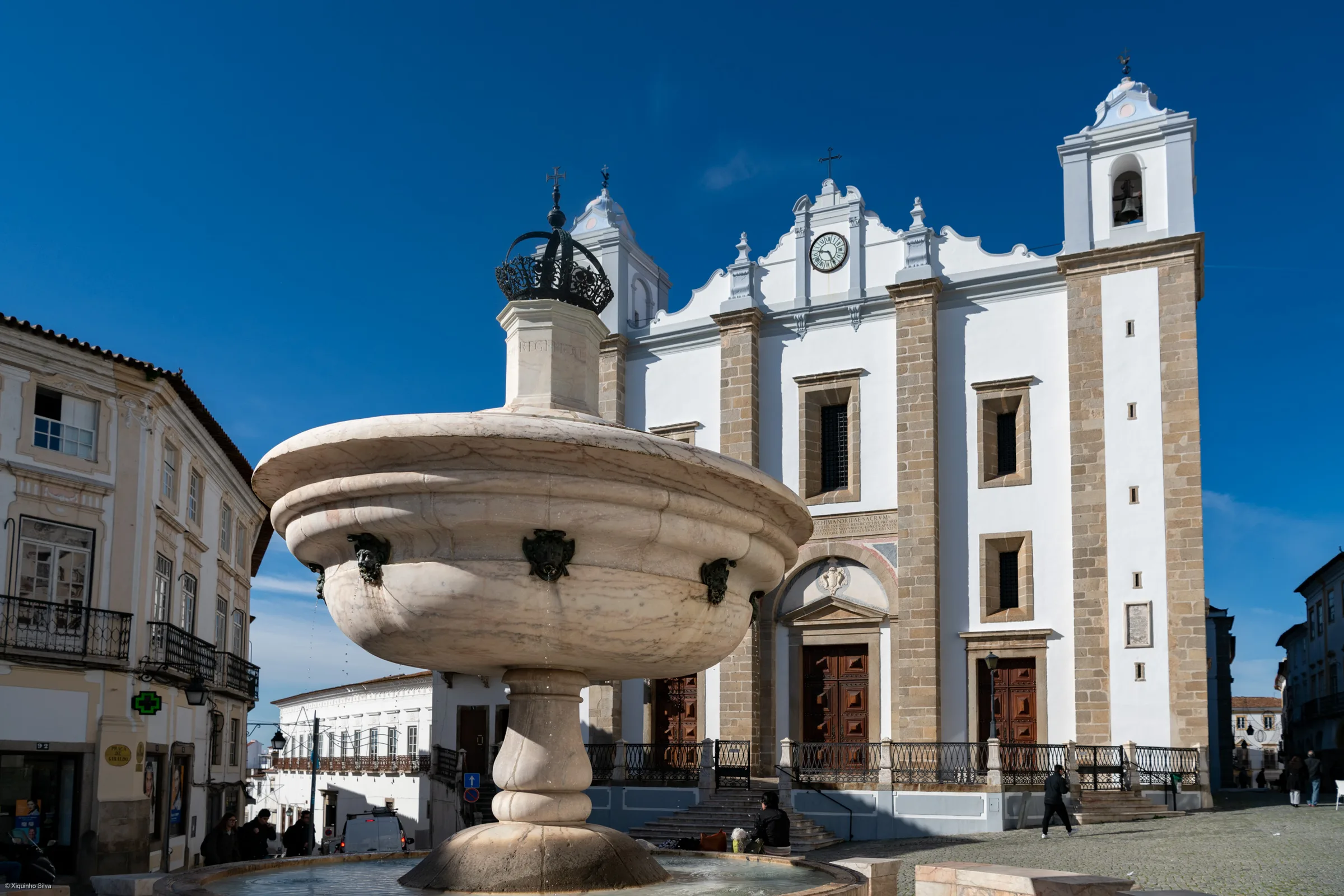
From Praça do Giraldo, the streets climb towards the cathedral and Roman temple, then descend between white houses and small squares. Évora makes it possible to spend a week in a single base, with visits on foot, Alentejo meals and a day among the vineyards with a driver. Here’s how to organise six nights without renting a car, making real room for breaks and neighbourhoods.
Évora, a base for seven days
Évora’s historic centre has been a World Heritage Site since 1986. Within its urban area, the city brings together Roman remains, religious buildings, palaces and a 16th-century aqueduct. Their proximity makes it possible to spread your discoveries over several days instead of cramming them between two long journeys. The hill does mean some steep climbs, and the cobblestones slow you down: where you stay matters as much as the list of monuments.
A week works well if you enjoy taking in the architecture, lingering over lunch and returning to a neighbourhood at different times of day. Our plan is based on six nights in the same accommodation, five full days and two travel days. It leaves room for an organised outing in the surrounding area. If your trip is mainly about major sights, a shorter stay can still make sense; here, unbooked time is part of the itinerary.
Praça do Giraldo serves as your daily landmark. You can return after a visit, take a different street and head back without repacking your bags. This arrangement also makes travelling as a group easier: one person can extend their walk while another goes back to the accommodation. Simply agree on a meeting point and a meal time rather than making everyone follow the same pace.
The journey from Lisbon
The municipality estimates that it takes about an hour and a half to reach Évora by train from Lisbon. It also gives an approximate journey time of one hour and thirty minutes to one hour and forty-five minutes by coach. Use these estimates to compare options; check departures, fares and any disruptions for your date with CP or Rede Expressos. Choose the connection that fits with your arrival in Lisbon, your accommodation and your return journey.
According to the same municipal source, the railway station is about a twenty-minute walk from the historic centre, compared with around ten minutes from the bus terminal. If you have a suitcase, it’s worth checking this final stretch on a map. The journey will take longer depending on which street you’re staying on, the heat and how comfortable you are on cobblestones. Taking a taxi on arrival may be more comfortable than walking uphill to your accommodation with luggage.
For your first day, plan only to settle in, take an orientation walk and have dinner. A tight connection followed by a timed visit ticket adds an unnecessary constraint. For the return journey, work backwards from your train or coach departure to calculate when to leave your accommodation, allowing extra time to reach the terminal. If you’re continuing to another region of Portugal, check the entire chain of connections before booking.
Accommodation in the centre
Staying around Giraldo or Porta de Moura, or on a street with easy access to these landmarks, makes your days simpler. Compare the actual route to the entrance, the stairs and the distance to the places you’ll visit. An address that looks close on a map may be on a steep hill or behind an inconvenient access point if you have luggage. Also ask how taxi arrivals work in the old town.
For a six-night stay, a few amenities become important: somewhere to sit other than the bed, a way to keep drinks cool, good blackout curtains and surroundings that suit your sleep. A kitchen lets you prepare a simple meal on some evenings, without making it an obligation. If you’re travelling during a hot period, confirm that the room you’ve booked has a cooling system.
The old centre is still a residential neighbourhood. Check the rental terms, the number of people allowed and the noise rules. Choosing accommodation suited to the length of your stay avoids compensating for every discomfort with another expense or trip. If you have limited mobility, confirm the steps from the street, whether there is a lift and access to the bathroom; the general description “central” tells you none of these things.
The temple and the upper town
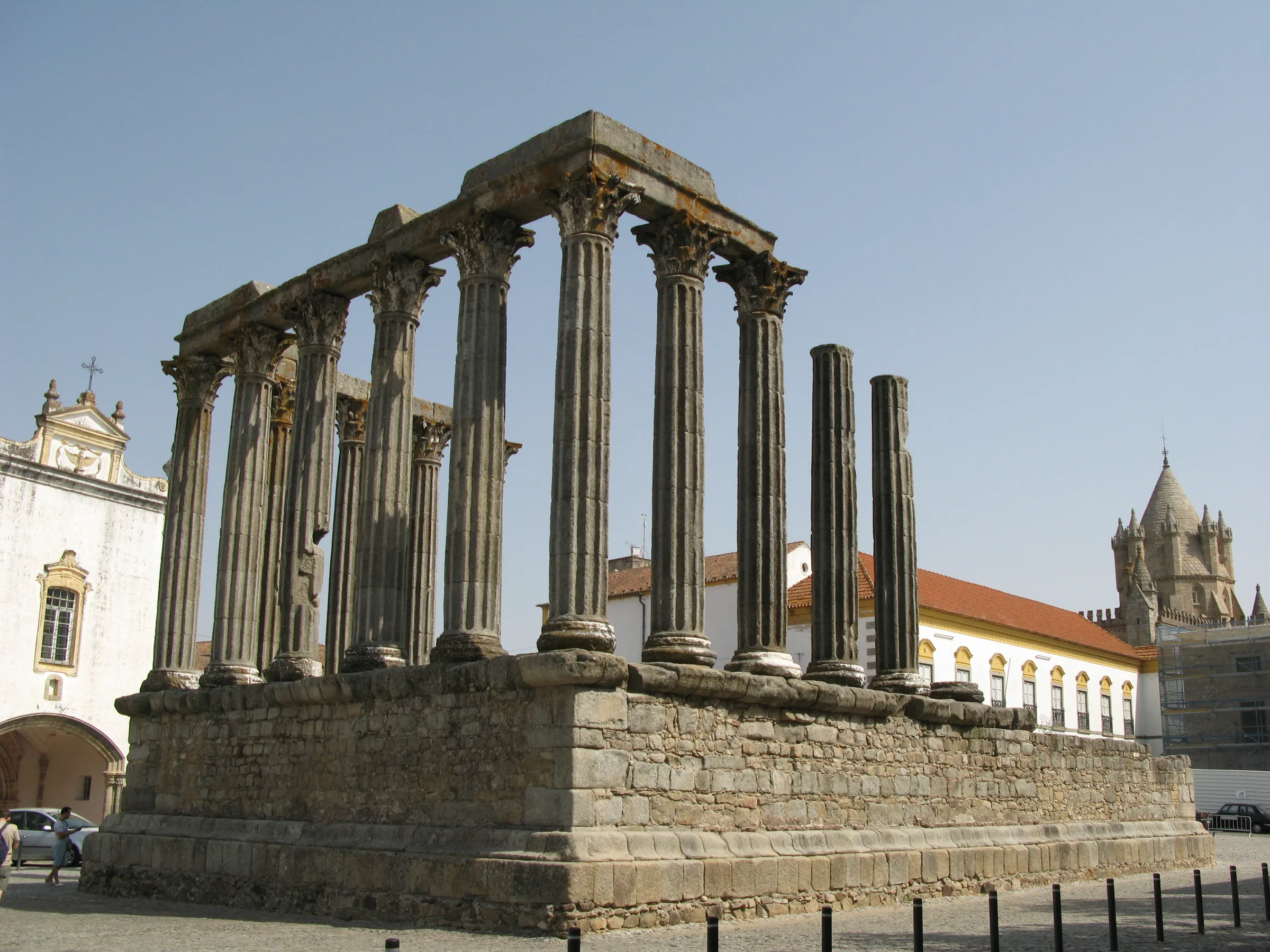
The Roman temple and the cathedral provide a first route to follow. Walk uphill from Giraldo, noting the changing slopes, façades and views between the streets. The regional tourist board lists these monuments among Évora’s major landmarks. Their proximity makes it possible to visit both in one outing, then return separately for an interior visit, depending on the access available.
At the temple, take time to look at the platform and columns from several accessible sides. The monument’s place in the present-day city helps explain some of the site’s appeal: you discover the remains among buildings and everyday activity. An outdoor visit can already fill a morning, including the climb and breaks, without needing to add several admission tickets.
For the cathedral, check which areas are open and the day’s access conditions before deciding how to visit. If religious architecture is your priority, give it most of the time in this half-day. If you’d rather take in the city as a whole, continue to the nearby squares and palace façades. Access to religious or university spaces follows its own rules; an open door from the street doesn’t mean every building is accessible.


São Francisco and the palace
The São Francisco complex offers another way to read the city. The operator distinguishes between the church, which is free to enter, and the museum spaces covered by a single ticket. The Capela dos Ossos is among them, along with other rooms and collections. So check what the visit includes before planning a quick stop between meals: how long you spend there depends on your interest in the complex as a whole.
The chapel was built in the 17th century. Its walls and pillars are covered with thousands of bones and skulls from burial areas associated with the convent. According to the church’s website, this decoration invited visitors to reflect on the fleeting nature of human life. This religious dimension helps explain the place. If you’re visiting with children, explain what they will see and let them opt out of this part of the visit.
Palácio de D. Manuel houses the city’s Interpretation Centre. The municipality presents a journey through twenty centuries of history, using objects, images, sounds and multimedia displays. It’s a good place to visit early in your stay to put the monuments in chronological context. You can also save it for a day when the weather is less suitable for walking. Check its opening days before adding it to your plans, especially if your stay includes a Sunday.
The aqueduct and the lower streets
According to the municipality, the Aqueduto da Água da Prata was completed in 1537. It offers a change of subject after the monuments in the upper town. Set aside another walk for the urban sections of the aqueduct and the surrounding streets. You’ll have more time to look at how the structure relates to the houses than if you add it to the end of an already full day.
The historic centre retains a network of narrow streets and an architecture of low, often white houses, as described in the municipality’s heritage overview. Porta de Moura and Giraldo are two landmarks you can use to vary your walks. Return by a different street, look at the thresholds, window frames and azulejo details, and stop when your group has had enough. You don’t need to complete a full route to make the outing worthwhile.
To extend your walk beyond the centre, check the exact route, distance and return journey. The existence of an aqueduct does not guarantee a continuous or accessible trail along its entire length. This guide deliberately focuses on urban walks; a countryside hike requires separate planning. In town, the Linha Azul offers an alternative to walking, with northern and southern routes listed by the municipality. Check the relevant service for the day of your visit.
Alentejan meals
Bread, olive oil and coriander feature prominently in the cuisine described by Turismo do Alentejo. Açorda and migas are good ways to explore this cuisine through dishes in which bread plays a central role. Cheeses and convent sweets offer other options for varying your meals during the week. Ask about the exact ingredients: the name of a specialty doesn’t tell you all its variations.
Spread out your discoveries rather than ordering every specialty at your first dinner. You could try a bread-based dish at one lunch, a meat or fish dish from the menu at another, then stop for a pastry. This gives you time to work out what you like and ask for recommendations. If you have an allergy or follow a vegetarian diet, confirm the stock, garnish and cooking fats directly with the restaurant.
Leave some flexibility for everyday meals. After a long visit, a simple dish near your accommodation may be more appealing than crossing town again. Conversely, a carefully chosen lunch can be the main activity of a quiet day. Check the opening days of places you’ve shortlisted, book ahead if a particular meal matters to you, and have a nearby backup for other evenings.
A day in the vineyards
A wine tour with transport adds a countryside experience to this city break. Viator’s Vititours listing for the area around Évora combines two wineries, tastings and lunch in a day lasting about seven hours. Transport in an air-conditioned vehicle is included. This option suits you if you want to visit wineries without arranging transport between them yourself or driving after the tastings.
The listing describes several possible routes around Évora, including Reguengos, Arraiolos, Vidigueira, Redondo and Estremoz. The itinerary depends on the operator’s arrangements: you won’t visit all these areas in one day. The languages offered in the listing we consulted are Portuguese, English and Spanish. Choose a language in which you can follow the explanations about the wines and ask questions.
Before booking, confirm the meeting point or pickup arrangements that apply to your accommodation. Also mention any dietary requirements for lunch. Set aside a full day for this outing and keep the evening free. The following day can be less demanding and focused on the city: you can return to visits you skipped, browse a shop or simply spend time in your neighbourhood.

Viator
Two wineries near Évora, lunch, and transportation
A countryside day with two wineries and lunch, while keeping your accommodation in Évora and avoiding driving after the tastings. Confirm the pickup arrangements and choose one of the offered languages.
- 7 hours
- 5/5 (11 reviews)
Seven-hour day trip with two wineries, tastings, lunch, and transportation around Évora. Portuguese, English, or Spanish; meeting point or pickup to be confirmed.
Cancellation policy
For a full refund, cancel at least 24 hours before the scheduled departure date.
From €280.00
View activityThe seven-day itinerary
Day one is for getting to Évora and settling in. A short loop around Giraldo lets you find your way back, locate restaurants and note a few streets you’d like to revisit. Save indoor visits for the next day. Keeping your arrival day light leaves room for transport delays or a rest if you need one.
On day two, you can explore the upper town and the Roman temple. Then choose between visiting the cathedral and spending the afternoon walking, depending on your interests and access conditions. Day three works well for São Francisco and its museum spaces, with a leisurely lunch. The Interpretation Centre can round out the day or be moved to day six if you’d rather limit the number of visits.
Set aside day four for the aqueduct and lower streets. Keep the afternoon free for a meal, shopping or a break at your accommodation. The wine tour fits on day five, subject to the available departure dates. If it isn’t available that day, swap it with another full day: urban walks are easier to reschedule than a booked activity.
Day six gives you time to explore a place in more depth, visit the Interpretation Centre or repeat a walk you enjoyed. Keep day seven centred on your departure. This itinerary suggests a pace; it isn’t an opening-hours calendar. Check closing days for your travel dates. Whether travelling as a couple or with family, agree on the visit that matters most to you before booking the other time slots.
Season and budget
For a trip spent mainly on foot, we recommend spring or early autumn. This is a choice made for comfort while sightseeing, and should be adjusted to the forecast and your tolerance for heat. In summer, take longer walks early in the day and choose accommodation where you can take a break. In winter, spread out your visits with shorter days and possible spells of rain in mind.
São Francisco publishes winter opening hours of 9 a.m. to 5 p.m., with a later closing time during daylight saving time. The site also lists specific closure dates, including January 1 and December 25. If you’re travelling around the holidays, check each venue separately. The Interpretation Centre, meanwhile, lists opening hours from Monday to Saturday, with a midday break. These differences may mean moving a visit to another day.
Build your budget around six nights at the rate actually offered, transport to Évora, meals, chosen admission tickets and, if applicable, the wine tour. Add a buffer for taxis and unexpected costs. Staying in one place avoids some transfers between accommodations, but the total depends first and foremost on where you stay and where you choose to eat. Compare bookings with equivalent cancellation terms and check what is already included before adding up the costs.
FAQ
Is a week in Évora too long?
A week works well if meals, walks and free time matter as much to you as the monuments. With six nights, you have five full days, one of which can be devoted to the vineyards. If you only want to see the main sights before moving on to another region, choose a shorter stay. This itinerary assumes you enjoy returning to the same neighbourhoods.
How do you get to Évora from Lisbon without a car?
The train and coach are the two options presented by the municipality. It indicates about an hour and a half by train and between an hour and a half and an hour and forty-five minutes by coach. The bus station is said to be closer on foot to the center than the railway station. Compare schedules for your date, then check the final leg to your accommodation with your luggage.
Can you visit the surrounding area without renting a car?
Yes, with an excursion that includes transportation or an organized trip to a specific destination. The recommended wine-country day trip includes a vehicle, visits, and lunch; the meeting point must be confirmed with the operator. For an independent outing by coach, check the return journey before setting out, especially at the weekend. A car-free stay works best with only a few excursions and full days in the city.
When is the best time to walk around Évora?
We recommend spring or early autumn for this walking itinerary, subject to the weather conditions during your stay. In hot weather, shorten walks during the hottest hours and take breaks indoors. In winter, plan an alternative in case of rain and check closing times. The pace should also take account of hills and cobblestones.
Is the Capela dos Ossos suitable for children?
The visit features real human bones on the walls and pillars. Explain this before entering and consider the child’s sensitivities when deciding whether to visit. The São Francisco complex includes other areas, and the church is free to visit according to its operator. One adult can stay outside with a child while the others visit the chapel, after agreeing on a meeting point.
Is the vineyard outing conducted in French?
The listing we consulted offers Portuguese, English, and Spanish. Choose this activity if one of these languages suits you, and confirm the language for your departure when booking. The package lasts about seven hours and includes two wineries, tastings, lunch, and transportation. Provide your address and dietary requirements so you can confirm the arrangements before paying.
Do you need to buy an eSIM for this trip?
First check your plan’s roaming terms in Portugal, including the data allowance and any fees. If you have a suitable French mobile plan, an additional purchase may not be necessary. Download a map of the center and keep your transport and accommodation confirmations available offline. If your plan does not cover the country, compare a local option that is compatible with your phone.
Sources and checks
Plan your visits and check current conditions.
- Historic centre, UNESCO and aqueduct
Municipality of Évora · Accessed November 2, 2026
What this source supports
Historic centre listed in 1986; hilly city, narrow streets, Giraldo, Porta de Moura, aqueduct completed in 1537.
- Getting there by train and coach
Municipality of Évora · Accessed November 2, 2026
What this source supports
Municipal estimates: around 1 hour 30 minutes by train from Lisbon, 1 hour 30 minutes to 1 hour 45 minutes by coach; the railway station is a twenty-minute walk from the centre, and the bus terminal is ten minutes away. Check dated schedules and prices with the operators.
- Getting around the city
Municipality of Évora · Accessed November 2, 2026
What this source supports
Linha Azul: two routes, north and south; taxis available. No specific service timetable is promised.
- City interpretation centre
Municipality of Évora · Accessed November 2, 2026
What this source supports
At Palácio de D. Manuel, twenty centuries of history; hours listed as Monday to Saturday, 9:30 am–12:30 pm and 2 pm–6 pm.
- The Capela dos Ossos
Igreja de São Francisco · Accessed November 2, 2026
What this source supports
17th century; bones and skulls from the convent’s burial areas, with a religious intention of reflecting on human life.
- Access to São Francisco
Igreja de São Francisco · Accessed November 2, 2026
What this source supports
Free entry to the church; museum spaces require a single ticket. Winter hours: 9 am–5 pm; summer hours: 9 am–6:30 pm. Certain closures apply, including 1 January and 25 December.
- Évora’s heritage
Turismo do Alentejo · Accessed November 2, 2026
What this source supports
The Roman temple, cathedral, Giraldo, palaces and university are among the city’s heritage landmarks.
- Alentejo cuisine
Turismo do Alentejo · Accessed November 2, 2026
What this source supports
Bread, olive oil, coriander, açorda, migas, cheeses and convent sweets; check variations for dietary requirements.
- Two wineries near Évora — 5497760P1
Viator / Vititours · Accessed November 2, 2026
What this source supports
Partner API listing consulted: product ACTIVE, seven hours, two wineries with tastings, lunch and transport, in Portuguese/English/Spanish. Meeting point or pickup to be confirmed. The central catalogue retains variable details and the exact product photo.
- Photograph: fountain at Praça do Giraldo
Wikimedia Commons · Accessed November 2, 2026
What this source supports
xiquinhosilva / Wikimedia Commons; CC BY 2.0; individual licence verified, original downloaded and visually checked; bytes uploaded via media/upload. Original 2560 × 1707 px, not enlarged.
- Photograph: Roman temple of Évora
Wikimedia Commons · Accessed November 2, 2026
What this source supports
ho visto nina volare / Wikimedia Commons; CC BY-SA 2.0; individual licence verified, original downloaded and visually checked; bytes uploaded via media/upload. Original 3648 × 2736 px, not enlarged.
Viator — activity pages
Information about the offers featured in this article.Affiliate links: Odyvero may earn a commission when you book through this article’s buttons.
- Viator : Two wineries near Évora, lunch, and transportation
Accessed November 2, 2026


