 odyvero
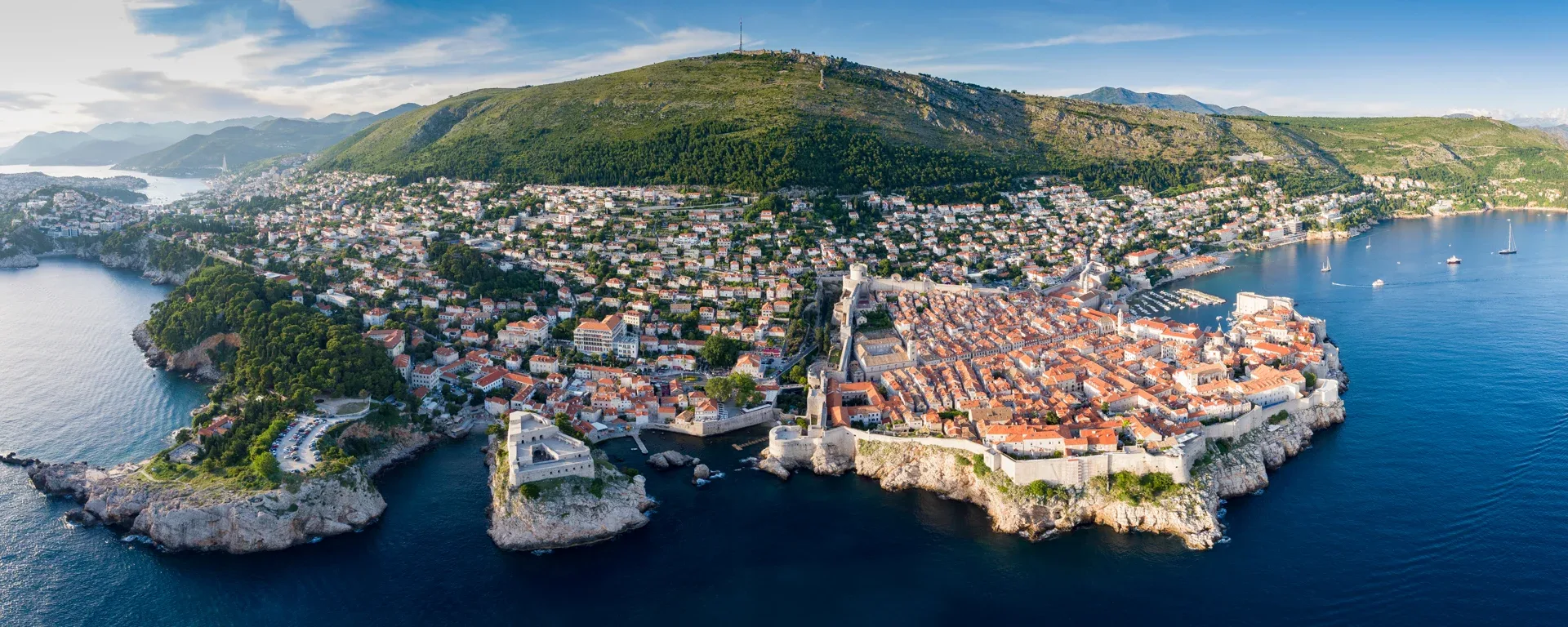
Three nights in Split, three in Hvar, three in Korčula, and four in Dubrovnik: this journey through Dalmatia leaves time for stone-built towns, swimming, and meals by the harbor. Here is a 14-day itinerary to plan around boat connections, with good places to stay and an alternative for when seasonal services stop running.
Four Bases on the Dalmatian Coast
In Split, the passageways of Diocletian’s Palace open onto lively squares and the Riva. In Korčula, the old town’s lanes form a dense network behind the fortifications. Both stops are easy to explore on foot, but the journey connecting them requires careful choices about ports. On an island, the destination name alone may not tell you where you will disembark.
We suggest traveling from north to south: arrive in Split, stay in Hvar Town, stop in Korčula Town, then depart from Dubrovnik. Compare flights to two different airports before booking a round trip. Any additional airfare should be weighed against the return journey, its overnight stay, and the time it takes. The route can also be done in reverse if the flights and boats work better that way.
The fourteen days here mean thirteen nights on the ground. The first day is for arrival, the last for departure. Three accommodation changes structure the trip; the days between those moves remain free for sightseeing. This distribution suits a first trip combining heritage and the sea, with luggage you can carry yourself.
Vis, Brač, Mljet, and the Pelješac Peninsula deserve separate trips or a revised itinerary. Vis, in particular, has a connection to Split in the Jadrolinija network: adding it to this route means reworking the crossings and taking nights away from elsewhere. For this first itinerary, we favor sleeping on two islands rather than arriving somewhere new almost every day.
The Crossing Season
From May to September, this itinerary works well for a vacation on the coast and islands. June and September are our first suggestions if you want to combine town visits with time by the water without choosing the height of the summer holiday season. Swimming depends on the weather and your own comfort; no week guarantees calm seas.
The key distinction is between year-round and seasonal services. Hvar’s tourist board lists regular ferries between Split and Stari Grad throughout the year. Catamarans that connect several islands follow their own schedules. Check each leg separately, even when several towns appear on the same route.
TP Line’s 2026 document for route 842 connects Dubrovnik, Korčula, Hvar, Milna, and Split from 1 April to 31 October, with directional restrictions at the start and end of the season. This schedule describes operations for that year. It does not confirm service for a departure the following year: wait for the schedule matching your trip before locking in the entire chain of accommodation bookings.
In late October or winter, plan a mainland-based itinerary instead, with an island accessible from a fixed base. The towns and their heritage remain good reasons to visit; museum hours, open restaurants, and boat excursions require closer checking then. Our off-season alternative appears below.
Days 1 to 3: Split
On the first day, get to your accommodation and familiarize yourself with the waterfront, the old town, and the departure port. A walk along the Riva helps you find your way to the palace without requiring a full visit after your journey. Use the opportunity to check the route to your boat on day 4: an early departure is easier when you already know where the quay is.
The second day can focus on Diocletian’s Palace. The Peristyle, Vestibule, gates, and passageways reveal the layout of an ancient complex that has become part of the city. Combine a walk through the streets with selected visits to monuments. Keep these two expenses separate when planning your budget: exploring the public spaces and visiting the interiors do not require the same tickets.
A guided walk is useful at this point in the trip, before returning on your own to places that interest you. We have selected the historical tour with Daniela: the product lists a duration of about one hour and forty-five minutes to two hours, with an English-speaking guide and a meeting point at the Bronze Gate on the Riva. The group tour requires a minimum of four and a maximum of fifteen participants. Confirm which option is actually offered on your date.
Tickets for the cellars, cathedral, bell tower, and Temple of Jupiter are separate and optional. The tour therefore provides context for exploring the city; afterward, you can spend the afternoon visiting the interiors you have chosen, taking a café break, or going for another walk. The terms and commercial details for this activity are listed on its card.
On the third day, keep the day free of transport bookings. A walk toward the Marjan area is a good option if you want to get a higher vantage point and leave the central passageways behind. Adjust the route to the heat and how much you feel like walking, then return to town for lunch. A more relaxed day in Split works just as well: shopping, swimming if conditions allow, and getting your bags ready all fit here.
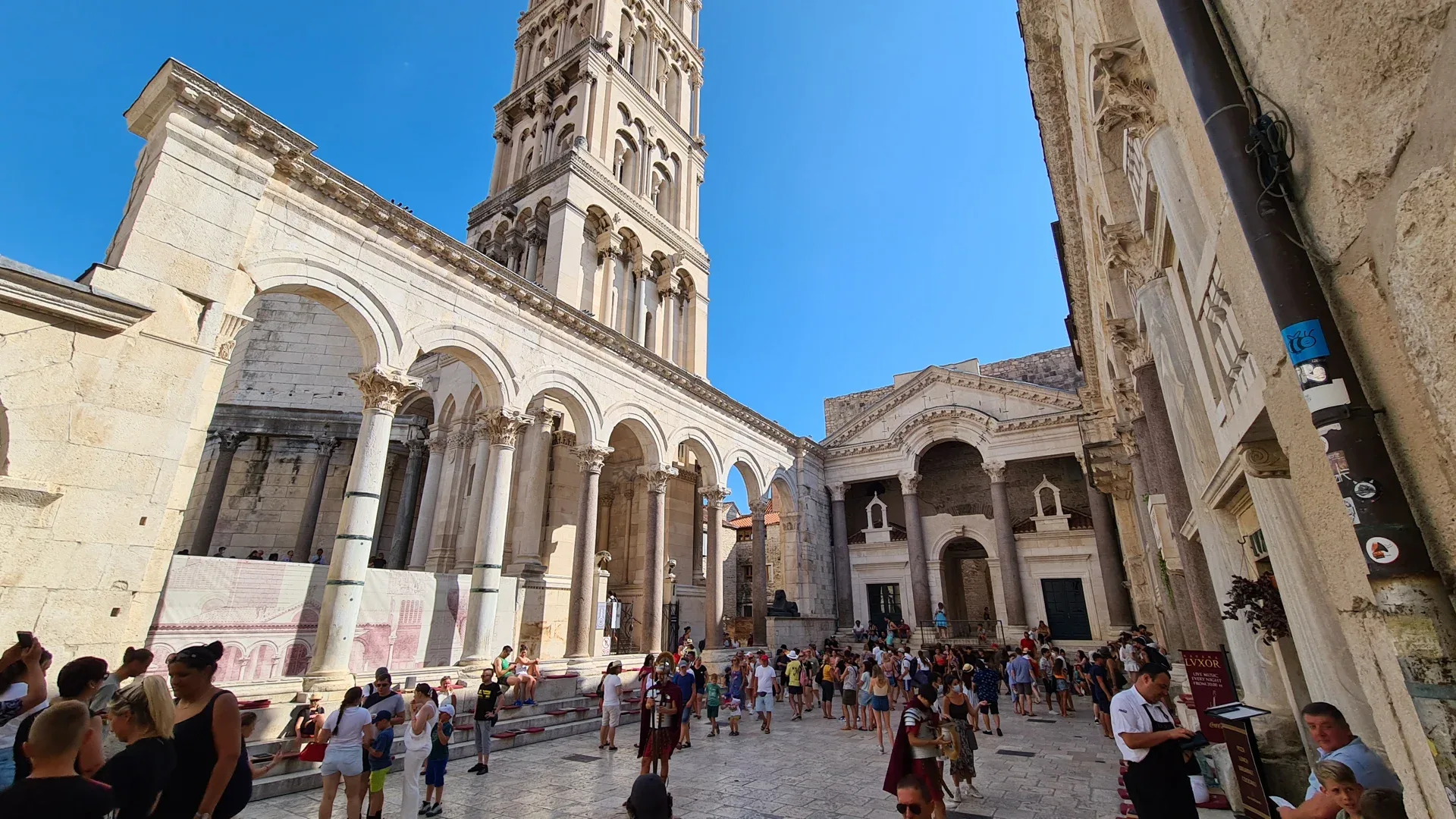


Viator
Split: Historic Palace Walk with Daniela
Schedule this for the second day to understand the palace before exploring on your own. The guide comments in English for 105 to 120 minutes; afterward, choose the interiors that interest you and book their tickets separately.
- 105–120 min
- 5/5 (218 reviews)
A 105–120-minute guided walk in English, departing from the Bronze Gate on the Riva. Admission to the cellars, cathedral, bell tower and temple is optional and paid separately; group option available with at least four participants, up to fifteen.
Cancellation policy
For a full refund, cancel at least 24 hours before the scheduled departure date.
From $30.00
View activityDays 4 to 6: Hvar
On day 4, travel to Hvar, arriving at a port that makes sense for your accommodation. Hvar refers both to the island and its main town. A catamaran to Hvar Town lets you disembark near the center; a ferry to Stari Grad means you will then need to travel overland if you are staying in Hvar Town. The tourist board also lists Jelsa and Sućuraj. Check the port name on your ticket before comparing only departure times and fares.
For three nights without a car, we would choose Hvar Town if the next leg of your trip leaves from the same port. You can then drop off your bags, have lunch, and explore the waterfront on foot. Stari Grad is another appealing base for a stay focused on this part of the island; just factor in the transfer to your next departure. Ask your accommodation how to make that connection at the planned time.
On day 5, give the town a full day. You can explore the square, the area around the cathedral, and the waterfront without trying to do everything in one go. Fortica Fortress offers views over the town and sea. Plan the climb for a time of day that suits the temperature, bring water and suitable shoes, then head back down for a break.
The theater, loggia, and museums let you extend your visit depending on opening hours. The tourist board publishes a page dedicated to hours and tickets; some spaces were listed as closed when we checked. Choose which interiors to visit based on this up-to-date information rather than following an itinerary that assumes all the monuments are open at the same time.
Day 6 can be devoted to the sea or spent on an outing to Stari Grad. Choose one direction and check the return journey before setting out. If a boat excursion appeals to you, look at its departure port, duration, and how much time it leaves you on land. Keeping this day flexible from the outset also lets you move the climb to Fortica or an indoor visit depending on the weather, without disrupting your booked nights.
Days 7 to 9: Korčula
For your day 7 connection, book a ticket to the port that suits your stay. Korčula Town is at the eastern end of the island, while Vela Luka is another gateway on the west. Jadrolinija serves, among other routes, Vela Luka from Split and Dominče from Orebić. These options are not interchangeable with arriving in Korčula Town when you want a short walk to your accommodation.
After the boat, spend the afternoon settling in and taking an initial walk around the old town. The waterfront gives you a sense of the peninsula, while the inner passageways offer different views of the houses and stairways. With three nights here, you can return to the same places at different times instead of cramming all your sightseeing between ferry departures.
On day 8, explore the old center around St. Mark’s Cathedral and the fortifications. The tourist board highlights the herringbone layout of the lanes, designed to encourage airflow while sheltering the town from the prevailing winds. Let this shape your walk: notice the orientations, openings, and changes in light rather than simply following a list of façades.
Korčula’s heritage is accompanied by culinary and wine traditions featured by the tourist board. For a meal, check the menu and see what is actually being offered that day. If you want to visit a winery, make an appointment and arrange your return without driving after a tasting. A lunch reservation can become the centerpiece of an outing, leaving the rest of the day for a stroll.
On day 9, Lumbarda offers an excursion option on the same island. Plan the local journey with your accommodation and choose between the village, vineyards, and seafront depending on the season. Spending the whole day in Korčula is also a good option if you want to slow down. Avoid booking a long outing that runs until evening: you will need time to prepare for the next departure and check for any carrier announcements.
Days 10 to 14: Dubrovnik
On day 10, travel to Dubrovnik and then to your accommodation. Gruž Port and the Old Port are different places. The tourist board describes buses as the way to connect neighborhoods, suburbs, and the old town; staying in Gruž or Lapad therefore calls for different planning than staying in the historic center. Check the entire journey from your boat’s arrival, including your luggage.
Four nights give you three full days before your departure on day 14. Day 11 can combine the old town and the city walls, if their opening arrangements suit your plans. Treat the walk along the walls as a full activity in its own right, with stairs, sunshine, and breaks, then leave the center’s streets for another part of the day. Check what is included in the ticket and which areas it covers before buying.
For a more leisurely visit, alternate a main thoroughfare with side streets, then take a break in a square. Slopes and steps affect your pace, especially with children or when the weather is hot. Choosing an indoor visit lets you round out the day without adding more climbs.
Day 12 can be devoted to Lokrum if boats are running and the weather allows. Confirm the departure point, access to the island, and the last return sailing for your chosen date. This outing is easy to arrange from your base in Dubrovnik: you keep the same room and can reschedule it. If conditions at sea are unsuitable, replace it with a visit in town rather than another boat trip subject to the same conditions.
Day 13 remains a buffer day on the mainland. You can explore the old town in greater depth, discover another neighborhood, or make a visit you postponed earlier. We have not scheduled any essential crossing for this day: your final accommodation is already in the city where your international departure begins. If you prefer the Elaphiti Islands to Lokrum, our dedicated guide compares ports, ferries, and cruises; choose that outing instead of another day at sea.
On day 14, allow time for the transfer to the airport and your flight. Confirm the pickup point, the time recommended by your carrier, and traffic conditions. This final day does not count as a full sightseeing day, even if your flight leaves in the late afternoon.
Boat reservations
Before paying for all four accommodations, check the schedules for each leg: Split–Hvar, Hvar–Korčula, and Korčula–Dubrovnik. For each one, note the operator, exact port, date, direction, and time. A route operating in the opposite direction or a few weeks earlier is not enough to confirm your crossing.
Passenger catamarans and vehicle ferries serve different needs. For our itinerary, you are traveling on foot. A ferry crossing to a different port can be a useful alternative, but it may involve an extra bus or taxi. In that case, compare the cost and travel time to your accommodation, not just the advertised sea crossing.
Book the key journeys as soon as the relevant schedules are available and your flights are confirmed. Read the rules for changes, cancellations, luggage, and boarding. TP Line’s route page asks passengers to be at the boarding point at least fifteen minutes in advance; allow extra time to find the dock and carry your belongings. Follow the instructions on your own ticket.
A weather-related cancellation may mean an extra night or a different route. Keep your accommodation contact details and the carriers’ alert channels handy. Staying several nights at each base reduces how often you need to depart, but does not replace a financial buffer or reservations whose terms you understand.
Accommodation and luggage
In Split, a place within walking distance of the center and port area makes the first three nights easier. However, check the actual route, floors and stairs: a few hundred meters on a map do not always reflect the effort involved when carrying a suitcase. Also ask whether you can leave your bags before check-in time.
In Hvar and Korčula, prioritize proximity to the port you will use and the places where you want to have dinner. A room higher up may offer a view, but you will have to climb each day. Look at photos of the access route and ask about steps before booking. If you are staying without a car, this information matters just as much as parking listed in the property details.
In Dubrovnik, the Old Town is ideal for walks early or late in the day, while Gruž is closer to the port and Lapad offers a different kind of stay. Vehicle access around the center is regulated. For a taxi or private transfer, confirm where the vehicle can actually stop and how far you will still need to walk.
Compact luggage makes quays, stairs and room changes easier. Bring something to separate wet items, rain protection and a small supply of water for transfers. Before traveling with family or someone with reduced mobility, confirm that the boat and accommodation are accessible; “close to the port” does not tell you whether there is a gangway or a floor without an elevator.
The Two-Week Budget
Build your budget around thirteen nights, three main crossings, airport transfers and local transportation. Add meals, heritage-site admission and the activities you choose. The four nights in Dubrovnik, room type and exact dates can significantly affect the total; a single daily amount would give a misleading impression of precision here.
To compare accommodations, add up taxes and listed fees, then include the necessary transportation. A kitchenette can make some meals more flexible. A cheaper place far from the port may require a transfer every time you arrive or depart. Compare the whole stay before choosing based solely on the room rate.
Separate essential purchases from optional visits. The guided walk in Split can be your only guided activity; the other days can mostly be planned on foot, with individual tickets chosen as needed. The price, currency and reviews for this recommendation are retained in the central listing and displayed when they are recent enough. Check the final option and what it includes when booking.
Keep some money available for a boat change, an unexpected night or a land transfer. This is in addition to insurance and the cancellation terms for your bookings. This reserve lets you change your route without sacrificing rest or taking an unreasonably tight connection before your flight.
The Off-Season Option
If the useful inter-island connections are not available on your dates, keep Split and Dubrovnik as your two main bases. Between them, choose a confirmed land connection and verify the travel time for the day of your trip. Distribute your nights according to your visits and flight times; you can spend more time in the cities and their surrounding areas.
Hvar can remain a separate stop from Split, thanks to the Stari Grad service described as year-round by the tourism board. Check the crossings and local transfer, then return to the mainland before continuing toward Dubrovnik. This arrangement includes the island without relying on a sea route onward to Korčula.
For Korčula, check the actual connections on your chosen dates and the journey to the town where you will be staying. The Orebić–Dominče ferry is listed in the Jadrolinija network, but getting to Orebić and transferring from Dominče are part of the journey. If these trips take too much time, spending the two weeks on the mainland is still a sensible choice.
FAQ
Can you do this itinerary without renting a car?
Yes, with confirmed passenger crossings and well-located accommodations. You can explore all four centers on foot, using buses or taxis for some transfers and local outings. Check each port: arriving in Stari Grad or Vela Luka may require an additional trip to your planned base.
Is two weeks enough for Split, the islands and Dubrovnik?
Fourteen days allow for three nights in Split, three in Hvar, three in Korčula and four in Dubrovnik. The first and last days are for travel. This outline leaves several days free of luggage; to add Vis or Mljet with overnight stays, extend the trip or replace a stop.
Should you start in Split or Dubrovnik?
Start in the city that offers the best combination of flights, overnight stays and crossings on your dates. The Split–Dubrovnik direction is our geographically organized suggestion. Check the sea connections before choosing the reverse direction, and end in the city where your airport is, with a final night there.
Do boats between the islands run all year?
Schedules vary by route. Hvar has a year-round service from Split via Stari Grad, while long coastal routes may be seasonal. The TP Line 842 route checked for 2026 covered April to October; its document does not confirm dates for a subsequent season.
Where should you stay in Hvar for this itinerary?
Hvar Town makes three nights easier when both your arrival and departure boats stop there. Stari Grad works for a stay focused on that part of the island, with transfers to factor in. Check the exact port, the steps to your accommodation and the available transport at your scheduled arrival time.
What budget should you plan for two weeks in Croatia?
Request prices for thirteen nights on your dates, then add three crossings, transfers, meals and your chosen admissions. Sharing a room, the season and the location of your accommodation can significantly change the total. Set aside a separate reserve for route changes rather than relying on a national average.
Is the guided tour of Split in French?
The product with Daniela selected for this article advertises an English-speaking guide. It lasts about one hour and forty-five minutes to two hours; admission to the main interiors is optional and paid separately. If French is essential, look for a tour that explicitly confirms it before booking.
Can you take a boat on the day of your return flight?
Our itinerary includes an overnight stay in Dubrovnik before departure and does not depend on a crossing on the day of any flight. A cancellation or delay could jeopardize an air connection. For the reverse itinerary, follow the same principle and spend the final night on the mainland in Split.
Sources and checks
Plan your visits and check current conditions.
- Jadrolinija network ↗
Jadrolinija · Accessed November 1, 2026
What this source supports
Routes 635 Split–Stari Grad, 602 Split–Vis, 604 to Vela Luka, 634 Orebić–Dominče. Different ports; no guarantee of future schedules.
- Routes and boarding ↗
TP Line · Accessed November 1, 2026
What this source supports
Passenger services to Split, Hvar, Korčula, and Dubrovnik; boarding points and a requirement to arrive at least fifteen minutes before departure.
- Route 842 schedule, 2026 season ↗
TP Line · Accessed November 1, 2026
What this source supports
Season runs from 1 April to 31 October 2026; the first day runs from Split only, the last from Dubrovnik only. Route: Dubrovnik–Korčula–Hvar–Milna–Split. No extrapolation of the 2026 schedule to 2027.
- Getting to Hvar ↗
Hvar Tourist Board · Accessed November 1, 2026
What this source supports
Ports at Hvar Town, Stari Grad, Jelsa, and Sućuraj; only Stari Grad and Sućuraj take vehicles. Split–Stari Grad is presented as a year-round service. Check schedules with the operator.
- Hvar heritage and museums ↗
Hvar Tourist Board · Accessed November 1, 2026
What this source supports
Fortica, the theater, loggia, bell tower, cathedral, and museums. Closures are listed; no future opening hours or prices are asserted.
- Korčula cultural heritage ↗
Korčula Tourist Board · Accessed November 1, 2026
What this source supports
Fortifications, fishbone-pattern lanes, ventilation, and protection from the winds; St. Mark’s Cathedral. Indicative UNESCO list, not confirmed inscription; Marco Polo’s birthplace claim not repeated.
- Discover Korčula ↗
Korčula Tourist Board · Accessed November 1, 2026
What this source supports
Urban heritage, gastronomy, and winemaking traditions; Lumbarda and Vela Luka are distinct; maritime operators identified.
- Getting around Dubrovnik ↗
Dubrovnik Tourist Board · Accessed November 1, 2026
What this source supports
Buses to neighborhoods and the old town; regulated road access; Gruž and the Old Port; connections to Lokrum. No invented pass prices or wall-walk time slots.
- Split Historical Walking Tour with Daniela ↗
Operator via Viator Partner API · Accessed November 1, 2026
What this source supports
ACTIVE product 5562873P1 verified via API; English-speaking guide, 105–120 min, meeting point at the Bronze Gate/Riva, group of 4 to 15, optional interior tickets sold separately. The deep affiliate URL returned for our key is unchanged. SUPPLIER_PROVIDED photograph of the exact product; no CC license. Price/currency and reviews are in the central catalog; no live availability verified. Odyvero may earn a commission on bookings made through this offer.
- Photograph: ralph-26547-dubrovnik ↗
Chensiyuan; modified by Bammesk · Accessed November 1, 2026
What this source supports
CC BY-SA 4.0; reduced from 9597 × 3838 to 1920 × 768 and converted to WebP without enlargement; derivative under the same license. Original decoded, actual dimensions [9597, 3838]. Local photograph inspected. Record present in the registry; remote delivery failed during the check, with import returning HTTP 503: delivery qualification blocked.
- Photograph: ralph-26547-split ↗
TimeTravelRome · Accessed November 1, 2026
What this source supports
CC BY 2.0; reduced from 4032 × 2268 to 1920 × 1080 and converted to WebP without enlargement; derivative under the same license. Original decoded, actual dimensions [4032, 2268]. Local photograph inspected. Record present in the registry; remote delivery failed during the check, with import returning HTTP 503: delivery qualification blocked.
Viator — activity pages
Source for the activity information below.Affiliate links: Odyvero may earn a commission when you book through this article’s buttons.
- Split: Historic Palace Walk with Daniela ↗
Accessed November 1, 2026


