 odyvero
In the Galápagos, choosing a cruise company starts with a map of the islands and the excursion schedule. A yacht carrying sixteen passengers, a ship carrying forty-eight, and a boat carrying ninety can all offer wildlife encounters in small groups. To compare them, look at the sites visited, the number of nights actually spent on board, the guides, and the activities available to everyone. Here are the differences worth spending your budget on, with a seven-day itinerary to examine in detail.
The islands before the cabin
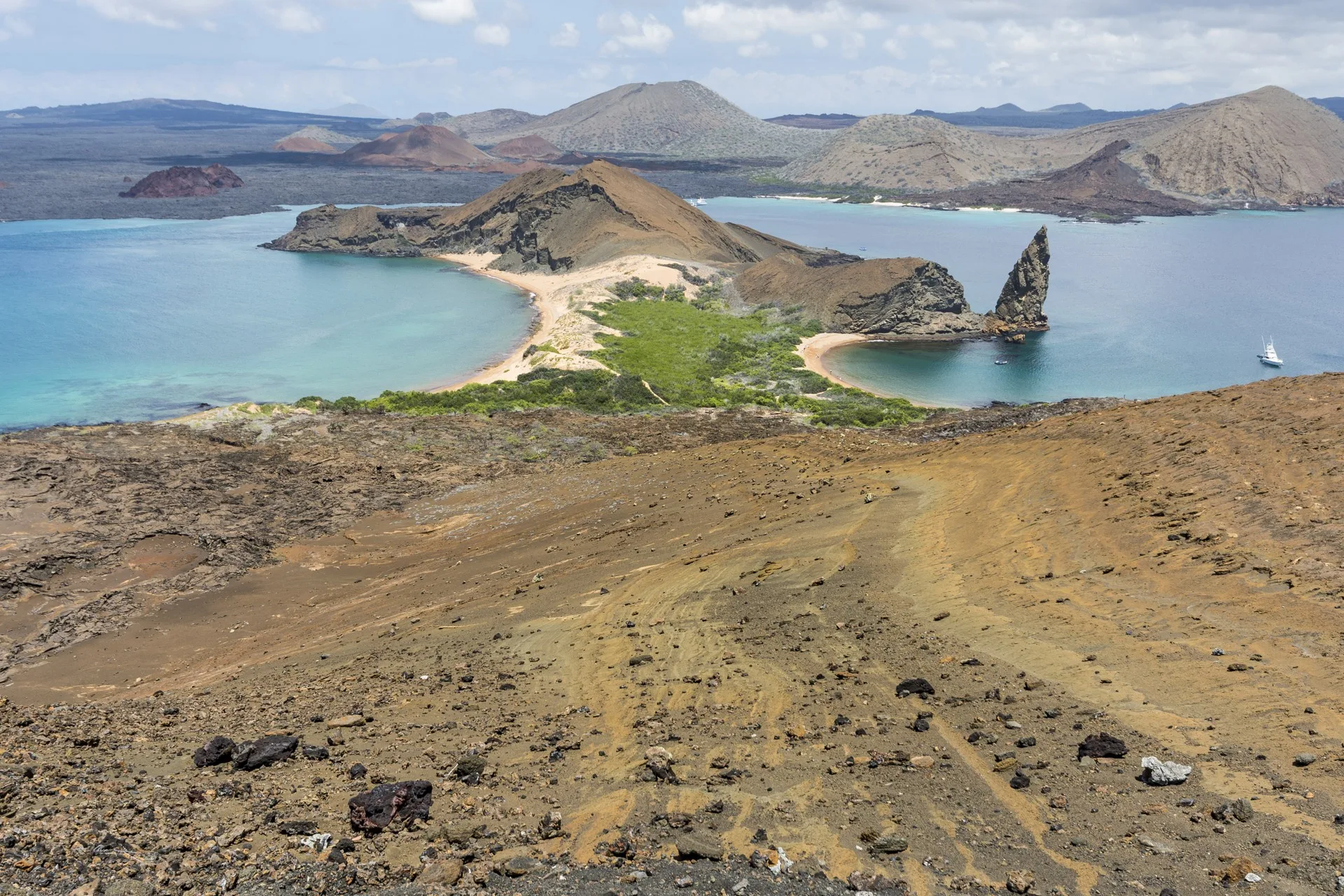
Fernandina, Floreana, and Santa Cruz tell different stories. La Pinta’s southwest itinerary combines the volcanic landscapes of Fernandina and Isabela, Rábida’s red beach, Santa Cruz’s highlands, and Floreana’s shores. This contrast already offers a selection criterion: would you rather explore volcanic coasts and marine life in depth, or are you looking for specific islands where you have spotted particular birds?
Ask for the details of the sites, not just the list of islands. Isabela is vast; a dinghy excursion at Punta Vicente Roca and a walk at Urbina Bay offer two different experiences. An itinerary may list an island without including a landing there. At Punta Vicente Roca, the itinerary presented here specifically includes an exploration from the boats, followed by snorkeling if conditions permit.
Mark your three priorities on the itinerary you receive: giant tortoises in the highlands, seabirds on a particular island, lava landscapes, or time in the water. Then see how they fit together. The number of species a company lists is a marketing tool; sightings still depend on animal movements and the conditions that day. A well-chosen itinerary makes the sites visited more relevant but cannot guarantee an encounter.
Useful nights and days
A trip advertised as seven days may include six nights on board, with arrival on the first day and a return flight on the last. La Pinta’s Darwin’s Legacy program follows this schedule from Friday to Thursday. With another operator, the overall duration may include nights on the mainland and domestic flights. Two trips with the same number of days may therefore offer different amounts of time for exploration.
For a first trip focused on the archipelago, we would prioritize about a week on board if your budget and time off allow. You will have more days to experience different environments and absorb travel time. A shorter option is still worthwhile if it covers exactly the sites you want, but airports and transfers take up a larger share of the trip.
Compare the first and last days just as carefully as the days in between. An afternoon walk on arrival day offers a genuine visit; a departure after breakfast is mainly a travel day. If you are combining two itineraries, ask about repeated stops and how passenger changes are handled. The value of a second week lies in the new sites and new opportunities for wildlife viewing, not simply in the extra nights.
Group sizes
The ship’s capacity determines the shared spaces, the number of people at meals, and the general atmosphere. The size of the group on land also depends on the number of guides, the available dinghies, and how excursions are organized. These two figures should appear separately in your comparison. On a larger boat, several groups may explore the sites with different naturalists.
Ecoventura lists twenty travelers and two guides on its Origin, Theory, and Evolve yachts, or one guide for every ten participants. HX lists up to ninety passengers on Santa Cruz II, with a maximum of eleven people per guide in its expedition groups. These figures come from the operators; ask whether they apply to the departure you are considering, especially if you are traveling with family or as part of a group.
A yacht that is not full may encourage conversation among all the passengers and create the feeling of sharing the trip with the same small group. A ship with several lounges or several teams may meet other needs, particularly when people have different interests. Also check the launch schedules: parallel excursions or staggered departures affect the time you actually spend on activities. Capacity alone does not tell you how excursions are organized.
Companies to compare
For a particularly intimate format, Quasar offers Grace, with sixteen passengers, and Evolution, with thirty-two, on trips advertised as eight or fifteen days. Both boats belong to the same company, but their capacities differ considerably. Compare the specific yacht, its cabin deck, and its itinerary before deciding based on the operator’s name.
Ecoventura offers three yachts carrying twenty travelers, with ten cabins and two naturalist guides. Each of its two complementary itineraries lasts seven nights. This format will particularly appeal to travelers looking for a small community on board and a full week of exploration. The second itinerary also makes a longer stay possible, provided you check which additional sites it visits.
Metropolitan Touring offers several sizes: forty passengers on Isabela II, forty-eight on La Pinta, and ninety on Santa Cruz II. HX also sells expeditions on Santa Cruz II. Compare these options based on their specific services: mainland nights, flights, and package inclusions may vary depending on the booking channel.
National Geographic-Lindblad offers a different fleet: Delfina carries sixteen travelers, Islander II and Gemini each carry forty-eight, and Endeavour II carries ninety-six. Its naturalist and photography team, as well as its family offerings, deserve attention if science communication is central to your plans. None of these names alone identifies an overall winner: choose two or three boats that match your itinerary and the way you like to travel.
La Pinta in the southwest
The Darwin’s Legacy itinerary is a concrete example for comparing what is offered. Its seven days link Baltra, North Seymour, Isabela, Fernandina, Rábida, Santa Cruz and Floreana, before returning to Baltra. The sequence combines several types of outings: coastal walks, exploring volcanic terrain, trips by dinghy, snorkeling and a visit to the highlands. We would consider it for a first stay seeking this variety rather than a trip focused on a single activity.
On North Seymour, the program includes observing birds and land iguanas. On Isabela and Fernandina, the outings explore volcanic coastlines and the species associated with these environments. Santa Cruz offers a different kind of day around Puerto Ayora, the Charles Darwin Research Station and the highlands. Floreana adds Post Office Bay, followed by Champion and Punta Cormorant. This itinerary makes it possible to compare actual experiences beyond cabin photographs.
The selected Viator listing includes the meals advertised, visits with certified naturalist guides, snorkeling equipment, wetsuits and an onboard doctor. The available languages are English and Spanish. Flights, park entry, the transit card, insurance, alcoholic drinks and tips are separate. The catalog lists an active product; the selected cabin and departure should be confirmed during booking.
The glass-bottom boat offers a useful consideration for a couple where one person does not want to snorkel. The official program mentions it in particular at Rábida and near Champion. Check its availability in the schedule for your departure and what other activities are offered at the same time.

Viator
La Pinta: seven days in the southwest Galápagos
A seven-day itinerary combining Isabela and Fernandina with the Santa Cruz highlands and Floreana. The glass-bottom boat on some stops may appeal to travelers who do not snorkel; guiding is available in English or Spanish.
- 7 days / 6 nights
- 5/5 (49 reviews)
Darwin’s Legacy itinerary, seven days and six nights, round trip from Baltra, with English- or Spanish-speaking guides. Isabela, Fernandina, Rábida, Santa Cruz, and Floreana; visits and snorkeling equipment included, flights and entry fees separate.
Cancellation policy
If you cancel at least 6 full day(s) before the scheduled departure time, you will receive a full refund.<br>If you cancel between 2 and 6 day(s) before the scheduled departure time, you will receive a refund of {2}%.<br>If you cancel within 2 day(s) of the scheduled departure, you will receive a 0% refund.
From $8,066.00
View activityOutings and mobility
An expedition day generally consists of several segments, separated by meals and boat transfers. The variety of activities matters as much as their number. A naturalist walk allows time for observation; a dinghy trip explores a coastline; an in-water session requires confidence and suitable equipment. Ask how long each activity lasts and what rest opportunities are planned for your itinerary.
Landings may be dry, with access via a jetty or rocks, or wet, requiring you to step into shallow water before reaching the beach. Trails may cross uneven lava and boulders. A short hike on the map can sometimes require more care than a long urban walk. Describe your mobility needs to the provider and ask what assistance is available when boarding the dinghies.
The presence of an onboard doctor is worth considering, along with insurance that covers medical expenses and evacuation. If you are prone to seasickness or have a particular medical condition, prepare for the trip with a healthcare professional. The cabin plan can also help you assess the location in relation to technical areas and passageways. Ask the seller about the boat’s features that matter to you, rather than relying on a general promise of comfortable sailing.
The two main seasons
The archipelago can be visited year-round, with conditions changing between seasons. From December to May, Galápagos Conservancy describes a warmer season, with showers and generally calmer seas. This period may suit travelers who prioritize in-water activities and usually smoother sailing. Days remain highly exposed to the sun, even when cloud cover varies.
From June to November, the waters are cooler, winds are often stronger and the sea can be rougher. Garúa, the characteristic damp mist, occurs during the cool season. Nutrient-rich waters support marine life. For travelers who get cold quickly in the water, the wetsuit, session length and opportunities to alternate with other outings become important considerations.
Choose your travel period based on your activities and tolerance for rough seas, then refine your choice according to the species and sites that interest you. No month guarantees every sighting. For a November departure, still prepare for cool-season conditions; for a stay spanning two seasons, bring versatile gear. Seasonal trends help with trip planning, while the guide and captain adapt the outings to actual conditions.
Conservation when booking
First, check that the provider and vessel are authorized for the activities planned in protected areas. The park also requires visitors to be accompanied by a specialist guide at the relevant sites. An operator should be able to explain the framework for its visits, the rules it follows and possible program changes. Operational flexibility matters here to comply with visiting conditions, safety requirements and park decisions.
Next, look at verifiable commitments: wastewater treatment, waste management and disposal, reduction of disposable items, sourcing and support for identified programs. Ecoventura describes, among other things, a fund established with the Charles Darwin Foundation and the park directorate. This gives you a specific point to investigate: which organization receives the funds, what activities do they support, and what results are documented?
Carbon-neutrality or emissions-reduction claims require a clearly defined scope. Offsetting, technical improvements and scientific contributions address different questions. To compare two offers, look for the measurement period, the operations covered and the methodology used. Passenger numbers or a name suggesting environmental responsibility are not, by themselves, enough to rank the impact of the boats.
The Charles Darwin Foundation lists introduced species, climate change, habitat degradation and overfishing among the threats to the archipelago. This underscores the importance of biosecurity checks, authorized itineraries and visitor behavior. An interesting conservation program can complement these requirements; it does not replace them.
Keeping your distance from wildlife
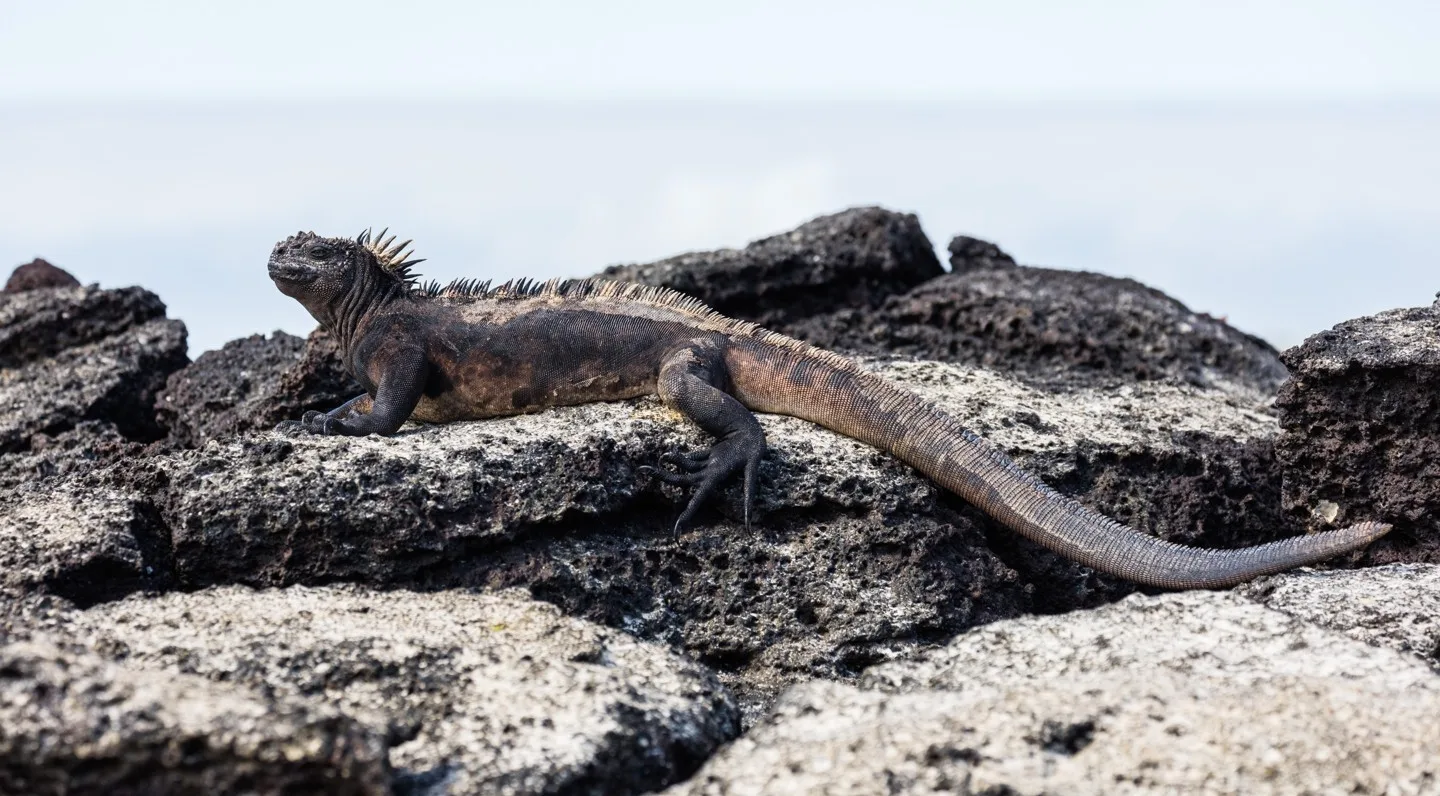
The park sets a minimum distance of two meters from wildlife, including when taking photographs. If an animal approaches or occupies the trail, follow the naturalist’s directions and give it space. A successful sighting may mean waiting or slightly changing position within the permitted areas. A suitable lens and binoculars make it possible to observe more closely without moving toward the animal.
The rules prohibit touching or feeding wildlife, collecting natural items and using flash photography on animals. Visitors must stay on the trails and may not use drones. Before setting out, clean your shoes and outdoor gear to remove soil and debris, then follow the inspections and restrictions on bringing products into the islands.
On board, a reusable water bottle and refill stations reduce the amount of packaging carried. At the sites, take your waste back with you and use the designated sorting systems. These practices fit naturally into a stay. They also offer a practical way to assess the guidance provided: the guide’s briefing should explain the rules before wildlife encounters, even when the animals seem unafraid of people.


The budget beyond the boat
Compare quotes on the same basis: dates, cabin category, number of travelers and nights on board. Then add international and domestic flights, nights on the mainland, transfers, taxes and personal expenses. An offer that includes flights from Quito cannot be directly compared with a cruise starting at the Baltra landing dock.
The park lists a standard entry fee of 200 USD for adult foreign tourists, with special categories and discounts. Galápagos Conservancy also lists a mandatory tourist transit card costing 20 USD. These administrative fees are separate from the cruise price; check whether they are included and how they should be paid in your departure documents. Check with the authorities which requirements and amounts apply to your situation.
Drinks, tips, equipment and surcharges should also be clearly itemized. For the Viator La Pinta product reviewed, the fuel surcharge is listed among the inclusions, while the direct-sales page treats it separately. This difference illustrates why you should keep the description from the channel through which you actually booked. Ask for written clarification of any ambiguous item and compare the resulting total, without automatically applying one seller’s terms to another.
Flights and buffer nights
Flights to the Galápagos depart from mainland Ecuador, mainly from Quito and Guayaquil. The two main island airports are Baltra and San Cristóbal. The right airport depends on your embarkation point; a cheaper ticket to another island may add travel that conflicts with your departure. Have the tour operator confirm the flight before booking it separately.
We would recommend leaving a night’s buffer on the mainland before the domestic flight, depending on your international flight times, and allowing enough time before your long-haul return flight. This suggested arrangement is intended to reduce the risk that a missed connection could jeopardize embarkation. Identify any welcome services, transfers, and hotels that may already be included in the package before adding duplicate bookings.
Download your documents and useful information before departure. Communications on board depend on the vessel’s system and the connection available. An eSIM for Ecuador may be useful during a stay on land, but nationwide coverage does not imply a connection offshore or at every anchorage. For this trip, focus on having offline access to your bookings and sharing the operator’s contact arrangements with your loved ones.
Staying on the inhabited islands
A hotel stay on Santa Cruz, San Cristóbal, or Isabela is another way to organize your visits. You return to your accommodation on land, choose permitted excursions, and can plan less tightly scheduled days. This option may suit those who prefer sleeping on land or want more time in the towns.
Compare the sites accessible from your base and the total travel involved. A cruise ship can travel overnight to reach the next site; from a hotel, excursions involve round trips. Some remote areas therefore require a very different arrangement. List the places you can realistically reach and the number of days spent on a boat before comparing budgets.
If you extend a cruise in Puerto Ayora, first check which visits are already included. The La Pinta itinerary described includes the Charles Darwin Research Station and the Santa Cruz highlands. Booking them a second time does not necessarily add anything worthwhile. Instead, you could keep some free time or explore a particular place in greater depth, while following its visiting arrangements. Each additional activity should serve a clear interest.
Final quote checklist
Before paying, keep the exact name of the vessel, cabin category and location, detailed itinerary, airports, languages, and cancellation terms together in the same file. Ask for details on the number of guides, activities running simultaneously, and arrangements for travelers who stay on board or do not enter the water. For a family, also confirm eligible ages, sleeping arrangements, and pricing terms.
The contract terms should match the product you are booking and your dates. Also keep a record of exclusions, the policy that applies if the itinerary changes, and operational contact details. Review your insurance separately, particularly for cancellation, medical expenses, and evacuation. This preparation can help you choose between two similar offers without relying solely on photographs or an introductory price.
We prefer the itinerary that covers your priority sites with suitable guidance and pacing. For a varied first exploration of the southwest, La Pinta is a well-documented option. If you want a very small group on board, the yachts carrying sixteen or twenty travelers are worth comparing closely. The best choice is clear from the program and the terms for your departure.
FAQ
How many days do you need for a Galápagos cruise?
About a week on board allows you to see a variety of islands and environments on a first wildlife-focused trip. Compare the actual nights on board: seven days may mean six nights, with arrival and departure days partly taken up by travel. A shorter option can still be worthwhile if its itinerary covers your priorities. For a two-week trip, check that the circuits complement each other and do not repeat stops.
Does a sixteen-passenger yacht offer smaller visiting groups?
It offers a small community on board, but the number of participants per guide should be assessed separately. A larger vessel may divide travelers among several naturalists and dinghies. Ask for the stated ratio for your departure, the activities offered in parallel, and the outing schedules. This information gives you a more precise sense of observation time and guidance than the vessel’s capacity alone.
Which season should I choose for sailing and snorkeling?
From December to May, the weather is generally warmer and the sea tends to be calmer. From June to November, the water is cooler and conditions can be rougher. For snorkeling, check which wetsuits are provided and how long the sessions last. Then choose based on your tolerance for cold, comfort at sea, and preferred sites, without expecting the weather to be the same every day.
Does a wildlife cruise include scuba diving?
Snorkeling, walks, and dinghy outings are the activities described in the selected La Pinta itinerary. Scuba diving requires a specific, authorized service with its own experience, certification, and safety requirements. If diving is a key reason for your trip, look for a specific diving program and check its sites rather than assuming it can be added to a wildlife cruise.
Can you join the tours in French?
The Viator product page for the La Pinta trip described lists English and Spanish as the available guiding languages. A sales page translated into French does not mean that French-speaking assistance is provided. If French is essential, request written confirmation for your departure and the relevant visits before booking. Also check the language used for safety briefings and daily naturalist explanations.
Can someone who does not snorkel still take part?
Yes, provided you choose a program with outings suited to their interests and mobility. La Pinta has a glass-bottom boat mentioned for certain stages of the official itinerary; walks and dinghy explorations offer other ways to observe wildlife. Ask for the alternatives available for each session. Dinghy transfers and landings should still be checked even if you do not swim.
What expenses should I budget for outside the cruise?
Depending on the package, flights, mainland hotel nights, transfers, park entry, transit card, insurance, drinks, and gratuities may be charged separately. For the La Pinta product reviewed, several of these items are explicitly excluded. Compare quotes for the same dates and travelers, then add each expense to the total. Offer prices are shown in the central cards in their actual currency.
Are the advertised animals guaranteed to be seen?
No. Sites are selected for their habitats and wildlife-viewing opportunities, but animals move around and outing conditions change. Choose several interests rather than relying on one essential sighting. A naturalist guide can help you spot species and understand their environments while maintaining the minimum distance of two meters and following park instructions.
Sources and checks
Plan your visits and check current conditions.
- Galápagos National Park — entrance fee
Parque Nacional Galápagos · Accessed November 2, 2026
What this source supports
Standard entrance fee, special categories, and funding for conservation and local services.
- Galápagos National Park — visitor rules
Parque Nacional Galápagos · Accessed November 2, 2026
What this source supports
Official sign reviewed: 2 m distance, authorized guide and provider, trails, no flash photography, drones, contact, feeding, or collecting.
- Planning a trip to the Galápagos
Galápagos Conservancy · Accessed November 2, 2026
What this source supports
Seasons, main airports, Transit Control Card (TCT) for USD 20, hotels or cruises, dry and wet landings.
- Metropolitan Touring’s fleet
Metropolitan Touring · Accessed November 2, 2026
What this source supports
Capacities: La Pinta 48, Isabela II 40, Santa Cruz II 90.
- La Pinta — Darwin’s Legacy
Metropolitan Touring · Accessed November 2, 2026
What this source supports
Seven days, six nights, Friday–Thursday, detailed southwest itinerary, glass-bottom boat at Rábida and Champion, inclusions from the direct booking channel.
- Ecoventura yachts
Ecoventura · Accessed November 2, 2026
What this source supports
Origin, Theory, and Evolve: twenty travelers, ten cabins, two naturalist guides.
- Ecoventura commitments and itineraries
Ecoventura · Accessed November 2, 2026
What this source supports
Two seven-night itineraries; funds for CDF and the park, commitments stated by the operator, with no claim of a comparative audit.
- Quasar — small yachts
Quasar Expeditions · Accessed November 2, 2026
What this source supports
Grace: sixteen passengers; Evolution: thirty-two; advertised trips of eight and fifteen days.
- HX — Galápagos expeditions
HX Expeditions · Accessed November 2, 2026
What this source supports
Santa Cruz II carries ninety travelers; advertised groups of up to eleven per guide, glass-bottom boat, and packages.
- National Geographic-Lindblad — Galápagos fleet
National Geographic-Lindblad Expeditions · Accessed November 2, 2026
What this source supports
Delfina 16, Islander II 48, Gemini 48, Endeavour II 96; naturalist and photography teams, family program.
- Research and conservation in the Galápagos
Charles Darwin Foundation · Accessed November 2, 2026
What this source supports
Threats: introduced species, climate change, habitat loss, overfishing; research and the Charles Darwin Research Station.
- La Pinta Darwin’s Legacy — Viator listing 23264P13
Viator / Metropolitan Touring · Accessed November 2, 2026
What this source supports
Product ACTIVE via our Partner API, seven days, English and Spanish, inclusions/exclusions, Odyvero link returned, and exact supplier image. Departure availability is not guaranteed.
Viator — activity pages
Information about the offers featured in this article.Affiliate links: Odyvero may earn a commission when you book through this article’s buttons.
- Viator : La Pinta: seven days in the southwest Galápagos
Accessed November 2, 2026


