 odyvero
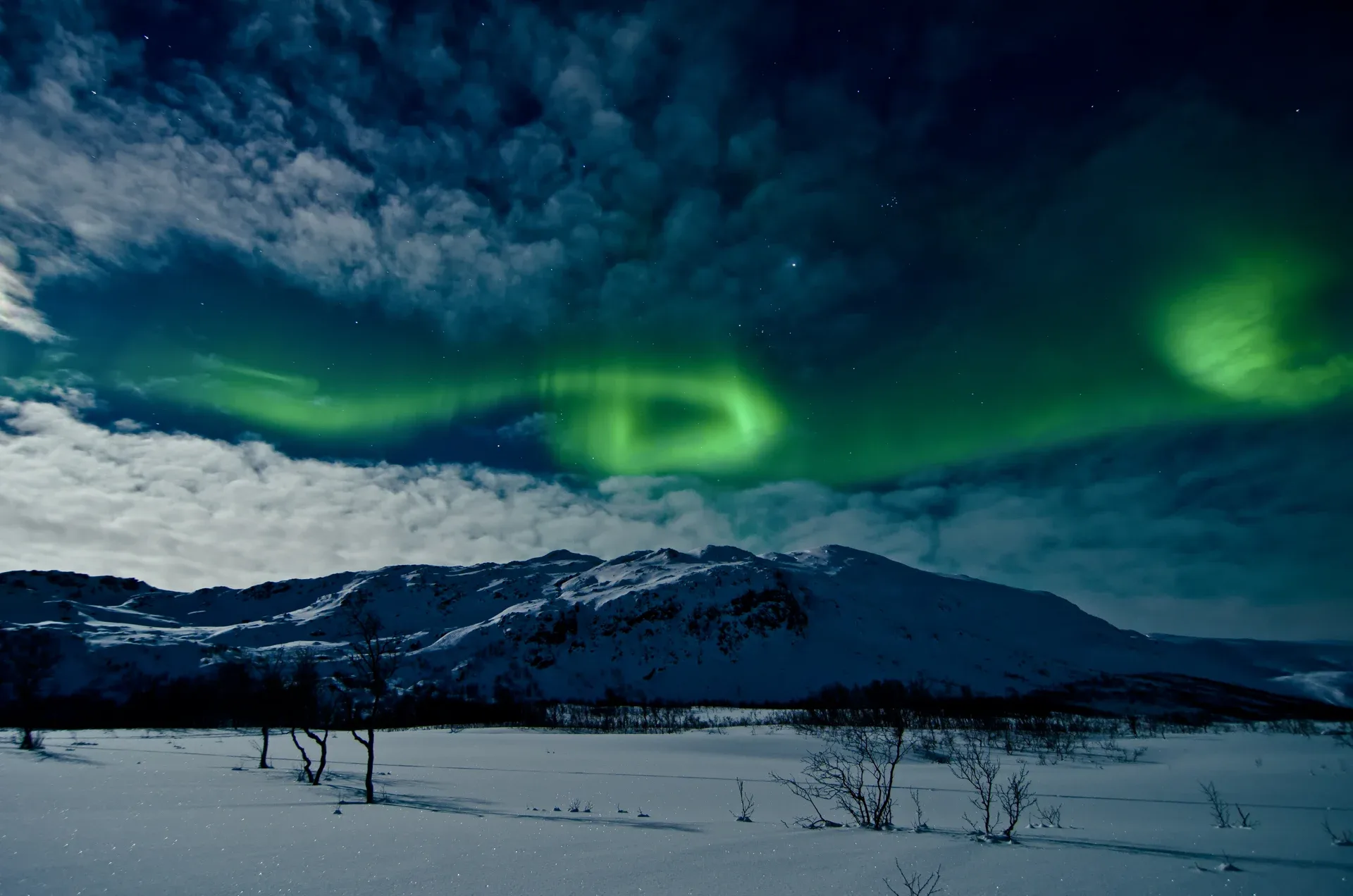

To see the Northern Lights during the 2026–2027 season, spend several nights in an Arctic region, look for clear skies and head out away from artificial lights. The solar cycle affects activity, but no scientific deadline means you have to go before 2031. Tromsø, Abisko and Finnish Lapland offer three different kinds of trips: here’s how to choose your base, dates and a suitable excursion.
The three viewing conditions
An aurora can form above a thick layer of clouds without being visible from the ground. Conversely, a perfectly starry evening can remain quiet. When planning your trip, distinguish three conditions: auroral activity at your latitude, sufficient darkness and a break in the clouds. Their alignment determines what you will see from a particular location.
Auroras occur when energetic particles, particularly electrons guided by Earth’s magnetic field, meet gases in the upper atmosphere. Oxygen and nitrogen then emit light. The phenomenon is concentrated in ovals around the magnetic polar regions. During strong disturbances, these zones extend toward lower latitudes, sometimes making it possible to see the aurora from France or Belgium.
A tourist stay is therefore best based in a region where auroras are usually seen, rather than relying on an exceptional storm. In northern Scandinavia, even modest activity may be enough. Having time to wait for another evening or travel to a clear area is especially useful. A very promising app cannot make up for a completely overcast sky.
The solar cycle after 2026
The Sun goes through an activity cycle of about eleven years. NASA and NOAA announced that it had entered a period of maximum in October 2024. This announcement referred to a phase; the precise peak can only be identified after observing how activity develops. It did not designate all of 2026 as a single, predictable date for travelers.
High solar activity favors disturbances that can fuel auroras. However, major storms can also occur during the declining phase. The Finnish Meteorological Institute mainly points out that auroras remain common in Lapland even at solar minimum. Their frequency and geographic reach change; they do not disappear for several years.
The phrase “last chance before 2031” therefore has no basis for planning an Arctic trip. It confuses a long-term variation with the possibility of seeing an aurora on a given night. You can choose the 2026–2027 season because your dates, budget and interests suit it, without booking in a rush because the sky is supposedly about to close.
Official solar-cycle forecasts also involve uncertainty and are revised. They are used to study solar activity and its effects, far beyond tourism. For your bookings, the number of evenings available, the local season and the arrangements on the ground are more directly useful criteria than an isolated peak date.
Months in the Arctic season
In Tromsø, the tourist board places the usual viewing period from late August to early April, when darkness returns. In the Kiruna region, September to March is the core season, with sightings possible from late August and into April. These ranges describe available darkness and local patterns; they do not guarantee an aurora every night.
In September and October, you can look for auroras without making the whole trip revolve around snow. Depending on conditions, daytime activities can still have an important place in your plans. This period suits those who first want to discover a region and set aside several evenings for the sky. Snow-dependent winter activities should be checked separately.
In the heart of winter, long periods of darkness provide more time to observe. They also mean planning your days carefully and bringing suitable gear for long waits outdoors. A late excursion followed by another morning activity can make the trip tiring. Keep your mornings flexible after the longest nights.
For northern Finland, the Finnish Meteorological Institute names March and early April as a favorable period when weather is taken into account. This is a useful lead when choosing your vacation dates, but it does not tell you what the forecast will be for your week. In summer, persistent brightness at high latitudes prevents viewing: auroral activity may occur without becoming visible.
Tromsø, a base without a car
Tromsø is suitable for a first trip if you want to combine an urban base with organized evening outings. The city lies within the auroral zone. In clear skies, the phenomenon may be visible from less brightly lit areas of the city; an excursion mainly lets you look for different conditions around the city. You then leave the nighttime travel to a provider.
The minibus outing with photography selected here lasts six to nine hours and is conducted in English, in a group advertised as having up to fifteen participants. The listed meeting point is Kirkegata 2. The route depends on conditions and may take you far from the starting point. Book it for an evening followed by a free morning, rather than the night before a tightly packed schedule.
The listing includes a thermal suit, expedition-style food, hot drinks, and web-resolution photos. A tripod for a camera may be provided; its mount is not suitable for phones. Drop-off at your accommodation is offered on Tromsø island only. Check where your lodging is before relying on this service.
This option is a good fit if you want a mobile search with photography guidance. You need to be able to wait and travel for several hours. For families, the listing states a minimum age of eight and a height above 120 cm; the booster seat must be arranged with the provider. These conditions matter more than the general claim that the activity is easy.

Viator
Aurora minibus tour and photography from Tromsø
For travelers who want to look for a clear-sky area from Tromsø with an English-speaking guide and photography assistance. Book an entire evening and check that your accommodation is on the island for the included return transfer.
- 360–540 min
- 4.9/5 (887 reviews)
Mobile aurora chase in English, lasting six to nine hours, with thermal gear and photography guidance; return to Tromsø island, according to the listing.
Cancellation policy
For a full refund, cancel at least 24 hours before the scheduled departure date.
From NOK 2,250.00
View activityAbisko and the Kiruna region
Kiruna and Abisko appeal to travelers who want to make landscapes and evenings spent watching the sky a central part of their trip. The Kiruna tourist office highlights the area’s position in the auroral oval and Abisko’s local features, including a weather effect that sometimes favors clear skies. This advantage is still compatible with cloudy evenings: no location can guarantee a break in the clouds.
The practical choice comes down to your accommodation and how far you are willing to travel. Staying in Kiruna gives you access to the town’s services; staying in Abisko puts you closer to local viewing sites. Check how to reach your accommodation with your luggage, where to have dinner, and how to get back after an outing. A remote property may require more planning than a landscape photo might suggest.
We would choose this region to spend several evenings in the same surroundings, while deliberately keeping the daytime schedule light. A nighttime walk accessible from your accommodation can complement a guided activity, provided the route is known and safe. Ask your accommodation provider or the tourist office to clarify which areas are accessible and what the current conditions are.
You do not need an excursion from Tromsø or Rovaniemi to cover this part of the guide. The distances and winter conditions make it worth choosing a suitable base. Changing countries repeatedly during a short trip reduces the number of evenings actually available and adds transfers that do not guarantee better skies.

Finnish Lapland at your own pace
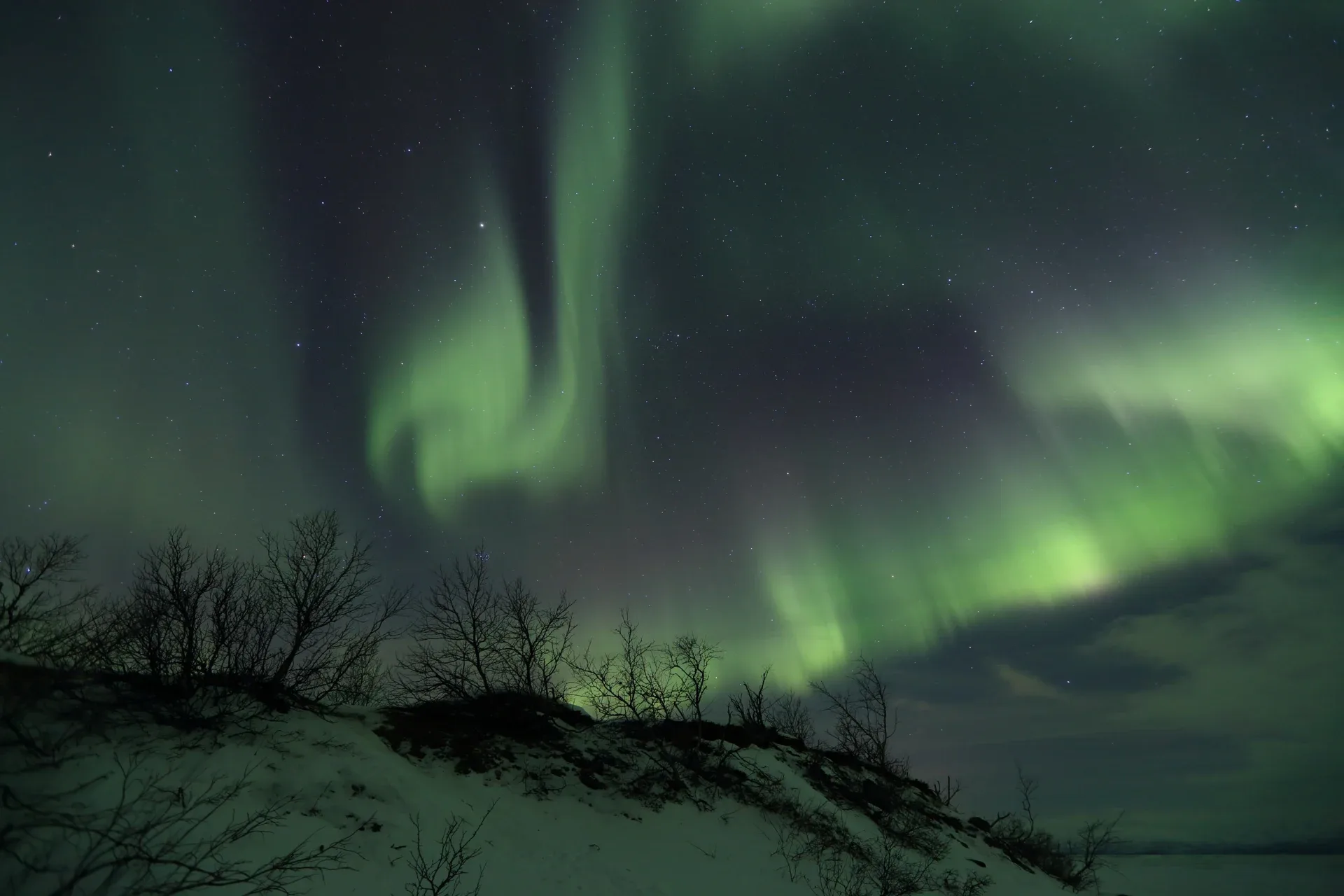
Northern Finland lets you combine a place to stay with regular opportunities to watch the sky. The national meteorological institute places the best chances in the northernmost areas. Its published figures apply to dark, cloudless nights: they do not indicate the likelihood of success on a weekend that also involves travel, variable weather, and fatigue.
Rovaniemi is an option if you have already chosen to stay there. The selected aurora and photography tour accommodates up to eight travelers and lists a duration of four to twelve hours. The guide speaks English or Finnish. Pickup is offered within a stated ten-kilometer radius of the center; confirm if your address is farther away.
Thermal clothing, boots, hot drinks, and a snack are among the inclusions. A full meal is not included: have dinner before departure at the time specified. The possible duration of the outing deserves particular attention if you are traveling with children or find long journeys difficult. Set aside a whole evening and be prepared for a potentially very late return.
The provider advertises a refund if no aurora is seen, subject to its terms. Before booking, read how an observation is defined and what steps you need to take. Financial protection can influence your choice; it does not change the clouds or solar activity. Keep a copy of the terms for your option and check what happens if the tour itself is canceled.

Viator
Aurora photography tour from Rovaniemi
For travelers already based in Rovaniemi who want photographs and are willing to join a search that may last twelve hours. Check the pickup radius and the terms of the advertised refund.
- 240–720 min
- 4.9/5 (889 reviews)
Four- to twelve-hour outing for up to eight travelers, in English or Finnish, with thermal clothing and boots; pickup within the radius specified by the provider.
Cancellation policy
For a full refund, cancel at least 24 hours before the scheduled departure date.
From €199.00
View activityNumber of nights and budget
For a first trip focused on the aurora, we recommend spending four to six nights in one base. This is an organizational suggestion, not a guaranteed success rate. It gives you several evenings, lets you reschedule an outing when conditions and the contract allow, and leaves time to enjoy the destination during the day.
A trip of just two nights is still possible, but your schedule leaves little room for flexibility. The arrival evening depends on your flight, transfer, and level of fatigue. It may be difficult to stay out late on the night before your return if you have an early departure. Count the evenings you can actually use, not just the number of nights charged by your accommodation.
Then set a budget for the entire trip: transport to your base, lodging, transfers, meals, equipment, and evening outings. Compare what each excursion includes before booking several. A loaned thermal suit, a meal, and a ride back to the hotel cover needs that might otherwise lead to extra expenses. Prices and ratings appear on the offer cards, in their actual currency.
For accommodation, prioritize practical arrangements: late returns, access to meals, and pickup that works with your address. Direct access to a dark outdoor area can be useful, provided you know the terrain. A glass-walled room or aurora-themed decor does not guarantee a sighting. Judge the extra cost of accommodation by its actual amenities and how much you want to stay there.
To compare Tromsø and Rovaniemi, calculate the final amount for your group in the currency shown at checkout. A longer duration may involve a lot of driving, and a small group does not mean a private tour. Also consider costs before departure and after the return: dinner, transport to the meeting point, and any extra travel to accommodation outside the drop-off area. An offer that looks cheaper on its card alone may require more costly arrangements for your address.
For a five-night stay, one possible schedule is to use the arrival evening to settle in, book a first excursion for the following day, then keep the other evenings open for another outing or for viewing the sky near your accommodation. This is a suggested pace, to be adjusted to the available departure times. During the day, choose an activity you will genuinely enjoy even after a quiet night. That way, you can enjoy the trip without turning every morning into a wait for the next aurora forecast.
Guided tour options
A mobile aurora chase lets the guide check several areas depending on the clouds. Viewing from a fixed location puts more emphasis on a stable schedule and settling in at the site. An activity combined with dinner or another experience may appeal to those who want a more structured evening. Decide how much importance you want to give the search itself before comparing offers.
Useful criteria include total duration, group size, transportation, languages, loaned clothing, food, restrooms, and the return trip. Also ask how much time is spent outdoors, walking, or in the vehicle. Two tours with the same duration can offer very different levels of comfort for someone sensitive to the cold or in need of regular breaks.
Plan your first outing early enough in the trip to keep other evenings available. A second booking may make sense if you want to repeat the experience; compare it with safe independent viewing and the rest of your budget. Avoid booking every night in advance without reading the change and cancellation terms.
Useful forecasts while you are there
First check local cloud cover, then consult space weather information. NOAA’s aurora map usually provides a forecast of location and intensity 30 to 90 minutes ahead. It helps you understand near-term conditions; it does not predict the sky during a trip booked several months in advance.
The Kp index reports geomagnetic activity on a global scale. A high value may accompany a southward expansion of the aurora. In Kiruna, however, a low value can still allow for an observation: always waiting for a very high Kp would mean missing interesting evenings. In Finland, the national service also uses local magnetic disturbance measurements, with thresholds tied to specific stations.
Once there, look at the sky from a safe place rather than staying in front of a screen. A break in the clouds can be brief, as can a period of intense auroral activity. The Finnish institute places typical displays around midnight, with several hours of possibility on either side, while noting that they can appear at other dark times too. Your guide will adjust the schedule to the conditions encountered.
Cold and nighttime safety
Standing still while you wait requires warmer clothing than an active walk. Plan several layers, wind protection, suitable footwear, gloves, and a hat. A loaned thermal suit complements this preparation. A hot drink, a small supply of food, and an extra battery also make long evenings easier to manage.
Visit Tromsø recommends wearing reflective items, respecting private property, and paying particular attention to traffic. Choose an authorized parking spot that is completely clear of the road. Do not stand in the middle of the road to frame a photograph. A group focused on the sky remains exposed to vehicles, even on a road that seems quiet.
If you have little experience driving in winter conditions, a guided outing with transportation makes the trip simpler. If you plan to observe independently, ask about local access, do not venture onto an icy surface without reliable information, and plan your return. Respect residents, take your rubbish with you, and keep your distance from wildlife. A successful image does not justify crossing private land.
Photography and what you see with the naked eye
A photograph can reveal more color than you see with the naked eye, especially when the aurora is faint. The Rovaniemi excursion listing says so itself. The perceived intensity depends on the phenomenon and your viewing conditions. Expect shapes that can sometimes be subtle, rather than assuming they will always match the saturation of a promotional image.
With a camera that offers manual controls, use a tripod, manually set and check the focus on a star or distant light, and choose a wide aperture. Visit Tromsø suggests starting with an ISO of around 1,600 to 3,200 and exposures of five to fifteen seconds. Then adjust: fast movement calls for a shorter exposure to preserve structure.
With a phone, stabilize the device and try the night mode available on your model. Practice the settings before heading out, then protect the battery from the cold. If you are counting on photos from the operator, check their resolution and how they will be sent. The web photos included with the Tromsø outing are primarily keepsakes; they are not a promise of files suitable for large prints.
FAQ
Can you still see auroras after 2026?
Yes. Auroras remain possible after 2026, including during periods of low solar activity, especially at high latitudes. The cycle affects their frequency and extent. It does not cause a general interruption until 2031. Choose your trip based on darkness, the region, and the time available.
Which country should you choose for a first trip?
Start by choosing the kind of setup you want. Tromsø suits travelers looking for an urban base with guided outings and transportation; Abisko and Kiruna let you center your stay on an Arctic setting; Finnish Lapland offers several bases, including Rovaniemi if you were already planning to go there. No country can guarantee the weather during your week.
Which month should you choose during the 2026–2027 season?
September and October suit a trip that does not depend on snow activities. The winter months offer long periods of darkness but require more preparation for the cold. In northern Finland, March and early April are worth considering, according to the meteorological institute. Always check local conditions and the outings that are actually being offered.
Are three nights enough to try to see the aurora?
Three nights allow for a serious attempt if you actually have several evenings available. We recommend four to six nights instead for a trip whose main goal is seeing the aurora. This gives your plans more flexibility without providing a statistical guarantee. Keep the first evening compatible with your arrival and the last with your return journey.
Does an excursion guarantee that you will see an aurora?
No provider controls this natural phenomenon. An offer may include a refund, another attempt, or a different commercial arrangement, depending on its contract. Check what counts as an observation, how to claim the provision, and how a cancellation is handled. The price covers guiding and transportation services, and what is included should be clear.
Do you need a high Kp index in Scandinavia?
A high Kp is not essential in regions sufficiently close to the auroral oval. Kiruna notes that low values can still allow for an observation. To decide whether to go out, consider activity alongside cloud cover and darkness. Local Finnish measurements add to this picture; they cannot be reduced to one universal measure of success.
Can you see the aurora with children?
Yes, with an outing suited to their age, the cold, and the schedule. A short wait near your accommodation may be more suitable than searching for several hours in a vehicle. The Tromsø offer featured here has age and height restrictions; the Rovaniemi outing may last twelve hours. Before booking, confirm that children are welcome, whether a car seat is needed, and how the outing is organized.
Do you need an eSIM for this trip?
Check your usual plan first. Finland and Sweden are in the European Union, and European roaming rules also apply in Norway under the EEA, subject to your operator’s terms. An eSIM may be useful if your data allowance is insufficient or your plan excludes your destination. Also download useful information for offline access; a mobile plan does not guarantee coverage everywhere.
Can you see the aurora without paying for an excursion?
Yes, when it is visible from a safe, accessible dark location. Ask your accommodation about suitable spots and walking back. An excursion provides organization and transportation, and may include a search for clear skies. Its value depends on your base, your independence, and whether you want a guide, not on any special right to access the sky.
Sources and checks
Plan your visits and check current conditions.
- Solar maximum: announcement of October 15, 2024
NASA · Accessed November 2, 2026
What this source supports
Announcement of a maximum phase in 2024; cycle of about eleven years; peak determined in hindsight; significant storms possible during the declining phase.
- Solar cycle progression
NOAA / SWPC · Accessed November 2, 2026
What this source supports
Solar Cycle 25 forecasts and uncertainties updated monthly; no end to viewing opportunities between 2026 and 2031.
- The aurora phenomenon
NOAA / SWPC · Accessed November 2, 2026
What this source supports
Electrons, oxygen and nitrogen, polar ovals; expansion to lower latitudes during storms; clear, dark skies required, with the midnight sun unfavorable.
- Aurora — 30 Minute Forecast
NOAA / SWPC · Accessed November 2, 2026
What this source supports
Typical 30–90-minute forecast, location and intensity from the OVATION model; does not predict cloud cover or whether your vacation will be successful.
- Auroras in Finland
Finnish Meteorological Institute · Accessed November 2, 2026
What this source supports
Auroras are common even at solar minimum in Lapland; statistics are conditional on dark, cloudless nights; March/early April are favorable when weather is taken into account; displays occur around midnight and are possible at any dark hour.
- Auroras and space weather
Finnish Meteorological Institute · Accessed November 2, 2026
What this source supports
Magnetometer measurements and local K index; thresholds vary by station, distinct from the global Kp index.
- Northern lights in Kiruna
Kiruna Lappland · Accessed November 2, 2026
What this source supports
September–March, with late August/April as extensions; low Kp is compatible with local viewing; Abisko and local clear spells, with no guarantees.
- Northern lights in Tromsø
Visit Tromsø · Accessed November 2, 2026
What this source supports
Late August to early April, with the city inside the auroral zone; clear skies and darkness are essential.
- Northern lights FAQ
Visit Tromsø · Accessed November 2, 2026
What this source supports
Viewing is possible in town under clear skies; mobile search for clear areas; criteria include group size, duration, equipment, food, photos, toilets and return transport.
- Northern lights tourism guidelines
Visit Tromsø · Accessed November 2, 2026
What this source supports
Wear reflective clothing, do not walk on the road, be mindful of parking and traffic, private property, wildlife and litter.
- How to photograph the northern lights
Visit Tromsø · Accessed November 2, 2026
What this source supports
Tripod, manual focus; ISO 1600–3200 and 5–15 seconds as starting settings, to be adjusted for movement and light.
- Mobile roaming in the European Union
European Union — Your Europe · Accessed November 2, 2026
What this source supports
EU roaming rules also apply in Norway/EEA; check your operator’s terms and limits.
- Northern Lights minibus tour and photography from Tromsø
Viator / Partner API · Accessed November 2, 2026
What this source supports
Exact product GET ACTIVE; languages en; duration 360–540 min; logistics, inclusions and restrictions read from the listing. productUrl link received with our attribution. No dated availability guaranteed.
- Northern Lights photography tour from Rovaniemi
Viator / Partner API · Accessed November 2, 2026
What this source supports
Exact product GET ACTIVE; languages fi, en; duration 240–720 min; logistics, inclusions and restrictions read from the listing. productUrl link received with our attribution. No dated availability guaranteed.
Viator — activity pages
Information about the offers featured in this article.Affiliate links: Odyvero may earn a commission when you book through this article’s buttons.
- Viator : Aurora photography tour from Rovaniemi
Accessed November 2, 2026
- Viator : Aurora minibus tour and photography from Tromsø
Accessed November 2, 2026


