 odyvero
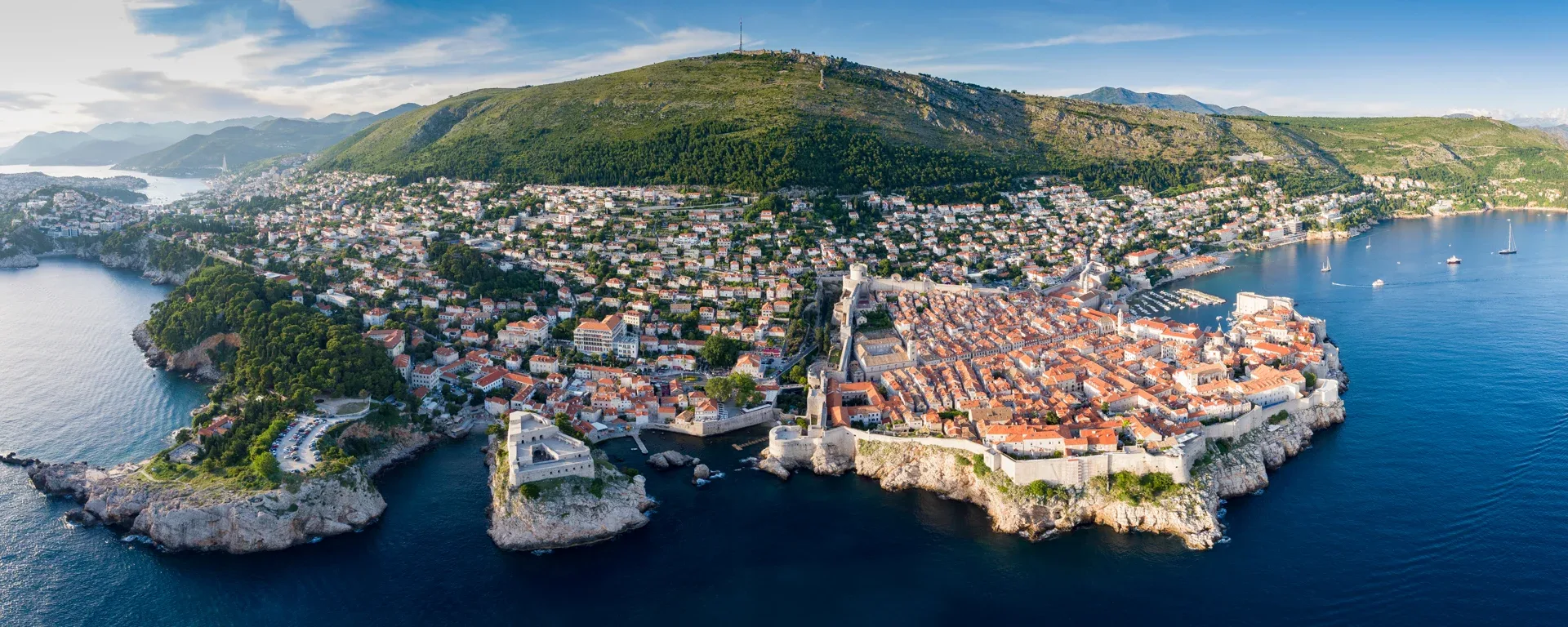

Dubrovnik behind its city walls, Hvar around its harbor, Kotor at the end of a mountainous bay: these three ports of call can fit into a week-long cruise. To choose well, focus on the ship, time ashore, and included excursions. Here is how to plan this trip, using a confirmed 2027 itinerary as a point of comparison and visits suited to the port calls.
All Three Ports of Call on One Departure
A search for “Adriatic cruise” brings up very different trips. Some head to Italian ports and northern Croatia; others stay between Split and the Dalmatian islands. To include Dubrovnik, Hvar, and Kotor, all three names must appear on the detailed itinerary for the same departure. A destination photo on a general page is not enough to establish that it is part of your week.
Also check what the port name refers to. Hvar means both an island and its main town; landing elsewhere on the island changes how you organize a walk. In Dubrovnik, the docking or landing location determines the transfer to the city walls. In Kotor, the quay or anchorage affects how much time you need before meeting ashore. These are details to obtain for the specific ship and date you choose.
We prefer an itinerary that leaves a genuine half-day in each town over a long list of closely spaced ports of call. This is an editorial selection criterion: it should allow time for a main visit, a break, and a return without rushing. When a day includes two islands, take a close look at the time available on each.
This trio suits travelers who enjoy alternating between town walks and sailing. Dubrovnik offers a densely packed walled city, Hvar a port center opening onto the islands, and Kotor a connection between the bay, mountains, and old town. You can devote all three stops to culture without booking an excursion every day. If your stay is focused on long swims, look more closely at the stops actually planned for swimming.
The Ship and Cabin
Choosing a ship changes everyday life: the number of passengers disembarking, common areas, meals, facilities, and access to different ports. Compare these characteristics before taking “yacht” or “luxury” at face value. A smaller passenger count may appeal for life on board; a larger capacity may come with more facilities. In either case, check port-call times and disembarkation arrangements.
La Belle de l'Adriatique, used in the CroisiEurope example presented here, carries 195 passengers. The official listing describes a 110-meter ship with four decks, a restaurant, a lounge bar, and a sun deck. This capacity gives you a concrete sense of the format: you share the trip with a sizeable group in an organized, hotel-style operation, without the scale of a large cruise ship.
The cabin deserves equally careful review. On this ship, CroisiEurope lists large picture windows on the upper and boat decks, and portholes on the main and lower decks. A picture window is not a private balcony. Check the exact cabin location, category, and nearby spaces before paying a supplement based solely on the deck name.
Finally, consider how easily you can get around. Ask for relevant accessibility information between the cabin, restaurant, deck, and disembarkation point, as well as arrangements for tenders if they are planned. Historic centers have stairs and uneven surfaces. An accessible cabin on board and a suitable shore excursion should be considered together, especially if you have reduced mobility.
A Confirmed Itinerary for 2027
CroisiEurope is selling an eight-day itinerary, reference DHD_PP, departing from and returning to Dubrovnik. The listing consulted includes Mljet, Korčula, Šibenik, Trogir, Split, Hvar, Vis, and Kotor. Departures are listed for 2027, including June 24 to July 1 and September 30 to October 7. Their presence on the calendar does not guarantee that a cabin in a particular category will be available when you book.
This example helps illustrate how full an Adriatic week can be. After boarding, there is still time in the program for Dubrovnik the following day. The next stops combine islands and coastal towns, then Hvar and Vis share a day. Kotor follows a morning sailing through the bay, before the return to Dubrovnik. Eight days of travel therefore do not mean eight full days of sightseeing.
Visits to Dubrovnik, Hvar, and Kotor, along with several other excursions, are listed as optional. The package includes, among other things, full board, drinks with meals and at the bar, and port fees, according to the listing. For this port-to-port version, you should look separately at transportation to the port. Ask for a quote that identifies each selected service rather than assuming “all-inclusive on board” means all visits are included.
We use this itinerary as a verifiable reference for planning the three stops, not as a suggestion to recreate its daily schedule independently. The cruise line notes that sailing conditions may change the itinerary and lead to intermediate stops being skipped. Any independent excursion should therefore be booked with that possibility and its own cancellation terms in mind.
Dubrovnik Between Pile Gate and the Port
In Dubrovnik, begin your planning with the journey from the ship to the old town. The port authority publishes arrival announcements; your cruise line confirms where you will disembark and whether transfers are provided. Keep the port name and the location where you need to return. A meeting point at Pile Gate means you must already have reached the area around the city walls, not merely left your cabin.
For a first visit, Pile Gate, the Stradun, the central squares and the area around the old port make a coherent walking route. You pass through a lived-in city, with shopping streets, churches and side passages that invite you to slow down. Leave time to step away from the main thoroughfare: the narrow lanes and changes in elevation offer a different perspective on the urban fabric.
The city walls are a visit in their own right. If you want them to be the highlight of your port call, give them a distinct place in your itinerary, allowing time for the entrance, the walk and breaks. Avoid automatically trying to fit the walls, a museum, a fortress and a beach into a short window. With children or in marked heat, a walk through the center and just one paid visit make for a more comfortable pace.
One self-guided option in French is WeGoTrip’s “Dubrovnik: Audio Guide to the Walled City.” The advertised route takes about one hour and twelve minutes, from Pile Gate toward the squares and the waterfront district. Attraction admission is not included; your actual walk will take longer with stops. The provider states that the content is AI-generated. Listen to the sample provided to decide whether the narration suits you.
This option is especially appealing to a couple or family who want to pause the commentary to have lunch, look at a building or head back to the ship. Bring headphones and download the route before your port call so you can listen offline in the app. If your cruise already includes a guided tour of the old town, choose the one that suits you rather than booking two equivalent tours.
WeGoTrip
Dubrovnik Old Town in French audio
To explore the old town in French without a group schedule: download the audio before your port call and add your breaks to the advertised duration. Admission is separate; the provider states that the content is AI-generated.
- About 1 hr 12 min, excluding breaks
A self-guided walk from Pile, with commentary on your smartphone. AI-generated content depending on the provider; personal headphones and monument admission are separate.
From €7.00
View activityHvar around the Pjaca
In Hvar, the center offers a port call that can be entirely on foot. The tourist office brings together the main landmarks around St. Stephen’s Square, or Pjaca, the harbor and the old streets. The cathedral closes off one side of the square; the Arsenal recalls the city’s maritime role. The historic theater, which opened in 1612 in this complex, is a reason to look at the buildings as well as the terraces.
For a short visit, we recommend the harbor, the square and the nearby streets, followed by a choice between an open interior and the climb to Fortica. This arrangement leaves time to sit down without taking you unnecessarily far from your disembarkation point. Check landmark opening hours again for the day of your visit: a site appearing on the tourist office map does not mean it will be open during your port call.
Fortica overlooks the city and offers views of the harbor and the Pakleni Islands. The climb takes extra effort, which you may feel differently depending on the heat and your mobility. Decide before setting off: allow time to walk back, take breaks and reach the ship. A viewpoint enjoyed at an easy pace is better than reaching the top when the meeting time is already too close.
In the reference itinerary, Hvar and Vis share a day. A boat trip to the Pakleni Islands would then add a second sailing and another return time to manage. In this situation, we recommend exploring Hvar itself. An excursion to the nearby islands is a better fit for a longer port call and a provider that expressly confirms it will work with your schedule.
Finally, check the arrival point specified by your cruise line. Seeing Hvar on the itinerary does not tell you whether you will arrive in the town, at another port or by tender. The answer will help you decide whether a central walk is enough, whether you need a transfer and whether an independent activity is reasonable. It also helps you avoid booking in the wrong place on an island that extends well beyond its historic center.
Kotor and the Inner Bay
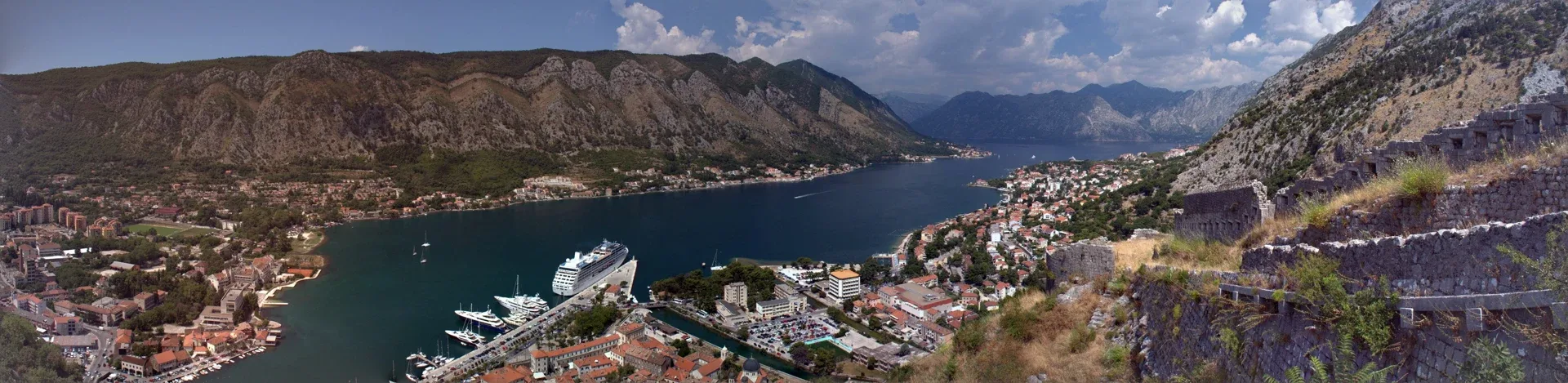
Sailing through the Bay of Kotor deserves a place in your day. You can take in the slopes, the inhabited shores and the space narrowing around the ship. If the itinerary lists an arrival after a morning in the bay, save this time for the scenery rather than treating it as a mere connection between two visits. The port call’s maritime appeal begins before you disembark.
On land, the port is near the old town walls, but the exact arrangements depend on the assigned quay or anchorage. In the center, plan a walk between gates, squares and narrow streets, returning regularly to an easy-to-recognize landmark. The uphill walk along the walls takes additional time and should not be added automatically to another excursion during a short port call.
To explore the opposite shore, Viator excursion 29883P2 links Kotor, Perast and Our Lady of the Rocks in an advertised two hours. It combines sailing with brief stops: the listing allows about twenty minutes on the islet and thirty minutes in Perast. It is a good fit for those who want to see the bay from a small boat and walk a little along the waterfront, while still leaving time for Kotor if the ship’s schedule allows.
The skipper-guide provides commentary in English; a French audio guide is available by QR code and requires an internet-connected smartphone. Admission to the museum or church of Our Lady of the Rocks is optional and not included. Visiting also depends on whether it is open on the day. You must arrive thirty minutes before departure; hotel transfers are not included. Use the meeting point on your confirmation, and keep the operator’s contact details handy.
We recommend this trip for its focused duration, provided there is comfortable time around it for disembarkation and return. A spot booked for a time slot is no guarantee that it will fit your cruise schedule. If your time ashore is tight, the old town is a sufficient plan. With more time, Perast offers a change of perspective without turning the port call into an extended road trip.


Viator
Perast and Our Lady of the Rocks from Kotor
To see Perast and Our Lady of the Rocks during a sufficiently long port call: allow two hours on the water, thirty minutes for the presentation and travel time from the ship. English-speaking skipper, French audio guide requiring an internet connection; admission to the islet is separate.
- 2 hours
- 4.8/5 (714 reviews)
A two-hour outing with a boat ride and short stops. English-speaking skipper, French audio guide; arrive thirty minutes beforehand. Museum/church admission is optional and not included.
Cancellation policy
For a full refund, cancel at least 24 hours before the scheduled departure date.
From €35.00
View activityExcursions and return time
For each port call, note four times: the ship’s scheduled arrival, a realistic time for leaving the port, the activity’s departure time and the latest time to return on board. The first two may differ, particularly if there are checks or tendering. Add travel time and any arrival buffer required by the operator. A two-hour tour refers to the advertised activity, not the total time you will be away from the ship.
Then allow a buffer beyond the duration of the activity itself. Take into account the return location, possible traffic and disembarkation arrangements. An activity that returns to central Kotor and one that ends far from the quay are not equivalent. No single buffer works for every port: confirm the specific locations before booking.
Cruise-line excursions have the advantage of being integrated into the line’s arrangements; read the terms covering assistance in the event of a delay or itinerary change. An independent tour may sometimes offer a different pace or a more suitable language. Its booking terms and coordination with the ship are separate matters. Ask what happens if the ship arrives late, changes ports or cancels the stop.
For this trio, our selection is deliberately short: an audio tour in Dubrovnik, a self-guided walk in Hvar and a focused boat trip in the bay at Kotor. You do not need to book everything. Prioritize the service that addresses your actual difficulty, such as understanding the city in French or arranging a boat trip to Perast. The remaining time can stay free.
The full cost of the trip
The first amount to compare is the cost of the stay for your actual party: number of travelers, cabin, deck, and any single supplement. Add transportation to the port, transfers, a night before embarkation if you choose one, and the excursions you want. Two cruise fares are comparable only when you compare what each includes. The name of the meal plan alone does not tell you whether drinks or visits are included.
Next, set aside a small budget for each port of call. In Dubrovnik, the admission fees you choose and the transfer may cost more than the walk itself. In Hvar, a route through the town center leaves plenty of time free. In Kotor, distinguish between the boat trip and the optional admission to the islet. The offer cards list the prices and currencies observed; the final amount depends on the number of participants and the date selected.
Also consider meals. Full board makes it possible to return to the ship for lunch when the schedule allows; a day spent away from the ship may mean buying an additional meal ashore. Choose it to make the most of your time in port, and include it in your budget rather than discovering the cost after booking. If your activity overlaps with meal service, check with the cruise line about packed lunches and dining times.
A night in Dubrovnik before departure can give you a more flexible day and keep your flight separate from your embarkation appointment. It is an organizational choice, with accommodation and transport costs. Book in an area that suits your plans: near the port to simplify embarkation, or with convenient access to the center if you want to explore first. In all cases, confirm the actual pier and check-in times.
Arrival and the final morning
A departure from Dubrovnik port involves two separate appointments: arriving in the city and boarding at the time specified by the cruise line. If you have booked your transport separately, plan the entire journey to the pier, including your luggage. Flight time is only one part of the day. Collecting your bags, transferring, dealing with traffic, and finding the correct check-in point all need to be accounted for.
Arriving the day before is especially useful if you want to visit Dubrovnik before the cruise. You can then book the city walls or a museum for that day and keep the port call in the itinerary for a more relaxed walk. This avoids trying to fit every visit between disembarking from the group and taking an optional excursion. Ask your accommodation what arrangements it offers for luggage between checkout and embarkation.
On the return, distinguish between the ship’s arrival time and when you can actually leave with your belongings. Confirm the disembarkation arrangements before booking a tight flight or transfer. A final morning listed in Dubrovnik on an itinerary may be devoted mostly to passengers leaving the ship. It is not automatically another block of time available for sightseeing.
If you stay on after the cruise, use the extra time to visit another neighborhood or take a trip to the Elaphiti Islands, setting aside a full day for it. This makes the options clearer: the cruise week links the ports of call, while extra nights give you more time to explore Dubrovnik. If you have little time off, one night beforehand and a straightforward return may be enough; if you have more time, add a proper day rather than squeezing an activity between two journeys.
Season and luggage
The observed 2027 calendar for the reference itinerary runs from June to a return in early October. Summer departures and those in late September suit different expectations. If swimming is important to you, check which stops actually allow for it; if you prefer cities, the distribution of visits and disembarkation times become key. No month removes the need to check sailing conditions.
In midsummer, exposed sections of the city walls and uphill walks call for water, sun protection, and breaks. Late in the season, bring a windproof layer and a rain garment that is easy to keep with you on a small boat. The weather can affect a local outing or the ship’s route. Have a backup plan in the center of the port of call that does not depend on a distant reservation.
Pack comfortable, secure-fitting shoes, clothing suitable for religious buildings, travel documents, and your usual medicines in their original packaging. The La Belle de l'Adriatique information sheet does not list a laundry service, so plan your clothing accordingly. Check with the cruise line and the authorities which documents are required for the whole trip, including Montenegro, based on your nationality.
Staying connected during port calls
In Croatia, EU roaming rules apply to phone use on land-based networks, subject to the terms of your plan. Check Montenegro separately with your provider. The European Commission also distinguishes satellite networks on ships: domestic pricing rules do not apply to them. The ship’s name or its apparent proximity to the coast is not enough to identify which network you are using.
For a port call in Kotor that is not covered by your plan, an Airalo Montenegro eSIM with 1 GB valid for three days may meet your needs for maps and messages. It works ashore on an unlocked, compatible phone; it does not provide satellite connectivity while sailing or coverage in Croatia. Compare this small plan with what you already have before buying it.
Download useful maps and tickets before leaving Wi-Fi, and keep the ship’s number and meeting-point address available offline. For the WeGoTrip audio guide, prepare the download in the app; the Kotor trip’s audio listing requires a connection. While sailing, airplane mode and deliberately selected Wi-Fi can help you avoid unintentionally connecting to a maritime mobile network.
Airalo
Montenegro: 1 GB eSIM valid for three days
To access maps and messages ashore in Montenegro if your plan does not cover this port of call. The 1 GB plan for three days covers neither Croatia nor maritime connectivity; an eSIM-compatible phone is required.
FAQ
How many days should you allow for Dubrovnik, Hvar, and Kotor?
An eight-day itinerary is available that combines these ports of call with other Dalmatian ports. The duration alone tells you little about sightseeing time: check which days are split between two places and when the ship is sailing. For a more flexible personal itinerary, add a night in Dubrovnik before embarkation or choose a departure with longer port calls.
Which 2027 departure lets you see all three cities?
The CroisiEurope DHD_PP listing, Dubrovnik–Dubrovnik, names all three cities and shows, among others, departures on June 24 and September 30, 2027. Check the itinerary for your chosen date, the cabin, and availability. The cruise line may change a port of call because of sailing conditions.
Are visits included in the cruise?
On the reference itinerary, several visits, including Dubrovnik, Hvar, and Kotor, are optional. Full board and the drinks listed as included on board are separate inclusions. Read the detailed quote, including excursions, transfers, and admissions. Independent activities are paid for separately and have their own terms.
Can you explore Hvar without an organized excursion?
Yes, if your disembarkation arrangements let you reach the town and you are comfortable walking. St. Stephen's Square, the harbor, and the Arsenal make up a central route. Fortica requires an additional climb. Check your arrival location and return time before adding a journey to another part of the island.
Can you take the Kotor–Perast trip during a port call?
It may work if you have enough time to spare. The selected product lists a duration of two hours and asks you to arrive thirty minutes beforehand, in addition to disembarkation and travel time. The skipper speaks English, with French audio accessed online. Admission to Our Lady of the Rocks is not included; also confirm that the timing works with your ship’s schedule.
Should you book a Game of Thrones tour in Dubrovnik?
Only if filming locations are your priority. A first visit can focus on the old town, its squares, and the old harbor. The selected French audio guide follows this urban route and mentions, among other places, the Jesuit Staircase. For a tour devoted entirely to the series, choose a dedicated option after checking its duration and admission fees.
Does a Montenegro eSIM work during the cruise?
It connects to covered land-based networks in Montenegro when those networks are available. It does not automatically cover Croatia and does not replace the ship’s internet at sea. Check your plan first, then your phone’s compatibility. Also prepare essential documents for offline access so you do not depend on network coverage at the meeting point.
Which budget item should you check first?
First compare the full cost of the cabin and transport to the port for your group. Then add transfers, selected tours, and any overnight stay beforehand. Keep the activity currencies as offered and check the total when booking. A short list of excursions also leaves more free time.
Sources and checks
Plan your visits and check current conditions.
- DHD_PP Itinerary: Croatia and Montenegro
CroisiEurope · Accessed November 2, 2026
What this source supports
Eight days Dubrovnik–Dubrovnik; Hvar/Vis on the same day; morning sailing to Kotor. 2027 departures include June 24–July 1 and September 30–October 7; optional visits, port-to-port package, meals and drinks advertised, sailing itinerary subject to change.
- La Belle de l’Adriatique: Ship and Cabins
CroisiEurope · Accessed November 2, 2026
What this source supports
195 passengers, 110 meters, four decks; picture windows on the upper and boat decks, portholes on the main and lower decks. No laundry service advertised.
- Dubrovnik Sightseeing Highlights
Dubrovnik Tourist Board · Accessed November 2, 2026
What this source supports
Pile Gate, Lovrjenac, St. John’s Fortress, Stradun, and the old port: landmarks for a first stroll.
- Port Authority and Arrivals
Port Dubrovnik · Accessed November 2, 2026
What this source supports
Official port authority website, arrival notices; confirm the exact disembarkation location with the cruise line.
- Hvar Cultural Landmarks
Visit Hvar — Tourist Board · Accessed November 2, 2026
What this source supports
St. Stephen’s Square/Pjaca, the cathedral, the Arsenal and theater opened in 1612, Fortica, and views of the Pakleni Islands. The center is walkable; no historical hours or prices are reproduced.
- Kotor Port and Marina
Port of Kotor · Accessed November 2, 2026
What this source supports
Port and marina context near the city walls; confirm the specific quay or anchorage for the ship.
- Kotor, Perast, and Our Lady of the Rocks
Viator / operator 29883P2 · Accessed November 2, 2026
What this source supports
Exact listing consulted via GET Partner API products/29883P2: ACTIVE, two hours, English with connected French audio, arrive thirty minutes before departure, optional museum/church admission excluded, short stops on the islet and in Perast. Price and reviews are in the hydrated central offer.
- French Audio Guide to Dubrovnik Old Town
WeGoTrip · Accessed November 2, 2026
What this source supports
French, about 1 h 12 min, personal smartphone and headphones required; admission fees excluded; AI-generated content declared by the provider; download in the app for offline listening.
- Montenegro: 1 GB for Three Days
Airalo · Accessed November 2, 2026
What this source supports
Montenegro land-based plan, 1 GB/3 days. The USD currency retained comes from the imported catalog, regardless of the provider website’s EUR locale.
- Mobile Roaming in the EU
European Commission — Your Europe · Accessed November 2, 2026
What this source supports
Domestic rates on EU terrestrial networks, subject to conditions; maritime satellite systems are outside capped roaming regulations; check which additional countries are covered by your operator.
- Dubrovnik Panorama: Photography Rights
Wikimedia Commons / Chensiyuan and Bammesk · Accessed November 2, 2026
What this source supports
File page reviewed: CC BY-SA 4.0, Chensiyuan, retouched by Bammesk. Original 9597 × 3838; reused campaign derivative, decoded dimensions 1920 × 768, and content viewed.
- Kotor Bay Panorama: Photography Rights
Wikimedia Commons / Scott Anderson · Accessed November 2, 2026
What this source supports
Commons file metadata verified: Scott Anderson, CC BY 2.0. Original decoded at 6755 × 1649; WebP reduction without enlargement to 1920 × 469, image viewed, then bytes imported via media/upload.
Booking partners
Information about the offers featured in this article.Affiliate links: Odyvero may earn a commission when you book through this article’s buttons.
- Airalo : Montenegro: 1 GB eSIM valid for three days
Accessed November 1, 2026
- Viator : Perast and Our Lady of the Rocks from Kotor
Accessed November 2, 2026
- WeGoTrip : Dubrovnik Old Town in French audio
Accessed November 2, 2026


