 odyvero

Six months of travel, a few weeks in one city, time to learn a language: a sabbatical leave lets you plan an extended trip while keeping your employment contract. For a private-sector employee in France, the project starts with three related decisions: securing the right leave, funding the entire absence, and keeping enough resources to resume your life when you return.
The sabbatical leave framework
The phrase “gap year” covers very different situations. In the French private sector, sabbatical leave has a specific framework: its standard duration is from six to eleven months, subject to any applicable collective bargaining provisions. A twelve-month trip therefore requires you to check your collective agreement or negotiate another arrangement. The duration stated in your travel contract does not determine how long your employer must approve.
The Service Public page, checked in August 2026, notably specifies three years’ seniority with the company, six years of professional activity, and a waiting period to be observed after certain types of leave. Seniority with the company may include non-consecutive periods; collective bargaining provisions may set a shorter period. Previous sabbatical leave, leave to start or take over a business, and certain career transition projects are taken into account when assessing the waiting period. Have your situation checked using your actual dates.
Your collective agreement and company agreements are therefore the first documents to consult. Note their provisions on seniority, duration, the request and any potential funding. A discussion with Human Resources can then help identify what falls under the applicable framework and what must be negotiated. This guide concerns private-sector employees in France; public-sector employees and self-employed workers must consider a different arrangement.
During the leave, the employment contract is suspended and pay generally stops. Collective bargaining provisions, company practice or rights available through a time-savings account may change how the leave is funded. Keeping your contract makes it easier to plan your return, but does not provide a travel salary. Build your budget using only amounts whose payment has been confirmed, and account for when they will actually be available.
For a three-month break or a different duration, unpaid leave is another possibility to discuss. Service Public notes that there is no general statutory minimum or maximum duration, and that employer approval is required, subject to any collective bargaining provisions. A written agreement should specify the dates, any renewal options and the conditions for returning to work. Choose the arrangement before paying travel deposits.
The request and handover
Under the framework described by Service Public, a request for sabbatical leave must be made at least three months before the planned departure, using a method that establishes the date it was sent. It should state the requested start date and duration. Check the procedures set out in the applicable agreements, and keep your request and proof that it was received. A favorable conversation with your manager does not replace this step.
Prepare for the meeting with two timelines: the one that suits you and an acceptable alternative. For example, you could propose leaving after a project closes rather than in the middle of its delivery. This flexibility is a negotiating choice; it should be matched by a clear commitment in the final agreement. If another date would make your project impossible, explain that before promising availability you cannot provide.
A useful handover document is only a few pages long: dates, main responsibilities, files to transfer, contacts and handover period. A list of documented access details and procedures is more useful than a promise to respond to emergencies from abroad. Identify the decisions that will need to be made without you and the person who will take them on. Your absence will be easier to manage if it does not depend on improvised calls during your trip.
Depending on the conditions of the scheme and the company’s size, the employer may give several possible responses. The government information page describes, in particular, postponements of up to nine months in a company with fewer than 300 employees and six months from that threshold, in the cases provided for. In companies with fewer than 300 employees, a request may also be refused on the grounds that it would be detrimental to the proper operation of the company, after consultation with the CSE (Social and Economic Committee). The grounds and available options are therefore not the same everywhere.
Under the framework described by Service Public, failure to respond within thirty days of receiving the request constitutes approval. Even so, before making a significant expense, clarify the dates with Human Resources and keep the documents that establish your situation. If your request is refused, the page states that you have fifteen days after notification to challenge the decision. A qualified employment-law professional should promptly review any genuine dispute.
The budget for the entire absence
The amount you need depends as much on what you continue to pay in France as on the countries you travel through. Start with four separate budget categories: preparation, expenses during the trip, obligations you keep at home, and getting settled after you return. Then add an emergency reserve. This separation immediately shows whether a seemingly small monthly expense becomes substantial over several months.
Preparation includes departure transport, equipment you actually need, any paid administrative procedures, and planned healthcare expenses. The trip includes overnight stays, meals, local transport, activities, communications, and the insurance you choose. Domestic obligations include, as applicable, housing, loans, bills, storage, subscriptions, and family support. Finally, the return budget covers amounts you need to pay before your first salary and purchases needed to get settled again.
Here is a fully fictional example of the method for six months. It describes neither the average cost of a round-the-world trip nor the current cost of Portugal. With 1,400 euros per month while traveling and 350 euros in expenses that remain in France, recurring expenses total 10,500 euros. Add 1,800 euros for preparation and major journeys, 2,400 euros set aside for the return, and 1,500 euros for unexpected costs, and the initial amount needed comes to 16,200 euros.
Replace each assumption with your own figure and supporting evidence: a quote, a flexible booking, a regular bill, or a clearly identified estimate. A weekly stay does not always have the same per-night cost as a monthly rental. A kitchen lets you plan meals differently, but it is useful only if you actually want to cook. Also include luggage, connections, and overnight stops in your travel costs, rather than counting only the advertised fare for the main journey.
Then test a less favorable scenario. In our example, a 15% increase in the “while traveling” category amounts to an additional 1,260 euros over six months. The total needed would rise to 17,460 euros if all other items stayed the same. This calculation does not predict inflation; it checks whether you can absorb more expensive accommodation, a change of route, or additional travel. Decide before departure which adjustment would be acceptable.
The duration should remain a variable in your plan. Six months funded with an available reserve may suit your situation better than eleven months that depend on income that is still hypothetical. You could also visit fewer countries, change accommodation less often, or postpone an expensive activity. Compare these options by the euros saved and their practical consequences for your trip, without turning every day into a minimum-spending target.
Month-by-month cash flow
After setting the total budget, create a payment schedule. List each amount when it will actually leave your account: accommodation deposits, transport balances, insurance, French direct debits, and day-to-day expenses. Add income only on the date it is likely to become available, distinguishing confirmed amounts from the rest. A balanced overall budget can conceal a cash shortfall at the start of your stay if several payments are due at once.
For an amount paid in advance and later refunded, such as a security deposit, separate the final cost from the money that is temporarily tied up. You may need to pay for your next accommodation before the previous deposit is returned. Show this overlap in your spreadsheet. A reserve for medical emergencies or the return trip should not become, without a conscious decision, the permanent funding source for these advances.
In a country that uses another currency, keep the local price and the exchange-rate assumption used in your budget. Add the fees your bank actually charges for payments and withdrawals. Then update your expenses using the amounts debited, rather than rough mental conversions. If you change countries, check this again: the payment method that is most convenient for the first stop may be less suitable for the next.
Finally, set a simple decision rule for future commitments. For example, you could wait until you have reviewed your first round of expenses before booking a second long-term rental or paying for another major journey. The rule should be based on the amount still available after accounting for expenses you have already committed to. It lets you choose a shorter stop or return on the planned date before your options become costly to change.
Housing and income
Your home in France deserves a separate review. If you keep it, calculate the full cost during your absence, including expenses that continue even when you are not using the property every day. If you are considering renting or subletting it, first check your lease, any required permissions, insurance, and applicable tax treatment. Do not count rental income as certain until you have established that the arrangement is permitted and properly organized.
Gross income is not the same as money fully available to you. Management, maintenance, vacant periods, bills, and taxes can all affect the result. Run a scenario in which the property generates no income for part of your absence. Also designate someone who can deal with a maintenance problem while you are away. Your budget will be more reliable if it includes this arrangement rather than assuming the property will always be occupied.
To fund your leave, check your time savings account with Human Resources: accrued entitlements, rules for using them, any required approval, and the payment schedule. Service Public also mentions, subject to conditions, the deferral of some paid leave; unless specific provisions apply, the fifth week may be deferred under the terms described in its guidance, for up to six years. Check your situation before treating this arrangement as an available resource.
If you want to work during your sabbatical leave, Service Public says this is possible, provided you comply with your duties of loyalty and non-compete obligations toward your employer. The right to work in your destination country, tax obligations, and social security coverage must be checked separately. A tourist visa should not be interpreted as general authorization to work.
Keep accumulated savings, contractually confirmed income, and hoped-for revenue separate. The latter can improve your plans if it comes through; it should not fund a firm commitment in advance. If your budget only works if you find assignments in the first month, your trip will involve a significant work constraint. In that case, plan for available time, equipment, connectivity, and administrative procedures instead of adding them after you arrive.
Health and formalities
Before a long absence, explain your exact situation to your health insurance fund: duration, country, whether you are keeping or changing your residence, and any work activity. A holiday information sheet is not enough to address a departure that changes your affiliation. Ask which steps apply and keep the response. The goal is to understand your actual coverage throughout the period, including if your plans change.
For a temporary stay in the countries concerned, Cleiss presents the European Health Insurance Card as providing access to medically necessary care under the conditions of the local public healthcare system. The EHIC is individual: each family member has their own. It does not replace travel insurance for rescue or repatriation. Using it also depends on whether your situation still entitles you to the corresponding rights.
Compare insurance policies based on your actual trip: the continuous period outside France, countries, activities, medical history, deductibles, and coverage limits. Check how to report a problem, obtain authorization for coverage, and pay costs upfront when necessary. Benefits associated with a bank card must be checked in the policy; their presence alone does not mean that a stay of several months is covered.
Prepare for routine care before departure without trying to plan for every medical possibility. For regular treatment, ask your healthcare professional how to arrange prescriptions and transport of medication, then check the country's rules. Keep useful documents accessible offline and a separate secure copy away from your primary phone. A trusted person can keep the necessary contact details without receiving all your personal data.
Stay requirements depend on your nationality and destination. For a citizen of the European Union, Your Europe describes a stay of up to three months in another EU country with a valid identity document, subject to local registration formalities. For a longer stay without work, sufficient resources, comprehensive health insurance, and registration may be required. A six-month stay in the same place therefore calls for additional verification.
Tax matters should be considered across the entire itinerary. Your Europe notes that each country has its own tax-residency rules and that treaties can resolve some cases of dual residence. The number of days alone cannot settle every case. Contact the relevant authority about your situation if you keep a home, receive rental income, or work from abroad. Record the dates and places where you are present from the start of the trip.
The pace of long-term travel
A sustainable itinerary starts with the daily life you want to lead. In the same city, a week barely gives you time to find your bearings; several weeks let you establish routines. Conversely, a fixed stay may feel too static if you are mainly looking for varied landscapes. Set an initial pace, then leave a review date before committing to what comes next.
To compare two stops, consider the full cost of moving: getting to the station or airport, luggage, the final transfer, a possible overnight stay, and the time spent finding your bearings in new accommodation. A short connection on a map can take up almost an entire day. Reducing the number of moves can sometimes pay for an activity or more suitable accommodation, while leaving you with more days genuinely available at your destination.
Consider the season in relation to each destination and activity. The right time for a city stay is not necessarily the right time for a high-altitude hike or swimming. Before each new stop, check which services are open, the expected weather, and travel conditions. An autumn departure from France does not determine the season in every region you may visit afterward.
Also plan days with no scheduled sightseeing. Shopping, laundry, errands, and fatigue all take up part of a long trip. Allowing for them in your budget and schedule helps you stay flexible. If you are traveling as a couple, discuss how often you will move, what level of accommodation comfort you want, and how much each of you is willing to spend on activities. These choices affect daily life more than a long list of places to see.
As a couple, build the budget by category rather than multiplying one person's expenses by two. Accommodation can be shared; two tickets, two individual insurance policies, or two activity registrations remain separate expenses. Also decide how to pay for something only one person wants to do. A shared allowance for everyday expenses and clearly defined personal amounts can make these choices easier, depending on how you usually manage money.
Traveling solo, accommodation and some travel costs can weigh more heavily on one person. Compare options based on your actual comfort level: sharing a room for a few nights does not mean you will want to do so for six months. Also plan for times when you want to meet people, through a class, an activity, or a regular meetup. A small-group tour can meet this occasional need without imposing an organized itinerary on your entire time off.
For loved ones back in France, agree on a realistic way to stay in touch and a procedure to follow if you are unexpectedly out of contact. Share useful upcoming plans rather than a fixed itinerary for your entire absence. If a family obligation could require you to return, consider your options for changing travel arrangements and how much money to keep available. This preparation helps you choose bookings with a clearer understanding of the commitments you are making.
A first stop in Lisbon
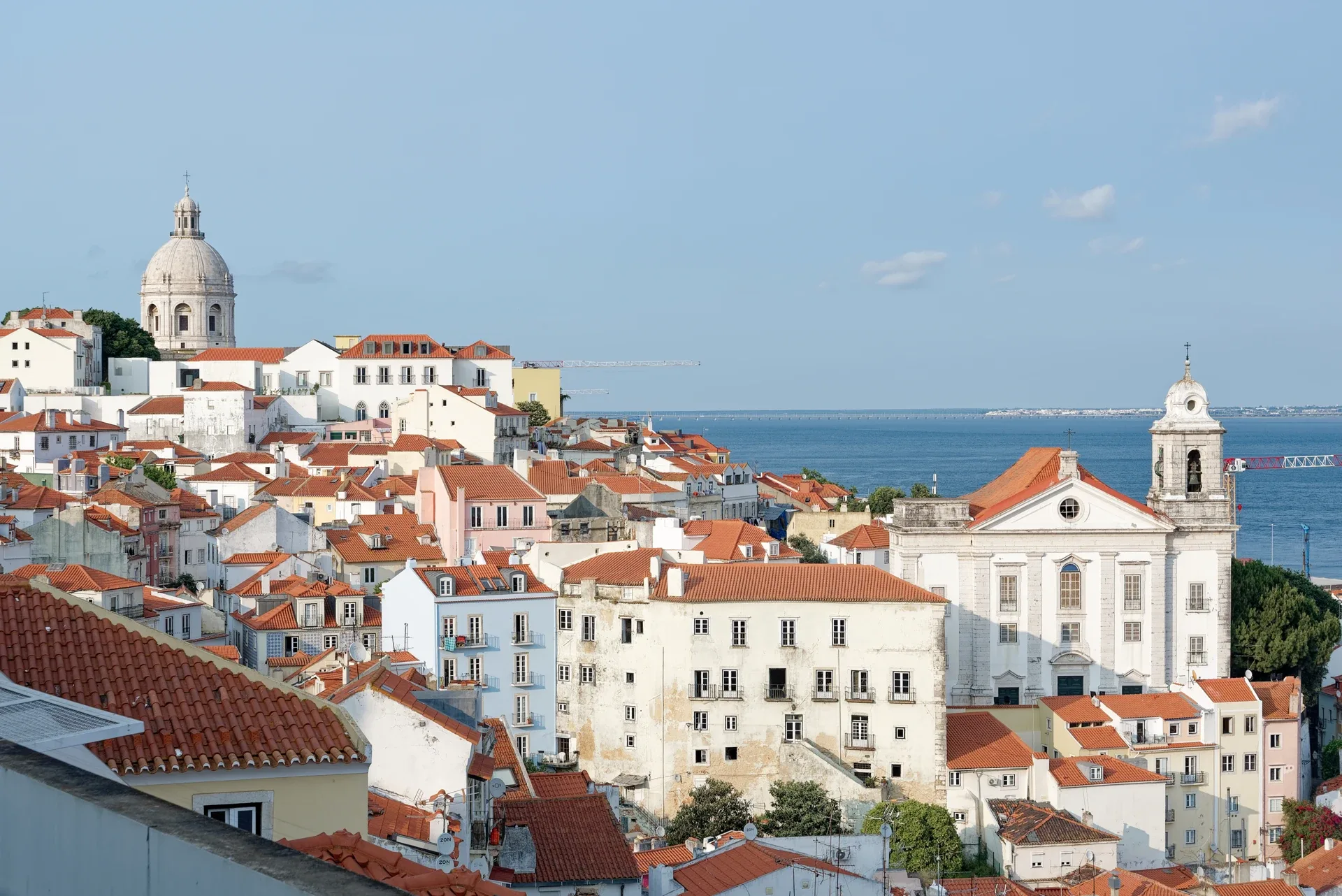
Lisbon can serve as an example of how to settle into Europe gradually, without being a one-size-fits-all choice for every budget. The first decision is where to stay: access to shops, the ability to cook, noise, stairs, and public transport. In Alfama, the tourism office describes a neighborhood of cobbled lanes and steep hills. These features matter when living there for several weeks with groceries or luggage.
For the first few days, choose a short walk, then identify a practical landmark: a route to the shops, a transit stop, and a place to sit down. The Santa Luzia viewpoint offers a view of Alfama's rooftops and the Tagus, but enjoying a view as a visitor is not enough to choose an address for a month. Check the practical accommodation details before booking a long, non-refundable stay.
A guided activity at the start of your stay can give you bearings you can use afterward. The Devour food tour selected here goes through Baixa, Chiado, and Cais do Sodré, with seven stops, eight tastings, and three drinks according to the supplier listing consulted. It lasts three hours, is conducted in English, and welcomes a maximum of twelve participants. We recommend it to travelers comfortable in that language who want to spend their first outing exploring the city's shops and cuisine.
Check dietary restrictions with the operator before booking; the planned tastings need to suit your needs. Schedule the activity for a day when you are rested, rather than immediately after an uncertain journey. Its value during a long trip lies in the guided introduction to neighborhoods and food, followed by time to continue exploring on your own. The price and updated reviews are shown on the offer card.
Porto could then become a second base if you want a change of city, with the Douro and Luís I Bridge as landmarks in the landscape. This suggestion illustrates moving to another stop; it does not assume discounted accommodation or an included journey. Compare the full cost of moving with your actual desire to leave. You could just as easily extend your first stop and save another region for later.

Viator
Lisbon: Devour food tour
Book at the start of a long stop to discover shops and cuisine in Baixa, Chiado, and Cais do Sodré, then continue exploring at your own pace. Three hours in English; confirm your dietary needs before booking.
- 4.9/5 (2,403 reviews)
Three hours in English, with a maximum of twelve participants. Seven stops, eight tastings and three drinks; meet at Praça da Figueira. Dietary restrictions must be confirmed.
Cancellation policy
For a full refund, cancel at least 24 hours before the scheduled departure date.
From €63.00
View activity

The schedule before departure
As soon as the project becomes serious, gather the leave rules, your list of expenses and an initial estimate of the trip. A planning horizon of several months gives you more opportunities to make adjustments than an application submitted just before buying tickets. However, the preparation time depends on your situation: available savings, housing arrangements, health and family commitments can all affect the schedule.
Before making non-refundable commitments, secure the arrangements for your absence and confirm the dates. Then focus on the expenses that genuinely determine whether you can leave: accommodation, suitable insurance, residence formalities and essential travel. Ordinary sightseeing can often wait until the plans are more settled. Keep a record of cancellation terms and payment deadlines so you do not tie up all your cash several months before departure.
In the final weeks, complete the handover and test your day-to-day arrangements: banking access, two-factor authentication, copies of documents and an emergency contact. Have a backup plan in case your phone is lost or a payment card becomes unusable. For mobile connectivity, first compare what your existing plan covers and the terms for extended use abroad before buying an add-on.
Once you arrive, an initial review after a few weeks lets you compare your assumptions with your actual spending. Review accommodation, meals, transport and activities separately. One-off overspending does not mean you need to rethink the entire project; a recurring expense that is too high calls for a decision before your next booking. Keep your return and emergency funds clearly earmarked, even if they are held in the same bank account.
Returning to the company
The end date of your leave should be part of your travel plan from the outset. Service Public states that at the end of sabbatical leave, employees return to their previous job or a similar one, with at least equivalent pay. Returning therefore does not guarantee that you will keep every project or the same team structure unchanged. Prepare to discuss your responsibilities and any changes that took place during your absence.
An early return requires your employer’s agreement: they are not required to re-employ you before the planned end date. If you want to shorten your trip, check the work schedule before counting on an earlier salary. Your return reserve is also there if you want to come home before your return-to-work date. It should remain available for housing, travel and everyday expenses.
Depending on your itinerary, leave some time between your last major journey and your first day at work. You can use it to settle back into your home, deal with mail and resume a regular sleep schedule. If you are renting, plan for the security deposit and upfront costs. If you have kept your home, check what needs to be put back into service. These are cash-flow needs separate from the cost of your final vacation days.
When you return, prepare for the professional interview mentioned by Service Public by considering your prospects. You can explain what you would like to return to in your role or change, without turning the trip into a compulsory performance showcase. Your leave may have changed your priorities; decisions about a transfer, training or resignation deserve their own consideration and a separate budget.
FAQ
Do you have to take exactly one year of sabbatical leave?
No. For private-sector employees in France, the standard duration stated by Service Public is six to eleven months. A collective agreement may provide for different durations. To take twelve months, check the applicable framework with human resources or negotiate an arrangement that suits your needs; do not book a year of travel assuming it automatically matches your leave.
What requirements must you meet to request this leave?
The administrative guidance lists, among other things, three years of service with the company, six years of professional activity and a waiting period following certain types of leave. Collective provisions and your specific history need to be reviewed. Prepare the dates of your previous jobs and leave, then confirm your eligibility before making costly commitments.
Can the employer postpone or refuse the leave?
Yes, in the circumstances provided for under the scheme. The options for postponement and refusal vary, in particular depending on whether the company has fewer than three hundred employees or meets or exceeds that threshold. It may be helpful to have alternative dates in mind during negotiations. Ask for a response in a form you can keep, and promptly consult a qualified contact if you want to challenge a refusal, as the deadline stated by Service Public is short.
How much should you budget for six months of travel?
Add together your travel expenses, ongoing expenses in France, preparation costs, return costs and a reserve. The example calculation in this article comes to 16,200 euros using fictional assumptions; it is intended only to show how the calculation works. Your actual needs should be based on your destinations, quotes and household expenses. Keep the money for your return separate from the funds available to extend a leg of the trip.
Can you receive a salary during sabbatical leave?
As a rule, the employer does not pay you during leave. Specific provisions or the use of time savings account entitlements may provide income, depending on the applicable rules. Confirm the amounts and payment dates. Other work is possible under the conditions described by Service Public, but it must comply with your obligations to your employer and the rules of the country where you work.
Is the EHIC enough for several months of travel?
The EHIC covers medically necessary care during a temporary stay in participating countries, subject to local conditions. It does not replace rescue or repatriation coverage. For an absence of several months, first check with your health insurance fund that your coverage will continue, then check what supplementary cover is appropriate for your duration, destinations and activities.
Can you stay in another European Union country for six months?
A European Union citizen may be able to stay for this length of time, but the conditions for stays longer than three months need to be reviewed. For someone who is not working, Your Europe mentions sufficient resources and comprehensive health insurance, among other requirements; the authorities may require registration. Check the formalities in the host country. Residence rules and tax residence are two separate matters.
Can you return to your job sooner if the trip ends early?
You can return early with your employer’s agreement, but they are not required to re-employ you before the scheduled end of your sabbatical leave. Contact human resources before counting on an earlier return to work and salary. If the date remains unchanged, your budget must cover the period between your physical return and your return to work.
Sources and checks
Plan your visits and check current conditions.
- Sabbatical leave for private-sector employees
Service Public / DILA · Accessed November 2, 2026
What this source supports
Eligibility and collective agreements; request three months in advance; default duration of six to eleven months; response, postponement/refusal depending on workforce size; pay, time-savings account, duty of loyalty and return to work.
- Unpaid leave for employees
Service Public / DILA · Accessed November 2, 2026
What this source supports
Employer approval, duration and return to be formalized; no general legally regulated duration.
- The European Health Insurance Card
Cleiss · Accessed November 2, 2026
What this source supports
Medically necessary care during a temporary stay, individual card, public healthcare system; does not replace travel and repatriation insurance.
- Health coverage while on holiday abroad
Cleiss · Accessed November 2, 2026
What this source supports
Coverage depends on the country and applicable agreements, contractual precautions, and no repatriation coverage from health insurance.
- Economically inactive EU citizens
European Commission · Accessed November 2, 2026
What this source supports
Stay of three months, local formalities; beyond that, sufficient resources and comprehensive health insurance, registration may be required.
- Income tax abroad
European Commission · Accessed November 2, 2026
What this source supports
National tax-residency rules, dual residence and treaties; individual assessment.
- Alfama
Turismo de Lisboa · Accessed November 2, 2026
What this source supports
The neighborhood’s cobbled lanes and slopes; Santa Luzia and views of the Tagus.
- Devour food tour in Lisbon, 170816P1
Viator / Devour operator · Accessed November 2, 2026
What this source supports
Basic API consulted: active product, English-speaking guide, three hours, seven stops, eight tastings and three drinks, maximum twelve participants.
Viator — activity pages
Information about the offers featured in this article.Affiliate links: Odyvero may earn a commission when you book through this article’s buttons.
- Viator : Lisbon: Devour food tour
Accessed November 2, 2026


