 odyvero
A meeting on Friday, a return on Sunday: adding personal time to a business trip can give you a full day to explore. But first, you need to know when the work assignment ends, who pays the extra expenses, and which insurance coverage applies. Here’s how to plan an extension, with an example of a free day in London.
The time you actually have available
Bleisure combines a business trip with a leisure stay. For the traveler, the question begins when choosing a return: head home after the last appointment or stay one more night to explore? The value depends on the time available at the destination, the extra cost and the arrangements accepted by the company.
Before booking, map out your full day. A conference’s announced end time may still leave a client discussion, a team dinner or a report to prepare. A guided tour booked just after the last conference becomes difficult to make if you need to collect a suitcase and cross the city. Book your first personal activity for when your work obligations have actually ended.
Then think in terms of useful hours. Adding one night before a very early departure mainly lets you sleep there. Two nights, with a full day in between, give you more flexibility for a visit and a walk. Your choice also depends on how tired you are: after several days at a trade show, a leisurely stroll through a neighborhood may suit you better than an excursion with an early-morning meeting point.
Approval for the extension
Plan an extension with the person who approves the business trip and, if necessary, the travel department or human resources. Get explicit approval before changing a ticket purchased by the company. Internal policy may set rules for return dates, booking channels, spending limits and whether a companion may join you.
Present a plan that is easy to verify: end of the assignment, start of personal time, return date, any leave days and expenses you will cover. If the extension includes a day that would normally be a workday, have its status approved through the usual channels. Staying in the client’s city does not make that day a workday.
Keep a written record of the agreed cost allocation. This can prevent a dispute later over a hotel night or transfer. Also clarify how a change requested by the company after booking will be handled: a rescheduled meeting, a shortened assignment or a new route. A cancellable activity and a changeable ticket may be subject to different terms; check each booking separately.
Budgeting for personal days
To compare your options, start with the business itinerary that would have been booked without an extension. Then ask for the cost of your preferred return, using comparable conditions: baggage, cabin class, flexibility and change fees. A later return may cost more or less; agree with the company on how to split the difference.
Add the expenses incurred only because you are staying: accommodation, meals, local transport, sightseeing, possible luggage storage and additional insurance. Also check what changing hotels would involve. A cheaper room on the other side of the city might require two transfers and cost you part of your only free morning.
Ask the hotel whether it can list business and private nights separately on the receipts. Separate the payments where possible and keep confirmations showing the dates. If a companion is joining you, identify the room surcharge and any services that apply specifically to them. This approach makes expense reporting easier; it does not determine the tax or social security treatment applicable to your situation.
Finally, assess the stay using the same criteria as a short trip you would book personally. Since the original transport is already arranged, extending the trip may be worthwhile. Still, it has a full cost and takes travel time. If it uses up your budget for just a few usable hours, a free evening during the business trip may be enough.
Accommodation after the business trip
The hotel chosen for a trade show is primarily selected for its proximity to appointments. For the private portion, consider where your planned visits and final departure point are. Keeping the same room saves you from repacking; changing neighborhoods may bring you closer to activities. Compare both options, factoring in the transfer, check-out time and access to the new accommodation.
If you stay at the same property, ask whether the bookings can be linked without changing rooms and under what conditions. If you move, ask about luggage storage before booking a morning visit. Confirmed storage makes planning easier; don’t assume you can check in early. If someone is joining your stay, also check the room’s capacity and access arrangements if they arrive before you return from a meeting.
Insurance between business and leisure travel
The policy taken out for business travel may have conditions concerning the purpose and duration of the stay and the people covered. Have the exact coverage dates confirmed, including those for the delayed return. Also ask what is covered for a personal activity, an extra night and a companion joining you.
Consider medical care, assistance, repatriation and cancellation separately. These may be covered under different benefits. If you are relying on credit card insurance, check the activation requirements, covered persons and required payments. A trip paid for by the employer and a hotel paid for personally warrant a careful review of the policy.
For a stay in the European Union, the European Economic Area, Switzerland or the United Kingdom, the French Health Insurance system recommends carrying a European Health Insurance Card. The card is individual and covers medically necessary care during the stay under the rules of the country. Ameli advises applying for it at least fifteen days before departure. Each family member must have their own card.
Arrange assistance and repatriation separately: coverage for care where you are staying does not take care of every aspect of arranging a medical return. Keep useful contacts and your policy number available offline. If you have a particular medical condition or plan a specific sports activity, get confirmation about the relevant coverage before purchasing the activity.
Requirements for a mixed-purpose stay
Check the entry requirements for the entire trip, taking into account your nationality, work activities, and total length of stay. An authorization issued for a specific purpose must match what you will actually be doing. The rules for a business meeting may differ from those for work carried out on site.
The United Kingdom illustrates this distinction. The UK government lists meetings and conferences among the business activities that may be permitted for a Standard Visitor, subject to the conditions detailed on its website. You must then check whether your circumstances require an ETA or a visa. Adding a day of sightseeing does not exempt you from these formalities, and a travel authorization alone does not guarantee admission.
Also plan how to handle the practical separation between the two parts of your stay. Follow your company’s instructions for your computer and documents; bring only what is permitted. Before visiting, check the venue’s baggage restrictions and the arrangements for your suitcase. This becomes important when you leave your business hotel on the morning of your first day off.
A day off in London
Consider a work assignment that ends on Friday, with a return booked for Sunday. For Saturday, a visit to Westminster followed by a walk toward the Thames makes for a focused itinerary: spend the morning at one place and leave part of the day unbooked. This is a suggested itinerary, to be adapted to your accommodation and the available time slots.
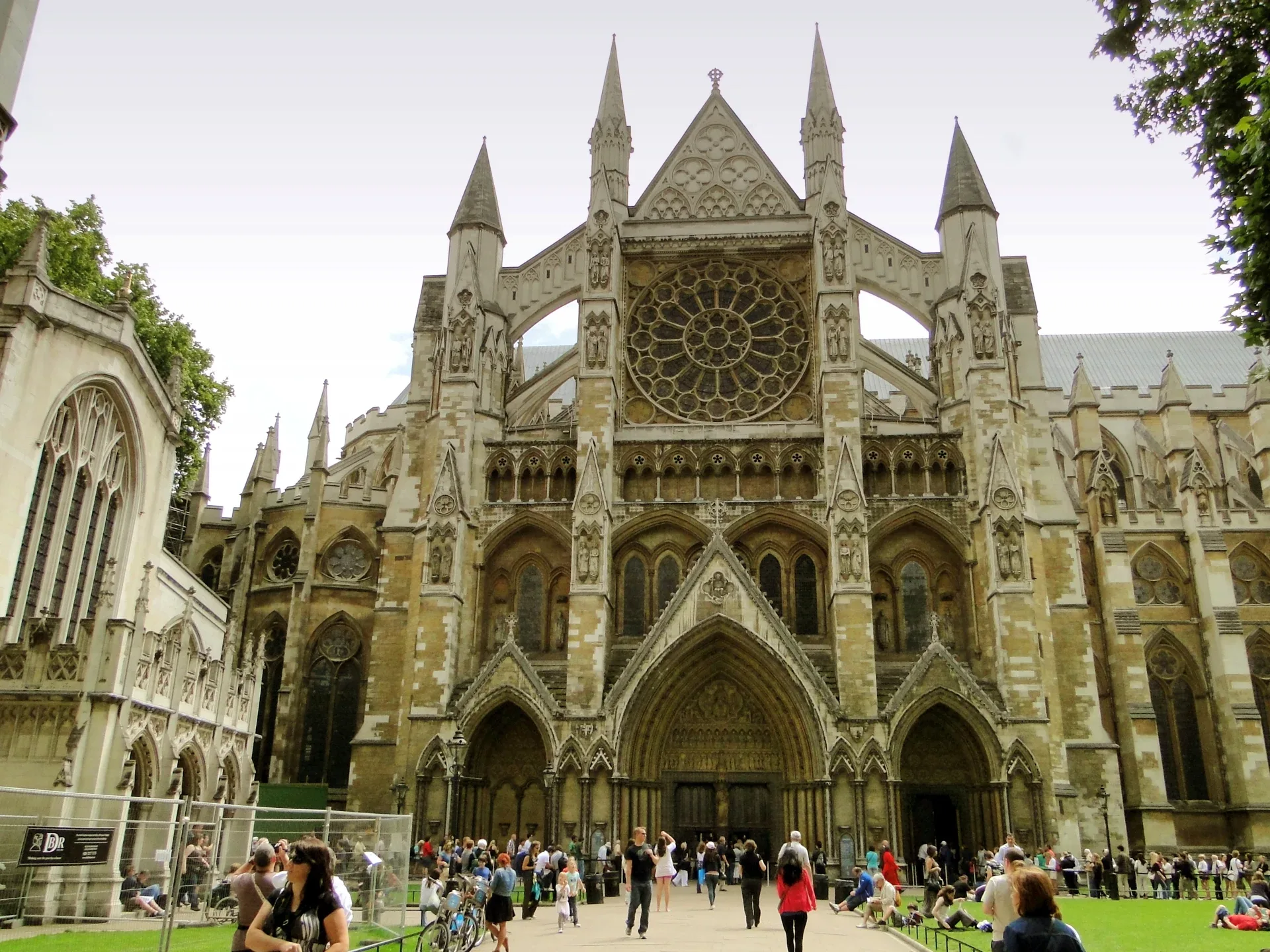
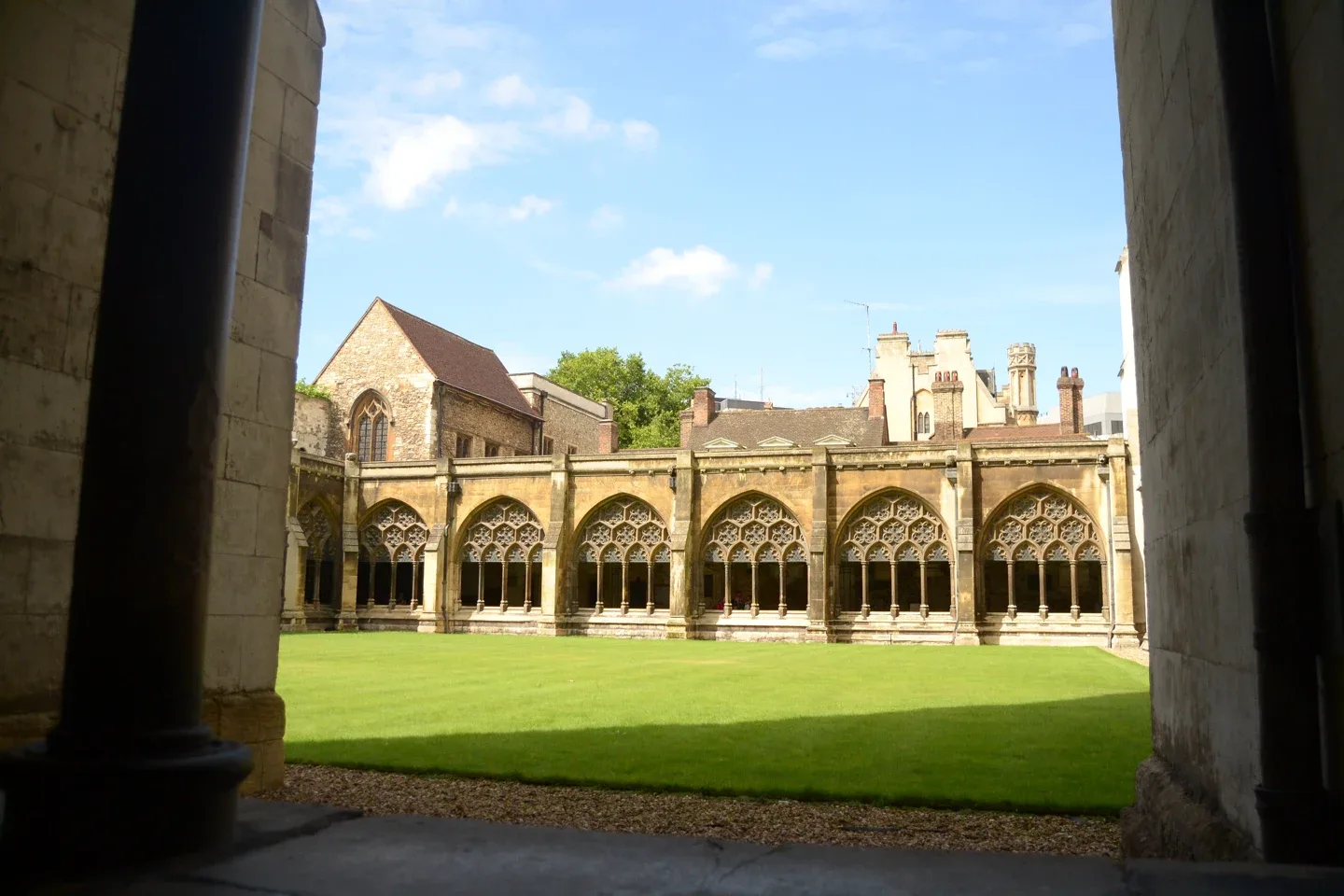
Westminster Abbey offers a chance to explore British religious and monarchical history. Its north transept features a large rose window and carved portals; the Great Cloister is arranged around a lawn bordered by arcades. The photographs in this article show these two spaces. Westminster and St James’s Park are among the stations listed as access points by the Abbey.
The day of your visit matters. The Abbey distinguishes between tourist visits and Sunday services. Check its calendar for your chosen date, especially if a ceremony changes visitor access. If your only free time falls on a Sunday, plan another visit or an outdoor walk, depending on your preferences; attending a service is a different kind of visit.
If you already have a clear morning, the guided tour featured here lasts two hours and is conducted in English, with a maximum of twenty participants. It includes admission and a break for coffee and a pastry at the Cellarium. The advertised meeting point is in front of the shop on the west side; the operator asks participants to arrive ten minutes before departure. You will need to arrange your own journey to the Abbey.
This option suits you if you want explanations and a set meeting time for your first morning off. Allow for travel to the meeting point and onward travel in addition to the two-hour visit. After the tour, you can leave the walk and lunch unplanned. If you would rather explore the Abbey without a group, also check the options for individual visits on its official website.


Viator
Westminster Abbey guided tour with a break at the Cellarium
For a completely free morning after your assignment: a two-hour tour in English, admission included, with a break at the Cellarium. Allow for the journey to the meeting point on the west side of the Abbey.
- 4.8/5 (372 reviews)
Two hours, English-speaking guide, maximum of twenty participants. Abbey admission, coffee, and a pastry included; meeting point near the shop on the west side.
Cancellation policy
For a full refund, cancel at least 24 hours before the scheduled departure date.
From £85.00
View activityBookings and the return journey
For a short extension, first choose the activity that matters most to you. A two-hour visit, workshop, or guided walk leaves room for travel and meals. A full-day excursion requires an entirely free day, with departure and return times that work with your accommodation.
Check the language of the activity, meeting point, inclusions, and cancellation terms. The language of the sales page may differ from the guide’s language. For the Westminster tour selected here, commentary is in English; take this into account before booking. Current prices and reviews are shown in the activity card.
Give your return day its own itinerary. Recalculate the journey to the station or airport from your leisure accommodation, especially if you have moved to a different neighborhood. Allow time to collect your suitcase, go through security, and follow the carrier’s instructions. Don’t rely on a tight connection as your only buffer between the end of a visit and your international departure.
If someone is joining you, compare your arrival times and baggage drop-off options. If they arrive while you are in meetings, they should be able to reach the accommodation without you. Also agree on when your time together begins: Friday’s business dinner may still be part of the assignment. That way, you can book a shared activity for a time when you are both genuinely free.
FAQ
What does the term bleisure mean?
It refers to combining a business trip with leisure time. When you extend a trip, you stay on personally before or after the business dates. The arrangements should specify workdays, personal days, and the chosen return date so that activities are booked for the right times.
Do you need your employer’s approval to stay for the weekend?
Get the plan approved before changing a business booking or using your company’s travel program. Even when the weekend is free, a later return may affect your ticket, insurance, or internal policy. Written approval of the dates and expenses gives you a clear basis for organizing the rest of your stay.
Who pays for the extra nights and activities?
Agree on how costs will be divided before booking. Identify leisure activities you buy for yourself as personal expenses, then check with your company how the return travel and any costs associated with changing it will be handled. Receipts that separate business and personal dates make it easier to claim reimbursement only for approved expenses.
Does business insurance cover the added weekend?
The answer depends on the applicable policy. Ask for confirmation that covers the dates, personal purpose, and people involved, then check medical coverage, assistance, and repatriation. You may need additional coverage. Where the EHIC can be used at your destination, it covers medically necessary care under local rules.
Can you work remotely during the extension?
Check with your employer and review the country’s rules before planning workdays on site. Having access to a computer or an internet connection does not determine what is permitted. If you take the extension as leave, plan it as leave rather than promising to be constantly available for work.
Is one day of leisure worth it?
It may be enough for a visit that interests you and a nearby neighborhood, if the extra expenses are acceptable to you. Count the hours you will actually have free between your work commitments and your return. If the plan requires several transfers or leaves you with no time to rest, make fewer bookings and keep one main visit.
Sources and checks
Plan your visits and check current conditions.
- Holidays abroad: coverage ↗
Health insurance · Accessed October 31, 2026
What this source supports
Individual EHIC, medically necessary care under local rules, apply at least fifteen days in advance; check assistance and repatriation separately.
- Visit the UK on business ↗
UK Government · Accessed October 31, 2026
What this source supports
Meetings and conferences are among the activities permitted subject to conditions; check the requirements for your circumstances. No general permission to work is inferred from a tourist stay.
- Electronic travel authorisation ↗
UK Government · Accessed October 31, 2026
What this source supports
ETA or visa depending on nationality and purpose, with possible exemptions; authorisation does not guarantee admission. No fixed amount is quoted.
- Visit Westminster Abbey ↗
Westminster Abbey · Accessed October 31, 2026
What this source supports
Distinguish the tourist schedule from Sunday services; access via Westminster and St James’s Park.
- Guided tour of Westminster and the Cellarium ↗
Viator / Premium Tours · Accessed October 31, 2026
What this source supports
ACTIVE product confirmed by Partner API: two hours, English-speaking guide, maximum of twenty people, admission, coffee and pastry included, meet on the west side ten minutes beforehand. Central Odyvero affiliate card; price and reviews are not repeated in the prose.
Viator — activity pages
Source for the activity information below.Affiliate links: Odyvero may earn a commission when you book through this article’s buttons.
- Westminster Abbey guided tour with a break at the Cellarium ↗
Accessed November 1, 2026


