 odyvero

From March 21 to 28, 2027, Holy Week processions will pass through Seville, with the Madrugá taking place on the night from Thursday to Friday. For a first visit, choosing your neighborhood and when to go matters as much as choosing the brotherhoods: here’s how to watch the processions, organize your days and get back to your accommodation without relying on a seat in the grandstand.
The March 2027 dates
Holy Week begins on Palm Sunday, March 21, and ends on Easter Sunday, March 28, 2027. Maundy Thursday falls on March 25 and Good Friday on March 26. The Madrugá refers to the night between them, extending into the morning as the brotherhoods return. Processions on the eve of Palm Sunday also take place in some neighborhoods.
The 2027 edition is already being prepared by Seville’s General Council of Brotherhoods, which has, among other things, announced the order of passage along the Carrera Oficial on Palm Sunday. The religious dates therefore help you choose when to visit. Departure, passage and return times, however, should be checked in each brotherhood’s program as your trip approaches.
For a stay of three or four nights, two options stand out. The beginning of the week suits a visit combining neighborhoods and monuments, with daytime and evening processions. A stay that includes March 25 and 26 lets you experience the Madrugá, provided you set aside time for sleep and can manage long periods on your feet. We recommend the first pace for families experiencing the festival for the first time; the second is better suited to travelers coming specifically for the nighttime processions.
Seville is in spring, but March evenings can call for a warm layer. Also bring rain protection and shoes you’ve already broken in. Plan around the day’s forecast: the printed schedule provides a framework, while announcements from the brotherhoods determine which processions actually go ahead.
The pasos and the brotherhoods
A hermandad is a religious brotherhood. During Holy Week, its procession accompanies one or more pasos: the structures carried through the streets that display sculptures of Christ, the Virgin Mary or a scene from the Passion. The bearers, called costaleros, work beneath the paso; the person directing their movements is the capataz. Nazarenos form the lines of penitents, often wearing a tunic and a pointed hood.
These words help you understand what is happening in front of you. A brotherhood’s procession includes a whole succession of participants, sometimes with a long wait between the head of the procession and the sculptures. Leaving as soon as you spot the first penitents may mean missing the paso you came to see. Watch for the stops and restarts, too: the coordinated movements are especially visible at turns.
The tourism office highlights the role of sculpture and artisanal crafts in the festival. Embroidery, silverwork, flowers and candles give the pasos their distinctive appearance. A statue of the Virgin beneath her canopy, the palio, is experienced differently from a sculpted scene featuring several figures. Music, when it accompanies the brotherhood, adds to this distinction; other processions are experienced in silence.
The procession remains a religious act. Stay clear of the formation, lower your voice when people around you are praying, and let the stewards manage crossings. When taking photographs, keep your phone at a reasonable height: raised arms and selfie sticks quickly block the view for spectators several rows back.
The street and the Carrera Oficial
You can watch the processions for free from many public spaces, subject to the day’s access arrangements and security measures. A reservation is therefore not necessary to experience Holy Week. The first decision is whether to wait for a procession in a particular area or watch several pass from an organized viewing spot.
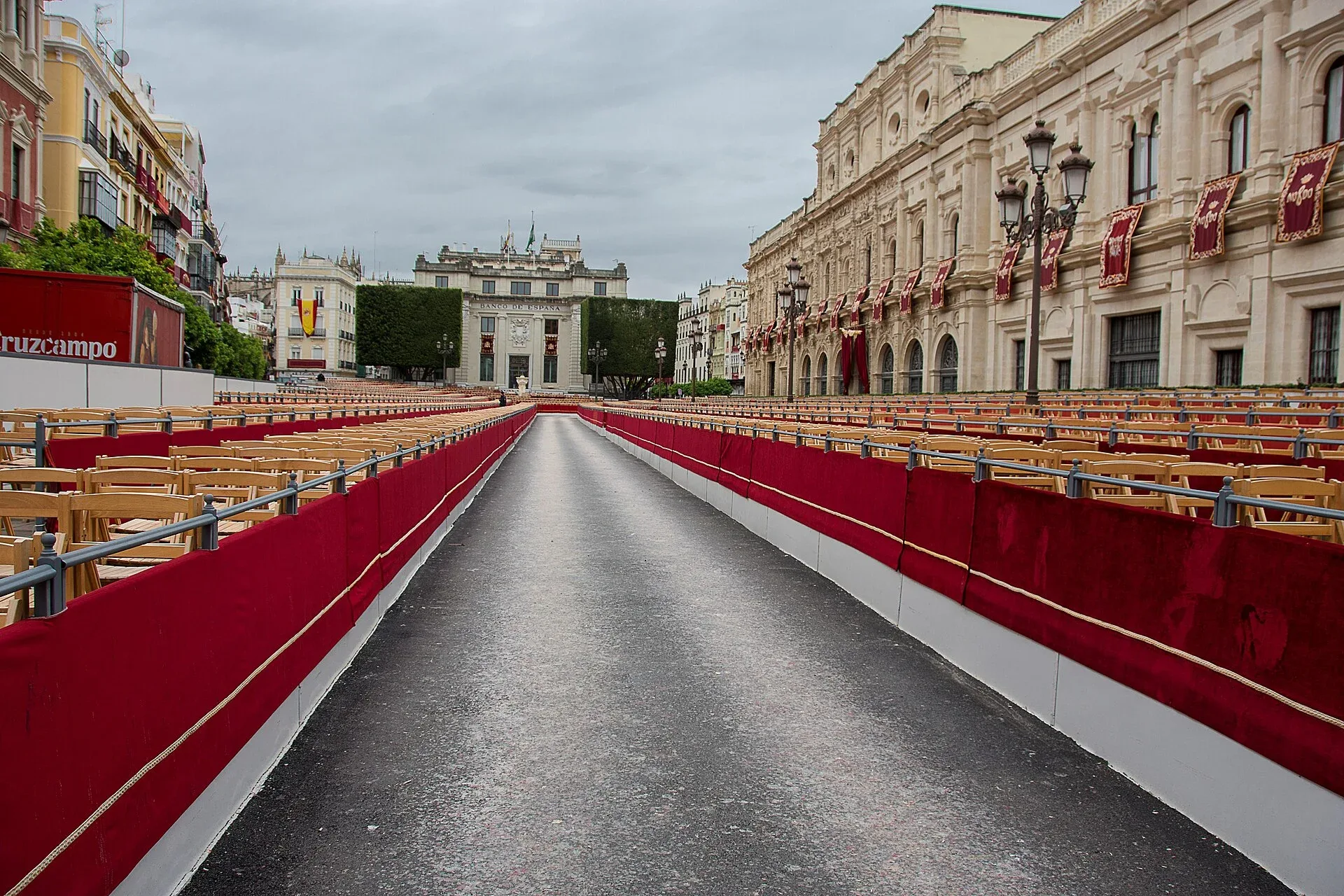
The Carrera Oficial is the shared route taken by the participating brotherhoods before their station at the cathedral. Seats and boxes are set up along it. Their allocation is managed by the Council of Brotherhoods, with rules and subscription periods of its own. For 2027, check its information directly before making any payment; we do not assume that prices have carried over or that seats are available.
A reserved seat can be useful if your trip is centered on watching the processions, especially if standing becomes difficult. Check the day, exact location, visibility and access conditions. A private balcony is a different type of service: ask what the view actually covers, how many people share the space, and when you can enter or leave.
On the street, choose a spot where you understand the access routes. A small square with an exit onto another street is more practical than a narrow corner that is already crowded. Keep passageways clear and follow the instructions of staff on site. A procession can make a crossing that looked obvious on the map impossible; the best place for photographs is not always the one you can leave easily.

The procession neighborhoods
Triana attracts visitors who want to follow a brotherhood connected to its neighborhood and see its relationship with the river. The tourist office lists La Estrella there on Palm Sunday, San Gonzalo on Monday, Esperanza de Triana during the Madrugá, followed by El Cachorro and La O on Good Friday. These are traditional landmarks to help guide your search for the 2027 program.
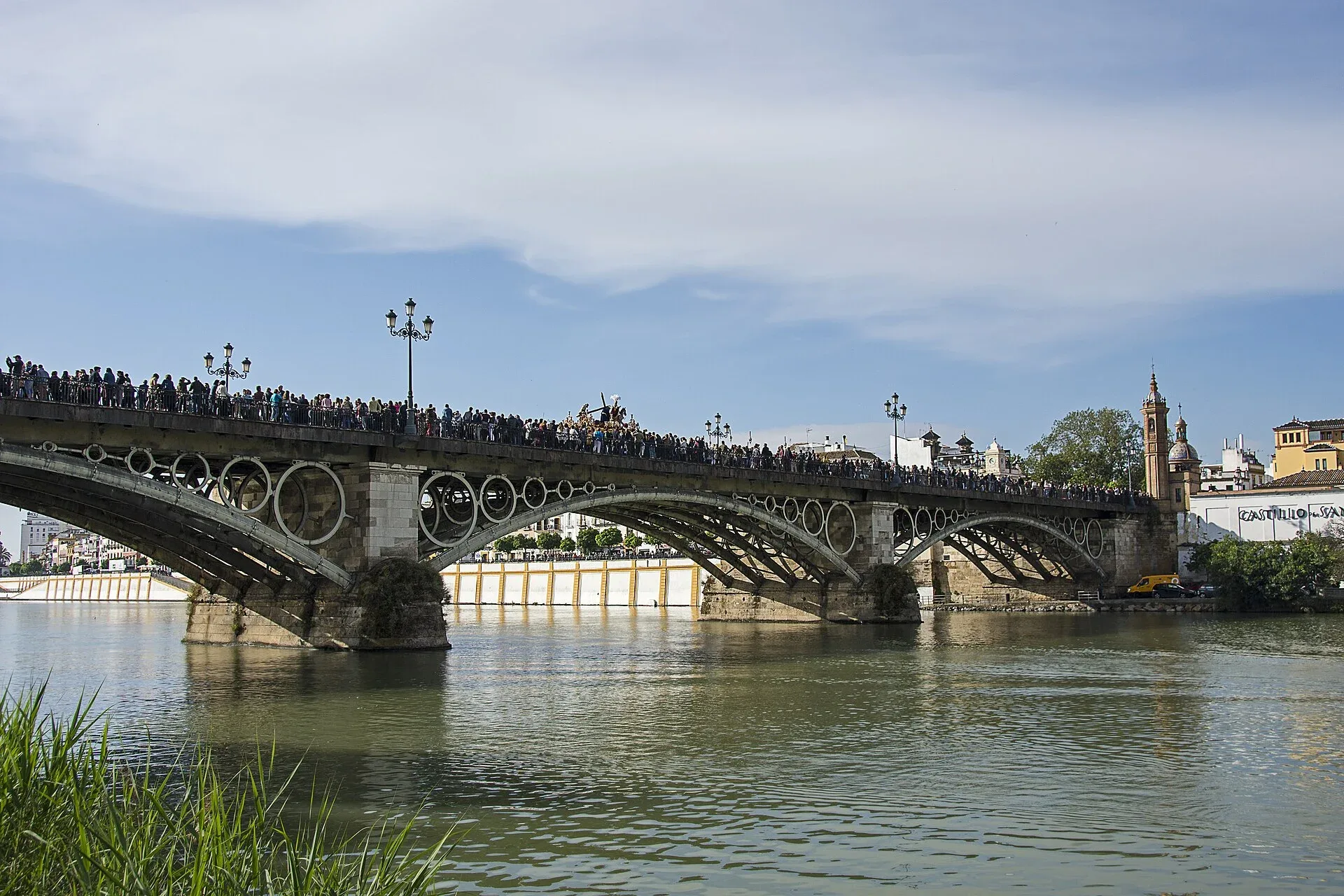
The Triana Bridge is a recognizable backdrop, but crossing it is also part of daily life and a gathering point. For your first viewing, don’t make standing in the middle of the bridge your only goal. Choose an area of the neighborhood that fits the announced route, and keep a return option on the same side of the river in case pedestrian traffic changes.
North of the historic center, the Macarena area offers a way to experience the festivities around the Esperanza Macarena brotherhood. Its passage during the Madrugá draws a great deal of attention. The San Julián neighborhood offers another point of reference with La Hiniesta, traditionally present on Palm Sunday. Leaving or returning near a church makes the neighbors’ participation more apparent.
To the south, El Porvenir is home to La Paz. San Bernardo also has its own brotherhood, associated with Holy Wednesday in the tourist office’s recommendations. These areas broaden the options beyond the cathedral–shopping center axis alone. They are no guarantee of smaller crowds: a residential neighborhood can fill up very quickly as the expected paso approaches.
For your first day, choose just one brotherhood and one viewing area. This gives you time to understand the procession’s pace. The next day, you can choose another neighborhood or a different kind of procession, rather than spending your evenings chasing several processions separated by streets that are difficult to cross.
The Madrugá and the return processions
The night of March 25–26, 2027 holds a special place in your stay. The names of the Macarena and Esperanza de Triana often come up, but the practical choice is first about how you want to experience the night: a specific nighttime procession, several hours on site, or a brotherhood’s return on Friday morning.
We recommend choosing a viewing window in advance, with a meeting point outside the crowd. Have dinner before settling in, bring water, and charge your battery. If you’re in a group, agree on where to meet if the network is unreliable or the group gets separated. An address written down in everyone’s phone is more useful than a last-minute message sent from a crowded intersection.
A morning return may suit those who want to see the brotherhoods without staying out all night. Still, you’ll need to check the actual times and be prepared to wait. Daylight changes how the embroidery, faces, and urban surroundings appear; it also offers a different perspective on the neighborhood along the route.
Take it easy on Friday after this night. An early booking with a strict time slot doesn’t work well with a late return and slower travel. If you’re traveling with children or tire easily in crowds, choose a daytime procession and a short evening instead. You’ll have enough energy left to enjoy the rest of your stay.
Where to stay
When choosing accommodation, consider the street and possible routes rather than just the distance to the cathedral. An address on a procession route may offer a sought-after view, but it can also mean noise and difficult access for several hours. Ask the property whether the entrance remains accessible during processions and where to get dropped off with luggage.
The historic center is a good fit if you want to return on foot between viewings. It lets you take a break without arranging transport for every outing. A room overlooking a courtyard may be preferable to a lively street-facing room if rest is your priority. Check the actual features of the room you book, especially when a listing mainly showcases the view from a shared space.
Triana is a good base for a stay focused mainly on its brotherhoods. If your days regularly alternate between the two riverbanks, factor the river into your plans: a bridge occupied by a procession can make the return journey longer. Staying in the neighborhood where you’ll spend the end of the evening often makes travel easier than choosing a location that is theoretically central.
Accommodation on the edge of the center may suit those who prioritize sleep and arriving with luggage. Compare the final walk, available connections, and nighttime route. When booking, read the cancellation terms and the total cost of the stay. A room rate on its own isn’t enough to compare two offers with different conditions.
Three days for a first-time visit
For a first introduction without an all-nighter, we suggest spending three days on site at the start of the week. This is an editorial recommendation, to be adapted to your arrival times, monument opening hours, and brotherhood schedules. It allows for one main viewing each day and time to rest at your accommodation.
Use the first morning to get your bearings: locate your accommodation, access routes to the center, and the neighborhood you’ve chosen for the afternoon. For Palm Sunday, the Council announced the 2027 order on the Carrera Oficial, beginning with the Sagrada Entrada en Jerusalén, followed by Jesús Despojado and then the Sagrada Cena. This order does not give the time each brotherhood leaves its own street.
The second day can focus on Triana, with a meal in the neighborhood and a viewing of San Gonzalo if the confirmed schedule fits your plans. Make your main journeys before the viewing period. A short evening after the procession will help you set off the next day without building up too much fatigue.
The third day leaves room for a heritage visit and a procession in another area. For the cathedral, be sure to distinguish between a tourist visit ticket, services, and access for watching the brotherhoods pass. The Council has announced an interior reorganization for 2027, with separate access routes. Check the option and date you’ve chosen with the monument before booking.
If you’d rather arrive for the Madrugá, replace this plan with an arrival day on Thursday, a targeted nighttime viewing, and a quieter Friday. Don’t add this itinerary to the early-week plan as if sleep and travel were unchanged.
Arrivals and getting around
From the airport, the EA bus line is the connection listed by Aena. Check its stops and conditions as you plan your arrival, then allow for the final walk to your accommodation. A return ticket purchased with an outbound ticket may have a short validity period: the option currently listed by Aena is valid on the day of purchase. So it does not automatically cover a stay of several nights.
For getting around the city, allow extra time on foot rather than relying on ordinary journey times to the minute. Identify two ways into your neighborhood and keep an offline map. Transport services may adjust their routes because of restrictions; check the day’s information before heading to a stop.
If you have a car, arrange parking before entering the center and ask your accommodation for directions. With suitcases, a slightly longer route along accessible streets is better than arriving directly in the middle of a procession. Keep essential items in a small bag in case you have to get dropped off some distance away.
Anyone with reduced mobility should check the entire route: road surface, permitted crossings, viewing location, restrooms, and return journey. A seat addresses only some of these needs. Contact the relevant organizer or venue with specific questions, stating what assistance or equipment you need.
Meals and budget
Torrijas offer a break closely tied to the season. The tourism office describes slices of bread soaked in milk or wine, dipped in egg and then fried, finished with honey or sugar and cinnamon. Recipes vary from one household to another; ask how they are prepared if you want to compare versions or have a dietary restriction.
For meals, choose a restaurant near your viewing area and check its service arrangements. A table booked at the other end of the city centre can be difficult to reach. On days with long outings, plan a proper lunch break and bring water; relying solely on finding a place at the last minute limits your freedom of movement.
Keep transport, nights, meals, heritage visits and any reserved seating in separate budget categories. Watching the processions in the streets lets you enjoy a substantial part of the stay without an event ticket. Accommodation and seating prices depend on actual availability: compare your exact dates rather than extrapolating from an average found for a different week.
Also keep a backup plan in case of rain. A brotherhood may change its route or decide not to process. First check its official announcement; then choose an indoor activity based on opening hours and ticket availability. A procession being cancelled does not automatically determine the refund terms for a separately booked private service.
An electric-bike orientation tour
If you arrive before the procession days, a guided tour can help you get your bearings among the monuments and along the riverbanks. The two-hour electric-bike tour selected here passes near the main landmarks and includes a stop at Plaza de España. Commentary is available in English or Spanish, in a group of up to fifteen participants.
We recommend it for an orientation day in advance, before dedicating the stay to the processions. Confirm your chosen departure time and any traffic-related adjustments with the operator. The booking covers this city tour: viewing the processions and entering monuments must be arranged separately.

Viator
Seville by electric bike in two hours
For an arrival before the procession days, to get your bearings among the monuments and riverbanks; English- or Spanish-speaking guide, traffic conditions and departure to be confirmed with the operator.
- 120 min
- 4.9/5 (25 reviews)
Shared electric-bike city tour, with a guide in English or Spanish and a stop at Plaza de España. A way to explore the city to arrange separately from the Feria.
Cancellation policy
For a full refund, cancel at least 24 hours before the scheduled departure date.
From €49.00
View activityFAQ
What are the dates of Seville Holy Week in 2027?
It runs from Sunday 21 to Sunday 28 March 2027. Maundy Thursday is 25 March and Good Friday is 26 March. Neighbourhoods also host pre-Palm Sunday processions. The 2027 edition is being prepared by the Council of Brotherhoods; check the detailed schedules closer to your stay.
Do you need a ticket to watch the processions?
You can watch them for free from accessible public spaces. Seats and boxes along the Carrera Oficial are allocated separately. A balcony or guided service requires a separate booking; check the view, schedule and included services.
When is the Madrugá in 2027?
It takes place during the night of Thursday 25 into Friday 26 March, with returns on Friday morning. Choose a viewing window and check the schedule of the brotherhood you want to see. Allow for a late night and keep the morning flexible enough for getting back and resting.
Which neighbourhood should you choose for a first visit?
The historic centre is convenient for walking back to your accommodation between viewing sessions. Triana is particularly suited to a stay focused on its brotherhoods. In either case, check the exact street where your accommodation is located, possible disturbances and access during the processions; these details matter more than the neighbourhood name.
Is Holy Week suitable for children?
A daytime viewing of a reasonable duration, with an easy exit, can work well for a family. Choose just one procession, bring water and plan a break. In crowded areas, getting around with a stroller can be difficult. The Madrugá calls for a different level of planning and stamina than an afternoon outing.
Do the processions go ahead when it rains?
The brotherhoods make the decision, depending on conditions. A procession may be altered or cancelled to protect people and heritage. Check their announcements before heading to your viewing spot and keep an alternative activity in mind. The terms for your accommodation or a private booking must be checked separately.
Can you visit the cathedral during this week?
Plan your visit around the tourist and religious opening hours that are actually announced. For 2027, the Council outlines different access arrangements for services and for watching the brotherhoods pass, with a revised route inside the cathedral. Choose the ticket and time slot that match your plans; a tourist ticket does not reserve a place to watch a procession.
How many days should you plan to stay?
Three days allow for an initial visit with a range of atmospheres and time for breaks. Four nights offer more flexibility for arriving early or for a Madrugá followed by a quiet day. These are pacing suggestions: adjust them to your mobility, the children’s ages and the number of heritage visits you want to make.
Sources and checks
Plan your visits and check current conditions.
- 2027 liturgical calendar
USCCB · Accessed November 1, 2026
What this source supports
Primary calendar consulted: Palm Sunday on March 21, Maundy Thursday on March 25 (page 21), and Easter on March 28, 2027. Seville procession times are not inferred from this calendar.
- Official route order for Palm Sunday 2027
Consejo General de Hermandades y Cofradías de Sevilla · Accessed November 1, 2026
What this source supports
2027 edition confirmed; the announced order begins with Sagrada Entrada, Jesús Despojado and Sagrada Cena. No departure times are stated.
- Vía Sacra: cathedral arrangements in 2027
Council of Brotherhoods and Cathedral Chapter · Accessed November 1, 2026
What this source supports
Reorganization of the indoor route and separate access arrangements for services and the brotherhoods’ passage. Tourist visits are separate; check the day’s conditions.
- Brotherhoods in the neighborhoods
Seville Tourism Office · Accessed November 1, 2026
What this source supports
Locations of brotherhoods and traditional procession days in Triana, Macarena, San Julián, San Bernardo and El Porvenir. These are reference points, not a 2027 timetable.
- Art and tradition of Holy Week
Seville Tourism Office · Accessed November 1, 2026
What this source supports
Lasting artistic and religious context. The old page contains references to 2023 and 2024; no exceptional event or figures have been carried over to 2027.
- Lenten torrijas
Seville Tourism Office · Accessed November 1, 2026
What this source supports
Bread soaked in milk or wine, egg, fried, then served with honey or sugar and cinnamon; variations depend on the recipe.
- EA bus at Seville Airport
Aena · Accessed November 1, 2026
What this source supports
EA line and current arrangements. A return ticket is currently valid on the day of purchase; fares are not carried over as March 2027 prices.
- Official seats and boxes portal
Consejo General de Hermandades y Cofradías de Sevilla · Accessed November 1, 2026
What this source supports
The Council’s portal was consulted; the 2027 calendar could not be used from the text on this page. No prices or availability are stated.
- Seville by electric bike: product 378959P1
Viator / operator · Accessed November 1, 2026
What this source supports
The actual ACTIVE Partner API listing was consulted: 120 minutes, English or Spanish, groups of up to fifteen, an outdoor city route and a stop at Plaza de España. The central offer was reused and hydrated with the exact product’s SUPPLIER_PROVIDED photo. Odyvero affiliate links: a booking may generate a commission; check prices and availability with the partner.
- Photograph: Triana Bridge
Anual / Wikimedia Commons · Accessed November 1, 2026
What this source supports
File and CC BY-SA 4.0 license verified separately; 2019 photograph, original 6000 × 4000 and reduced file actually decoded at 1920 × 1280, with no upscaling.
- Photograph: Carrera Oficial
Anual / Wikimedia Commons · Accessed November 1, 2026
What this source supports
File and CC BY-SA 4.0 license verified separately; 2019 photograph, original 6000 × 4000 and reduced file actually decoded at 1920 × 1280, with no upscaling.
Viator — activity pages
Information about the offers featured in this article.Affiliate links: Odyvero may earn a commission when you book through this article’s buttons.
- Viator : Seville by electric bike in two hours
Accessed November 1, 2026


