 odyvero
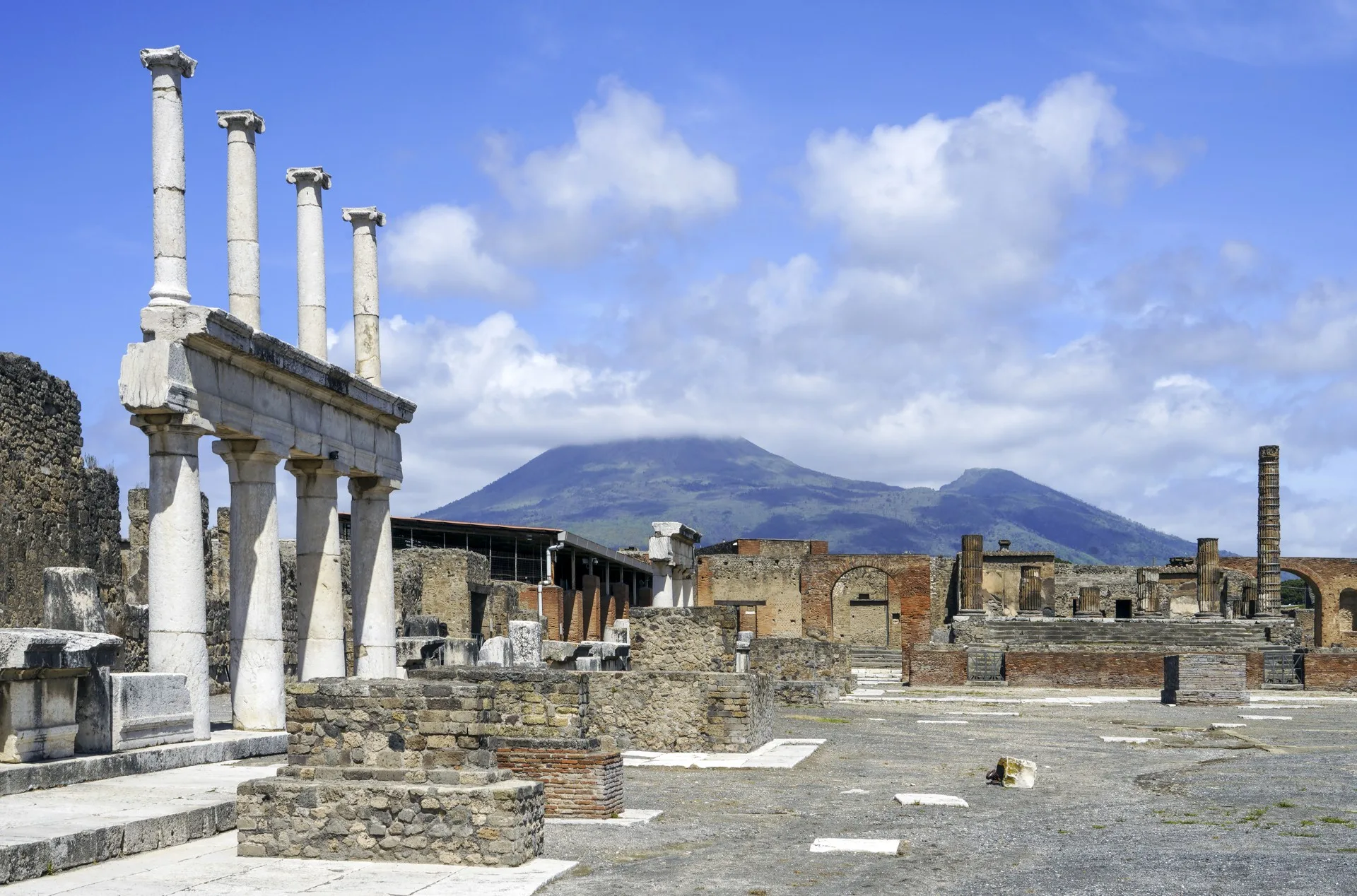
You can visit Pompeii and Herculaneum in a single day from Rome by taking a high-speed train to Naples. To make the most of both archaeological parks, we would favor an option with local transfers and guided visits: it leaves more time for the ruins and less for connections. Three services let you choose between a departure with assistance at Termini, tickets sent before the trip, and a guide you meet directly in Pompeii. Here’s what they include and how to compare them with a day you organize yourself.
Four ways to organize the day
The first decision is how you want your day to begin. Would you like to meet someone in Rome, receive your tickets and board the train on your own, or book each part of the journey yourself? These three levels of assistance can take you to the same sites, but the days can feel quite different. Meals, group size, and where the guided service ends then become useful criteria for choosing between offers.
The ItaliaTours day includes a representative at Termini, trains, local transfers, both visits, and lunch. It suits first-time rail travelers in Italy who would appreciate having a point of contact from the start. The Askos day from Rome also provides tickets and transport in Campania, but you travel by train on your own. You meet the team in Naples; meals are at your own expense.
With the Askos option that joins you in Pompeii, you buy your own travel from Rome. The guide leads the visits to both parks and the planned transfer between them. This arrangement will mainly appeal to travelers who want to choose their train or spend a night in the area. Finally, a fully independent day lets you schedule the visits freely, provided you coordinate admissions, transport, and the return time.
The three guided products reviewed offer commentary in English. If you want explanations in French, look for a service that confirms French for your chosen departure. You could also plan a day around one site with a French-speaking guide, then visit the other on a separate outing. For two parks from Rome, understanding the commentary matters more than the number of places listed.
| Arrangement | Advertised duration | Key assistance included | Separate expenses |
|---|---|---|---|
| ItaliaTours from Rome | 11 hours | Assistance at Termini, trains, transfers, two visits, and lunch | Personal extras |
| Askos with trains provided | 11.5 hours | Board the train independently in Rome, meet the team in Naples, minibus, and two visits | Meals and drinks |
| Askos, TG7 option in Pompeii | 6 hours on site | Guide, two admissions, and a one-way train to Herculaneum | Travel from Rome, return journey, and meals |
| Independent day | Depending on your itinerary | Timetables, tickets, and visits chosen by you | All items booked separately |
On small screens, scroll the table sideways.
The advertised durations cover different parts of the day. Add your journey to Termini to the days starting in Rome; for TG7, also add the journey to Pompeii and the return from Herculaneum. This table compares arrangements; it does not rank prices for options that are not equivalent.
Why visit both ancient cities
Pompeii offers a way to read the Roman city through its streets, public spaces, and homes. The forum helps explain the role of civic life; the theaters, shops, and baths reveal other uses of space. As you move from one neighborhood to another, you get a sense of the distances between everyday activities. A short guided tour selects a few groups of sites to make this layout easier to understand.
Herculaneum offers another perspective on the same disaster of 79. The park documents the exceptional preservation of organic materials: wooden doors, pieces of furniture, staircases, ropes, and food have left traces rarely preserved from antiquity. These discoveries make it possible to discuss features that have often disappeared elsewhere. Not every object found can be seen as you walk through the streets; a guide can explain its context without promising that it is on display.
The value of combining the two lies in the comparison. After observing Pompeii’s routes and monuments, you can look at how a home is organized in Herculaneum, its decoration, and traces of its fixtures. Differences in preservation prompt specific questions: which materials survive, what can be reconstructed, and how can you distinguish a remnant from a restoration? The two visits then take on a shared meaning.
For a first encounter with archaeology, however, we would keep the goal simple: understand a few places in each park. A day visiting both sites requires a change of setting, several hours of walking, and sustained attention to the explanations. If you enjoy sketching, taking your time with photographs, or reading every sign, Pompeii alone can easily fill your day. The second park could be a reason to stay in Naples.
The Rome–Naples–Pompeii journey
High-speed trains connect Rome to Naples, after which a road transfer or local train takes you to the archaeological sites. Italo lists a minimum scheduled journey time of 55 minutes for Rome–Naples, depending on the service. Your journey also includes arriving at the station, waiting before departure, making your connection in Naples, and reaching the meeting point. When choosing an excursion, consider its full duration rather than just this rail journey.
If you are arranging the trip yourself, look for a train arriving at Napoli Centrale, then find the EAV connection, usually identified by the name Circumvesuviana. Pompeii’s official website lists the Napoli–Sorrento line and the Pompei Villa dei Misteri stop for the Porta Marina and Piazza Esedra entrances. This is important if your guide is meeting you on that side of the park: it prevents you from planning to arrive at a different station in the city.
The national rail network station called Pompei serves another area, near Piazza Anfiteatro according to the park’s directions. It may suit an itinerary that uses that entrance. On a ticket or in an app, the similar station names offer little clue to their locations. Before confirming your transport, note the full stop name, the entrance to the archaeological site, and the meeting point.
For Herculaneum, the park lists the Ercolano Scavi stop, followed by a walk toward Corso Resina. Allow time for the walk, crossings, and entry checks. Fifteen minutes between the station and the entrance is a reasonable planning buffer for many visitors, adjusted to your pace. Check the EAV schedules and service notices for your travel date: services and stops may change.
Askos with trains included
The Askos 23258P151 package includes round-trip train travel from Rome, minibus transfers in the Naples area, admission to Pompeii and Herculaneum, and tours with an archaeologist. The advertised duration is eleven hours and thirty minutes, with a maximum of twenty travelers and commentary in English. It is for people who want to book the full itinerary and are comfortable boarding independently at Termini.
The rail documents are sent before the excursion. You make your way to your train without a guide at the Rome departure point, then meet the local team in Naples. The listing gives several descriptions of the Naples meeting point in different sections; follow the final instructions sent by the provider and keep them available offline. Confirm the exact meeting place before departure, while you still have time to contact the operator without rushing.
At Pompeii, the advertised admission is the Express option, focused on the ancient city. The other admission covers the ruins of Herculaneum. The practical advantage is that the team organizing the visits handles travel between the sites. You can focus on the history, homes, and monuments while following the group’s shared pace. The areas actually visited will depend on opening arrangements and the day’s schedule.
Meals and drinks are not included. The itinerary reviewed includes a fifty-minute stop at the Maximall Pompeii shopping center between the visits. It is worth knowing about this when choosing the package: part of the day is set aside for this break. We would choose this option for the guided archaeological tour and included trains, and budget separately for lunch and water.
Affiliate links: Odyvero may earn a commission when you book through this article’s buttons.

Viator
Pompeii and Herculaneum from Rome: trains and an archaeologist
Choose this option for both visits with an archaeologist and minibus transfers. Trains are included, but you board independently in Rome; the tour is in English, meals are separate, and a stop at Maximall is scheduled.
- 4.7/5 (129 reviews)
Eleven-and-a-half-hour Askos day trip, English-speaking guide, maximum twenty travelers. Round-trip trains provided, independent boarding in Rome, minibus and two admissions included; meals are separate.
Cancellation policy
For a full refund, cancel at least 24 hours before the scheduled departure date.
ItaliaTours with lunch included
The ItaliaTours 5831P118 day trip lasts eleven hours and accommodates a maximum of eighteen travelers. It includes round-trip high-speed train travel, local transfers by air-conditioned coach, admission to both sites, and guided tours in English. The itinerary allows about two hours in Pompeii and two hours in Herculaneum. These segments offer a structured introduction to each city, with a selection of sites rather than an exhaustive exploration.
A representative meets participants at Termini and helps them board. The instructions reviewed ask you to arrive thirty minutes before the train departs, in front of Caffè Vergnano inside the station. Check the address and time on your confirmation: assistance at departure is a practical service for travelers who prefer to identify a contact person before leaving Rome. Your local guide will meet you in Naples.
The advertised lunch includes pizza, antipasti, dessert, and a drink of your choice. It has a substantial place in the schedule, with a ninety-minute break listed in the itinerary. This arrangement gives you time to sit down between the two parks and lets you know in advance what the meal will involve. Anyone with dietary requirements should get a specific answer from the operator about possible accommodations before purchasing.
We would choose this day trip if being met at Termini and having lunch arranged matter to your comfort. To compare its price with another option, count the same services: two train journeys, transfers, admissions, guiding, and lunch. The group size and total duration are similar to Askos; the departure arrangements and midday break are the more meaningful differences in how the trips work.

Viator
Pompeii and Herculaneum from Rome by train
For a representative to meet you at Termini and a sit-down lunch between the parks: trains, transfers, and both tours in English are included. Eleven hours, maximum eighteen travelers.
- 4.9/5 (136 reviews)
Eleven hours from Termini, English-speaking, maximum eighteen travelers. Round-trip train, transfers, two admissions, guided tours and pizza lunch included.
Cancellation policy
For a full refund, cancel at least 24 hours before the scheduled departure date.
Meet the guide in Pompeii
Askos product 23258P129 combines several options departing from Rome, Naples, Sorrento, or Pompeii. If you are planning your own rail journey, the option of interest is variant TG7, titled “Pompeii Tour.” It advertises six hours from the local meeting point, with an English-speaking guide, admission to both sites, and a one-way Circumvesuviana journey from Pompeii to Herculaneum. The group can have up to twenty people.
For this variant, the meeting point is Porta Marina Inferiore, on Piazza Esedra. You must therefore make your own way there before the tour begins. The train from Rome, the connection in Naples, and the time buffer before the meeting all add to the six hours of the tour. This local duration cannot be compared directly with the eleven hours of a trip that includes round-trip travel from Termini.
After Pompeii, you travel to Herculaneum with the guide using the transport included in the option: for TG7, the listing describes a local train and a walk to the park. The tour ends in the ruins of Herculaneum. Getting back to Ercolano Scavi, then on to Naples and Rome, is up to you. Meals are also separate. This option provides continuity in the commentary while letting you choose your national rail tickets and accommodation.
It becomes particularly appealing if you are staying overnight in Naples or can find trains that suit your budget. For a simple day trip from Rome, first work out what time you will arrive in Pompeii and when you can realistically return. Select TG7 specifically: the other variants of the same product have different departure points and inclusions. The general six-to-eleven-hour range reflects those options, not a variable duration for the same local itinerary.

Viator
Pompeii and Herculaneum with an archaeologist: choose your departure
Select TG7 to join the guide in Pompeii: six hours, two admissions, and a one-way train to Herculaneum. English; arrival from Rome and the return journey after the visit must be arranged separately.
- 4.8/5 (1,892 reviews)
Askos multi-departure product, six to eleven hours depending on the option. TG7: meet in Pompeii, English-speaking guide, two admissions and one-way train to Herculaneum; travel from Rome and the return journey are separate.
Cancellation policy
For a full refund, cancel at least 24 hours before the scheduled departure date.
The Fully Independent Day
An independent trip lets you spend more time at the first site, choose your break, and change the second part of the itinerary. In return, you will need to coordinate several bookings: national trains, local transport, admission tickets, and any separately booked guiding. For a day visiting two archaeological parks, we would start by checking opening hours and deciding how long you want to spend at each site, then look for trains that actually fit that schedule.
Pompeii in the morning and Herculaneum in the afternoon make a logical order for returning to Naples afterward. At Pompeii, you can choose an area focused on public spaces and a few houses, then take the train to Ercolano Scavi. At each stage, also allow time to leave the park, get to the station, and wait for the next service. The time spent walking between two places is not included in the train journey time shown.
For a first, focused independent visit, we would allow about three hours in Pompeii and two hours in Herculaneum. These are planning guidelines, not durations imposed by the sites. Add a meal break and genuine transport buffers. In winter, the second park’s last admission time becomes critical: arriving at the ticket office just before it closes would leave too little time for a satisfying visit.
Book a return journey to Rome that leaves a buffer after your expected arrival in Naples. If you buy tickets separately, check each transport provider’s change conditions and what happens if there is a delay. The savings may be worthwhile if you are comfortable handling the logistics. If the schedule would force you to keep checking the time, visit Pompeii alone and use the remaining time to explore its districts in greater depth rather than adding more connections.
Time Spent in Pompeii
For a two- or three-hour visit, use the park map to plan a compact selection. The forum and basilica provide a starting point for discussing public life; the streets and shops then offer a way to talk about movement, commerce, and domestic life. A guide will choose examples that are accessible that day. A commercial itinerary’s list describes a planned program, with possible adjustments depending on what is open.
Think about what interests you most before you arrive. Architecture enthusiasts may want to understand the layout of a house and how people moved through it; families can focus on water, meals, and movement; others may prefer decoration and conservation techniques. Giving your visit this guiding thread will help you connect a few observations instead of rushing to see every named monument.
The ticket’s coverage matters too. Pompeii Express covers the ancient city; Pompeii Plus also includes the suburban villas listed by the park, including the Villa of the Mysteries. The Askos package from Rome and the corresponding options in the multi-departure product specify Express. If your day also includes Herculaneum, your time is already divided: a more extensive ticket is worth choosing only if your itinerary gives you a real opportunity to make use of it.
Admission to Pompeii is nominative, and the park enforces a daily visitor cap. Bring the requested ID and use the exact names when booking. Leaving the site does not allow you to re-enter with the same ticket. So if you plan to eat outside, arrange to do so after you have finished your visit. On a guided tour, the guide coordinates this with the planned transfer.
The Route Through Herculaneum
At Herculaneum, the two hours indicated by ItaliaTours provide a framework for exploring a selection of streets, houses, and communal spaces. Askos offers also mention various domestic and public areas. The House of the Wooden Partition, the baths, and the decoration in the homes are possible points of interest, depending on access. The precise route should follow that day’s opening arrangements and the park staff’s instructions.
The comparison with Pompeii becomes especially interesting when looking at traces of interior fittings. Carbonized wood, when visible along the route, is a reminder that homes incorporated many materials besides stone and paint. Finds documented by the park also include objects from work and everyday life. Ask your guide to distinguish what remains in place, what is preserved elsewhere, and what archaeologists have reconstructed.
The Villa of the Papyri and the ancient theatre are listed as closed on the official page consulted. They should therefore not be automatically added as stops on this day. When deciding what to book, base your choice on the archaeological park that is actually accessible and the visits included. Any special opening would have its own conditions; the three services compared here do not give grounds to assume it will be included.
After the explanations, leave enough time to reach the exit and continue your journey. On the local TG7 option, the guided visit ends inside the ruins: check the route back to the station in advance. On days that include transfers from Naples, follow the team’s instructions for where to meet again. This final journey is part of choosing the right package, just as much as the morning transfer.
Opening Hours and Seasons
Pompeii’s current published schedule distinguishes two periods: from October 15 to March 15, it opens at 9 a.m., last admission is at 3:30 p.m., and the site closes at 5 p.m.; from March 16 to October 14, it closes at 7 p.m., with last admission at 5:30 p.m. These opening hours help you plan your visit. For a future date, especially in 2027, check the hours again before buying independent transport tickets.
Herculaneum currently opens at 8:30 a.m. During the winter period, last admission is listed as 3:30 p.m., the gates close at 5 p.m., and visitors are asked to leave the archaeological area by 4:40 p.m. During the summer period, the park lists last admission at 6 p.m., visitors must leave the area by 7 p.m., and the gates close at 7:30 p.m. The time visitors must leave matters just as much as the gate-closing time.
For a day of walking, we would favor spring or early autumn if you can choose your dates. The routes include long stretches outdoors. In summer, bring sun protection and water, and plan breaks that work for your group; in cooler seasons, add a layer and rain protection. Let the actual weather and your comfort with walking guide your choice of day.
Holiday hours, temporary closures of houses, and transport changes should be checked separately. Avoid planning your day around a special opening announced for a previous year. These are ongoing activities, with departures sold according to their commercial calendar; their presence in the catalog does not yet confirm that a specific date in 2027 is bookable for your group.
Walking and Families
A day visiting both sites is best suited to visitors prepared for a lot of walking and two tours in the same language. Ancient paving, changes in elevation, and standing stops are more demanding than a regular city stroll. Sturdy shoes and a light bag make getting around easier. Keep water, weather protection, and documents within reach, and avoid bringing extra luggage you will have to carry all day.
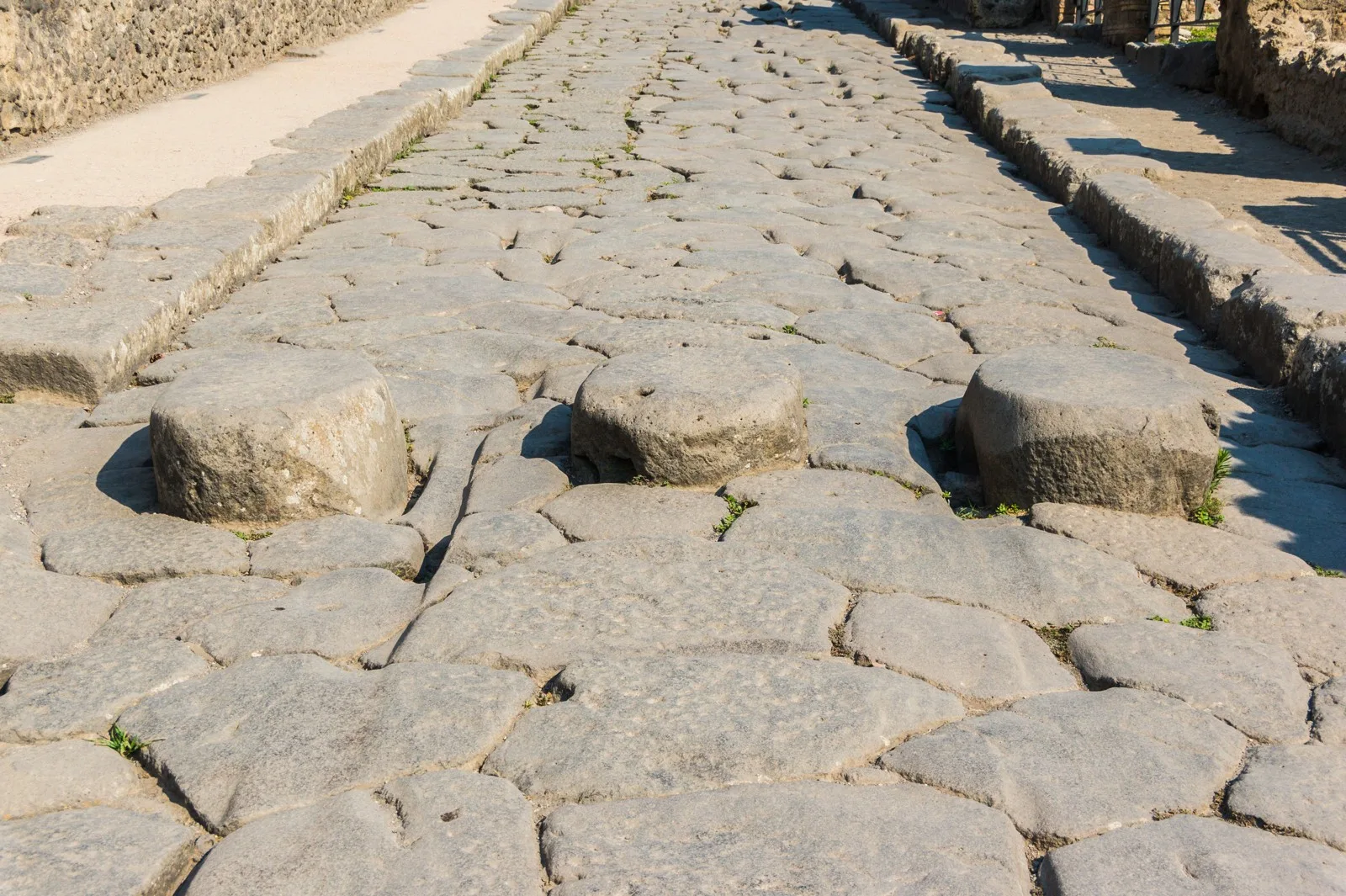
With children, you can make your choice based on their interest in the sites and their stamina. Streets, shops, and houses provide concrete topics: how did people cross the streets, where were meals prepared, and how did water get in? However, two English-language guided visits require sustained attention. For young children who do not understand English, a shorter day with a French-speaking guide will often be easier to enjoy together.
Information from ItaliaTours and Askos lists restrictions for wheelchair users; ItaliaTours also excludes the mobility aids mentioned in its listing. Do not book these group tours based solely on a general fitness icon. Describe your needs to the operator, including vehicle access, stairs, distances, and opportunities to rest, then ask for a suitable option.
Pompeii has a “Pompeii for All” route of more than 3.5 kilometers starting at Piazza Anfiteatro. The park nevertheless notes that some slopes exceed 8%, that some stretches are uneven, and that independent access may be difficult. The existence of this route makes it possible to plan an adapted visit using the appropriate access points. For specific mobility needs, a tailored visit to one site may therefore be preferable to the standard day visiting both sites.


The Budget for Equivalent Inclusions
To compare the options, use the same group composition and travel date. The day trip with lunch includes an expense that remains separate with Askos; the tour joined in Pompeii requires adding national trains and the connections to and from the meeting point. The prices shown for the main offers and the final amounts on Viator provide up-to-date commercial information. A starting price may apply to a different option from the one you want.
For a self-organized trip, add up the Rome–Naples round trip, local transport, both admissions, lunch and any guide. Also compare the trains’ change conditions. An inflexible low-cost ticket and a changeable ticket suit different needs when several connections bracket the visit. The total cost of the day is easier to understand once these items are aligned, without arbitrarily assigning a monetary value to your time.
The Askos multi-departure product requires particular care at checkout. The local option, the Naples option and the Rome option may appear under the same listing, with different durations and prices. Check the option name in the booking summary. For TG7, the service starts in Pompeii and ends in Herculaneum; the round trip from Rome remains a separate purchase, even if other options on the page include it.
Before booking, also review the language, what the meal includes, ticket collection instructions and the cancellation terms applicable to your chosen departure. Keep your confirmations and the operator’s contact details available offline. For an option with provided train tickets, wait for the documents and follow their procedure: buying your own tickets in parallel may create an unnecessary expense. For independent travel, allow a return-time buffer that matches your risk tolerance.
FAQ
Can you visit Pompeii and Herculaneum from Rome in one day?
Yes, with an early start and a full day devoted to the trip. The two tours that include trains advertise durations of eleven or eleven and a half hours. They combine high-speed rail to Naples, local transfers and visits to both parks. If traveling independently, carefully add walking, waiting and a meal break to the train time. To explore Pompeii at a more relaxed pace, spend a full day there and visit Herculaneum during a stay in Campania.
Which option should you choose for a first day trip?
We would choose ItaliaTours if you want to meet a representative at Termini and have lunch arranged. Askos from Rome is suitable if you are comfortable boarding on your own with the provided tickets and prefer to arrange your meal separately. The local option in Pompeii is for travelers who want to choose their own trains. In all three cases, the guided tours are in English; this should suit the people traveling with you.
What is the budget for a day visiting both sites?
It depends on the trains, date, travelers’ ages and level of service. Compare the total price including round-trip transport, two admissions, travel between the sites, guiding and lunch. ItaliaTours includes the advertised meal; Askos keeps it separate. For the local TG7 option, also add transport from Rome and the return journey from Herculaneum. The cards link to the exact offers; check the final price for your group composition.
Are the tours presented in French?
The three products checked list an English-speaking guide for the options described. A booking page written in French may sell an English-language departure. For commentary in French, choose another service that confirms the language for your date or plan a visit focused on a single site. With children, ease of understanding may justify reducing the itinerary rather than rushing through two visits that are difficult to follow.
Are tickets to both parks included?
Yes, the products compared state that both admissions are included in the options described. Askos specifies a Pompeii Express ticket for the ancient city, as well as admission to Herculaneum. The suburban villas require the appropriate ticket coverage and extra time. If traveling independently, buy admission separately through the parks’ official channels, taking into account Pompeii’s named-ticket rules and the last-entry time at the second site.
Which station should you use to meet the guide in Pompeii?
For Porta Marina and Piazza Esedra, the park lists Pompei Villa dei Misteri on the Circumvesuviana Napoli–Sorrento line. The national railway station Pompei serves another side of town and may suit the Piazza Anfiteatro entrance. So check the full station name and the meeting point. For the local TG7 option described here, the meeting point is listed as Porta Marina Inferiore, Piazza Esedra; the instructions in your confirmation remain the operational reference.
Can you go directly to Herculaneum after Pompeii?
Yes. The local Askos option includes a one-way Circumvesuviana ticket between the two sites and travel with the guide, followed by a walk to the park. If traveling independently, look for a service that stops at Ercolano Scavi and check the day’s stops with EAV. Allow time to leave Pompeii, reach the platform and then walk to Herculaneum. The return to Naples and Rome must be arranged separately if your service ends at the ruins.
Are both visits suitable for children?
They can suit children interested in antiquity who are able to walk and follow the commentary. The long duration and English-language explanations should factor into your choice. Plan breaks, bring water and wear suitable clothing for outdoor routes. With young children, we would often prefer a single park and a French-speaking guide, leaving time to rest and letting their questions shape a less crowded visit.
Should you get Pompeii Plus for this day trip?
The Plus ticket makes sense if you want to visit the additional areas it covers, including the suburban villas, and your schedule allows time for them. On a tour combining Pompeii and Herculaneum, visits are already split between two parks. The Express ticket included with Askos is intended for exploring the ancient city. Choose the ticket coverage based on the places actually on your itinerary, rather than the breadth of the ticket alone.
Can these day trips be booked for 2027?
Search for your exact date in the calendar for the option you choose. A product being active in the catalog does not confirm a departure on every future date or availability for every group. Park hours, trains and the provider’s arrangements must be checked again at the time of purchase. This comparison presents verified arrangements without announcing a 2027 schedule that has not been confirmed by the sellers and relevant institutions.
Sources and checks
Plan your visits and check current conditions.
- Pompeii: opening hours and tickets ↗
Pompeii Archaeological Park · Accessed October 31, 2026
What this source supports
Named tickets; daily admission capped at 20,000. The Express ticket covers the ancient city, while Plus also includes the suburban villas. No re-entry after leaving. Winter: 9 am–5 pm, last entry 3:30 pm; summer: 9 am–7 pm, last entry 5:30 pm. These are current opening hours; no 2027 schedule is guaranteed.
- Pompeii: stations and entrances ↗
Pompeii Archaeological Park · Accessed October 31, 2026
What this source supports
Pompei Villa dei Misteri station on the Naples–Sorrento line for Porta Marina and Piazza Esedra; the national railway station in Pompei is by Piazza Anfiteatro. The rail networks and entrances are distinguished.
- Pompeii for All: accessible route ↗
Pompeii Archaeological Park · Accessed October 31, 2026
What this source supports
A route of more than 3.5 km from Piazza Anfiteatro, with slopes sometimes exceeding 8%; visitors may have difficulty completing it independently. This does not describe group tours.
- Herculaneum: tickets, opening hours, and closures ↗
Herculaneum Archaeological Park · Accessed October 31, 2026
What this source supports
Winter: 8:30 am–5 pm, last entry 3:30 pm, leave the area by 4:40 pm; summer: 8:30 am–7:30 pm, last entry 6 pm, leave the area by 7 pm. The Villa of the Papyri and the ancient theater are listed as closed, with no reopening date set.
- Herculaneum: preservation of organic materials ↗
Herculaneum Archaeological Park · Accessed October 31, 2026
What this source supports
Exceptional preservation through carbonization: wood, doors, staircases, furniture, ropes, and food. Not all documented finds are guaranteed to be on display along the route.
- High-speed train from Rome to Naples ↗
Italo · Accessed October 31, 2026
What this source supports
Operator page reviewed; the shortest advertised journey is 55 minutes, depending on the service. The rail journey is distinct from door-to-door travel; no specific 2027 price or departure is guaranteed.
- Herculaneum: rail access ↗
Herculaneum Archaeological Park · Accessed October 31, 2026
What this source supports
Official page reviewed, HTTP 200; get off at Ercolano Scavi and walk along Corso Resina. The suggested quarter-hour is a planning buffer, not a guaranteed journey time.
- EAV: timetables and service ↗
Ente Autonomo Volturno · Accessed October 31, 2026
What this source supports
Official page reviewed, HTTP 200, after the old /web/ URL returned 404. Links to timetables and service notices; no frequency or service on a specific date is inferred.
- Pompeii and Herculaneum from Rome: trains and an archaeologist ↗
Viator Partner API / operator · Accessed October 31, 2026
What this source supports
ACTIVE product GET reviewed; logistics, languages, options, and inclusions checked. Askos’s eleven-and-a-half-hour day, English-speaking guide, maximum 20 travelers. Round-trip trains provided, self-boarding in Rome, minibus, and two admissions included; meals separate. Choose this option for both visits with an archaeologist and minibus transfers. Trains provided, but boarding in Rome is on your own; English-language tour, meals separate, and a Maximall stop on the itinerary. Exact SUPPLIER_PROVIDED photo, file actually decoded; catalog refreshed with the price and currency actually returned. No availability on a specific date is guaranteed.
- Pompeii and Herculaneum from Rome by train ↗
Viator Partner API / operator · Accessed October 31, 2026
What this source supports
ACTIVE product GET reviewed; logistics, languages, options, and inclusions checked. Eleven hours from Termini, English-language tour, maximum 18 travelers. Round-trip train, transfers, two admissions, guided visits, and a pizza lunch included. For a welcome from a representative at Termini and a sit-down lunch between the parks: trains, transfers, and both English-language visits included. Eleven hours, maximum 18 travelers. Exact SUPPLIER_PROVIDED photo, file actually decoded; catalog refreshed with the price and currency actually returned. No availability on a specific date is guaranteed.
- Pompeii and Herculaneum with an archaeologist: choose your departure ↗
Viator Partner API / operator · Accessed October 31, 2026
What this source supports
ACTIVE product GET reviewed; logistics, languages, options, and inclusions checked. Askos product with multiple departure options, lasting six to eleven hours depending on the option. TG7: meet in Pompeii, English-speaking guide, two admissions, and a one-way train to Herculaneum; travel from Rome and the return journey are separate. Select TG7 to meet the guide in Pompeii: six hours, two admissions, and a one-way train to Herculaneum. English-language tour; arrival from Rome and the return trip after the visit must be arranged separately. Exact SUPPLIER_PROVIDED photo, file actually decoded; catalog refreshed with the price and currency actually returned. No availability on a specific date is guaranteed.
- Photo: Columns and remains of the Pompeii forum, with Mount Vesuvius in the background. ↗
Commonists / Wikimedia Commons — CC BY-SA 4.0 · Accessed October 31, 2026
What this source supports
CC BY-SA 4.0; resized and converted to WebP; derivative under CC BY-SA 4.0. Individual Commons page actually reviewed; served file decoded, dimensions 1920 × 1268, and visual match checked. Reused from the registry.
- Photo: Ancient Pompeii street and raised stones that allowed people to cross the road. ↗
Jebulon / Wikimedia Commons — CC0 1.0 · Accessed October 31, 2026
What this source supports
CC0 1.0; resized and converted to WebP. Individual Commons page actually reviewed; served file decoded, dimensions 1600 × 1065, and visual match checked. Reused from the registry.
Viator — activity pages
Source for the activity information below.Affiliate links: Odyvero may earn a commission when you book through this article’s buttons.
- Pompeii and Herculaneum from Rome: trains and an archaeologist ↗
Accessed October 31, 2026
- Pompeii and Herculaneum with an archaeologist: choose your departure ↗
Accessed October 31, 2026
- Pompeii and Herculaneum from Rome by train ↗
Accessed October 31, 2026

