 odyvero
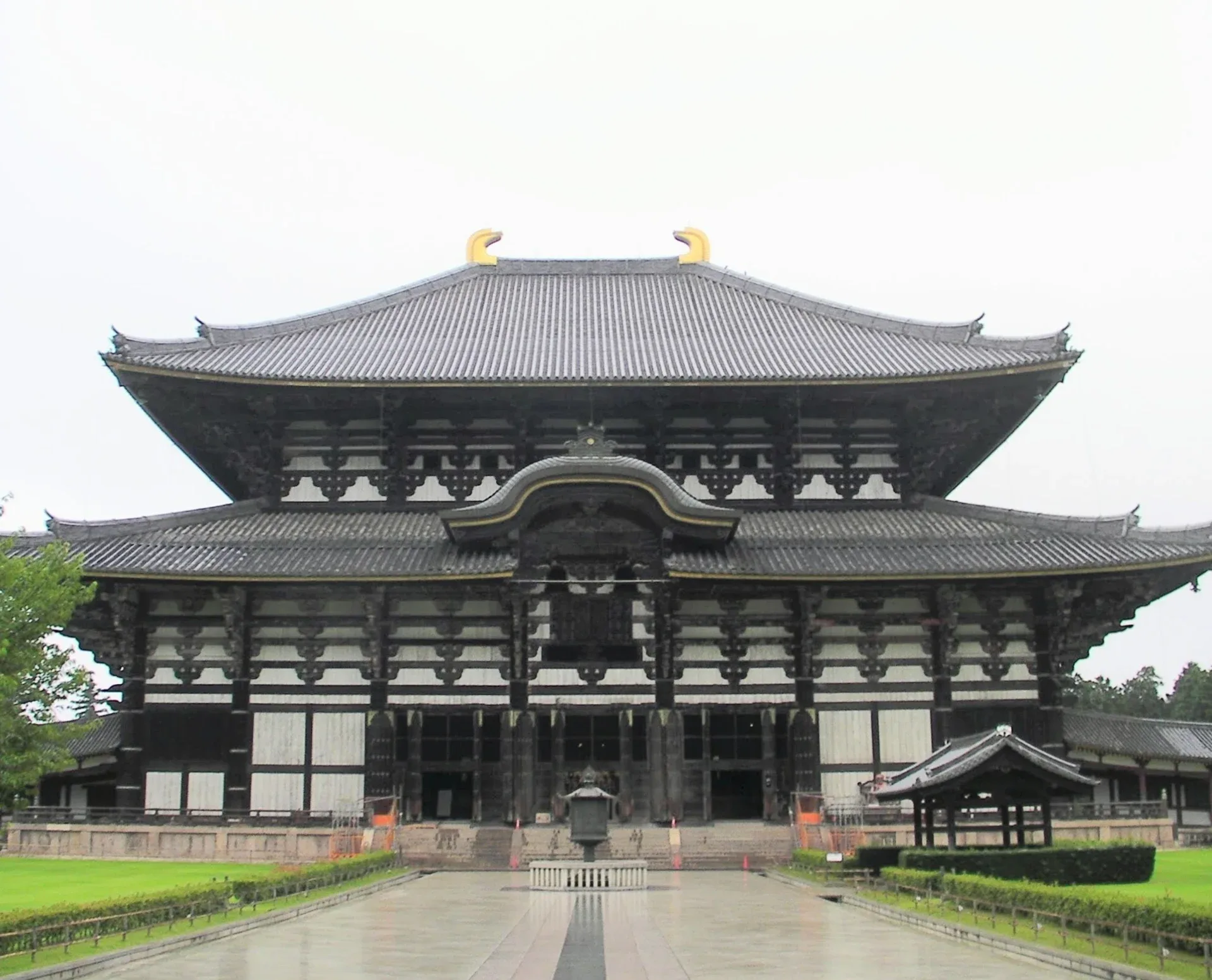
Choosing a trip to Nara starts with the meeting point: some tours meet you at JR Nara Station, others at Kintetsu-Nara, while a few accompany you from Kyoto or Osaka. Across these options, differences in transport, meals and admission fees matter just as much as the temple itinerary. Here are six ways to discover the Great Buddha, the lanterns of Kasuga Taisha and the deer park, with time to explore Naramachi on your own.
The tour options and their departure points
For a first visit, we recommend a guided walk starting in Nara, after arranging your own train journey. The main sites make it possible to plan a day on foot, and a guide can explain the connections between the Buddhist temples, the Shinto shrine and the deer. The five-hour option with lunch suits those who want to devote most of their day to exploring. The three-hour tour from JR Nara leaves more room for independent visits.
An accompanied departure from Kyoto or Osaka meets a different need: meet someone before boarding the train and leave the outbound journey arrangements to them. The selected morning tour offers exactly this option, with an independent return journey. A private car is worthwhile if your priority is a seamless trip from your hotel or if you want to spread out your travel over an eight-hour day. A private walking guide, meanwhile, lets you decide what to see with a guide dedicated to your group.
Finally, the bike tour connects different areas with a particular setup: equipment, a meeting point outside the center and walking stops within religious grounds. French is one of the languages offered for this activity. For travelers who want explanations in French, this may tip the decision, provided they choose a session where French is actually available.
The trains and the two stations
From Osaka-Namba, the Nara tourism office indicates about forty minutes by direct Kintetsu train to Kintetsu-Nara. From Osaka Station, the Yamatoji Rapid reaches JR Nara in about fifty minutes; from Tennoji, the stated journey time is thirty-six minutes. The choice therefore depends on where you are staying and where your activity meets. Switching rail networks just to save a few minutes on the train may make your journey from the hotel longer.
From Kyoto, two reference times make comparison possible: about forty-five minutes on the Miyakoji Rapid to JR Nara, or thirty-five minutes on the Kintetsu limited express to Kintetsu-Nara. The latter time is for a service with a surcharge. Other Kintetsu services have their own journey times and connections. These figures, published by the tourism office, are route estimates; your chosen departure, waiting time and access to the platform add to your morning’s travel time.
When you arrive, the two stations are separate. Kintetsu-Nara is close to Kōfuku-ji: the temple states it is about a five-minute walk from this station, compared with fifteen minutes from JR Nara. JR Station remains a convenient starting point when your guide arranges to meet you there and take a bus to the park. Keep the full station name in your route-planning app, then check the precise meeting place shown on your booking confirmation.
Allow extra time to find the exit and meet the group before the stated time. Group tours leave as scheduled. If your booking starts in Nara, you must arrange the Kyoto–Nara or Osaka–Nara journey separately, even when the product title lists those cities as possible bases for the excursion.
Three hours from JR Nara
The classic three-hour tour is a good option for travelers arriving via the JR network. The English-speaking guide meets the group in front of the JR Nara ticket office; bus transport to the park area and admission to the Great Buddha Hall are included. The advertised group size is up to fifteen travelers. Lunch is on your own, allowing you to extend the day according to your appetite and interests.
The route combines Kasuga Taisha, the park, and Tōdai-ji. These places offer three complementary perspectives on Nara: the shrine’s place in local history, the animals moving among visitors, and the monumental scale of the Buddhist complex. The guide also helps explain religious gestures and practices, which is useful if you have already visited several temples without receiving much explanation.
Depending on the season and the group’s progress, the itinerary may also include Kōfuku-ji. The operator plans, in particular, to adapt the route during the hot months from June to September. When planning the rest of your day, focus on the core itinerary and the end time shown on your booking. Afterward, you can have lunch, return to a place that interests you, or head to Naramachi. This option is especially suitable for a trip where Nara needs to fit into a single day, with a fairly short guided portion.

Viator
Classic Nara from JR Nara
For arrival via the JR network: meet the guide at JR Nara, take the included local bus and visit the Great Buddha, then leave lunch and Naramachi for your free time.
- 3 hours
- 4.9/5 (124 reviews)
Three hours in an English-speaking group, with up to fifteen travelers. Meet at JR Nara; bus to the park and admission to the Great Buddha Hall included. Lunch is at your own expense.
Cancellation policy
For a full refund, cancel at least 24 hours before the scheduled departure date.
From ¥6,500
View activityFive hours with lunch
For a more structured first day, the five-hour walking tour with lunch brings together the main stops and a seated break. The meeting point is near the statue of Gyōki, at Exit 2, or the east exit, of Kintetsu-Nara. The guide speaks English, the advertised group is limited to eight participants, and admission to the temples and shrines visited is included. The program includes Tōdai-ji, Kasuga Taisha, Kōfuku-ji, and the park.
The small group’s main advantage is the continuity of the tour. You can ask a question about a statue or ritual, then pick up where you left off at the next site. With the meal included, finding a restaurant won’t take up part of your break midway through the itinerary. This suits travelers who want to discover several aspects of Nara in one go, without having to decide on each stop after arriving.
The option advertises a vegan menu and asks you to provide dietary requirements in advance. The operator specifies that it cannot accommodate gluten-free requests and does not guarantee that the kitchens used are free of allergens. If you have a medical dietary requirement, get a suitable response before booking. The meal and walk need to work for everyone in your group: some sections of the route are difficult to access with a wheelchair or stroller.
After these five hours, the simplest plan is to take a short walk on your own rather than visit another string of monuments. A break in Naramachi or a little shopping can round out the visit before your return train. The guided tour will already have provided the essential cultural context for the day.

Viator
Nara on foot with lunch
For a first day with a proper meal break: arrive at Kintetsu-Nara and share your dietary requirements by the day before; admission to the sites visited is included.
- 5 hours
- 4.9/5 (1,082 reviews)
Five hours in a small English-speaking group, with a maximum of eight participants. Meet at Kintetsu-Nara; lunch and admission to the sites visited included. Private option available depending on booking.
Cancellation policy
For a full refund, cancel at least 24 hours before the scheduled departure date.
From ¥15,900
View activityA morning from Kyoto or Osaka
The English-language morning excursion offers several meeting points—Kyoto, Osaka, Namba, or Kintetsu-Nara—depending on the option booked. The listing states that it lasts four and a half hours and is limited to a maximum of twelve travelers. Travel from Kyoto or Osaka is included only with the options that specify it. Return travel is your responsibility, as are admission to Tōdai-ji and meals.
This arrangement is mainly appealing to travelers who want a guide from the city where they are staying. In Kyoto, the listed meeting point is near Kyoto Tower, by the central gate for the JR lines; take care not to confuse it with the Shinkansen entrances. In Osaka, the exact meeting points vary depending on the station selected. Your booking confirmation must match your option, because going to the wrong departure point could jeopardize the entire morning.
The program visits Kōfuku-ji, Kasuga Taisha, the park, and Tōdai-ji. An early start leaves time afterward for lunch or independent sightseeing. The exact meeting time depends on the session you booked; it also needs to be compatible with your ability to reach the station from your hotel. A guided morning therefore does not mean you can skip planning that first journey.
The operator estimates that the tour involves around ten thousand steps, does not admit children under six, and advises against the visit for people over seventy-five. Consider this level of activity for the whole group. If you have younger children or need frequent, extended breaks, an independent walk or a customized private tour will offer more flexibility.

Viator
Nara in the morning, with optional accompanied departure
For a guide from Kyoto or Osaka: explicitly select the option that includes travel from your station, then arrange your return journey and Great Buddha admission separately.
- 4 hr 30 min
- 4.9/5 (1,240 reviews)
Four and a half hours advertised, with an English-speaking guide. Meet in Kyoto, Osaka, or Nara depending on the option; outbound travel included only with the corresponding option, while the return journey, meals, and Tōdai-ji are separate.
Cancellation policy
For a full refund, cancel at least 24 hours before the scheduled departure date.
From ¥10,500
View activityNara by bicycle, in French
The bicycle tour of the main sites lasts three to four hours. It is offered in Japanese, English, and French, with a maximum group size of ten participants. The bicycle, helmet, and listed equipment are included; the itinerary also mentions admission to Tōdai-ji. Meals and personal purchases are separate. For those choosing this activity primarily for its language, the key is to book a French-language session.
The meeting point is near the Toichishogakko bus stop, which you need to reach from the center. Factor in getting there and back rather than assuming that the tour starts at the station. If you are traveling with a teenager, check which bicycle sizes are available, and consider how comfortable everyone is riding in an unfamiliar area. The listing describes a group outing that requires at least two participants to go ahead.
The bicycle makes it possible to connect the park, Tōdai-ji, and Kasuga Taisha areas, with stops for visits. At Tōdai-ji, the official rules require you to park at the lot southwest of the Great South Gate, Nandaimon: entering with a bicycle, even if you are pushing it by hand, is prohibited. The program therefore alternates between riding and exploring on foot.
When deciding between this option and a guided walk, the key question is whether you want to cycle. Choose it if riding is part of the experience you’re looking for and every participant is comfortable with the equipment. A walking tour will be simpler if you want to linger freely within the temple and shrine grounds or change your pace often.

Viator
Nara by bike with a French-language option
To cycle between the sites with explanations in French: select a French-language session and plan how to reach the meeting point near Toichishogakko.
- 3 to 4 hours
- 4.7/5 (104 reviews)
Three- to four-hour outing, with up to ten travelers. French offered depending on the session; bike, helmet, and admission to Tōdai-ji advertised as included. Departure near Toichishogakko.
Cancellation policy
For a full refund, cancel at least 24 hours before the scheduled departure date.
From ¥11,000
View activityA private walking guide
The customizable tour with a licensed national guide lasts six hours and starts in Nara. Guidance is available in English or Japanese; your group chooses three or four sites from the options offered by the product. Admission, lunch, and local transport are separate. A private vehicle is also excluded. This distinction matters: the guide can meet you in the agreed area of Nara, but the booking does not include a transfer from Kyoto or Osaka.
This option makes the most sense when you have a specific cultural priority. You can spend more time at Tōdai-ji and Kasuga Taisha, or build Naramachi into the program. The discussions beforehand help shape a coherent route: choose places that fit the travel time, the length of each visit, and the breaks you want.
For a multigenerational group, mention any need for rest, stairs to avoid, and possible use of a taxi. The customization gives you a chance to discuss these points in advance. You should then confirm the final route and access at the selected sites with the guide, especially if anyone has limited mobility. The fact that a tour is private does not, on its own, mean the entire itinerary is accessible.
This is a good choice if you want to devote the guide’s time to your questions and your preferred pace. To compare its cost with a group option, add the separate expenses for everyone in your party. A private service may be priced differently from an activity sold per person; make sure your actual group size is reflected in the booking search.

Viator
Nara with a private licensed guide
To explore a few places at your own pace: agree on three or four priorities with the guide in Nara and add admission and local transport to your budget.
- 6 hours
- 5/5 (245 reviews)
Six hours on foot, in English or Japanese. Meet in Nara and choose three or four sites. Transportation, admission, meals, and private vehicle are separate.
Cancellation policy
For a full refund, cancel at least 24 hours before the scheduled departure date.
From ¥22,000
View activityThe day by private car
The private car excursion departing from Kyoto or Osaka is listed as eight hours and includes an air-conditioned vehicle, water, and guidance in English or Japanese. Meet at your hotel reception, within the pickup area confirmed at booking. Temple admission fees are paid separately. Lunch is not listed among the inclusions, so keep it as a separate item in your day’s budget.
The itinerary brings together the park, Tōdai-ji, Naramachi, Kasuga Taisha, and the Mount Wakakusa area. Its main difference from walking tours is that it takes care of getting between stops from your base. For a family or small group wishing to avoid figuring out several train stations, this seamless transport may make the car worthwhile.
The religious sites and neighborhood exploration still involve some walking. Before booking, mention any difficulty getting into the vehicle, walking on gravel, or using steps. Ask them to confirm the available space, any equipment needed for children, and which stops are suitable for your group. The product does not offer a general accessibility guarantee.
The view from Wakakusa adds a panorama to the monuments, but the day’s conditions and your visit time determine what you will see. The advertised itinerary does not guarantee a sunset. For an eight-hour day that includes travel, ask in particular how the visits and meal break are allocated, then agree on priorities with the operator.

Viator
Nara by private car from Kyoto or Osaka
For a continuous day out from your hotel: confirm its pickup area and each participant’s needs, then prioritize the visits with the operator.
- 8 hours
- 5/5 (69 reviews)
Eight-hour day with an air-conditioned vehicle and an English- or Japanese-speaking guide. Meet at your hotel within the accepted area; water included, temple admission and lunch separate.
Cancellation policy
For a full refund, cancel at least 24 hours before the scheduled departure date.
From ¥55,000
View activityThe Great Buddha and Kasuga
At Tōdai-ji, the Great Buddha Hall is the indoor visit to plan for in the itinerary. A walk around the grounds and a ticket to this hall provide access to different areas. The temple lists opening hours of 7:30 a.m. to 5:30 p.m. from April to October, then 8 a.m. to 5 p.m. from November to March. In winter, schedule indoor visits early enough to leave some flexibility after lunch and travel.
An audio guide in French is available on site, with service starting at 10 a.m. and its own operating hours. This can enhance a self-guided day if you want explanations about the temple without booking a full guided tour. It also lets you spend more time in the hall rather than keeping pace with a group.
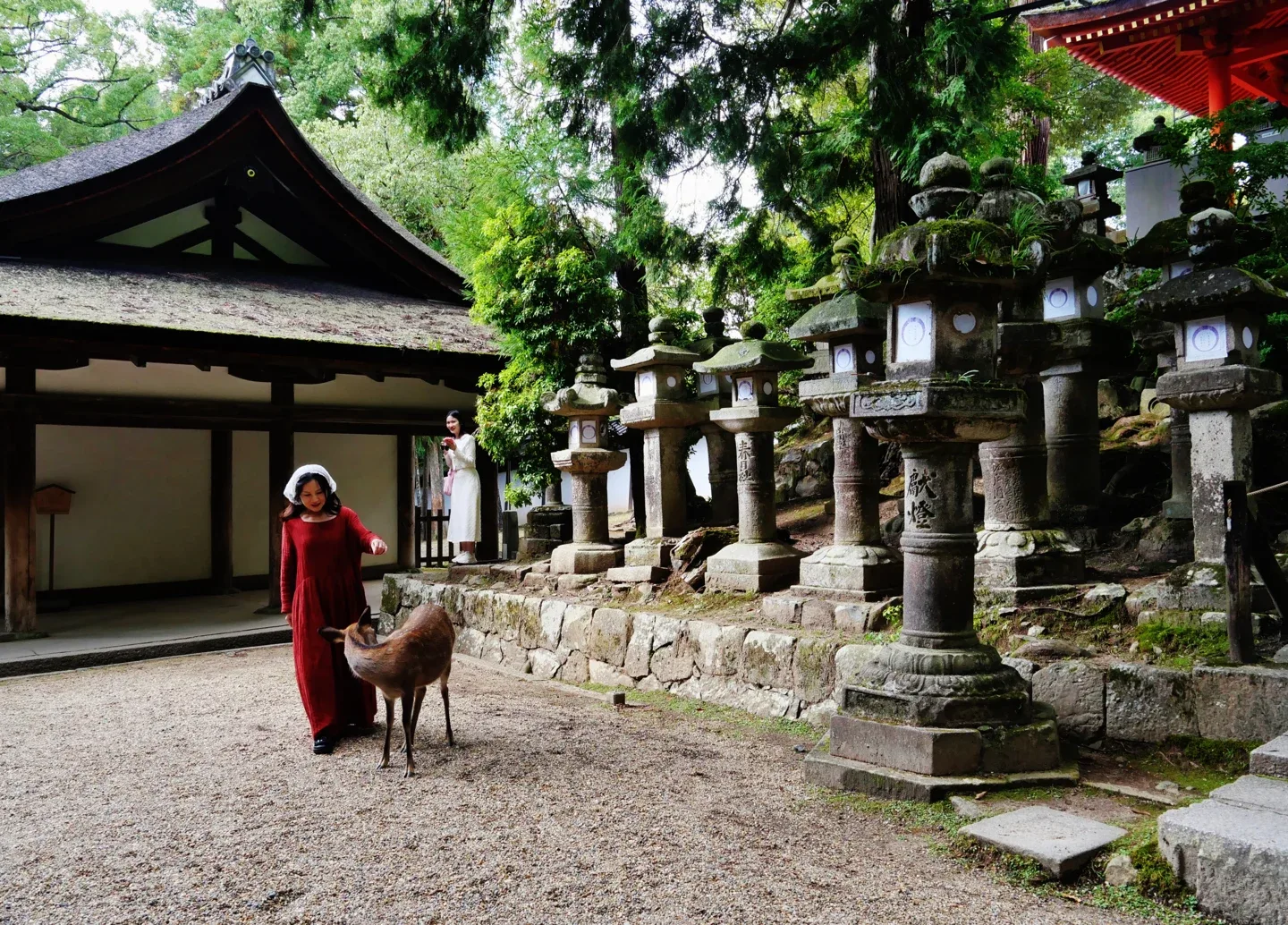
At Kasuga Taisha, the stone lanterns along the approaches, hanging lanterns, and vermilion buildings give the shrine its distinctive character. Special access inside the cloisters requires a separate ticket, with admission listed from 9 a.m. to 4 p.m., subject to ceremonies. It includes access to Fujinami-no-ya, where lanterns are lit. A regular visit is not the same as the full illumination during a festival: book based on the areas actually included in your activity.


Naramachi after your visit
Naramachi is a good way to extend your day among merchant houses, shops, and cafés housed in historic buildings. The district is near Gangō-ji and within walking distance of both train stations. The tourism office estimates around fifteen minutes from Kintetsu-Nara and twenty minutes from JR Nara to this temple in the heart of the area. The appeal is the shift from large religious compounds to a more domestic scale.
A leisurely stroll works well after the short morning tour: you can have lunch, admire the façades of the machiya townhouses, and step into whichever shops catch your eye. Documented specialties include kaki-no-ha-zushi, pressed sushi wrapped in persimmon leaves; cha-gayu, a tea-based rice dish; and fine Miwa sōmen noodles. Choose where to eat based on the menus and opening hours that day.
If your visit already includes lunch, save this area for a break or some shopping. Dividing the day this way avoids stacking overlapping bookings. Shops, houses open to the public, and any demonstrations each operate on their own schedules; browsing freely is more flexible than building a timed itinerary around a hoped-for cooking show.
The deer and the seasons
Deer roam freely in the park and remain wild animals. The tourism office notes that males can become aggressive, particularly in autumn. Watching from a distance is a perfectly good way to enjoy the visit; feeding them is optional. If you do, use only the designated crackers, never bread, sweets, or leftover food.
Put away plastic bags, maps, and papers that deer might grab. Offer the crackers without keeping the animals waiting, then show your open hands when you have run out. With young children, an adult should stay beside them during the interaction. Getting a photograph is no reason to hold a deer back or keep pestering it.
The season also affects how you plan your day. In spring, blooms vary by species and weather; the tourism office places some cherry blossoms between late March and April, but cannot guarantee a peak bloom on your date. In autumn, foliage adds interest to the wooded approaches. In summer, bring water and a hat and take breaks; some tours adjust their final stop because of the heat. In winter, the opening hours of the halls make it especially important to prioritize indoor visits.
Budget and booking
The total cost includes the selected activity, travel to the meeting point, any transport not included, admission fees, and meals booked separately. For the tours featured here, refer to the prices, currencies, and reviews on the main listing cards; this avoids fixing commercial prices that can change depending on the session and participants. Compare offers for the same dates and group size.
Monument tickets offer another point of reference. At the time of checking, Tōdai-ji listed 800 yen for adults and 400 yen for children aged six to twelve for the Great Buddha Hall; special access to the Kasuga Taisha cloisters was listed at 700 yen. Add these costs when they are not included in your package. The Tōdai-ji Museum and the paid areas of Kōfuku-ji have separate tickets.
Before confirming, review these four details together: departure station or hotel, guide language, list of included admissions, and return journey. Then check the cancellation policy for the session you selected. A product being active in the catalog does not guarantee availability on a particular date. With these details in hand, the choice becomes concrete: free time after three hours, a day with lunch, a guide for the outbound train journey, a French-speaking bike tour, or a private itinerary.
FAQ
Is it better to depart from Kyoto or Osaka to visit Nara?
Depart from the city where you are staying. Both allow for a day trip, with convenient train connections. In Osaka, your neighborhood and the choice between JR Nara and Kintetsu-Nara will shape the journey. In Kyoto, compare the Miyakoji Rapid and Kintetsu services. Changing hotels just for this visit usually offers little benefit; the activity’s meeting point is a more useful consideration.
Can you visit Nara without an organized tour?
Yes. You can take the train to Nara, explore the areas around the monuments, and buy admission tickets separately. A self-guided day lets you adjust your breaks and time spent inside the halls. A guide mainly provides explanations and a structured route. At Tōdai-ji, the French audio guide available on site is another way to enrich an independent visit.
Which station should I choose for a guided tour in Nara?
Use the station specified on your booking confirmation. The selected three-hour tour starts at JR Nara; the five-hour tour with lunch meets near Exit 2 of Kintetsu-Nara. Kintetsu-Nara’s proximity to Kōfuku-ji does not mean you can join a group departing from JR Nara. Save the station name and exact meeting point before setting out.
Is there an excursion in Nara with a French-speaking guide?
The bike tour featured here offers French alongside English and Japanese. Select French for the session you are interested in and confirm availability if needed. The group walking tours selected for this comparison are in English. A booking page written in French does not change the language of the tour.
Is half a day enough to discover Nara?
A three-hour guided tour offers an introduction to the park, Kasuga Taisha, and Tōdai-ji, depending on the booked itinerary. You will also need to allow time for the train, getting to the meeting point, and breaks, so setting aside the full day in your travel plans is more comfortable. You can then extend the visit with lunch and Naramachi instead of heading straight back.
Which option is suitable with young children?
Choose a self-guided day or a private itinerary whose pace has been confirmed as suitable for your family. The selected morning outing does not accept children under six and involves a lot of walking. For a private car, check the child-safety equipment and the distances to be covered on foot. In the park, an adult should stay close to children during interactions with the deer.
Are train travel and admission fees included in the excursions?
It depends on the product and option. Tours starting in Nara generally leave you to arrange train travel from Kyoto or Osaka. The morning package includes travel from those cities only with the corresponding options; the return journey is separate. The three-hour tour includes the local bus and the Great Buddha; the five-hour tour includes admission to the sites visited and lunch.
Does a private tour always include a car?
No. The nationally licensed guide featured in this comparison accompanies your group on foot for six hours, with a meeting point in Nara and transportation paid separately. The private-car option is a separate booking, advertised as an eight-hour tour departing from a hotel in Kyoto or Osaka within the accepted area. Compare the mode of transport and pickup arrangements, not just the word “private.”
Sources and checks
Plan your visits and check current conditions.
- Rail access and getting around Nara ↗
Nara City Tourism Association · Accessed October 31, 2026
What this source supports
Indicative journey times: Kintetsu Osaka-Namba 40 min; Kyoto limited express 35 min with a surcharge; JR Osaka 50 min, Tennoji 36 min, Kyoto Miyakoji Rapid 45 min. Local Nara Kotsu network.
- Tōdai-ji: hours, admission and audio guide ↗
Tōdai-ji · Accessed October 31, 2026
What this source supports
Great Buddha Hall: April–October 7:30 a.m.–5:30 p.m., November–March 8 a.m.–5 p.m.; adults 800 JPY, ages 6–12 400 JPY. A French audio guide is offered; reception starts at 10 a.m. according to its own schedule. The museum and other halls are separate.
- Bicycle rules at Tōdai-ji ↗
Tōdai-ji · Accessed October 31, 2026
What this source supports
Bicycles must be parked southwest of Nandaimon; bicycles are prohibited inside the grounds, even when pushed by hand.
- Kasuga Taisha: history and buildings ↗
Kasuga Taisha · Accessed October 31, 2026
What this source supports
Founded in 768; vermilion buildings, forest, and stone and bronze lanterns; the complex is included among the Historic Monuments of Ancient Nara.
- Cloisters and Fujinami-no-ya ↗
Kasuga Taisha · Accessed October 31, 2026
What this source supports
Reception for special access to the cloisters is open from 9 a.m. to 4 p.m.; 700 JPY. Restrictions may apply during ceremonies. Lanterns are lit at Fujinami-no-ya; this does not mean the entire grounds are lit every day.
- The deer: behavior and precautions ↗
Nara City Tourism Association · Accessed October 31, 2026
What this source supports
Wild animals; males can sometimes be aggressive in autumn. Use only designated crackers; put away paper and plastic; feed them without making them wait, and hold out open hands once you have finished distributing the crackers. Children should be accompanied. The 2024-dated price is not repeated.
- Kōfuku-ji: access and visitor areas ↗
Kōfuku-ji · Accessed October 31, 2026
What this source supports
About 5 min from Kintetsu-Nara and 15 min from JR Nara; separate tickets apply to the halls and museum. No promise that the pagoda will be visible while construction work is underway.
- Naramachi and merchant houses ↗
Nara City Tourism Association · Accessed October 31, 2026
What this source supports
Machiya townhouses, shops and cafés; Gangō-ji is about 15 min from Kintetsu-Nara and 20 min from JR Nara. Specialties include kaki-no-ha-zushi, cha-gayu and Miwa sōmen.
- The seasons in Nara ↗
Nara City Tourism Association · Accessed October 31, 2026
What this source supports
Cherry blossoms, depending on the species, mainly from late March to April; autumn foliage. No event calendar or guaranteed peak for a future date.
- Classic Nara from JR Nara ↗
Operator via Viator Partner API · Accessed October 31, 2026
What this source supports
Three hours in an English-speaking group of up to fifteen travelers. Meet at JR Nara; bus to the park and admission to the Great Buddha Hall included. Lunch at your own expense. Duration: 3 hours. ACTIVE product verified via GET. Odyvero affiliate booking links; no dated availability guaranteed.
- Nara on foot with lunch ↗
Operator via Viator Partner API · Accessed October 31, 2026
What this source supports
Five hours in a small English-speaking group, maximum eight participants. Meet at Kintetsu-Nara; lunch and admission to the sites visited included. Private option available depending on booking. Duration: 5 hours. ACTIVE product verified via GET. Odyvero affiliate booking links; no dated availability guaranteed.
- Nara in the morning, with optional accompanied departure ↗
Operator via Viator Partner API · Accessed October 31, 2026
What this source supports
Advertised as four and a half hours with an English-speaking guide. Meet in Kyoto, Osaka or Nara depending on the option; the outbound journey is included only in the corresponding option, while the return journey, meals and Tōdai-ji are separate. Duration: 4 h 30. ACTIVE product verified via GET. Odyvero affiliate booking links; no dated availability guaranteed.
- Nara by bike with a French-language option ↗
Operator via Viator Partner API · Accessed October 31, 2026
What this source supports
Three- to four-hour tour, up to ten travelers. French is offered depending on the session; bike, helmet and Tōdai-ji admission are listed as included. Departure near Toichishogakko. Duration: 3 to 4 hours. ACTIVE product verified via GET. Odyvero affiliate booking links; no dated availability guaranteed.
- Nara with a licensed private guide ↗
Operator via Viator Partner API · Accessed October 31, 2026
What this source supports
Six hours on foot, in English or Japanese. Meet in Nara and choose three or four sites. Transport, admission, meals and private vehicle are separate. Duration: 6 hours. ACTIVE product verified via GET. Odyvero affiliate booking links; no dated availability guaranteed.
- Nara by private car from Kyoto or Osaka ↗
Operator via Viator Partner API · Accessed October 31, 2026
What this source supports
Eight-hour day with an air-conditioned vehicle and English- or Japanese-speaking accompaniment. Meet at a hotel within the accepted area; water included, temple admission and lunch separate. Duration: 8 hours. ACTIVE product verified via GET. Odyvero affiliate booking links; no dated availability guaranteed.
- File:Todai-ji Daibutsuden front view in 2011.jpg ↗
ONO Masanobu / Wikimedia Commons · Accessed October 31, 2026
What this source supports
CC0 — https://creativecommons.org/publicdomain/zero/1.0/deed.en. Original downloaded and decoded: [2044, 1653]; resized derivative [1920, 1553], without upscaling. Visual inspection completed.
- File:Nara Kasuga-taisha Lanterns & Deer 05.jpg ↗
Zairon / Wikimedia Commons · Accessed October 31, 2026
What this source supports
CC BY 4.0 — https://creativecommons.org/licenses/by/4.0. Original downloaded and decoded: [5172, 3714]; resized derivative [1440, 1034], without upscaling. Visual inspection completed.
Viator — activity pages
Source for the activity information below.Affiliate links: Odyvero may earn a commission when you book through this article’s buttons.
- Nara in the morning, with optional accompanied departure ↗
Accessed November 1, 2026
- Nara by private car from Kyoto or Osaka ↗
Accessed November 1, 2026
- Classic Nara from JR Nara ↗
Accessed November 1, 2026
- Nara by bike with a French-language option ↗
Accessed November 1, 2026
- Nara on foot with lunch ↗
Accessed November 1, 2026
- Nara with a private licensed guide ↗
Accessed November 1, 2026


