 odyvero
Four nights in Mexico City, two in Puebla, five in Oaxaca: this allocation leaves time for the cities and archaeological sites, with two days set aside for transfers. Here is a twelve-day route linking museums, markets and Zapotec heritage without renting a car, followed by a return plan that avoids a rushed connection.
The trip’s three bases
The challenge of a trip between Mexico City and Oaxaca is to leave enough full days in each city. Journeys, checking into hotels and excursion appointments take up part of the trip in ways that a map does not show well. For twelve days on the ground, we suggest eleven nights split between three bases: Mexico City for the first four, Puebla for the next two, then Oaxaca for the final five. Departure is on day twelve, subject to having a compatible flight ticket.
The trip takes in the collections at the National Museum of Anthropology, the city of Teotihuacán, Puebla’s historic center and Monte Albán. Oaxaca’s markets offer another way to understand the region, through its food, drinks and everyday practices. Only one extra day away from Oaxaca remains available. This gives you room to choose an activity that genuinely interests you, instead of booking a different excursion every morning.
The proposed schedule is as follows: days 1 to 4 in Mexico City, day 5 for the journey to Puebla, day 6 in Puebla, day 7 for the journey to Oaxaca, and days 8 to 11 in Oaxaca and its surroundings. Visits can be rearranged: the Anthropology Museum usually closes on Mondays, a rainy day may shift an outing, and a road disruption may mean giving up a detour. The free-time durations suggested here are planning advice; only the programs listed in the offers correspond to commercial services.
Mexico City: arrival and the center
The first day depends on your landing time. After a long-haul flight, focus on the transfer, checking in and having a meal near your accommodation. A cultural booking at a fixed time can be hard to keep if your arrival is delayed. For four nights, choose a place that makes it easy to visit your two main areas of interest—the historic center and Chapultepec—rather than picking accommodation solely for its price.
Spend part of the second day around the Zócalo and the area near the cathedral. The square helps orient you in the capital’s center and among the monuments you may want to explore further. A short walk followed by a visit inside a place of your choice is easier to organize than walking across several neighborhoods. Leave time for lunch and a return to the hotel if you are feeling the effects of travel fatigue.
The boundaries of this walk matter. France Diplomatie recommends caution in the center and advises against certain areas north and northeast of the Zócalo. A nearby street on the map may be in a neighborhood where continuing your walk is not recommended. Stick to the identified sightseeing areas, and ask your accommodation or a recognized transport service to arrange your return if you are unfamiliar with the route.
Keeping your first evening simple also makes the next day easier: identify your departure point, prepare some water and check how long it will take to reach the museum or excursion meeting point. Traffic in Mexico City makes tightly scheduled back-to-back bookings impractical. For this trip, one main activity per half-day is usually enough to make for a full day.
The collections of Chapultepec
The National Museum of Anthropology provides especially useful context before the circuit’s two archaeological visits. INAH presents collections devoted to Mexico’s pre-Hispanic societies and Indigenous cultures. The galleries follow a chronological progression and then a geographic one, including a section devoted to the cultures of Oaxaca. This lets you place the Zapotecs in context before seeing Monte Albán and situate Teotihuacán within a broader history.
Set aside a long half-day for the museum. Choose a few collections rather than trying to see every gallery: those related to Teotihuacán, the Mexica, and Oaxaca form a coherent route that connects with the rest of the trip. The objects, displays, and models help you recognize features you will encounter at the sites. A break in the courtyard helps you stay focused throughout the visit.
The official page lists opening hours as Tuesday to Sunday, 9 a.m. to 6 p.m. The extended hours listed for a period in 2026 ended on July 5; do not assume they will apply to a later trip. Check the current hours before you leave. If your second day falls on a Monday, swap this visit with Teotihuacán or your exploration of the city center.
The fourth day in Mexico City is deliberately left flexible. It can accommodate this museum if you started with the city center, another cultural visit you have already chosen, or a walk around your accommodation. Avoid adding a distant outing simply because a time slot seems free: the following day involves changing cities, with luggage and a bus station to deal with.
Teotihuacán in a morning
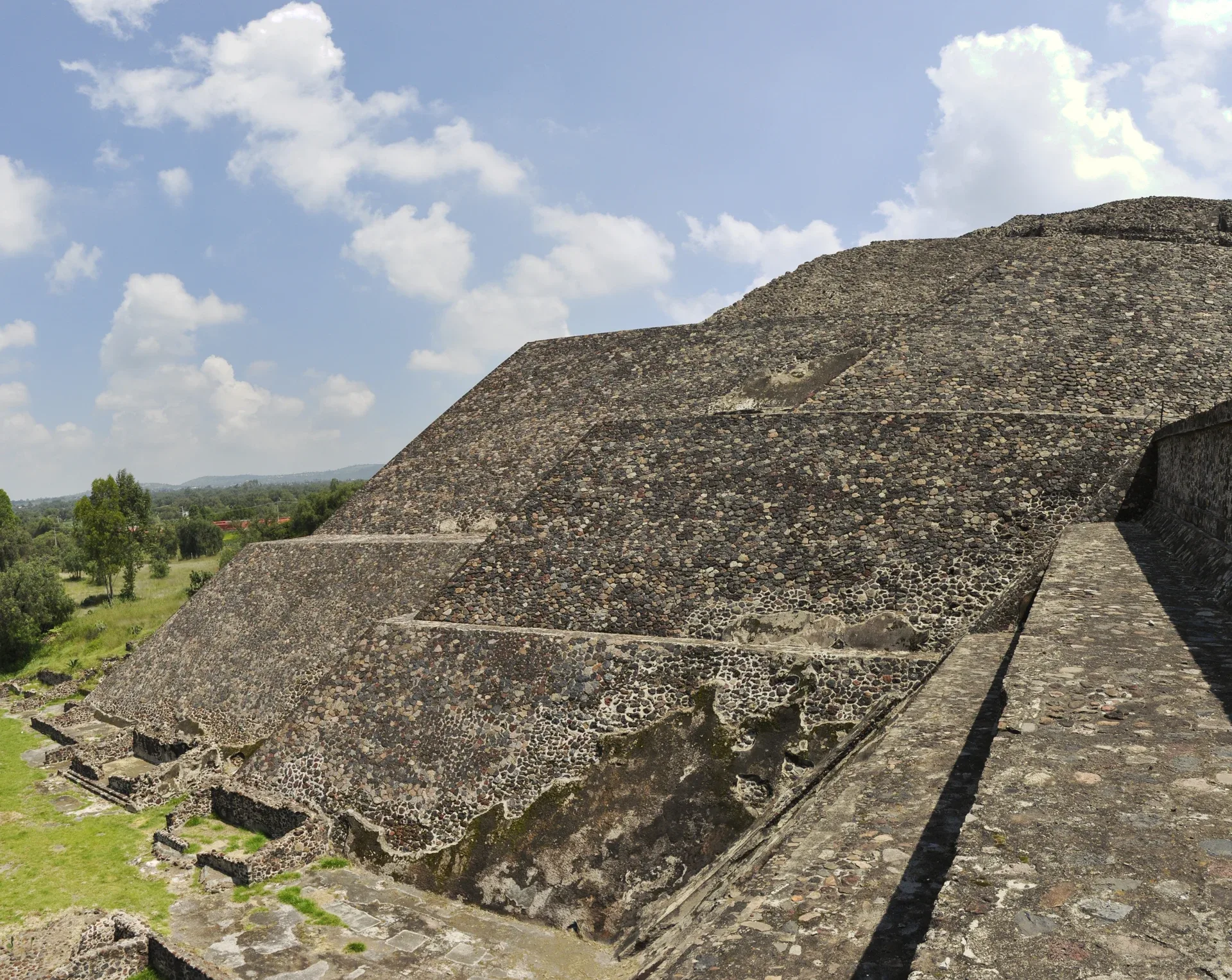
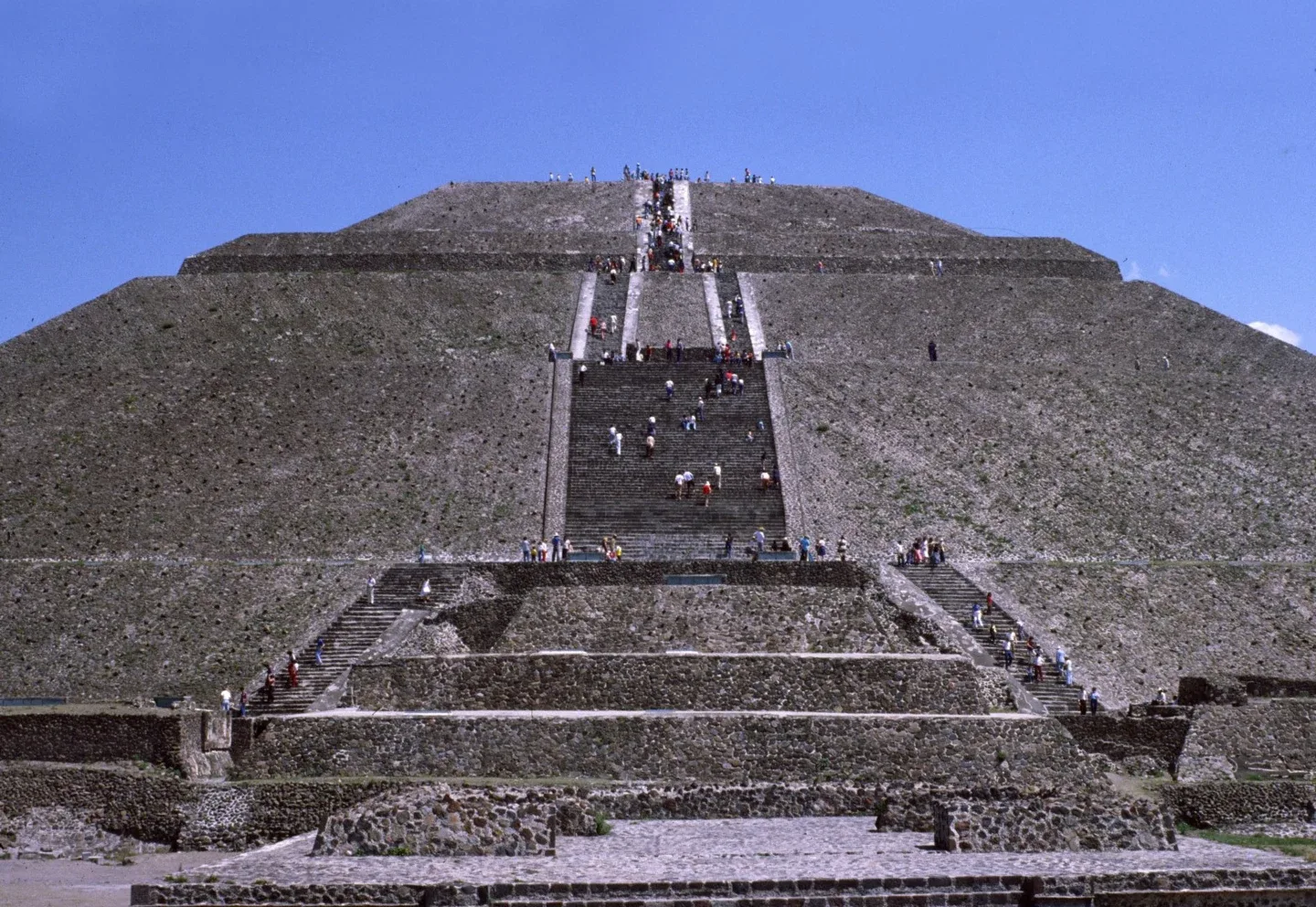
Schedule Teotihuacán for day three, or for whichever day fits with the museum’s opening hours. The visit takes you through the expansive grounds of a city that was among Mesoamerica’s major urban centers. Its Nahuatl name was given to it by the Mexica; INAH notes that the name used by its inhabitants remains unknown. This distinction helps avoid automatically attributing every monument on the trip to the same civilization.
The Pyramid of the Sun, the Pyramid of the Moon, and the monumental avenues structure the visit. The time spent walking between the complexes is part of the experience. Wear suitable shoes, bring water, and protect yourself from the sun. Access to the buildings is subject to site rules: plan your day around exploring the open areas, without assuming you will be able to climb a pyramid.
To keep the afternoon free in Mexico City, the morning excursion described here lasts five hours in total, including about two and a half hours at the site. The group is limited to twelve travelers; transportation and admission are included, with a guide in English or Spanish. Pickup depends on the area where you are staying, and a meeting point may be offered for other addresses. Confirm this before planning your morning.
This format suits the circuit because it focuses the outing on archaeology. Plan for lunch afterward and a flexible afternoon, without booking a ticket for immediately after the stated return time. France Diplomatie flags risks on buses that make stops between Mexico City and Teotihuacán and recommends direct services operated by major companies. If traveling independently, choosing the exact transport option deserves as much attention as choosing your admission ticket.


Viator
Teotihuacán at opening time in a small group
For your third day in Mexico City: five hours in total, including about two and a half hours at the site, with admission and transportation included. The group has a maximum of twelve participants and the guide speaks English or Spanish; confirm pickup arrangements based on your accommodation.
- 5 hours
- 4.9/5 (534 reviews)
Five hours including transportation, two and a half hours of guided time at the site, and a maximum of twelve travelers. Admission included; English- or Spanish-speaking guide; pickup depending on the neighborhood.
Cancellation policy
For a full refund, cancel at least 24 hours before the scheduled departure date.
From MX$1,160.00
View activityPuebla: two nights in between
Day 5 is for traveling to Puebla. Look for a daytime service and check the exact departure and arrival stations: a city name does not always refer to a single terminal. Allow for the journey from your hotel to the station, then from the arrival terminal to your new accommodation. We have reserved this day for the transfer and a first walk around the city, without specifying a bus time that depends on your travel date.
Two nights in Puebla give you one full day there. The stop has its own appeal for travelers interested in architecture and food. It also breaks up the journey before Oaxaca. If your trip lasts only ten days, dropping Puebla is the simplest adjustment: you keep the two main bases and avoid reducing each one to a few rushed visits.
On day 6, plan your exploration around the historic center. The tourism office lists the zócalo, the cathedral, the Biblioteca Palafoxiana, the Artists’ Quarter, and Plazuela de los Sapos among its landmarks. Choose two indoor visits whose opening hours you have checked, then link them with a walk. This leaves time for facades, squares, and breaks without depending on five consecutive attractions being open.
Puebla is worth setting aside time for a proper lunch. Mole poblano, chalupas, cemitas, and pipián are among the dishes featured in the tourism office’s guide. Choosing one dish is a way to explore a regional cuisine that sets you up to make useful comparisons with Oaxaca. Chiles en nogada are also listed among local specialties; their inclusion on a tourist list does not guarantee they will be served on your travel dates.
The transfer to Oaxaca
Day 7 is set aside for the Puebla–Oaxaca connection. Check the official ADO booking engine for your date, then read the full ticket before paying: terminal, time, stated duration, luggage, and change conditions. The booking app shows the services actually on sale. General travel times published by a tourism office are no substitute for the duration of a coach service with its specific route and any stops.
Where available services allow, favor an arrival during daylight hours. Your first task in Oaxaca will be to get to your hotel and settle in; booking a guided tour for the same day would make the schedule fragile. You can then have dinner near your accommodation and check the route to the next day’s meeting point. Keep your accommodation address and access instructions available offline.
The regional route requires particular care. France Diplomatie specifically advises against the Puebla–Orizaba corridor and the Oaxaca–Santo Domingo Tehuantepec road. The itinerary described here does not include an extension to Orizaba or the isthmus. If you are traveling with a driver or changing the route suggested by a navigation app, check which roads will actually be used and review the latest recommendations before setting out.
A longer-than-expected journey should not cost you an essential visit. That is the advantage of the final five nights in Oaxaca: the first evening is for arrival, leaving four days available afterward. The outings on days 8 to 11 can be rearranged, provided you keep the final night close to your planned departure point and do not add a long excursion just before leaving.
The markets and center of Oaxaca
Day 8 begins in central Oaxaca. The zócalo and the Santo Domingo area provide two landmarks to help organize your walks. Set aside part of the day for the city itself: meals, markets, and cultural visits take time, even when they are within a relatively compact area. A full day without a vehicle is a welcome break after the transfer.
For an introduction to local specialties with explanations, the selected food tour lasts three hours and is conducted in English. Its route includes the 20 de Noviembre and Benito Juárez markets, followed by the historic center. The listing mentions tastings of mole, quesillo, and tejate. The meeting point is on Ignacio Aldama Street, near the market; the tour ends near Santo Domingo, with no transfer from the hotel.
This tour is particularly useful at the beginning of your stay. It gives you points of reference for later meals: you will be able to recognize a cheese, drink, or preparation that you may want to order again. Plan breakfast and dinner around a route that includes several tastings. The exact menu may change; disclose any allergies before booking and ask for confirmation that the necessary adjustments can be made.
When exploring independently, also take time to look over the stalls before deciding where to eat. Ask what dishes contain and whether they include meat, nuts, or dairy products, depending on your needs. A specialty served with a sauce may combine several ingredients that are not immediately obvious. For drinks as well as food, ask exactly what is being offered rather than relying only on the translated name.

Viator
Oaxaca: markets and local specialties in the city center
Schedule this near the start of your five nights in Oaxaca so you can recognize local specialties at later meals. The walking tour lasts three hours and is in English; meet near the 20 de Noviembre market and mention any allergies before booking.
- 180 min
- 5/5 (46 reviews)
A three-hour food tour in English, covering the markets and historic center.
Cancellation policy
For a full refund, cancel at least 24 hours before the scheduled departure date.
From $77.00
View activityMonte Albán and the valley
Spend the morning of day 9 at Monte Albán. The city occupies the summit of a mountain west of Oaxaca. INAH dates its founding to around 500 BCE and notes its role as a Zapotec capital. The monumental spaces take on a different dimension here than those at Teotihuacán: their position on the heights makes it possible to understand the relationship between the ancient city and the valleys surrounding it.
A guide helps connect the visible structures to this history. The official source also highlights links with Teotihuacán, especially apparent in the architecture, ceramics and murals. After seeing the collections in Mexico City, this second archaeological visit offers an opportunity to compare urban layouts and periods, without reducing the trip to a series of photographed pyramids.
The listed tour duration is four hours in total, including about three hours at the site. Admission is included, and the guide speaks English or Spanish, with a maximum group size of fifteen. The tour departs from a meeting point on Melchor Ocampo Street; the return is planned near the zócalo. Keep this total time in mind when organizing your day, even though the commercial title refers to three hours.
You can leave the afternoon for Oaxaca, with a late lunch and a short visit if you feel like it. For an independent visit to Monte Albán, the INAH page lists daily opening hours of 8 a.m. to 5 p.m., with last entry at 4 p.m. Arriving early gives you more flexibility to walk and take breaks. Confirm access arrangements for the day and plan your return before heading up to the site.

Viator
Monte Albán: three hours at the site with a guide
For the morning of day nine: about three hours at the site as part of a four-hour tour, admission included, with an English- or Spanish-speaking guide. The meeting point is in Oaxaca; the afternoon is free to spend in the city.
- 4 hours in total
- 5/5 (56 reviews)
Four-hour outing in total, including about three hours at the site, admission, and an English- or Spanish-speaking guide; departure by appointment in Oaxaca.
Cancellation policy
For a full refund, cancel at least 24 hours before the scheduled departure date.
From MX$699.00
View activityA day in the surrounding area
Day 10 lets you choose an outing based on your main interest: scenery, handicrafts or mezcal production. For this day, compare how much time is devoted to your priority with how much is spent in a vehicle. A program that includes several villages may work for a first overview; an in-depth meeting with an artisan or producer calls for a more focused choice and a confirmed appointment.
Hierve el Agua is one of the options around Oaxaca, but access and local conditions should be confirmed before setting out. If you choose this destination, check transportation, entrance fees and the actual amount of time planned at the site. An excursion that features a landscape in its title may also devote a significant part of the day to other stops. Ask for the detailed itinerary and choose according to whether you want to walk or stay at the viewpoints.
For a mezcal-focused outing, find out where it is produced, how the visit unfolds and what language the explanations are in. The inclusion of a tasting alone does not tell you how much time will be spent learning about the work involved in processing agave. Arrange a driver if you plan to drink alcohol, and ask how the day is organized for participants who do not take part in the tasting.
The Oaxaca tourism office recommends using accredited guides and registered providers. Its information service can help confirm local conditions. This day is optional: if weather or transportation makes the outing difficult, a workshop in the city and another walk around Oaxaca are still worthwhile. No out-of-town site is essential for the itinerary to feel complete.
The final day and the return journey
Day 11 is for exploring what interested you most in Oaxaca and preparing for your departure. A cultural visit, market or workshop can fill the morning; the afternoon leaves time for shopping, packing and confirming your transfer. For fragile items and bottles, also check your airline’s transportation rules.
For day 12, first look for a flight combination that works with your international trip. A ticket that lets you arrive in Mexico City and depart from Oaxaca avoids having to retrace the entire overland route. It may still involve a connection: compare the full itinerary, baggage arrangements and the protection offered in case of a delay. Two separate tickets require a larger buffer than a connection booked under a single reservation.
If your long-haul flight departs from Mexico City and you return overland, set aside a full day for the return and spend the night in the capital before your flight. In that case, the itinerary shown must be extended or lose a day in Oaxaca. Do not pair an estimated bus arrival time with an international departure on the same day just to preserve the advertised twelve-day duration.
To shorten the trip to ten days, remove the two nights in Puebla and schedule the direct Mexico City–Oaxaca connection as a travel day. You keep the main visits and the final four days in Oaxaca. If you have more time, add a night to a base already on the itinerary: this allows for a longer visit, a workshop or a rest day without checking in to another hotel.
Budget and bookings
Build your budget by separating flights, eleven nights, the two major overland connections, local transfers, meals and visits. Activity listings show centralized commercial details where available. It is more useful to compare these costs for your dates than to rely on a daily amount supposedly suited to every traveler. Also check whether a room rate is for one person or for all occupants.
The three suggested visits serve different needs: organized transportation to Teotihuacán, a food experience in Oaxaca and an interpretation of Monte Albán. You can book just one or all three. For each outing, compare the total price with the included services, actual departure point and language. Admission included, pickup from your hotel and a meeting point in the city center are different arrangements, even when two titles sound similar.
Prioritize booking the elements that shape the itinerary: flights, accommodation, connections between cities and any activity you want on a fixed date. Everyday meals and walks can remain more flexible. During busy periods, check availability before finalizing your nights; do not assume a local event will take place on the same dates or under the same conditions as in a previous year.
Finally, review safety advice and weather conditions as your departure approaches. Major direct carriers, daytime journeys and clearly identified transfers make this car-free itinerary easier. Keep tickets and addresses accessible offline, take out suitable insurance and leave buffers between important commitments. These practical choices are what make the three stops work within a twelve-day trip.
FAQ
How many days do you need to travel between Mexico City and Oaxaca?
Twelve days allow for four nights in Mexico City, two in Puebla and five in Oaxaca, with departure on the final day. This itinerary includes two travel days and several in-depth visits. If returning overland to Mexico City before an international flight, add a day and a buffer night, or reduce your time in Oaxaca.
Do you need to rent a car for this itinerary?
No, the three bases can be arranged around intercity connections, local transfers and selected excursions. A car mainly offers flexibility for multiple trips to rural areas, which are not necessary for this itinerary. Without a car, carefully check bus terminals and meeting points so you can book the right transfers.
Is Puebla worth two nights between the two cities?
Yes, if you want a full day to explore its historic center and cuisine. Two nights mean you do not have to see the city only between an arrival and another departure. For a ten-day trip, however, you can skip this stop and focus on Mexico City and Oaxaca without taking a day away from either of the two main bases.
Are Teotihuacán and Monte Albán too similar to visit both?
The two visits complement each other. Teotihuacán offers a chance to explore the vast spaces of a major city in central Mexico; Monte Albán introduces you to a Zapotec capital set on a height overlooking the valleys of Oaxaca. The Anthropology Museum helps put their histories in context. If you only want to visit one site, choose based on which part of the trip you want to explore in greater depth.
Are the recommended visits available in French?
The listings checked offer English or Spanish for Teotihuacán and Monte Albán, and English for the food tour in Oaxaca. No French-language service is listed here. If French is essential, look for an option that explicitly confirms it for your departure before booking; the language of the commercial page is not enough.
Can you travel to Oaxaca overnight?
Available services depend on the date, but this itinerary prioritizes daytime travel. France Diplomatie highlights several road-safety risks and recommends, in particular, using the direct services of major operators. Traveling overnight also affects comfort and the next day’s schedule. Check the exact service and current recommendations before settling on this arrangement.
What time of year should you choose for this itinerary?
Choose mainly according to your available dates, expected weather conditions, and accommodation availability. This itinerary covers inland cities and exposed sites and involves walking; conditions at a seaside resort do not reflect those at every stop. Bring sun protection, an extra layer for cooler periods, and something to keep you dry, then adjust your outings to the local forecast.
Can you travel back from Oaxaca on the day of your international flight?
If you book a connection separately, you bear the risk of missing it, subject to the booking conditions. If returning to Mexico City by road, plan to travel the day before and stay overnight. For air travel, compare a single ticket departing from Oaxaca with a separate booking: protection in case of delays, baggage handling, and the time buffer required may affect your choice.
Sources and checks
Plan your visits and check current conditions.
- Teotihuacán: history and opening hours ↗
INAH · Accessed November 1, 2026
What this source supports
A great Mesoamerican city; the Nahuatl name was given by the Mexica, while its original name is unknown; open daily 8 a.m.–5 p.m., last entry 4:30 p.m. No pyramid climb is guaranteed.
- Monte Albán: history, location and hours ↗
INAH · Accessed November 1, 2026
What this source supports
Founded around 500 BCE, it was a Zapotec capital with ties to Teotihuacán; 8 km west of Oaxaca; open 8 a.m.–5 p.m., last entry 4 p.m.
- National Museum of Anthropology ↗
INAH · Accessed November 1, 2026
What this source supports
Archaeological and ethnographic collections, including cultures of Oaxaca; Tuesday–Sunday, 9 a.m.–6 p.m. The extended hours that expired on July 5, 2026, are not included. Conflicting prices on the page are not quoted.
- Puebla’s historic center heritage ↗
Visit Puebla / Secretariat of Tourism · Accessed November 1, 2026
What this source supports
Zócalo, cathedral, Biblioteca Palafoxiana, Artists’ Quarter, Plazuela de los Sapos.
- Puebla cuisine ↗
Visit Puebla / Secretariat of Tourism · Accessed November 1, 2026
What this source supports
Mole poblano, chalupas, cemitas, pipián and chiles en nogada are among the specialties; no year-round availability of these dishes is promised.
- Official tourist information for Oaxaca ↗
Oaxaca Secretariat of Tourism · Accessed November 1, 2026
What this source supports
Information desk; recommendation to use accredited guides and registered providers; air and road access. Indicative driving times are not presented as bus schedules.
- Coach reservations ↗
ADO · Accessed November 1, 2026
What this source supports
Official portal reviewed; JavaScript application with no extraction of dated results. No coach service, schedule, fare or journey time is claimed as verified; transfer days are an editorial proposal.
- Mexico: safety and travel ↗
France Diplomatie · Accessed November 1, 2026
What this source supports
Heightened vigilance; avoid areas north and northeast of the Zócalo; risks associated with buses making stops en route to Teotihuacán; direct services by major companies and toll roads are recommended, and night driving is discouraged. The Puebla–Orizaba 150D and Oaxaca–Santo Domingo Tehuantepec 190 routes are discouraged unless travel is essential.
- Monte Albán: three hours at the site with a guide ↗
Viator / operator · Accessed November 1, 2026
What this source supports
Four-hour outing in total, with about three hours at the site; admission included and English- or Spanish-speaking guide; departure by arrangement in Oaxaca. ACTIVE product reviewed through Partner API Basic; languages and duration checked. Odyvero affiliate deep link returned for our key; supplier photo of the exact product. Odyvero may earn a commission on bookings. Price, returned currency and reviews are retained only in the central offer.
- Oaxaca: markets and downtown specialties ↗
Viator / operator · Accessed November 1, 2026
What this source supports
A three-hour food tour in English, through the markets and historic center. ACTIVE product reviewed through Partner API Basic; languages and duration checked. Odyvero affiliate deep link returned for our key; supplier photo of the exact product. Odyvero may earn a commission on bookings. Price, returned currency and reviews are retained only in the central offer.
- Teotihuacán at opening time in a small group ↗
Viator / operator · Accessed November 1, 2026
What this source supports
Five hours including transportation, two and a half hours of guided time at the site and a maximum of twelve travelers. Admission included, English- or Spanish-speaking guide; pickup depends on the neighborhood. ACTIVE product reviewed through Partner API Basic; languages and duration checked. Odyvero affiliate deep link returned for our key; supplier photo of the exact product. Odyvero may earn a commission on bookings. Price, returned currency and reviews are retained only in the central offer.
- The terraces and stone masonry of the Pyramid of the Moon at Teotihuacán, photographed in 2015. ↗
Jarek Tuszyński / Wikimedia Commons — CC BY 4.0 · Accessed November 1, 2026
What this source supports
CC BY 4.0; resized and converted to WebP, without upscaling. File page and license reviewed; original decoded at 4467 × 3552; subject visually checked. Dimensions recorded by the registry: 1920 × 1527.
- The Pyramid of the Sun at Teotihuacán in a historical photograph from 1979. ↗
John Deckinga / Wikimedia Commons — CC BY-SA 4.0 · Accessed November 1, 2026
What this source supports
CC BY-SA 4.0; photograph dated March 10, 1979; resized to 1440 px and converted to WebP, without upscaling. Commons page reviewed; CC BY-SA 4.0 license and author John Deckinga verified; original actually decoded at 1568 × 1080, registry derivative at 1440 × 992, with no upscaling. Photograph dated March 10, 1979; visual check completed; no current climb is guaranteed.
Viator — activity pages
Source for the activity information below.Affiliate links: Odyvero may earn a commission when you book through this article’s buttons.
- Monte Albán: three hours at the site with a guide ↗
Accessed November 1, 2026
- Teotihuacán at opening time in a small group ↗
Accessed November 1, 2026
- Oaxaca: markets and local specialties in the city center ↗
Accessed November 1, 2026


