 odyvero
The total eclipse of August 12, 2026 has passed. The next opportunity in Spain will be on the morning of August 2, 2027, along a different path: the Strait of Gibraltar and southern Andalusia. Cádiz, Tarifa and Málaga offer three different types of stay, with very unequal durations of totality. Here are the key points to help you choose your base, prepare for safe viewing and enjoy the days around the eclipse.
The August 2, 2027 path
On August 2, 2027, the Moon’s shadow will cross the Strait of Gibraltar before continuing along North Africa. In Spain, the Instituto Geográfico Nacional places the path of totality over Ceuta and Melilla, almost all of Cádiz province, much of Málaga province, and the southernmost areas of Granada and Almería provinces. A booking in Andalusia should therefore begin with a geographic check: the region’s name, and even the province’s name, is not enough.
This path of totality determines the experience. Inside it, the Sun’s bright disk will be completely obscured for a short interval, making its corona visible if the sky is clear. Outside it, part of the disk will remain visible, even when the Moon covers almost all of it. Eye protection will still be necessary throughout the observation. A few kilometers near the edge can therefore change how the morning unfolds.
The destinations for 2026 do not carry over to 2027. The August 12, 2026 eclipse crossed western Iceland and then northern Spain, with the Sun low on the horizon in Spain. To experience totality in 2027, head toward southern Spain and the Strait. Iceland is not part of this selection. Photographs and accounts from the previous year can explain the phenomenon; they do not show where the next shadow will pass.
For a first trip, we favor Cádiz if you want to combine the historic center with observing from an urban base, Tarifa if the duration of totality matters more than the variety of sightseeing, and Málaga if easy arrivals and museums are important to you. The final choice will also depend on an authorized, accessible location with an unobstructed view toward the Sun. A convenient place on the ground may be worth more than a spectacular panorama that requires a long approach.
The times of totality
The IGN publishes circumstances for each municipality in official local time. In Cádiz, the partial phase will begin at around 9:40 a.m., totality at around 10:45 a.m., and the eclipse will end around noon. The stated duration of totality is 2 min 54 s. In Tarifa, it will also begin around 10:45 a.m. and last about 4 min 38 s, according to the municipal timings. In Málaga, it will begin around 10:48 a.m. and last about 1 min 48 s. These reference points are for the IGN’s specified locations, not every terrace in these cities.
Ceuta will have 4 min 48 s of totality, around 10:45 to 10:50 a.m. Melilla will have 4 min 34 s, beginning around 10:48 a.m. These durations explain the astronomical appeal of the two cities. However, they require planning the stay and connections around each city in its own right, rather than adding one as an improvised detour from another base. A crossing booked for the morning of the eclipse would make the entire observation dependent on how it goes.
The full observation period lasts much longer than totality itself. The partial phases let you follow the Moon’s progress and then its retreat; they last about two hours and twenty minutes in the municipalities mentioned. To enjoy them, plan a place where you can wait comfortably, with water, sun protection and access to restrooms. Arriving just before 10:45 a.m. would leave little time to get familiar with the location and check your equipment.
The IGN’s official viewer lets you refine your choice. Note separately the start of the partial phase, the beginning and end of totality, and then the end of the eclipse. Keep these times together with the location for which they were calculated. An astronomical map may also show times in Universal Time: these cannot be read directly as Spanish civil time. For planning on site, use a single clearly identified reference and follow the instructions of any local arrangements in place.
Cádiz and the waterfront
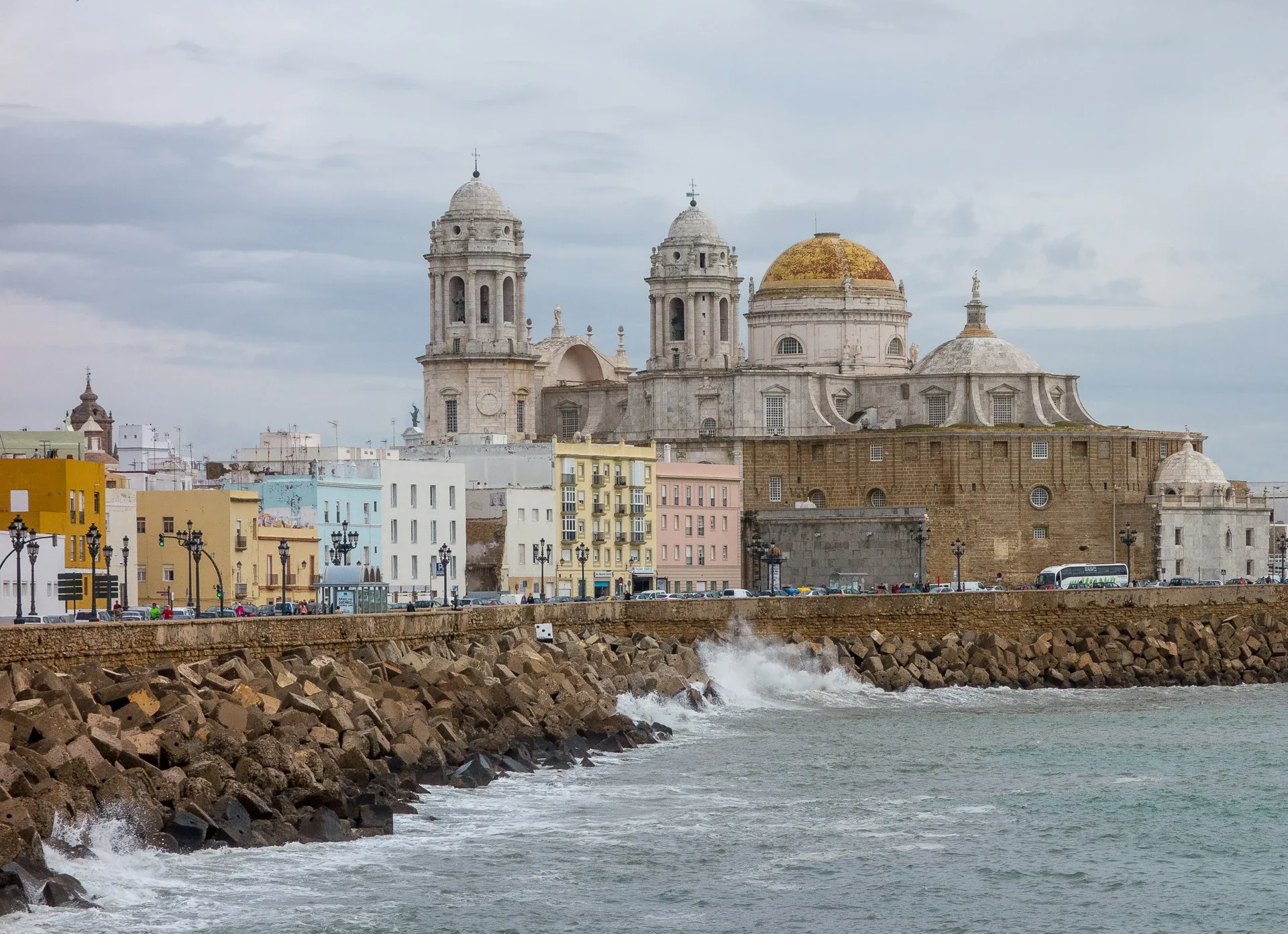
Cádiz is a good fit for a stay where you want to spend several days in a compact city, walk between sights and set aside a whole morning for the eclipse. Its position on a peninsula gives the coastline a prominent role, while the old neighborhoods offer a variety of walks. El Pópulo, La Viña, the cathedral and the area around Campo del Sur make an appealing base for the other days, without turning the trip into a road tour.
With nearly three minutes of totality, there is more time to observe than in Málaga. This difference matters if you want to watch with the naked eye throughout totality, follow the changes in light and take a few simple photographs. It is still best to plan a single photographic action rather than several adjustments. Improvising a series of settings can easily take up the entire interval you came to see.
The waterfront deserves a careful scouting visit. An open view of the ocean does not automatically mean an unobstructed view toward the morning Sun. Streets, facades and structures can block the useful direction from a spot that is otherwise pleasant for sunset. The IGN’s municipal data places the Sun in the east at maximum eclipse, at an elevation of about 37 degrees in Cádiz. Check that precise area, then verify that access to the chosen site is permitted.
For sightseeing days, schedule the most exposed walks at times that suit you in light of the heat, and alternate them with breaks or indoor visits. La Caleta, framed by its defensive structures, is a good place to explore the historic coastline. The cathedral area helps explain the city’s relationship with the sea. These tourist stops are separate from the choice of an eclipse location: none is presented here as an official viewing area.


Tarifa and the Strait
Tarifa offers a noticeably longer totality than Cádiz and Málaga, at about four and a half minutes according to municipal data. For a trip focused mainly on the eclipse, that is a major advantage. The Strait also gives the stay geographical coherence: you are in the area crossed by the shadow, where the Atlantic meets the Mediterranean. The old town and beaches make it easy to spend the surrounding days at a more relaxed pace.
Wind is part of the preparation. Turespaña specifically describes the easterly winds that affect Tarifa’s beaches. A lightweight tripod, a large sheet of filter material, or a parasol therefore needs to be set up to suit the actual conditions. Choose equipment you know how to stabilize, using the fasteners recommended by its manufacturer. A gust can shift an optical filter or make waiting on the sand uncomfortable, even under clear skies.
Your choice of accommodation should take the journey to the observation site into account. A room in an attractive setting that requires a car and uncertain parking can complicate the crucial morning. By contrast, a base close to a genuinely accessible location reduces travel. Before booking, compare the address, the site you have in mind, and the local rules that will be communicated. A beach or natural area has its own rules of use; the astronomical event does not grant any additional access.
Tarifa is our pick if you want to prioritize totality while still enjoying a coastal stay. Allow time to explore its streets and heritage outside eclipse morning. If you are considering another activity in the Strait, choose a separate date and check the service, sea conditions, and available departures. A standard excursion guarantees neither astronomical viewing nor eclipse glasses, nor a position in a suitable area at the right time.
Málaga and city sightseeing
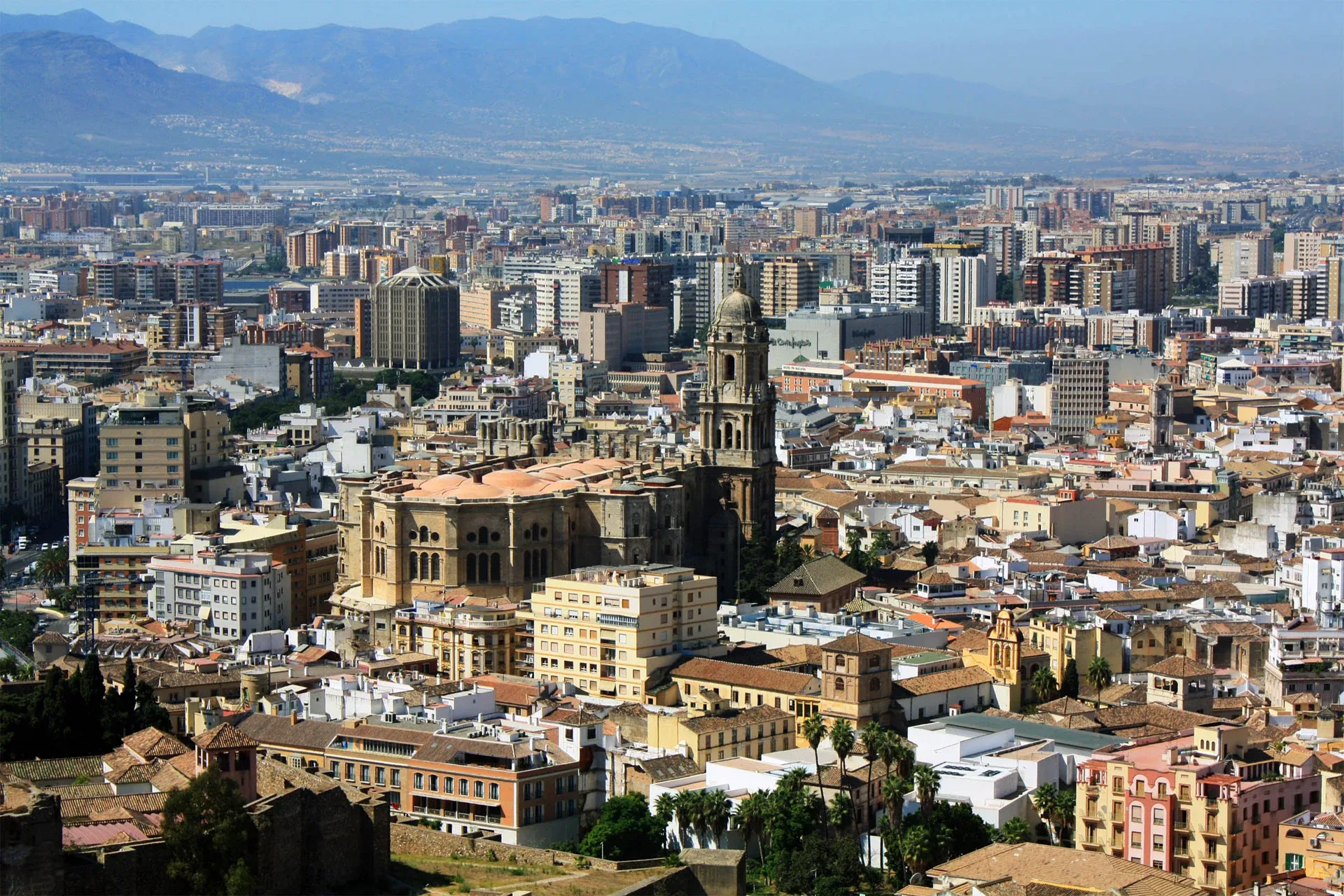
Málaga is a particularly convenient base for travelers who want to combine the eclipse with a cultural stay. The airport and María Zambrano railway station offer several arrival options, while the city center brings together many places that are easy to reach on foot. The Alcazaba, the Roman Theatre, collections related to Picasso, and the port district make it possible to plan several days without changing hotels. Check the exact connections for the dates you actually book.
Totality is shorter here: about one minute and forty-eight seconds according to the IGN summary. That is enough time to observe the event, provided you are already in place and know the safety procedures. For a first family eclipse, ease of planning may matter more than the extra duration available elsewhere. An enjoyable day also starts with a manageable journey, a comfortable wait, and the ability to return easily to your accommodation after the observation.
The urban terrain deserves a check. Gibralfaro Castle offers views over the city, but a popular hilltop attraction does not automatically become an available, open, suitable observation site on August 2. Opening hours, obstructions in the direction of the Sun, and any visitor management arrangements must be established separately. At maximum, municipal data places the Sun toward the east, at an altitude of about 39 degrees: an unobstructed view in another direction does not meet the need.
For the other days, organize your visits around your interests. The Roman Theatre and the Alcazaba create a continuous historical route; a museum adds an indoor stop; the port or Pedregalejo let you extend your exploration toward the sea. Avoid scheduling a timed-entry visit immediately after the eclipse ends. A slow return, a meal, or simply needing a break can shift the rest of the day’s plans.
The market and tapas
Another morning in Málaga can be devoted to the city’s flavors. The market and tapas tour we have selected combines tastings, stops at local businesses, and a culinary introduction to the city center. The current itinerary includes churros, coffee, market produce, olive oil, and tapas. Its value lies in giving you useful pointers for later meals, with explanations rather than just a string of restaurant recommendations.
The verified listing states that the tour lasts three hours, is shared with a group of no more than eight travelers, and is led by an English-speaking guide. Choose it with that language requirement in mind, even if you can view the booking page in French. Tell the provider about any allergies or dietary needs before booking and get a response that addresses your situation. Confirm the tastings and any adaptations with the provider for the option you select.
Schedule this tour for a day other than the morning of August 2, on a date actually offered in the calendar. It can enrich a stay based in Málaga; it includes no eclipse-viewing arrangements. Current prices, ratings, and commercial information appear on the card linked to the offer. Check availability for a time slot during your stay when you make the booking.

Viator
Market and tapas in Málaga with an English-speaking guide
To discover Málaga’s local produce on another morning of your stay, allow three hours, expect an English-speaking guide, and choose a date actually offered outside eclipse morning.
- 3 hours
- 5/5 (37 reviews)
A culinary discovery of central Málaga, including a market and tastings, to be scheduled for a morning other than eclipse morning.
Cancellation policy
For a full refund, cancel at least 24 hours before the scheduled departure date.
From €58.90
View activityCeuta and Melilla
Ceuta has the longest totality among the Spanish cities highlighted by the IGN, at 4 min 48 s. Its Royal Walls and bay also offer plenty to explore during a visit. This option suits travelers prepared to plan their arrival and spend several nights there. To make the most of the extra time, the key is to be settled in the city already and to have identified an accessible location before eclipse morning.
Melilla also offers more than four and a half minutes. It is a distinct trip, with its own access arrangements and accommodation. Compare arrival options, ticket conditions, and the full cost before choosing between these destinations. Required documents depend on your nationality and itinerary; check with the relevant authorities and transport operators. This guide does not assume that any connection or crossing time is guaranteed.
For a first short trip, Cádiz, Tarifa, or Málaga often require fewer decisions if they already fit your itinerary. Ceuta and Melilla are most appealing when you want to devote the trip to them. The best astronomical choice on paper still has to work with the journey that is actually possible, your budget, and the conditions of your stay. Longer totality is worth choosing only if you can organize your trip to make the most of it.
The observation site
Start by locating the site within the path of totality, then check the terrain. A small-scale map helps you choose a region; the official viewer lets you examine the municipality and area more precisely. Near an edge, do not rely only on the location of your hotel or the city center. A terrace, parking lot, or beach must be assessed at its actual position, with a reasonable margin inside the path.
An unobstructed view to the east is a key criterion for the locations discussed here. Look for buildings, trees, terrain, or structures that could block the Sun at the relevant time. Visiting the site on a previous morning helps you understand its orientation and obstacles. The Sun will not be in exactly the same position each day: this visit helps you assess the location, while the astronomical data determine the circumstances on August 2.
Comfort while waiting matters too. A place where you can wait safely, without obstructing traffic or occupying an emergency access route, is better than a roadside shoulder chosen at the last minute. Locate water, restrooms, shaded areas for breaks, and the route back. If someone has difficulty walking, check the ground surface, slope, and distance from the drop-off point. Calling a city “accessible” does not describe every site.
Municipal information and civil protection guidance should supplement this site check as the date approaches. If a managed zone is announced, examine its access, capacity, and any reservation requirements. We do not assume that any official site or local event will exist. An accommodation booking, guided tour, or monument ticket includes an observation site only if that service is explicitly described.
Weather and travel
The astronomical calendar is known; the sky on August 2, 2027, is not. Weather planning therefore has two stages: first choose a sensible base, then check the official forecasts in the days beforehand. A place that is usually sunny is no guarantee of cloud-free skies at the moment of totality. Wind, heat, and visibility also matter for comfort and safety while you wait.
A useful backup plan must be realistic. Identify a second authorized location in advance, also within the path, that your group could reach without an unreasonable journey. Check the route, parking, and obstructions just as you would for the first location. A destination marked on a map but with no practical way to get there is not an operational backup. Any decision to move must leave enough time to arrive and get settled, while allowing you to abandon the plan calmly if road conditions make it necessary.
We recommend arriving at your chosen base before eclipse day and avoiding a change of accommodation that morning. This gives you leeway to absorb transport delays and get to know the area. If driving, use only authorized parking and plan your return so you do not have to leave immediately after totality. An overly tight schedule can force you to cut short the partial phases or make travel decisions in a rush.
Travelers without a car can plan their stay around accommodation and an observing site connected on foot or by confirmed transport. The 2027 timetables, any extra services, and restrictions will need to be checked once they are published. For August 2, a simple, reliable journey matters more than the number of places you visit. Save longer excursions for another day, with their own reservations and schedules.
Glasses and equipment
During the partial phases, NASA calls for protection specifically designed for solar viewing. Ordinary sunglasses, even very dark ones, are not suitable. Eclipse glasses or viewers must meet ISO 12312-2 and be in good condition. Buy from a reliable supplier, check the product information, and inspect the filters before use. Discard any filter that is scratched, torn, or damaged.
Put on the glasses before looking at the Sun. To take a break, look away first, then remove them. Children must be supervised and wear equipment that fits securely over their eyes. One indirect option is pinhole projection: view the projected image on a surface with your back to the Sun. Never look at the Sun through the hole. This method also lets you follow the changing shape of the disk during the partial phases.
You may remove your protection only during complete totality, when the Sun’s bright face is entirely obscured, and only from a location actually within the path. Put it back on as soon as sunlight reappears. Outside totality, protection must remain on at all times. If you cannot confidently identify the start and end of this interval, stick to a protected or indirect viewing method and follow guidance from someone qualified.
Binoculars, telescopes, and cameras require suitable solar filters attached in front of the optics. Eclipse glasses worn behind an instrument do not protect you from concentrated light: NASA warns that this poses a risk of serious injury. Have your setup checked by a qualified person and practise using it before the trip. For a first eclipse, simple, safe viewing may be preferable to equipment you are using for the first time on site.
Photography and children
A simple photography plan leaves more time for observing. Before you leave, decide whether you mainly want to capture the landscape and atmosphere, or photograph the Sun with suitable equipment. The first goal requires less handling. For the second, filtering, mounting, aiming, and settings all need to be mastered beforehand. Pointing a phone at the event does not make its user a protected observer; the same eye-safety rules still apply.
Plan the morning for children, too. Explain the sequence of phases with pictures, try on the glasses, and agree on a clear rule: look at the Sun only with the designated protection and under an adult’s supervision. Divide up responsibilities if another adult wants to take photographs. During a brief totality, one person cannot supervise several children, manage an instrument, and follow every change in the sky with the same level of attention.
The wait will be easier with breaks in the shade, water, a snack, and somewhere to sit if the site allows it. Remember a hat, suitable clothing, and skin protection. A young child may tire before the central moment; choosing a spot near your accommodation or a cool shelter makes things easier to manage. Finally, keep the rest of the day light so the success of the trip does not depend on how much energy you have left after midday.
Four days around the eclipse
For a four-day stay, we suggest spending at least two nights at your base before the decisive morning, if your dates allow. Use the first day to reach your base and explore the immediate surroundings. The next day is for checking out the site, testing your equipment, and taking one main outing. Keep August 2 for observing, with a flexible afternoon. The final day can accommodate a pre-booked activity, a walk, or your return journey. This is a suggested way to organize your trip, not an official itinerary.
In Cádiz, take an initial stroll around El Pópulo and the cathedral, then another toward La Viña and La Caleta, depending on your interests. In Tarifa, focus on the old town and coastal outings suited to the wind and your abilities. In Málaga, spread out heritage sites, museums, and food experiences across separate time slots. A market visit and tapas fit on another morning when you are genuinely free to book.
Your budget should distinguish between arrival transport, accommodation, local travel, meals, solar-viewing equipment, and optional visits. Compare the final cost for your whole group, including luggage, parking, or transfers if needed. Read the cancellation terms for hotels and transport carefully: they may not match those of an activity. No undated average price can honestly provide a precise estimate for a midsummer stay like this.
Before confirming, check three things together: a room for the right dates, a realistic way to reach the observing site, and the possibility of enjoying the stay even under cloudy skies. You cannot book the event like a seat at a show. A trip built around places that interest you still makes sense, while leaving the morning of August 2 the time and attention it requires.
FAQ
When will the next total solar eclipse in Spain take place after August 2026?
The next one will take place on the morning of August 2, 2027. Totality will cover the Strait of Gibraltar area, part of southern Andalusia, Ceuta, and Melilla. It will follow a different path from the one on August 12, 2026. Check the location on the IGN’s 2027 map rather than reusing a destination recommended for the previous year.
What is the difference between Cádiz, Tarifa, and Málaga?
Cádiz combines a compact historic center with nearly three minutes of totality. Tarifa offers about four and a half minutes in a coastal setting where wind is an important part of planning. Málaga offers a cultural stay and a variety of arrival options, with a shorter totality of around 1 min 48 s. In all three bases, an accessible site with an unobstructed view remains essential.
Can you see totality from Seville or Madrid?
These cities are not within the path of totality on August 2, 2027. The eclipse will be partial there, with the Sun substantially obscured, but there will be no period of totality. Suitable solar protection will be necessary throughout the entire viewing period. To see the disk completely obscured, choose a location within the official path, then check its exact position and access conditions.
Is Iceland still a destination for this eclipse?
Iceland is not a destination for totality on August 2, 2027. The island’s west was on the path of August 12, 2026, which has already passed. For the next trip described here, the suggested bases are in southern Spain. Keep the two events distinct when checking bookings, maps, and schedules.
Are glasses necessary throughout the entire morning?
They are necessary when looking directly at the partial phases. You may remove them only during complete totality, from a location within the path, and must put them back on as soon as sunlight reappears. Outside totality, they are essential at all times. Optical instruments require their own solar filters placed in front of the objective; eclipse glasses are not a substitute.
Do you need a car for this trip?
A car can help you reach a chosen site outside the city centre, but it is not essential if your accommodation lets you walk to a suitable, authorized location. Check the actual route, the ground conditions and the return journey before booking. For public transport, use timetables confirmed for your dates and allow extra time; a regular tourist service is not a special transfer for the eclipse.
Does the tapas tour in Málaga include eclipse viewing?
No. The listed product is a three-hour culinary experience with an English-speaking guide, tastings and a shared group of up to eight participants, according to the verified listing. It can be booked for another morning when it is actually offered. It does not provide an eclipse viewing spot, glasses or transport to the eclipse. Its current prices and commercial information are grouped in the offer card.
What should you do if the sky is cloudy?
Check official forecasts as August 2 approaches and consider only a backup plan that is prepared, authorized and reachable early enough. A rushed journey could mean missing the eclipse without improving viewing conditions. If the sky remains cloudy, stick to your planned itinerary: heritage in Cádiz, the coast in Tarifa or cultural visits in Málaga. Cloud cover can prevent you from seeing the Sun even within the path of totality.
Sources and checks
Plan your visits and check current conditions.
- Total eclipse on August 2, 2027 ↗
Instituto Geográfico Nacional · Accessed October 31, 2026
What this source supports
Date, path of totality, circumstances for each municipality, direction and altitude of the Sun; timings to the minute in the text. Málaga: about 1 min 48 sec according to the IGN summary.
- Path of the August 12, 2026 eclipse ↗
Instituto Geográfico Nacional · Accessed October 31, 2026
What this source supports
Previous path across western Iceland and northern Spain; do not carry it over to 2027.
- Path of the Total Solar Eclipse of 2027 Aug 02 ↗
NASA GSFC / Fred Espenak · Accessed October 31, 2026
What this source supports
2027 path, UTC times, distinction between the central line duration and local circumstances.
- Eclipse Viewing Safety ↗
NASA · Accessed October 31, 2026
What this source supports
ISO 12312-2 filters, partial phases and full totality, supervision of children, indirect projection, filters in front of optical instruments.
- Eclipses visible in Spain ↗
Turespaña · Accessed October 31, 2026
What this source supports
Confirmation of the morning of August 2, 2027, and the territories concerned.
- Cádiz — tourist information ↗
Turespaña · Accessed October 31, 2026
What this source supports
El Pópulo and La Viña neighborhoods, cathedral, Campo del Sur, La Caleta and the peninsula.
- Tarifa — tourist information ↗
Turespaña · Accessed October 31, 2026
What this source supports
The Strait, old town, beaches and easterly winds.
- Málaga — tourist information ↗
Turespaña · Accessed October 31, 2026
What this source supports
Access via the airport and María Zambrano train station; city center, Alcazaba, Roman theater, Picasso, Atarazanas, port and Pedregalejo.
- Ceuta — tourist information ↗
Turespaña · Accessed October 31, 2026
What this source supports
Bay and Royal Walls.
- Market and tapas in Málaga — product 189885P5 ↗
Viator Partner API · Accessed October 31, 2026
What this source supports
ACTIVE product, 180 minutes, English-speaking guide, shared group of up to eight and tastings. An activity separate from the eclipse, with no guaranteed 2027 time slot.
Viator — activity pages
Source for the activity information below.Affiliate links: Odyvero may earn a commission when you book through this article’s buttons.
- Market and tapas in Málaga with an English-speaking guide ↗
Accessed November 1, 2026


