 odyvero
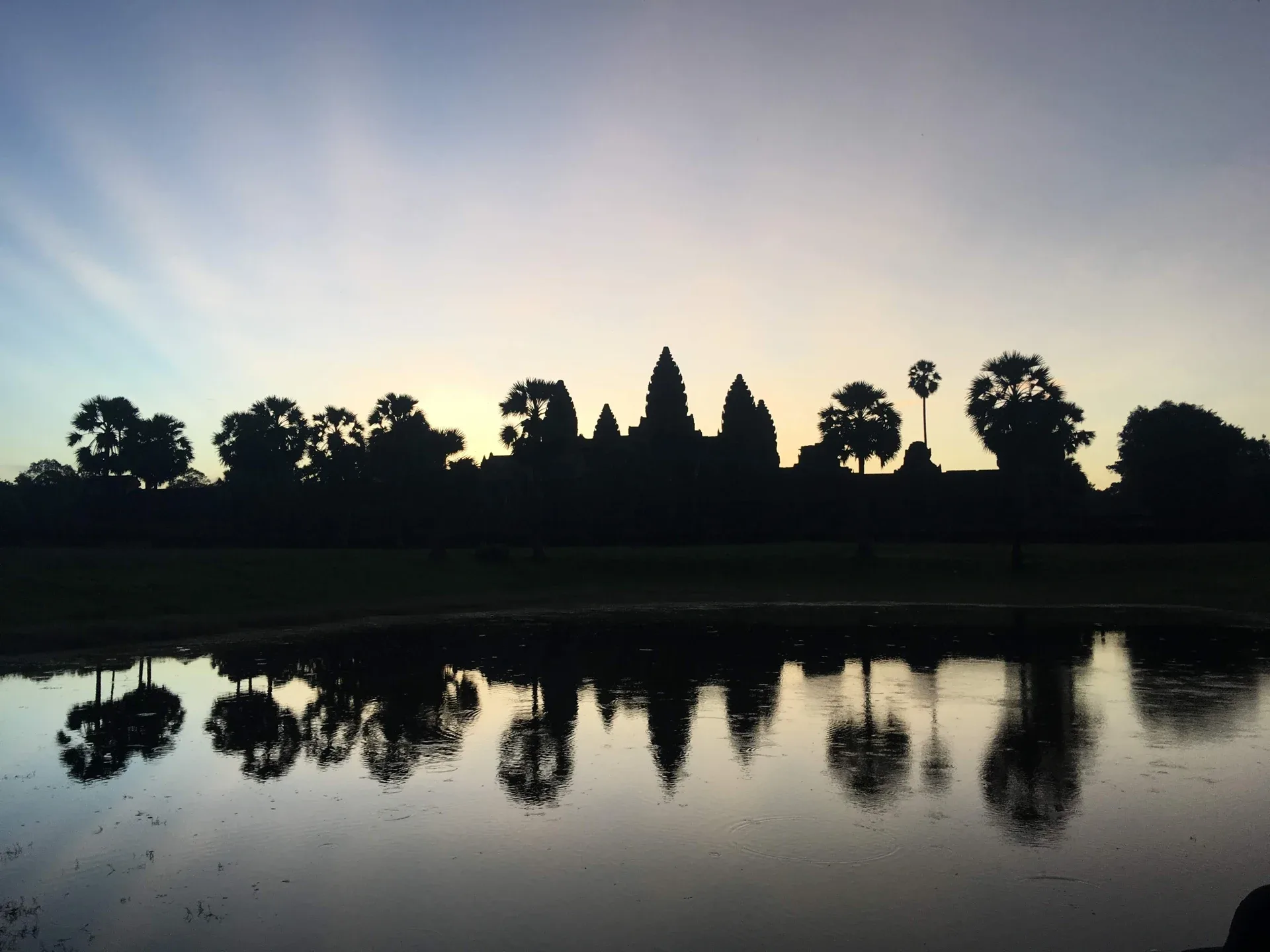
To photograph Angkor Wat’s towers in silhouette, choose sunrise. To see the details of its western façade, opt for an afternoon visit; to watch the sun sink over the Angkor landscape, consider Phnom Bakheng hill instead. The same pass grants access to the temples concerned: your choice is mainly about the number of days, transportation, and guidance. Here’s how to plan these moments without turning your stay in Siem Reap into one endless day of sightseeing.
Two kinds of light, several viewpoints
By Angkor Wat’s reflecting pools, morning first reveals a shape: the towers and palm trees stand out against the brightening sky. The photographic appeal comes from this silhouette and its reflection, when conditions allow. The sun does not appear directly above the central tower every morning. This composition depends on the time of year and your position; an ordinary sunrise is still worthwhile without this particular alignment.
The afternoon offers something different. Angkor Wat faces west, an orientation noted by APSARA, the authority that manages the site. From the western approach, the sun sets behind you and may illuminate the stone. This is the time to choose if you want to observe the façade and focus on architectural details rather than simply wait for a solar disc. Cloud cover then determines the actual quality of the light.
Sunset from Phnom Bakheng offers yet another landscape. You climb a hill, then look beyond the temple terraces toward the forest and the West Baray. Angkor Wat can also be seen from the summit’s eastern side, in the distance. So choose which way to look: the towers lit by the evening and the setting sun do not automatically make up the same photograph.
For a first visit, we prefer sunrise followed by a proper visit to Angkor Wat, with a late-afternoon visit on another day if your stay allows. If the night-time departure already sounds exhausting, a well-planned daytime visit is still an excellent choice. The galleries, courtyards, and sculpted scenes deserve attention whatever the color of the sky.
The official Angkor pass
Angkor Enterprise lists three pass durations for the park: one day for US dollars 37, three days usable within a seven-day period for $62, and seven days within a thirty-day period for $72. These prices cover access; the driver, guide, meals, and the Viator booking are separate costs. Sunrise is not a distinct official ticket category in this price list.
The one-day pass suits a single visit to Angkor Wat and several nearby temples. You can plan the day around morning or afternoon, depending on the monuments’ opening hours. If you want to return for a second day, consider the three-day pass when you first book. Its flexibility is also useful: visiting days can be spread across its validity period, with a break in Siem Reap between outings.
The seven-day pass is for those who want to explore the temples more extensively. Its price, close to that of the three-day pass, is not by itself a reason to make each day longer. Consider the time you actually have, your interest in architecture, and the travel involved. Several shorter mornings may be more rewarding than a circuit where you visit each temple while watching the time until the next departure.
The official ticketing site links to ticket.angkorenterprise.gov.kh for purchases. Prepare your pass before an early-morning outing and keep it accessible for checks, with a copy available offline. Follow the information requested by the portal at the time of purchase. An excursion with “Angkor Wat” in its title may exclude the admission fee: check this separately from the price of the guided tour.
Planning a dawn departure
Your wake-up time depends on your hotel, the date and the service. Among the tours reviewed, some pickup instructions are for around 4:30 a.m.; the time to follow is the one confirmed by your operator. A sunrise time found in an old travel account is not enough to set your meeting time. Allow for the transfer, check-in and walk from where the vehicle drops you off to the viewing spot.
The night before, gather your pass, charged phone, flashlight and water. Ask your hotel how to get a takeaway breakfast if you want one. Meals are not included by default in the selected tours, and a breakfast option may be a separate paid add-on. Preparing ahead means you won’t have to look for food when you should already be heading to the temple.
On site, the area around the pond draws visitors looking for reflections of the towers. A spot slightly off to the side may give you a more pleasing composition than a front-row place gained by waiting a long time in a crowd. Keep paths clear, watch your footing and keep your equipment close. Your chosen photograph depends as much on the foreground, palm trees and water as on whether the sun actually appears.
After dawn, set aside time for the monument. APSARA gives a rough estimate of two to three hours to visit Angkor Wat. Its galleries depict, among other scenes, the Battle of Kurukshetra and the Churning of the Sea of Milk; a guide can help you identify the figures and connect the scenes. Exploring the reliefs adds depth to the morning, especially if the sky has stayed overcast.
Bakan, the upper level, has its own schedule. The official listing distinguishes it from general opening hours and notes closures on holy days. So arriving at the site early in the morning does not mean you can immediately climb to the top. A carefully planned itinerary can fit in the galleries and courtyards before this section, subject to instructions given on site.
Evening at Phnom Bakheng
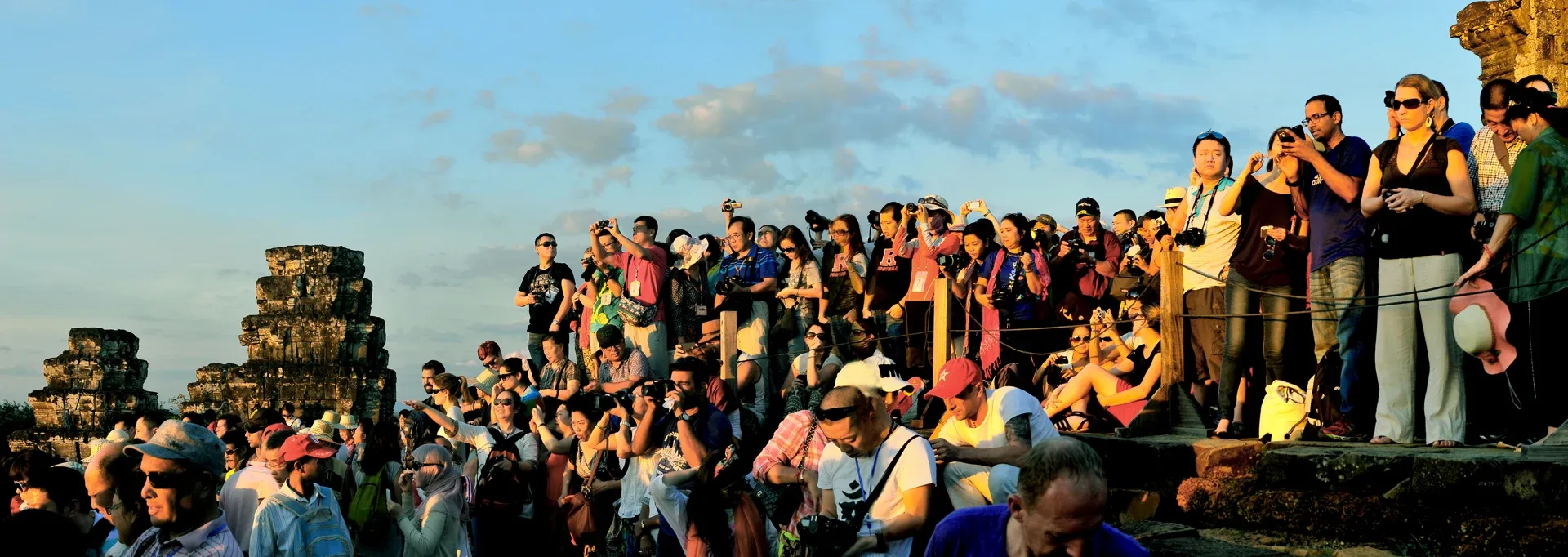
Phnom Bakheng is worth visiting for its location as much as its architecture. This temple, built at the top of a hill, was the symbolic center of an ancient capital. From its heights, you can look out over the Angkor landscape. The contrast with Angkor Wat’s ponds is striking: here, you see a stretch of forest and distant horizons, with other visitors gathered on the terraces.
Plan to arrive with enough time to climb at a relaxed pace and reach the permitted areas before the end of the day. The stairs, pathways and any crowd-management measures are all part of the visit. Arriving at the foot of the hill at the exact time of sunset leaves too little margin. For the descent, a small flashlight and shoes that stay securely on your feet are useful; also agree on a meeting point with your driver.
Official hours should be read monument by monument. APSARA’s Angkor Wat listing shows 5 a.m.–5:30 p.m.; the Phnom Bakheng listing gives 5 a.m.–7 p.m. The ticketing page also shows a generic park time slot. When planning your route, use the listing for the site you are visiting, then have staff or your guide confirm the current instructions. These published hours do not guarantee that you can enter the summit right up to closing time.
APSARA specifies that the summit of Phnom Bakheng is not accessible to children under twelve or to pregnant women, for safety reasons. This rule affects what families should choose. An afternoon visit to Angkor Wat may be a better fit, with a route adapted to the people in your group. You can still enjoy the evening light without planning a climb.


Three guided options to compare
The three tours below depart from Siem Reap and offer three ways to organize your stay: share transport, have private guidance for a day, or spread the temples over two days. The listings reviewed exclude the Angkor pass. Prices, ratings and review counts are shown on the cards from the central catalog; final booking depends on the date, number of travelers and option selected.
The small-group minibus tour
This tour offers a group visit with an air-conditioned minibus, an English-speaking guide and hotel pickup. The advertised duration is between eight and nine hours. The listing includes Angkor Wat, Ta Prohm, Ta Keo and Bayon, in Angkor Thom. The current offer mentions options around sunrise or sunset: choose the departure that matches your plans rather than inferring the schedule from the product name alone.
This option is a good fit if you want to visit several temples with the arrangements already taken care of. Shared transport simplifies travel between sites, and the commentary connects monuments from different periods and with different forms. Meals are still your responsibility, as is the pass. Check the advertised return time before booking a restaurant or another departure for the same day.

Viator
Angkor in a small group: sunrise or sunset
For visits to the main temples with shared transport and an English-speaking guide: explicitly select the sunrise or sunset option before booking.
- 8–9 hours
- 5/5 (4,615 reviews)
Transport in an air-conditioned minibus, English-speaking guide and hotel transfers; pass and meals excluded.
Cancellation policy
For a full refund, cancel at least 24 hours before the scheduled departure date.
From $13.00
View activityThe private sunrise tour
This option provides a seven-hour private tour with an English-speaking guide, hotel transfers and water. The itinerary combines sunrise at Angkor Wat with a visit to the monument, Angkor Thom and Ta Prohm. You can experience dawn with a dedicated guide, then continue the tour without changing groups.
We recommend it for travelers who want to ask questions and discuss how much time to spend at each stop with their guide. The listing distinguishes options that include meals: don’t assume breakfast is included in the basic package. Check the option you choose, the transport arrangements and pickup from your hotel. The park pass is paid separately.

Viator
Angkor at dawn with a private guide
For sunrise and the rest of the morning at the temples with a dedicated English-speaking guide; select a meal option if you want breakfast.
- 7 hours
- 5/5 (90 reviews)
Private day tour with an English-speaking guide and hotel transfers; pass excluded, meals depend on the option.
Cancellation policy
For a full refund, cancel at least 24 hours before the scheduled departure date.
From $30.00
View activityTwo days among the temples
This tour combines a two-day private visit, an English-speaking guide and an air-conditioned vehicle. The itinerary includes Angkor Wat, several temples in the park and Banteay Srei, with sunrise and sunset outings. Meals and the pass are excluded. The two-day duration refers to the program spread across those days; overnight stays and free time need to be arranged separately.
This option makes sense if you want to compare several architectural ensembles without cramming all the highlights into a single outing. Confirm the daily schedule and the exact sunset location: the general name of the tour does not mean that sunset necessarily takes place at Phnom Bakheng. For entry to the temples over two days, consider the three-day pass while preparing your budget.

Viator
Angkor and Banteay Srei on a two-day private tour
To spread Angkor and Banteay Srei over two days in a private, air-conditioned vehicle; confirm the planned sunset location and arrange the appropriate pass.
- 2 days
- 5/5 (55 reviews)
Two days of private tours with an English-speaking guide and an air-conditioned vehicle; pass and meals excluded.
Cancellation policy
For a full refund, cancel at least 24 hours before the scheduled departure date.
From $125.00
View activityA stay of one to three days
If you have only one day for temples, start by choosing your priority. For sunrise, you can plan to visit Angkor Wat and explore it in depth, have a meal, then choose a reasonable selection of nearby monuments. Angkor Thom is home to Bayon, at the heart of the ancient capital; Ta Prohm offers a different perspective on the site, with its structures and trees. Your itinerary should leave time to walk, look around and rest.
If you prefer the afternoon, plan to visit Angkor Wat early enough to explore the galleries before they close. The light on the facade then becomes part of the visit, rather than a wait that takes the place of the monument. Adding Phnom Bakheng means allowing time for a transfer and climb, as well as checking that the schedules work. Ask your driver to confirm the sequence; you could also reserve the entire end of the day for one site.
With two days, the schedule becomes more relaxed: one morning with sunrise at Angkor Wat, then another day paced around an evening viewpoint. This is our preferred plan for those who care about photography. You get more chances to find interesting light without having to be out every day from before dawn until night.
A third day can include additional temples or make the first two days less demanding. Plan the transfers with your driver instead of piling place names onto a map. English is the advertised guide language for all three selected tours. If French commentary is essential, look for an option that explicitly offers it and have the service confirmed before payment.
On-site conditions
The weather mainly calls for keeping your itinerary flexible. A layer of clouds can hide the sunrise or sunset; it does not prevent you from visiting the courtyards and galleries. For a stay in late October or November, check the local forecast as your outing approaches and bring rain protection. No service can guarantee the color of the sky shown in its promotional photograph.
Equinox announcements also require checking the year. APSARA had announced an observation window from September 21 to 23, 2026, which has now passed as of the date of this guide. This specific event is neither a permanent sunrise schedule nor a calendar for a future edition. For a future trip focused on the solar alignment, wait for information from the relevant authority and plan for crowds appropriate to the event.
Angkor remains a place of worship. Wear clothing appropriate for temples, covering your shoulders and knees, and respect worshippers. The code of conduct specifically asks visitors not to touch or climb the monuments and to take their rubbish with them. Follow the open routes: an ancient stone or a passage that happens to be accessible does not constitute permission to climb for a particular photo composition.
Fatigue comes from the combined effects of heat, walking and stairs. Keep water and sun protection on hand, and schedule breaks. With children or someone with limited mobility, prioritize a selection of sites that can be explored at a comfortable pace, with rest periods. Restrictions at the Bakan and the summit of Phnom Bakheng should be built into your itinerary before you set out; a private vehicle makes travel easier but does not eliminate walking inside the temples.
FAQ
Do you need a special ticket for sunrise at Angkor Wat?
Angkor Enterprise’s official ticket schedule offers passes by number of days, with no separate category for sunrise. You need a pass that covers your visit and must observe the monument’s opening hours. A dawn excursion separately sells its organization, transport and guide services; check what is included to see whether admission is covered.
Does the same pass cover both morning and evening visits?
The pass provides access to visits during its validity period, subject to the inspection rules and opening hours for each monument. You do not need to buy two categories of pass because you want to see both sunrise and late afternoon. If those visits take place on two different days, choose a duration that covers both, such as the three-day pass within its seven-day window.
Which viewpoint should you choose for sunset?
Phnom Bakheng is a good choice for an elevated panorama of the Angkor landscape and the West Baray. An afternoon visit to Angkor Wat is better suited to those who want to see its western façade in the light. The former involves a climb and access rules for the summit; the latter lets you spend time at the monument before it closes.
Can you climb to the Bakan as soon as it opens?
APSARA indicates that the Bakan opens later than Angkor Wat: its listing shows 7:40 a.m.–5 p.m., with closure on holy days. Plan to visit the temple’s other areas before climbing and confirm the day’s instructions. The authority specifically excludes children under twelve and pregnant women from access to the upper level.
Does the three-day pass require consecutive days?
Angkor Enterprise presents three days of visits that can be used within a seven-day period. You can therefore take a break between outings within that window. Check the dates printed at the time of purchase and use the same pass at each inspection; this flexibility is useful for alternating temples, rest and exploring Siem Reap.
Do excursions include the temple ticket?
The three products selected for this comparison do not include the Angkor pass. Their prices cover the services listed, such as the guide, vehicle and transfers, depending on the option selected. Add the admission fee and any excluded meals separately when comparing budgets. The cards show the key commercial details; the booking page specifies the package actually purchased.
Are the recommended tours available in French?
The three offers presented list an English-speaking guide in the information consulted. A product listing displayed in French describes the service in your reading language; the commentary language is selected according to the product’s terms. For a guided tour in French, book a package that explicitly states this and confirm it for your date.
Is sunrise worth the trip in cloudy weather?
An overcast sky can hide the sun and soften the colorful reflections. You can still visit Angkor Wat, subject to the day’s hours and conditions, and explore its galleries and courtyards. If photography is your priority, spending several days on site gives you more flexibility to choose a favorable morning or afternoon.
Sources and checks
Plan your visits and check current conditions.
- Official Angkor passes and prices ↗
Angkor Enterprise · Accessed October 31, 2026
What this source supports
1-day pass USD 37; 3 days within 7 days USD 62; 7 days within 30 days USD 72. Linked official sales portal; no purchase or availability check.
- Angkor Wat: Architecture and opening hours ↗
APSARA National Authority · Accessed October 31, 2026
What this source supports
Current official listing, consulted via the official WordPress API posts?slug=angkor-wat: west-facing orientation, 12th century, Vishnu followed by Buddhism, galleries and bas-reliefs; published hours 5 a.m.–5:30 p.m., Bakan 7:40 a.m.–5 p.m. and on holy days, restrictions on climbing. Confirm hours locally.
- Phnom Bakheng: Site and access ↗
APSARA National Authority · Accessed October 31, 2026
What this source supports
Consulted via the official API posts?slug=phnom-bakheng: hilltop panorama and West Baray, listing hours 5 a.m.–7 p.m.; summit prohibited to children under 12 and pregnant women. This does not guarantee last admission.
- Angkor Wat viewed from Phnom Bakheng ↗
APSARA National Authority · Accessed October 31, 2026
What this source supports
September 14, 2026 news item read via the official API posts/69392: view toward Angkor Wat from the eastern side, evening light, and forest.
- The Angkor Code of Conduct ↗
APSARA National Authority · Accessed October 31, 2026
What this source supports
Official page read via pages/5446: sacred site, appropriate clothing, respect for worshippers, no touching or climbing monuments, and no littering.
- Angkor Thom and the Bayon ↗
APSARA National Authority · Accessed October 31, 2026
What this source supports
Official page read via posts/1619: capital of Jayavarman VII, Bayon at the center, opening hours specific to each monument.
- September 2026 Equinox: Past Announcement ↗
APSARA National Authority · Accessed October 31, 2026
What this source supports
Announcement dated September 19, 2026, read via posts/69459: window of September 21–23, 2026. Past event; no permanent schedule or 2027 calendar inferred.
- Angkor at dawn with a private guide ↗
Viator / operator · Accessed October 31, 2026
What this source supports
Private day tour with an English-speaking guide and hotel transfers; pass excluded, meals depend on the option selected. Actual product retrieved via GET, status ACTIVE; Odyvero affiliate links received in productUrl. Duration, SUPPLIER_PROVIDED image, and reviews hydrated in the central catalog. Price shown with the currency actually returned; no date-specific availability guaranteed.
- Angkor and Banteay Srei in Two Private Days ↗
Viator / operator · Accessed October 31, 2026
What this source supports
Two days of private sightseeing with an English-speaking guide and air-conditioned vehicle; pass and meals excluded. Actual product retrieved via GET, status ACTIVE; Odyvero affiliate links received in productUrl. Duration, SUPPLIER_PROVIDED image, and reviews hydrated in the central catalog. Price shown with the currency actually returned; no date-specific availability guaranteed.
- Angkor in a small group: sunrise or sunset ↗
Viator / operator · Accessed October 31, 2026
What this source supports
Transportation by air-conditioned minibus, English-speaking guide, and hotel transfers; pass and meals excluded. Actual product retrieved via GET, status ACTIVE; Odyvero affiliate links received in productUrl. Duration, SUPPLIER_PROVIDED image, and reviews hydrated in the central catalog. Price shown with the currency actually returned; no date-specific availability guaranteed.
Viator — activity pages
Source for the activity information below.Affiliate links: Odyvero may earn a commission when you book through this article’s buttons.
- Angkor at dawn with a private guide ↗
Accessed October 31, 2026
- Angkor and Banteay Srei on a two-day private tour ↗
Accessed October 31, 2026
- Angkor in a small group: sunrise or sunset ↗
Accessed October 31, 2026


