 odyvero
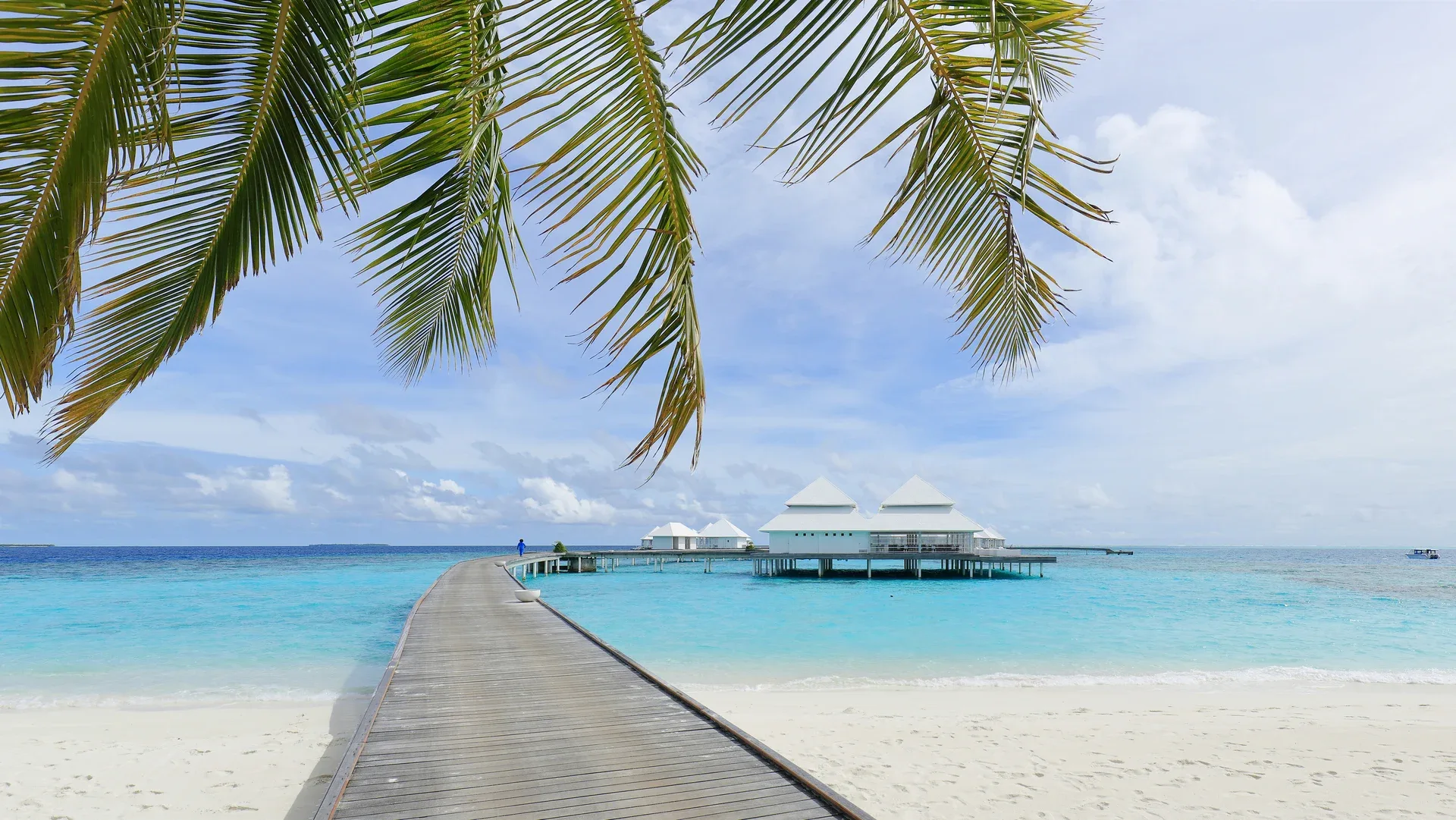
A resort island suits travellers who want to spend their time between their room, the beach and the resort’s services. A guesthouse on an inhabited island offers more freedom to choose meals, outings and accommodation, while requiring you to respect local rules. To compare the two, look at the full cost of seven nights, transfers and your daily access to the sea. Here are the differences that matter before you book.
Two different day-to-day experiences in the same archipelago
On a resort island, your stay is organized mainly within the property. You can go to the beach, restaurants, dive centre or leisure facilities, depending on what is available. You can arrange many of the details before departure: room type, board, transfer and priority activities. This option particularly suits travellers who want to settle in and minimize day-to-day planning.
On an inhabited island, you stay in a village or small town. Your accommodation shares its surroundings with homes, shops, places of worship and jetties. You can go out for meals, buy a few provisions and book excursions with different providers. The experience depends greatly on the location: a room near the harbour, another overlooking a beach, and a hotel with a pool all make for different days.
The term “guesthouse” also covers a wide range of places. Visit Maldives’ directory includes both small properties and establishments with hotel-style services. In Maafushi, Kaani offers several properties, including Palm Beach with a rooftop pool and Village & Spa, arranged around a courtyard. Choosing an inhabited island does not mean you have to settle for basic accommodation. Compare the room and its actual surroundings, not just its commercial category.
For a first week, choose a resort island if your main priorities are an accessible beach, services in one place and minimal travel. Choose an inhabited island if you enjoy walking around the village and picking meals as you go. Either way, check swimming access and the underwater environment separately: a beautiful view from the balcony does not tell you how easy it is to reach the water.
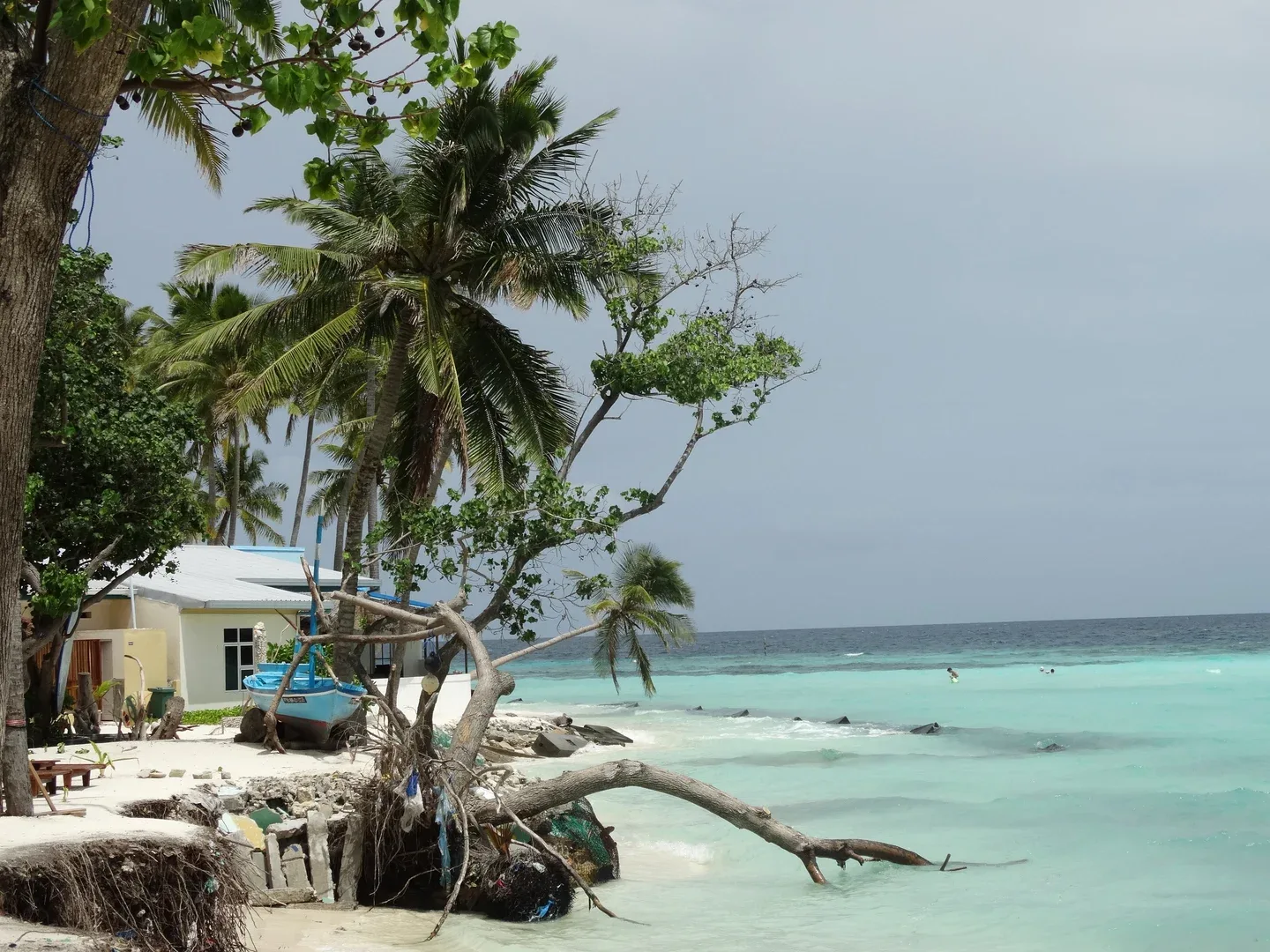


The total cost of seven nights
Start the comparison with two quotes for the same travellers and dates. List the seven nights, taxes, any stated service charges, round-trip transfers and meals you will still need to pay for. Add drinks, essential outings and any nights near the airport. International flights can stay on a shared line if the route is the same; their schedules must still work with each accommodation.
A room sold with breakfast still leaves two meals a day to cover. Full board includes meals as defined by the property. For an all-inclusive package, check which restaurants you can use, which drinks are covered, the hours and the activities included. A boat trip, treatment or some facilities may cost extra. The booking document shows what you can actually use without additional payment.
Soneva’s conditions illustrate why this matters: unless stated otherwise, rates are quoted in US dollars excluding taxes and fees, while meals, drinks and extras depend on the confirmation. This is a useful example of how to read a resort booking; no single rate represents all resort islands. On an inhabited island, too, an attractive offer may leave transport and some expenses to be paid locally.
If travelling alone, ask for the price of the entire room and the price of excursions that accept solo travellers. For a family, confirm permitted occupancy, bedding and the age categories used for meals and transfers. A child counted as an adult for one service can change the total. Finally, keep a reserve for a boat change or an extra night: it should remain available after the main bookings are paid for.
Local taxes and surcharges
The environmental tax deserves a separate line in the quote. Kaani’s published terms show that the same inhabited island can include accommodations charging different amounts: US$6 per person per night at Kaani Beach Hotel and Kaani Village & Spa, compared with US$12 at Kaani Palm Beach and Kaani Grand Seaview. Children under two are exempt under these terms. These amounts apply to the properties named.
For two adults staying seven nights, this charge alone comes to US$84 or US$168, respectively. This is a calculation based on the stated amounts, not a hotel package price. A room that appears slightly cheaper may lose some of its price advantage once the charges are added. Always ask whether the displayed total already includes them so you do not add them twice.
Holiday dates may also involve a mandatory surcharge. Kaani, for example, advertises paid dinners on December 24 and 31, separate from the booking price. Before choosing a year-end stay, list the charges that apply to each member of your group and check the refund terms. This operator’s packages are advertised as non-refundable. Review this clause before buying other parts of the trip, especially when your connections are still uncertain.
Getting to your island
The final leg affects both your budget and the time you have available. Some properties can be reached by boat from the airport or Malé area; others require a seaplane, a domestic flight, or a combination of transport. Ask for the exact route before booking your room. A short distance on the map does not establish that a direct transfer between two islands is available.
Maafushi offers a documented example of a speedboat connection. Kaani advertises a journey of about 35 minutes and an adult fare of US$25 per person each way, booked separately from the room. For two adults, a round trip therefore costs US$100 at the advertised rates. The total time also includes waiting, meeting up, and boarding; the operator asks passengers to arrive 30 minutes before departure. Confirm the terminal and schedule that work with your flight.
For resorts served by Trans Maldivian Airways, the transfer is booked through the property. The airline flies from sunrise to sunset and recommends arriving on an international flight before 3:30 p.m. to reach the resort the same day. This is TMA’s own guidance and should be checked against your hotel’s confirmation. A flight that lands late may mean spending the night in Malé or Hulhumalé before continuing.
For your return, give your international flight details to your accommodation. Do not work out your departure time based only on the boat journey or domestic flight time. The transfer must allow for local operations and airport formalities. On a short week-long trip, a base that is easy to reach may leave you with more time on site than a more spectacular room that requires two extra legs.
Luggage and connections
If you take a TMA seaplane, its advertised standard baggage allowance is 20 kg checked and 5 kg cabin baggage per person. Check your booking, especially if you have diving gear, a stroller, or bulky equipment. A more generous allowance on your international flight does not automatically carry over to the local leg. Pack according to the most restrictive part of your trip.
Keep essential medication and a change of clothes in a small, accessible bag. TMA notes that, in exceptional circumstances, luggage may travel on a different flight from its passengers. On a boat, protect devices and documents from spray as well, and check the arrangements for transporting large suitcases. This becomes more important if you change islands during your stay.
For connections, distinguish between services included in one booking and services purchased separately. Ask what happens if your incoming flight is delayed or the boat is cancelled. Insurance and change terms matter just as much as the initial price shown. A planned overnight stop can be built into your itinerary; an unplanned night because no connection is available uses up your contingency fund and cuts into your beach time.
Meals and drinks
On an inhabited island, several restaurants give you options for varying your meals and choosing how much to spend each day. Before booking, though, check where they are in relation to your accommodation and consider your dietary needs. For a family, having a convenient option nearby may be more useful than a long list of places that require a trip every evening. Also ask about breakfast hours if you plan to leave early for an excursion.
At a resort, your choices depend on its restaurants and meal plan. Some venues require a reservation or charge a supplement. To assess a meal plan, think about what a typical week would look like for you: will you have lunch on site every day? Is there a particular restaurant you want to try? Which drinks do you usually have? Ask for the cost of the options you are actually considering rather than paying for a plan with services you are unlikely to use.
Alcohol is a practical difference. The UK’s official travel advice limits it to resort islands and reminds visitors that it must not be taken off the resort. Keep this rule in mind when choosing a room on an inhabited island. If having a cocktail with dinner is part of your everyday expectations, a resort island is a more direct fit. In all cases, if you have a medical diet or allergies, get a clear answer from the property about what meals it can provide.
Beaches and snorkeling
For a guesthouse, ask where the beach area that allows tourists to wear swimwear is, and how to get there. On inhabited islands, local dress customs apply outside designated areas. A photo of sand in front of the hotel does not establish that you can swim there in the clothing you prefer. Also check the walk, shade, and proximity to water activities.
Outside resorts, the UK’s official travel advice recommends modest clothing that respects local customs. Pack lightweight clothes for getting around the village and visiting shops. Nudism and topless sunbathing are prohibited, including at resorts. These rules are part of ordinary trip planning, just like transport or meals.
For snorkeling, check access to the reef from the beach, current conditions, and whether you may need to take a boat. A shallow lagoon may be suitable for swimming at certain times without offering the underwater route you are looking for. Ask where excursions take place, what supervision is provided, and what level of swimming ability is required. Clear water does not tell you how strong the current is.
Follow local guidance before entering the water and stay within areas suited to the day’s conditions. The UK authorities warn of dangerous currents and accidents involving propellers near whale shark viewing sites. Check the life jackets and how the activity is run. To enjoy the marine life, avoid touching corals and keep your distance from animals; no sighting should be promised during your stay.
Comfort and family holidays
At a resort, look for amenities that genuinely make your days easier: a nearby beach, convenient dining, a kids’ area suitable for your children’s ages, and an appropriate room. Soneva Jani, in Noonu Atoll, for example, offers beach and overwater villas, as well as a children’s area called The Den. This illustrates the variety of services available. Each property sets its own access rules, hours, and possible surcharges.
An overwater villa calls for special consideration with young children: check direct access to the water, the terrace, stairs, and supervision needs before choosing a room category. A beach villa may suit your routine better. Also check the distances within the resort: on a large island, getting to meals several times a day may depend on transport or involve a substantial walk.
On an inhabited island, check the space in the room, potential noise, air conditioning, bedding, and whether there is somewhere to dry your things. A swimming pool can complement swimming in the sea, but it does not replace supervision or guarantee convenient beach access. Ask for details about amenities suited to your group. For either type of stay, check accessibility along the entire route—from the boat to the bathroom—not just at the hotel entrance.
The season and sea conditions
The Maldivian Meteorological Service normally places the wet monsoon from mid-May to November, followed by the dry season from January to March. December and April are transitional periods. For a first trip devoted mainly to the beach, January to March is therefore a climate window to consider first. Conditions remain variable from day to day and across different parts of the archipelago.
At the end of October, a trip coming up soon still falls within the period that is usually wet. Choose a plan that remains enjoyable if a boat trip is rescheduled: a comfortable room, meals that are easy to arrange, reading, a pool, or facilities available at your accommodation. A photograph of a sunny lagoon shows a landscape, not the conditions to expect during your week.
The calendar also affects connections and possible cancellations. Before paying for an excursion, check what happens in bad weather and who decides whether to reschedule it. If an activity is a major reason for the trip, schedule it early enough to leave other possible days available. Sea conditions can change without compromising the entire stay, provided you allow enough time and make reservations that accommodate this flexibility.
A week split between two accommodations
A split stay lets you combine a few days on an inhabited island with a few nights at a resort. For seven nights, we would first recommend a single base; splitting the stay into two parts makes sense if both experiences really matter to you. Each change involves handling your luggage, giving up part of a day, and taking transport whose price should be added to your comparison.
Before choosing this arrangement, have the connection between the two addresses confirmed. You may need to go back through the airport or Malé. Ask who organizes each leg and when you check out of one room and collect the next. The rates for two separate stays are not enough to establish the price of combining them. Any minimum-night requirements and meal-plan terms should also be reviewed.
A proposal of four nights on an inhabited island followed by three nights at a resort may suit those who want to start with more independent days. The reverse order may fit the available transport better. Decide between these options using the actual schedules and your return flight. On a short week, avoiding an extra change often frees up a day you can devote entirely to the sea.
Malé during an overland stop
A night near the airport can make room for Malé in your trip. The city center offers a chance to explore the markets, public spaces, and local history with a guide. Save this visit for a genuinely free half-day, after allowing time for rest, transport to the meeting point, and any luggage storage you may need. A tight connection is not a good fit for a plan involving several separate journeys.
The selected tour lasts three hours and lists French among its language options. According to the advertised itinerary, it passes through the area around the Friday Mosque, Sultan Park, Independence Square, and the fish market. The shared group is limited to twelve travelers. The guide and the stated tax are included; private transport and tips are separate.
The meeting point is in the hall of the Airport Ferry Terminal in Malé, on the city side. Arrange your transport to this location and confirm the language for your chosen date. This booking suits a planned stop on the mainland; it does not include transport from your island hotel. At religious sites, follow the guide’s directions on dress and possible access restrictions.

Viator
Malé: three-hour tour with French option
For a free half-day during a stop on the mainland: select French if it is available on your date, and go to the meeting point on the city side in Malé. Arrange transfers and luggage storage separately.
- 180 min
- 5/5 (4 reviews)
Guided walk around Malé, departing from the city side of the Airport Ferry Terminal; three hours, French offered subject to availability when booking. Private transport is separate.
Cancellation policy
For a full refund, cancel at least 24 hours before the scheduled departure date.
From $40.00
View activityBefore-departure requirements
Maldives Immigration grants tourist visas on arrival, provided travelers meet its entry requirements. The official page lists, among other things, a machine-readable passport valid for at least one month, a confirmed return ticket, prepaid accommodation registered with the authorities, and sufficient funds. Check the requirements that apply to your documents and itinerary, including those of any transit countries.
The IMUGA declaration is free on the official portal and must be submitted within the 96 hours before arrival. Each traveler, including children, must have their own declaration. Keep accommodation bookings and transfer confirmations accessible during your journey. Before departure, also review the travel advice and information from your airline.
France Diplomatie highlights the risk of dengue and recommends protecting yourself from mosquitoes. Bring appropriate protection and consult a healthcare professional about your circumstances. Your insurance should cover the planned activities and relevant assistance costs. If diving is a major part of your trip, check its coverage terms specifically rather than assuming it is included in every travel insurance policy.
FAQ
Does a guesthouse offer access to the same scenery as a resort?
Both options let you enjoy the archipelago, but your everyday surroundings depend on the island and the location of your accommodation. At a guesthouse, check which beach is within walking distance and what trips you would need to take to reach the reefs you want to visit. At a resort, ask where the swimming area and reef are in relation to your room. The type of accommodation guarantees neither the quality of the underwater environment nor animal sightings.
What budget should you compare for a week in the Maldives?
Compare a total for seven nights that includes the room, taxes, transfers, meals not included, drinks, and priority activities. Add a possible transit night. In Maafushi, the Kaani example already shows that taxes differ by property, while the boat is booked separately. Request two written quotes on this shared basis: you can then weigh them against your dates and the number and ages of travelers.
Can you drink alcohol on an inhabited island?
The official UK travel advice states that alcoholic drinks are available only at resorts and prohibits taking them off the resort islands. A guesthouse on an inhabited island therefore does not meet the expectations of someone who wants a daily alcoholic drink on site. Keep this rule in mind when choosing your base, and do not plan to bring alcohol back from a stay on a resort island.
Should you choose a seaplane to reach a resort?
Transport depends on the property. Some resorts are reached by boat, others by seaplane or another route. Ask which mode is required or offered, how much it costs, and whether it works with your international flight. TMA flights operate during daylight hours, and bookings are made through the resort. This airline’s terms do not replace confirmation of your specific transfer.
Is an inhabited island suitable for children?
Yes, if the room, meals, beach, and transport suit their age and your family’s routines. Check the permitted occupancy, beds, and boat conditions. Access to a suitable beach and a straightforward journey may matter more than an extra amenity. At a resort too, check the room’s safety and the terms for the children’s area before booking.
Can you stay in the Maldives in November?
Yes, if you plan for a period that the Meteorological Service still classifies as part of the wet monsoon. Sunny days are still possible, but conditions vary and trips may be rescheduled. Leave several time slots available for important activities and check the cancellation terms. If you are primarily looking for the dry season, consider January to March.
Does a day trip to a resort replace staying there for a few nights?
A day visit lets you experience some services if the property accepts outside visitors. Compare it based on what it actually includes: boat, meals, beach, pool, and permitted hours. It does not include a room or all services unless explicitly stated. Ask for confirmation for your date; do not plan a guesthouse stay on the assumption that you can visit a resort island every day.
Which option should you choose for a first trip?
Choose a resort island if you want to reduce travel and have the beach, meals, and services in one place. An inhabited island is a better fit for a stay with separately chosen restaurants and activities, while respecting local customs. For seven nights, we still prefer a single base. The best decision then comes down to the full quote and actual access to the sea.
Sources and checks
Plan your visits and check current conditions.
- The climate in the Maldives ↗
Maldives Meteorological Service · Accessed November 1, 2026
What this source supports
Wet monsoon normally from mid-May to November; dry season from January to March; December and April are transitional. No guarantee of the weather on any given day.
- Seaplane transfers ↗
Trans Maldivian Airways · Accessed November 1, 2026
What this source supports
Booked through resorts; daytime flights; arrival before 3:30 p.m. recommended for a same-day transfer; standard allowance is 20 kg checked baggage + 5 kg cabin baggage; bags may sometimes travel on a different flight. Conditions specific to TMA.
- The boat to Maafushi ↗
Kaani Hotels & Resorts · Accessed November 1, 2026
What this source supports
Advertised as taking 35 minutes, USD 25 per adult per direction, transfer booked separately from the room; check in thirty minutes before departure. Round trip for two adults: USD 100. Confirm schedules and terminal when booking.
- Kaani hotel taxes and conditions ↗
Kaani Hotels & Resorts · Accessed November 1, 2026
What this source supports
Green tax of USD 6/person/night at Kaani Beach and Village, USD 12 at Palm Beach and Grand Seaview; children under two exempt according to the operator’s conditions. Two adults for seven nights: USD 84 or USD 168. Mandatory dinners on December 24 and 31; packages are non-refundable. This is not an exhaustive statement of national tax rules.
- Accommodation on inhabited islands ↗
Visit Maldives · Accessed November 1, 2026
What this source supports
Guesthouse directory with filters by atoll and amenities; a range of property types. It does not guarantee services at any accommodation not specifically named.
- Kaani properties in Maafushi ↗
Kaani Hotels & Resorts · Accessed November 1, 2026
What this source supports
Palm Beach has a rooftop pool, while Village & Spa has a courtyard and pool; different locations in Maafushi. No package prices included.
- Soneva Jani villas and amenities ↗
Soneva · Accessed November 1, 2026
What this source supports
Noonu Atoll; beach and overwater villas, restaurants, activities and The Den children’s space. Hotel example, not a rate recommendation; the hero image is separately identified as being from Thudufushi.
- Soneva booking conditions ↗
Soneva · Accessed November 1, 2026
What this source supports
Conditions as of June 2026: rates in USD exclude taxes/fees unless stated otherwise; board, meals, drinks and extras depend on the confirmation. These conditions should not be generalized to all resorts.
- Local customs and maritime safety ↗
Foreign, Commonwealth & Development Office · Accessed November 1, 2026
What this source supports
Alcohol is available only at resorts and must not be taken outside them; wear modest clothing outside resorts; nudism and topless sunbathing are prohibited. Currents can be dangerous; follow local instructions and wear life jackets. Propeller accidents have occurred near whale shark sites. Confirm locally which beach areas are designated for tourists; a photo alone does not establish that a beach is authorized.
- Tourist visa and IMUGA ↗
Maldives Immigration · Accessed November 1, 2026
What this source supports
Visa on arrival subject to conditions: an MRZ-readable passport valid for at least one month, confirmed return travel, a prepaid booking at registered accommodation and sufficient funds. IMUGA is free and must be completed within 96 hours before arrival; each traveller, including children, must submit an individual declaration. Check specific requirements against your documents; no visa duration has been extrapolated.
- Travel health advice ↗
Ministry for Europe and Foreign Affairs · Accessed November 1, 2026
What this source supports
A dengue alert was actually consulted; use mosquito protection and seek appropriate medical advice. No individual vaccination advice or prescription.
- A guided walk in Malé ↗
Operator via Viator Partner API · Accessed November 1, 2026
What this source supports
ACTIVE product verified: 180 min, shared group of up to twelve; French offered, meeting point in the Malé-side hall of the Airport Ferry Terminal; guide and tax included, private transport and tips separate. Odyvero’s Viator links are affiliate links: the publisher may earn a commission at no extra cost to the traveller. SUPPLIER_PROVIDED map photo from the exact product, with no Creative Commons designation.
- Photography: The shore of Maafushi ↗
Adam Jones from Kelowna, BC, Canada · Accessed November 1, 2026
What this source supports
CC BY-SA 2.0; reduced and converted to WebP without enlargement; derivative under the same license. Decoded original: 3648 × 2736; derivative: 1440 × 1080. License rechecked for each file; caption and pixels checked. No guarantee of the shoreline’s current condition.
- Photography: Thudufushi, May 2017 ↗
Martin Falbisoner · Accessed November 1, 2026
What this source supports
CC BY-SA 4.0; reduced and converted to WebP without enlargement; derivative under the same license. Decoded original: 5248 × 2956; derivative: 1920 × 1081. License rechecked for each file; caption and pixels checked. No guarantee of the shoreline’s current condition.
Viator — activity pages
Source for the activity information below.Affiliate links: Odyvero may earn a commission when you book through this article’s buttons.
- Malé: three-hour tour with French option ↗
Accessed November 1, 2026


